
Cell Lysis And Fractionation Market Report 2026
Global Outlook – By Type (Mammalian Cells, Microbial Cells), By Application (Nucleic Acid Purification And Isolation, Protein Purification And Isolation), By End-User (Research Laboratories And Institutes, Biopharmaceutical, Biotechnology Companies) - Market Size, Trends, Strategies, and Forecast to 2030
Cell Lysis And Fractionation Market Overview
• Cell Lysis And Fractionation market size has reached to $3.69 billion in 2025 • Expected to grow to $5.16 billion in 2030 at a compound annual growth rate (CAGR) of 6.9% • Growth Driver: Growing Emphasis On Personalized Medicine Fuels Cell Lysis And Fractionation Market Expansion • Market Trend: Increasing Focus On Introducing Viral Vector Lysis Kit For Enhanced Cell Lysis And Fractionation Solutions • North America was the largest region in 2025.What Is Covered Under Cell Lysis And Fractionation Market?
Cell Lysis and Fractionation refers to tools and technologies designed to disrupt cell membranes and isolate cellular components for various research applications. Cell lysis and fractionation are used to break open cells and separate their components, allowing researchers to study specific proteins, organelles, or nucleic acids. The main types of cell lysis and fractionation are mammalian cells and microbial cells. Mammalian cells are eukaryotic cells that are derived from mammals and are used in cell culture and biomanufacturing of therapeutic proteins and viral vaccines. These are used for various applications, such as nucleic acid purification and isolation and protein purification and isolation, and are used by several end users, including research laboratories and institutes, biopharmaceutical, and biotechnology companies.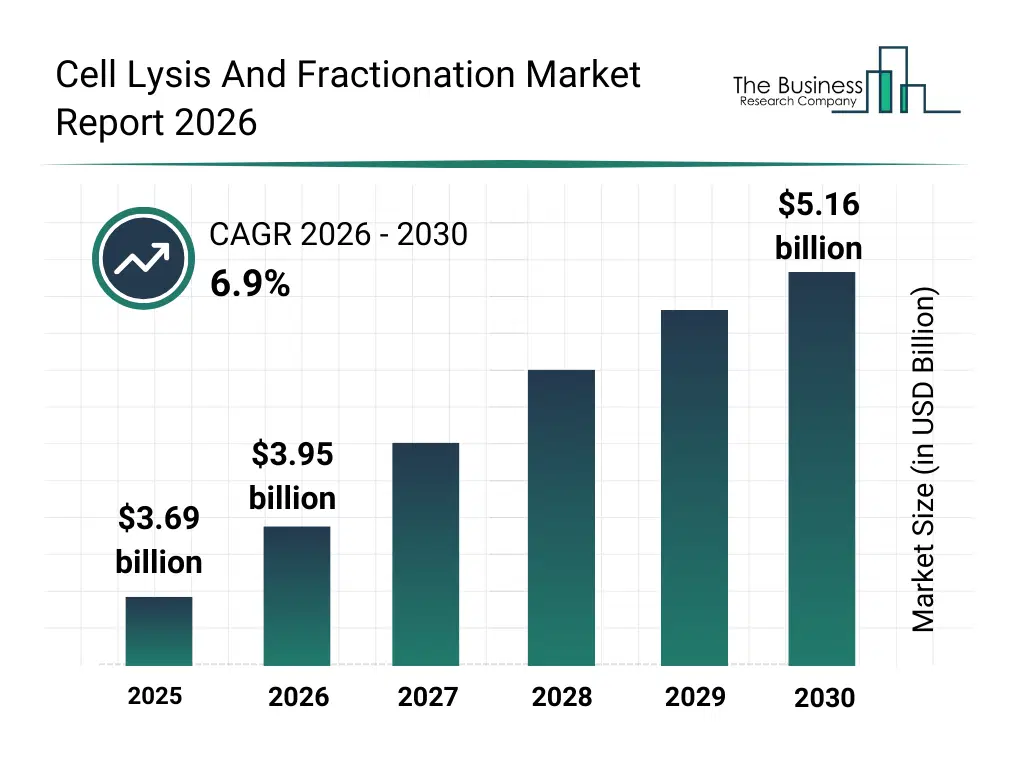
What Is The Cell Lysis And Fractionation Market Size and Share 2026?
The cell lysis and fractionation market size has grown strongly in recent years. It will grow from $3.69 billion in 2025 to $3.95 billion in 2026 at a compound annual growth rate (CAGR) of 7.0%. The growth in the historic period can be attributed to increasing molecular biology research activity, growth in proteomics studies, rising use of nucleic acid purification techniques, expansion of life science laboratories, increased demand for standardized sample preparation.What Is The Cell Lysis And Fractionation Market Growth Forecast?
The cell lysis and fractionation market size is expected to see strong growth in the next few years. It will grow to $5.16 billion in 2030 at a compound annual growth rate (CAGR) of 6.9%. The growth in the forecast period can be attributed to increasing investments in proteomics and genomics research, growing adoption of automated sample preparation, rising focus on high-throughput analysis, expansion of biopharmaceutical research pipelines, increasing use of integrated laboratory systems. Major trends in the forecast period include increasing adoption of automated cell lysis systems, rising demand for high-efficiency protein extraction, growing use of chemical and mechanical lysis methods, expansion of fractionation-based sample preparation, enhanced focus on sample integrity.
Global Cell Lysis And Fractionation Market Segmentation
1) By Type: Mammalian Cells, Microbial Cells 2) By Application: Nucleic Acid Purification And Isolation, Protein Purification And Isolation 3) By End-User: Research Laboratories And Institutes, Biopharmaceutical, Biotechnology Companies Subsegments: 1) By Mammalian Cells: Adherent Mammalian Cells, Suspension Mammalian Cells, Primary Cells, Cell Lines 2) By Microbial Cells: Bacterial Cells, Yeast Cells, Fungal Cells, Algal CellsWhat Are The Drivers Of The Cell Lysis And Fractionation Market?
A growing focus on personalized medicine is expected to propel the growth of the cell lysis and fractionation markets going forward. Personalized medicine is an emerging practice of medicine that uses an individual's genetic profile for the diagnosis and treatment of disease. It involves tailoring medical decisions and treatments to the individual characteristics of each patient, particularly focusing on their genetic makeup. Cell lysis and fractionation play a crucial part in precision medicine by making it possible to separate and analyze particular subcellular elements from patient samples, including proteins, organelles, and nucleic acids. This makes it possible for scientists and medical professionals to investigate the molecular processes that underlie illness and create customized treatments depending on the unique molecular traits of each patient. For instance, in February 2024, according to the Personalized Medicine Coalition (PMC), a US-based nonprofit organization, in 2023, the Food and Drug Administration (FDA) approved 7 new personalized treatments for cancer, out of a total of 26 personalized treatments, marking a significant increase from the 12 approved in 2022. Therefore, the growing focus on personalized medicine is driving the growth of the cell lysis and fractionation markets. The rising demand from the biopharmaceutical industry is expected to propel the growth of the cell lysis and fractionation market going forward. The biopharmaceutical industry is the sector that develops, produces, and commercializes drugs and therapies derived from biological sources using biotechnology. The biopharmaceutical industry is growing due to the rising prevalence of chronic and complex diseases, which drives demand for advanced, targeted therapies. Cell lysis and fractionation help the biopharmaceutical industry by breaking open cells to release and separate intracellular biomolecules, such as proteins, enzymes, and nucleic acids, which are essential for drug development, biologic production, and research. For instance, in January 2024, according to IQVIA, a US-based provider of biopharmaceutical development services, the spending on global biotech is expected to exceed $892 billion by 2028. Therefore, the rising demand from the biopharmaceutical industry is driving the growth of the cell lysis and fractionation industry.Key Players In The Global Cell Lysis And Fractionation Market
Major companies operating in the cell lysis and fractionation market are Hoffmann-La Roche Ltd, Merck & Co. Inc., Thermo Fisher Scientific Inc., Danaher Corporation, Becton, Dickinson and Company, Lonza Group AG, Illumina Inc., Beckman Coulter Inc., PerkinElmer Inc., IDEX Corporation, Bio-Rad Laboratories Inc., QIAGEN NV, Eppendorf AG, Miltenyi Biotec B.V. & Co. KG, Promega Corporation, Takara Bio Inc., Abcam plc, Cell Signaling Technology Inc., BioVision Inc., Diagenode LLC, Claremont BioSolutions LLC, Norgen Biotek Corp., Qsonica LLC, Labfreez Instruments Group Co. Ltd.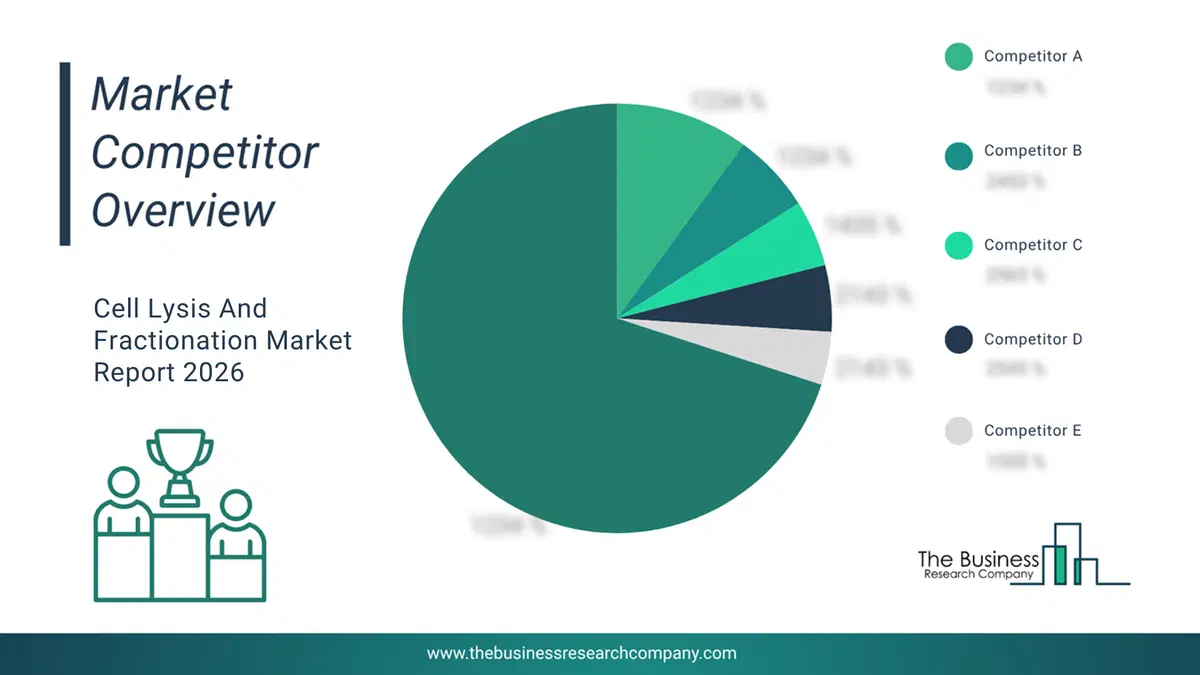
This chart is for illustrative purposes; the full report includes a detailed competitor analysis and comprehensive overview of the top 10 companies in the market.
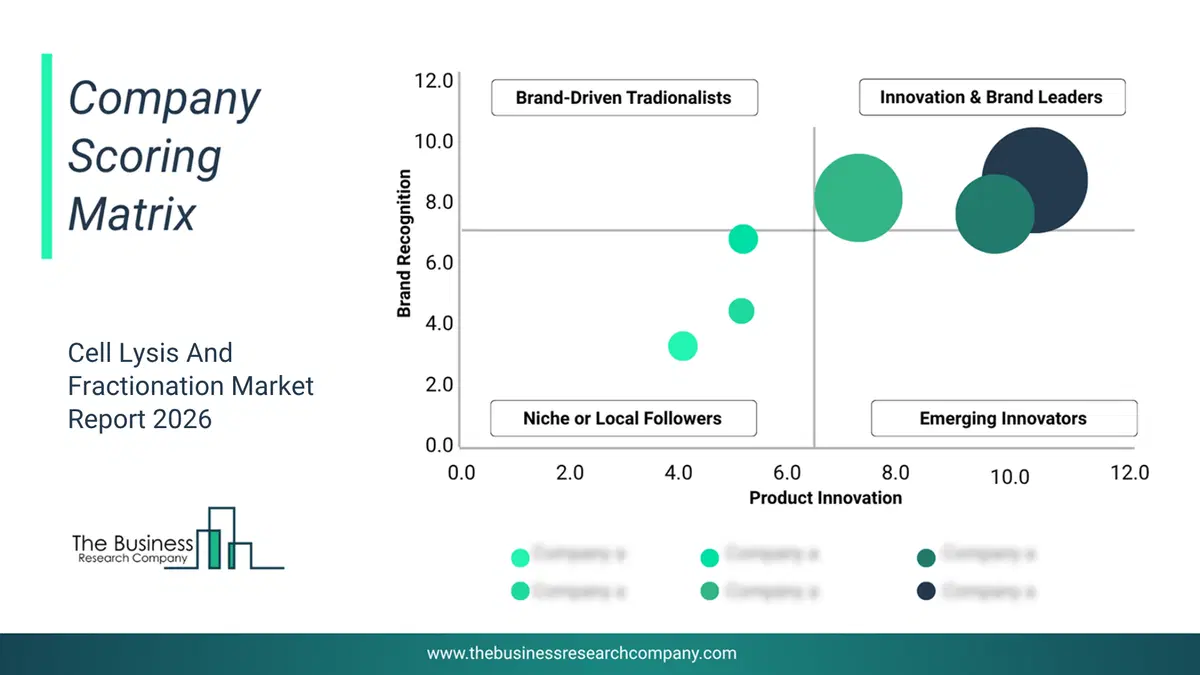
This chart maps companies by product innovation and brand strength, with bubble size indicating relative revenue, helping identify market leaders, challengers, and niche players. This is an illustrative chart; the full report provides a complete and accurate competitive analysis.
Global Cell Lysis And Fractionation Market Trends and Insights
Major companies operating in the cell lysis and fractionation market are focused on introducing advanced solutions, such as CGT (cell and gene therapy) viral vector lysis kits, to gain a competitive edge in the market. These lysis kits offer a simplified AAV (Adeno-associated virus) lysis methodology that will improve SOPs (Standard Operating Procedures), quality control, and safety while standardizing bioprocessing workflows. For instance, in July 2023, QIAGEN, a Germany-based provider of sample and assay technologies, launched the new CGT Viral Vector Lysis Kit, which makes it possible to quantify virus titers for several serotypes with an exact and uniform procedure starting with cell lysates. The new CGT viral vector lysis kit complements QIAGEN's rapidly expanding digital PCR portfolio for the biopharma industry, which already includes three QIAcuity Residual DNA Quantification Kits to check for host cell DNA carryover and ten QIAcuity Cell and Gene Therapy (CGT) dPCR Assays for use in adeno-associated virus (AAV) titer quantification.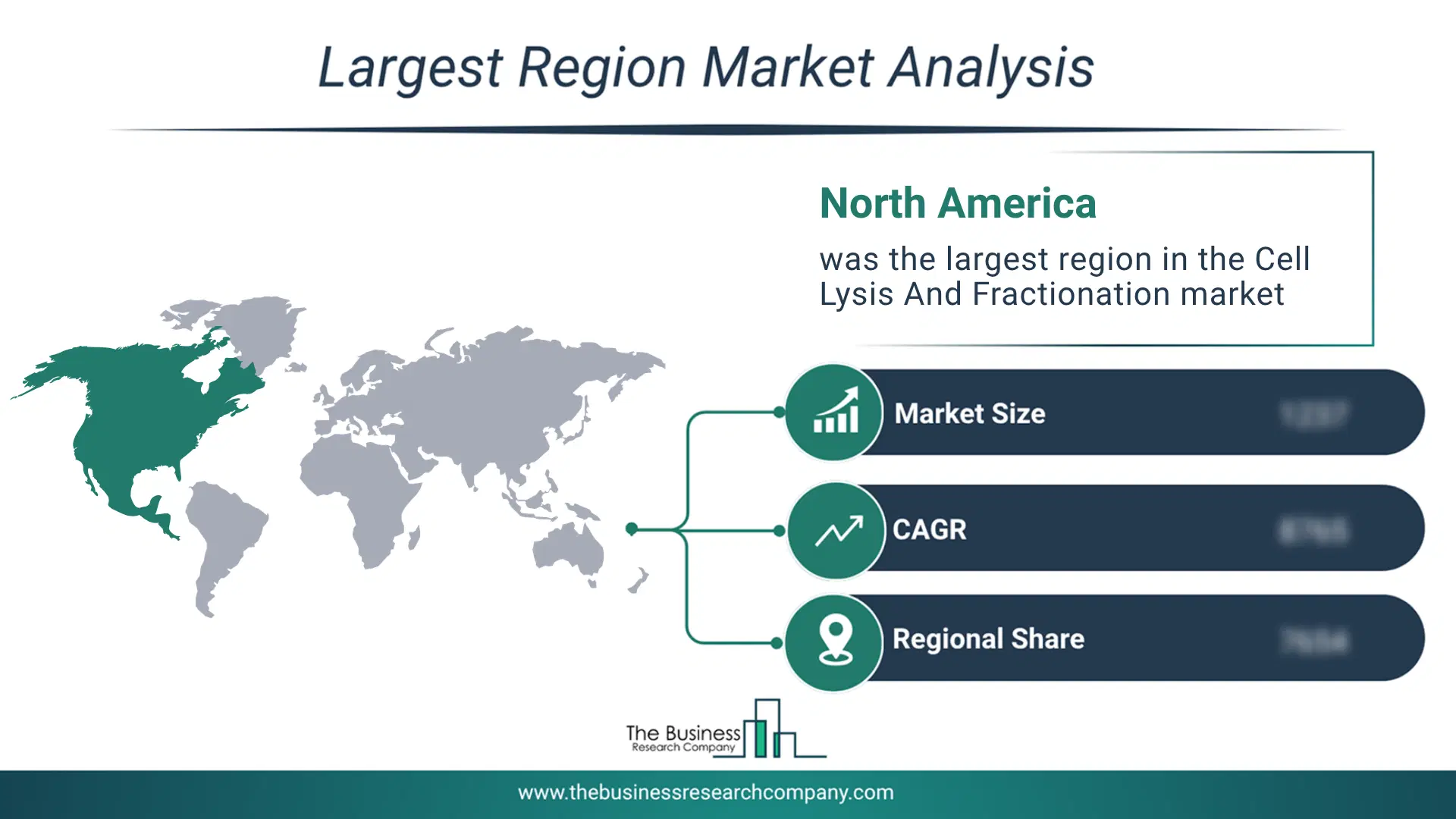
Regional Outlook
North America was the largest region in the cell lysis and fractionation market in 2025. The regions covered in this market report are Asia-Pacific, South East Asia, Western Europe, Eastern Europe, North America, South America, Middle East, Africa. The countries covered in this market report are Australia, Brazil, China, France, Germany, India, Indonesia, Japan, Taiwan, Russia, South Korea, UK, USA, Canada, Italy, Spain.What Defines the Cell Lysis And Fractionation Market?
The cell lysis and fractionation market consists of revenues earned by entities by providing cellular contents extraction, cytoplasmic separation, and cell disruption. The market value includes the value of related goods sold by the service provider or included within the service offering. The cell lysis and fractionation market also includes sales of cell lysis instruments, cell lysis reagents, and consumables. Values in this market are ‘factory gate’ values, the value of goods sold by the manufacturers or creators of the goods, whether to other entities (including downstream manufacturers, wholesalers, distributors, and retailers) or directly to end customers. The value of goods in this market includes related services sold by the creators of the goods.How is Market Value Defined and Measured?
The market value is defined as the revenues that enterprises gain from the sale of goods and/or services within the specified market and geography through sales, grants, or donations in terms of the currency (in USD unless otherwise specified). The revenues for a specified geography are consumption values that are revenues generated by organizations in the specified geography within the market, irrespective of where they are produced. It does not include revenues from resales along the supply chain, either further along the supply chain or as part of other products.
This chart presents market attractiveness based on a quantitative evaluation of growth, competition, strategic alignment, and risk, offering a clear view of opportunity areas for decision-making. This chart is for illustrative purposes; the full report contains the complete analysis.

This chart highlights the Total Addressable Market (TAM) by estimating the maximum revenue opportunity using an assumption-driven approach, supporting strategic planning and opportunity sizing across markets. The chart is illustrative; the full report provides a more comprehensive analysis.
What Key Data and Analysis Are Included in the Cell Lysis And Fractionation Market Report 2026?
The cell lysis and fractionation market research report is one of a series of new reports from The Business Research Company that provides market statistics, including industry global market size, regional shares, competitors with the market share, detailed market segments, market trends and opportunities, and any further data you may need to thrive in the cell lysis and fractionation industry. The market research report delivers a complete perspective of everything you need, with an in-depth analysis of the current and future state of the industry.Cell Lysis And Fractionation Market Report Forecast Analysis
| Report Attribute | Details |
|---|---|
| Market Size Value In 2026 | $3.95 billion |
| Revenue Forecast In 2030 | $5.16 billion |
| Growth Rate | CAGR of 6.9% from 2026 to 2030 |
| Base Year For Estimation | 2025 |
| Actual Estimates/Historical Data | 2020-2025 |
| Forecast Period | 2026 - 2030 |
| Market Representation | Revenue in USD Billion and CAGR from 2026 to 2030 |
| Segments Covered | Type, Application, End-User |
| Regional Scope | Asia-Pacific, Western Europe, Eastern Europe, North America, South America, Middle East, Africa |
| Country Scope | The countries covered in the report are Australia, Brazil, China, France, Germany, India, Indonesia, Japan, Taiwan, Russia, South Korea, UK, USA, Canada, Italy, Spain |
| Key Companies Profiled | Hoffmann-La Roche Ltd, Merck & Co. Inc., Thermo Fisher Scientific Inc., Danaher Corporation, Becton, Dickinson and Company, Lonza Group AG, Illumina Inc., Beckman Coulter Inc., PerkinElmer Inc., IDEX Corporation, Bio-Rad Laboratories Inc., QIAGEN NV, Eppendorf AG, Miltenyi Biotec B.V. & Co. KG, Promega Corporation, Takara Bio Inc., Abcam plc, Cell Signaling Technology Inc., BioVision Inc., Diagenode LLC, Claremont BioSolutions LLC, Norgen Biotek Corp., Qsonica LLC, Labfreez Instruments Group Co. Ltd. |
| Customization Scope | Request for Customization |
| Pricing And Purchase Options | Explore Purchase Options |