
Cell Separation Technologies Market Report 2026
Global Outlook – By Product (Instruments, Consumables And Reagents), By Technology (Gradient Centrifugation, Surface Markers Separation, Fluorescence Activated Cell Sorting, Magnetic Cell Sorting, Filtration Based Separation), By Application (Stem Cell Research, Immunology, Neuroscience, Cancer Research, Other Applications), By End-User (Biotechnology And Pharmaceutical Companies, Hospitals And Diagnostic Laboratories, Academic And Research Institutes, Other End-Users) - Market Size, Trends, And Global Forecast 2026-2030
Cell Separation Technologies Market Overview
• Cell Separation Technologies market size has reached to $11.5 billion in 2025 • Expected to grow to $22.2 billion in 2030 at a compound annual growth rate (CAGR) of 14.1% • Growth Driver: Cell Separation Technology Market Thrives On Rising Chronic Disease Prevalence • Market Trend: Advanced Cell Isolation Technology Enhances Precision And Efficiency In Therapy Development • North America was the largest region in 2025 and Asia-Pacific is the fastest growing region.Market Gains By 2030 – Top Opportunities By Segment
Market Gain identifies the most promising market opportunities by highlighting the segments or products expected to generate the highest incremental revenue growth over the next five years.
What Is Covered Under Cell Separation Technologies Market?
Cell separation technologies are methods and tools used to isolate specific cell types from a heterogeneous mixture of cells. These technologies are crucial in biomedical research, clinical diagnostics, and therapeutic applications, with the objective of cell separation to obtain a pure population of target cells for subsequent analysis or use. The main products of cell separation technologies are instruments, consumables, and reagents. Instruments refer to the equipment used in cell separation technologies to facilitate the process of isolating specific cell populations from biological samples. Various technologies include gradient centrifugation, surface marker separation, fluorescence-activated cell sorting, magnetic cell sorting, and filtration-based separation. Different applications of cell separation technologies, such as stem cell research, immunology, neuroscience, cancer research, and others, are provided for a variety of end-users, including biotechnology and pharmaceutical companies, hospitals and diagnostic laboratories, academic and research institutes, and others.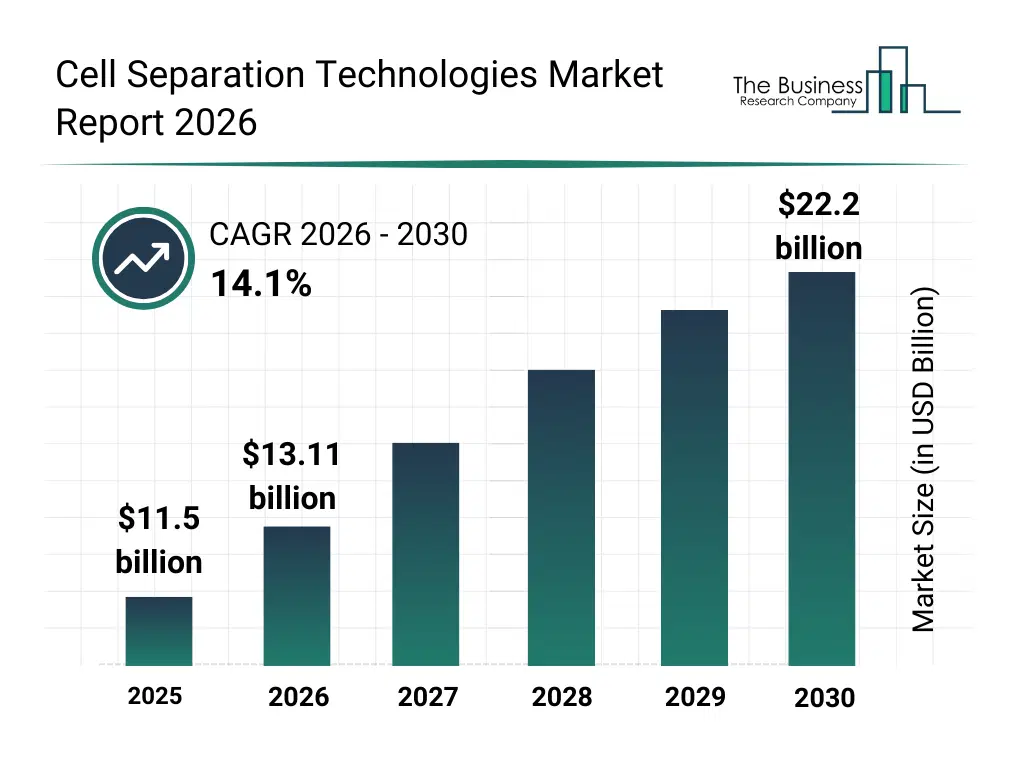
What Is The Cell Separation Technologies Market Size and Share 2026?
The cell separation technologies market size has grown rapidly in recent years. It will grow from $11.5 billion in 2025 to $13.11 billion in 2026 at a compound annual growth rate (CAGR) of 14.0%. The growth in the historic period can be attributed to growth in stem cell research activities, increasing use of cell-based assays, expansion of academic and biomedical research institutes, rising adoption of flow cytometry techniques, availability of advanced separation consumables.What Is The Cell Separation Technologies Market Growth Forecast?
The cell separation technologies market size is expected to see rapid growth in the next few years. It will grow to $22.2 billion in 2030 at a compound annual growth rate (CAGR) of 14.1%. The growth in the forecast period can be attributed to increasing demand for personalized medicine research, rising investments in cell-based therapeutics, expansion of automated laboratory workflows, growing focus on reproducibility in cell analysis, increasing integration of ai-assisted cell sorting tools. Major trends in the forecast period include increasing adoption of high-purity cell isolation techniques, rising use of magnetic and fluorescence-based sorting systems, growing demand for automated cell separation instruments, expansion of application-specific separation kits, enhanced focus on high-throughput cell processing.
Global Cell Separation Technologies Market Segmentation
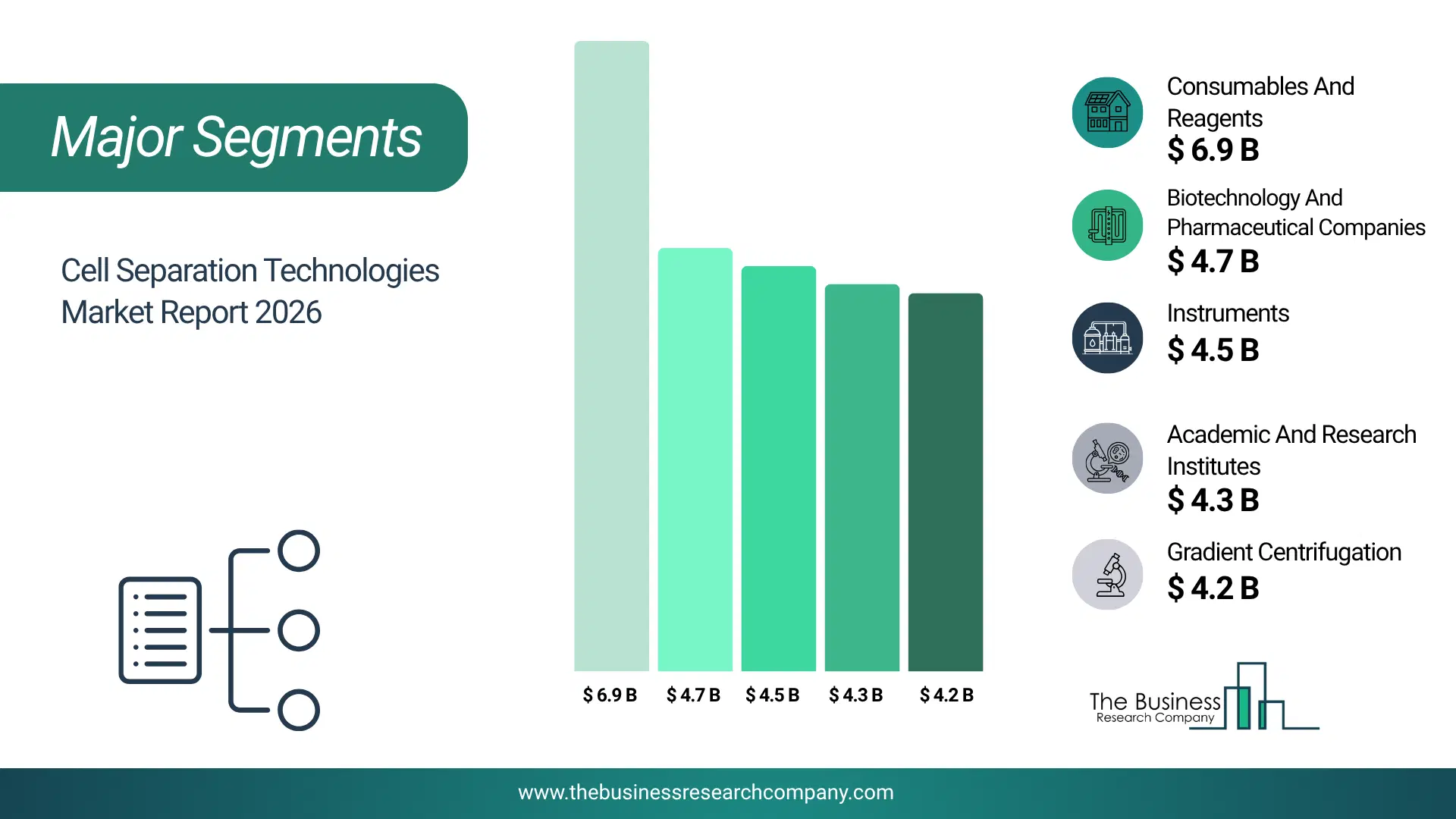
1) By Product: Instruments, Consumables And Reagents 2) By Technology: Gradient Centrifugation, Surface Markers Separation, Fluorescence Activated Cell Sorting, Magnetic Cell Sorting, Filtration Based Separation 3) By Application: Stem Cell Research, Immunology, Neuroscience, Cancer Research, Other Applications 4) By End-User: Biotechnology And Pharmaceutical Companies, Hospitals And Diagnostic Laboratories, Academic And Research Institutes, Other End-Users Subsegments: 1) By Instruments: Centrifuges, Magnetic Cell Sorters, Flow Cytometers, Laser Capture Microdissection Systems, Cell Sorters 2) By Consumables And Reagents: Separation Columns, Cell Separation Kits, Filters, Microbeads The top segments in the cell separation technologies market will be: • Consumables And Reagents will reach $6972.39 Million by 2025. • Biotechnology And Pharmaceutical Companies will reach $4740.82 Million by 2025. • Instruments will reach $4525.31 Million by 2025. • Academic And Research Institutes will reach $4353.46 Million by 2025. • Gradient Centrifugation will reach $4223.77 Million by 2025.What Is The Driver Of The Cell Separation Technologies Market?
The surge in the prevalence of chronic diseases is expected to propel the growth of the cell separation technology market. Chronic diseases are problems that last a year or longer, necessitating continuing medical care, restricting everyday activities, or both. Cancer, heart disease, stroke, diabetes, and arthritis are among the most common chronic diseases. The prevalence of chronic diseases is due to a rise in modifiable lifestyle choices, social inequities, infections, genetics, autoimmunity, and mental health issues. Cell-separation technologies help advance treatments for chronic diseases by providing a solution for isolating cancer cells, immune cells, and other relevant cell types. For instance, in April 2025, according to the Centers for Disease Control and Prevention (CDC), a US-based federal agency. in 2023, approximately 194 million U.S. adults, or 76.4%, reported having at least one chronic condition. The prevalence was 59.5% among young adults, 78.4% among midlife adults, and 93.0% among older adults. Therefore, the surge in the prevalence of chronic diseases is driving the growth of the cell separation technology market.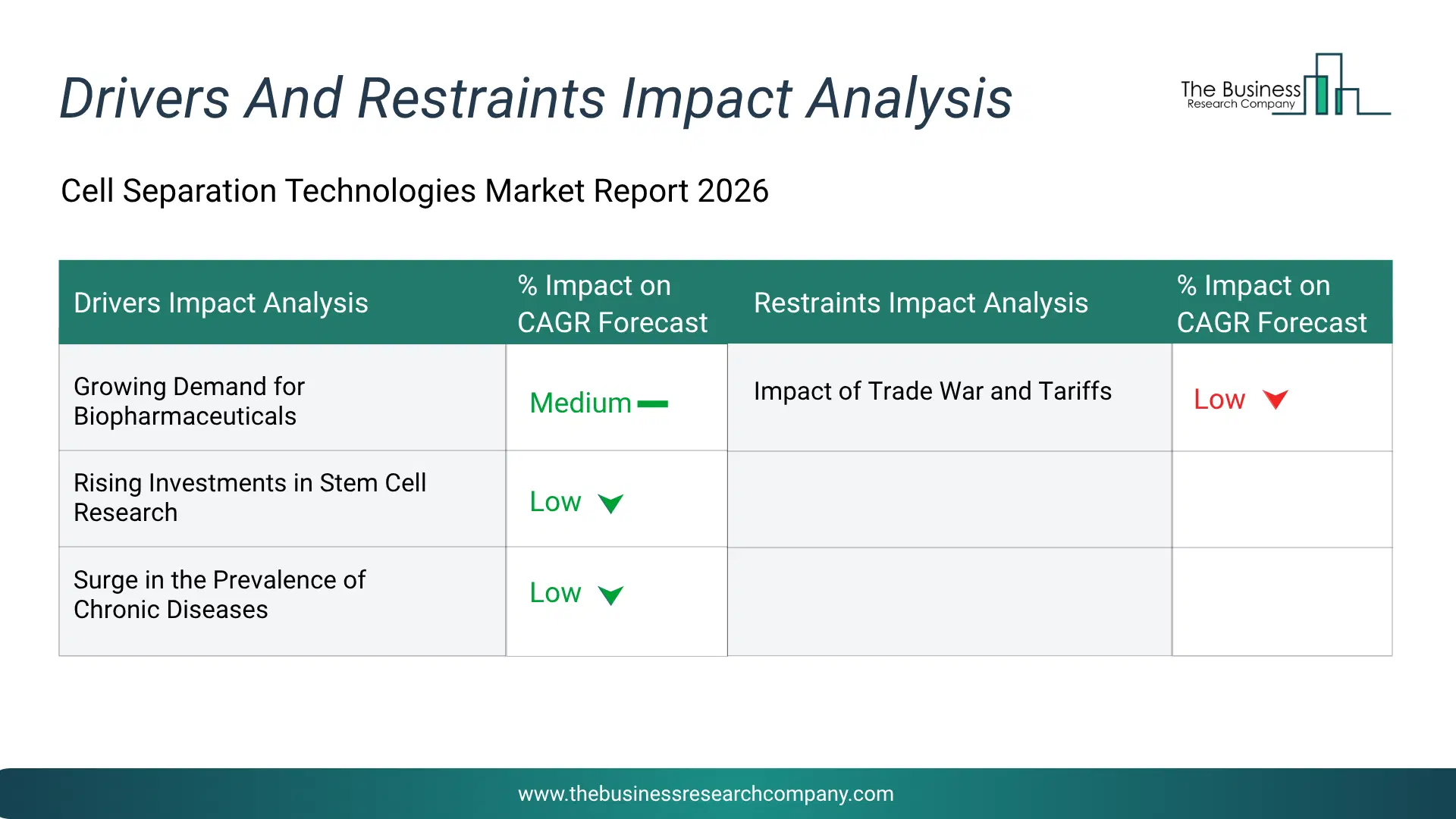
Infographic Chart Showing Key Market Drivers Analysis And Restraints For Cell Separation Technologies Market
The chart presents an impact analysis of key drivers and restraints, quantifying their relative influence on the market's growth rate and helping assess the balance between growth enablers and limiting factors. This chart offers a high-level perspective; the full report contains more detailed insights.
How Will The Drivers Impact Growth In The Global Cell Separation Technologies Market?
• Growing Demand for Biopharmaceuticals (Medium) – The growing demand for biopharmaceuticals will become a key driver of growth in the cell separation technologies market by 2030. Biopharmaceuticals such as monoclonal antibodies, recombinant proteins and vaccines depend on mammalian cell cultures like CHO (Chinese Hamster Ovary) cells, where cell separation technologies are essential for ensuring pure, high-yielding cell populations. These systems play a critical role in upstream bioprocessing by enabling the selection of optimal clones and removal of contaminants, ensuring consistency and regulatory compliance. As the industry shifts toward personalized biologics, including cell-based therapies, the need for precise cell isolation has expanded. Rising R&D investments, particularly after the pandemic, have further driven demand for automated, high-throughput cell separation platforms to support accelerated drug development and manufacturing scalability. As a result, the growing demand for biopharmaceuticals is anticipated to contributing to a 1.5% annual growth in the market. • Rising Investments in Stem Cell Research (Low) – The rising investments in stem cell research will emerge as a major factor driving the expansion of the cell separation technologies market by 2030. Rising investments in stem cell research are significantly driving demand for advanced cell separation technologies, which are essential for isolating specific stem cell populations from complex biological samples. These technologies support the development of regenerative therapies for conditions like heart disease, diabetes and neurodegenerative disorders by enabling the production of high-purity therapeutic cells. They are also critical for stem cell banking and cryopreservation, where clean separation is required before storage. Additionally, growing regulatory scrutiny has increased the need for GMP-compliant systems to ensure consistent quality, potency and identity of stem cell products. Consequently, the accelerating rising investments in stem cell research will capabilities is projected to contributing to a 1.0% annual growth in the market. • Surge in the Prevalence of Chronic Diseases (Low) – The surge in the prevalence of chronic diseases processes will serve as a key growth catalyst for the cell separation technologies market by 2030 The rising prevalence of chronic diseases such as cancer, diabetes and cardiovascular disorders is driving demand for targeted therapies that rely on isolating specific cell types, making cell separation technologies essential. These tools support advanced diagnostics by enabling the extraction of high-purity cells for genetic analysis, biomarker detection and disease monitoring. Additionally, the growth of regenerative and stem cell therapies, particularly for conditions like neurodegeneration and organ failure, further underscores the need for precise and scalable cell separation methods. As healthcare shifts toward personalized medicine, the market for these technologies continues to expand, driven by their critical role in both research and clinical applications. Therefore, this surge in the prevalence of chronic diseases operations is projected to supporting to a 0.8% annual growth in the market. • Rising Healthcare Expenditure (Medium) – The rising healthcare expenditure will become a significant driver contributing to the growth of the cell separation technologies market by 2030. The global increase in healthcare spending is enabling greater investment in advanced cell separation technologies, critical for research, diagnostics and therapeutic applications. Enhanced funding allows hospitals, labs and biotech firms to upgrade infrastructure, supporting the adoption of precision tools that improve efficiency and outcomes. Increased spending also fuels the growth of personalized and cell-based therapies, which rely heavily on effective cell isolation. Additionally, the expansion of clinical trials and diagnostic services—such as liquid biopsies and immunophenotyping—further accelerates demand for high-performance cell separation solutions. Consequently, the rising healthcare expenditure strategies is projected to contributing to a 0.5% annual growth in the market.How Will The Restraints Impact Growth In The Global Cell Separation Technologies Market?
• Inconsistent Reimbursement Policies (Medium) – Inconsistent Reimbursement Policies will restrict the growth of the Cell Separation Technologies market during the forecast period. Cell separation technologies used in clinical applications face inconsistent reimbursement policies across different healthcare systems and regions. Limited reimbursement for cell separation procedures restricts patient access and affects adoption rates. Reimbursement uncertainty creates challenges for technology providers and limits market growth. • Technical Complexity and Skill Requirements (Low) – Technical Complexity and Skill Requirements will restrict the growth of the Cell Separation Technologies market during the forecast period. Cell separation techniques require skilled personnel with expertise in cell biology, flow cytometry, and laboratory operations. The shortage of qualified professionals with cell separation experience limits the capacity of research and clinical facilities. Skill gaps can affect technology adoption and operational efficiency, constraining market growth. • Impact of Trade War and Tariffs (Low) – Impact of Trade War and Tariffs will restrict the growth of the Cell Separation Technologies market during the forecast period. Cell separation technologies rely on imported reagents, consumables, and specialized equipment from global suppliers. Trade tariffs and restrictions can increase costs and affect product availability. Trade barriers may also limit technology transfer and international collaboration in cell research.Key Players In The Global Cell Separation Technologies Market
Major companies operating in the cell separation technologies market are Merck KGaA, Thermo Fisher Scientific Inc., Danaher Corporation, Becton Dickinson and Company, GE HealthCare Technologies, Corning Incorporated, Lonza Group, Sartorius AG, Bio-Rad Laboratories Inc., Pall Corporation, Eppendorf AG, Miltenyi Biotec B.V. & Co. KG, Stemcell Technologies Inc., 10X Genomics Inc., Cytena GmbH, Pluriselect GmbH, Akadeum Life Sciences Inc., Cellenion, NanoCellect Biomedical Inc., Agilent Technologies Inc, Cytek Biosciences Inc, Cell Microsystems Inc, Nexcelom Bioscience, ChemoMetec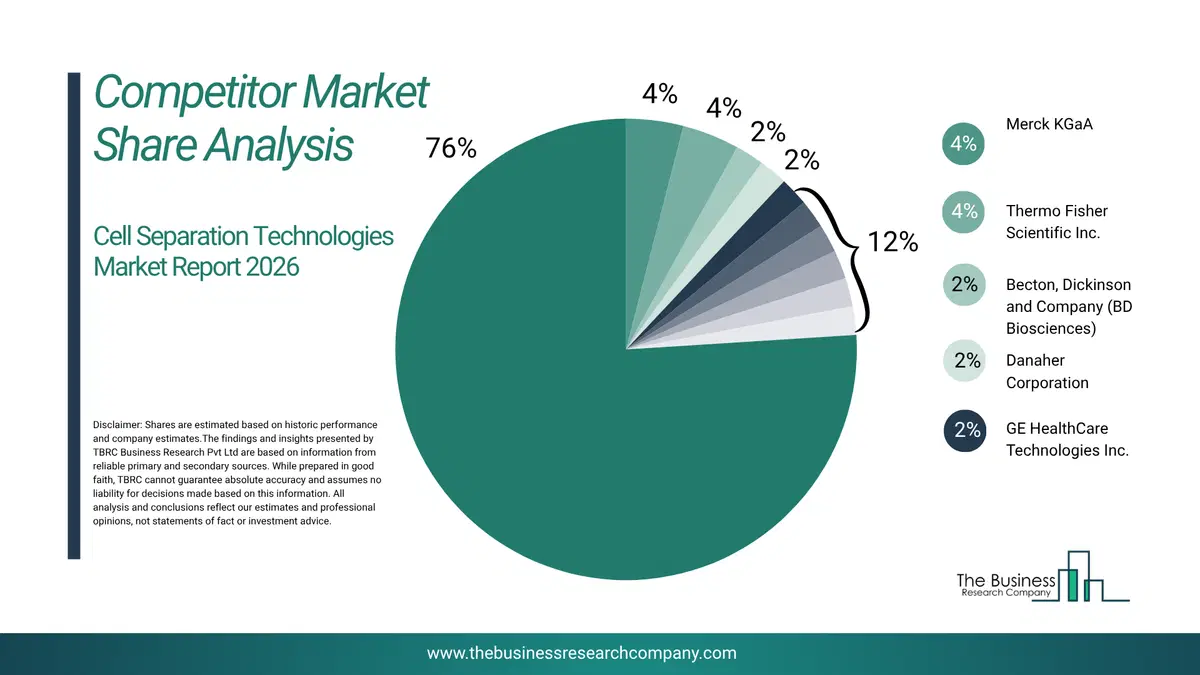
This chart is for illustrative purposes; the full report includes a detailed competitor analysis and comprehensive overview of the top 10 companies in the market.
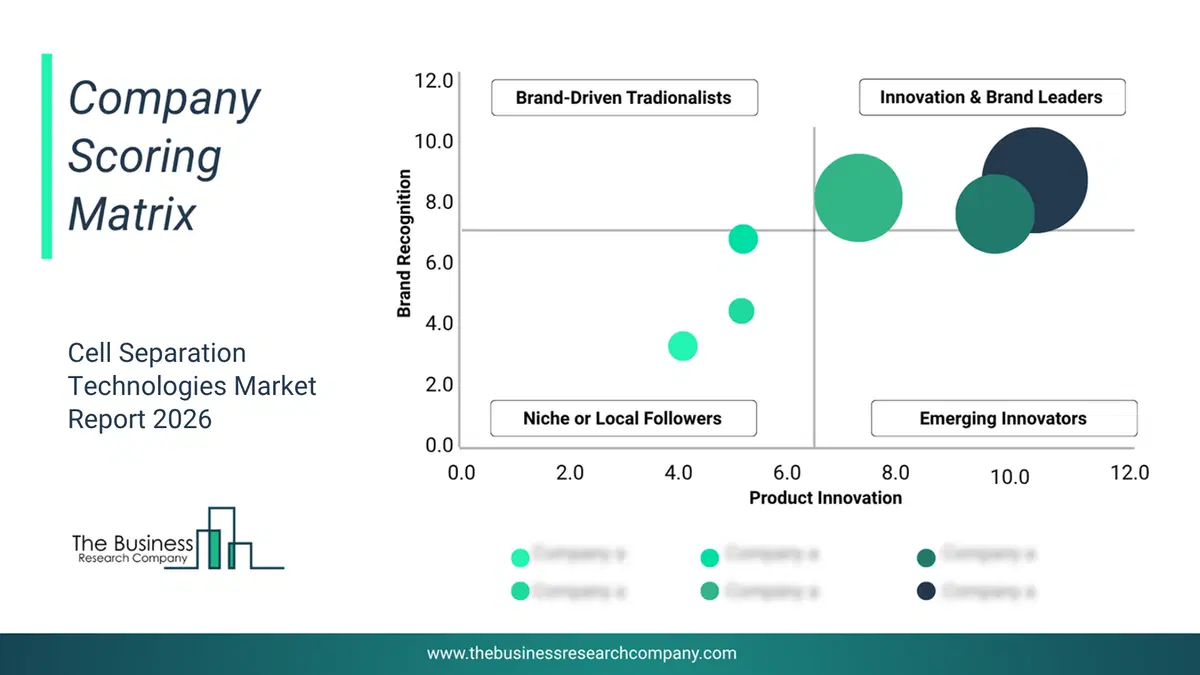
This chart maps companies by product innovation and brand strength, with bubble size indicating relative revenue, helping identify market leaders, challengers, and niche players. This is an illustrative chart; the full report provides a complete and accurate competitive analysis.
Global Cell Separation Technologies Market Trends and Insights
Major companies operating in the cell separation technologies market are focusing on developing innovative products, such as automated temperature‑controlled tissue‑dissociation systems, to standardize and accelerate the conversion of solid tissues into viable single‑cell suspensions for downstream applications. Automated temperature‑controlled tissue‑dissociation systems are instruments that combine regulated motion, temperature, and enzymatic digestion protocols to safely and reproducibly dissociate tissue into single cells. For instance, in June 2025, STEMCELL Technologies, a Canada‑based provider of cell culture media, separation reagents, and instruments for cell‑biology research, launched the STEMprep Tissue Dissociator System. The key features include: precise temperature control ranging from 4 °C to 37 °C to optimize enzymatic activity and preserve cell viability; fully automated workflows that reduce hands-on labor and improve consistency; modular design supporting 4‑, 8‑, or 12‑sample processing; and protocol flexibility, with validated STEMCELL enzymes or user-defined methods for different tissue types. This system helps researchers save time, reduce variability, and maintain high viability in primary cells, thereby improving the reliability of downstream single-cell analytics, flow cytometry, and cell therapy development.What Are Latest Mergers And Acquisitions In The Cell Separation Technologies Market?
In May 2024, Mirus Bio LLC, a US-based biotechnology company that manufactures transfection reagents and gene delivery systems for genetic research and cellular applications, acquired Merck Group for $600 million. With this acquisition, Mirus Bio LLC aims to enhance its product offerings and expand its capabilities in gene delivery technologies. Merck Group is a Germany-based science and technology company that manufactures pharmaceuticals, life science products, and specialty materials.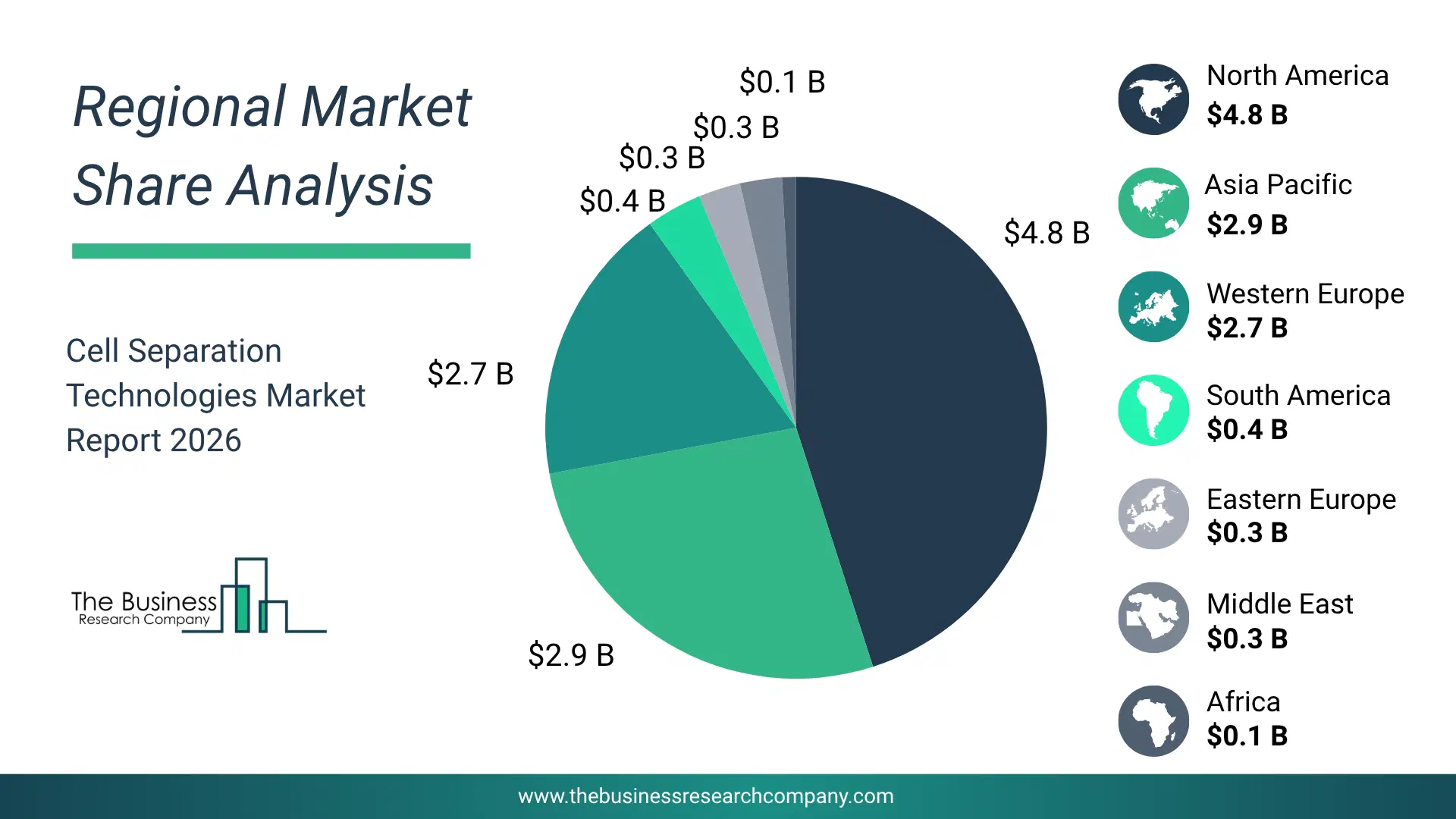
Regional Outlook
North America was the largest region in the cell separation technologies market in 2025. Asia-Pacific is expected to be the fastest-growing region in the forecast period. The regions covered in this market report are Asia-Pacific, South East Asia, Western Europe, Eastern Europe, North America, South America, Middle East, Africa. The countries covered in this market report are Australia, Brazil, China, France, Germany, India, Indonesia, Japan, Taiwan, Russia, South Korea, UK, USA, Canada, Italy, Spain.What Defines the Cell Separation Technologies Market?
The cell separation technologies market consists of revenues earned by entities through cell sorting, pre-plating, cell isolation, and field flow fractionation (FFF). The market value includes the value of related goods sold by the service provider or included within the service offering. The cell separation technology market also includes sales of cell isolation kits and automated cell separation instruments. Values in this market are ‘factory gate’ values, that is, the value of goods sold by the manufacturers or creators of the goods, whether to other entities (including downstream manufacturers, wholesalers, distributors, and retailers) or directly to end customers. The value of goods in this market includes related services sold by the creators of the goods.How is Market Value Defined and Measured?
The market value is defined as the revenues that enterprises gain from the sale of goods and/or services within the specified market and geography through sales, grants, or donations in terms of the currency (in USD unless otherwise specified). The revenues for a specified geography are consumption values that are revenues generated by organizations in the specified geography within the market, irrespective of where they are produced. It does not include revenues from resales along the supply chain, either further along the supply chain or as part of other products.
This chart presents market attractiveness based on a quantitative evaluation of growth, competition, strategic alignment, and risk, offering a clear view of opportunity areas for decision-making. This chart is for illustrative purposes; the full report contains the complete analysis.

This chart highlights the Total Addressable Market (TAM) by estimating the maximum revenue opportunity using an assumption-driven approach, supporting strategic planning and opportunity sizing across markets. The chart is illustrative; the full report provides a more comprehensive analysis.
What Key Data and Analysis Are Included in the Cell Separation Technologies Market Report 2026?
The cell separation technologies market research report is one of a series of new reports from The Business Research Company that provides market statistics, including industry global market size, regional shares, competitors with the market share, detailed market segments, market trends and opportunities, and any further data you may need to thrive in the cell separation technologies industry. The market research report delivers a complete perspective of everything you need, with an in-depth analysis of the current and future state of the industry.Cell Separation Technologies Market Report Forecast Analysis
| Report Attribute | Details |
|---|---|
| Market Size Value In 2026 | $13.11 billion |
| Revenue Forecast In 2030 | $22.2 billion |
| Growth Rate | CAGR of 14.0% from 2026 to 2030 |
| Base Year For Estimation | 2025 |
| Actual Estimates/Historical Data | 2020-2025 |
| Forecast Period | 2026 - 2030 |
| Market Representation | Revenue in USD Billion and CAGR from 2026 to 2030 |
| Segments Covered | Product, Technology, Application, End-User |
| Regional Scope | Asia-Pacific, Western Europe, Eastern Europe, North America, South America, Middle East, Africa |
| Country Scope | The countries covered in the report are Australia, Brazil, China, France, Germany, India, Indonesia, Japan, Taiwan, Russia, South Korea, UK, USA, Canada, Italy, Spain. |
| Key Companies Profiled | Merck KGaA, Thermo Fisher Scientific Inc., Danaher Corporation, Becton Dickinson and Company, GE HealthCare Technologies, Corning Incorporated, Lonza Group, Sartorius AG, Bio-Rad Laboratories Inc., Pall Corporation, Eppendorf AG, Miltenyi Biotec B.V. & Co. KG, Stemcell Technologies Inc., 10X Genomics Inc., Cytena GmbH, Pluriselect GmbH, Akadeum Life Sciences Inc., Cellenion, NanoCellect Biomedical Inc., Agilent Technologies Inc, Cytek Biosciences Inc, Cell Microsystems Inc, Nexcelom Bioscience, ChemoMetec |
| Customization Scope | Request for Customization |
| Pricing And Purchase Options | Explore Purchase Options |