
Cell Signaling Market Report 2026
Global Outlook – By Product (Consumables, Instruments), By Signaling Type (Endocrine Signaling, Paracrine Signaling, Autocrine Signaling, Synaptic Signaling Source, Other Signaling Types), By Pathway (Akt Signaling Pathway, AMPK Signaling Pathway, ErbB Or HER Signaling Pathway, Other Signaling Pathways), By Technology (Microscopy, Western Blotting, Flow Cytometry, Immunohistochemistry (IHC), Enzyme-Linked Immunosorbent Assay (ELISA), Mass Spectrometry, Other Technologies), By Application (Research Applications, Medical Applications) - Market Size, Trends, Strategies, and Forecast to 2030
Cell Signaling Market Overview
• Cell Signaling market size has reached to $4.97 billion in 2025 • Expected to grow to $7.11 billion in 2030 at a compound annual growth rate (CAGR) of 7.3% • Growth Driver: Rising Prevalence Of Chronic Diseases Fuels Growth In Cell Signaling Market • Market Trend: Advancements In Immunohistochemistry (IHC) Technology Driving Innovation In Cell Signaling Market • North America was the largest region in 2025 and Asia-Pacific is the fastest growing region.What Is Covered Under Cell Signaling Market?
Cell signaling, also known as cell communication or cellular signaling, refers to the process by which cells communicate with each other to regulate various physiological functions, coordinate cellular activities, and respond to external stimuli. This intricate system allows cells to sense changes in their environment, transmit signals, and elicit appropriate responses to maintain homeostasis and ensure the proper functioning of tissues and organs. The main products of the cell signaling market are consumables and instruments. Consumables in the cell signaling market refer to the materials or substances used during experiments or procedures, such as antibodies, reagents, and assay kits. The various signaling types include endocrine signaling, paracrine signaling, autocrine signaling, synaptic signaling source, and other signaling types and various pathways including the Akt signaling pathway, AMPK signaling pathway; ERBB/HER signaling pathway, and other signaling pathways. The various technologies include microscopy, western blotting, flow cytometry, immunohistochemistry (IHC), ELISA, mass spectrometry, and other technologies and various applications include research applications and medical applications.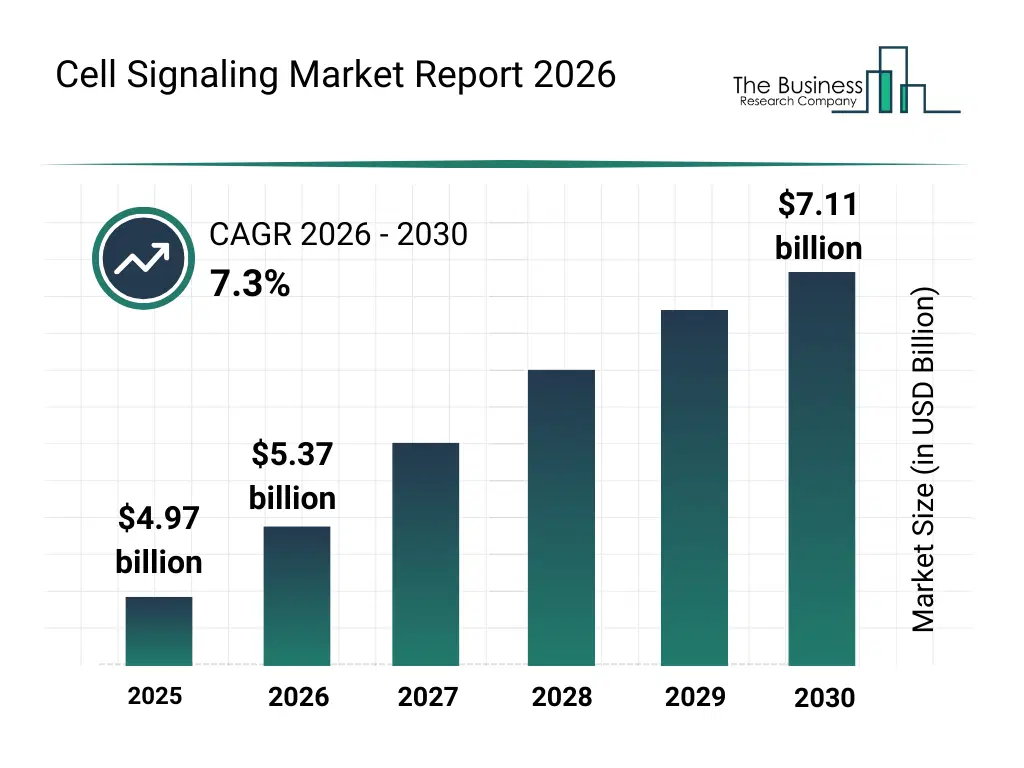
What Is The Cell Signaling Market Size and Share 2026?
The cell signaling market size has grown strongly in recent years. It will grow from $4.97 billion in 2025 to $5.37 billion in 2026 at a compound annual growth rate (CAGR) of 8.2%. The growth in the historic period can be attributed to expansion of molecular biology research, increasing use of immunoassays in research labs, growth in cancer signaling studies, rising adoption of western blotting techniques, availability of advanced antibodies.What Is The Cell Signaling Market Growth Forecast?
The cell signaling market size is expected to see strong growth in the next few years. It will grow to $7.11 billion in 2030 at a compound annual growth rate (CAGR) of 7.3%. The growth in the forecast period can be attributed to increasing investments in targeted therapy research, rising demand for precision signaling analysis, expansion of translational research applications, growing use of high-throughput proteomics, increasing integration of computational biology tools. Major trends in the forecast period include increasing focus on pathway-specific signal analysis, rising use of high-sensitivity detection reagents, growing adoption of multiplex signaling assays, expansion of quantitative cell communication studies, enhanced integration of advanced imaging techniques.
Global Cell Signaling Market Segmentation
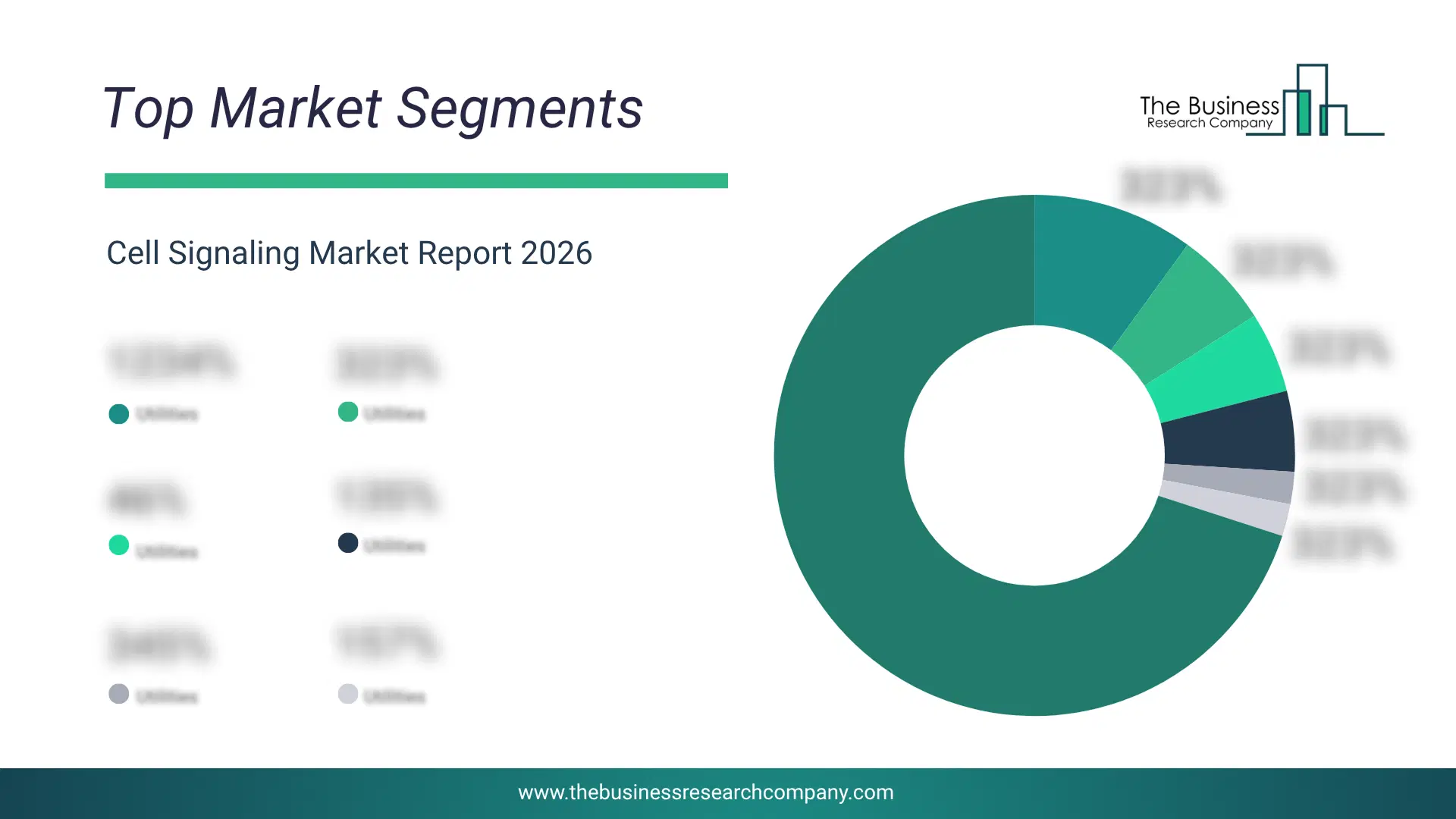
1) By Product: Consumables, Instruments 2) By Signaling Type: Endocrine Signaling, Paracrine Signaling, Autocrine Signaling, Synaptic Signaling Source, Other Signaling Types 3) By Pathway: Akt Signaling Pathway, AMPK Signaling Pathway, ErbB Or HER Signaling Pathway, Other Signaling Pathways 4) By Technology: Microscopy, Western Blotting, Flow Cytometry, Immunohistochemistry (IHC), Enzyme-Linked Immunosorbent Assay (ELISA), Mass Spectrometry, Other Technologies 5) By Application: Research Applications, Medical Applications Subsegments: 1) By Consumables: Reagents, Antibodies, Kits, Chemicals and Enzymes 2) By Instruments: Flow Cytometers, Microplate Readers, Cell Counters, Western Blotting Systems, Real-Time PCR SystemsWhat Is The Driver Of The Cell Signaling Market?
The increasing prevalence of chronic diseases is expected to propel the growth of the cell signaling market going forward. Chronic diseases are long-lasting medical conditions that progress slowly and persist for extended periods, often for years or even a lifetime. These conditions are characterized by their prolonged duration and may require ongoing management and treatment to control symptoms, prevent complications, and maintain quality of life. The prevalence of chronic disease is due to an aging population, unhealthy lifestyles, and the accessibility and infrastructure of healthcare. Cell signaling research provides valuable insights and tools for understanding, diagnosing, treating, and preventing chronic diseases, offering hope for improved outcomes and quality of life for affected individuals. For instance, in January 2023, according to the National Library of Medicine, a US-based biomedical library, the number of people 50 years of age and older having at least one chronic illness is predicted to rise from 71.522 million in 2020 to 142.66 million in 2050, a 99.5% increase. Therefore, the increasing prevalence of chronic diseases is driving the growth of the cell signaling industry.Key Players In The Global Cell Signaling Market
Major companies operating in the cell signaling market are Johnson & Johnson, F. Hoffmann-La Roche Ltd., Pfizer Inc., Bayer AG, Bristol-Myers Squibb Company, Thermo Fisher Scientific Inc., Novartis AG, GlaxoSmithKline plc, Eli Lilly and Company, Gilead Sciences Inc., Danaher Corporation, Merck KGaA, Becton Dickinson and Company, Agilent Technologies Inc., PerkinElmer Inc., Beckman Coulter Inc., Bio-Rad Laboratories Inc., Qiagen N.V., Bio-Techne Corporation, Miltenyi Biotec, Promega Corporation, Janssen Pharmaceuticals Inc., Abcam plc, Horizon Discovery Ltd., Cell Signaling Technology Inc., Cisbio Bioassays, Rockland Immunochemicals Inc.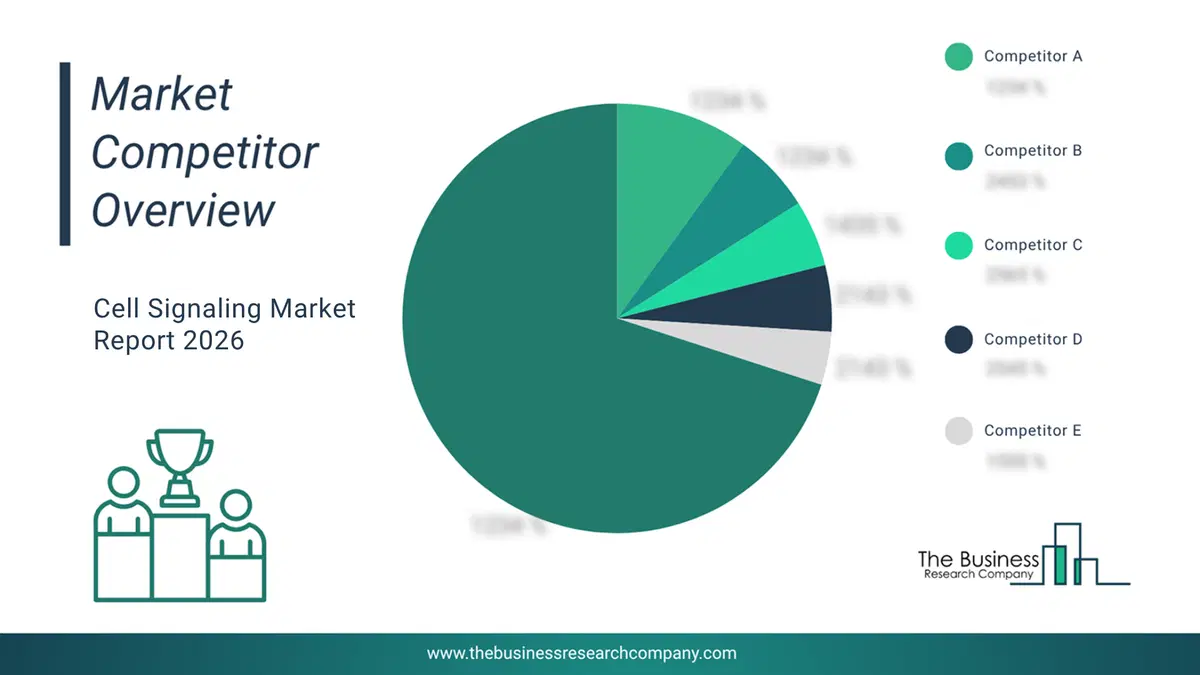
This chart is for illustrative purposes; the full report includes a detailed competitor analysis and comprehensive overview of the top 10 companies in the market.
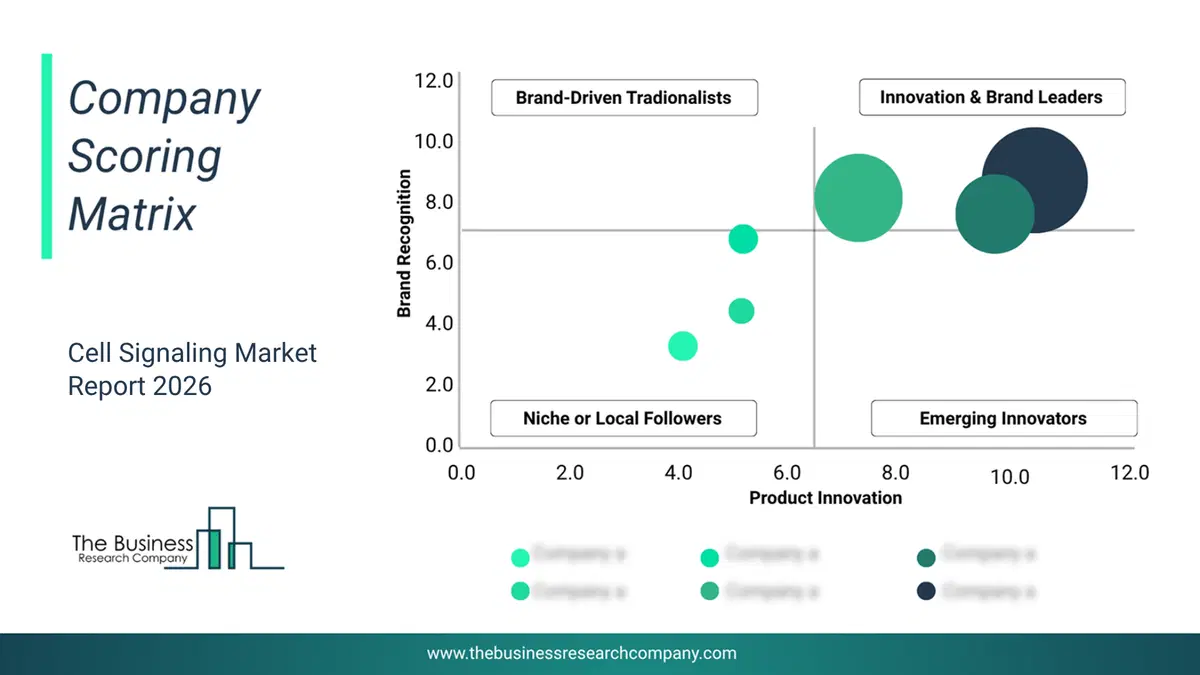
This chart maps companies by product innovation and brand strength, with bubble size indicating relative revenue, helping identify market leaders, challengers, and niche players. This is an illustrative chart; the full report provides a complete and accurate competitive analysis.
Global Cell Signaling Market Trends and Insights
Major companies operating in the cell signaling market are focused on developing innovative technologies, such as immunohistochemistry (IHC) assays, to strengthen their position in the market. Immunohistochemistry (IHC) assays are laboratory techniques to detect and visualize specific proteins or antigens within tissue samples. For instance, in September 2023, Cell Signaling Technology (CST), a US-based life sciences discovery technology company, announced the launch of SignalStar Multiplex IHC technology, an innovative tool for a method for spatial biology research using mid-plex, high-throughput immunohistochemistry (IHC) assays. This innovative technology allows researchers to detect multiple targets simultaneously in formalin-fixed, paraffin-embedded (FFPE) tissues with high sensitivity and specificity. It utilizes a combination of antibodies, oligonucleotides, and fluorophores to amplify the antibody signal, enabling the detection of targets, even those with low expression levels of up to eight proteins in a single tissue.What Are Latest Mergers And Acquisitions In The Cell Signaling Market?
In May 2024, Merck KGaA, a Germany-based science and technology company, acquired EyeBio for $3 billion. With this acquisition, Merck aims to diversify its pipeline and reestablish its presence in the ophthalmology space by integrating EyeBio's innovative tri-specific antibody Restoret, which targets retinal diseases, into its portfolio to enhance its capabilities in addressing unmet medical needs in this therapeutic area. EyeBio is a UK-based clinical-stage biotechnology company specialising in ophthalmology and cell signalling.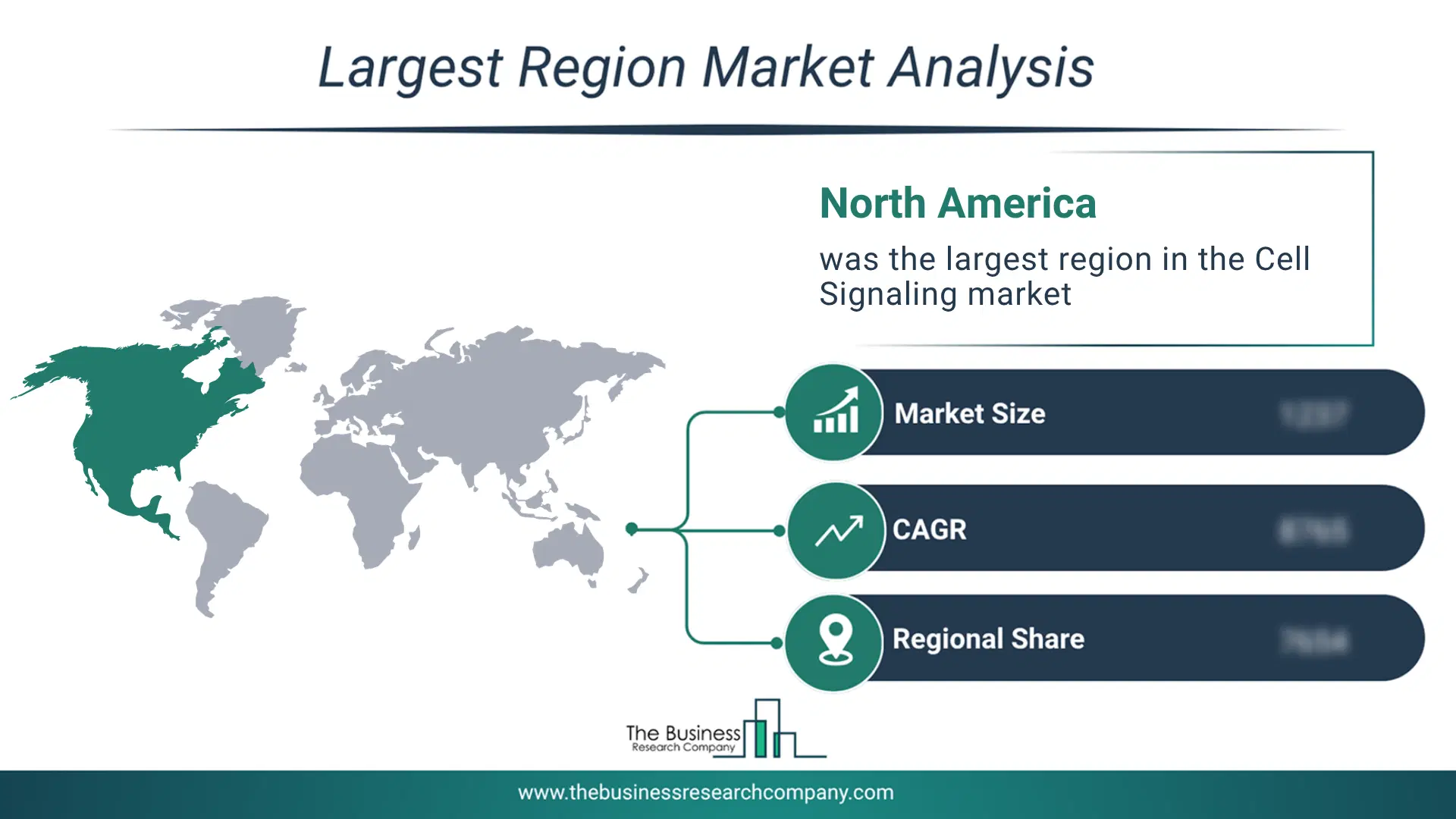
Regional Outlook
North America was the largest region in the cell signaling market in 2025. Asia-Pacific is expected to be the fastest-growing region in the forecast period. The regions covered in this market report are Asia-Pacific, South East Asia, Western Europe, Eastern Europe, North America, South America, Middle East, Africa. The countries covered in this market report are Australia, Brazil, China, France, Germany, India, Indonesia, Japan, Taiwan, Russia, South Korea, UK, USA, Canada, Italy, Spain.What Defines the Cell Signaling Market?
The cell signaling market includes revenues earned by entities by providing services such as cell signaling assays, drug discovery and development, cell signaling pathway analysis, and cell signaling research. The market value includes the value of related goods sold by the service provider or included within the service offering. The cell signaling market consists of sales of flow cytometry reagents, antibodies, recombinant proteins, enzyme-linked immunosorbent assay (ELISA) kits, small molecule inhibitors, and reporter assays. Values in this market are ‘factory gate’ values, that is the value of goods sold by the manufacturers or creators of the goods, whether to other entities (including downstream manufacturers, wholesalers, distributors and retailers) or directly to end customers. The value of goods in this market includes related services sold by the creators of the goods.How is Market Value Defined and Measured?
The market value is defined as the revenues that enterprises gain from the sale of goods and/or services within the specified market and geography through sales, grants, or donations in terms of the currency (in USD unless otherwise specified). The revenues for a specified geography are consumption values that are revenues generated by organizations in the specified geography within the market, irrespective of where they are produced. It does not include revenues from resales along the supply chain, either further along the supply chain or as part of other products.
This chart presents market attractiveness based on a quantitative evaluation of growth, competition, strategic alignment, and risk, offering a clear view of opportunity areas for decision-making. This chart is for illustrative purposes; the full report contains the complete analysis.

This chart highlights the Total Addressable Market (TAM) by estimating the maximum revenue opportunity using an assumption-driven approach, supporting strategic planning and opportunity sizing across markets. The chart is illustrative; the full report provides a more comprehensive analysis.
What Key Data and Analysis Are Included in the Cell Signaling Market Report 2026?
The cell signaling market research report is one of a series of new reports from The Business Research Company that provides market statistics, including industry global market size, regional shares, competitors with the market share, detailed market segments, market trends and opportunities, and any further data you may need to thrive in the cell signaling industry. The market research report delivers a complete perspective of everything you need, with an in-depth analysis of the current and future state of the industry.Cell Signaling Market Report Forecast Analysis
| Report Attribute | Details |
|---|---|
| Market Size Value In 2026 | $5.37 billion |
| Revenue Forecast In 2030 | $7.11 billion |
| Growth Rate | CAGR of 7.3% from 2026 to 2030 |
| Base Year For Estimation | 2025 |
| Actual Estimates/Historical Data | 2020-2025 |
| Forecast Period | 2026 - 2030 |
| Market Representation | Revenue in USD Billion and CAGR from 2026 to 2030 |
| Segments Covered | Product, Signaling Type, Pathway, Technology, Application |
| Regional Scope | Asia-Pacific, Western Europe, Eastern Europe, North America, South America, Middle East, Africa |
| Country Scope | The countries covered in the report are Australia, Brazil, China, France, Germany, India, Indonesia, Japan, Taiwan, Russia, South Korea, UK, USA, Canada, Italy, Spain |
| Key Companies Profiled | Johnson & Johnson, F. Hoffmann-La Roche Ltd., Pfizer Inc., Bayer AG, Bristol-Myers Squibb Company, Thermo Fisher Scientific Inc., Novartis AG, GlaxoSmithKline plc, Eli Lilly and Company, Gilead Sciences Inc., Danaher Corporation, Merck KGaA, Becton Dickinson and Company, Agilent Technologies Inc., PerkinElmer Inc., Beckman Coulter Inc., Bio-Rad Laboratories Inc., Qiagen N.V., Bio-Techne Corporation, Miltenyi Biotec, Promega Corporation, Janssen Pharmaceuticals Inc., Abcam plc, Horizon Discovery Ltd., Cell Signaling Technology Inc., Cisbio Bioassays, Rockland Immunochemicals Inc. |
| Customization Scope | Request for Customization |
| Pricing And Purchase Options | Explore Purchase Options |