

Cell Therapy Manufacturing Automation Market Report 2026
Global Outlook – By Component (Hardware, Software, Services), By Cell Type (T-Cells, Stem Cells, Natural Killer (NK) Cells, Other Cell Types), By Process (Upstream Processing, Downstream Processing, Fill-Finish, Quality Control, Other Processes), By End-User (Pharmaceutical And Biotechnology Companies, Research Institutes, Contract Manufacturing Organizations (CMOs), Other End-Users) – Market Size, Trends, Strategies, and Forecast to 2030
Cell Therapy Manufacturing Automation Market Overview
• Cell Therapy Manufacturing Automation market size has reached to $1.81 billion in 2025 • Expected to grow to $3.58 billion in 2030 at a compound annual growth rate (CAGR) of 14.5% • Growth Driver: Growing Demand For Gene Therapies Fueling The Growth Of The Market Due To The Need For Scalable, Standardized, And High-Quality Production Processes • Market Trend: Automation Software Integration Drives Workflow Standardization • North America was the largest region in 2025 and Asia-Pacific is the fastest growing region.Market Gains By 2030 – Top Opportunities By Segment
Market Gain identifies the most promising market opportunities by highlighting the segments or products expected to generate the highest incremental revenue growth over the next five years.
What Is Covered Under Cell Therapy Manufacturing Automation Market?
Cell therapy manufacturing automation refers to the use of automated, robot- or software-driven systems for cell isolation, expansion, processing, and quality control to improve scalability, consistency, and sterility in cell therapy production. This market includes automated closed-system bioreactors, robotic cell-handling platforms, automated cryopreservation units, integrated quality-control and monitoring tools, and software solutions for workflow control, electronic batch records, and GMP compliance. The main components of cell therapy manufacturing automation solutions are hardware, software, and services. Hardware comprises automated processing equipment, bioreactors, and integrated systems that support scalable, consistent, and compliant cell therapy production workflows. These solutions are used across cell types including T-cells, stem cells, natural killer cells, and others, applied in upstream processing, downstream processing, fill-finish, quality control, and others, among end users such as pharmaceutical and biotechnology companies, research institutes, contract manufacturing organizations, and others.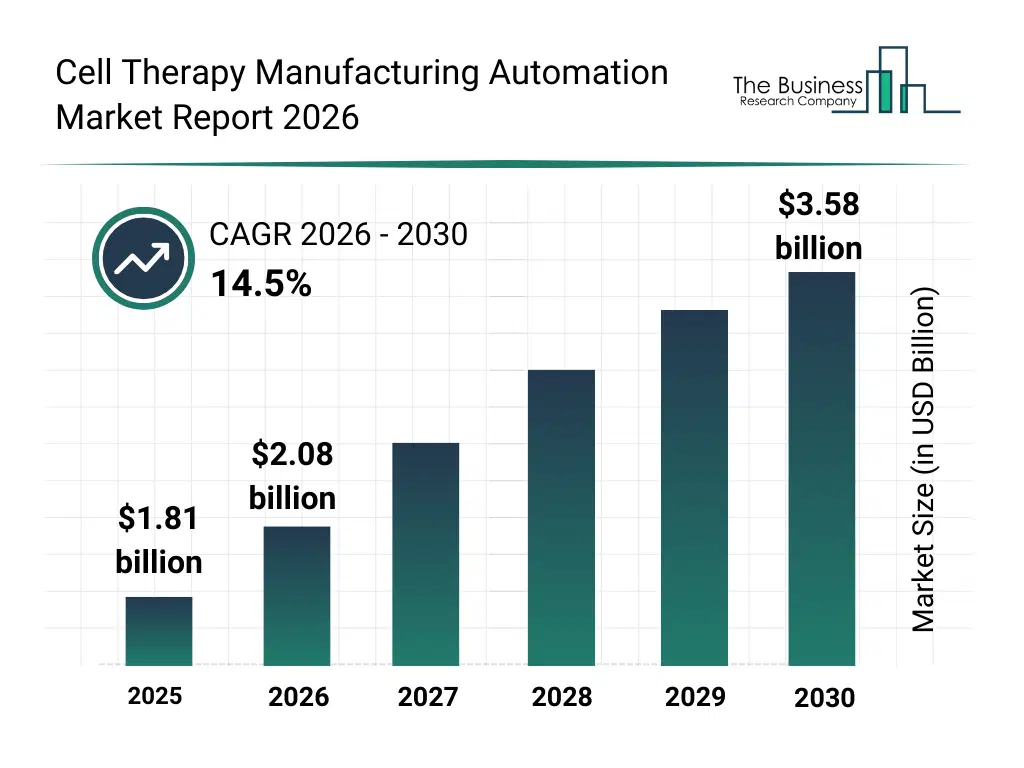
What Is The Cell Therapy Manufacturing Automation Market Size and Share 2026?
The cell therapy manufacturing market size has grown rapidly in recent years. It will grow from $1.81 billion in 2025 to $2.08 billion in 2026 at a compound annual growth rate (CAGR) of 14.8%. The growth in the historic period can be attributed to increasing cell-processing demand, growing manufacturing scalability needs, rising adoption of automated bioreactors, expansion of GMP-compliant workflows, and increasing focus on production consistency.What Is The Cell Therapy Manufacturing Automation Market Growth Forecast?
The cell therapy manufacturing market size is expected to see rapid growth in the next few years. It will grow to $3.58 billion in 2030 at a compound annual growth rate (CAGR) of 14.5%. The growth in the forecast period can be attributed to increasing personalized-therapy volumes, growing investment in automation platforms, rising need for contamination-free workflows, expansion of large-scale commercial manufacturing, and increasing regulatory-driven quality requirements. Major trends in the forecast period include technology advancements in closed systems, automation-driven process innovations, integrated workflow developments, real-time analytics research, and advanced robotics research and development.
Global Cell Therapy Manufacturing Automation Market Segmentation
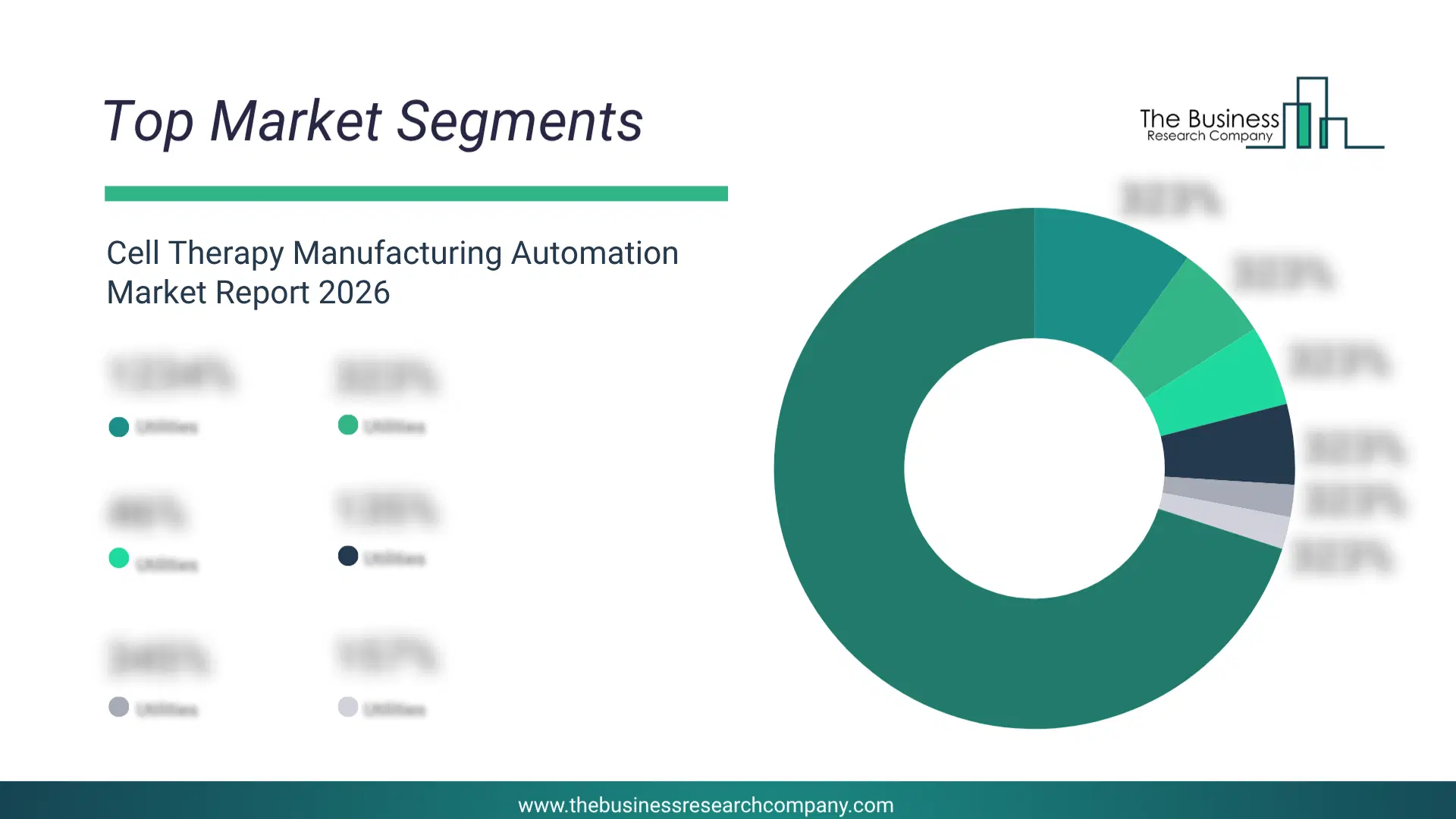
1) By Component: Hardware, Software, Services 2) By Cell Type: T-Cells, Stem Cells, Natural Killer (NK) Cells, Other Cell Types 3) By Process: Upstream Processing, Downstream Processing, Fill-Finish, Quality Control, Other Processes 4) By End-User: Pharmaceutical And Biotechnology Companies, Research Institutes, Contract Manufacturing Organizations (CMOs), Other End-Users Subsegments: 1) By Hardware: Automated Bioreactor Systems, Robotic Handling Platforms, Automated Separation Devices, Automated Expansion Units, In Line Quality Analyzers 2) By Software: Electronic Batch Record Software, Manufacturing Execution Software, Workflow Management Software, Data Monitoring Software, Compliance Management Software 3) By Services: Installation Services, Maintenance Services, Validation Services, Training Services, Technical Support Services The top segments in the cell therapy manufacturing automation market will be: • Hardware will reach $1.58 Billion by 2030. • Software will reach $1.02 Billion by 2030. • Services will reach $0.77 Billion by 2030.What Is The Driver Of The Cell Therapy Manufacturing Automation Market?
The growing demand for gene therapies is expected to propel the growth of the cell therapy manufacturing automation market going forward. Gene therapy refers to a medical technique that involves modifying or replacing defective genes to treat or prevent diseases. The increasing demand for gene therapy is due to advancements in genetic sequencing and diagnostics, which enable precise identification of disease-causing genes for targeted treatment. Cell therapy manufacturing automation supports gene therapy by streamlining and standardizing complex production processes to ensure consistent quality and scalability. It enhances therapeutic development by reducing errors, improving efficiency, and enabling reliable large-scale manufacturing of gene-modified cells. For instance, in December 2024, according to the American Society of Gene & Cell Therapy (ASGCT), a US-based non-profit medical and scientific organization, the Food and Drug Administration (FDA) approved six gene therapy products in 2023, up from five approvals in 2022. Therefore, the growing demand for gene therapies is driving the growth of the cell therapy manufacturing automation industry.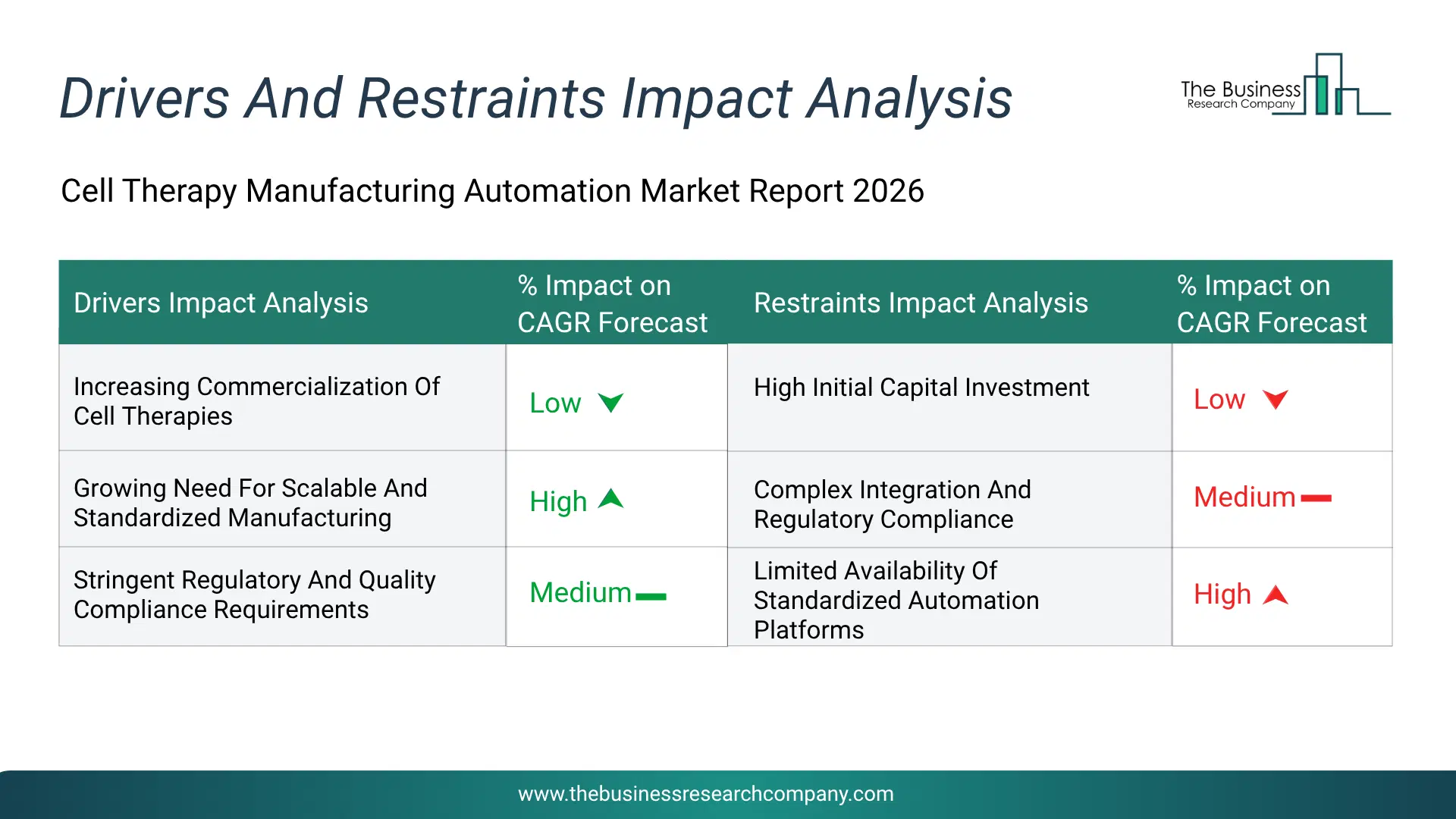
Infographic Chart Showing Key Market Drivers Analysis And Restraints For Cell Therapy Manufacturing Automation Market
The chart presents an impact analysis of key drivers and restraints, quantifying their relative influence on the market's growth rate and helping assess the balance between growth enablers and limiting factors. This chart offers a high-level perspective; the full report contains more detailed insights.
How Will The Drivers Impact Growth In The Global Cell Therapy Manufacturing Automation Market?
• Increasing Commercialization Of Cell Therapies (Low) – During the forecast period, the increasing commercialization of cell therapies is expected to become a key growth driver for the cell therapy manufacturing automation market by 2030. The increasing commercialization of cell therapies is driving the demand for automated manufacturing solutions as more therapies advance from clinical trials to large-scale production. Commercial manufacturing requires consistent product quality, higher production volumes, and strict compliance with regulatory standards, which are difficult to achieve through manual processes. Automation improves process standardization, minimizes contamination risks, and enhances production efficiency while reducing human error. It also supports scalable manufacturing to meet the growing demand for personalized and allogeneic cell therapies. • Growing Need For Scalable And Standardized Manufacturing (High) – During the forecast period, the growing need for scalable and standardized manufacturing is expected to emerge as a major factor driving the expansion of the cell therapy manufacturing automation market by 2030. The growing need for scalable and standardized manufacturing is accelerating the adoption of automation in cell therapy production. As the number of cell therapy products entering commercial markets increases, manufacturers require processes that can consistently produce high-quality products across larger production volumes. Automated systems enable standardized workflows, reduce process variability, and improve reproducibility while minimizing manual intervention. They also enhance manufacturing efficiency by supporting continuous monitoring and optimized process control. This enables companies to meet rising global demand, maintain regulatory compliance, and reduce overall production costs. • Stringent Regulatory And Quality Compliance Requirements (Medium) – During the forecast period, the stringent regulatory and quality compliance requirements is expected to act as a key growth catalyst for the cell therapy manufacturing automation market by 2030. Stringent regulatory and quality compliance requirements are driving the adoption of automation in cell therapy manufacturing to ensure consistent and compliant production processes. Regulatory agencies require manufacturers to maintain strict control over product quality, traceability, and documentation throughout the manufacturing lifecycle. Automated systems enable real-time process monitoring, electronic data recording, and standardized workflows, reducing the risk of human error and contamination. They also simplify validation and support compliance with Good Manufacturing Practice (GMP) standards. As regulatory expectations continue to evolve, manufacturers are increasingly investing in automation to improve product reliability, streamline audits, and accelerate regulatory approvals.How Will The Restraints Impact Growth In The Global Cell Therapy Manufacturing Automation Market?
• High Initial Capital Investment (Low) – During the forecast period, the high initial capital investment is a major restraint for the cell therapy manufacturing automation market, as implementing automated systems requires substantial upfront spending. Companies must invest in advanced robotics, software platforms, closed-system equipment, facility upgrades, and system validation, significantly increasing capital expenditure. Small and mid-sized biotechnology firms often face financial constraints that limit their ability to adopt these technologies. In addition, the long return on investment and ongoing maintenance costs further discourage early adoption. These financial barriers can slow the widespread deployment of automated manufacturing solutions, particularly in emerging markets and smaller production facilities. • Complex Integration And Regulatory Compliance (High) – During the forecast period, the complex integration and regulatory compliance act as significant restraints on the cell therapy manufacturing automation market. Integrating automated systems with existing manufacturing infrastructure, laboratory equipment, and digital platforms can be technically challenging and time-consuming. Manufacturers must also ensure that automated processes comply with evolving regulatory standards, including Good Manufacturing Practice (GMP) requirements and validation protocols. Frequent regulatory updates often require additional testing, documentation, and system modifications, increasing implementation costs and project timelines. These challenges can delay automation adoption, particularly for organizations with limited technical expertise or resources. • Limited Availability Of Standardized Automation Platforms (Medium) – During the forecast period, the limited availability of standardized automation platforms acts as a significant restraint on the Cell Therapy Manufacturing Automation market because the industry lacks universally accepted automation frameworks that can be applied across different cell therapy processes. Cell therapy manufacturing involves highly customized workflows, requiring automation systems to be specifically configured for different cell types, production methods, and therapeutic applications. The absence of common standards increases development complexity and integration requirements for manufacturers. Companies often need to invest additional resources in customizing automation solutions to meet specific production needs. These challenges can delay implementation and increase overall project costs. As a result, limited standardization can slow the adoption of automation technologies in cell therapy manufacturing.Key Players In The Global Cell Therapy Manufacturing Automation Market
Major companies operating in the cell therapy manufacturing automation market are Thermo Fisher Scientific Inc., Merck KGaA, Fujifilm Holdings Corporation, Corning Incorporated, Lonza Group AG, Cytiva, WuXi AppTecCo. Ltd., Hitachi High Technologies Corp., CatalentInc., Sartorius AG, Beckman Coulter Life Sciences, Terumo BCT Inc., Miltenyi Biotec, Oxford Biomedica Plc, National Resilience LLC, Minaris Regenerative Medicine LLC, Tulip Interfaces Inc., Invetech Pty Ltd., BlueRock Therapeutics LLC, Cellares Inc., Ascential Medical & Life Sciences, Cell and Gene Therapy Catapult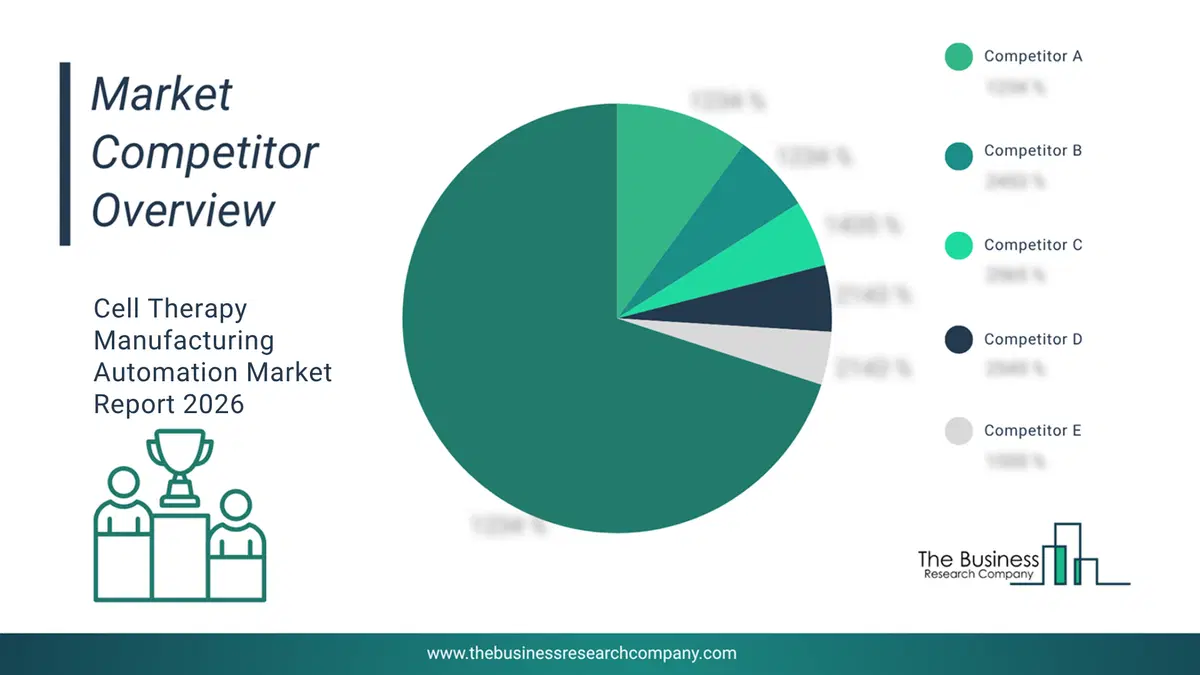
This chart is for illustrative purposes; the full report includes a detailed competitor analysis and comprehensive overview of the top 10 companies in the market.
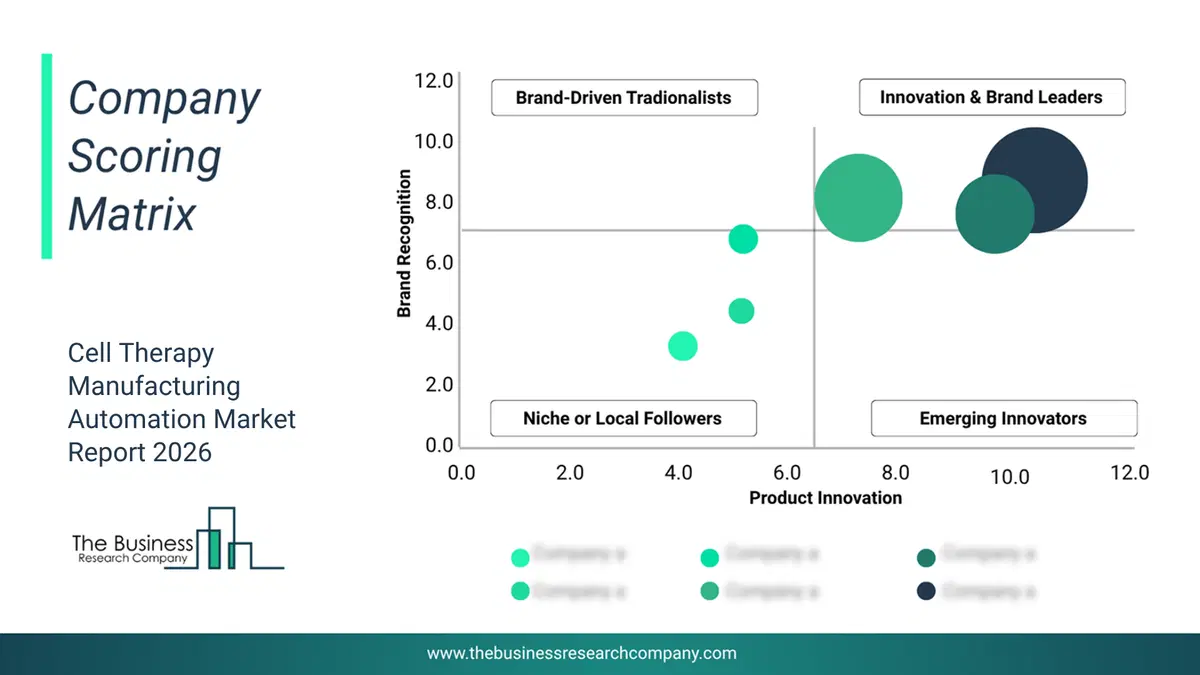
This chart maps companies by product innovation and brand strength, with bubble size indicating relative revenue, helping identify market leaders, challengers, and niche players. This is an illustrative chart; the full report provides a complete and accurate competitive analysis.
Global Cell Therapy Manufacturing Automation Market Trends and Insights
Major companies operating in the cell therapy manufacturing automation market are focusing on developing advanced solutions, such as automated cell therapy system, to connect multi‑stage manufacturing workflows into unified, validated digital frameworks that reduce manual touchpoints and support regulatory compliance. An automated cell therapy system refers to an off‑the‑shelf validated automation solution that digitally connects cell therapy instruments (e.g., magnetic separation, centrifugation, electroporation, incubators) into a single interface, enabling traceability, repeatability, and cGMP compliance across production stages. For instance, in January 2024, Thermo Fisher Scientific Inc., a US‑based life sciences company, launched Gibco CTS Cellmation Software, a first-of-its-kind automation solution. It is a first-of-its-kind, off-the-shelf validated software solution that digitally connects instruments from across Thermo Fisher’s cell therapy portfolio to automate manufacturing workflows. It includes a pre-validated automation system powered by Emerson’s DeltaV technology, enabling seamless integration and control of multiple instruments without costly custom projects, and it establishes traceable, repeatable workflows that help ensure compliance with cGMP and data security regulations, reducing manual touchpoints for ground therapy developers.What Are Latest Mergers And Acquisitions In The Cell Therapy Manufacturing Automation Market?
In July 2024, Cellular Origins Ltd., a UK-based provider of automated cell and gene therapy manufacturing solutions, acquired the Autologous Cell Therapy Industrial Automation (ACTIA) Platform IP for an undisclosed amount. With this acquisition, Cellular Origins expanded its automated manufacturing technology portfolio by advancing the Constellation robotic platform to improve scalability, reduce production bottlenecks, and support industrialized cell therapy manufacturing workflows. ACTIA Platform IP is a US-based intellectual property platform focused specifically on industrial automation solutions for autologous cell therapy manufacturing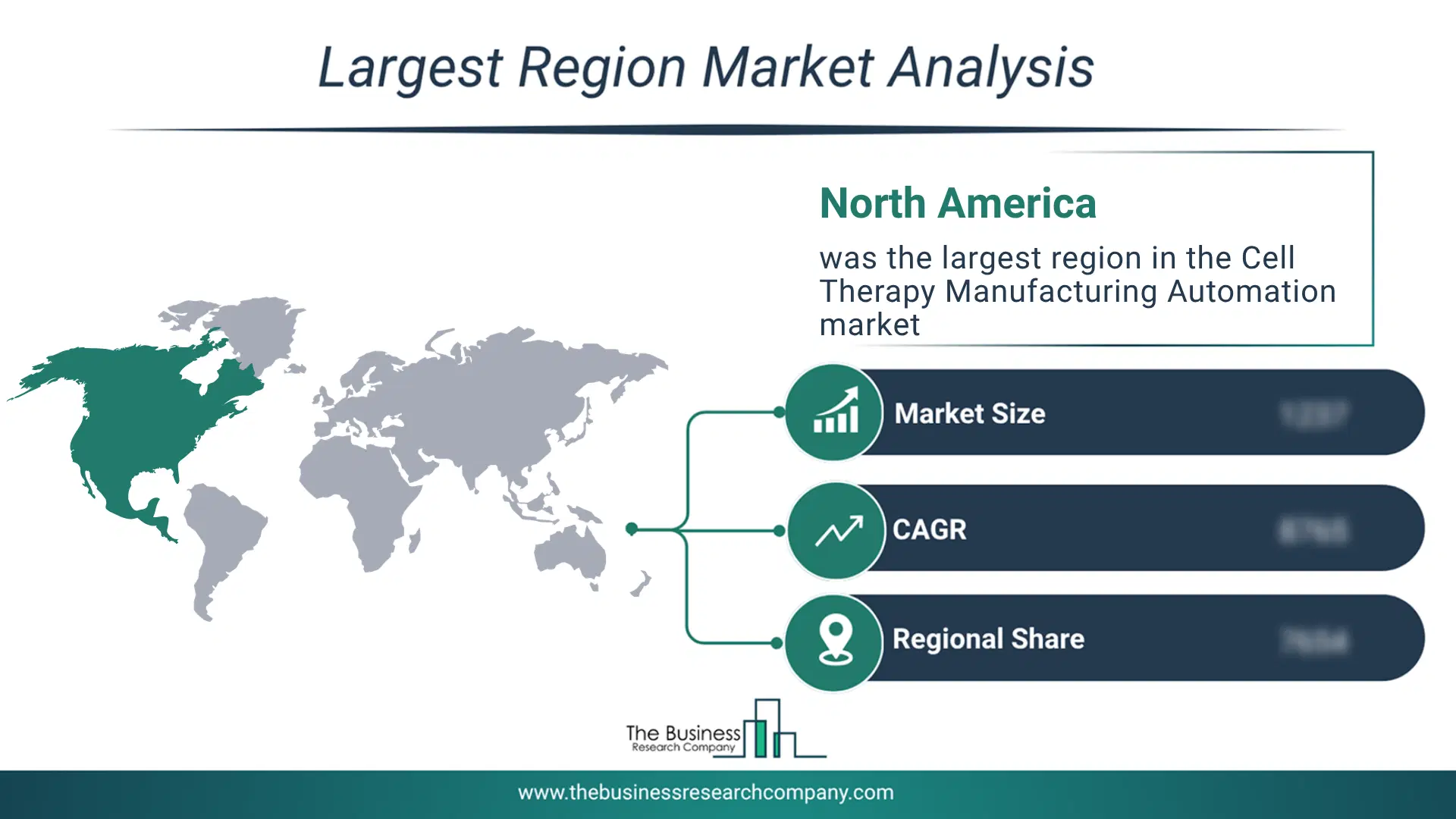
Regional Insights
North America was the largest region in the cell therapy manufacturing market in 2025. Asia-Pacific is expected to be the fastest-growing region in the forecast period. The regions covered in this market report are Asia-Pacific, South East Asia, Western Europe, Eastern Europe, North America, South America, Middle East, Africa. The countries covered in this market report are Australia, Brazil, China, France, Germany, India, Indonesia, Japan, Taiwan, Russia, South Korea, UK, USA, Canada, Italy, Spain.What Defines the Cell Therapy Manufacturing Automation Market?
The cell therapy manufacturing automation market consists of revenues earned by entities by providing services such as automated cell processing, workflow integration, process monitoring and control, digital manufacturing execution, and equipment validation and maintenance. The market value includes the value of related goods sold by the service provider or included within the service offering. The cell therapy manufacturing automation market also includes sales of automated cell culture systems, robotic liquid handling platforms, closed system bioreactors, process control software, and integrated manufacturing hardware. Values in this market are ‘factory gate’ values, that is, the value of goods sold by the manufacturers or creators of the goods, whether to other entities (including downstream manufacturers, wholesalers, distributors, and retailers) or directly to end customers. The value of goods in this market includes related services sold by the creators of the goods.How is Market Value Defined and Measured?
The market value is defined as the revenues that enterprises gain from the sale of goods and/or services within the specified market and geography through sales, grants, or donations in terms of the currency (in USD unless otherwise specified). The revenues for a specified geography are consumption values that are revenues generated by organizations in the specified geography within the market, irrespective of where they are produced. It does not include revenues from resales along the supply chain, either further along the supply chain or as part of other products.
This chart presents market attractiveness based on a quantitative evaluation of growth, competition, strategic alignment, and risk, offering a clear view of opportunity areas for decision-making. This chart is for illustrative purposes; the full report contains the complete analysis.

This chart highlights the Total Addressable Market (TAM) by estimating the maximum revenue opportunity using an assumption-driven approach, supporting strategic planning and opportunity sizing across markets. The chart is illustrative; the full report provides a more comprehensive analysis.
What Key Data and Analysis Are Included in the Cell Therapy Manufacturing Automation Market Report 2026?
The cell therapy manufacturing automation market research report is one of a series of new reports from The Business Research Company that provides market statistics, including industry global market size, regional shares, competitors with the market share, detailed market segments, market trends and opportunities, and any further data you may need to thrive in the cell therapy manufacturing automation industry. The market research report delivers a complete perspective of everything you need, with an in-depth analysis of the current and future state of the industry.Cell Therapy Manufacturing Automation Market Report Forecast Analysis
| Report Attribute | Details |
|---|---|
| Market Size Value In 2026 | $2.08 billion |
| Revenue Forecast In 2030 | $3.58 billion |
| Growth Rate | CAGR of 14.8% from 2026 to 2030 |
| Base Year For Estimation | 2025 |
| Actual Estimates/Historical Data | 2020-2025 |
| Forecast Period | 2026 - 2030 |
| Market Representation | Revenue in USD Billion and CAGR from 2026 to 2030 |
| Segments Covered | Component, Cell Type, Process, End-User |
| Regional Scope | Asia-Pacific, Western Europe, Eastern Europe, North America, South America, Middle East, Africa |
| Country Scope | The countries covered in the report are Australia, Brazil, China, France, Germany, India, ... |
| Key Companies Profiled | Thermo Fisher Scientific Inc., Merck KGaA, Fujifilm Holdings Corporation, Corning Incorporated, Lonza Group AG, Cytiva, WuXi AppTecCo. Ltd., Hitachi High Technologies Corp., CatalentInc., Sartorius AG, Beckman Coulter Life Sciences, Terumo BCT Inc., Miltenyi Biotec, Oxford Biomedica Plc, National Resilience LLC, Minaris Regenerative Medicine LLC, Tulip Interfaces Inc., Invetech Pty Ltd., BlueRock Therapeutics LLC, Cellares Inc., Ascential Medical & Life Sciences, Cell and Gene Therapy Catapult |
| Customization Scope | Request for Customization |
| Pricing And Purchase Options | Explore Purchase Options |