

Cell Viability Assays Market Report 2026
Global Outlook – By Product (Consumables, Instruments), By Application (Basic Research, Stem Cell Research, Drug Discovery And Development, Clinical And Diagnostic Applications, Other Applications), By End-User (Academic And Research Institutes, Pharmaceutical And Biotechnology Companies, Hospital And Diagnostic Laboratories, Other End-Users) - Market Size, Trends, Strategies, and Forecast to 2030
Cell Viability Assays Market Overview
• Cell Viability Assays market size has reached to $1.73 billion in 2025 • Expected to grow to $2.72 billion in 2030 at a compound annual growth rate (CAGR) of 9.3% • Growth Driver: Role Of Cell-Based Therapeutics In Driving The Growth Of The Cell Viability Assays Market • Market Trend: Innovative Cell Screening Technologies Revolutionize Drug Discovery • North America was the largest region in 2025 and Asia-Pacific is the fastest growing region.What Is Covered Under Cell Viability Assays Market?
Cell viability assays are methods used to determine the ability of cells, tissues, or organs to maintain or recover a state of survival. Cell viability assays are used to evaluate the best growth conditions for cells in culture in response to external stimuli, chemicals, and medicinal treatments when determining optimal growth conditions in cell culture. The main products of cell viability assays are consumables and instruments. Consumables in cell viability assays are things that are used only once or need to be replaced on a regular basis. They are used for various applications including basic research, stem cell research, drug discovery and development, clinical and diagnostic applications, and others by academic and research institutes, pharmaceutical and biotechnology companies, hospital and diagnostic laboratories, and others.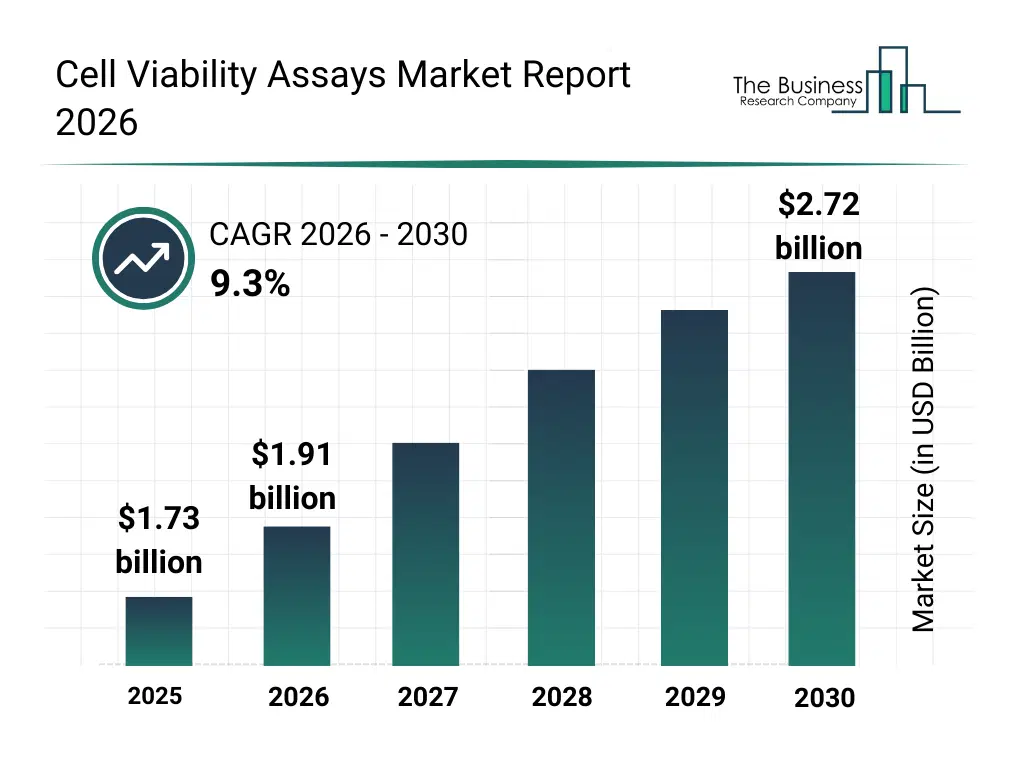
What Is The Cell Viability Assays Market Size and Share 2026?
The cell viability assays market size has grown rapidly in recent years. It will grow from $1.73 billion in 2025 to $1.91 billion in 2026 at a compound annual growth rate (CAGR) of 10.5%. The growth in the historic period can be attributed to expansion of in vitro research activities, increasing pharmaceutical R&D spending, growth in toxicology testing, rising use of cell culture models, availability of standardized assay kits.What Is The Cell Viability Assays Market Growth Forecast?
The cell viability assays market size is expected to see strong growth in the next few years. It will grow to $2.72 billion in 2030 at a compound annual growth rate (CAGR) of 9.3%. The growth in the forecast period can be attributed to increasing demand for high-throughput drug discovery, rising adoption of automated assay platforms, expansion of personalized medicine research, growing focus on assay miniaturization, increasing integration of imaging-based viability analysis. Major trends in the forecast period include increasing adoption of high-sensitivity viability assays, rising use of microplate-based detection systems, growing demand for multiparametric cell health analysis, expansion of drug screening applications, enhanced focus on reproducible assay protocols.
Global Cell Viability Assays Market Segmentation
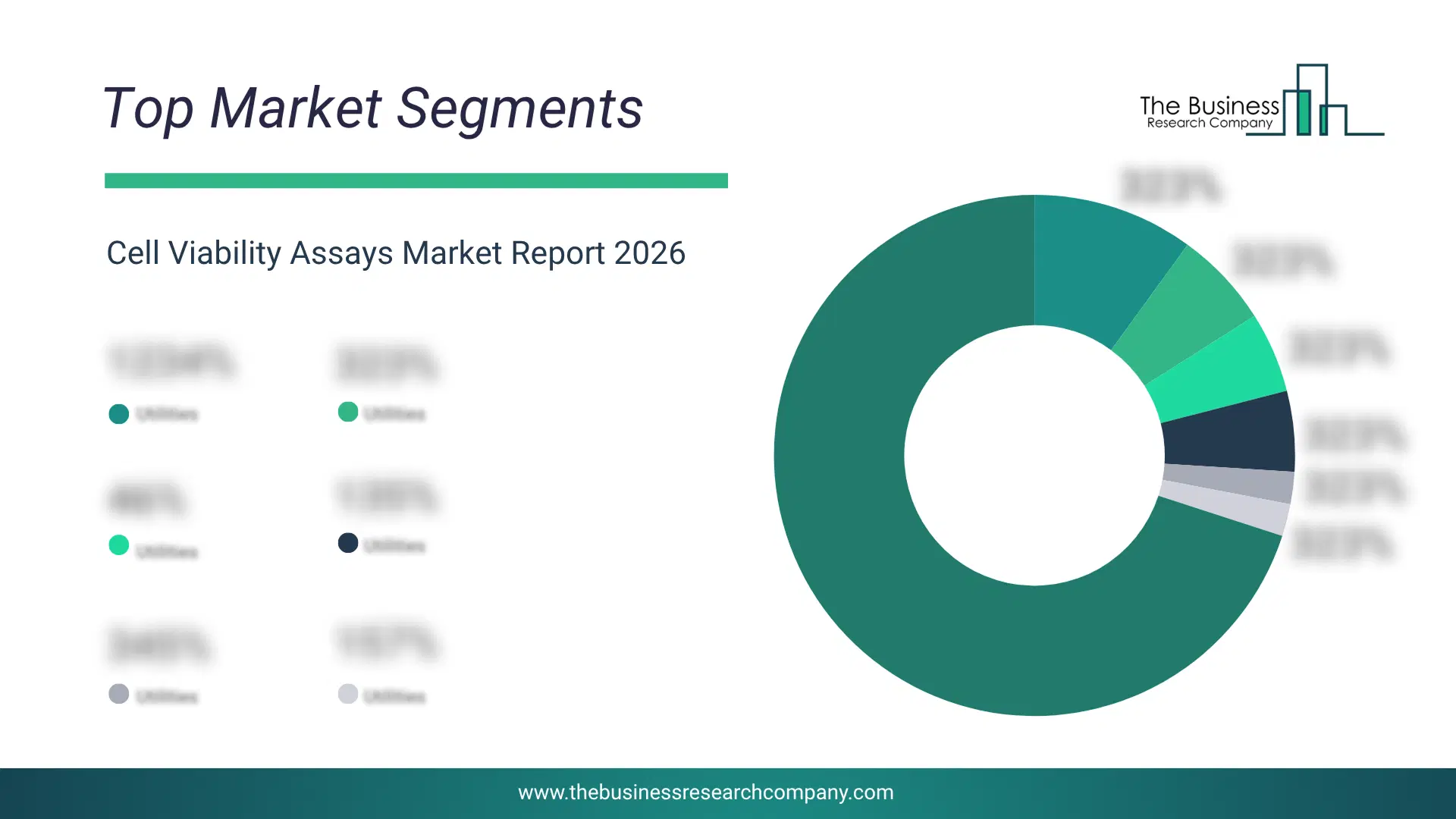
1) By Product: Consumables, Instruments 2) By Application: Basic Research, Stem Cell Research, Drug Discovery And Development, Clinical And Diagnostic Applications, Other Applications 3) By End-User: Academic And Research Institutes, Pharmaceutical And Biotechnology Companies, Hospital And Diagnostic Laboratories, Other End-Users Subsegments: 1) By Consumables: Reagents, Kits, Assay Plates (96-Well plates), Microplates 2) By Instruments: Spectrophotometers, Fluorometers, Microplate Readers, Flow Cytometers, Imaging SystemsWhat Is The Driver Of The Cell Viability Assays Market?
The increasing cell-based therapeutics is expected to propel the growth of the cell viability assay market going forward. Cell-based therapeutics refer to treatments that use living cells to repair or replace damaged tissue, treat diseases, or restore normal function. Cell-based therapeutics are fueled by advances in biotechnology, increasing investment in regenerative medicine, growing acceptance and adoption of cell therapies, and improvements in cell engineering and manufacturing technologies. Cell viability assays support cell-based therapeutics by ensuring the health, functionality, and safety of therapeutic cells, thereby optimizing treatment efficacy and quality control. For instance, in 2023, according to the American Society of Gene & Cell Therapy, a US-based non-profit medical and scientific organization, the number of gene therapies in Phase III clinical trials grew by 10% in Q3 2023, the first quarterly increase since Q3 2022. Therefore, increasing cell-based therapeutics is driving the growth of the cell viability assay industry.Key Players In The Global Cell Viability Assays Market
Major companies operating in the cell viability assays market are Thermo Fisher Scientific Inc., Danaher Corporation, Merck KGaA, Becton, Dickinson, and Company, Agilent Technologies Inc., Lonza Group Ltd., PerkinElmer Inc., Sartorius AG, Charles River Laboratories, Bio-Rad Laboratories Inc., Bio-Techne Corporation, Beckman Coulter Inc., Promega Corporation, Abcam Limited, MP Biomedicals, Cayman Chemical Company, Cell Signaling Technology Inc., Enzo Biochem Inc., Creative Bioarray, Abnova Corporation, Biotium, Canvax, Nexcelom Bioscience LLC, G-Biosciences, AAT Bioquest Inc.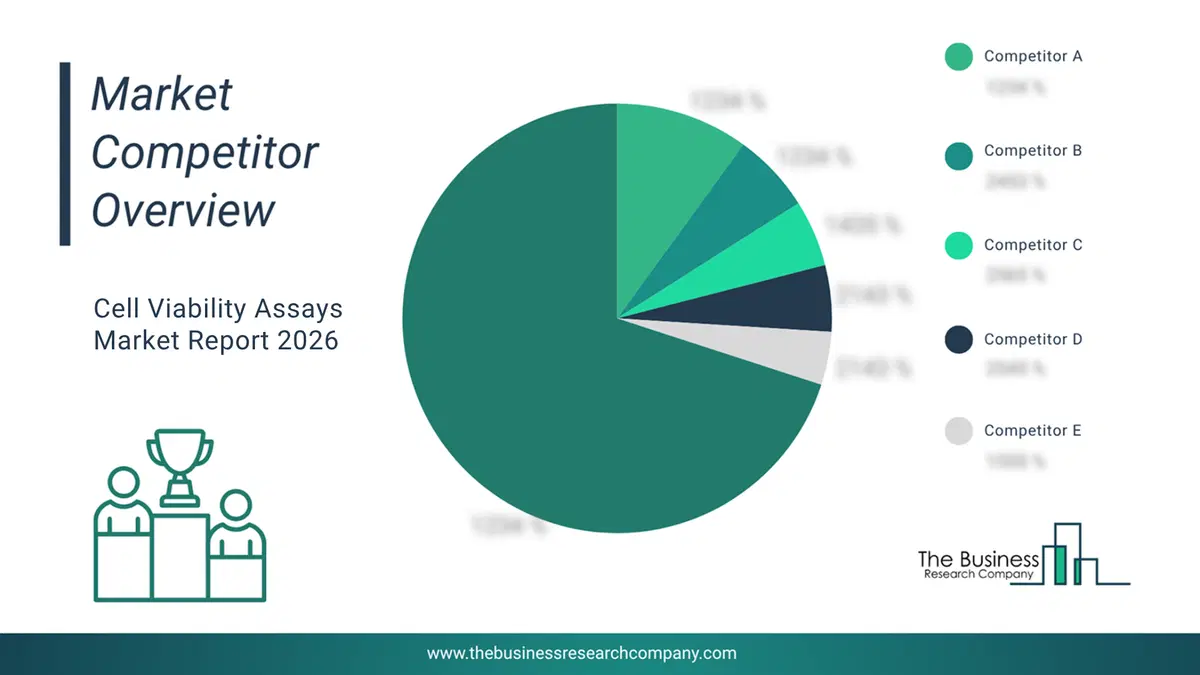
This chart is for illustrative purposes; the full report includes a detailed competitor analysis and comprehensive overview of the top 10 companies in the market.
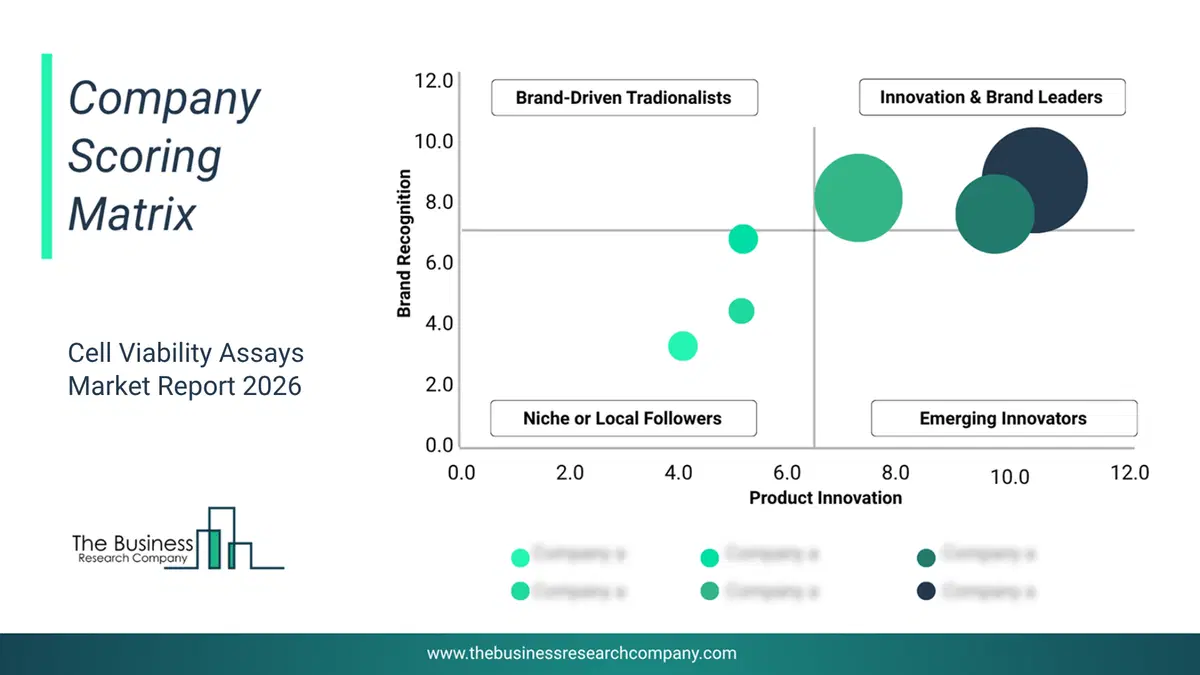
This chart maps companies by product innovation and brand strength, with bubble size indicating relative revenue, helping identify market leaders, challengers, and niche players. This is an illustrative chart; the full report provides a complete and accurate competitive analysis.
Global Cell Viability Assays Market Trends and Insights
Major companies operating in the cell viability assays market are developing innovative cell screening technologies to improve accuracy and speed up drug discovery. Cell screening technologies enhance cell viability assays by enabling high-throughput, precise, and rapid analysis of cell health and responses, thus optimizing experimental conditions and improving the development of therapeutic strategies. For instance, in May 2024, Arralyze, a Germany-based technology company, introduced CellShepherd, a cutting-edge platform for single-cell analysis. It utilizes proprietary nanowell glass arrays to miniaturize cell-based assays for real-time monitoring. The autonomous system offers precise cell dispensing, co-culturing in sterile conditions, and imaging with brightfield and fluorescent channels. The AI-driven analysis guarantees accurate cell counting and tracking. This user-friendly platform addresses the increasing need for precise single-cell research in biomedical and life science applications.What Are Latest Mergers And Acquisitions In The Cell Viability Assays Market?
In September 2025, Fluidic Sciences, a US-based life sciences company, acquired the business and assets of Sphere Bio for an undisclosed amount. With this acquisition, Fluidic Sciences aims to accelerate single-cell analysis and protein interaction discovery, enhance its research capabilities, expand its technological portfolio, and strengthen its position in the biopharmaceutical and biotechnology markets. Sphere Bio is a US-based manufacturing company specializing cell viability assays.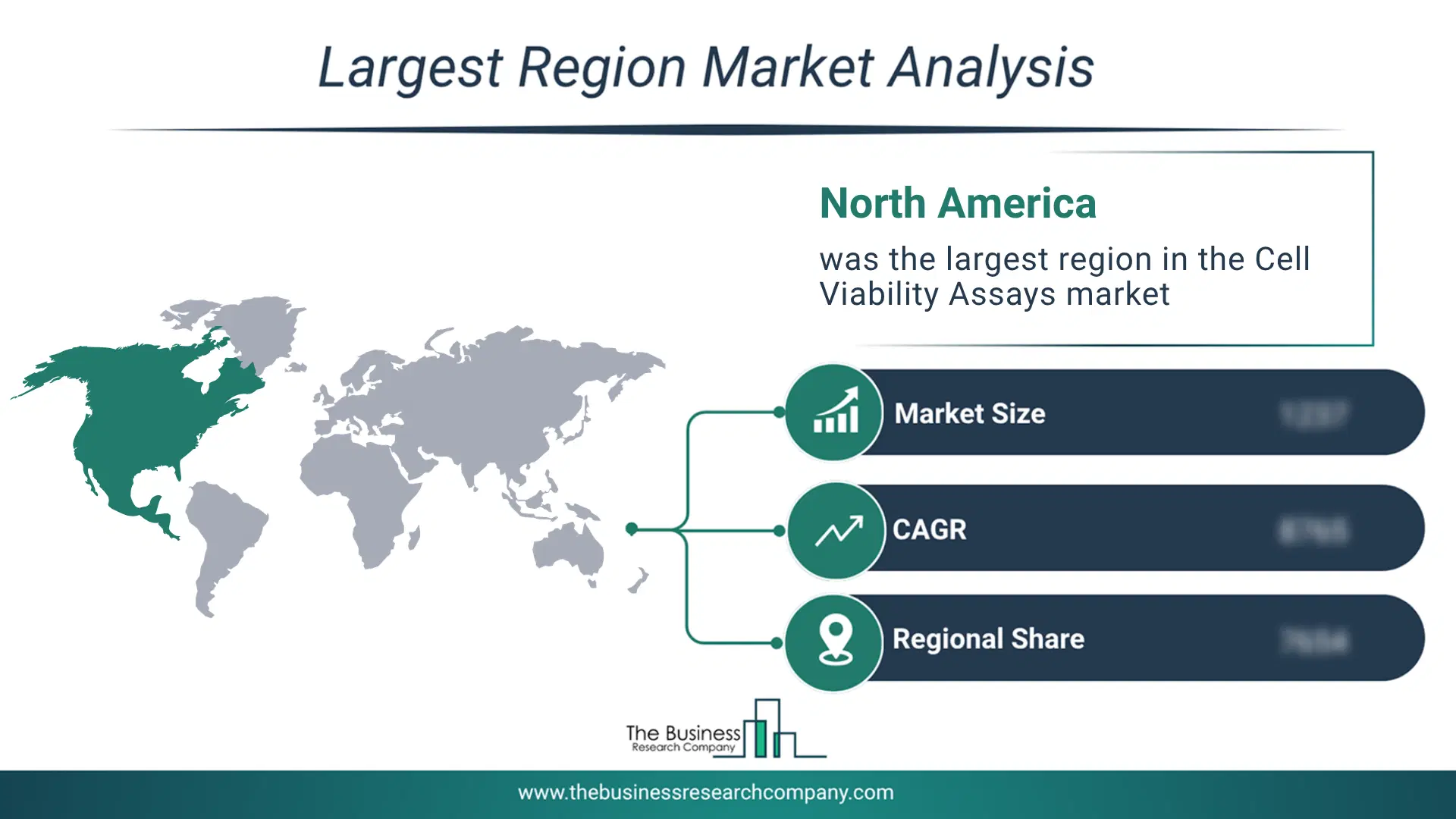
Regional Outlook
North America was the largest region in the cell viability assays market in 2025. Asia-Pacific is expected to be the fastest-growing region in the forecast period. The regions covered in this market report are Asia-Pacific, South East Asia, Western Europe, Eastern Europe, North America, South America, Middle East, Africa. The countries covered in this market report are Australia, Brazil, China, France, Germany, India, Indonesia, Japan, Taiwan, Russia, South Korea, UK, USA, Canada, Italy, Spain.What Defines the Cell Viability Assays Market?
The cell viability assays market consists of revenues earned by entities by providing services such as assay development services, assay validation services, cell culture services, and data analysis services. The market value includes the value of related goods sold by the service provider or included within the service offering. The cell viability assays market also includes sales of microscopes, imaging systems, incubators, plate readers, and automated liquid handling systems. Values in this market are ‘factory gate’ values, that is the value of goods sold by the manufacturers or creators of the goods, whether to other entities (including downstream manufacturers, wholesalers, distributors and retailers) or directly to end customers. The value of goods in this market includes related services sold by the creators of the goods.How is Market Value Defined and Measured?
The market value is defined as the revenues that enterprises gain from the sale of goods and/or services within the specified market and geography through sales, grants, or donations in terms of the currency (in USD unless otherwise specified). The revenues for a specified geography are consumption values that are revenues generated by organizations in the specified geography within the market, irrespective of where they are produced. It does not include revenues from resales along the supply chain, either further along the supply chain or as part of other products.
This chart presents market attractiveness based on a quantitative evaluation of growth, competition, strategic alignment, and risk, offering a clear view of opportunity areas for decision-making. This chart is for illustrative purposes; the full report contains the complete analysis.

This chart highlights the Total Addressable Market (TAM) by estimating the maximum revenue opportunity using an assumption-driven approach, supporting strategic planning and opportunity sizing across markets. The chart is illustrative; the full report provides a more comprehensive analysis.
What Key Data and Analysis Are Included in the Cell Viability Assays Market Report 2026?
The cell viability assays market research report is one of a series of new reports from The Business Research Company that provides market statistics, including industry global market size, regional shares, competitors with the market share, detailed market segments, market trends and opportunities, and any further data you may need to thrive in the cell viability assays industry. The market research report delivers a complete perspective of everything you need, with an in-depth analysis of the current and future state of the industry.Cell Viability Assays Market Report Forecast Analysis
| Report Attribute | Details |
|---|---|
| Market Size Value In 2026 | $1.91 billion |
| Revenue Forecast In 2030 | $2.72 billion |
| Growth Rate | CAGR of 9.3% from 2026 to 2030 |
| Base Year For Estimation | 2025 |
| Actual Estimates/Historical Data | 2020-2025 |
| Forecast Period | 2026 - 2030 |
| Market Representation | Revenue in USD Billion and CAGR from 2026 to 2030 |
| Segments Covered | Product, Application, End-User |
| Regional Scope | Asia-Pacific, Western Europe, Eastern Europe, North America, South America, Middle East, Africa |
| Country Scope | The countries covered in the report are Australia, Brazil, China, France, Germany, India, Indonesia, Japan, Taiwan, Russia, South Korea, UK, USA, Canada, Italy, Spain |
| Key Companies Profiled | Thermo Fisher Scientific Inc., Danaher Corporation, Merck KGaA, Becton, Dickinson, and Company, Agilent Technologies Inc., Lonza Group Ltd., PerkinElmer Inc., Sartorius AG, Charles River Laboratories, Bio-Rad Laboratories Inc., Bio-Techne Corporation, Beckman Coulter Inc., Promega Corporation, Abcam Limited, MP Biomedicals, Cayman Chemical Company, Cell Signaling Technology Inc., Enzo Biochem Inc., Creative Bioarray, Abnova Corporation, Biotium, Canvax, Nexcelom Bioscience LLC, G-Biosciences, AAT Bioquest Inc. |
| Customization Scope | Request for Customization |
| Pricing And Purchase Options | Explore Purchase Options |