

Cellulose Bioplastic Market Report 2026
Global Outlook – By Product (Cellulose Acetate, Regenerated Cellulose, Cellulose Ester), By Source (Wood Based Cellulose, Cotton Based Cellulose, Agricultural Residue Based Cellulose), By End User (Packaging Industry, Food And Beverage Industry, Automotive Industry) – Market Size, Trends, Strategies, and Forecast to 2030
Cellulose Bioplastic Market Overview
• Cellulose Bioplastic market size has reached to $2.5 billion in 2025 • Expected to grow to $4.99 billion in 2030 at a compound annual growth rate (CAGR) of 14.7% • Growth Driver: Rising Demand For Sustainable Packaging Driving The Growth Of The Market Due To Reduce Material Usage And Lower Plastic Waste • Market Trend: Strategic Partnerships Driving Fully Compostable Food Packaging Innovation • North America was the largest region in 2025 and Asia-Pacific is the fastest growing region.What Is Covered Under Cellulose Bioplastic Market?
Cellulose bioplastic is a type of bio-based and often biodegradable plastic derived from cellulose, a naturally occurring polymer found in plant cell walls. It is used as an environmentally friendly alternative to conventional petroleum-based plastics due to its renewable source, biodegradability, and reduced environmental footprint. The main products of cellulose bioplastic include cellulose acetate, regenerated cellulose, and cellulose ester. Cellulose acetate refers to a biodegradable thermoplastic derived from cellulose through acetylation, offering transparency, toughness, and versatility for a wide range of sustainable applications. These bioplastics are produced from wood based cellulose, cotton based cellulose, and agricultural residue based cellulose and are utilized by end users including packaging industry, food and beverage industry, and automotive industry.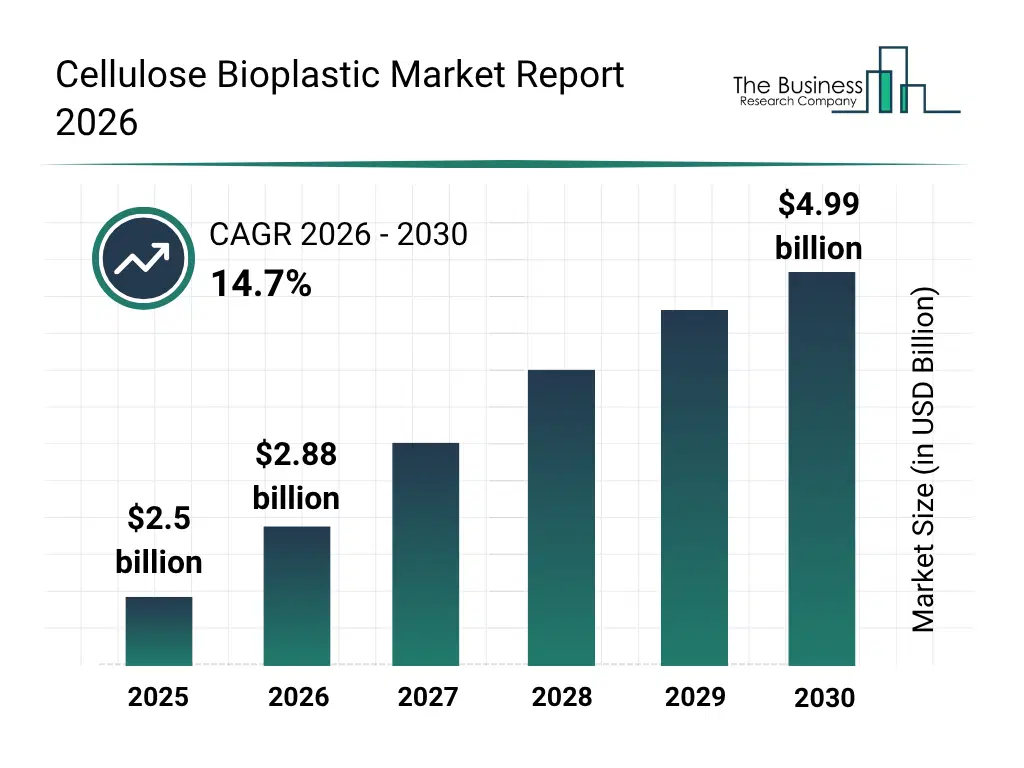
What Is The Cellulose Bioplastic Market Size and Share 2026?
The cellulose bioplastic market size has grown rapidly in recent years. It will grow from $2.5 billion in 2025 to $2.88 billion in 2026 at a compound annual growth rate (CAGR) of 15.1%. The growth in the historic period can be attributed to growing environmental awareness, increasing restrictions on single use plastics, rising demand for renewable materials, expansion of sustainable packaging applications, growing consumer preference for eco friendly products.What Is The Cellulose Bioplastic Market Growth Forecast?
The cellulose bioplastic market size is expected to see rapid growth in the next few years. It will grow to $4.99 billion in 2030 at a compound annual growth rate (CAGR) of 14.7%. The growth in the forecast period can be attributed to increasing investment in bio based material production, growing demand for compostable packaging solutions, rising adoption across automotive applications, expansion of cellulose feedstock availability, increasing focus on circular material economy. Major trends in the forecast period include increasing adoption of biodegradable packaging materials, growing demand for renewable cellulose feedstocks, rising development of high performance cellulose bioplastics, expansion of compostable consumer product applications, increasing focus on sustainable material substitution.
Global Cellulose Bioplastic Market Segmentation
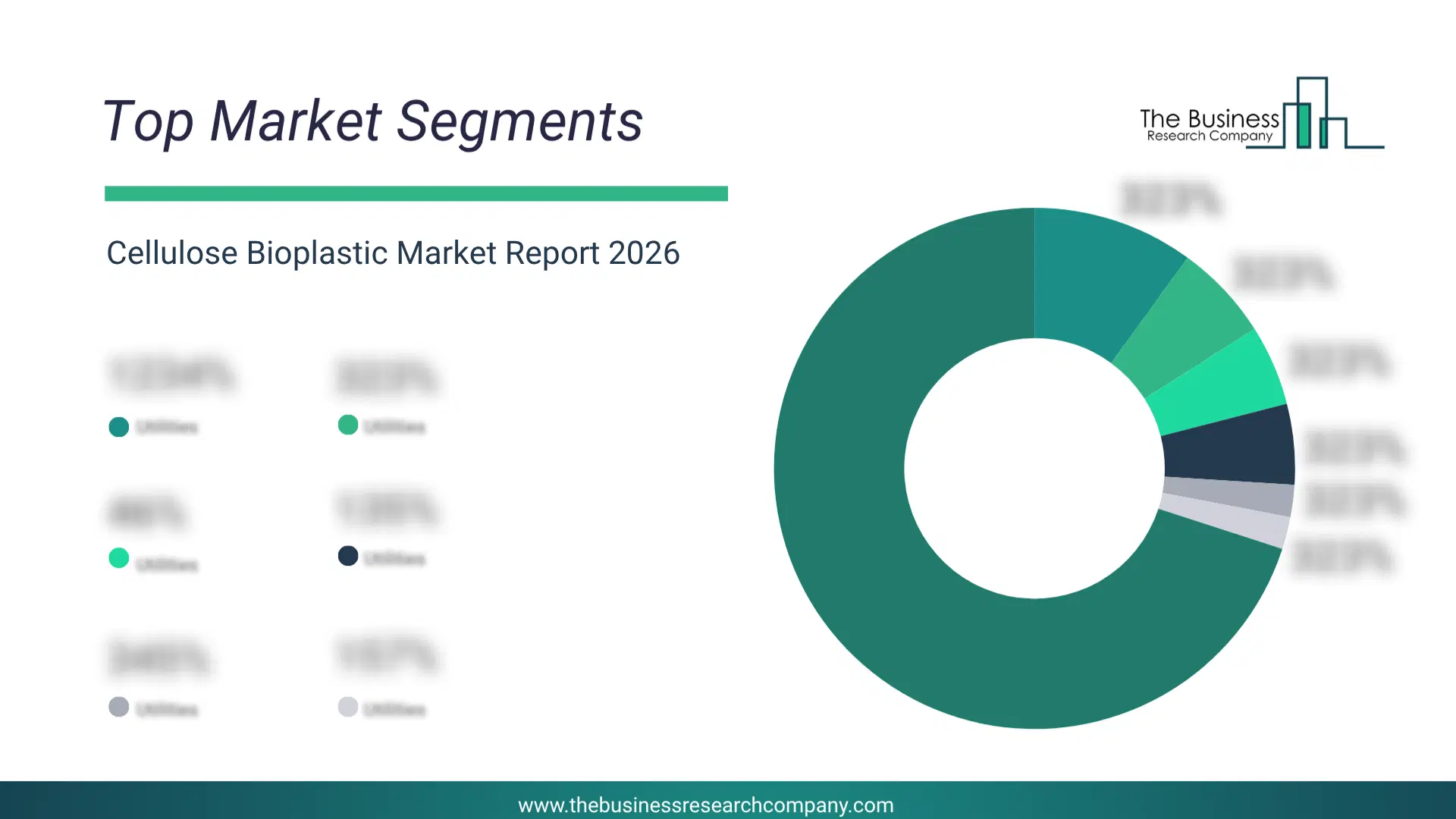
2) By Source: Wood Based Cellulose, Cotton Based Cellulose, Agricultural Residue Based Cellulose 3) By End User: Packaging Industry, Food And Beverage Industry, Automotive Industry Subsegments: 1) By Cellulose Acetate: Cellulose Acetate Film, Cellulose Acetate Fiber, Cellulose Acetate Sheet, Plasticized Cellulose Acetate 2) By Regenerated Cellulose: Regenerated Cellulose Film, Regenerated Cellulose Fiber, Regenerated Cellulose Sheet, Regenerated Cellulose Packaging Grade 3) By Cellulose Ester: Cellulose Nitrate, Cellulose Acetate Butyrate, Cellulose Acetate Propionate, Cellulose Mixed EstersWhat Are The Drivers Of The Cellulose Bioplastic Market?
The rising demand for sustainable packaging is expected to propel the growth of the cellulose bioplastic market going forward. Sustainable packaging is the development and use of packaging solutions that minimize environmental impact through reduced material usage, recyclability, and efficient resource utilization. Sustainable packaging is increasing due to rising regulatory pressure on reducing plastic waste and promoting eco-friendly materials. Cellulose bioplastic enables sustainable packaging by serving as a renewable, biodegradable, and compostable alternative to conventional plastics, thereby reducing dependence on fossil-based materials and lowering environmental pollution. For instance, in April 2023, according to the 2023 Buying Green Report by Trivium Packaging, a Netherlands-based sustainable packaging company, 82% of consumers expressed willingness to pay more for sustainable packaging, reflecting a four-percentage-point increase from 2022. Therefore, the rising demand for sustainable packaging is driving the growth of the cellulose bioplastic industry. The growth in e-commerce is expected to propel the growth of the cellulose bioplastic market going forward. E-commerce refers to the online buying and selling of products and services through digital platforms, websites, and mobile applications. Growth in e-commerce is primarily due to increased internet penetration, which has enabled more people to access online platforms, shop conveniently, and engage in digital transactions from anywhere. Growth in e-commerce is accelerating the demand for sustainable, lightweight, and compostable packaging solutions, thereby driving the adoption of cellulose bioplastic as an eco-friendly alternative to conventional plastic packaging. For instance, in February 2025, according to the Census Bureau, a US-based federal government's largest statistical agency, retail e-commerce sales reached $308.9 billion in the fourth quarter of 2024, reflecting a 9.4% increase compared to the fourth quarter of 2023. Therefore, the growth in e-commerce is driving the growth of the cellulose bioplastic industry.Key Players In The Global Cellulose Bioplastic Market
Major companies operating in the cellulose bioplastic market are Eastman Chemical Company, Celanese Corporation, Sappi Limited, Nippon Paper Industries Co. Ltd., Rayonier Advanced Materials Inc., Daicel Corporation, Futamura Chemical Co. Ltd., Borregaard ASA, Cerdia International GmbH, Mazzucchelli 1849 S.p.A., FKuR Kunststoff GmbH, Green Dot Bioplastics LLC, Rotuba Extruders Inc., Tecnaro GmbH, Bio4Pack GmbH, Nordic Bioproducts Group Oy, Papkot, Bioform Technologies Inc., Cellugy ApS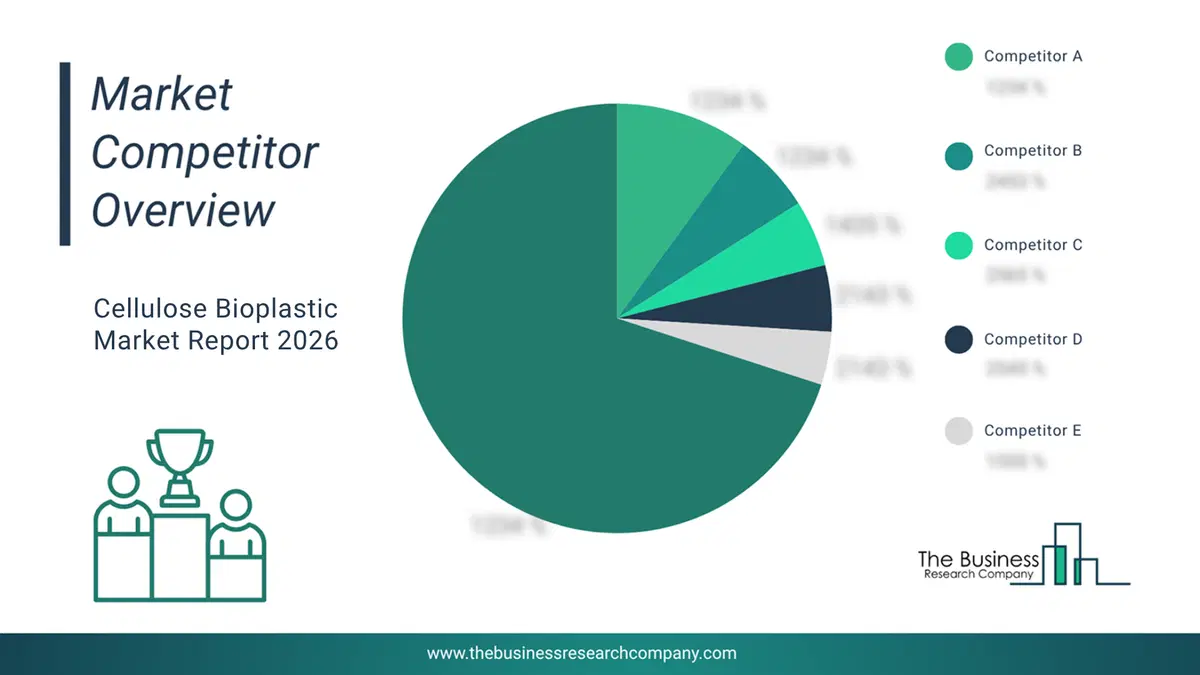
This chart is for illustrative purposes; the full report includes a detailed competitor analysis and comprehensive overview of the top 10 companies in the market.
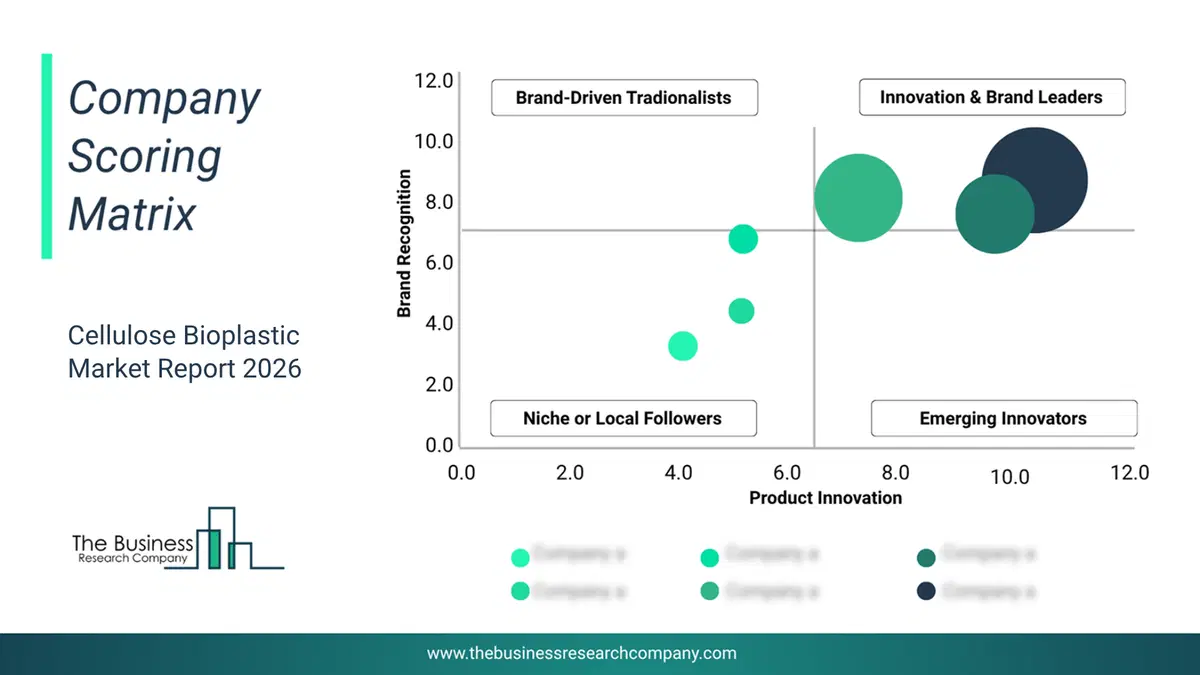
This chart maps companies by product innovation and brand strength, with bubble size indicating relative revenue, helping identify market leaders, challengers, and niche players. This is an illustrative chart; the full report provides a complete and accurate competitive analysis.
Global Cellulose Bioplastic Market Trends and Insights
Major companies operating in the cellulose bioplastic market are focusing on developing strategic partnerships to develop fully compostable and circular packaging solutions by combining regenerated cellulose films with biodegradable food-contact materials to replace conventional plastic-based packaging in food service applications. A strategic partnership is a long-term collaborative arrangement between organizations that integrates complementary technologies, materials expertise, and product design capabilities to accelerate innovation, improve sustainability outcomes, and enable scalable commercial deployment of eco-friendly alternatives. For instance, in May 2026, Futamura Chemical UK Limited, a UK-based manufacturing company, partnered with BIOPAP S.r.l. Società Benefit, an Italy-based compostable food packaging solutions company, to further strengthen their 25-year collaboration aimed at advancing sustainable food service packaging. The partnership integrates Futamura’s NatureFlex regenerated cellulose film with BIOPAP’s high-performance compostable food trays to develop functional packaging made from renewable raw materials with improved end-of-life options, including industrial and home composting as well as compatibility with anaerobic digestion systems. The resulting solutions are engineered to endure extreme temperature conditions ranging from -90°C to +175°C while maintaining strong barrier properties, food safety, and performance across applications such as cooking, storage, reheating, and direct consumption.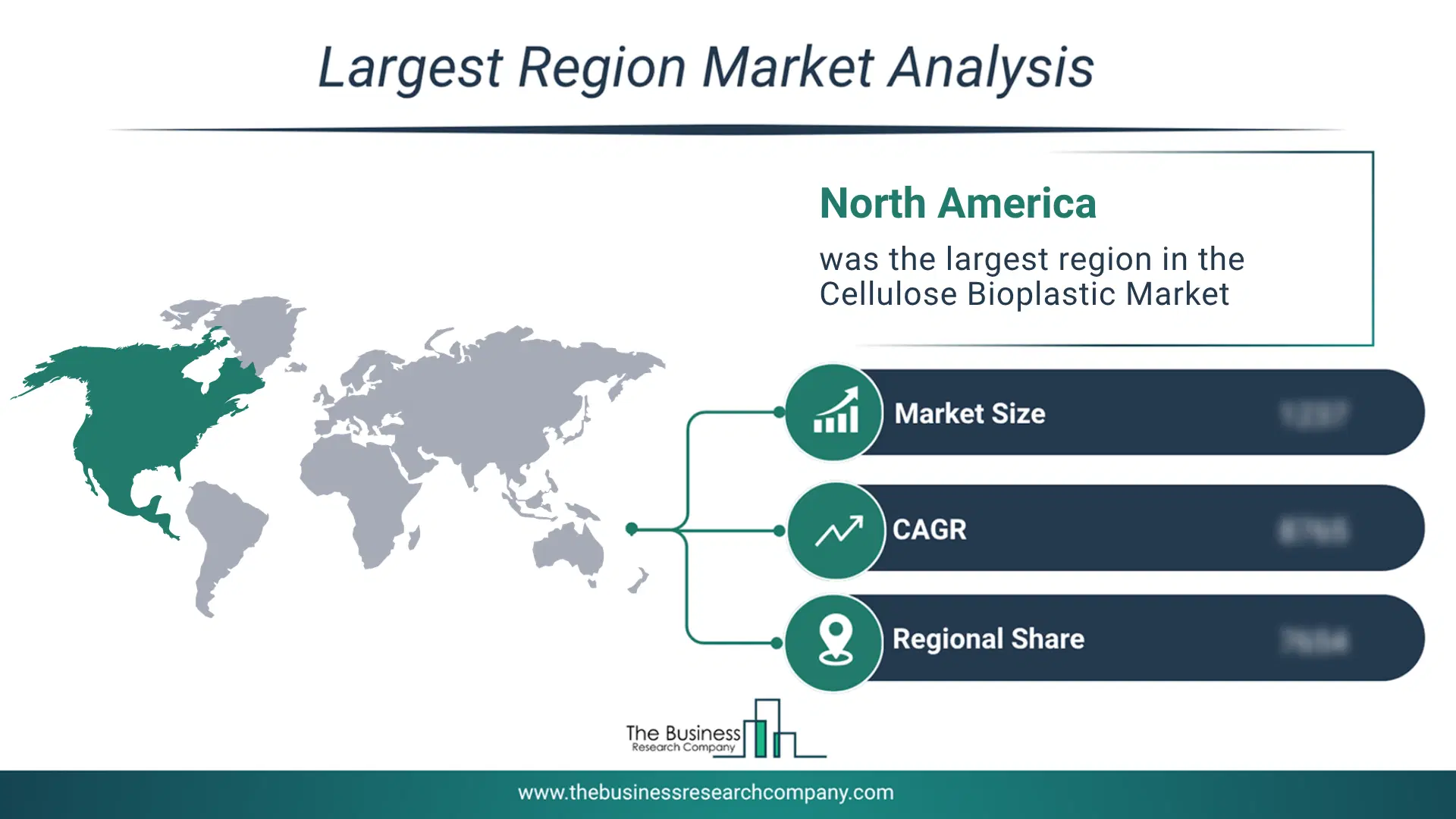
Regional Outlook/Insights
North America was the largest region in the cellulose bioplastic market in 2025. Asia-Pacific is expected to be the fastest-growing region in the forecast period. The regions covered in this market report are Asia-Pacific, South East Asia, Western Europe, Eastern Europe, North America, South America, Middle East, Africa. The countries covered in this market report are Australia, Brazil, China, France, Germany, India, Indonesia, Japan, Taiwan, Russia, South Korea, UK, USA, Canada, Italy, Spain.What Defines the Cellulose Bioplastic Market?
The cellulose bioplastic market consists of sales of biodegradable packaging films, disposable cutlery, medical packaging materials, and transparent sheets. Values in this market are ‘factory gate’ values, that is, the value of goods sold by the manufacturers or creators of the goods, whether to other entities (including downstream manufacturers, wholesalers, distributors, and retailers) or directly to end customers. The value of goods in this market includes related services sold by the creators of the goods.How is Market Value Defined and Measured?
The market value is defined as the revenues that enterprises gain from the sale of goods and/or services within the specified market and geography through sales, grants, or donations in terms of the currency (in USD unless otherwise specified). The revenues for a specified geography are consumption values that are revenues generated by organizations in the specified geography within the market, irrespective of where they are produced. It does not include revenues from resales along the supply chain, either further along the supply chain or as part of other products.
This chart presents market attractiveness based on a quantitative evaluation of growth, competition, strategic alignment, and risk, offering a clear view of opportunity areas for decision-making. This chart is for illustrative purposes; the full report contains the complete analysis.

This chart highlights the Total Addressable Market (TAM) by estimating the maximum revenue opportunity using an assumption-driven approach, supporting strategic planning and opportunity sizing across markets. The chart is illustrative; the full report provides a more comprehensive analysis.
What Key Data and Analysis Are Included in the Cellulose Bioplastic Market Report 2026?
The cellulose bioplastic market research report is one of a series of new reports from The Business Research Company that provides cellulose bioplastic market statistics, including cellulose bioplastic industry global market size, regional shares, competitors with a cellulose bioplastic market share, detailed cellulose bioplastic market segments, market trends and opportunities, and any further data you may need to thrive in the cellulose bioplastic industry. This cellulose bioplastic market research report delivers a complete perspective of everything you need, with an in-depth analysis of the current and future scenario of the industry.Cellulose Bioplastic Market Report Forecast Analysis
| Report Attribute | Details |
|---|---|
| Market Size Value In 2026 | $2.88 billion |
| Revenue Forecast In 2030 | $4.99 billion |
| Growth Rate | CAGR of 14.7% from 2026 to 2030 |
| Base Year For Estimation | 2025 |
| Actual Estimates/Historical Data | 2020-2025 |
| Forecast Period | 2026 - 2030 |
| Market Representation | Revenue in USD Billion and CAGR from 2026 to 2030 |
| Segments Covered | Product, Source, End User |
| Regional Scope | Asia-Pacific, Western Europe, Eastern Europe, North America, South America, Middle East, Africa |
| Country Scope | The countries covered in the report are Australia, Brazil, China, France, Germany, India, Indonesia, Japan, Taiwan, Russia, South Korea, UK, USA, Canada, Italy, Spain. |
| Key Companies Profiled | Eastman Chemical Company, Celanese Corporation, Sappi Limited, Nippon Paper Industries Co. Ltd., Rayonier Advanced Materials Inc., Daicel Corporation, Futamura Chemical Co. Ltd., Borregaard ASA, Cerdia International GmbH, Mazzucchelli 1849 S.p.A., FKuR Kunststoff GmbH, Green Dot Bioplastics LLC, Rotuba Extruders Inc., Tecnaro GmbH, Bio4Pack GmbH, Nordic Bioproducts Group Oy, Papkot, Bioform Technologies Inc., Cellugy ApS |
| Customization Scope | Request for Customization |
| Pricing And Purchase Options | Explore Purchase Options |