

Cellulose Derivatives Market Report 2026
Global Outlook – By Type (Methyl Cellulose, Hydroxypropyl Methylcellulose (HPMC), Hydroxypropyl Cellulose (HPC), Carboxymethyl Cellulose, Hydroxyethyl Cellulose (HEC), Ethyl Cellulose, Other Types), By Grade (Industrial Grade, Food Grade, Pharmaceutical Grade), By End Users (Food Industry, Pharmaceutical Industry, Personal Care, Construction, Paint Industry, Other End Users) – Market Size, Trends, Strategies, and Forecast to 2030
Cellulose Derivatives Market Overview
• Cellulose Derivatives market size has reached to $6.73 billion in 2025 • Expected to grow to $9.31 billion in 2030 at a compound annual growth rate (CAGR) of 6.6% • Growth Driver: Growing Pharma And Personal Care Sectors Drive Cellulose Derivatives Market Surge • Market Trend: Hydroxypropyl Cellulose (HPC) Tablet Binders: Enhancing Low-Temperature Melt Granulation In Pharmaceuticals • Asia-Pacific was the largest region in 2025 and Asia-Pacific is the fastest growing region.What Is Covered Under Cellulose Derivatives Market?
Cellulose derivatives are compounds obtained by chemically modifying cellulose, which enhance or alter its properties to make it suitable for various applications. It offers the advantage of improved processability and functionality, enabling their use in creating environmentally friendly products that are biodegradable and non-toxic. The main types of cellulose derivatives include methylcellulose, hydroxypropyl methylcellulose (HPMC), hydroxypropyl cellulose (HPC), carboxymethylcellulose, hydroxyethyl cellulose (HEC), ethyl cellulose, and others. Methyl cellulose is a chemical compound derived from cellulose that is used in pharmaceuticals as a thickener, emulsifier, and binder in tablet formulations. The derivatives are categorized by grades into Industrial Grade, Food Grade, and Pharmaceutical Grade by end users such as the food industry, pharmaceutical industry, personal care, construction, paint industry, and others.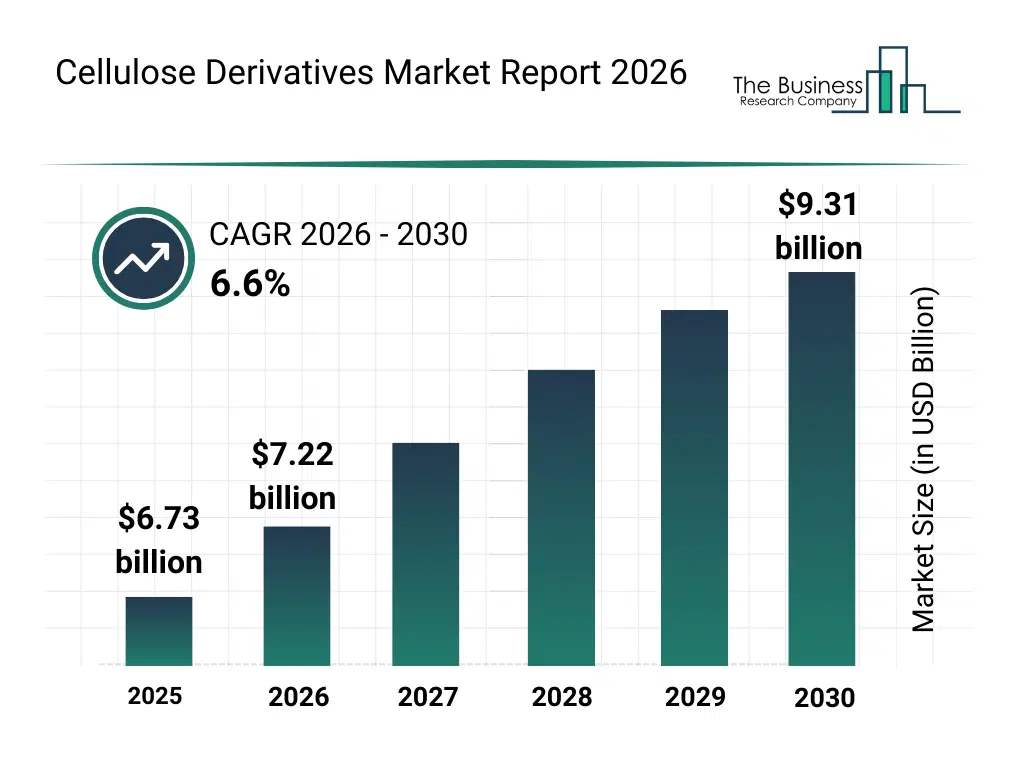
What Is The Cellulose Derivatives Market Size and Share 2026?
The cellulose derivatives market size has grown strongly in recent years. It will grow from $6.73 billion in 2025 to $7.22 billion in 2026 at a compound annual growth rate (CAGR) of 7.4%. The growth in the historic period can be attributed to growth of pharmaceutical excipients usage, expansion of food processing industry, increased construction material demand, early adoption of cellulose based polymers, regulatory support for biodegradable materials.What Is The Cellulose Derivatives Market Growth Forecast?
The cellulose derivatives market size is expected to see strong growth in the next few years. It will grow to $9.31 billion in 2030 at a compound annual growth rate (CAGR) of 6.6%. The growth in the forecast period can be attributed to rising demand for sustainable packaging, expansion of green construction, growth in plant based pharmaceuticals, increasing environmental regulations, technological advancements in cellulose modification. Major trends in the forecast period include rising demand for biodegradable polymers, growing use in pharmaceutical formulations, expansion in food texture and stabilization applications, increasing adoption in construction materials, higher focus on sustainable and plant based ingredients.
Global Cellulose Derivatives Market Segmentation
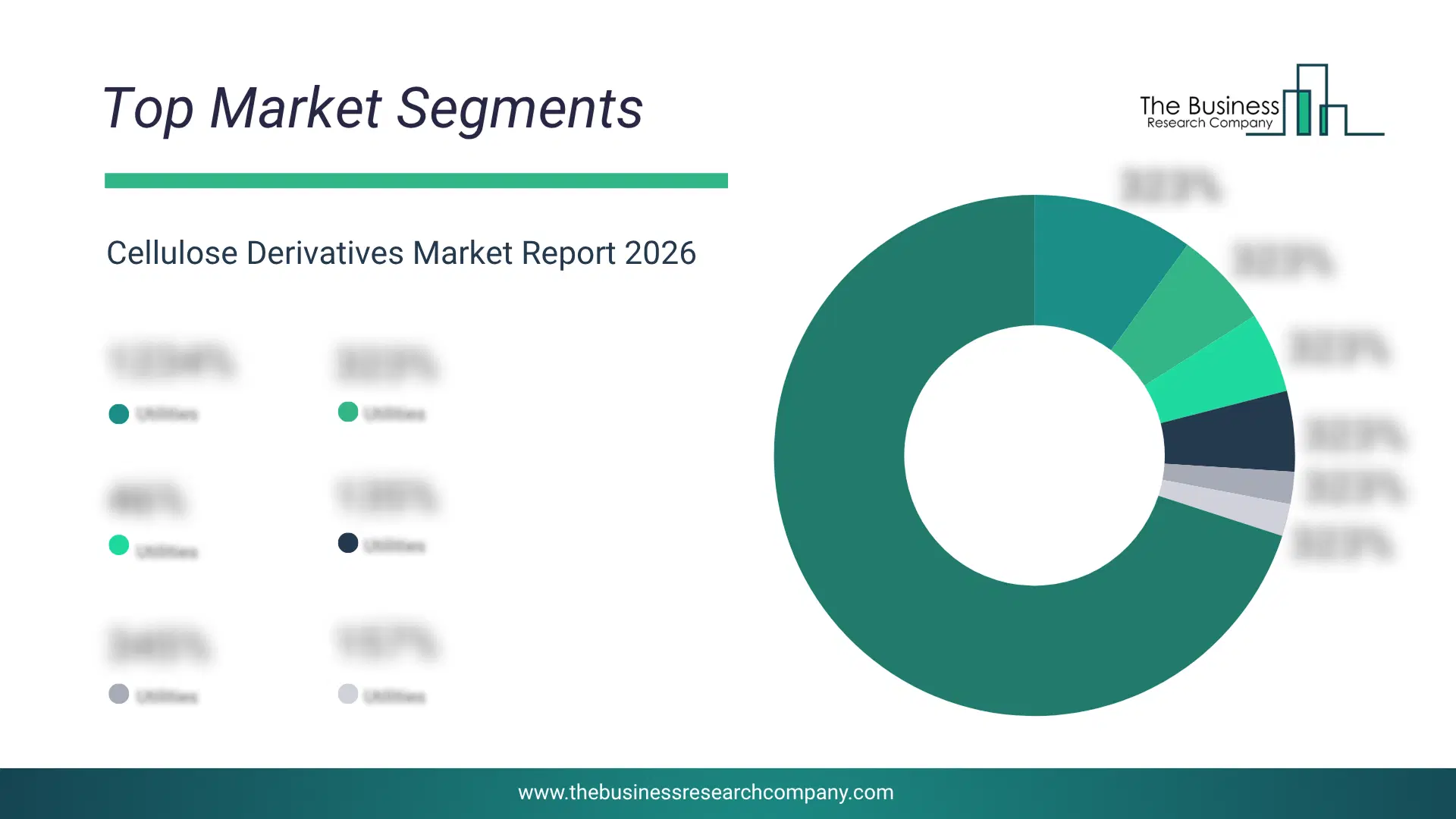
1) By Type: Methyl Cellulose, Hydroxypropyl Methylcellulose (HPMC), Hydroxypropyl Cellulose (HPC), Carboxymethyl Cellulose, Hydroxyethyl Cellulose (HEC), Ethyl Cellulose, Other Types 2) By Grade: Industrial Grade, Food Grade, Pharmaceutical Grade 3) By End Users: Food Industry, Pharmaceutical Industry, Personal Care, Construction, Paint Industry, Other End Users Subsegments: 1) By Methyl Cellulose: Hydroxypropyl Methylcellulose (HPMC), Hydroxypropyl Methylcellulose Acetate Succinate (HPMCAS) 2) By Hydroxypropyl Methylcellulose (HPMC): Pharmaceutical Grade, Food Grade, Industrial Grade 3) By Hydroxypropyl Cellulose (HPC): Low Viscosity, Medium Viscosity, High Viscosity 4) By Carboxymethyl Cellulose (CMC): Sodium Carboxymethyl Cellulose (NaCMC), Calcium Carboxymethyl Cellulose (CaCMC), Other Salts 5) By Hydroxyethyl Cellulose (HEC): Low Viscosity, Medium Viscosity, High Viscosity 6) By Ethyl Cellulose: Pharmaceutical Grade, Food Grade, Industrial Grade 7) By Other Types: Ethyl Hydroxyethyl Cellulose (EHEC), Sodium Hydroxyethyl Cellulose (NaHEC), Other Modified Cellulose DerivativesWhat Is The Driver Of The Cellulose Derivatives Market?
The increasing demand for pharmaceuticals and personal care products is expected to propel the growth of the cellulose derivatives market. The rising adoption of pharmaceuticals and personal care products is driven by increasing health awareness, aging populations, and advancements in medical and cosmetic technologies. Cellulose derivatives are used in pharmaceuticals and personal care products as thickeners, stabilizers, and excipients to improve active ingredients' texture, stability, and delivery. For instance, in April 2025, according to Eurostat, a Luxembourg-based government agency, in 2024, EU exports of medicinal and pharmaceutical products increased by 13.5% compared with 2023, reaching $316.38 billion (€313.4 billion). At the same time, imports only recorded a modest increase of 0.5%, amounting to $112.7 billion (€119.7 billion). Therefore, the increasing demand for pharmaceuticals and personal care products will drive the growth of the cellulose derivatives industry.Key Players In The Global Cellulose Derivatives Market
Major companies operating in the cellulose derivatives market are The Dow Chemical Company, Shin-Etsu Chemical Co. Ltd., Akzo Nobel N.V., Eastman Chemical Company, Celanese Corporation, Nippon Paper Industries Co. Ltd., Sappi Limited, Nouryon, SNF Group, Daicel Corporation, Ashland Global Holdings Inc, Rayonier Advanced Materials Inc, LOTTE Fine Chemical Co. Ltd, Viscofan, CP Kelco ApS, Lamberti SpA, Yueyang Xingchang Petrochemical Co Ltd, DKS Co Ltd, Shandong Head Co Ltd, J RETTENMAIER & SÖHNE GmbH + Co KG, Reliance Cellulose Products Ltd, SE Tylose GmbH & Co KG, Hangzhou Dayangchem Co Ltd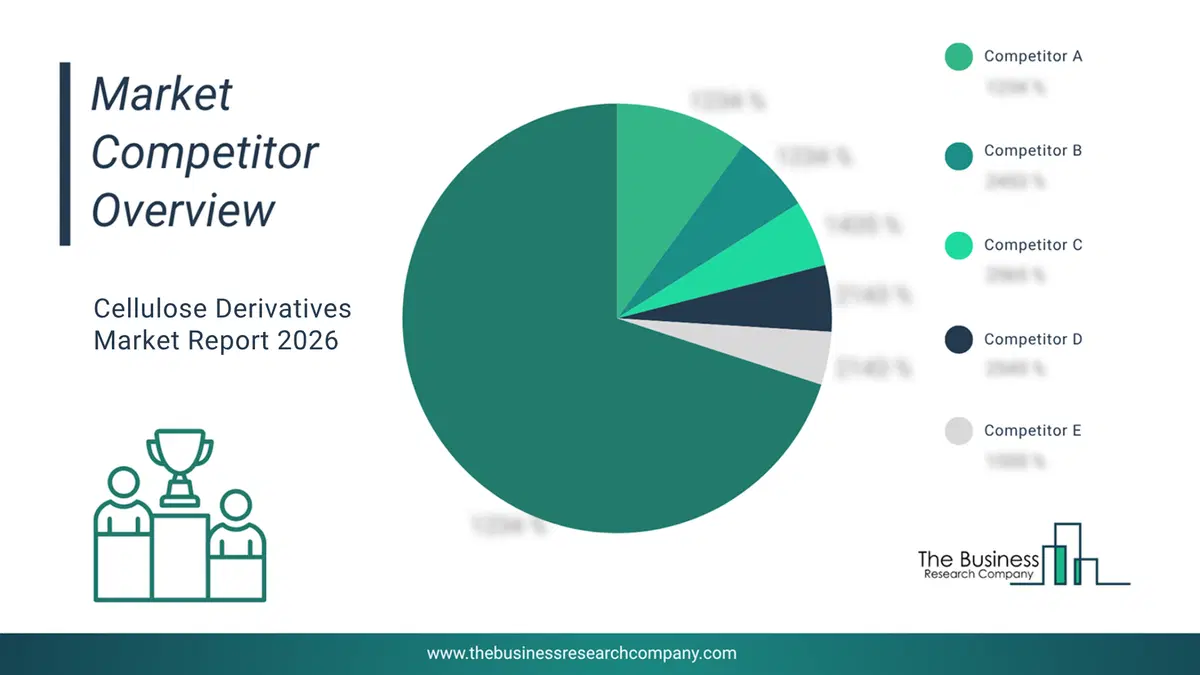
This chart is for illustrative purposes; the full report includes a detailed competitor analysis and comprehensive overview of the top 10 companies in the market.
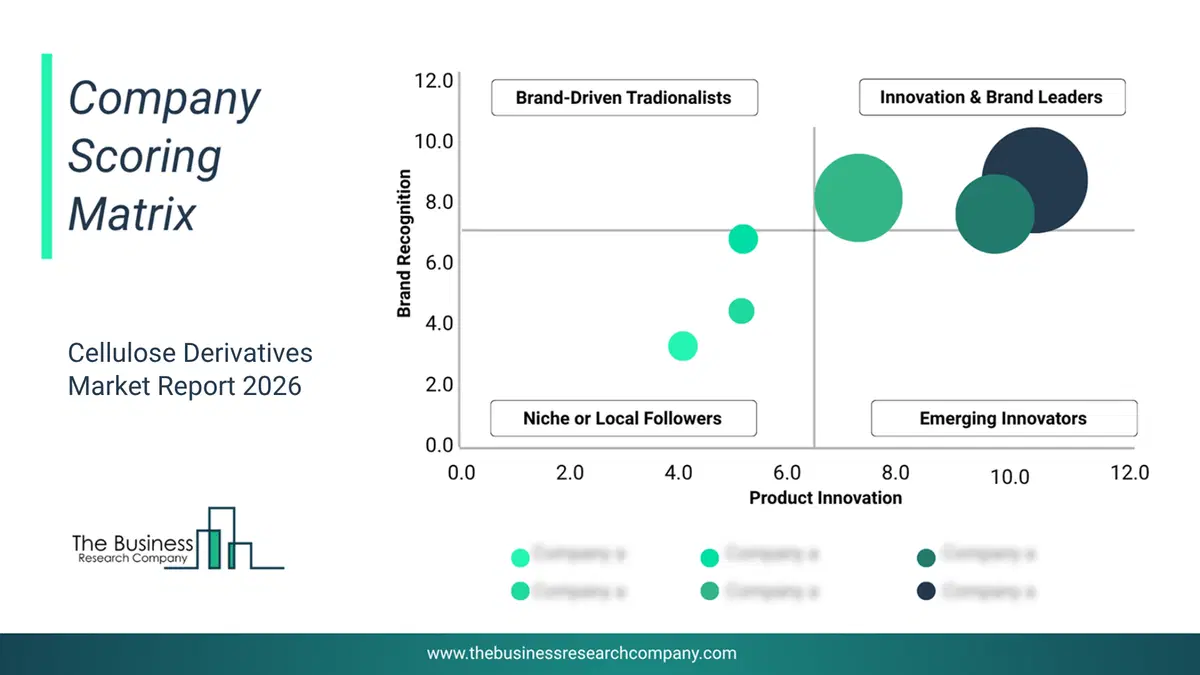
This chart maps companies by product innovation and brand strength, with bubble size indicating relative revenue, helping identify market leaders, challengers, and niche players. This is an illustrative chart; the full report provides a complete and accurate competitive analysis.
Global Cellulose Derivatives Market Trends and Insights
Major companies operating in the cellulose derivatives market focus on innovative and sustainable solutions, such as hydroxypropyl cellulose (HPC) tablet binder to enhance low-temperature melt granulation efficiency and tablet cohesion. Hydroxypropyl cellulose (HPC) tablet binder refers to a water-soluble polymeric excipient used in pharmaceutical formulations to promote the cohesion of powder particles during granulation and tablet formation. For instance, in October 2023, Ashland Inc., a US-based specialty ingredients company launched Klucel Fusion HPC, was developed to address key challenges in low-temperature melt granulation. It is is a hydroxypropyl cellulose-based tablet binder offering low melt viscosity, thermal and moisture stability, strong binding at reduced processing temperatures (50 °C–80 °C), and compatibility with thermolabile active pharmaceutical ingredients making it ideal for efficient, robust, and high-quality tablet production while minimizing API degradation and energy usage.What Are Latest Mergers And Acquisitions In The Cellulose Derivatives Market?
In March 2025, Oji Holdings Corporation, a Japan-based pulp and paper company, acquired Chemfield Cellulose Private Limited, for an undisclosed amount. Through this acquisition, Oji Holdings aims to strengthen its pharmaceutical excipient portfolio and enhance the integration of high-quality cellulose derivatives into global pharmaceutical supply chains. Chemfield Cellulose Private Limited is an India-based company specializing in the production of microcrystalline cellulose for pharmaceutical, dietary supplement, and food applications.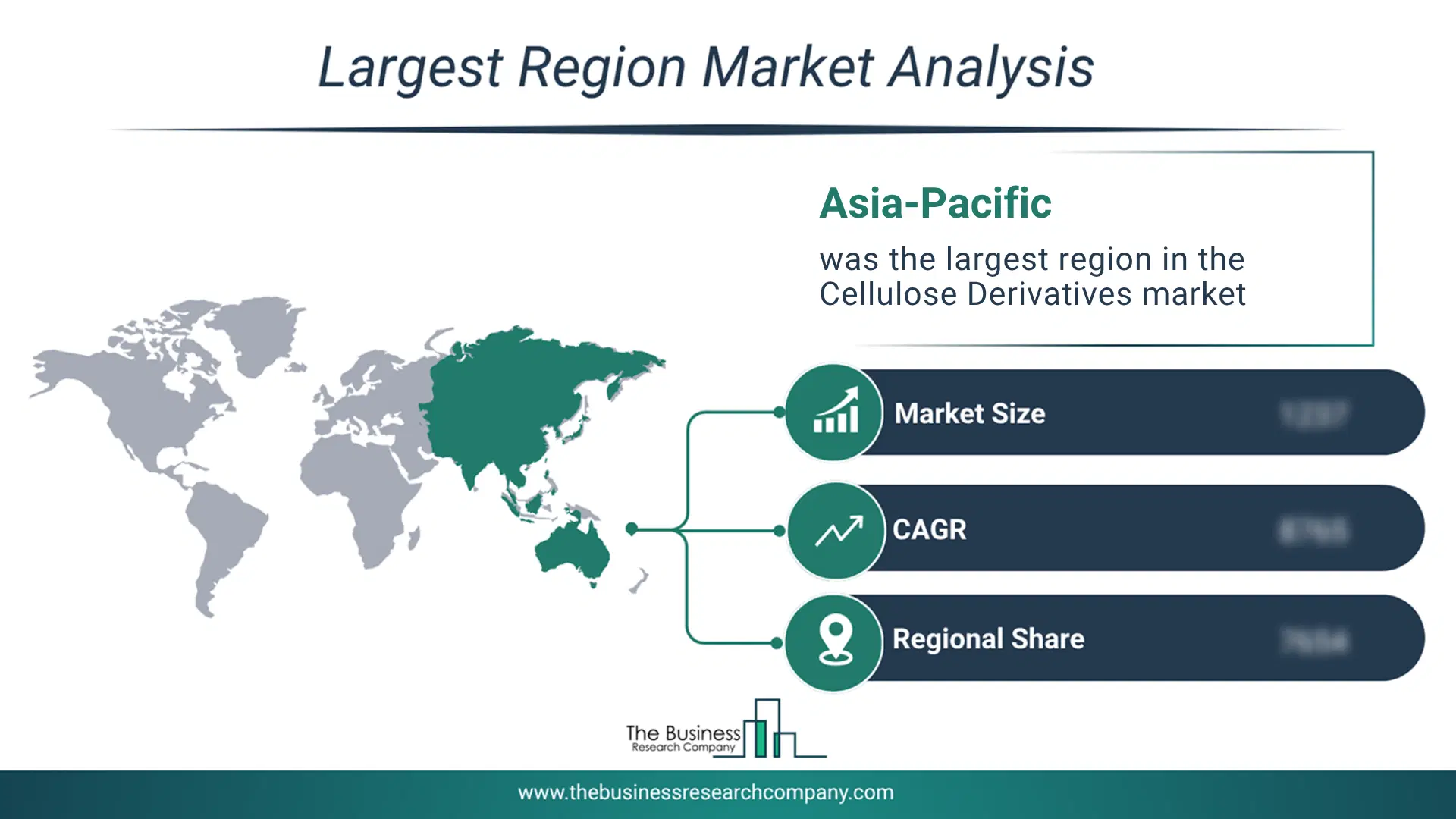
Regional Insights
Asia-Pacific was the largest region in the cellulose derivatives market in 2025 and is expected to be the fastest-growing region in the forecast period. The regions covered in this market report are Asia-Pacific, South East Asia, Western Europe, Eastern Europe, North America, South America, Middle East, Africa The countries covered in this market report are Australia, Brazil, China, France, Germany, India, Indonesia, Japan, Taiwan, Russia, South Korea, UK, USA, Canada, Italy, SpainWhat Defines the Cellulose Derivatives Market?
The cellulose derivatives market consists of sales of cellulose acetate butyrate (CAB), cellulose acetate propionate (CAP), and cellulose nitrate. Values in this market are ‘factory gate’ values, that is the value of goods sold by the manufacturers or creators of the goods, whether to other entities (including downstream manufacturers, wholesalers, distributors and retailers) or directly to end customers. The value of goods in this market includes related services sold by the creators of the goods.How is Market Value Defined and Measured?
The market value is defined as the revenues that enterprises gain from the sale of goods and/or services within the specified market and geography through sales, grants, or donations in terms of the currency (in USD unless otherwise specified). The revenues for a specified geography are consumption values that are revenues generated by organizations in the specified geography within the market, irrespective of where they are produced. It does not include revenues from resales along the supply chain, either further along the supply chain or as part of other products.
This chart presents market attractiveness based on a quantitative evaluation of growth, competition, strategic alignment, and risk, offering a clear view of opportunity areas for decision-making. This chart is for illustrative purposes; the full report contains the complete analysis.

This chart highlights the Total Addressable Market (TAM) by estimating the maximum revenue opportunity using an assumption-driven approach, supporting strategic planning and opportunity sizing across markets. The chart is illustrative; the full report provides a more comprehensive analysis.
What Key Data and Analysis Are Included in the Cellulose Derivatives Market Report 2026?
The cellulose derivatives market research report is one of a series of new reports from The Business Research Company that provides market statistics, including industry global market size, regional shares, competitors with the market share, detailed market segments, market trends and opportunities, and any further data you may need to thrive in the cellulose derivatives industry. The market research report delivers a complete perspective of everything you need, with an in-depth analysis of the current and future state of the industry.Cellulose Derivatives Market Report Forecast Analysis
| Report Attribute | Details |
|---|---|
| Market Size Value In 2026 | $7.22 billion |
| Revenue Forecast In 2030 | $9.31 billion |
| Growth Rate | CAGR of 7.4% from 2026 to 2030 |
| Base Year For Estimation | 2025 |
| Actual Estimates/Historical Data | 2020-2025 |
| Forecast Period | 2026 - 2030 |
| Market Representation | Revenue in USD Billion and CAGR from 2026 to 2030 |
| Segments Covered | Type, Grade, End Users |
| Regional Scope | Asia-Pacific, Western Europe, Eastern Europe, North America, South America, Middle East, Africa |
| Country Scope | The countries covered in this market report are Australia, Brazil, China, France, Germany, India, Indonesia, Japan, Taiwan, Russia, South Korea, UK, USA, Canada, Italy, Spain |
| Key Companies Profiled | The Dow Chemical Company, Shin-Etsu Chemical Co. Ltd., Akzo Nobel N.V., Eastman Chemical Company, Celanese Corporation, Nippon Paper Industries Co. Ltd., Sappi Limited, Nouryon, SNF Group, Daicel Corporation, Ashland Global Holdings Inc, Rayonier Advanced Materials Inc, LOTTE Fine Chemical Co. Ltd, Viscofan, CP Kelco ApS, Lamberti SpA, Yueyang Xingchang Petrochemical Co Ltd, DKS Co Ltd, Shandong Head Co Ltd, J RETTENMAIER & SÖHNE GmbH + Co KG, Reliance Cellulose Products Ltd, SE Tylose GmbH & Co KG, Hangzhou Dayangchem Co Ltd |
| Customization Scope | Request for Customization |
| Pricing And Purchase Options | Explore Purchase Options |