
Cement board Market Report 2026
Global Outlook – By Product Type (Fiber Cement Board (FCB), Wood Wool Cement Board (WWCB), Wood Strand Cement Board (WSCB), Cement Bonded Particle Board (CBPB) ), By Application (Flooring, Exterior And Partition Walls, Roofing, Facades, Weatherboard, And Cladding, Acoustic And Thermal Insulation, Other Applications ), By End User (Residential, Commercial, Industrial And Institutional) – Market Size, Trends, Strategies, and Forecast to 2030
Cement board Market Overview
• Cement board market size has reached to $8.49 billion in 2025 • Expected to grow to $11.42 billion in 2030 at a compound annual growth rate (CAGR) of 6% • Growth Driver: Cement Board Market Surges With Growing Residential And Commercial Construction • Market Trend: Innovative Fire-Safe, Durable Cladding Solutions Driving Next-Generation Construction Materials • Asia-Pacific was the largest region in 2025.Market Gains By 2030 – Top Opportunities By Segment
Market Gain identifies the most promising market opportunities by highlighting the segments or products expected to generate the highest incremental revenue growth over the next five years.
What Is Covered Under Cement board Market?
Cement board, also known as back board, refers to a thin layer of concrete with a fiberglass mesh on both sides. The boards' porous nature after drying makes them easy to stick to grout and mortar. Cement boards are both heat and fire-resistant and are utilized to increase the wall surface's impact resistance and strength. The main product types of cement board are fiber cement board (FCB), wood wool cement board (WWCB), wood strand cement board (WSCB), and cement bonded particle board (CBPB) that are used for flooring, exterior and partition walls, roofing, columns and beams, facades, weatherboard, and cladding, acoustic and thermal insulation, and other applications. These are used by residential, commercial, industrial and institutional end users.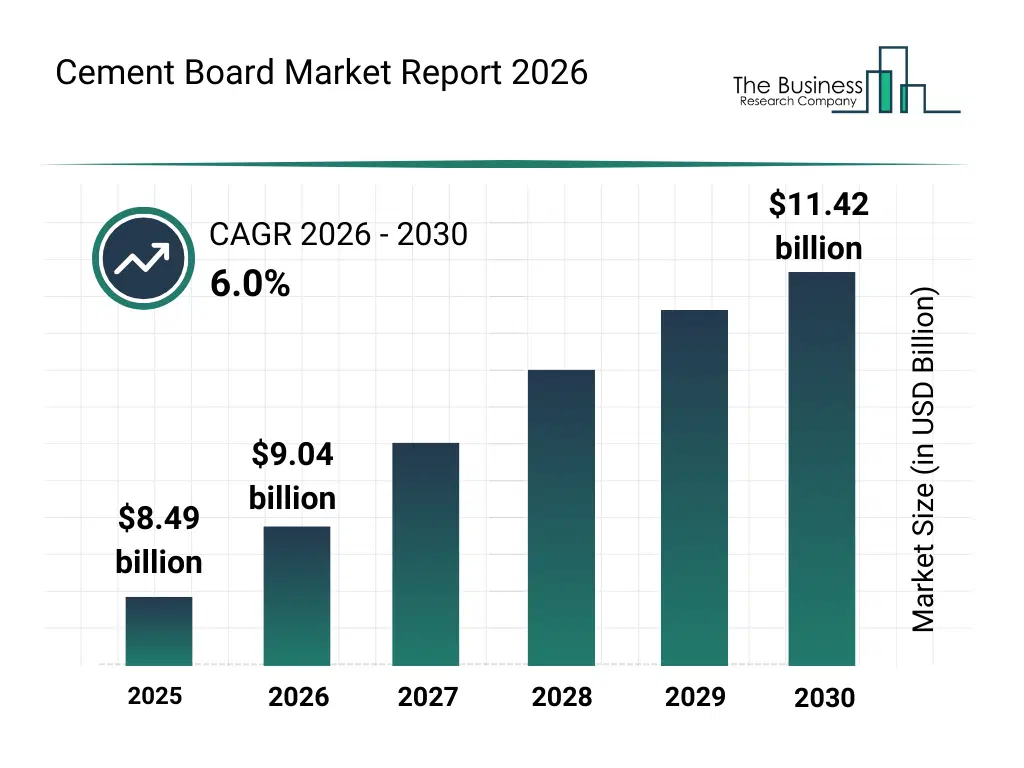
What Is The Cement board Market Size and Share 2026?
The cement board market size has grown strongly in recent years. It will grow from $8.49 billion in 2025 to $9.04 billion in 2026 at a compound annual growth rate (CAGR) of 6.4%. The growth in the historic period can be attributed to growth of residential housing construction, increasing use of cement boards as drywall alternatives, rising demand for fire-resistant wall systems, expansion of commercial building projects, availability of fiber cement manufacturing technologies.What Is The Cement board Market Growth Forecast?
The cement board market size is expected to see strong growth in the next few years. It will grow to $11.42 billion in 2030 at a compound annual growth rate (CAGR) of 6.0%. The growth in the forecast period can be attributed to rising adoption of green and sustainable building materials, growth in prefabricated construction methods, increasing renovation and remodeling activities, demand for improved acoustic and thermal insulation, expansion of construction activities in emerging economies. Major trends in the forecast period include rising adoption of fire-resistant building materials, growing use of cement boards in wet and high-moisture areas, increasing demand for lightweight and high-strength wall panels, expansion of prefabricated and modular construction, rising preference for durable and low-maintenance interior solutions.
Global Cement board Market Segmentation
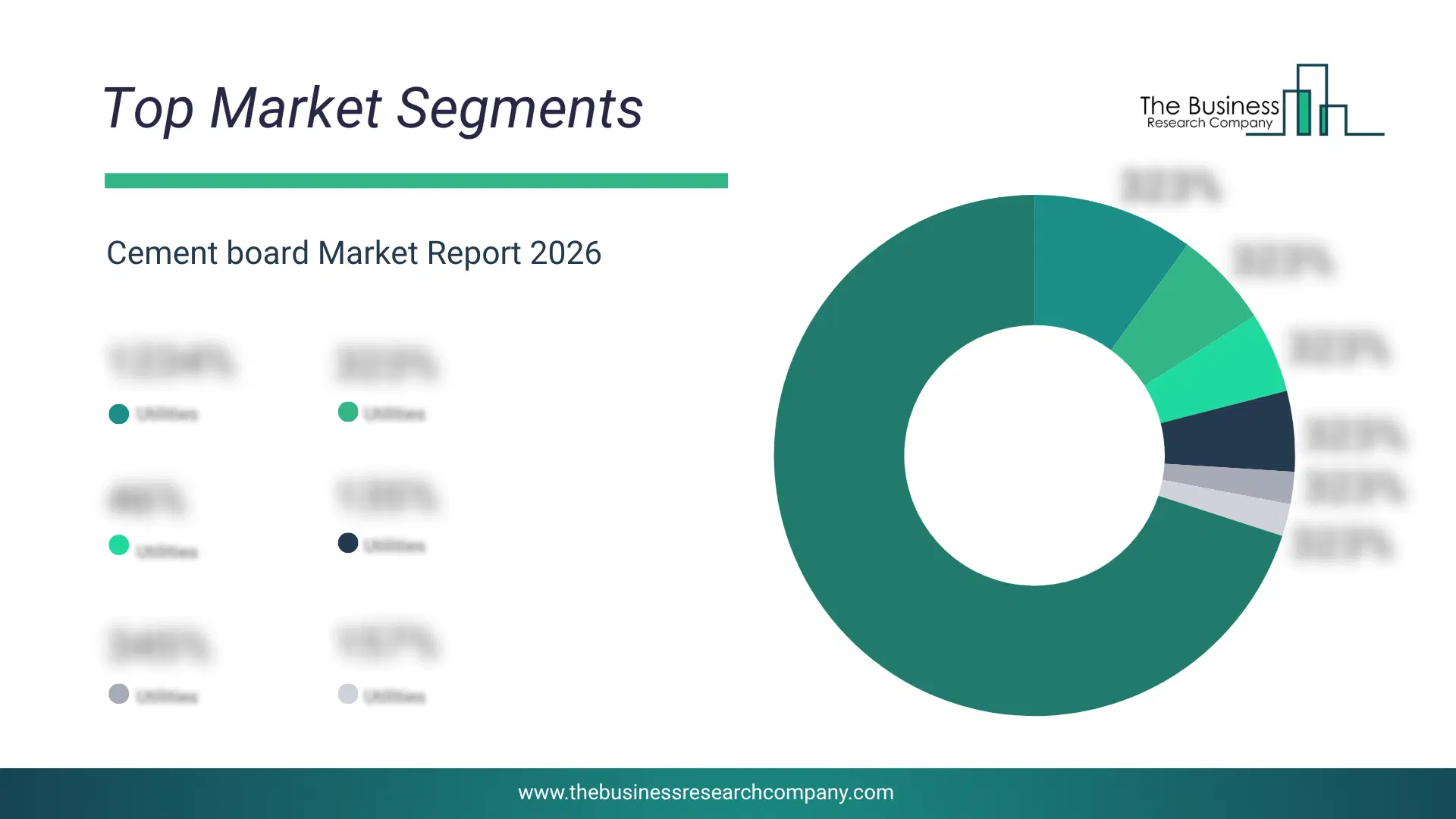
1) By Product Type: Fiber Cement Board (FCB), Wood Wool Cement Board (WWCB), Wood Strand Cement Board (WSCB), Cement Bonded Particle Board (CBPB) 2) By Application: Flooring, Exterior And Partition Walls, Roofing, Facades, Weatherboard, And Cladding, Acoustic And Thermal Insulation, Other Applications 3) By End User: Residential, Commercial, Industrial And Institutional Subsegments: 1) By Fiber Cement Board (FCB): Flat Sheets, Textured Sheets, Pre-formed Panels 2) By Wood Wool Cement Board (WWCB): Standard Boards, Acoustic Boards, Fire-Resistant Boards 3) By Wood Strand Cement Board (WSCB): Standard Boards, Insulated Boards 4) By Cement Bonded Particle Board (CBPB): Standard Boards, Structural Boards, Decorative Boards The top segments in the cement board market will be: • Fiber Cement Board (FCB) will reach $4.52 Billion by 2030. • Wood Wool Cement Board (WWCB) will reach $3.37 Billion by 2030. • Cement Bonded Particle Board (CBPB) will reach $2.31 Billion by 2030. • Wood Strand Cement Board (WSCB) will reach $1.12 Billion by 2030.What Is The Driver Of The Cement board Market?
The growing residential and commercial construction is expected to propel the growth of the cement board market going forward. Residential construction refers to construction of private dwelling residential space whereas commercial construction refers to the design and modelling of properties for commercial use. The cement boards are installed in a diagonal or lateral arrangement to safeguard the building's foundation in residential and construction. Hence, the increasing residential and commercial construction sector is boosting the sales of cement boards. For instance, according to the United States Census Bureau, a US-based principal agency of the federal statistical system, in February 2023, the number of privately owned housing units were 1,524,000 on a seasonally adjusted yearly basis, an increase of 13.8% from January 2023. Therefore, the growing residential and commercial construction is driving the growth of the cement board industry.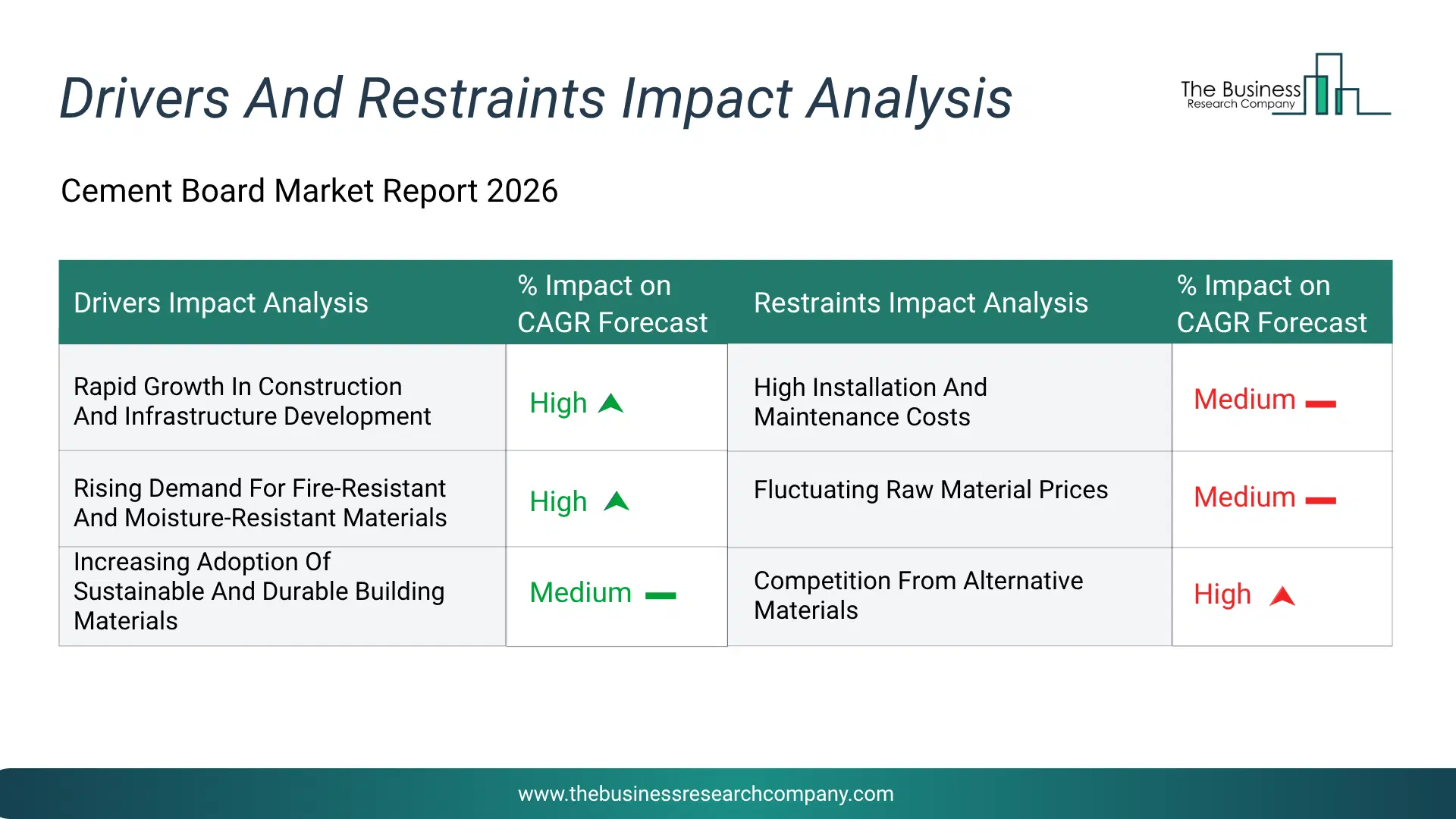
Infographic Chart Showing Key Market Drivers Analysis And Restraints For Cement Board Market
The chart presents an impact analysis of key drivers and restraints, quantifying their relative influence on the market's growth rate and helping assess the balance between growth enablers and limiting factors. This chart offers a high-level perspective; the full report contains more detailed insights.
How Will The Drivers Impact Growth In The Global Cement Board Market?
• Rapid Growth In Construction And Infrastructure Development (High) – During the forecast period, the rapid growth in construction and infrastructure development is expected to become a key growth driver for the cement board market by 2030. Expanding urban populations and rising investments in residential, commercial, and public infrastructure projects are increasing the demand for reliable and versatile construction materials. Cement boards are widely utilized in walls, flooring, roofing, and façade systems due to their structural performance and ease of installation. Governments and private developers are accelerating large-scale construction activities to address housing and infrastructure requirements. This sustained construction momentum is reinforcing steady market expansion. • Rising Demand For Fire-Resistant And Moisture-Resistant Materials (High) – During the forecast period, the rising demand for fire-resistant and moisture-resistant materials is expected to emerge as a major factor driving the expansion of the cement board market by 2030. Building owners and contractors are increasingly prioritizing materials that improve safety, durability, and long-term performance in challenging environmental conditions. Cement boards offer excellent resistance to fire, water, mold, and pests, making them suitable for both interior and exterior applications. Stricter building regulations and greater awareness of property protection are further encouraging the adoption of high-performance construction materials. • Increasing Adoption Of Sustainable And Durable Building Materials (Medium) – During the forecast period, the increasing adoption of sustainable and durable building materials is expected to act as a key growth catalyst for the cement board market by 2030. The construction industry is shifting toward environmentally responsible materials that support green building initiatives and reduce lifecycle maintenance requirements. Cement boards provide long service life, resource efficiency, and compatibility with energy-efficient building designs, making them attractive alternatives to traditional construction materials. Architects and developers are increasingly incorporating durable building products to improve sustainability performance and operational efficiency.How Will The Restraints Impact Growth In The Global Cement Board Market?
• High Installation And Maintenance Costs (High) – During the forecast period, the high installation and maintenance costs act as a key restraint for the cement board market by increasing the overall project expenditure for end users. Compared to traditional materials, cement boards often require specialized labor, tools, and additional finishing processes, which raise initial setup costs. This discourages adoption, particularly in price-sensitive residential and small-scale construction projects. Ongoing maintenance and repair expenses further add to the lifecycle cost, reducing their attractiveness despite durability benefits. As a result, cost-conscious consumers and builders may shift toward cheaper alternatives, limiting market expansion. • Fluctuating Raw Material Prices (High) – During the forecast period, the fluctuating raw material prices significantly restrain the cement board market by impacting production costs and profit margins. Key inputs such as cement, sand, and fiberglass are subject to price volatility due to supply chain disruptions and changing demand conditions. This unpredictability makes it difficult for manufacturers to maintain stable pricing, affecting long-term contracts and planning. Increased production costs are often passed on to customers, making cement boards less competitive in the construction market. Consequently, inconsistent pricing creates uncertainty and slows down steady market growth. • Competition From Alternative Materials (Medium) – During the forecast period, the competition from alternative materials acts as a major restraint by limiting the widespread adoption of cement boards across construction applications. Materials such as gypsum boards, plywood, and fiberboards are often preferred due to their lower cost, lighter weight, and ease of installation. These substitutes offer comparable functionality for certain uses, making them attractive options for builders and contractors. The presence of well-established alternatives reduces the demand for cement boards, especially in non-critical applications. As a result, strong competition restricts market penetration and slows overall industry growth.Key Players In The Global Cement board Market
Major companies operating in the cement board market report are BetonWood SRL, Everest Industries Limited, Etex Group Ltd., Elementia Materiales SAB de CV, HIL Limited, GAF Materials Corporation, James Hardie Industries plc, Johns Manville Corp., Nichiha Corporation, Saint-Gobain SA, Atermit AS, LTM Group LLC, Lato OJSC, Soben Board International, Knauf Gips KG, Tepe Betopan AS, Mahaphant India Pvt.Ltd., Hume Cemboard Industries Sdn. Bhd., Visaka Industries Ltd., Allura USA, Swisspearl Group AG, Plycem USA Inc., Maxitile Ltd., American Fiber Cement Corporation, Taisyou International Business Co. Ltd., SCG Building Materials Co. Ltd., TPI Polene Public Company Limited, Shandong Lutai Building Material Science and Technology Group Co. Ltd.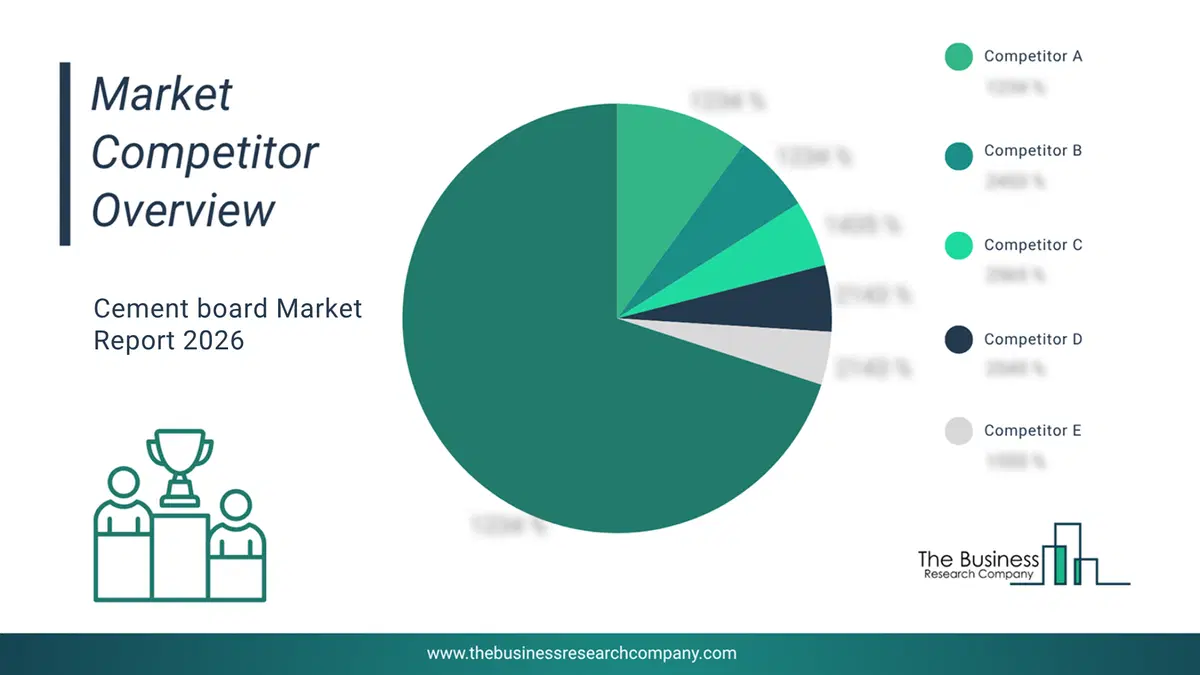
This chart is for illustrative purposes; the full report includes a detailed competitor analysis and comprehensive overview of the top 10 companies in the market.
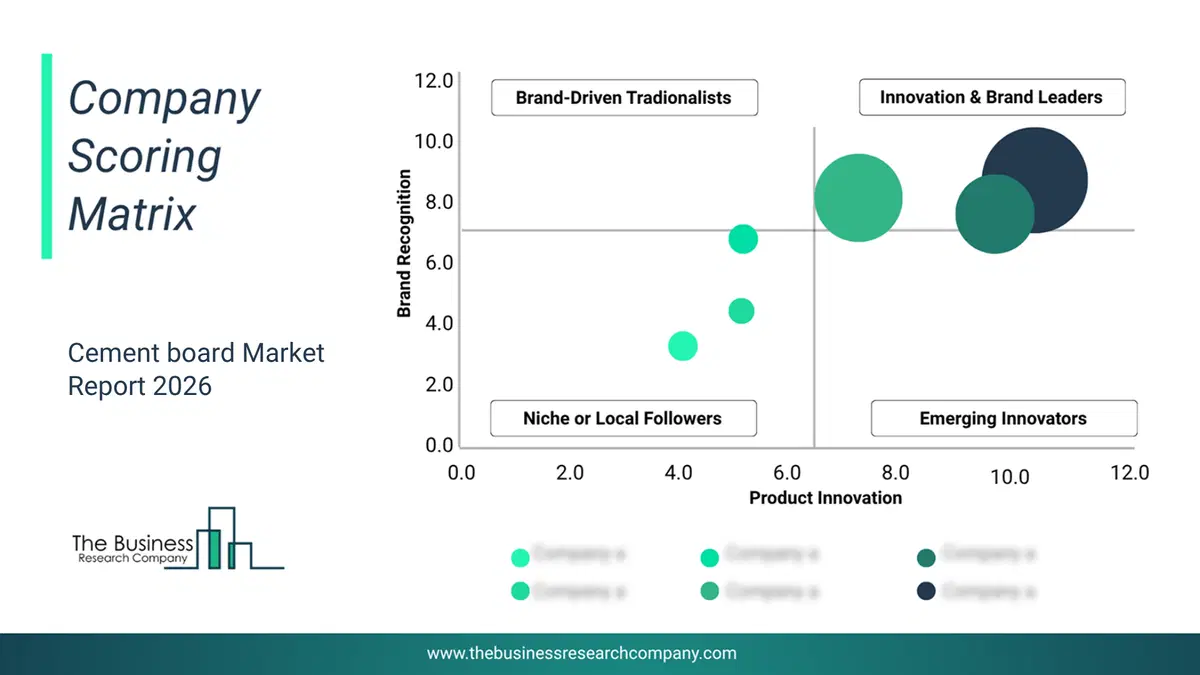
This chart maps companies by product innovation and brand strength, with bubble size indicating relative revenue, helping identify market leaders, challengers, and niche players. This is an illustrative chart; the full report provides a complete and accurate competitive analysis.
Global Cement board Market Trends and Insights
Major companies operating in the cement board market are focusing on developing innovative solution such as large-format, A2 fire-rated fiber-cement façade panels to enhance durability, fire safety, and architectural flexibility for commercial and residential applications. Fiber-cement façade panels are composite boards made from cement, mineral fibers, and fillers, combining the non-combustibility and weather resistance of cement with lighter weight, smoother finishes, and improved dimensional stability compared with traditional Portland-cement boards or timber cladding. For instance, in January 2024, James Hardie Industries plc, an Australia–based building-materials manufacturer, launched the 11 mm Hardie Panel for UK and European markets. The panel offers enhanced impact performance and an A2 fire rating, is available in large sizes up to 3048 × 1220 mm with multiple textures and finishes—including a Metallics range—and reduces installation complexity by requiring fewer layers where high impact resistance is needed, providing a durable, fire-safe, and aesthetically versatile solution for modern façades.What Are Latest Mergers And Acquisitions In The Cement board Market?
In March 2024, Etex N.V., a Belgium-based manufacturing company, acquired BGC’s plasterboard and fiber cement businesses for an undisclosed amount. With this acquisition, Etex expanded its sustainable offering and market presence in Australia and New Zealand—complementing its gypsum footprint, securing a top-three position in the fiber cement market, and increasing accessibility to sustainable building products and services. BGC (Australia) Pty Ltd plasterboard and fiber cement business is an Australia-based manufacturing company that specializes in providing plasterboard and fiber cement building products and related distribution services, supported by a plasterboard plant in Western Australia and a network of nine warehouses across Australia and New Zealand.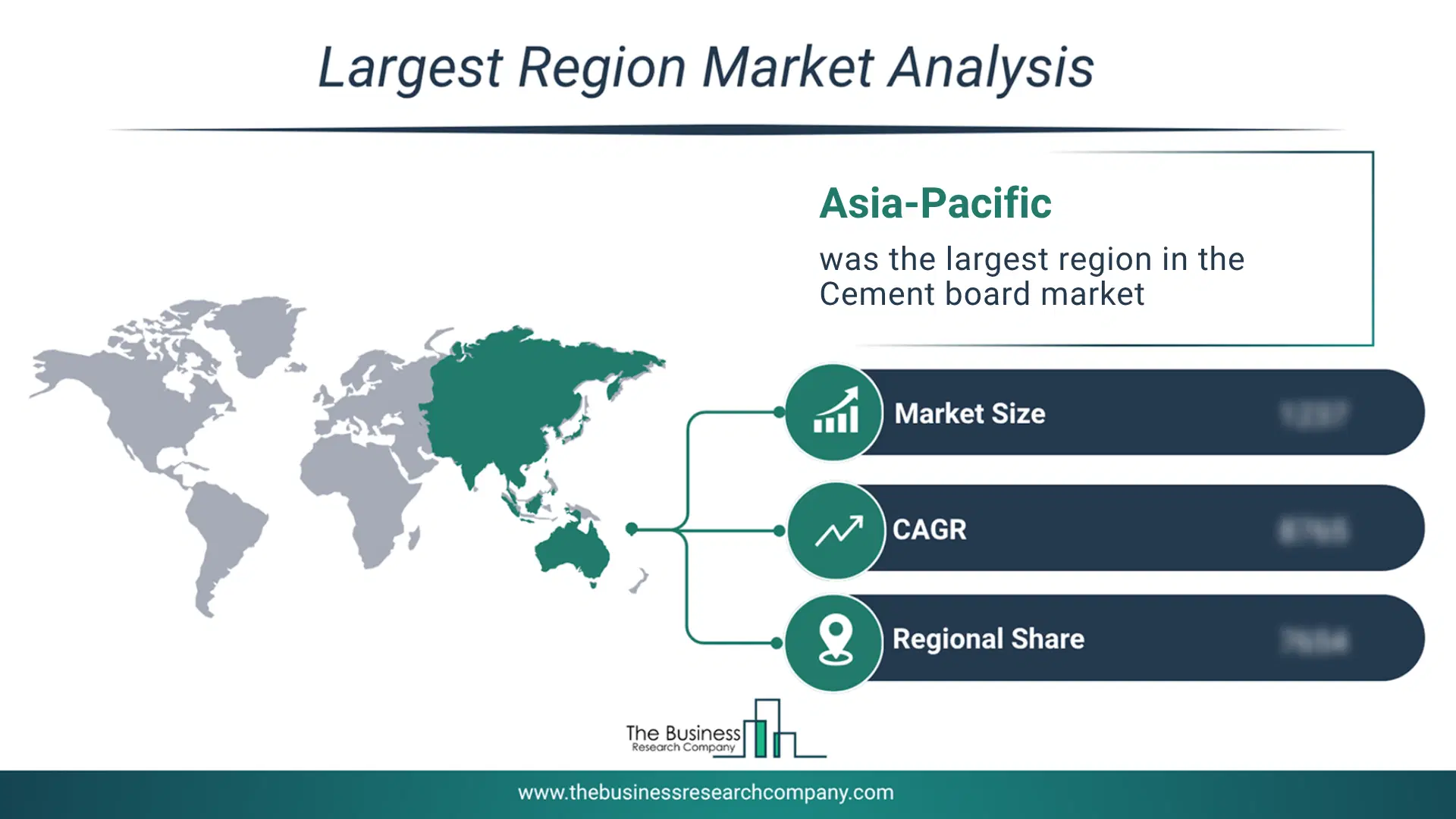
Regional Outlook
Asia-Pacific was the largest region in the cement board market in 2025. The regions covered in the cement board market are Asia-Pacific, South East Asia, Western Europe, Eastern Europe, North America, South America, Middle East, Africa. The countries covered in the cement board market are Australia, Brazil, China, France, Germany, India, Indonesia, Japan, Taiwan, Russia, South Korea, UK, USA, Canada, Italy, Spain.What Defines the Cement board Market?
The cement board market consists of sales of cement SIP (structural insulated panel) and ceramic cement boards. Values in this market are ‘factory gate’ values, that is the value of goods sold by the manufacturers or creators of the goods, whether to other entities (including downstream manufacturers, wholesalers, distributors and retailers) or directly to end customers. The value of goods in this market includes related services sold by the creators of the goods.How is Market Value Defined and Measured?
The market value is defined as the revenues that enterprises gain from the sale of goods and/or services within the specified market and geography through sales, grants, or donations in terms of the currency (in USD unless otherwise specified). The revenues for a specified geography are consumption values that are revenues generated by organizations in the specified geography within the market, irrespective of where they are produced. It does not include revenues from resales along the supply chain, either further along the supply chain or as part of other products.
This chart presents market attractiveness based on a quantitative evaluation of growth, competition, strategic alignment, and risk, offering a clear view of opportunity areas for decision-making. This chart is for illustrative purposes; the full report contains the complete analysis.

This chart highlights the Total Addressable Market (TAM) by estimating the maximum revenue opportunity using an assumption-driven approach, supporting strategic planning and opportunity sizing across markets. The chart is illustrative; the full report provides a more comprehensive analysis.
What Key Data and Analysis Are Included in the Cement board Market Report 2026?
The cement board market research report is one of a series of new reports from The Business Research Company that provides market statistics, including Market Report 2026?global market size, regional shares, competitors with the market share, detailed market segments, market trends and opportunities, and any further data you may need to thrive in the cement board Market Report 2026? The market research report delivers a complete perspective of everything you need, with an in-depth analysis of the current and future state of the Market Report 2026?Cement board Market Report Forecast Analysis
| Report Attribute | Details |
|---|---|
| Market Size Value In 2026 | $9.04 billion |
| Revenue Forecast In 2030 | $11.42 billion |
| Growth Rate | CAGR of 6.4% from 2026 to 2030 |
| Base Year For Estimation | 2025 |
| Actual Estimates/Historical Data | 2020-2025 |
| Forecast Period | 2026 - 2030 |
| Market Representation | Revenue in USD Billion and CAGR from 2026 to 2030 |
| Segments Covered | Product Type, Application, End User |
| Regional Scope | Asia-Pacific, Western Europe, Eastern Europe, North America, South America, Middle East, Africa |
| Country Scope | The countries covered in the report are Australia, Brazil, China, France, Germany, India, Indonesia, Japan, Taiwan, Russia, South Korea, UK, USA, Canada, Italy, Spain. |
| Key Companies Profiled | BetonWood SRL, Everest Industries Limited, Etex Group Ltd., Elementia Materiales SAB de CV, HIL Limited, GAF Materials Corporation, James Hardie Industries plc, Johns Manville Corp., Nichiha Corporation, Saint-Gobain SA, Atermit AS, LTM Group LLC, Lato OJSC, Soben Board International, Knauf Gips KG, Tepe Betopan AS, Mahaphant India Pvt.Ltd., Hume Cemboard Industries Sdn. Bhd., Visaka Industries Ltd., Allura USA, Swisspearl Group AG, Plycem USA Inc., Maxitile Ltd., American Fiber Cement Corporation, Taisyou International Business Co. Ltd., SCG Building Materials Co. Ltd., TPI Polene Public Company Limited, Shandong Lutai Building Material Science and Technology Group Co. Ltd. |
| Customization Scope | Request for Customization |
| Pricing And Purchase Options | Explore Purchase Options |