
Chemical, Biological, Radiological, Nuclear, And Explosive (CBRNE) Threat Detection Instruments Market Report 2026
Global Outlook – By Type (Fixed, Handheld Portable), By Technology Type (Gas Chromatography, Ion Mobility Spectrometry, Mass Spectrometry, Raman Spectroscopy), By Sales Channel (Direct Sales, Distributors, Online Sales), By Application (Environmental Monitoring, Healthcare, Homeland Security, Industrial, Military And Defense), By End User (Analytical Laboratories, Defense Forces, Fire Departments, Law Enforcement) – Market Size, Trends, Strategies, and Forecast to 2030
Chemical, Biological, Radiological, Nuclear, And Explosive (CBRNE) Threat Detection Instruments Market Overview
• Chemical, Biological, Radiological, Nuclear, And Explosive (CBRNE) Threat Detection Instruments market size has reached to $2.73 billion in 2025 • Expected to grow to $4.51 billion in 2030 at a compound annual growth rate (CAGR) of 10.5% • Growth Driver: Increasing Terrorism And Security Threats Fueling The Growth Of The Market Due To Rising Extremism And Growing Need For Early Threat Detection • Market Trend: Strategic Collaborations Driving Advanced CBRNE Threat Detection Solutions • North America was the largest region in 2025 and Asia-Pacific is the fastest growing region.What Is Covered Under Chemical, Biological, Radiological, Nuclear, And Explosive (CBRNE) Threat Detection Instruments Market?
Chemical, biological, radiological, nuclear, and explosive (CBRNE) threat detection instruments are advanced and highly specialized devices designed to detect, identify, and measure the presence of chemical, biological, radiological, nuclear, and explosive substances across diverse environments, enabling timely and informed responses to potentially dangerous situations. These instruments deliver precise and rapid analysis of hazardous agents, helping to prevent incidents, mitigate risks, and enhance overall situational safety and preparedness. The main types of chemical, biological, radiological, nuclear, and explosive (CBRNE) threat detection instruments are fixed, handheld, and portable. Fixed detection instruments are stationary devices installed in specific locations, such as buildings, laboratories, or critical facilities, to continuously monitor for chemical, biological, radiological, nuclear, and explosive threats. These include various technologies, such as gas chromatography, ion mobility spectrometry, mass spectrometry, and Raman spectroscopy, and are distributed via various channels, including direct sales, distributors, and online sales. These instruments find applications in environmental monitoring, healthcare, homeland security, and industrial, military, and defense sectors, serving end users such as analytical laboratories, defense forces, fire departments, and law enforcement.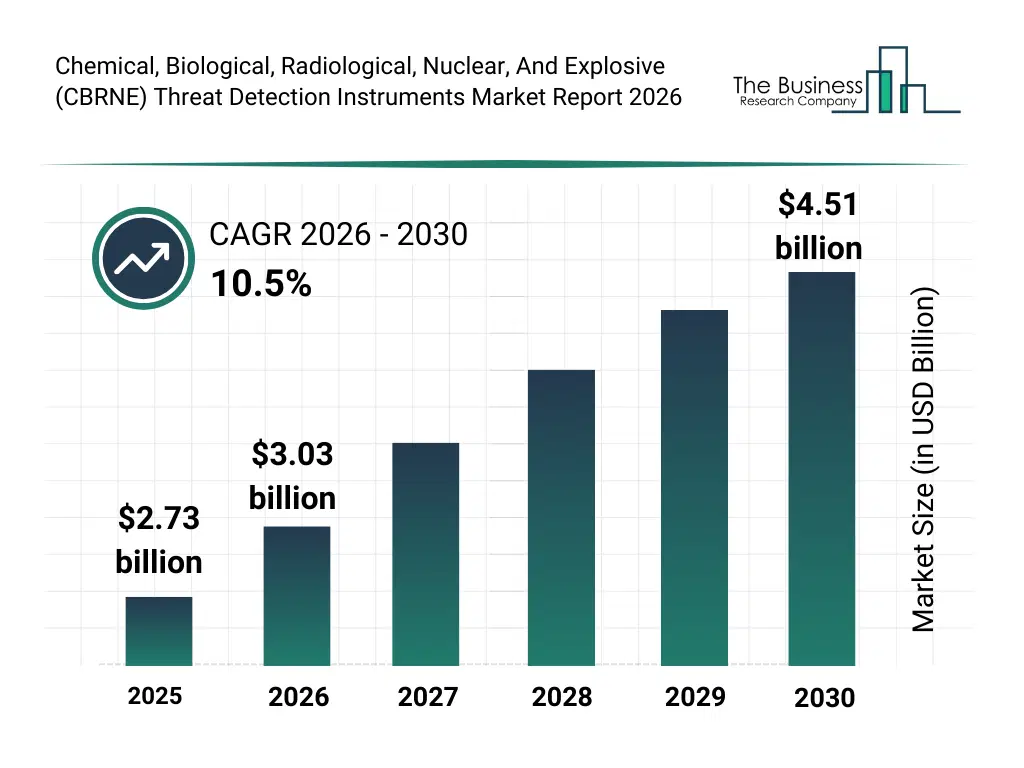
What Is The Chemical, Biological, Radiological, Nuclear, And Explosive (CBRNE) Threat Detection Instruments Market Size and Share 2026?
The chemical, biological, radiological, nuclear, and explosive (cbrne) threat detection instruments market size has grown rapidly in recent years. It will grow from $2.73 billion in 2025 to $3.03 billion in 2026 at a compound annual growth rate (CAGR) of 11.0%. The growth in the historic period can be attributed to rising global concerns over cbrne threats, increasing adoption of portable and fixed detection instruments by military and homeland security agencies, advancements in sensor and analytical technologies, regulatory mandates for safety and emergency preparedness, collaborations between instrument manufacturers and government agencies.What Is The Chemical, Biological, Radiological, Nuclear, And Explosive (CBRNE) Threat Detection Instruments Market Growth Forecast?
The chemical, biological, radiological, nuclear, and explosive (cbrne) threat detection instruments market size is expected to see rapid growth in the next few years. It will grow to $4.51 billion in 2030 at a compound annual growth rate (CAGR) of 10.5%. The growth in the forecast period can be attributed to development of multi-threat, real-time, and networked cbrne detection systems, integration with ai and data analytics for predictive threat assessment, rising demand from industrial, transportation, and public safety sectors, emphasis on compact, lightweight, and user-friendly instruments, expansion of maintenance, calibration, training, and consulting services for operational readiness. Major trends in the forecast period include miniaturization of multi-threat detection instruments, increased demand for integrated cbrne detection suites, shift toward rugged, field-deployable analytical platforms, growing outsourcing of calibration and maintenance services, rising adoption of real-time monitoring in industrial environments,,.
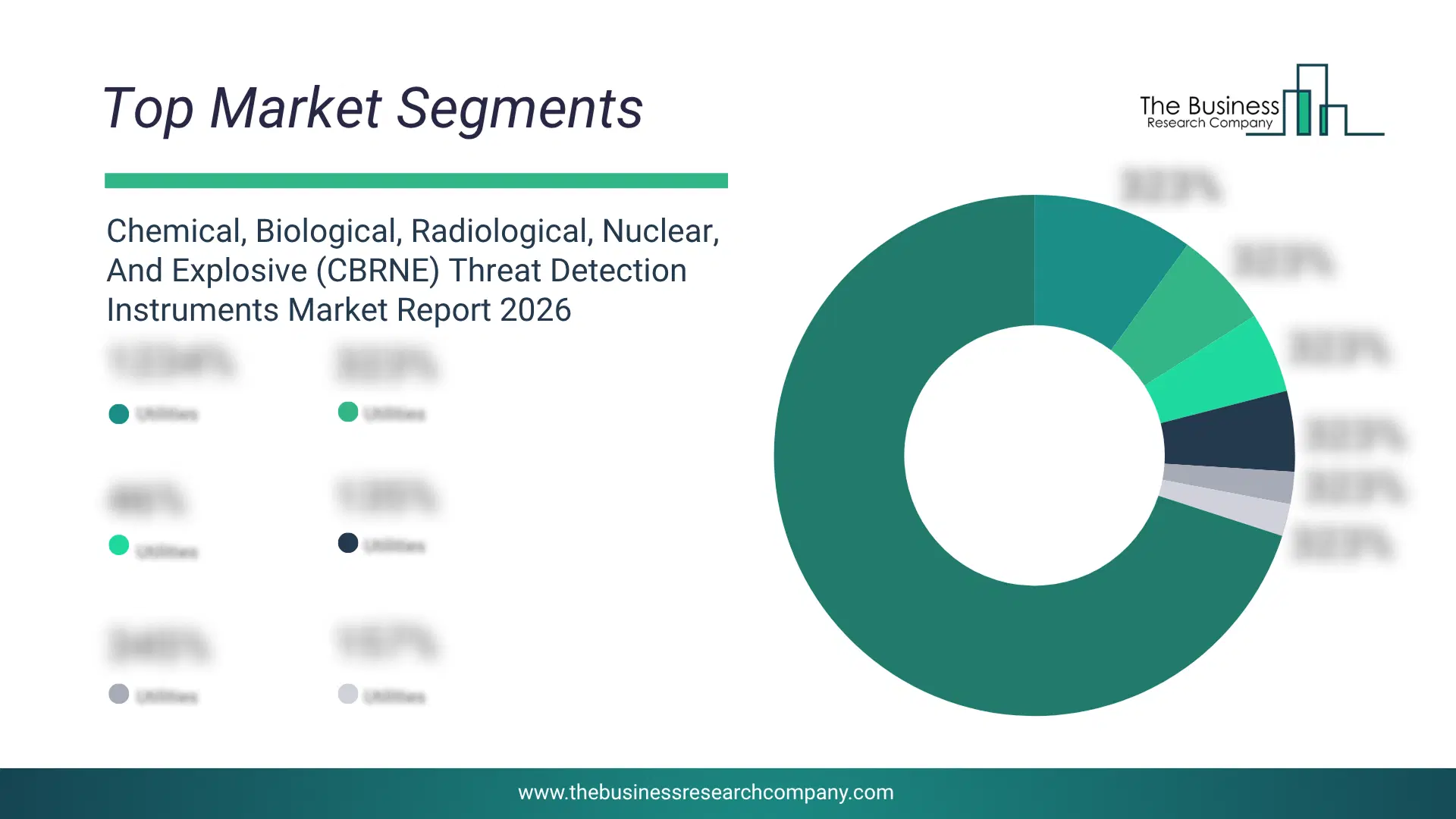
Global Chemical, Biological, Radiological, Nuclear, And Explosive (CBRNE) Threat Detection Instruments Market Segmentation
1) By Type: Fixed, Handheld Portable 2) By Technology Type: Gas Chromatography, Ion Mobility Spectrometry, Mass Spectrometry, Raman Spectroscopy 3) By Sales Channel: Direct Sales, Distributors, Online Sales 4) By Application: Environmental Monitoring, Healthcare, Homeland Security, Industrial, Military And Defense 5) By End User: Analytical Laboratories, Defense Forces, Fire Departments, Law Enforcement Subsegments: 1) By Fixed: Mounted Detection Units, Stationary Monitoring Systems, Fixed-Site Surveillance Equipment 2) By Handheld Portable: Handheld Portable Chemical Detectors, Handheld Portable Biological Analyzers, Handheld Portable Radiological Sensors, Handheld Portable Explosive Trace DetectorsWhat Is Driver Of The Chemical, Biological, Radiological, Nuclear, And Explosive (CBRNE) Threat Detection Instruments Market?
The increasing terrorism and security threats are expected to propel the growth of the chemical, biological, radiological, nuclear, and explosive (CBRNE) threat detection instruments market going forward. Terrorism and security threats are actions or situations that put people, places, or communities in danger and cause fear or harm. The increasing terrorism and security threats are due to religious extremism, as radical ideologies continue to spread online and offline, influencing vulnerable individuals to commit acts of violence. Chemical, biological, radiological, nuclear, and explosive (CBRNE) threat detection instruments help counter terrorism and security threats by providing early identification of hazardous substances, making them essential for military, law enforcement, and emergency responders. They reduce risks by enabling rapid detection and response, improving preparedness, and safeguarding public safety. For instance, in February 2024, according to the Institute for Economics and Peace, an Australia-based non-profit organization, the lethality rate of terrorist attacks rose to 2.5 fatalities per attack in 2023, compared to 1.6 in 2022. Therefore, the increasing terrorism and security threats are driving the growth of the chemical, biological, radiological, nuclear, and explosive (CBRNE) threat detection instruments industry.Key Players In The Global Chemical, Biological, Radiological, Nuclear, And Explosive (CBRNE) Threat Detection Instruments Market
Major companies operating in the chemical, biological, radiological, nuclear, and explosive (cbrne) threat detection instruments market are Thermo Fisher Scientific Inc., Honeywell International Inc., 3M Company, Thales Group, Leidos Holdings Inc., Rheinmetall AG, Agilent Technologies, Battelle Memorial Institute, Teledyne Technologies Inc., SAAB AB, Drägerwerk AG & Co. KGaA, Smiths Group PLC, Bruker Corporation, Hach Chemical Company, Chemring Group PLC, Kromek Group plc, Bertin Technologies, Kärcher Futuretech GmbH, Morphix Technologies, Argon Electronics Ltd., Proengin SAS, S. E. International Inc.
This chart is for illustrative purposes; the full report includes a detailed competitor analysis and comprehensive overview of the top 10 companies in the market.
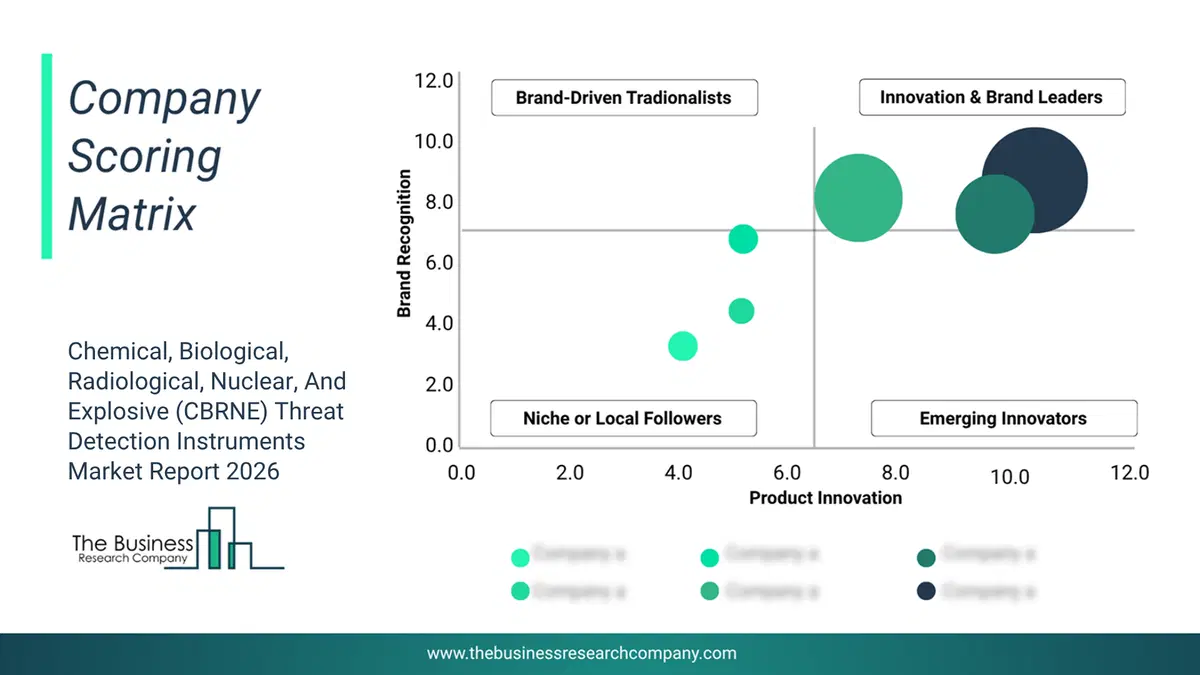
This chart maps companies by product innovation and brand strength, with bubble size indicating relative revenue, helping identify market leaders, challengers, and niche players. This is an illustrative chart; the full report provides a complete and accurate competitive analysis.
Global Chemical, Biological, Radiological, Nuclear, And Explosive (CBRNE) Threat Detection Instruments Market Trends and Insights
Major companies operating in the chemical, biological, radiological, nuclear, and explosive (CBRNE) threat detection instruments market are focusing on adopting strategic collaborations to enhance detection accuracy and operational efficiency. Strategic collaborations refer to purposeful partnerships between organizations aimed at combining resources and expertise to achieve mutual long-term goals and gain a competitive advantage. For instance, in September 2024, Smiths Detection Group Ltd., a UK-based technology company, partnered with Riskaware Limited, a UK-based actionable intelligence consultancy, and launched UrbanAware, an end-to-end platform to augment, integrate, and digitize the delivery of chemical, biological, radiological, and nuclear (CBRN) hazard intelligence in real time during an incident. This collaboration aims to bridge the gap between data collection, analysis, and situational awareness of chemical, biological, radiological, and nuclear threats, delivering actionable intelligence to the tactical edge in real time. This solution enables faster, informed decision-making for first responders and military planners by integrating sensor data with advanced hazard modeling and simulation, ultimately protecting people, infrastructure, and societies during chemical incidents and disaster management operations.What Are Latest Mergers And Acquisitions In The Chemical, Biological, Radiological, Nuclear, And Explosive (CBRNE) Threat Detection Instruments Market? Norwegian MoD Partners With Watchbird AS To Advance CBRN Detection
In June 2025, the Norwegian Ministry of Defence, a Norway-based government body responsible for national defence, partnered with Watchbird AS to advance next-generation CBRN threat-detection capabilities. The aim of the partnership is to accelerate research and development of cutting-edge sensor systems to strengthen national security and improve early detection of chemical, biological, radiological, and nuclear threats. Watchbird AS is a Norway-based technology company specializing in autonomous sensor platforms and advanced situational-awareness systems.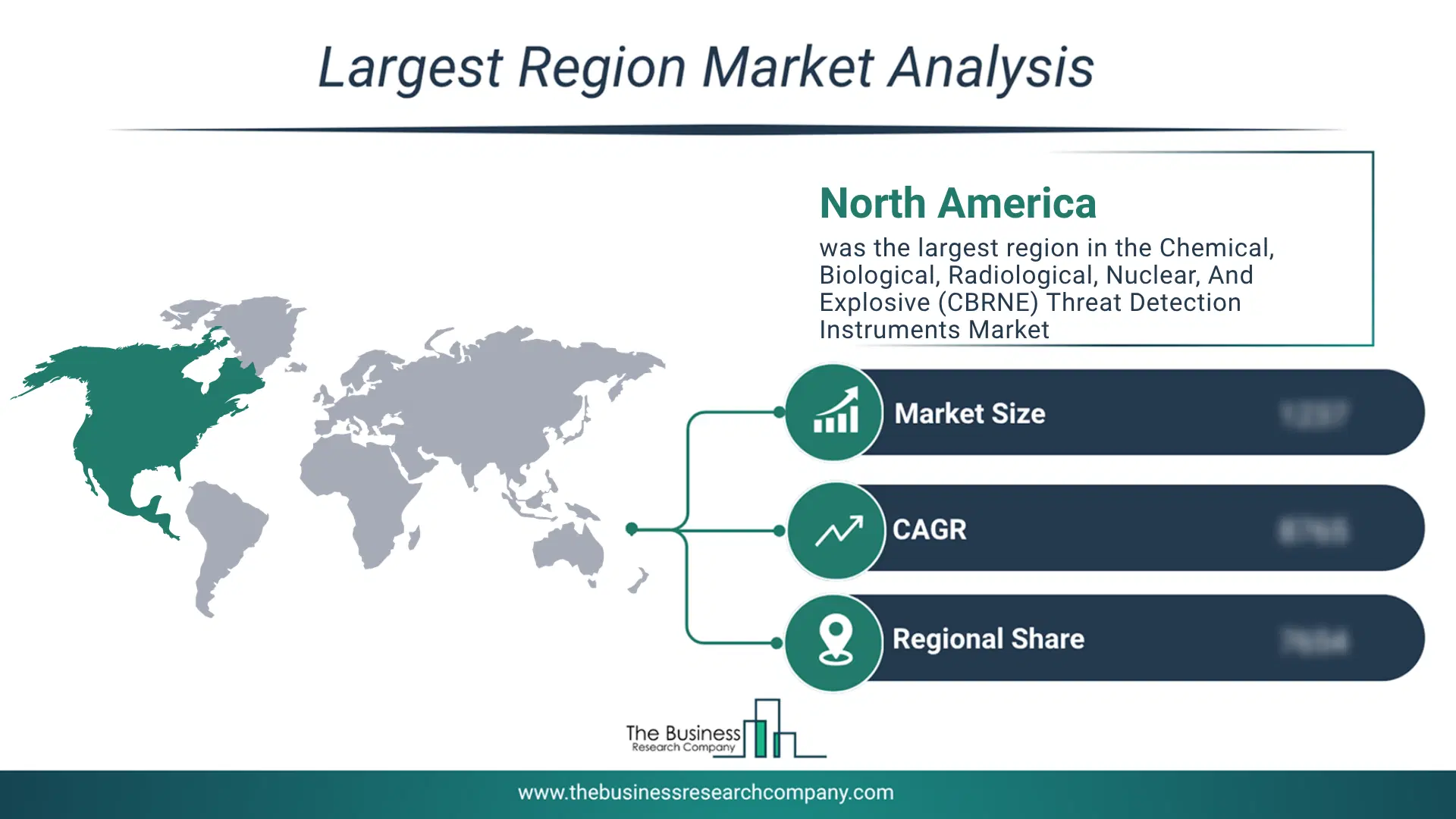
Regional Insights
North America was the largest region in the chemical, biological, radiological, nuclear, and explosive (CBRNE) threat detection instruments market in 2025. Asia-Pacific is expected to be the fastest-growing region in the forecast period. The regions covered in this market report are Asia-Pacific, South East Asia, Western Europe, Eastern Europe, North America, South America, Middle East, Africa. The countries covered in this market report are Australia, Brazil, China, France, Germany, India, Indonesia, Japan, Taiwan, Russia, South Korea, UK, USA, Canada, Italy, SpainWhat Defines the Chemical, Biological, Radiological, Nuclear, And Explosive (CBRNE) Threat Detection Instruments Market?
The chemical, biological, radiological, nuclear, and explosive (CBRNE) threat detection instruments market consists of revenues earned by entities by providing services such as system installation, maintenance and repair, calibration, technical support, training, monitoring, and consulting services. The market value includes the value of related goods sold by the service provider or included within the service offering. The chemical, biological, radiological, nuclear, and explosive (CBRNE) threat detection instruments market also includes sales of chemical, biological, radiological, nuclear, and explosive (CBRNE) threat detection instruments. Values in this market are ‘factory gate’ values, that is the value of goods sold by the manufacturers or creators of the goods, whether to other entities (including downstream manufacturers, wholesalers, distributors and retailers) or directly to end customers. The value of goods in this market includes related services sold by the creators of the goods.How is Market Value Defined and Measured?
The market value is defined as the revenues that enterprises gain from the sale of goods and/or services within the specified market and geography through sales, grants, or donations in terms of the currency (in USD unless otherwise specified). The revenues for a specified geography are consumption values that are revenues generated by organizations in the specified geography within the market, irrespective of where they are produced. It does not include revenues from resales along the supply chain, either further along the supply chain or as part of other products.
This chart presents market attractiveness based on a quantitative evaluation of growth, competition, strategic alignment, and risk, offering a clear view of opportunity areas for decision-making. This chart is for illustrative purposes; the full report contains the complete analysis.

This chart highlights the Total Addressable Market (TAM) by estimating the maximum revenue opportunity using an assumption-driven approach, supporting strategic planning and opportunity sizing across markets. The chart is illustrative; the full report provides a more comprehensive analysis.
What Key Data and Analysis Are Included in the Chemical, Biological, Radiological, Nuclear, And Explosive (CBRNE) Threat Detection Instruments Market Report 2026?
The chemical, biological, radiological, nuclear, and explosive (cbrne) threat detection instruments market research report is one of a series of new reports from The Business Research Company that provides market statistics, including industry global market size, regional shares, competitors with the market share, detailed market segments, market trends and opportunities, and any further data you may need to thrive in the chemical, biological, radiological, nuclear, and explosive (cbrne) threat detection instruments industry. The market research report delivers a complete perspective of everything you need, with an in-depth analysis of the current and future state of the industry.Chemical, Biological, Radiological, Nuclear, And Explosive (CBRNE) Threat Detection Instruments Market Report Forecast Analysis
| Report Attribute | Details |
|---|---|
| Market Size Value In 2026 | $3.03 billion |
| Revenue Forecast In 2030 | $4.51 billion |
| Growth Rate | CAGR of 10.5% from 2026 to 2030 |
| Base Year For Estimation | 2025 |
| Actual Estimates/Historical Data | 2020-2025 |
| Forecast Period | 2026 - 2030 |
| Market Representation | Revenue in USD Billion and CAGR from 2026 to 2030 |
| Segments Covered | Type, Technology Type, Sales Channel, Application, End User |
| Regional Scope | Asia-Pacific, Western Europe, Eastern Europe, North America, South America, Middle East, Africa |
| Country Scope | The countries covered in the chemical, biological, radiological, nuclear, and explosive (cbrne) threat detection instruments market report are Australia, Brazil, China, France, Germany, India, Indonesia, Japan, Taiwan, Russia, South Korea, UK, USA, Canada, Italy, Spain |
| Key Companies Profiled | Thermo Fisher Scientific Inc., Honeywell International Inc., 3M Company, Thales Group, Leidos Holdings Inc., Rheinmetall AG, Agilent Technologies, Battelle Memorial Institute, Teledyne Technologies Inc., SAAB AB, Drägerwerk AG & Co. KGaA, Smiths Group PLC, Bruker Corporation, Hach Chemical Company, Chemring Group PLC, Kromek Group plc, Bertin Technologies, Kärcher Futuretech GmbH, Morphix Technologies, Argon Electronics Ltd., Proengin SAS, S. E. International Inc. |
| Customization Scope | Request for Customization |
| Pricing And Purchase Options | Explore Purchase Options |