
Chemical Fungicides Market Report 2026
Global Outlook – By Product Type (Bio Based Fungicide, Synthetic Fungicide), By Form (Liquid, Dry), By Active Ingredients (Dithiocarbamates, Benzimidazoles, Chloronitriles, Triazoles, Phenylamides, Strobilurins, Other Active Ingredients), By Action (Contact, Systemic), By Application (Seed Treatment, Soil Treatment, Foliar Spray, Chemigation, Post-Harvest) – Market Size, Trends, Strategies, and Forecast to 2030
Chemical Fungicides Market Overview
• Chemical Fungicides market size has reached to $25.45 billion in 2025 • Expected to grow to $34.44 billion in 2030 at a compound annual growth rate (CAGR) of 6.1% • Growth Driver: The Surge In Chemical Fungicides Market Fueled By Escalating Crop Diseases • Market Trend: Innovations In Biological Fungicide Technology Strengthen Integrated Disease-Management Strategies In Chemical Fungicide Applications • Asia-Pacific was the largest region in 2025.What Is Covered Under Chemical Fungicides Market?
Chemical fungicides refer to the pesticides known as fungicides that work to eradicate or stop the development of fungi and their spores. They are effective against rust, mildew, and other plant-damaging fungi. The main types of chemical fungicides are bio-based fungicides and synthetic fungicides. Bio-fungicides are live organism-based formulations that are used to regulate the activities of bacteria and fungi that cause plant diseases. These are available in various forms such as liquid and dry. The various active ingredients include dithiocarbamates, benzimidazoles, chloronitriles, triazoles, phenyl amides, strobilurins and other active ingredients through various actions such as contact and systemic. These are used in various applications such as seed treatment, soil treatment, foliar spray, chemigation and post-harvest.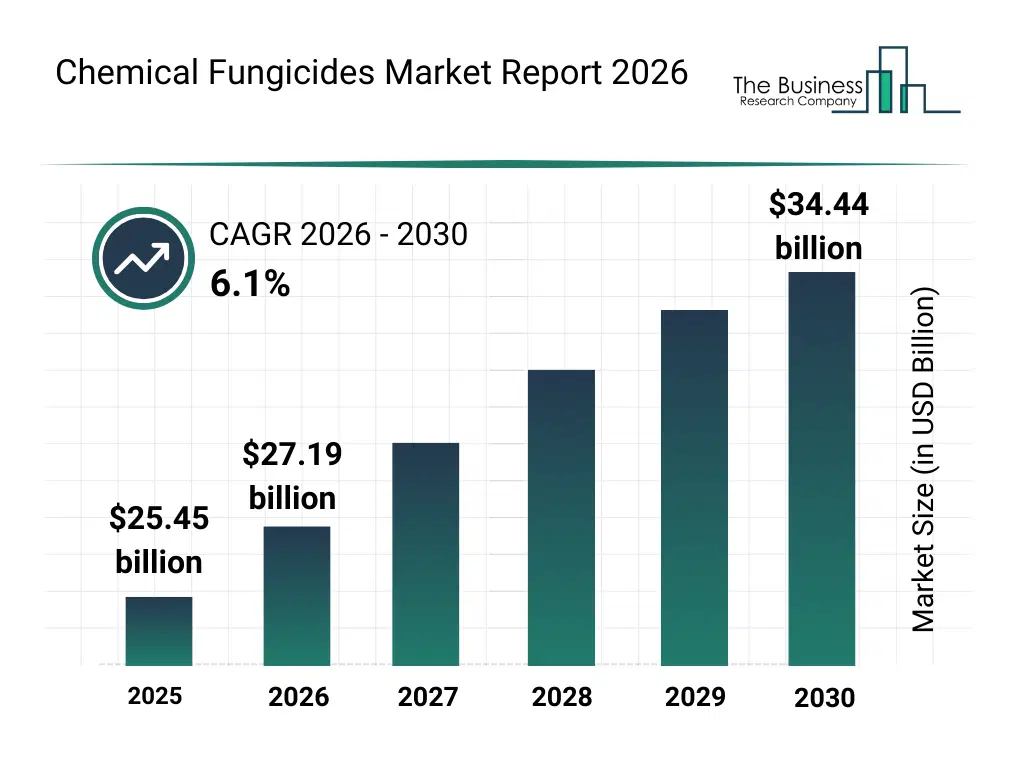
What Is The Chemical Fungicides Market Size and Share 2026?
The chemical fungicides market size has grown strongly in recent years. It will grow from $25.45 billion in 2025 to $27.19 billion in 2026 at a compound annual growth rate (CAGR) of 6.8%. The growth in the historic period can be attributed to increasing crop disease incidence, expansion of commercial agriculture practices, rising use of chemical crop protection products, growth in seed treatment applications, availability of diverse synthetic active ingredients.What Is The Chemical Fungicides Market Growth Forecast?
The chemical fungicides market size is expected to see strong growth in the next few years. It will grow to $34.44 billion in 2030 at a compound annual growth rate (CAGR) of 6.1%. The growth in the forecast period can be attributed to increasing global food demand, rising adoption of integrated pest management programs, expansion of fungicide use in horticulture crops, growing focus on crop yield optimization, increasing investments in advanced agrochemical formulations. Major trends in the forecast period include increasing adoption of broad-spectrum fungicide formulations, rising demand for systemic fungicides in high-value crops, growing use of resistance-management fungicide programs, expansion of post-harvest fungicide applications, enhanced focus on yield protection efficiency.
Global Chemical Fungicides Market Segmentation
1) By Product Type: Bio Based Fungicide, Synthetic Fungicide 2) By Form: Liquid, Dry 3) By Active Ingredients: Dithiocarbamates, Benzimidazoles, Chloronitriles, Triazoles, Phenylamides, Strobilurins, Other Active Ingredients 4) By Action: Contact, Systemic 5) By Application: Seed Treatment, Soil Treatment, Foliar Spray, Chemigation, Post-Harvest Subsegments: 1) By Bio-Based Fungicide: Microbial Fungicides, Plant Extract Fungicides, Bio-Control Agents 2) By Synthetic Fungicide: Azoles, Strobilurins, Chloronitriles, DicarboximidesWhat Is The Driver Of The Chemical Fungicides Market?
The rising occurrence of crop diseases is expected to propel the growth of the chemical fungicide market going forward. Crop diseases are caused by various pathogenic organisms, such as fungi, bacteria, mycoplasmas, viruses, viroids, nematodes, and parasitic flowering plants. Chemical fungicides work to eradicate or stop the development of fungi and their spores and are effective against rust, mildew, and other plant-damaging fungi. As a result, the rising occurrence of crop diseases increases the demand for chemical fungicides. For instance, in January 2025, according to the Ministry of Agriculture, a Zambia-based government ministry, more than 125,000 hectares of maize fields across the country have been infested by fall armyworms, impacting 247,957 farming households in the 2024/2025 farming season. Therefore, the rising occurrence of crop diseases drives the chemical fungicide industry.Key Players In The Global Chemical Fungicides Market
Major companies operating in the chemical fungicides market are BASF SE, Bayer AG, Corteva Inc, Syngenta AG, FMC Corporation, UPL Ltd., Sumitomo Chemical Co. Ltd., Nippon Soda Co. Ltd., Isagro S.p.A, Nufarm, ADAMA, Nissan Chemical Corporation, Marrone Bio Innovations Inc., Ishihara Sangyo Kaisha Ltd., Certis LLC, Valent BioSciences LLC, Stockton Group, Lallemand Plant Care, Albaugh LLC, Rotam CropSciences Ltd., Sipcam Agro USA Inc., Kumiai Chemical Industry Co. Ltd., Arysta LifeScience Corporation, Heranba Industries Ltd.
This chart is for illustrative purposes; the full report includes a detailed competitor analysis and comprehensive overview of the top 10 companies in the market.
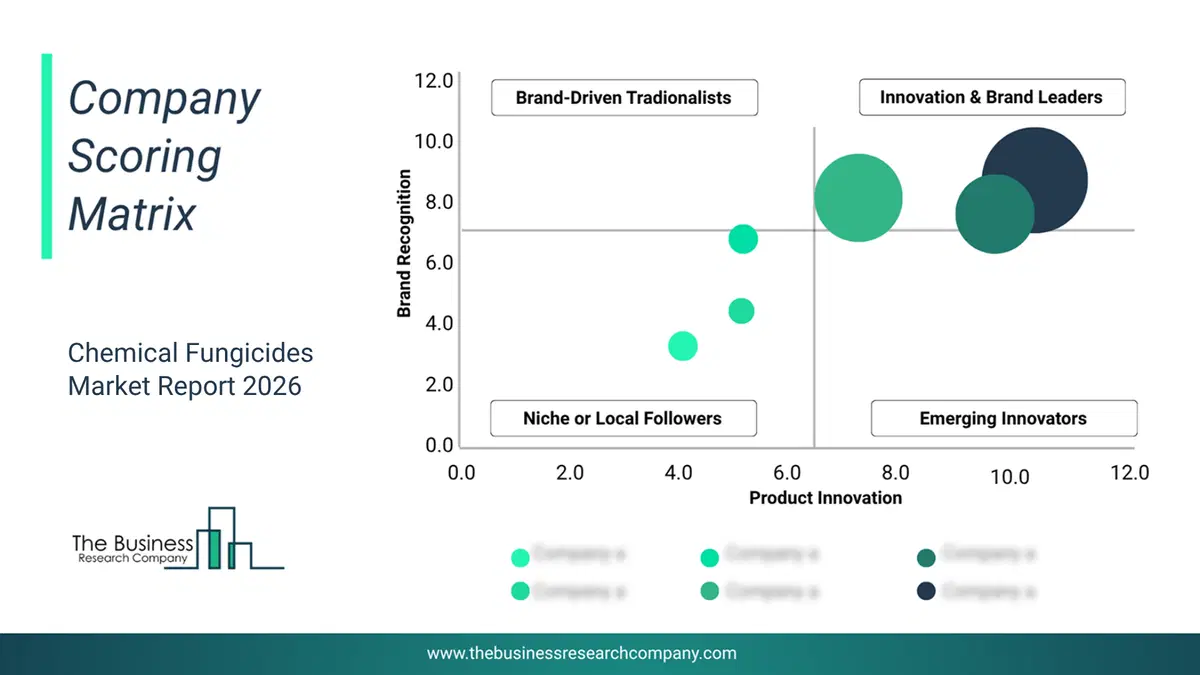
This chart maps companies by product innovation and brand strength, with bubble size indicating relative revenue, helping identify market leaders, challengers, and niche players. This is an illustrative chart; the full report provides a complete and accurate competitive analysis.
Global Chemical Fungicides Market Trends and Insights
Major companies operating in the chemical fungicides market are focusing on developing advanced biological solutions, such as microbial-based fungicides, to enhance disease control, improve crop resilience, and support sustainable farming practices. Microbial fungicides leverage naturally occurring beneficial microorganisms to suppress plant pathogens, reduce chemical load, and complement existing fungicide programs for improved overall efficacy. For instance, in August 2023, FMC India, an India-based agricultural-sciences company, launched ENTAZIA bio-fungicide, a next-generation biological fungicide formulated with a proprietary strain of Bacillus subtilis. The product harnesses the natural disease-control properties of Bacillus subtilis to effectively prevent bacterial leaf blight in rice, while simultaneously activating the crop's innate defense mechanisms. ENTAZIA supports a healthy plant microbiome, enhances stress tolerance, and promotes overall plant vigor. It can also be integrated into conventional disease-management programs alongside synthetic fungicides and biostimulants to deliver enhanced crop protection and agronomic benefits.What Are Latest Mergers And Acquisitions In The Chemical Fungicides Market?
In April 2024, UPL Corp, an India-based company manufacturing sustainable agriculture products, acquired Corteva's Solo mancozeb business for an undisclosed amount. This acquisition is aimed at strengthening UPL Corp's position in the crop protection industry by expanding its fungicide portfolio and enhancing its global market reach. Corteva is a US-based company produces fungicide products aimed at preventing and curing fungal diseases.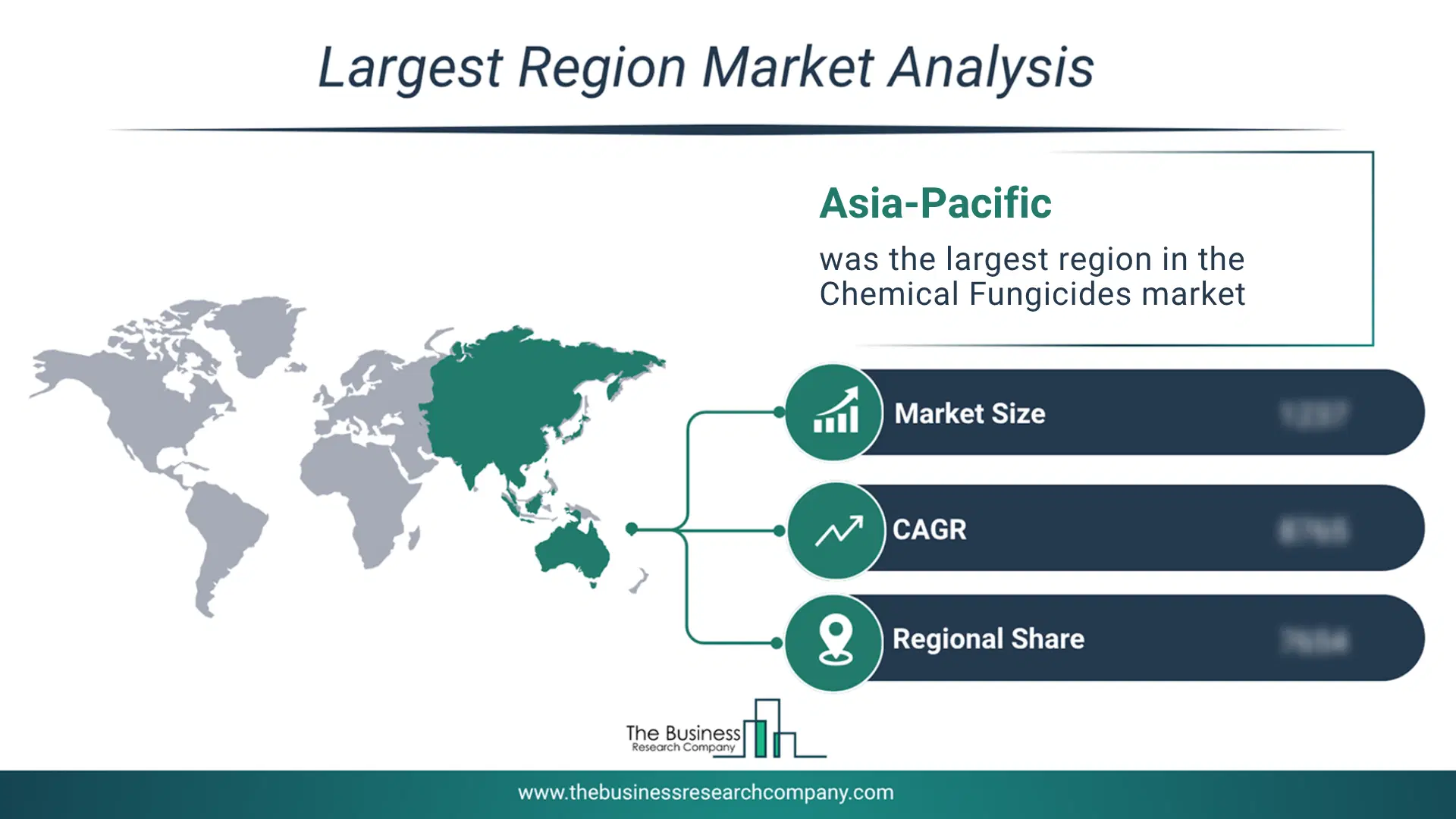
Regional Insights
Asia-Pacific was the largest region in the chemical fungicides market in 2025. The regions covered in this market report are Asia-Pacific, South East Asia, Western Europe, Eastern Europe, North America, South America, Middle East, Africa The countries covered in this market report are Australia, Brazil, China, France, Germany, India, Indonesia, Japan, Taiwan, Russia, South Korea, UK, USA, Canada, Italy, SpainWhat Defines the Chemical Fungicides Market?
The chemical fungicides market consists of sales of mancozeb, maneb, nabamand zineb. Values in this market are ‘factory gate’ values, that is the value of goods sold by the manufacturers or creators of the goods, whether to other entities (including downstream manufacturers, wholesalers, distributors and retailers) or directly to end customers. The value of goods in this market includes related services sold by the creators of the goods.How is Market Value Defined and Measured?
The market value is defined as the revenues that enterprises gain from the sale of goods and/or services within the specified market and geography through sales, grants, or donations in terms of the currency (in USD unless otherwise specified). The revenues for a specified geography are consumption values that are revenues generated by organizations in the specified geography within the market, irrespective of where they are produced. It does not include revenues from resales along the supply chain, either further along the supply chain or as part of other products.
This chart presents market attractiveness based on a quantitative evaluation of growth, competition, strategic alignment, and risk, offering a clear view of opportunity areas for decision-making. This chart is for illustrative purposes; the full report contains the complete analysis.

This chart highlights the Total Addressable Market (TAM) by estimating the maximum revenue opportunity using an assumption-driven approach, supporting strategic planning and opportunity sizing across markets. The chart is illustrative; the full report provides a more comprehensive analysis.
What Key Data and Analysis Are Included in the Chemical Fungicides Market Report 2026?
The chemical fungicides market research report is one of a series of new reports from The Business Research Company that provides market statistics, including industry global market size, regional shares, competitors with the market share, detailed market segments, market trends and opportunities, and any further data you may need to thrive in the chemical fungicides industry. The market research report delivers a complete perspective of everything you need, with an in-depth analysis of the current and future state of the industry.Chemical Fungicides Market Report Forecast Analysis
| Report Attribute | Details |
|---|---|
| Market Size Value In 2026 | $27.19 billion |
| Revenue Forecast In 2030 | $34.44 billion |
| Growth Rate | CAGR of 6.8% from 2026 to 2030 |
| Base Year For Estimation | 2025 |
| Actual Estimates/Historical Data | 2020-2025 |
| Forecast Period | 2026 - 2030 |
| Market Representation | Revenue in USD Billion and CAGR from 2026 to 2030 |
| Segments Covered | Product Type, Form, Active Ingredients, Action, Application |
| Regional Scope | Asia-Pacific, Western Europe, Eastern Europe, North America, South America, Middle East, Africa |
| Country Scope | The countries covered in this market report are Australia, Brazil, China, France, Germany, India, Indonesia, Japan, Taiwan, Russia, South Korea, UK, USA, Canada, Italy, Spain |
| Key Companies Profiled | BASF SE, Bayer AG, Corteva Inc, Syngenta AG, FMC Corporation, UPL Ltd., Sumitomo Chemical Co. Ltd., Nippon Soda Co. Ltd., Isagro S.p.A, Nufarm, ADAMA, Nissan Chemical Corporation, Marrone Bio Innovations Inc., Ishihara Sangyo Kaisha Ltd., Certis LLC, Valent BioSciences LLC, Stockton Group, Lallemand Plant Care, Albaugh LLC, Rotam CropSciences Ltd., Sipcam Agro USA Inc., Kumiai Chemical Industry Co. Ltd., Arysta LifeScience Corporation, Heranba Industries Ltd. |
| Customization Scope | Request for Customization |
| Pricing And Purchase Options | Explore Purchase Options |