
Chemical Logistics Market Report 2026
Global Outlook – By Services (Transportation And Distribution Services, Storage And Warehousing Services, Customs And Security Services, Other Services), By Mode Of Transportation (Roadways, Railways, Airways, Waterways, Pipelines), By End User (Chemical Industry, Pharmaceutical Industry, Cosmetic Industry, Oil And Gas Industry, Specialty Chemicals Industry) – Market Size, Trends, Strategies, and Forecast to 2030
Chemical Logistics Market Overview
• Chemical Logistics market size has reached to $303.06 billion in 2025 • Expected to grow to $381.22 billion in 2030 at a compound annual growth rate (CAGR) of 4.6% • Growth Driver: Chemical Production Surge Ignites Growth In The Chemical Logistics Market • Market Trend: GWC Logistics Launches State-Of-The-Art Chemical Logistics Center In Doha To Support Multiple Industries • Asia-Pacific was the largest region in 2025.Market Gains By 2030 – Top Opportunities By Segment
Market Gain identifies the most promising market opportunities by highlighting the segments or products expected to generate the highest incremental revenue growth over the next five years.
What Is Covered Under Chemical Logistics Market?
Chemical logistics is a service that involves the storage and transportation of chemicals along a supply chain with special care by chemical logistics companies. The chemical logistics services help to transport these compounds with extreme caution to avoid any safety risks such as contamination and spoilage. The main types of services in chemical logistics are transportation and distribution services, storage and warehousing services, customs and security services, green logistics services, and consulting and management services. Transport and distribution services can be used to connect customers, raw material suppliers, plants, warehouses, and channel members with the help of water, rail, motor carrier, air, and pipeline. The different modes of transportation include roadways, railways, airways, waterways, and pipelines, and are used by the chemical industry, pharmaceutical industry, cosmetic industry, oil and gas industry, specialty chemicals industry, food industry, and other industries.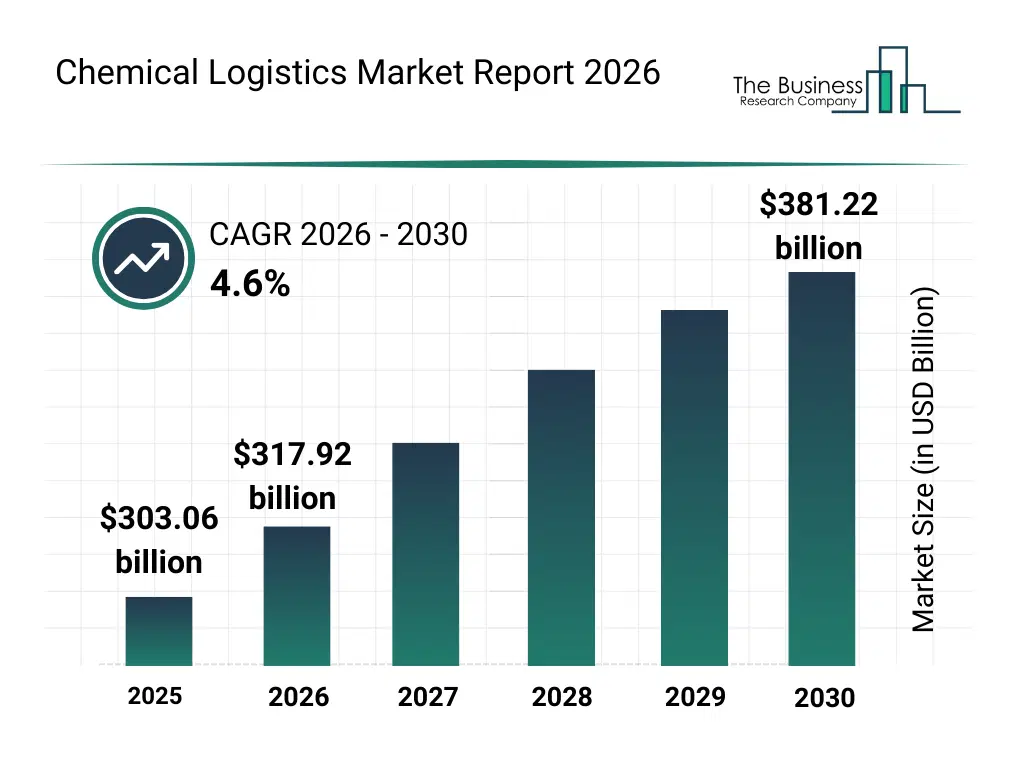
What Is The Chemical Logistics Market Size and Share 2026?
The chemical logistics market size has grown steadily in recent years. It will grow from $303.06 billion in 2025 to $317.92 billion in 2026 at a compound annual growth rate (CAGR) of 4.9%. The growth in the historic period can be attributed to chemical industry expansion, globalization of chemical trade, need for safe handling, growth of bulk chemical transport, regulatory enforcement.What Is The Chemical Logistics Market Growth Forecast?
The chemical logistics market size is expected to see steady growth in the next few years. It will grow to $381.22 billion in 2030 at a compound annual growth rate (CAGR) of 4.6%. The growth in the forecast period can be attributed to sustainable logistics demand, digital supply chain adoption, growth of specialty chemicals, automation in warehousing, risk management focus. Major trends in the forecast period include growth of specialized chemical transport, expansion of temperature-controlled logistics, rising focus on regulatory compliance, adoption of digital tracking systems, demand for green logistics.
Global Chemical Logistics Market Segmentation
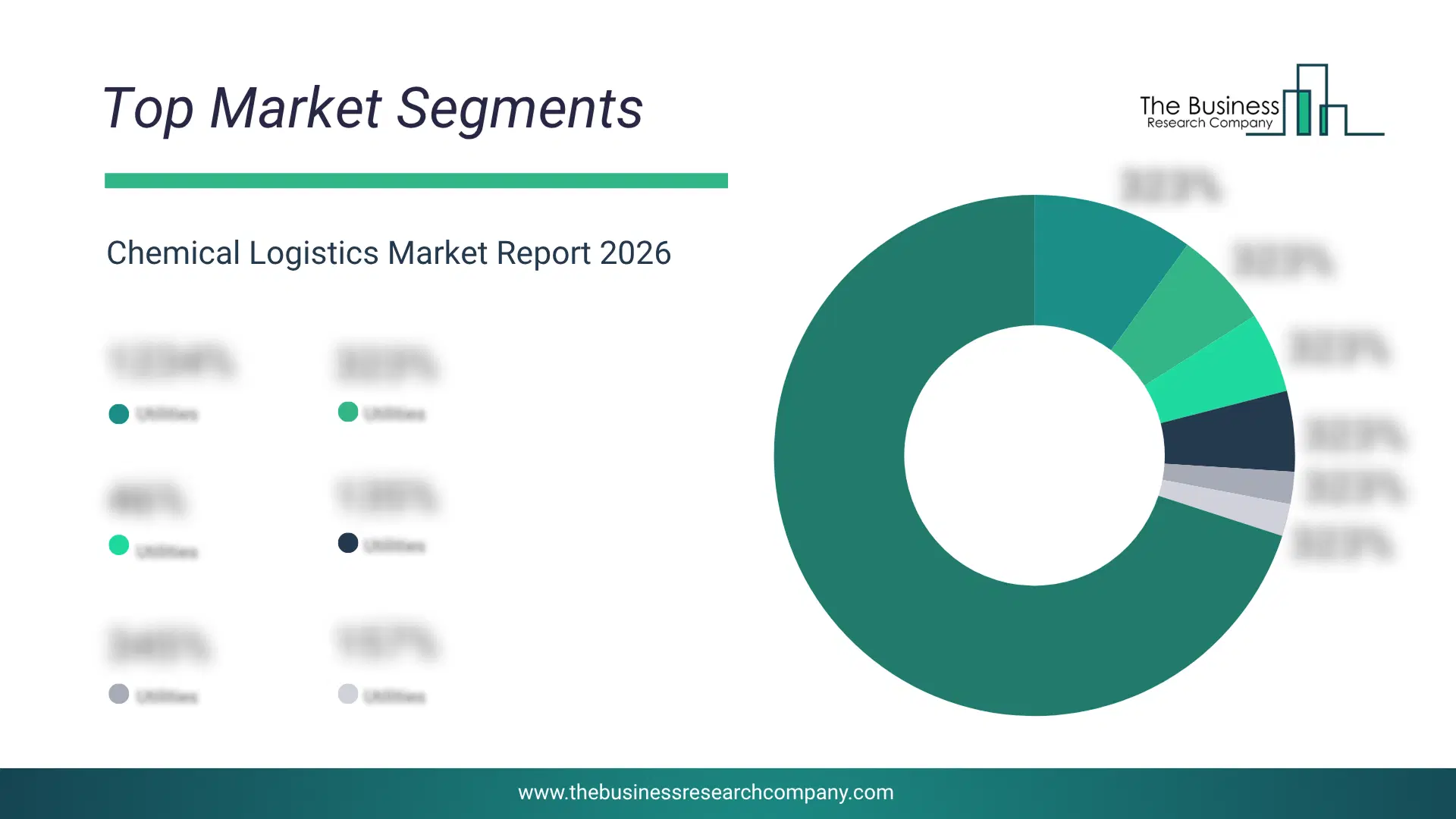
1) By Services: Transportation And Distribution Services, Storage And Warehousing Services, Customs And Security Services, Other Services 2) By Mode Of Transportation: Roadways, Railways, Airways, Waterways, Pipelines 3) By End User: Chemical Industry, Pharmaceutical Industry, Cosmetic Industry, Oil And Gas Industry, Specialty Chemicals Industry Subsegments: 1) By Transportation And Distribution Services: Road Transport, Rail Transport, Sea Freight, Air Freight 2) By Storage And Warehousing Services: Bulk Storage, Temperature-Controlled Storage, Hazardous Material Storage 3) By Customs And Security Services: Customs Clearance, Security Inspections, Regulatory Compliance 4) By Other Services: Packaging Services, Inventory Management, Value-Added Services The top segments in the chemical logistics market will be: • Transportation and Distribution Services will reach $153.78 Billion by 2030. • Storage and Warehousing Services will reach $114.47 Billion by 2030. • Customs and Security Services will reach $55.81 Billion by 2030. • Other Services will reach $55.53 Billion by 2030.What Is The Driver Of The Chemical Logistics Market?
The rise in chemical production is expected to propel the growth of the chemical logistics market. An increase in the production of chemicals to supply to various industries, including food production, pharmaceutical manufacturing, automobile manufacturing, and engineering, leads to a rise in the need for safe corners of transportation and distribution services. For instance, in February 2025, according to Atradius N.V., a Netherlands-based trade company, in 2024, US chemical production grew by 2.1%, with solid growth expected to continue at 3.8% in 2025 and 2.7% in 2026. Therefore, the rise in chemical production is driving the growth of the chemical logistics industry.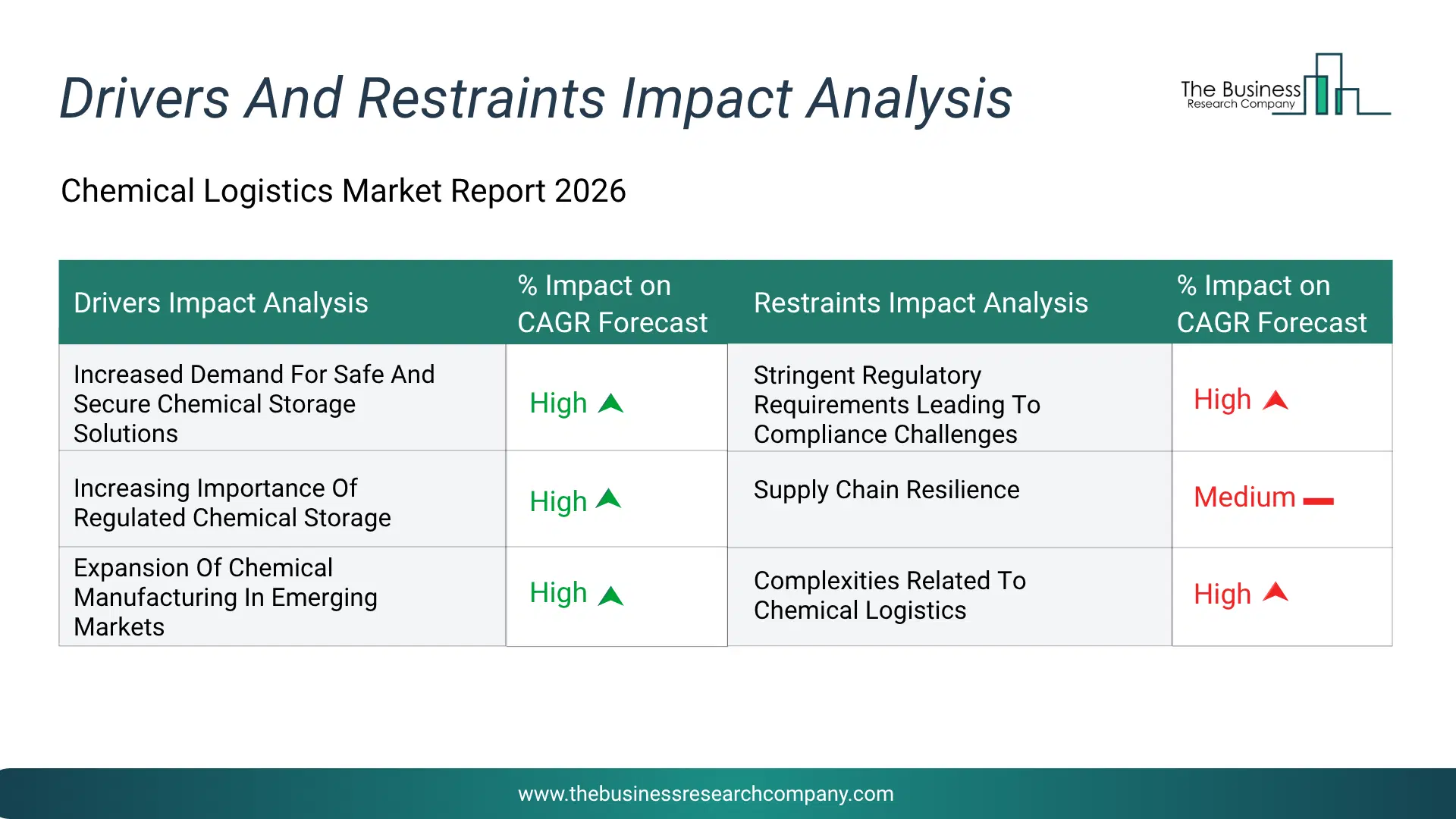
Infographic Chart Showing Key Market Drivers Analysis And Restraints For Chemical Logistics Market
The chart presents an impact analysis of key drivers and restraints, quantifying their relative influence on the market's growth rate and helping assess the balance between growth enablers and limiting factors. This chart offers a high-level perspective; the full report contains more detailed insights.
How Will The Drivers Impact Growth In The Global Chemical Logistics Market?
• Increased Demand For Safe And Secure Chemical Storage Solutions (High) – During the forecast period, the increased demand for safe and secure chemical storage solutions is expected to become a key growth driver for the chemical logistics market by 2030. Rising volumes of industrial chemicals, specialty chemicals, and hazardous materials are creating greater requirements for dedicated storage facilities equipped with advanced safety systems and environmental protection measures. Companies are increasingly investing in modern tank farms, bulk storage terminals, and temperature-controlled warehouses to minimize operational risks and maintain product integrity. The growing focus on accident prevention and supply chain reliability is further strengthening demand for specialized storage services. • Increasing Importance Of Regulated Chemical Storage (High) – During the forecast period, the increasing importance of regulated chemical storage is expected to emerge as a major factor driving the expansion of the chemical logistics market by 2030. Regulatory authorities worldwide are implementing stricter standards for the handling, segregation, and storage of hazardous substances, requiring logistics providers to enhance compliance capabilities. Chemical manufacturers are seeking certified storage partners that can meet evolving safety, environmental, and documentation requirements. The growing complexity of chemical classifications and transportation regulations is also encouraging investments in specialized logistics infrastructure and monitoring technologies. • Expansion Of Chemical Manufacturing In Emerging Markets (High) – During the forecast period, the expansion of chemical manufacturing in emerging markets is expected to act as a key growth catalyst for the chemical logistics market by 2030. Rapid industrialization across developing economies is driving the establishment of new chemical production facilities, creating greater demand for inbound raw material transportation and outbound product distribution services. Logistics providers are expanding regional networks and developing integrated supply chain solutions to support growing production volumes. Rising exports and cross-border trade activities are also increasing the need for efficient chemical transportation and handling capabilities.How Will The Restraints Impact Growth In The Global Chemical Logistics Market?
• Stringent Regulatory Requirements Leading To Compliance Challenges (High) – During the forecast period, the stringent regulatory requirements are acting as a restraint on the chemical logistics market by increasing operational complexity and compliance costs for service providers. Companies must adhere to multiple national and international regulations related to hazardous material handling, labeling, storage, and transportation. This creates a need for continuous monitoring, documentation, and staff training, which raises overall expenses. Smaller logistics providers may struggle to meet these strict standards, limiting market participation. Frequent regulatory updates also require constant system upgrades and process adjustments. Non-compliance can lead to heavy penalties, delays, and reputational damage. Consequently, these challenges slow down operational efficiency and restrict the growth potential of the chemical logistics market. • Supply Chain Resilience (High) – During the forecast period, the frequent disruptions such as geopolitical tensions, natural disasters, port congestion, and transportation delays significantly impact the smooth movement of chemicals, which often require specialized handling and timely delivery. These disruptions increase operational risks, including delays, safety hazards, and inventory imbalances. As a result, logistics providers face higher costs due to contingency planning, rerouting, and maintaining buffer inventories. Additionally, uncertainties in global supply chains make it difficult for companies to ensure consistent service levels and compliance with safety standards. Consequently, these vulnerabilities act as a restraint by reducing efficiency, increasing costs, and limiting the overall growth potential of the chemical logistics sector. • Complexities Related To Chemical Logistics (High) – During the forecast period, the inherent complexities related to chemical logistics act as a major restraint by making operations highly specialized and difficult to manage. Handling different types of chemicals requires customized storage conditions, packaging, and transportation methods. Logistics providers must ensure safety, compatibility, and regulatory compliance at every stage of the supply chain. This increases the need for skilled personnel, advanced infrastructure, and precise coordination. Managing risks such as spills, contamination, and hazardous reactions further adds to operational challenges. These complexities also lead to higher costs and longer planning cycles. Consequently, the intricate nature of chemical logistics limits scalability and poses challenges to overall market expansion.Key Players In The Global Chemical Logistics Market
Major companies operating in the chemical logistics market report include A&R Logistics LLC, Deutsche Post DHL Group, CH Robinson Worldwide Inc., Rhenus Logistics LLC, Deutsche Bahn AG, Ryder System Inc., CEVA Logistics LLC, FedEx Corporation, Montreal Chemical Logistics, Schneider National Inc., Odyssey Logistics & Technology Corporation, Bd Trans-Logistics Sp. z o. o., Kuehne + Nagel International AG, DACHSER SE, DHL Global Forwarding Pte. Ltd., Expeditors International of Washington Inc., GEODIS, Hellmann Worldwide Logistics SE & Co KG, Kerry Logistics Network Limited, Nippon Express Co. Ltd., Panalpina World Transport Ltd., Sinotrans Limited, UPS Supply Chain Solutions Inc., Yusen Logistics Co. Ltd., Agility Logistics Pvt. Ltd., Damco Solutions Pvt. Ltd.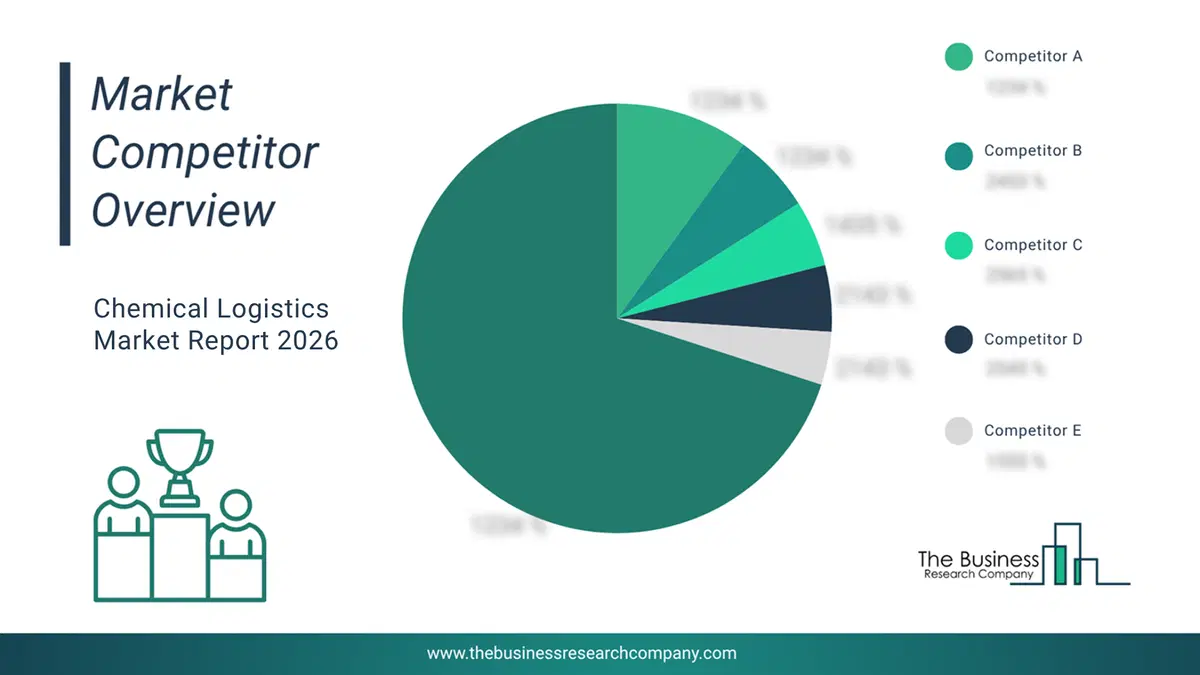
This chart is for illustrative purposes; the full report includes a detailed competitor analysis and comprehensive overview of the top 10 companies in the market.
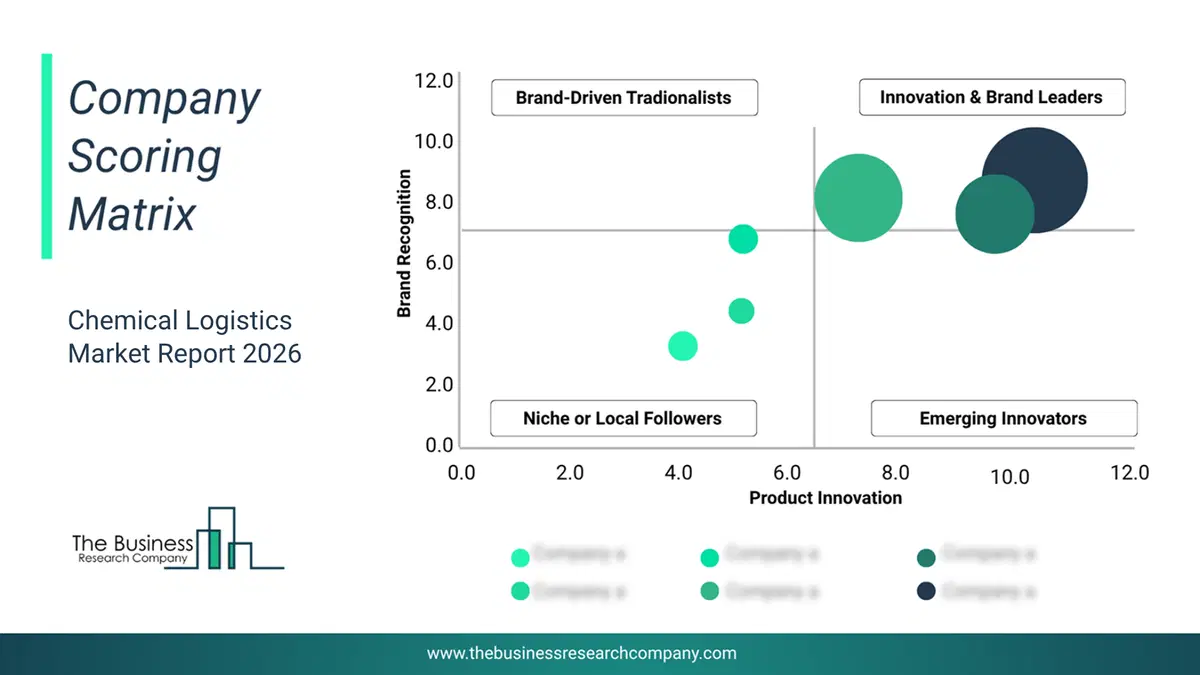
This chart maps companies by product innovation and brand strength, with bubble size indicating relative revenue, helping identify market leaders, challengers, and niche players. This is an illustrative chart; the full report provides a complete and accurate competitive analysis.
Global Chemical Logistics Market Trends and Insights
Major companies operating in the chemical logistics market are focusing on developing innovative solutions, such as chemical logistics centers, to enhance operational efficiency and improve service delivery. A chemical logistics center refers to a specialized facility designed to manage the storage, handling, and transportation of chemical products. For instance, in December 2023, GWC Logistics, a Qatar-based logistics company, launched a new chemical logistics center in Doha's industrial area, covering 16,000 square meters. This state-of-the-art facility is designed to cater to various industries, including manufacturing and automotive, with specialized storage for hazardous materials such as gases and flammable liquids. Complying with stringent safety standards, the center features ATEX-certified fittings and advanced fire suppression systems. Additionally, it incorporates sustainable practices like motion-sensor LED lighting and water-cooled air conditioning.What Are Latest Mergers And Acquisitions In The Chemical Logistics Market?
In April 2024, Quantix SCS, LLC, a US-based leading supply chain services company, acquired CLX Logistics, LLC for an undisclosed amount. Through this acquisition, Quantix aims to enhance its position as a leader in the chemical third-party logistics (3PL) market. CLX Logistics, LLC is a US-based logistics and supply chain management company that specializes in providing integrated solutions for businesses.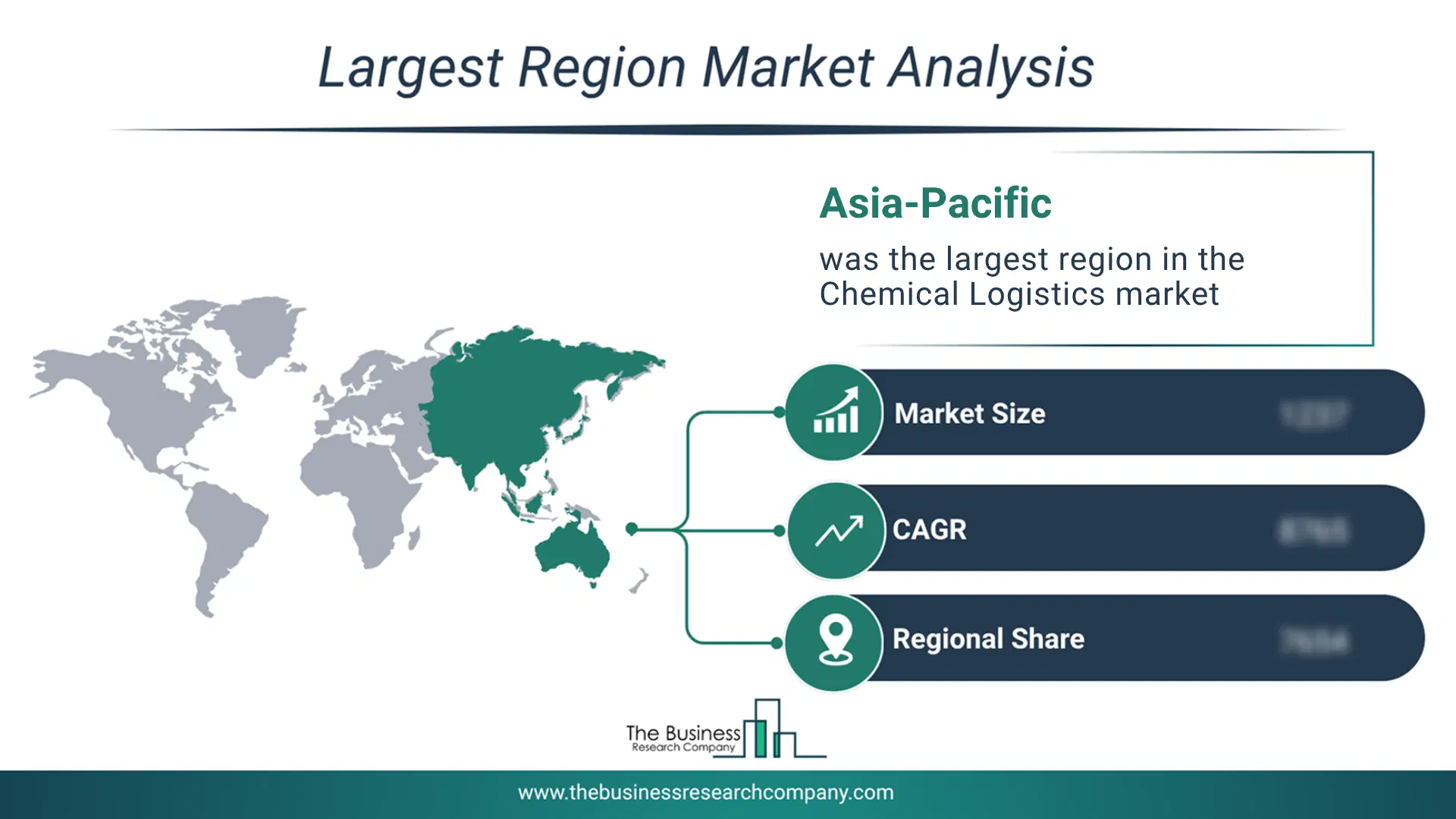
Regional Outlook
Asia-Pacific was the largest region in the chemical logistics market in 2025. The regions covered in this market report include Asia-Pacific, South East Asia, Western Europe, Eastern Europe, North America, South America, Middle East, Africa. The countries covered in this market report include Australia, Brazil, China, France, Germany, India, Indonesia, Japan, Taiwan, Russia, South Korea, UK, USA, Canada, Italy, SpainWhat Defines the Chemical Logistics Market?
The chemical logistics market includes revenues earned by entities bybulk storage & transfer, flammable & temperature-controlled rooms, packaging, repackaging, relabeling, fulfillment, and transportation. The market value includes the value of related goods sold by the service provider or included within the service offering. Only goods and services traded between entities or sold to end consumers are included.How is Market Value Defined and Measured?
The market value is defined as the revenues that enterprises gain from the sale of goods and/or services within the specified market and geography through sales, grants, or donations in terms of the currency (in USD unless otherwise specified). The revenues for a specified geography are consumption values that are revenues generated by organizations in the specified geography within the market, irrespective of where they are produced. It does not include revenues from resales along the supply chain, either further along the supply chain or as part of other products.
This chart presents market attractiveness based on a quantitative evaluation of growth, competition, strategic alignment, and risk, offering a clear view of opportunity areas for decision-making. This chart is for illustrative purposes; the full report contains the complete analysis.

This chart highlights the Total Addressable Market (TAM) by estimating the maximum revenue opportunity using an assumption-driven approach, supporting strategic planning and opportunity sizing across markets. The chart is illustrative; the full report provides a more comprehensive analysis.
What Key Data and Analysis Are Included in the Chemical Logistics Market Report 2026?
The chemical logistics market research report is one of a series of new reports from The Business Research Company that provides market statistics, including industry global market size, regional shares, competitors with the market share, detailed market segments, market trends and opportunities, and any further data you may need to thrive in the chemical logistics industry. The market research report delivers a complete perspective of everything you need, with an in-depth analysis of the current and future state of the industry.Chemical Logistics Market Report Forecast Analysis
| Report Attribute | Details |
|---|---|
| Market Size Value In 2026 | $317.92 billion |
| Revenue Forecast In 2030 | $381.22 billion |
| Growth Rate | CAGR of 4.9% from 2026 to 2030 |
| Base Year For Estimation | 2025 |
| Actual Estimates/Historical Data | 2020-2025 |
| Forecast Period | 2026 - 2030 |
| Market Representation | Revenue in USD Billion and CAGR from 2026 to 2030 |
| Segments Covered | Services, Mode Of Transportation, End User |
| Regional Scope | Asia-Pacific, Western Europe, Eastern Europe, North America, South America, Middle East, Africa |
| Country Scope | The countries covered in the report are Australia, Brazil, China, France, Germany, India, Indonesia, Japan, Taiwan, Russia, South Korea, UK, USA, Canada, Italy, Spain. |
| Key Companies Profiled | A&R Logistics LLC, Deutsche Post DHL Group, CH Robinson Worldwide Inc., Rhenus Logistics LLC, Deutsche Bahn AG, Ryder System Inc., CEVA Logistics LLC, FedEx Corporation, Montreal Chemical Logistics, Schneider National Inc., Odyssey Logistics & Technology Corporation, Bd Trans-Logistics Sp. z o. o., Kuehne + Nagel International AG, DACHSER SE, DHL Global Forwarding Pte. Ltd., Expeditors International of Washington Inc., GEODIS, Hellmann Worldwide Logistics SE & Co KG, Kerry Logistics Network Limited, Nippon Express Co. Ltd., Panalpina World Transport Ltd., Sinotrans Limited, UPS Supply Chain Solutions Inc., Yusen Logistics Co. Ltd., Agility Logistics Pvt. Ltd., Damco Solutions Pvt. Ltd. |
| Customization Scope | Request for Customization |
| Pricing And Purchase Options | Explore Purchase Options |