
Chemotherapy-Induced Anemia Market Report 2026
Global Outlook – By Anemia (Mild Anemia, Moderate Anemia, Severe Anemia, Life-Threatening Anemia), By Treatment Type (RBC (Red Blood Cells) Transfusion, Erythropoiesis-Stimulating Agents (ESAs), Iron Supplementation), By End-User (Hospitals, Ambulatory Surgical Centers, Multispecialty Clinics, Cancer Research Centers, Cancer Rehabilitation Centers) - Market Size, Trends, Strategies, and Forecast to 2030
Chemotherapy-Induced Anemia Market Overview
• Chemotherapy-Induced Anemia market size has reached to $2.81 billion in 2025 • Expected to grow to $4.13 billion in 2030 at a compound annual growth rate (CAGR) of 8.1% • Growth Driver: Rising Cancer And Anemia Cases Propel Growth In Chemotherapy-Induced Anemia Market • Market Trend: Treatment Indicated For Myelofibrosis Patients With Anaemia • North America was the largest region in 2025 and Asia-Pacific is the fastest growing region.What Is Covered Under Chemotherapy-Induced Anemia Market?
Chemotherapy-Induced Anemia refers to a decrease in red blood cells caused by chemotherapy treatments, leading to fatigue, weakness, and other symptoms. It is used to manage the side effects of cancer treatment, helping to improve patients' quality of life. Addressing this condition often involves erythropoiesis-stimulating agents or blood transfusions. The main types of chemotherapy-induced anemia are mild, moderate, severe, and life-threatening anemia. Mild anemia refers to a condition in which a person has hemoglobin levels that are below standard. The treatment procedure, which includes RBC (red blood cells) transfusion, erythropoiesis-stimulating agents (ESAs), and iron supplementation, can be done in various end-users such as hospitals, ambulatory surgical centers, multispecialty clinics, cancer research centers, and cancer rehabilitation centers.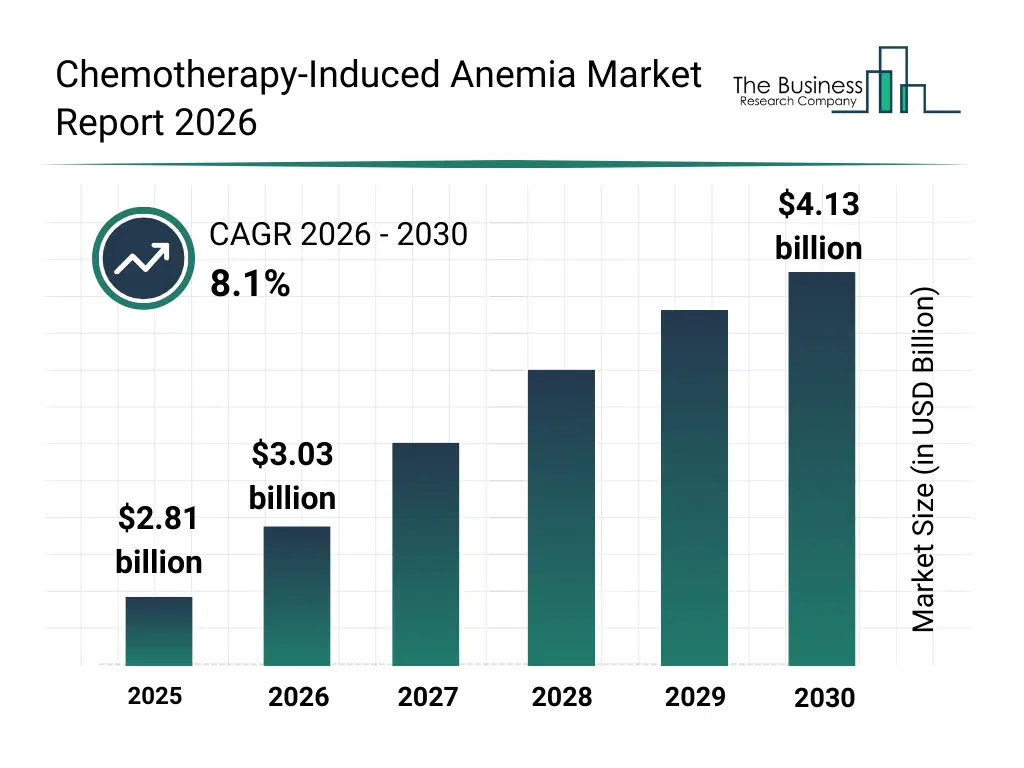
What Is The Chemotherapy-Induced Anemia Market Size and Share 2026?
The chemotherapy-induced anemia market size has grown strongly in recent years. It will grow from $2.81 billion in 2025 to $3.03 billion in 2026 at a compound annual growth rate (CAGR) of 7.7%. The growth in the historic period can be attributed to increasing use of intensive chemotherapy regimens, rising prevalence of treatment-related anemia, expansion of oncology treatment centers, improved access to blood transfusion services, availability of supportive cancer care therapies.What Is The Chemotherapy-Induced Anemia Market Growth Forecast?
The chemotherapy-induced anemia market size is expected to see strong growth in the next few years. It will grow to $4.13 billion in 2030 at a compound annual growth rate (CAGR) of 8.1%. The growth in the forecast period can be attributed to increasing demand for long-acting anemia treatments, rising focus on minimizing transfusion dependency, expansion of personalized oncology care, growing adoption of home-based treatment models, advancements in anemia management drugs. Major trends in the forecast period include increasing adoption of erythropoiesis-stimulating agents, growing use of personalized anemia management plans, rising preference for early intervention therapies, expansion of outpatient anemia treatment settings, enhanced focus on patient quality of life.
Global Chemotherapy-Induced Anemia Market Segmentation
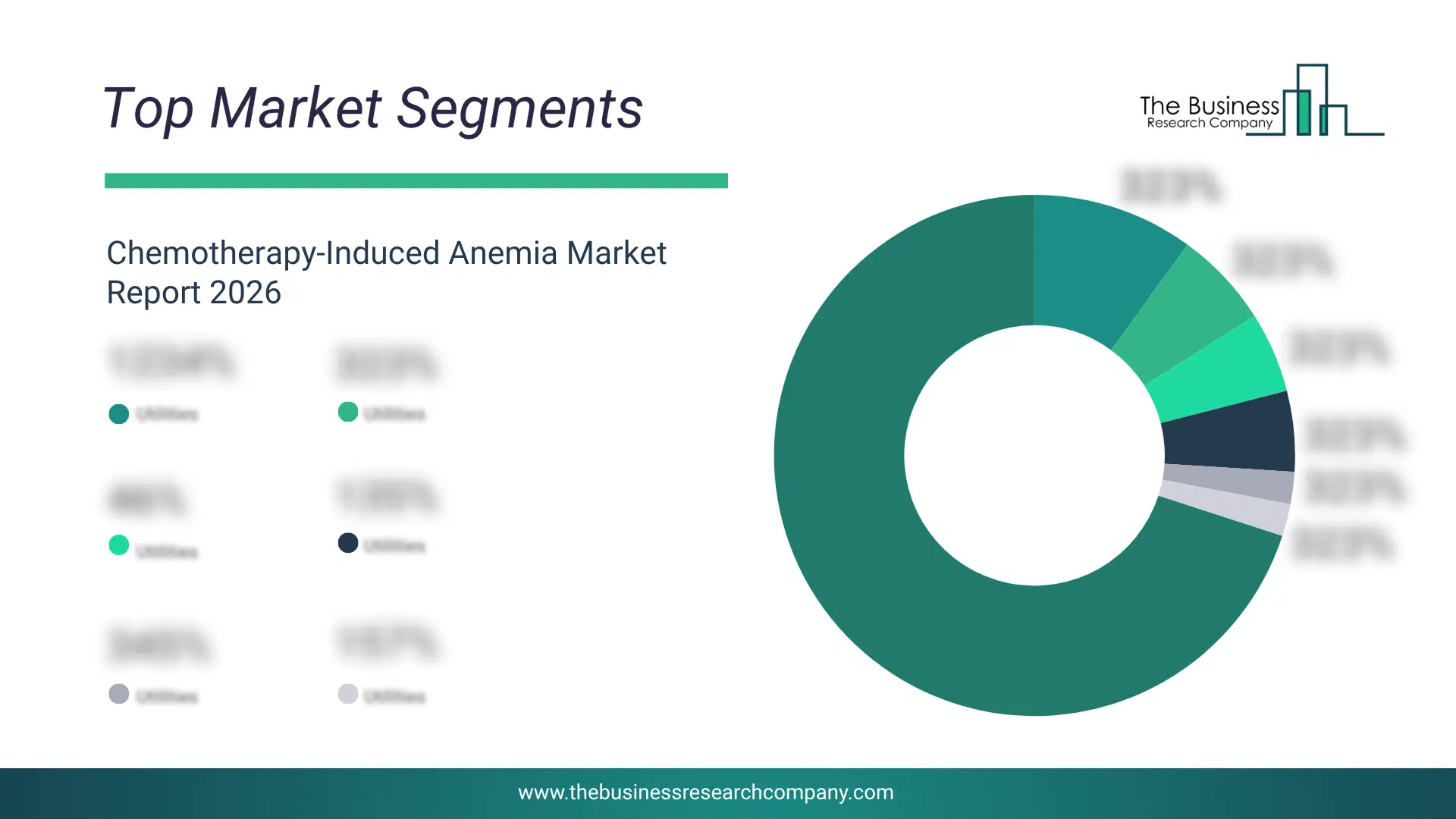
1) By Anemia: Mild Anemia, Moderate Anemia, Severe Anemia, Life-Threatening Anemia 2) By Treatment Type: RBC (Red Blood Cells) Transfusion, Erythropoiesis-Stimulating Agents (ESAs), Iron Supplementation 3) By End-User: Hospitals, Ambulatory Surgical Centers, Multispecialty Clinics, Cancer Research Centers, Cancer Rehabilitation Centers Subsegments: 1) By Mild Anemia: Hemoglobin Levels 10-12 Grams Per Deciliter (g/dL), Symptomatic Treatments 2) By Moderate Anemia: Hemoglobin Levels 8-10 Grams Per Deciliter (g/dL), Erythropoiesis-stimulating Agents (ESAs), Blood Transfusion Management 3) By Severe Anemia: Hemoglobin Levels 6.5-8 Grams Per Deciliter (g/dL), Intensive ESA Treatments, Frequent Blood Transfusions 4) By Life-Threatening Anemia: Hemoglobin Levels Below 6.5 Grams Per Deciliter (g/dL), Emergency interventions, Critical Care And MonitoringWhat Is The Driver Of The Chemotherapy-Induced Anemia Market?
The high prevalence of cancer and anemia is expected to propel the growth of the chemotherapy-induced anemia market going forward. Cancer is a disease where somebody's cells grow out of control and spread to other body regions. In cancer patients receiving aggressive chemotherapy, whether with or without radiation therapy, cancer and chemotherapy-induced anemia (CIA) are frequent occurrences. The medication stimulates the production of red blood cells in the bone marrow and can be used to treat chemotherapy-induced anemia. For instance, in 2023, according to Cancer Research UK, a UK-based independent cancer research organization, the incidence of head and neck cancer in the UK is projected to rise by 3% between 2023 and 2025, while deaths due to head and neck cancers are expected to increase by 12% between 2023 and 2025. Therefore, the high prevalence of cancer and anemia drives the growth of the chemotherapy-induced anemia industry.Key Players In The Global Chemotherapy-Induced Anemia Market
Major companies operating in the chemotherapy-induced anemia market are Pfizer Inc., Johnson & Johnson, F. Hoffmann‑La Roche Ltd., Merck & Co. Inc., Novartis AG, Sanofi S.A., Bristol‑Myers Squibb Company, AstraZeneca plc, Takeda Pharmaceutical Company Limited, Eli Lilly and Company, Amgen Inc., Baxter International Inc., Fresenius Kabi AG, Biocon Ltd., Vifor Pharma Group, Pharmacosmos A/S, Daiichi Sankyo Company Limited, Bayer AG, Akebia Therapeutics Inc, Otsuka Pharmaceutical Co Ltd, Zydus Lifesciences Ltd, Viatris Inc, Shield Therapeutics plc, Keros Therapeutics Inc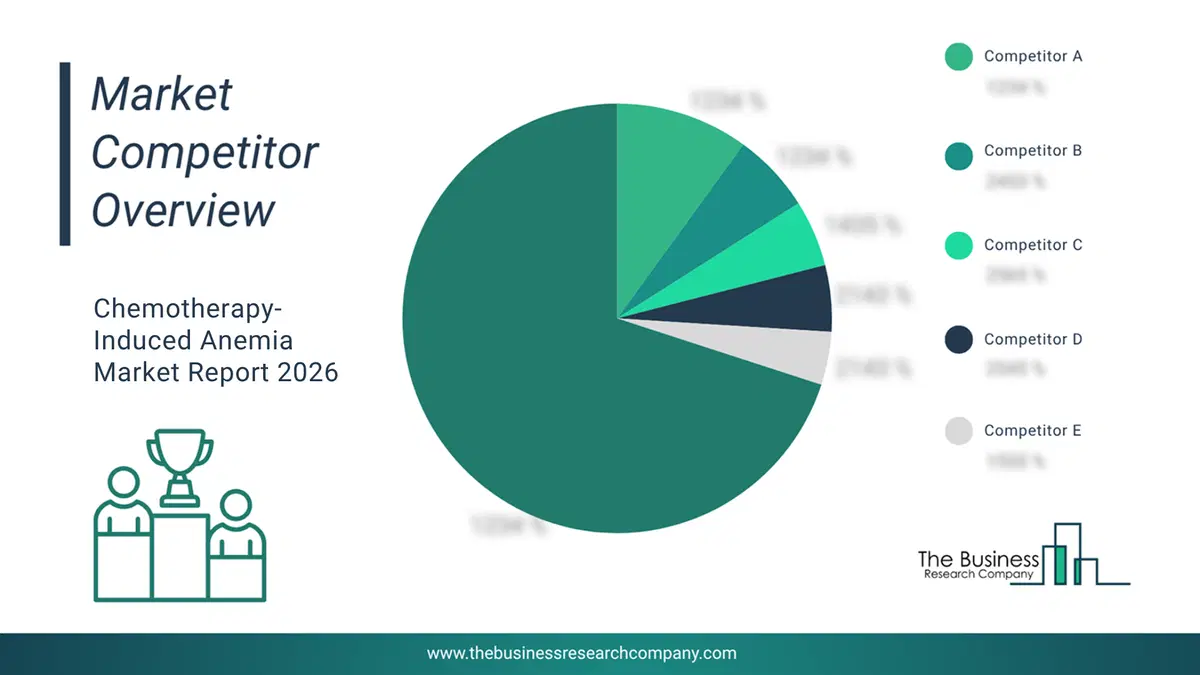
This chart is for illustrative purposes; the full report includes a detailed competitor analysis and comprehensive overview of the top 10 companies in the market.
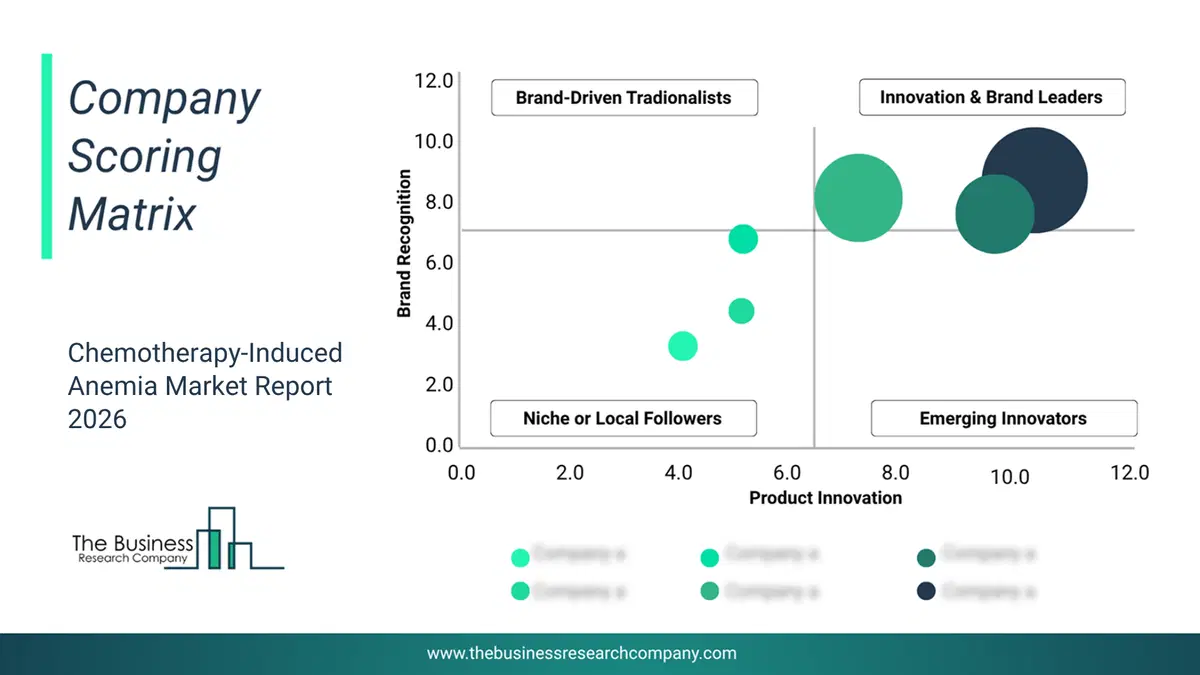
This chart maps companies by product innovation and brand strength, with bubble size indicating relative revenue, helping identify market leaders, challengers, and niche players. This is an illustrative chart; the full report provides a complete and accurate competitive analysis.
Global Chemotherapy-Induced Anemia Market Trends and Insights
Major companies in the chemotherapy-induced anemia market are focusing on developing technological advancements such as Ojjaara (momelotinib) to enhance treatment options and improve patient outcomes for those affected by anemia related to cancer therapies. The name 'Ojjaara' is derived from the word 'Ojaara,' which reflects a connection to the concept of healing or wellness.For instance, in September 2023, Ojjaara (momelotinib) is developed by GSK (GlaxoSmithKline), which is an England-based company; it signifies the drug's purpose as a treatment for myelofibrosis, particularly in patients with anemia. Ojjaara (momelotinib) is a groundbreaking treatment for myelofibrosis patients with anemia, working by inhibiting key pathways to improve blood counts, enhance quality of life, and reduce the need for blood transfusions, making it the first and only therapy specifically indicated for this condition.What Are Latest Mergers And Acquisitions In The Chemotherapy-Induced Anemia Market?
In August 2024, Pharmacosmos Group, a Denmark-based global pharmaceutical company, acquired G1 Therapeutics, Inc. for an undisclosed amount. Through this acquisition, Pharmacosmos aims to strengthen its oncology supportive care portfolio, expand its presence in the U.S. biopharmaceutical market, and accelerate the development and commercialization of innovative therapies that address unmet needs in cancer treatment. G1 Therapeutics, Inc. is a U.S.-based biopharmaceutical company, that offers chemotherapy-induced anemia products.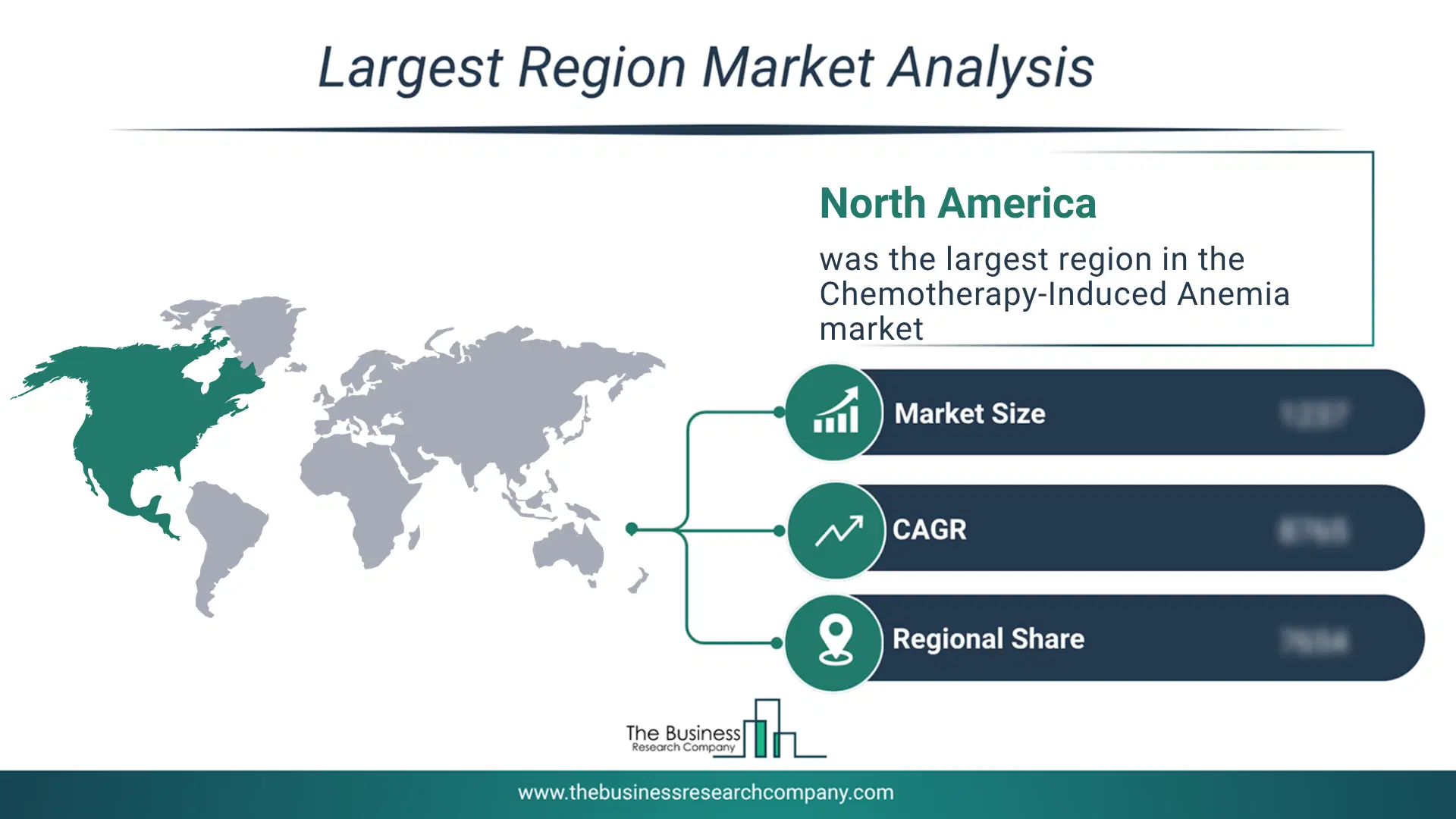
Regional Outlook
North America was the largest region in the chemotherapy-induced anemia market in 2025. Asia-Pacific is expected to be the fastest-growing region in the forecast period. The regions covered in this market report are Asia-Pacific, South East Asia, Western Europe, Eastern Europe, North America, South America, Middle East, Africa. The countries covered in this market report are Australia, Brazil, China, France, Germany, India, Indonesia, Japan, Taiwan, Russia, South Korea, UK, USA, Canada, Italy, Spain.What Defines the Chemotherapy-Induced Anemia Market?
The chemotherapy-induced anemia market consists of sales of androxy oral, epoetin alfa injection, epogen injection, procrit injection, and aranesp injection. Values in this market are ‘factory gate’ values, that is the value of goods sold by the manufacturers or creators of the goods, whether to other entities (including downstream manufacturers, wholesalers, distributors and retailers) or directly to end customers. The value of goods in this market includes related services sold by the creators of the goods.How is Market Value Defined and Measured?
The market value is defined as the revenues that enterprises gain from the sale of goods and/or services within the specified market and geography through sales, grants, or donations in terms of the currency (in USD unless otherwise specified). The revenues for a specified geography are consumption values that are revenues generated by organizations in the specified geography within the market, irrespective of where they are produced. It does not include revenues from resales along the supply chain, either further along the supply chain or as part of other products.
This chart presents market attractiveness based on a quantitative evaluation of growth, competition, strategic alignment, and risk, offering a clear view of opportunity areas for decision-making. This chart is for illustrative purposes; the full report contains the complete analysis.

This chart highlights the Total Addressable Market (TAM) by estimating the maximum revenue opportunity using an assumption-driven approach, supporting strategic planning and opportunity sizing across markets. The chart is illustrative; the full report provides a more comprehensive analysis.
What Key Data and Analysis Are Included in the Chemotherapy-Induced Anemia Market Report 2026?
The chemotherapy-induced anemia market research report is one of a series of new reports from The Business Research Company that provides market statistics, including industry global market size, regional shares, competitors with the market share, detailed market segments, market trends and opportunities, and any further data you may need to thrive in the chemotherapy-induced anemia industry. The market research report delivers a complete perspective of everything you need, with an in-depth analysis of the current and future state of the industry.Chemotherapy-Induced Anemia Market Report Forecast Analysis
| Report Attribute | Details |
|---|---|
| Market Size Value In 2026 | $3.03 billion |
| Revenue Forecast In 2030 | $4.13 billion |
| Growth Rate | CAGR of 8.1% from 2026 to 2030 |
| Base Year For Estimation | 2025 |
| Actual Estimates/Historical Data | 2020-2025 |
| Forecast Period | 2026 - 2030 |
| Market Representation | Revenue in USD Billion and CAGR from 2026 to 2030 |
| Segments Covered | Anemia, Treatment Type, End-User |
| Regional Scope | Asia-Pacific, Western Europe, Eastern Europe, North America, South America, Middle East, Africa |
| Country Scope | The countries covered in the report are Australia, Brazil, China, France, Germany, India, Indonesia, Japan, Taiwan, Russia, South Korea, UK, USA, Canada, Italy, Spain |
| Key Companies Profiled | Pfizer Inc., Johnson & Johnson, F. Hoffmann‑La Roche Ltd., Merck & Co. Inc., Novartis AG, Sanofi S.A., Bristol‑Myers Squibb Company, AstraZeneca plc, Takeda Pharmaceutical Company Limited, Eli Lilly and Company, Amgen Inc., Baxter International Inc., Fresenius Kabi AG, Biocon Ltd., Vifor Pharma Group, Pharmacosmos A/S, Daiichi Sankyo Company Limited, Bayer AG, Akebia Therapeutics Inc, Otsuka Pharmaceutical Co Ltd, Zydus Lifesciences Ltd, Viatris Inc, Shield Therapeutics plc, Keros Therapeutics Inc |
| Customization Scope | Request for Customization |
| Pricing And Purchase Options | Explore Purchase Options |