

Chemotherapy-Induced Myelosuppression Treatment Market Report 2026
Global Outlook – By Indication (Anemia, Neutropenia, Thrombocytopenia), By Drug Class (Growth Factors, Erythropoietin Stimulating Agents, Thrombopoietic Agents, Iron Supplements, Other Drug Classes), By Route Of Administration (Oral, Injectable), By Distribution Channel (Hospital Pharmacies, Retail Pharmacies, Online Pharmacies) - Market Size, Trends, Strategies, and Forecast to 2030
Chemotherapy-Induced Myelosuppression Treatment Market Overview
• Chemotherapy-Induced Myelosuppression Treatment market size has reached to $8.35 billion in 2025 • Expected to grow to $10.24 billion in 2030 at a compound annual growth rate (CAGR) of 4% • Growth Driver: Impact Of Rising Cancer Prevalence On The Chemotherapy-Induced Myelosuppression Treatment Market • Market Trend: Advancements In Long-Acting G-CSF Therapies For Chemotherapy-Induced Myelosuppression • North America was the largest region in 2025 and Asia Pacific is the fastest growing region.What Is Covered Under Chemotherapy-Induced Myelosuppression Treatment Market?
Chemotherapy-induced myelosuppression treatment refers to therapeutic interventions aimed at managing and mitigating the suppression of bone marrow activity caused by chemotherapy drugs. The goal of treating chemotherapy-induced myelosuppression is to manage symptoms, prevent complications such as infections or bleeding disorders, and support patients in continuing chemotherapy treatment. The main indication types of chemotherapy-induced myelosuppression treatment are anemia, neutropenia, and thrombocytopenia. Anemia in chemotherapy-induced myelosuppression treatment refers to a condition where the body lacks enough healthy red blood cells. This can lead to fatigue, weakness, and shortness of breath. The various drug classes include growth factors, erythropoietin-stimulating agents, thrombopoietic agents, iron supplements, and other drug classes. The market includes chemotherapy-induced myelosuppression treatment by route of administration such as oral and injectables that are distributed through channels such as hospital pharmacies, retail pharmacies, and online pharmacies.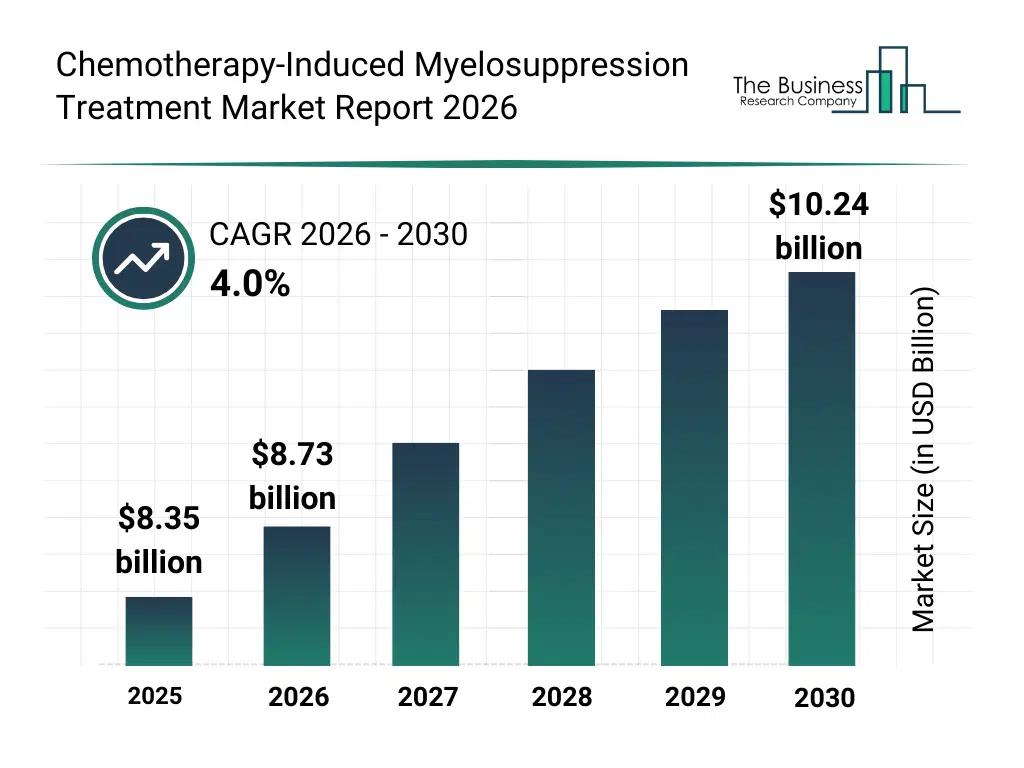
What Is The Chemotherapy-Induced Myelosuppression Treatment Market Size and Share 2026?
The chemotherapy-induced myelosuppression treatment market size has grown steadily in recent years. It will grow from $8.35 billion in 2025 to $8.73 billion in 2026 at a compound annual growth rate (CAGR) of 4.6%. The growth in the historic period can be attributed to increasing intensity of chemotherapy regimens, rising incidence of treatment-related cytopenias, expansion of hospital-based oncology care, availability of supportive hematology treatments, improved diagnostic capabilities.What Is The Chemotherapy-Induced Myelosuppression Treatment Market Growth Forecast?
The chemotherapy-induced myelosuppression treatment market size is expected to see steady growth in the next few years. It will grow to $10.24 billion in 2030 at a compound annual growth rate (CAGR) of 4.0%. The growth in the forecast period can be attributed to increasing focus on long-acting hematopoietic agents, rising adoption of personalized dosing strategies, expansion of outpatient supportive care services, growing investment in biologic drug development, advancements in bone marrow support therapies. Major trends in the forecast period include increasing adoption of growth factor therapies, rising use of prophylactic treatment strategies, growing emphasis on infection prevention protocols, expansion of personalized myelosuppression management, enhanced monitoring of blood cell counts.
Global Chemotherapy-Induced Myelosuppression Treatment Market Segmentation
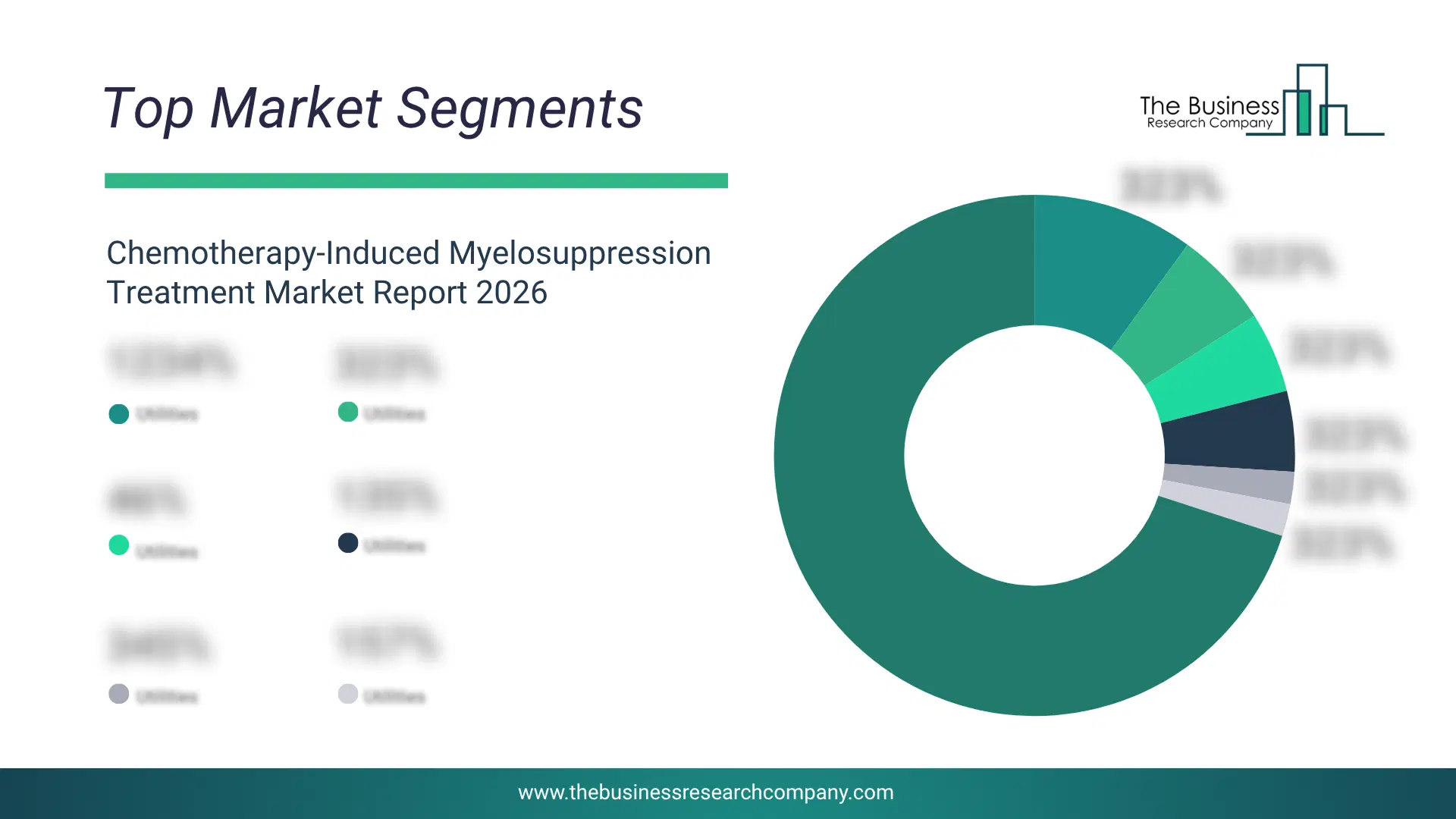
1) By Indication: Anemia, Neutropenia, Thrombocytopenia 2) By Drug Class: Growth Factors, Erythropoietin Stimulating Agents, Thrombopoietic Agents, Iron Supplements, Other Drug Classes 3) By Route Of Administration: Oral, Injectable 4) By Distribution Channel: Hospital Pharmacies, Retail Pharmacies, Online Pharmacies Subsegments: 1) By Anemia: Erythropoiesis-Stimulating Agents (Esas), Iron Supplements, Blood Transfusion 2) By Neutropenia: Granulocyte Colony-Stimulating Factors (G-Csfs), Granulocyte-Macrophage Colony-Stimulating Factors (Gm-Csfs), Antibiotic Prophylaxis 3) By Thrombocytopenia: Thrombopoietin Receptor Agonists (Tpo-Ras), Platelet Transfusion, Growth Factors For Platelet ProductionWhat Is The Driver Of The Chemotherapy-Induced Myelosuppression Treatment Market?
The rising prevalence of cancer is expected to propel the growth of the chemotherapy-induced myelosuppression treatment market going forward. Cancer is the unregulated growth and spread of abnormal cells, often leading to the invasion of surrounding tissues and organs, disrupting their normal function, and potentially threatening the overall health and well-being of the individual. The prevalence of cancer is due to exposure to pollution, radiation, certain chemicals, and carcinogens. Chemotherapy-induced myelosuppression treatment is essential in cancer care for managing the hematological side effects caused by chemotherapy, which is a standard treatment modality for various types of cancer. For instance, in July 2024, according to the Australian Institute of Health and Welfare, an Australia-based government agency, in 2023, an estimated 165,000 Australians were newly diagnosed with cancer, which equates to over 450 cases each day, and males represented about 55% of these diagnoses. Therefore, the rising prevalence of cancer is driving the chemotherapy-induced myelosuppression treatment industry.Key Players In The Global Chemotherapy-Induced Myelosuppression Treatment Market
Major companies operating in the chemotherapy-induced myelosuppression treatment market are Merck & Co. Inc., Bayer AG, Sanofi SA, Abbott Laboratories, Novartis AG, Glaxo Smith Kline plc, Amgen Inc., Viatris Inc., Biogen SA, Bausch Health Companies Inc., Cipla Inc., Hikma Pharmaceuticals PLC,Lupin Ltd, Seagen Inc, Mission Pharmacal Company, G1 Therapeutics Inc., Spectrum Pharmaceuticals Inc., Partner Therapeutics Inc., Myelo Therapeutics GmbH, Evive Biotech Inc.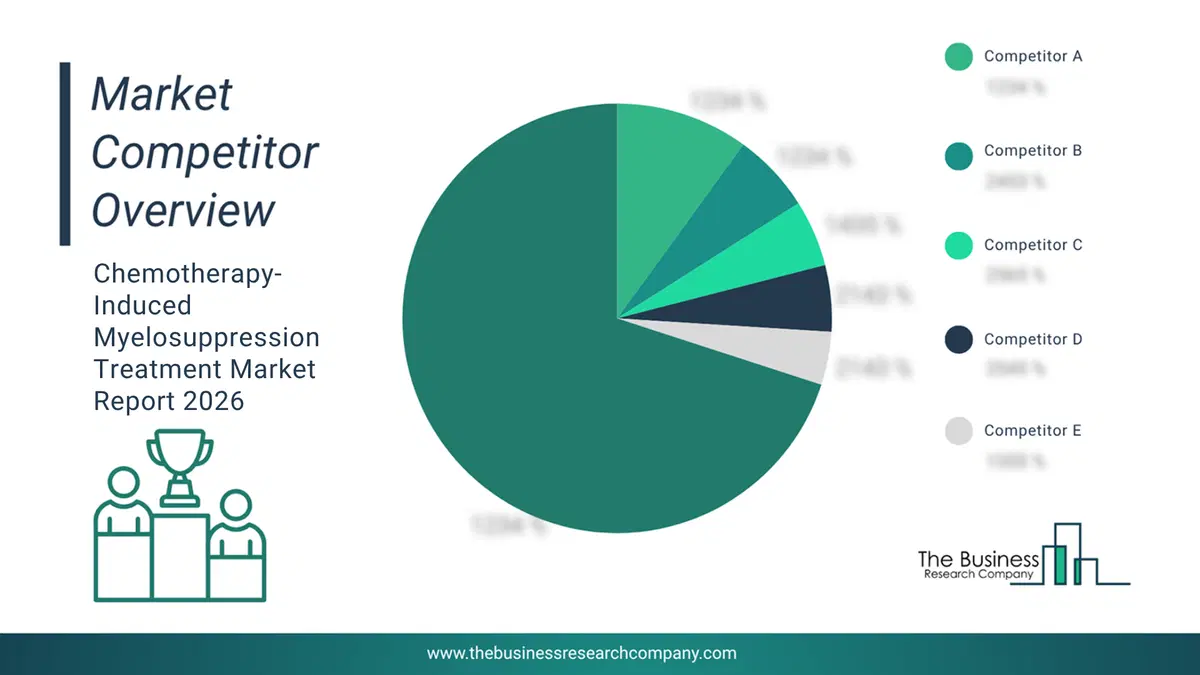
This chart is for illustrative purposes; the full report includes a detailed competitor analysis and comprehensive overview of the top 10 companies in the market.
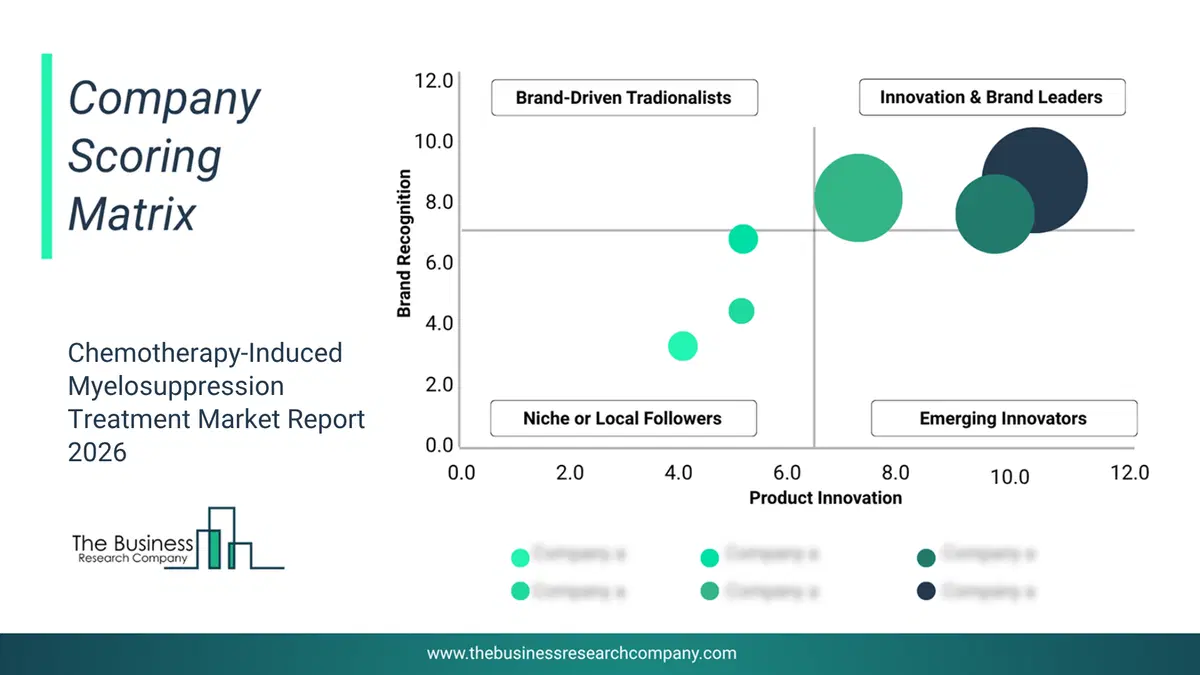
This chart maps companies by product innovation and brand strength, with bubble size indicating relative revenue, helping identify market leaders, challengers, and niche players. This is an illustrative chart; the full report provides a complete and accurate competitive analysis.
Global Chemotherapy-Induced Myelosuppression Treatment Market Trends and Insights
Major companies operating in the chemotherapy-induced myelosuppression treatment market are focusing on developing innovative solutions, such as long-acting G-CSF, to enhance patient convenience, improve treatment adherence, reduce the frequency of injections, and optimize overall clinical outcomes for cancer patients undergoing chemotherapy. A long-acting G-CSF (Granulocyte Colony-Stimulating Factor) is a type of biologic medication designed to stimulate the bone marrow to produce more neutrophils (a type of white blood cell) over an extended period. For instance, in May 2025, Mabwell, a China-based biopharmaceutical company, received NMPA approval for Albipagrastim Alfa for Injection (Mailisheng), a recombinant human G-CSF fused with albumin, designed to prolong half-life and improve neutrophil recovery. The product is formulated with recombinant human serum albumin (HSA), providing a long-acting effect that allows less frequent administration while maintaining effective stimulation of neutrophil production, offering a significant improvement over traditional G-CSF therapies that require daily dosing.What Are Latest Mergers And Acquisitions In The Chemotherapy-Induced Myelosuppression Treatment Market?
In December 2023, Pfizer Inc., a US-based pharmaceutical company, acquired Seagen Inc. for approximately $43 billion. With this acquisition, Pfizer aims to expand its portfolio in oncology and biopharmaceuticals, leveraging Seagen's expertise in antibody-drug conjugates and targeted cancer therapies to enhance its position in the oncology market and advance patient treatment options. Seagen Inc. is a US-based company that develops innovative monoclonal antibody-based therapies for chemotherapy-induced myelosuppression.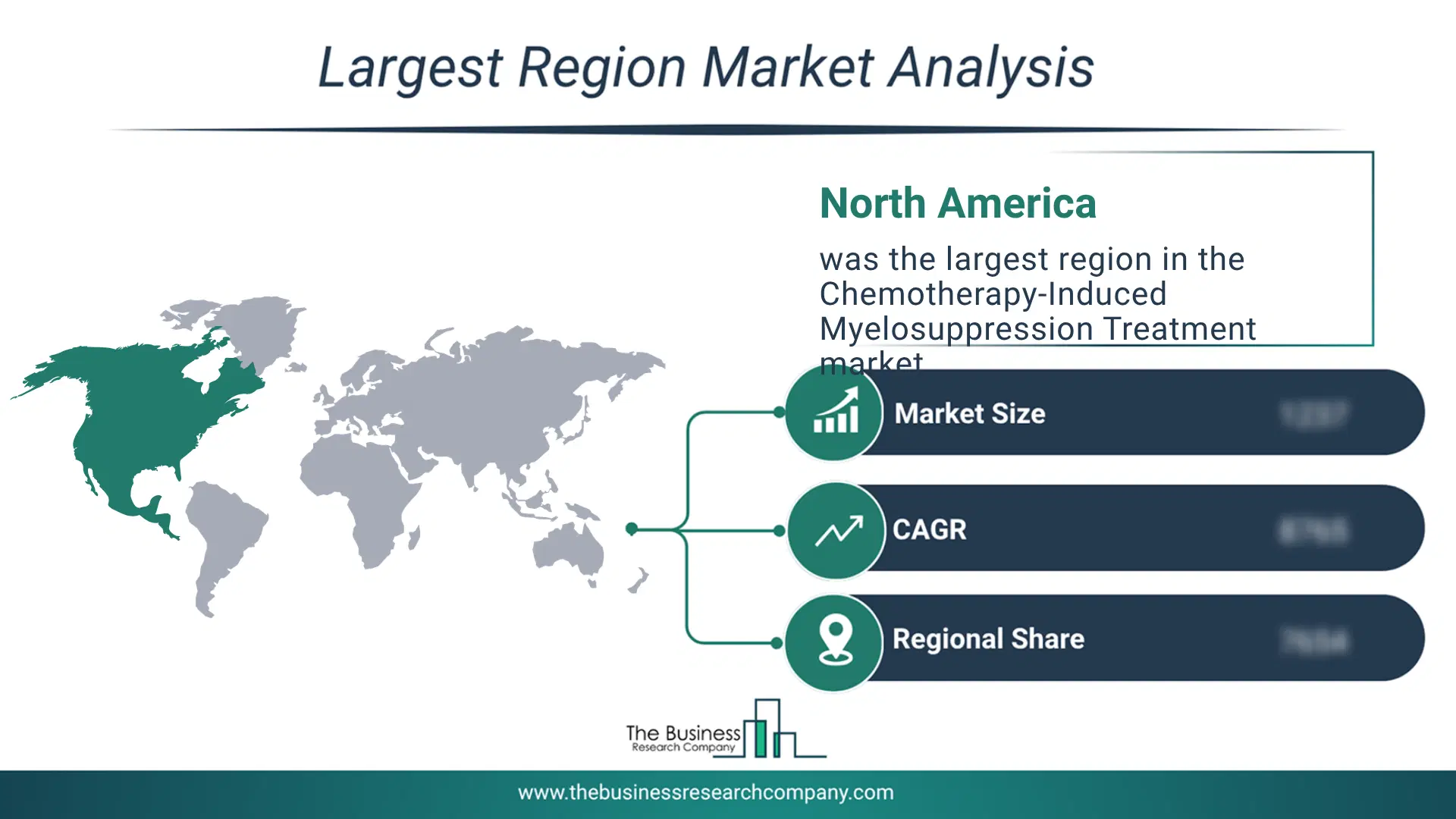
Regional Outlook
North America was the largest region in the chemotherapy-induced myelosuppression treatment market in 2025. Asia Pacific is expected to be the fastest-growing region in the forecast period. The regions covered in this market report are Asia-Pacific, South East Asia, Western Europe, Eastern Europe, North America, South America, Middle East, Africa. The countries covered in this market report are Australia, Brazil, China, France, Germany, India, Indonesia, Japan, Taiwan, Russia, South Korea, UK, USA, Canada, Italy, Spain.What Defines the Chemotherapy-Induced Myelosuppression Treatment Market?
The chemotherapy-induced myelosuppression treatment market includes revenues earned by entities by providing services such as red blood cell transfusions, platelet transfusions, antibiotic therapy, and supportive care and related erythropoiesis-stimulating agents, antibiotics, colony-stimulating factors (CSFs), diagnostic kits and hydration solutions. The market value includes the value of related goods sold by the service provider or included within the service offering. Only goods and services traded between entities or sold to end consumers are included.How is Market Value Defined and Measured?
The market value is defined as the revenues that enterprises gain from the sale of goods and/or services within the specified market and geography through sales, grants, or donations in terms of the currency (in USD unless otherwise specified). The revenues for a specified geography are consumption values that are revenues generated by organizations in the specified geography within the market, irrespective of where they are produced. It does not include revenues from resales along the supply chain, either further along the supply chain or as part of other products.
This chart presents market attractiveness based on a quantitative evaluation of growth, competition, strategic alignment, and risk, offering a clear view of opportunity areas for decision-making. This chart is for illustrative purposes; the full report contains the complete analysis.

This chart highlights the Total Addressable Market (TAM) by estimating the maximum revenue opportunity using an assumption-driven approach, supporting strategic planning and opportunity sizing across markets. The chart is illustrative; the full report provides a more comprehensive analysis.
What Key Data and Analysis Are Included in the Chemotherapy-Induced Myelosuppression Treatment Market Report 2026?
The chemotherapy-induced myelosuppression treatment market research report is one of a series of new reports from The Business Research Company that provides market statistics, including industry global market size, regional shares, competitors with the market share, detailed market segments, market trends and opportunities, and any further data you may need to thrive in the chemotherapy-induced myelosuppression treatment industry. The market research report delivers a complete perspective of everything you need, with an in-depth analysis of the current and future state of the industry.Chemotherapy-Induced Myelosuppression Treatment Market Report Forecast Analysis
| Report Attribute | Details |
|---|---|
| Market Size Value In 2026 | $8.73 billion |
| Revenue Forecast In 2030 | $10.24 billion |
| Growth Rate | CAGR of 4% from 2026 to 2030 |
| Base Year For Estimation | 2025 |
| Actual Estimates/Historical Data | 2020-2025 |
| Forecast Period | 2026 - 2030 |
| Market Representation | Revenue in USD Billion and CAGR from 2026 to 2030 |
| Segments Covered | Indication, Drug Class, Route Of Administration, Distribution Channel |
| Regional Scope | Asia-Pacific, Western Europe, Eastern Europe, North America, South America, Middle East, Africa |
| Country Scope | The countries covered in the report are Australia, Brazil, China, France, Germany, India, Indonesia, Japan, Taiwan, Russia, South Korea, UK, USA, Canada, Italy, Spain |
| Key Companies Profiled | Merck & Co. Inc., Bayer AG, Sanofi SA, Abbott Laboratories, Novartis AG, Glaxo Smith Kline plc, Amgen Inc., Viatris Inc., Biogen SA, Bausch Health Companies Inc., Cipla Inc., Hikma Pharmaceuticals PLC,Lupin Ltd, Seagen Inc, Mission Pharmacal Company, G1 Therapeutics Inc., Spectrum Pharmaceuticals Inc., Partner Therapeutics Inc., Myelo Therapeutics GmbH, Evive Biotech Inc. |
| Customization Scope | Request for Customization |
| Pricing And Purchase Options | Explore Purchase Options |