
Chemotherapy-Induced Nausea and Vomiting (CINV) Market Report 2026
Global Outlook – By Form (Injectables, Oral, Transdermal Patches), By Drug Class (5-HT3 Receptor Antagonists, Neurokinin-1 Receptor Antagonists, Corticosteroids, Cannabinoids, Other Drug Classes), By Emetogenic Risk (Highly Emetogenic Chemotherapy (HEC), Moderately Emetogenic Chemotherapy (MEC), Low Emetogenic Chemotherapy (LEC)), By Distribution Channel (CINV Hospitals, Cancer Research Institute, Retail Pharmacies, Online Pharmacies, Drug Stores), By Application (Gynecology, Urology, Gastrointestinal Surgery, Other Applications) - Market Size, Trends, Strategies, and Forecast to 2030
Chemotherapy-Induced Nausea and Vomiting (CINV) Market Overview
• Chemotherapy-Induced Nausea and Vomiting (CINV) market size has reached to $3.13 billion in 2025 • Expected to grow to $4.57 billion in 2030 at a compound annual growth rate (CAGR) of 8% • Growth Driver: Rising Cancer Prevalence Spurs Growth In The Chemotherapy-Induced Nausea And Vomiting (CINV) Market • Market Trend: Innovative Antiemetic Solution Aims To Improve CINV Patient Outcomes • North America was the largest region in 2025.What Is Covered Under Chemotherapy-Induced Nausea and Vomiting (CINV) Market?
Chemotherapy-induced nausea and vomiting (CINV) is a condition that causes nausea and vomiting sensation, which can develop due to chemotherapy treatment. It is a prevalent side-effect affecting many cancer patients, affecting their quality of life and treatment results. CINV can be managed and treated through medications and lifestyle changes. The main types of forms of chemotherapy-induced nausea and vomiting (CINV) are injectables, oral and transdermal patches. Injectables are chemicals that are injected into the body to have various effects. The various drug classes are 5-HT3 receptor antagonists, neurokinin-1 receptor antagonists, corticosteroids, cannabinoids and others and various emetogenic risks are highly emetogenic chemotherapy (HEC), moderately emetogenic chemotherapy (MEC) and low emetogenic chemotherapy (LEC). The various distribution channels are CINV hospitals, cancer research institutes, retail pharmacies, online pharmacies and drug stores applied in gynecology, urology, gastrointestinal surgery and others.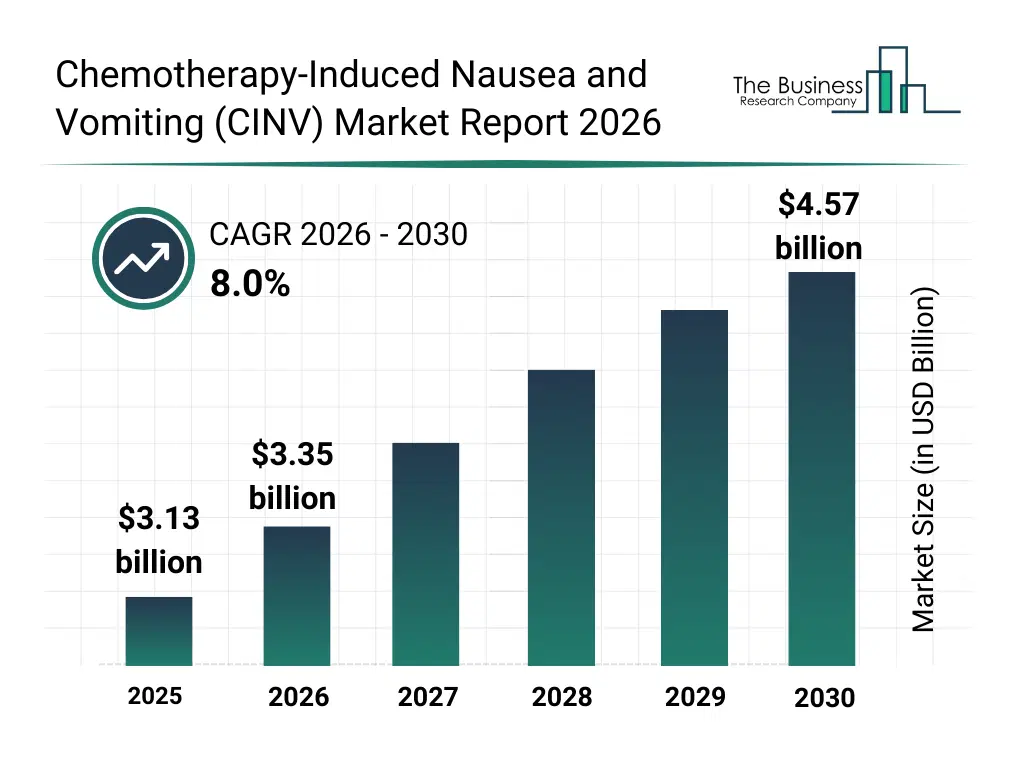
What Is The Chemotherapy-Induced Nausea and Vomiting (CINV) Market Size and Share 2026?
The chemotherapy-induced nausea and vomiting (cinv) market size has grown strongly in recent years. It will grow from $3.13 billion in 2025 to $3.35 billion in 2026 at a compound annual growth rate (CAGR) of 7.0%. The growth in the historic period can be attributed to increasing use of highly emetogenic chemotherapy, rising awareness of treatment side effects, availability of advanced antiemetic drugs, expansion of oncology treatment programs, improved clinical guidelines for cinv management.What Is The Chemotherapy-Induced Nausea and Vomiting (CINV) Market Growth Forecast?
The chemotherapy-induced nausea and vomiting (cinv) market size is expected to see strong growth in the next few years. It will grow to $4.57 billion in 2030 at a compound annual growth rate (CAGR) of 8.0%. The growth in the forecast period can be attributed to increasing demand for next-generation antiemetics, rising adoption of personalized antiemetic therapy, expansion of outpatient chemotherapy services, growing focus on adherence to treatment protocols, advancements in sustained-release formulations. Major trends in the forecast period include increasing adoption of combination antiemetic regimens, rising use of long-acting cinv drugs, growing focus on patient-centric treatment approaches, expansion of preventive cinv management protocols, enhanced emphasis on quality-of-life outcomes.
Global Chemotherapy-Induced Nausea and Vomiting (CINV) Market Segmentation
1) By Form: Injectables, Oral, Transdermal Patches 2) By Drug Class: 5-HT3 Receptor Antagonists, Neurokinin-1 Receptor Antagonists, Corticosteroids, Cannabinoids, Other Drug Classes 3) By Emetogenic Risk: Highly Emetogenic Chemotherapy (HEC), Moderately Emetogenic Chemotherapy (MEC), Low Emetogenic Chemotherapy (LEC) 4) By Distribution Channel: CINV Hospitals, Cancer Research Institute, Retail Pharmacies, Online Pharmacies, Drug Stores 5) By Application: Gynecology, Urology, Gastrointestinal Surgery, Other Applications Subsegments: 1) By Injectables: Intravenous (IV) Solutions, Intramuscular (IM) Injections 2) By Oral: Tablets, Capsules, Liquid Formulations 3) By Transdermal Patches: Fentanyl Patches, Scopolamine PatchesWhat Is The Driver Of The Chemotherapy-Induced Nausea and Vomiting (CINV) Market?
The increasing prevalence of cancer is expected to propel the growth of chemotherapy-induced nausea and vomiting (CINV) market going forward. Cancer is when some cells in the body develop uncontrolled and spread to other body regions. As cancer cases continue to grow, there is a greater incentive to develop more effective and targeted anti-emetic treatments to alleviate CINV, a distressing side effect of chemotherapy. This heightened focus on CINV management has led to advancements in understanding its underlying mechanisms and developing novel therapies. For instance, in January 2023, according to the American Cancer Society (ACS), a US-based volunteer health organization committed to cancer eradication, in the United States, it is anticipated to be 1.9 million new cancer cases (approximately 5,370 cases per day) and 609,820 cancer deaths (about 1,670 deaths per day) in 2023. Therefore, the increasing prevalence of cancer will drive the chemotherapy-induced nausea and vomiting (CINV) industry.Key Players In The Global Chemotherapy-Induced Nausea and Vomiting (CINV) Market
Major companies operating in the chemotherapy-induced nausea and vomiting (cinv) market are Pfizer Inc., Roche Holding AG, Merck & Co. Inc., AbbVie Inc., Novartis AG, AstraZeneca plc, GlaxoSmithKline plc, Baxter International Inc., Teva Pharmaceuticals Industries Ltd., Bausch Health Companies Inc., Eisai Co. Ltd., Jazz Pharmaceuticals plc, Ono Pharmaceutical Co. Ltd., Dr. Reddy’s Laboratories Ltd., Kyowa Kirin Inc., Amneal Pharmaceuticals Inc., Mundipharma International Limited, Insys Therapeutics Inc., Lupin Limited, Helsinn Holding S.A., Heron Therapeutics Inc., Camurus AB, Cadila Pharmaceuticals Limited, Acacia Pharma Ltd., Soligenix Inc.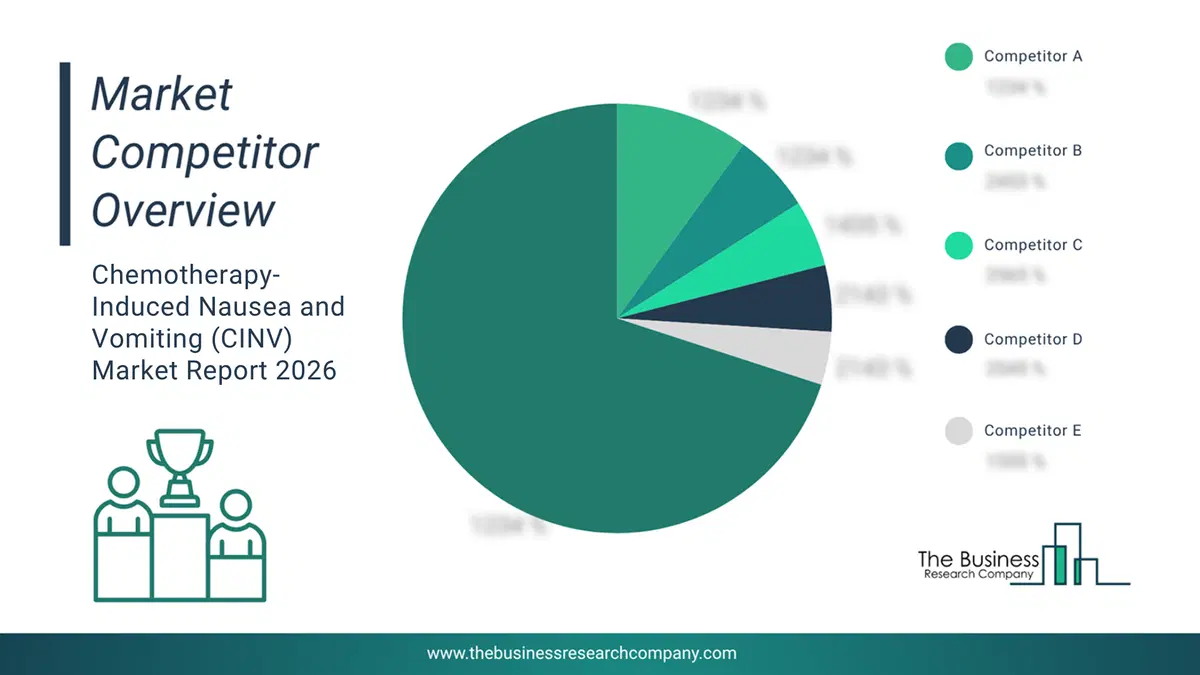
This chart is for illustrative purposes; the full report includes a detailed competitor analysis and comprehensive overview of the top 10 companies in the market.
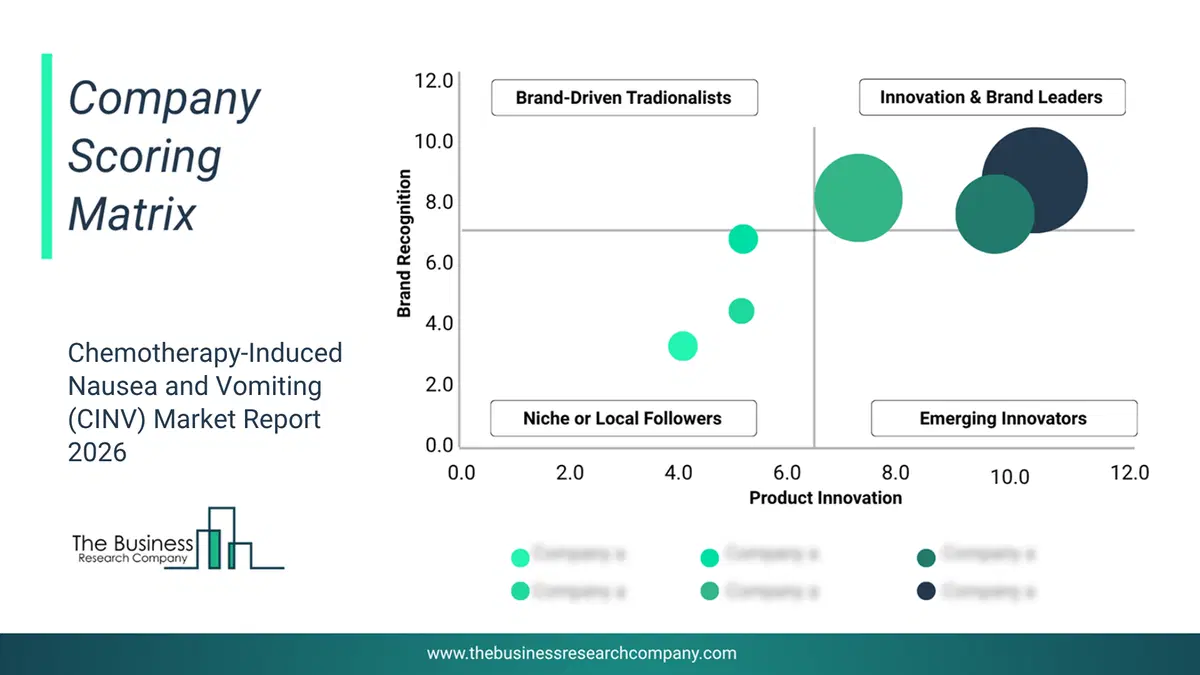
This chart maps companies by product innovation and brand strength, with bubble size indicating relative revenue, helping identify market leaders, challengers, and niche players. This is an illustrative chart; the full report provides a complete and accurate competitive analysis.
Global Chemotherapy-Induced Nausea and Vomiting (CINV) Market Trends and Insights
Major companies operating in the chemotherapy-induced nausea and vomiting (CINV) market are working on new product innovations, such as fixed intravenous antiemetic, to gain a competitive advantage. A fixed intravenous antiemetic refers to a predetermined dose of medication administered through an IV to prevent or treat nausea and vomiting, commonly used in chemotherapy or post-surgery settings. For instance, in January 2023, Glenmark Pharmaceuticals Limited, an India-based manufacturer of pharmaceuticals, generics, and over-the-counter (OTC) products, introduced AKYNZEO I.V. in India, the first fixed intravenous antiemetic combination designed to prevent chemotherapy-induced nausea and vomiting (CINV). The product combines netupitant and palonosetron, targeting both acute and delayed phases of nausea and vomiting. It offers single-dose convenience, improved complete response rates, and enhanced quality of life for cancer patients. Clinical studies show it is particularly beneficial for highly emetogenic chemotherapy patients.What Are Latest Mergers And Acquisitions In The Chemotherapy-Induced Nausea and Vomiting (CINV) Market?
In January 2023, Helsinn Healthcare SA, a Switzerland-based global cancer supportive care company, entered into an exclusive partnership with Immedica Pharma to commercialize its cancer supportive care products across key European markets. This collaboration aims to expand patient access to proven oncology supportive therapies, strengthen Helsinn’s regional commercial reach, and enhance Immedica’s portfolio with established treatments addressing critical unmet needs in cancer care. Immedica AB is a Sweden-based pharmaceutical company specializing in the commercialization of rare disease and specialty care medicines.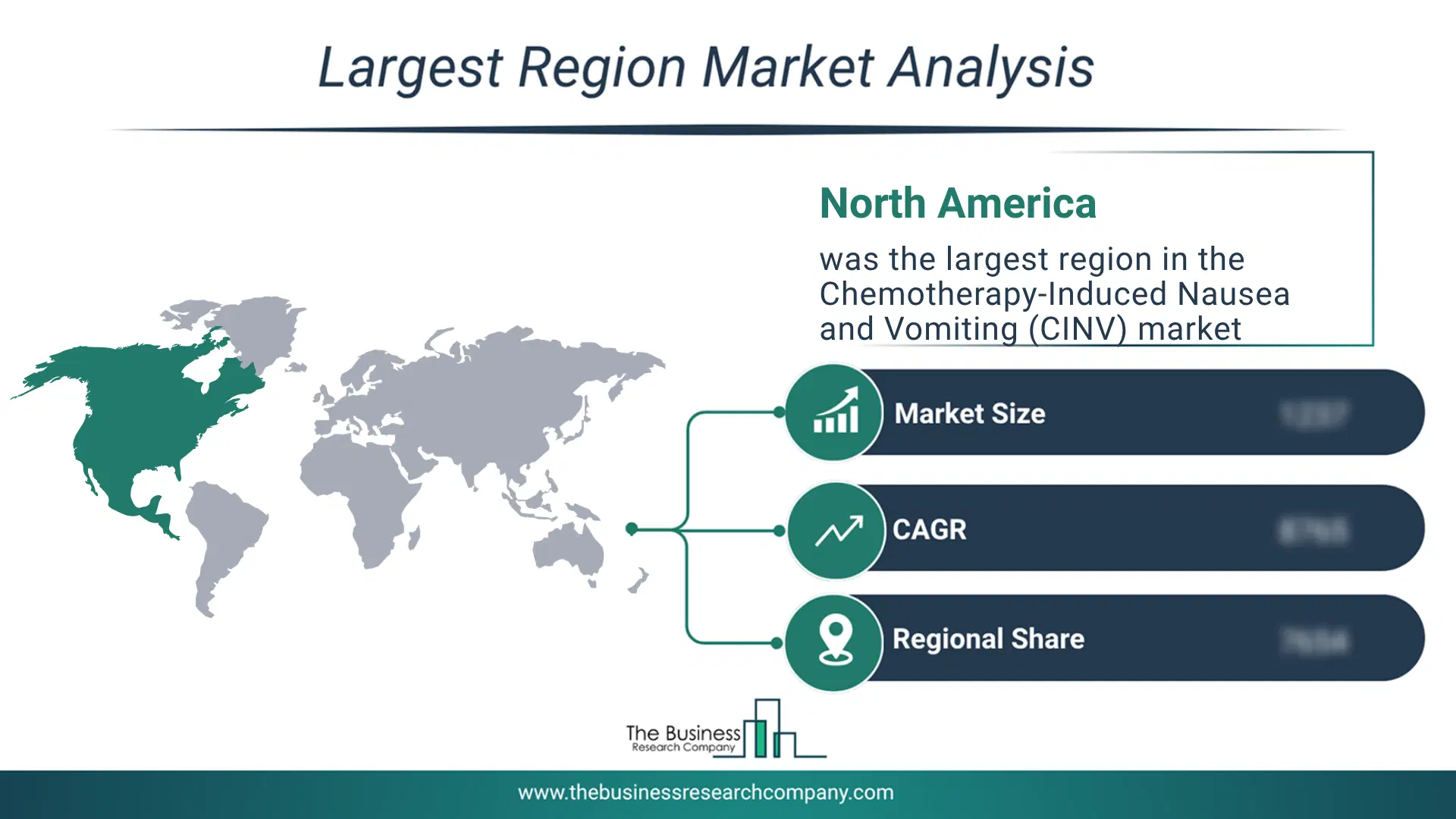
Regional Outlook
North America was the largest region in the chemotherapy-induced nausea and vomiting (CINV) market in 2025. The regions covered in this market report are Asia-Pacific, South East Asia, Western Europe, Eastern Europe, North America, South America, Middle East, Africa. The countries covered in this market report are Australia, Brazil, China, France, Germany, India, Indonesia, Japan, Taiwan, Russia, South Korea, UK, USA, Canada, Italy, Spain.What Defines the Chemotherapy-Induced Nausea and Vomiting (CINV) Market?
The chemotherapy-induced nausea and vomiting (CINV) market consists of revenues earned by entities by providing services such as pharmacologic therapy and nonpharmacologic therapy. The market value includes the value of related goods sold by the service provider or included within the service offering. The chemotherapy-induced nausea and vomiting (CINV) market also includes the sales of such as olanzapine, dexamethasone, cannabinoids, metoclopramide, promethazine and prochlorperazine. Values in this market are ‘factory gate’ values, that is the value of goods sold by the manufacturers or creators of the goods, whether to other entities (including downstream manufacturers, wholesalers, distributors and retailers) or directly to end customers. The value of goods in this market includes related services sold by the creators of the goods.How is Market Value Defined and Measured?
The market value is defined as the revenues that enterprises gain from the sale of goods and/or services within the specified market and geography through sales, grants, or donations in terms of the currency (in USD unless otherwise specified). The revenues for a specified geography are consumption values that are revenues generated by organizations in the specified geography within the market, irrespective of where they are produced. It does not include revenues from resales along the supply chain, either further along the supply chain or as part of other products.
This chart presents market attractiveness based on a quantitative evaluation of growth, competition, strategic alignment, and risk, offering a clear view of opportunity areas for decision-making. This chart is for illustrative purposes; the full report contains the complete analysis.

This chart highlights the Total Addressable Market (TAM) by estimating the maximum revenue opportunity using an assumption-driven approach, supporting strategic planning and opportunity sizing across markets. The chart is illustrative; the full report provides a more comprehensive analysis.
What Key Data and Analysis Are Included in the Chemotherapy-Induced Nausea and Vomiting (CINV) Market Report 2026?
The chemotherapy-induced nausea and vomiting (cinv) market research report is one of a series of new reports from The Business Research Company that provides market statistics, including industry global market size, regional shares, competitors with the market share, detailed market segments, market trends and opportunities, and any further data you may need to thrive in the chemotherapy-induced nausea and vomiting (cinv) industry. The market research report delivers a complete perspective of everything you need, with an in-depth analysis of the current and future state of the industry.Chemotherapy-Induced Nausea and Vomiting (CINV) Market Report Forecast Analysis
| Report Attribute | Details |
|---|---|
| Market Size Value In 2026 | $3.35 billion |
| Revenue Forecast In 2030 | $4.57 billion |
| Growth Rate | CAGR of 8% from 2026 to 2030 |
| Base Year For Estimation | 2025 |
| Actual Estimates/Historical Data | 2020-2025 |
| Forecast Period | 2026 - 2030 |
| Market Representation | Revenue in USD Billion and CAGR from 2026 to 2030 |
| Segments Covered | Form, Drug Class, Emetogenic Risk, Distribution Channel, Application |
| Regional Scope | Asia-Pacific, Western Europe, Eastern Europe, North America, South America, Middle East, Africa |
| Country Scope | The countries covered in the report are Australia, Brazil, China, France, Germany, India, Indonesia, Japan, Taiwan, Russia, South Korea, UK, USA, Canada, Italy, Spain |
| Key Companies Profiled | Pfizer Inc., Roche Holding AG, Merck & Co. Inc., AbbVie Inc., Novartis AG, AstraZeneca plc, GlaxoSmithKline plc, Baxter International Inc., Teva Pharmaceuticals Industries Ltd., Bausch Health Companies Inc., Eisai Co. Ltd., Jazz Pharmaceuticals plc, Ono Pharmaceutical Co. Ltd., Dr. Reddy’s Laboratories Ltd., Kyowa Kirin Inc., Amneal Pharmaceuticals Inc., Mundipharma International Limited, Insys Therapeutics Inc., Lupin Limited, Helsinn Holding S.A., Heron Therapeutics Inc., Camurus AB, Cadila Pharmaceuticals Limited, Acacia Pharma Ltd., Soligenix Inc. |
| Customization Scope | Request for Customization |
| Pricing And Purchase Options | Explore Purchase Options |