

Chemotherapy-Induced Neutropenia Treatment Market Report 2026
Global Outlook – By Type (Antibiotic Therapy, Granulocyte Colony-Stimulating Factor Therapy (G-CSF), Granulocyte Transfusion, Other Types), By Route of Administration (Subcutaneous, Intravenous), By Indication (Solid Tumors, Hematological Malignancies, Other Indications), By Distribution Channel (Hospital Pharmacies, Retail Pharmacies, Online Pharmacies), By End-User (Hospitals, Specialty Clinics, Homecare Settings) - Market Size, Trends, Strategies, and Forecast to 2030
Chemotherapy-Induced Neutropenia Treatment Market Overview
• Chemotherapy-Induced Neutropenia Treatment market size has reached to $0.62 billion in 2025 • Expected to grow to $0.79 billion in 2030 at a compound annual growth rate (CAGR) of 5.1% • Growth Driver: Increasing Incidence Of Cancer Fueling The Growth Of The Market Due To Higher Vulnerability In Aging Populations • Market Trend: On-Body Injectors Support Seamless Neutropenia Management • North America was the largest region in 2025 and Asia-Pacific is the fastest growing region.What Is Covered Under Chemotherapy-Induced Neutropenia Treatment Market?
Chemotherapy-induced neutropenia treatment is medical management used to help cancer patients whose white blood cell levels drop after chemotherapy. It reduces the duration and severity of neutropenia to prevent infections. The treatment often involves growth factors and chemotherapy dose adjustments, while early intervention supports schedule adherence and enhances patient outcomes. The main types in the chemotherapy-induced neutropenia treatment are antibiotic therapy, granulocyte colony-stimulating factor therapy (G-CSF), granulocyte transfusion and other types. Antibiotic therapy refers to the use of antibiotics to treat or prevent bacterial infections by either killing bacteria or inhibiting their growth. The routes of administration for chemotherapy-induced neutropenia treatment include subcutaneous and intravenous methods. Key indications encompass solid tumors, hematological malignancies, and other related conditions. Distribution channels comprise hospital pharmacies, retail pharmacies, and online pharmacies. The primary end-users of these treatments are hospitals, specialty clinics, and homecare settings.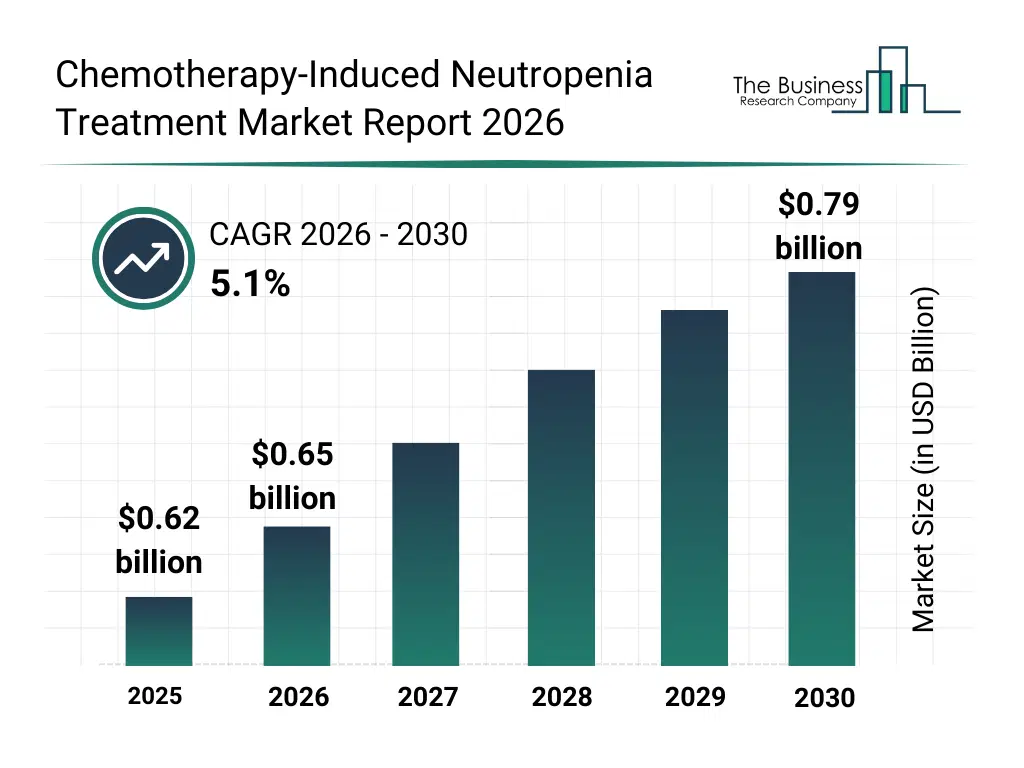
What Is The Chemotherapy-Induced Neutropenia Treatment Market Size and Share 2026?
The chemotherapy-induced neutropenia treatment market size has grown strongly in recent years. It will grow from $0.62 billion in 2025 to $0.65 billion in 2026 at a compound annual growth rate (CAGR) of 5.3%. The growth in the historic period can be attributed to increasing incidence of chemotherapy-induced neutropenia, expansion of aggressive cancer treatment protocols, availability of colony-stimulating factors, improved clinical monitoring practices, growth of oncology treatment facilities.What Is The Chemotherapy-Induced Neutropenia Treatment Market Growth Forecast?
The chemotherapy-induced neutropenia treatment market size is expected to see strong growth in the next few years. It will grow to $0.79 billion in 2030 at a compound annual growth rate (CAGR) of 5.1%. The growth in the forecast period can be attributed to increasing adoption of long-acting growth factors, rising focus on outpatient neutropenia management, expansion of biosimilar g-csf usage, growing investment in infection prevention strategies, advancements in immunomodulatory therapies. Major trends in the forecast period include increasing adoption of prophylactic g-csf therapy, rising use of early intervention treatment models, growing emphasis on infection risk reduction, expansion of personalized neutropenia management, enhanced monitoring of white blood cell levels.
Global Chemotherapy-Induced Neutropenia Treatment Market Segmentation
1) By Type: Antibiotic Therapy, Granulocyte Colony-Stimulating Factor Therapy (G-CSF), Granulocyte Transfusion, Other Types 2) By Route of Administration: Subcutaneous, Intravenous 3) By Indication: Solid Tumors, Hematological Malignancies, Other Indications 4) By Distribution Channel: Hospital Pharmacies, Retail Pharmacies, Online Pharmacies 5) By End-User: Hospitals, Specialty Clinics, Homecare Settings Subsegments: 1) By Antibiotic Therapy: Broad-Spectrum Antibiotics, Narrow-Spectrum Antibiotics, Prophylactic Antibiotics 2) By Granulocyte Colony-Stimulating Factor Therapy (G-CSF): Filgrastim, Pegfilgrastim, Lenograstim 3) By Granulocyte Transfusion: Allogeneic Granulocyte Transfusion, Autologous Granulocyte Transfusion 4) By Other Types: Antifungal Therapy, Stem Cell Therapy, Immunomodulatory TherapyWhat Is The Driver Of The Chemotherapy-Induced Neutropenia Treatment Market?
The increasing incidence of cancer is expected to propel the growth of the chemotherapy-induced neutropenia treatment market going forward. Cancer refers to a group of diseases characterized by the uncontrolled growth and spread of abnormal cells in the body. The rise in cancer cases is due to the aging population, as older individuals have a higher risk of developing cancer due to accumulated genetic mutations and weakened immune function over time. Chemotherapy-induced neutropenia treatment aids in cancer care by reducing infection risks through immune support, ensuring patients can continue chemotherapy with fewer interruptions. It enhances treatment outcomes by minimizing complications, thereby improving overall patient safety and quality of life. For instance, in July 2024, according to the Australian Institute of Health and Welfare, an Australia-based government agency, in 2023, an estimated 165,000 Australians were newly diagnosed with cancer, which equates to over 450 cases each day, and males represented about 55% of these diagnoses. Therefore, the increasing incidence of cancer is driving the growth of the chemotherapy-induced neutropenia treatment industry.Key Players In The Global Chemotherapy-Induced Neutropenia Treatment Market
Major companies operating in the chemotherapy-induced neutropenia treatment market are Pfizer Inc., Johnson & Johnson, Merck & Co. Inc., GSK plc, Bristol-Myers Squibb Company, Novartis AG, Takeda Pharmaceutical Company Limited, Amgen Inc., Teva Pharmaceutical Industries Ltd., Astellas Pharma Inc., Biogen Inc., Baxter Inteational, Fresenius Kabi, Eisai Co. Ltd., Dr. Reddy's Laboratories Ltd., Exelixis Inc., Biocon Biologics Limited, Coherus BioSciences Inc., G1 Therapeutics, Enzychem Lifesciences Corporation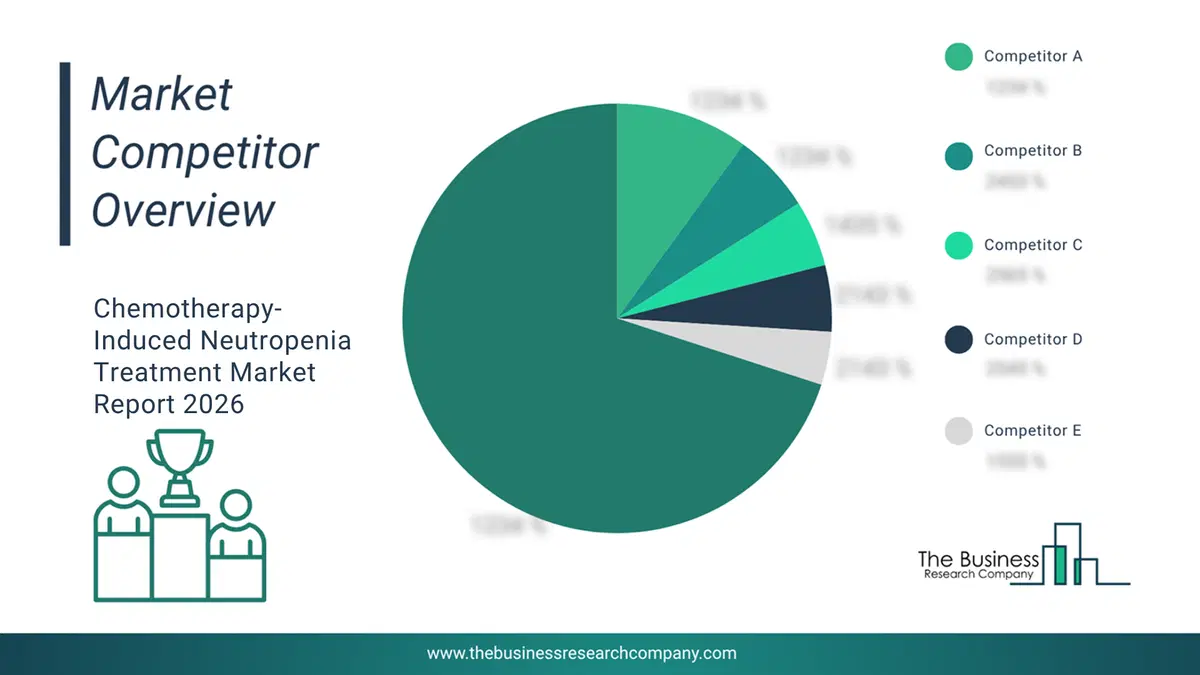
This chart is for illustrative purposes; the full report includes a detailed competitor analysis and comprehensive overview of the top 10 companies in the market.
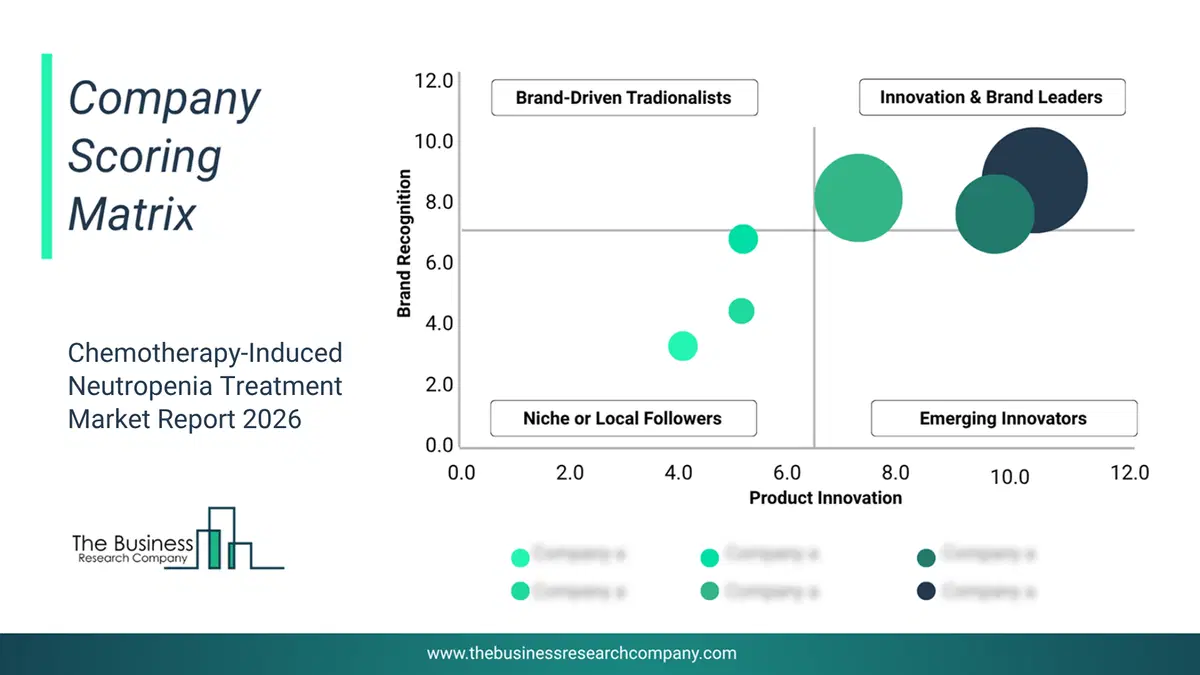
This chart maps companies by product innovation and brand strength, with bubble size indicating relative revenue, helping identify market leaders, challengers, and niche players. This is an illustrative chart; the full report provides a complete and accurate competitive analysis.
Global Chemotherapy-Induced Neutropenia Treatment Market Trends and Insights
Major companies operating in the chemotherapy-induced neutropenia treatment market are focusing on developing innovative products and getting approvals, such as long-acting formulations to improve patient convenience, reduce dosing frequency, and enhance treatment adherence. Long-acting formulations refer to drug preparations designed to release active ingredients slowly over an extended period, reducing the frequency of administration. For instance, in December 2023, Coherus BioSciences Inc., a US-based biopharmaceutical company, received the U.S. Food and Drug Administration (FDA) approval for Udenyca Onbody, a novel, ready-to-use on-body injector. This device containing a long-acting formulation automatically delivers pegfilgrastim approximately 27 hours after chemotherapy, eliminating the need for a next-day injection. Udenyca Onbody enhances patient experience by ensuring timely prophylactic treatment of chemotherapy-induced neutropenia while reducing clinic visits and improving adherence.What Are Latest Mergers And Acquisitions In The Chemotherapy-Induced Neutropenia Treatment Market?
In September 2025, Hanmi Pharmaceutical, a South Korea-based biopharmaceutical company, entered into a strategic collaboration with Tabuk Pharmaceuticals to expand the market presence of its innovative biologic therapy, Rolontis (eflapegrastim), across the Middle East–North Africa (MENA) region. The partnership aims to accelerate patient access to advanced neutropenia treatment, strengthen commercial capabilities in key international markets, and support Hanmi’s broader global expansion strategy. Tabuk Pharmaceuticals is a Saudi Arabia–based pharmaceutical company specializing in the development, manufacturing, and distribution of branded and generic medicines across the MENA region.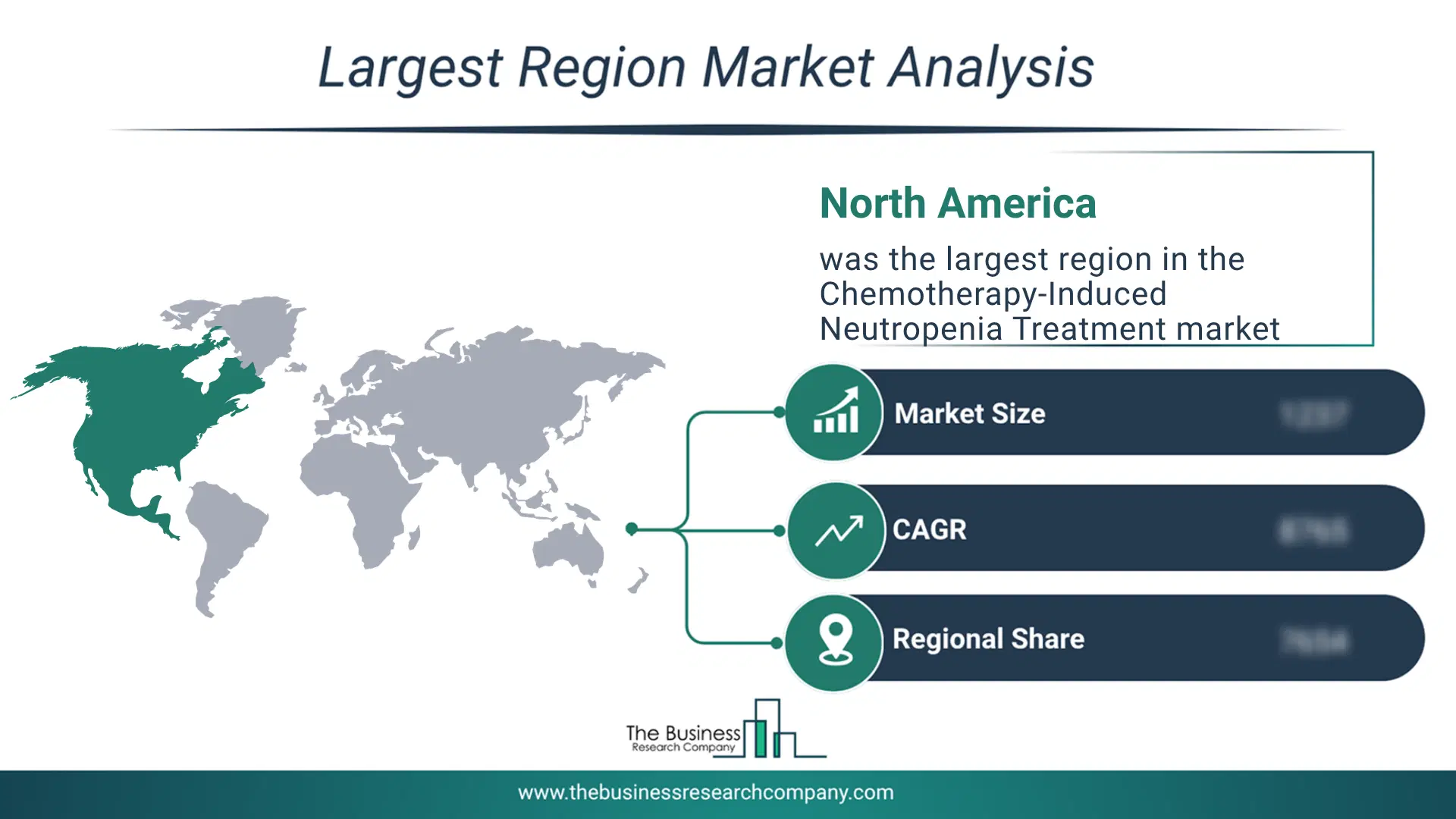
Regional Outlook
North America was the largest region in the chemotherapy-induced neutropenia treatment market in 2025. Asia-Pacific is expected to be the fastest-growing region in the forecast period. The regions covered in this market report are Asia-Pacific, South East Asia, Western Europe, Eastern Europe, North America, South America, Middle East, Africa. The countries covered in this market report are Australia, Brazil, China, France, Germany, India, Indonesia, Japan, Taiwan, Russia, South Korea, UK, USA, Canada, Italy, Spain.What Defines the Chemotherapy-Induced Neutropenia Treatment Market?
The chemotherapy-induced neutropenia treatment market consists of revenues earned by entities by providing services such as neutrophil count monitoring, chemotherapy dose management, patient education and follow-up care. The market value includes the value of related goods sold by the service provider or included within the service offering. The chemotherapy-induced neutropenia treatment market also includes sales of biologics, biosimilars, and supportive care devices such as auto-injectors and on-body delivery systems. Values in this market are ‘factory gate’ values, that is, the value of goods sold by the manufacturers or creators of the goods, whether to other entities (including downstream manufacturers, wholesalers, distributors, and retailers) or directly to end customers. The value of goods in this market includes related services sold by the creators of the goods.How is Market Value Defined and Measured?
The market value is defined as the revenues that enterprises gain from the sale of goods and/or services within the specified market and geography through sales, grants, or donations in terms of the currency (in USD unless otherwise specified). The revenues for a specified geography are consumption values that are revenues generated by organizations in the specified geography within the market, irrespective of where they are produced. It does not include revenues from resales along the supply chain, either further along the supply chain or as part of other products.
This chart presents market attractiveness based on a quantitative evaluation of growth, competition, strategic alignment, and risk, offering a clear view of opportunity areas for decision-making. This chart is for illustrative purposes; the full report contains the complete analysis.

This chart highlights the Total Addressable Market (TAM) by estimating the maximum revenue opportunity using an assumption-driven approach, supporting strategic planning and opportunity sizing across markets. The chart is illustrative; the full report provides a more comprehensive analysis.
What Key Data and Analysis Are Included in the Chemotherapy-Induced Neutropenia Treatment Market Report 2026?
The chemotherapy-induced neutropenia treatment market research report is one of a series of new reports from The Business Research Company that provides market statistics, including industry global market size, regional shares, competitors with the market share, detailed market segments, market trends and opportunities, and any further data you may need to thrive in the chemotherapy-induced neutropenia treatment industry. The market research report delivers a complete perspective of everything you need, with an in-depth analysis of the current and future state of the industry.Chemotherapy-Induced Neutropenia Treatment Market Report Forecast Analysis
| Report Attribute | Details |
|---|---|
| Market Size Value In 2026 | $0.65 billion |
| Revenue Forecast In 2030 | $0.79 billion |
| Growth Rate | CAGR of 5.1% from 2026 to 2030 |
| Base Year For Estimation | 2025 |
| Actual Estimates/Historical Data | 2020-2025 |
| Forecast Period | 2026 - 2030 |
| Market Representation | Revenue in USD Billion and CAGR from 2026 to 2030 |
| Segments Covered | Type, Route of Administration, Indication, Distribution Channel, End-User |
| Regional Scope | Asia-Pacific, Western Europe, Eastern Europe, North America, South America, Middle East, Africa |
| Country Scope | The countries covered in the report are Australia, Brazil, China, France, Germany, India, Indonesia, Japan, Taiwan, Russia, South Korea, UK, USA, Canada, Italy, Spain |
| Key Companies Profiled | Pfizer Inc., Johnson & Johnson, Merck & Co. Inc., GSK plc, Bristol-Myers Squibb Company, Novartis AG, Takeda Pharmaceutical Company Limited, Amgen Inc., Teva Pharmaceutical Industries Ltd., Astellas Pharma Inc., Biogen Inc., Baxter Inteational, Fresenius Kabi, Eisai Co. Ltd., Dr. Reddy's Laboratories Ltd., Exelixis Inc., Biocon Biologics Limited, Coherus BioSciences Inc., G1 Therapeutics, Enzychem Lifesciences Corporation |
| Customization Scope | Request for Customization |
| Pricing And Purchase Options | Explore Purchase Options |