

Chronic Spontaneous Urticaria Market Report 2026
Global Outlook – By Treatment (Medication, Phototherapy, Other Treatments), By Route Of Administration (Oral, Topical, Parenteral, Other Routes Of Administrations), By Diagnosis (Physical Examination, Blood Test, Allergy Test, Other Diagnosis), By End-Users (Hospitals, Specialty Clinics, Homecare, Other End-Users) - Market Size, Trends, Strategies, and Forecast to 2030
Chronic Spontaneous Urticaria Market Overview
• Chronic Spontaneous Urticaria market size has reached to $2.23 billion in 2025 • Expected to grow to $3.21 billion in 2030 at a compound annual growth rate (CAGR) of 7.4% • Growth Driver: Impact Of Increasing Alcohol Consumption On The Chronic Spontaneous Urticaria Market • Market Trend: Development Of Next-Generation Briquilimab (JSP191) To Enhance Treatment Efficacy • North America was the largest region in 2025.What Is Covered Under Chronic Spontaneous Urticaria Market?
Chronic spontaneous urticaria (CSU) is a skin condition characterized by the recurrent appearance of hives (raised, red, itchy welts) and angioedema (swelling) lasting for more than six weeks, without an identifiable external trigger. The exact cause of CSU is often unknown, but it may involve an autoimmune component where the body's immune system mistakenly attacks healthy skin cells. Treatment focuses on symptom management, primarily using antihistamines and, in more severe cases, other medications such as biologics. The main treatments for chronic spontaneous urticaria are medication, phototherapy, and others. Chronic spontaneous urticaria medication typically includes antihistamines as first-line treatment, with options ranging from non-sedating to sedating types based on symptom severity and patient response. Treatment administration routes include oral, topical, parenteral, and others. Diagnosis involves physical examination, blood tests, and allergy testing and is used by various end users of treatments, including hospitals, specialty clinics, home care settings, and others.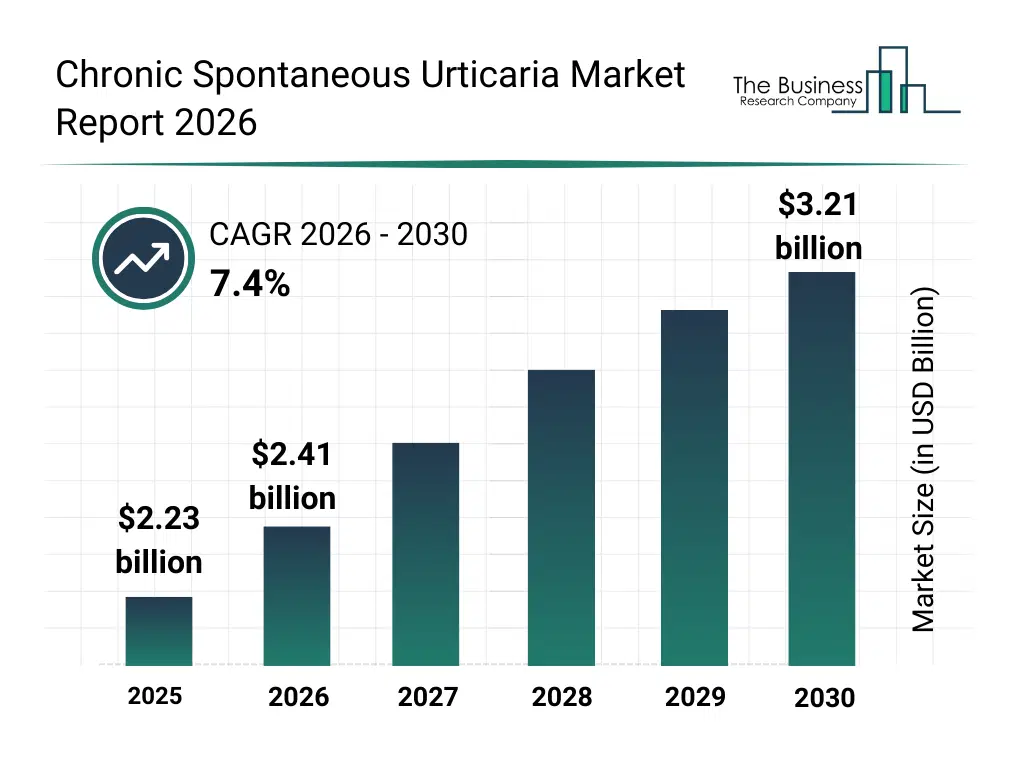
What Is The Chronic Spontaneous Urticaria Market Size and Share 2026?
The chronic spontaneous urticaria market size has grown strongly in recent years. It will grow from $2.23 billion in 2025 to $2.41 billion in 2026 at a compound annual growth rate (CAGR) of 8.4%. The growth in the historic period can be attributed to increasing prevalence of chronic skin allergies, wider availability of second-generation antihistamines, improved diagnostic practices, growth in dermatology clinic visits, increased patient awareness of urticaria conditions.What Is The Chronic Spontaneous Urticaria Market Growth Forecast?
The chronic spontaneous urticaria market size is expected to see strong growth in the next few years. It will grow to $3.21 billion in 2030 at a compound annual growth rate (CAGR) of 7.4%. The growth in the forecast period can be attributed to increasing biologic drug pipeline development, rising investment in autoimmune dermatology research, expansion of targeted monoclonal antibody use, growing focus on symptom-free disease control, increasing adoption of long-term maintenance therapies. Major trends in the forecast period include increasing adoption of biologic treatments for csu, rising use of advanced antihistamine protocols, growing focus on autoimmune disease mechanisms, expansion of personalized treatment algorithms, enhanced monitoring of long-term disease control.
Global Chronic Spontaneous Urticaria Market Segmentation
1) By Treatment: Medication, Phototherapy, Other Treatments 2) By Route Of Administration: Oral, Topical, Parenteral, Other Routes Of Administrations 3) By Diagnosis: Physical Examination, Blood Test, Allergy Test, Other Diagnosis 4) By End-Users: Hospitals, Specialty Clinics, Homecare, Other End-Users Subsegments: 1) By Medication: Antihistamines, Leukotriene Receptor Antagonists, Monoclonal Antibodies, Immunosuppressants, Corticosteroids 2) By Phototherapy: UVB Phototherapy, UVA Phototherapy, Narrowband UVB Therapy 3) By Other Treatments: Alternative Therapies, Dietary Modifications, PsychotherapyWhat Is The Driver Of The Chronic Spontaneous Urticaria Market?
Increasing alcohol consumption is expected to propel the growth of the chronic spontaneous urticaria market going forward. The rising consumption of alcohol can be attributed to various factors, such as social norms, stress, advertising, affordability, and availability. Alcohol consumption can potentially exacerbate symptoms of chronic spontaneous urticaria in some individuals, leading to increased hives and swelling. For instance, in 2025, according to the Priory Group is a UK-based provider of mental health, addiction, and specialist education services, a 2023 survey found that 25% of UK individuals aged 18–24 now abstain from alcohol entirely, highlighting a notable shift toward sobriety among the younger generation. Therefore, increasing alcohol consumption is driving the growth of the chronic spontaneous urticaria industry.Key Players In The Global Chronic Spontaneous Urticaria Market
Major companies operating in the chronic spontaneous urticaria market are F. Hoffmann-La Roche Ltd., Merck & Co. Inc., AbbVie Inc., Bayer AG, Sanofi SA, AstraZeneca plc, Novartis AG, GlaxoSmithKline plc, Eli Lilly and Company, Amgen Inc., Teva Pharmaceutical Industries Ltd., Sun Pharmaceutical Industries Ltd., Aurobindo Pharma Limited, Cipla Limited, Genentech Inc., Dr. Reddy's Laboratories Ltd., Hikma Pharmaceuticals plc, Celltrion Inc., Allakos Inc., United BioPharma Inc.
This chart is for illustrative purposes; the full report includes a detailed competitor analysis and comprehensive overview of the top 10 companies in the market.
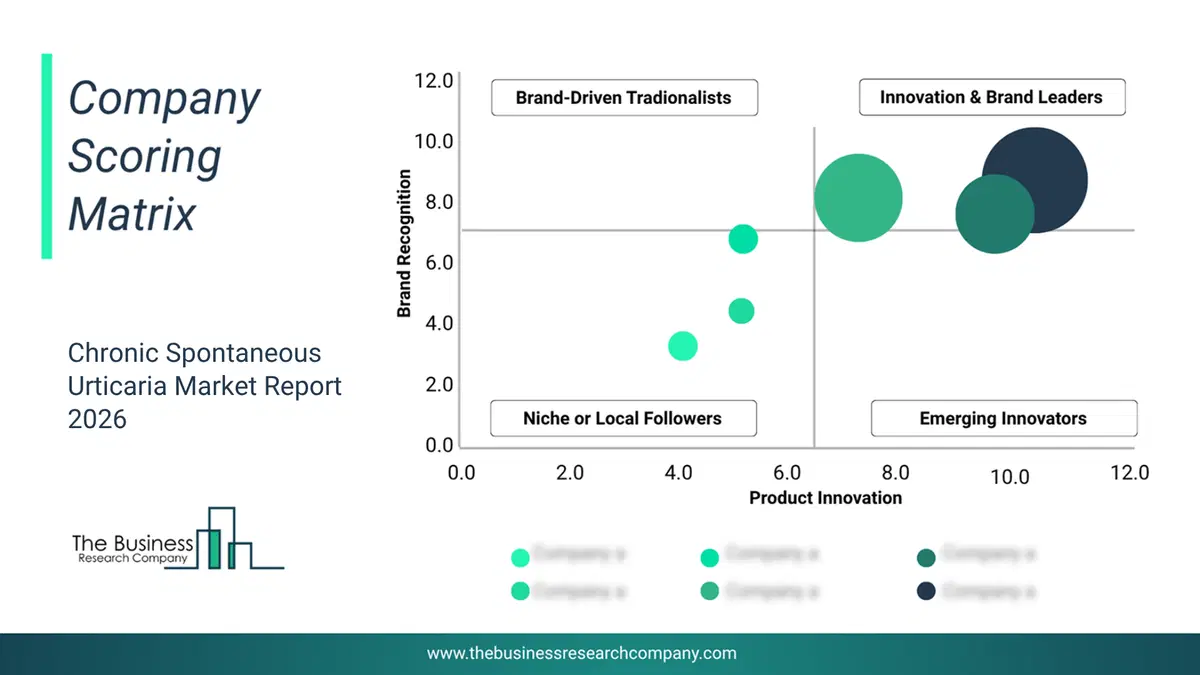
This chart maps companies by product innovation and brand strength, with bubble size indicating relative revenue, helping identify market leaders, challengers, and niche players. This is an illustrative chart; the full report provides a complete and accurate competitive analysis.
Global Chronic Spontaneous Urticaria Market Trends and Insights
Major companies operating in the chronic spontaneous urticaria market are developing advanced next-generation Briquilimab (JSP191) to enhance treatment efficacy and reduce dosing frequency. Next-generation Briquilimab (JSP191) refers to a monoclonal antibody designed to target and deplete specific immune cells, particularly targeting CD47, such as chronic spontaneous urticaria. For instance, in November 2023, Jasper Therapeutics Inc., a US-based clinical-stage biotechnology company, announced that it has dosed its first patient in a Phase 1b/2a clinical study of Briquilimab for chronic spontaneous urticaria (CSU). This achievement is a critical step in assessing the safety and effectiveness of Briquilimab, a next-generation monoclonal antibody that targets CD47, in the treatment of this recurrent hive and itching problem. The study aims to assess how well Briquilimab can alleviate symptoms and improve quality of life for patients suffering from CSU.What Are Latest Mergers And Acquisitions In The Chronic Spontaneous Urticaria Market?
In May 2024, Incyte Corporation, a US-based biopharmaceutical company focused on developing and commercializing innovative medicines, acquired Escient Pharmaceuticals for an undisclosed amount. With this acquisition, Incyte aims to expand its immunology and inflammation pipeline, strengthen its early-stage R&D capabilities, and accelerate the development of first-in-class therapies targeting sensory modulation pathways. Escient Pharmaceuticals is a US-based clinical-stage biotechnology company specializing in novel small-molecule therapeutics for chronic inflammatory and allergic diseases.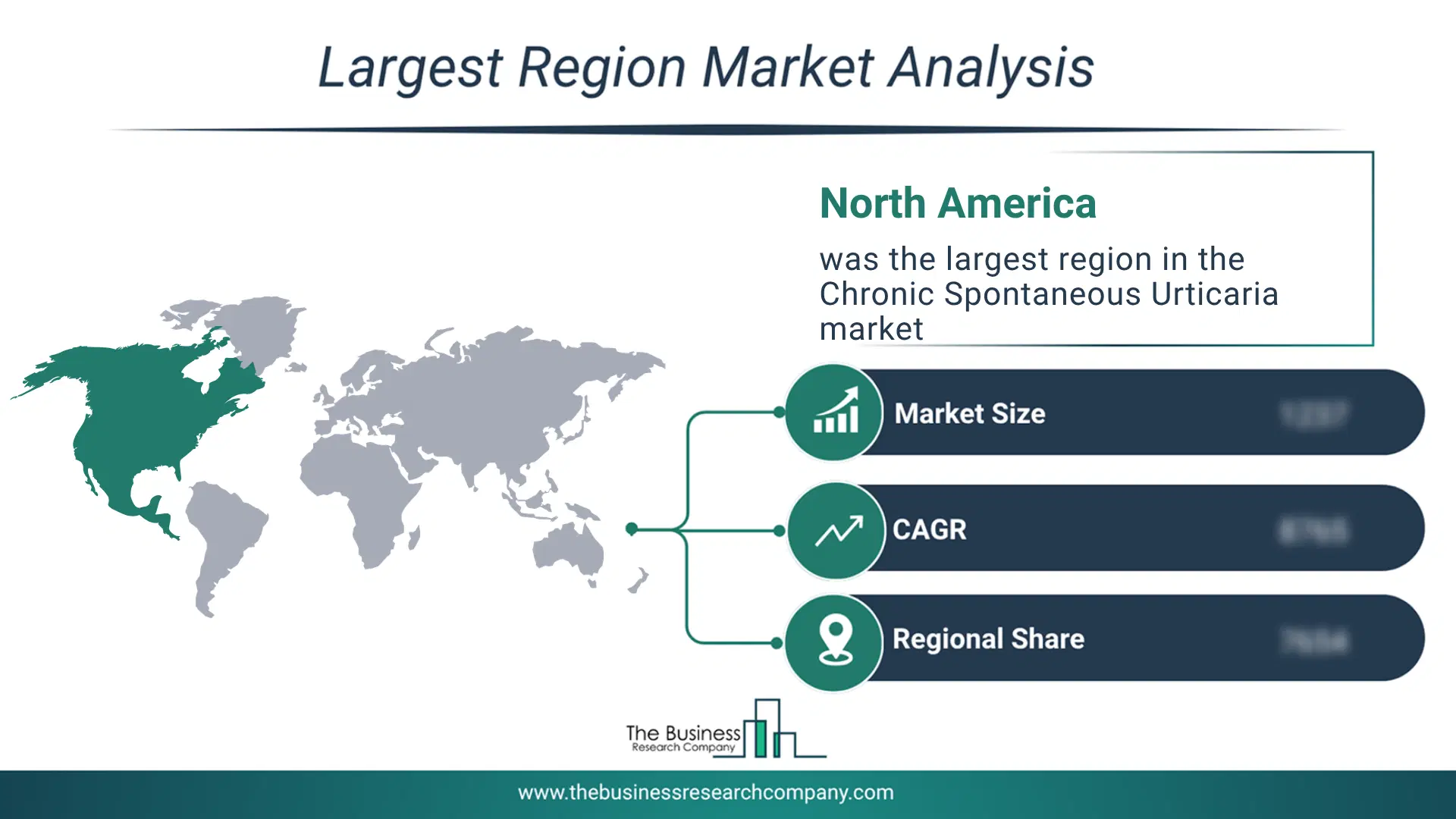
Regional Outlook
North America was the largest region in the chronic spontaneous urticaria market in 2025. The regions covered in this market report are Asia-Pacific, South East Asia, Western Europe, Eastern Europe, North America, South America, Middle East, Africa. The countries covered in this market report are Australia, Brazil, China, France, Germany, India, Indonesia, Japan, Taiwan, Russia, South Korea, UK, USA, Canada, Italy, Spain.What Defines the Chronic Spontaneous Urticaria Market?
The chronic spontaneous urticaria market consists of revenues earned by entities by providing services such as diagnostic services and medical consultations. The market value includes the value of related goods sold by the service provider or included within the service offering. The chronic spontaneous urticaria market also includes sales of antihistamines, corticosteroids, and cyclosporine. Values in this market are ‘factory gate’ values, that is the value of goods sold by the manufacturers or creators of the goods, whether to other entities (including downstream manufacturers, wholesalers, distributors and retailers) or directly to end customers. The value of goods in this market includes related services sold by the creators of the goods.How is Market Value Defined and Measured?
The market value is defined as the revenues that enterprises gain from the sale of goods and/or services within the specified market and geography through sales, grants, or donations in terms of the currency (in USD unless otherwise specified). The revenues for a specified geography are consumption values that are revenues generated by organizations in the specified geography within the market, irrespective of where they are produced. It does not include revenues from resales along the supply chain, either further along the supply chain or as part of other products.
This chart presents market attractiveness based on a quantitative evaluation of growth, competition, strategic alignment, and risk, offering a clear view of opportunity areas for decision-making. This chart is for illustrative purposes; the full report contains the complete analysis.

This chart highlights the Total Addressable Market (TAM) by estimating the maximum revenue opportunity using an assumption-driven approach, supporting strategic planning and opportunity sizing across markets. The chart is illustrative; the full report provides a more comprehensive analysis.
What Key Data and Analysis Are Included in the Chronic Spontaneous Urticaria Market Report 2026?
The chronic spontaneous urticaria market research report is one of a series of new reports from The Business Research Company that provides market statistics, including industry global market size, regional shares, competitors with the market share, detailed market segments, market trends and opportunities, and any further data you may need to thrive in the chronic spontaneous urticaria industry. The market research report delivers a complete perspective of everything you need, with an in-depth analysis of the current and future state of the industry.Chronic Spontaneous Urticaria Market Report Forecast Analysis
| Report Attribute | Details |
|---|---|
| Market Size Value In 2026 | $2.41 billion |
| Revenue Forecast In 2030 | $3.21 billion |
| Growth Rate | CAGR of 7.4% from 2026 to 2030 |
| Base Year For Estimation | 2025 |
| Actual Estimates/Historical Data | 2020-2025 |
| Forecast Period | 2026 - 2030 |
| Market Representation | Revenue in USD Billion and CAGR from 2026 to 2030 |
| Segments Covered | Treatment, Route Of Administration, Diagnosis, End-Users |
| Regional Scope | Asia-Pacific, Western Europe, Eastern Europe, North America, South America, Middle East, Africa |
| Country Scope | The countries covered in the report are Australia, Brazil, China, France, Germany, India, Indonesia, Japan, Taiwan, Russia, South Korea, UK, USA, Canada, Italy, Spain |
| Key Companies Profiled | F. Hoffmann-La Roche Ltd., Merck & Co. Inc., AbbVie Inc., Bayer AG, Sanofi SA, AstraZeneca plc, Novartis AG, GlaxoSmithKline plc, Eli Lilly and Company, Amgen Inc., Teva Pharmaceutical Industries Ltd., Sun Pharmaceutical Industries Ltd., Aurobindo Pharma Limited, Cipla Limited, Genentech Inc., Dr. Reddy's Laboratories Ltd., Hikma Pharmaceuticals plc, Celltrion Inc., Allakos Inc., United BioPharma Inc. |
| Customization Scope | Request for Customization |
| Pricing And Purchase Options | Explore Purchase Options |