
Circuit Breaker Market Report 2026
Global Outlook – By Type ( Low voltage, Medium voltage, High voltage), By Insulation Type ( Vacuum, Air, Gas, Oil), By Application ( Indoor, Outdoor), By End User ( Residential, Commercial, Industrial, Utilities) – Market Size, Trends, Strategies, and Forecast to 2030
Circuit Breaker Market Overview
• Circuit Breaker market size has reached to $7.96 billion in 2025 • Expected to grow to $10.46 billion in 2030 at a compound annual growth rate (CAGR) of 5.5% • Growth Driver: Rising Electricity Demand Propels Growth Of The Circuit Breaker Market • Market Trend: Advancements In Electrical Safety And Reliability Through Active Protection Devices • Asia-Pacific was the largest region in 2025 and North America is the fastest growing region.Market Gains By 2030 – Top Opportunities By Segment
Market Gain identifies the most promising market opportunities by highlighting the segments or products expected to generate the highest incremental revenue growth over the next five years.
What Is Covered Under Circuit Breaker Market?
A circuit breaker is an electrical device designed to protect an electrical circuit from damage caused by overcurrent or short circuit. Its basic function is to interrupt the flow of electricity when a fault is detected, preventing damage to the electrical system and reducing the risk of fire or other hazards. The main types of circuit breaker are low voltage, medium voltage, and high voltage. Low voltage (LV) refers to electrical systems and equipment operating at a voltage level less than or equal to 1000 volts (V) AC or 1500 V DC. LV is used in control rooms, distribution systems, lighting, communication systems, security systems, and various residential and commercial devices such doorbells, thermostats, and landscape lighting. The various insulation types include vacuum, air, gas, and oil, and various applications involved are indoor and outdoor. It is used by multiple end-users such as residential, commercial, industrial, and utilities.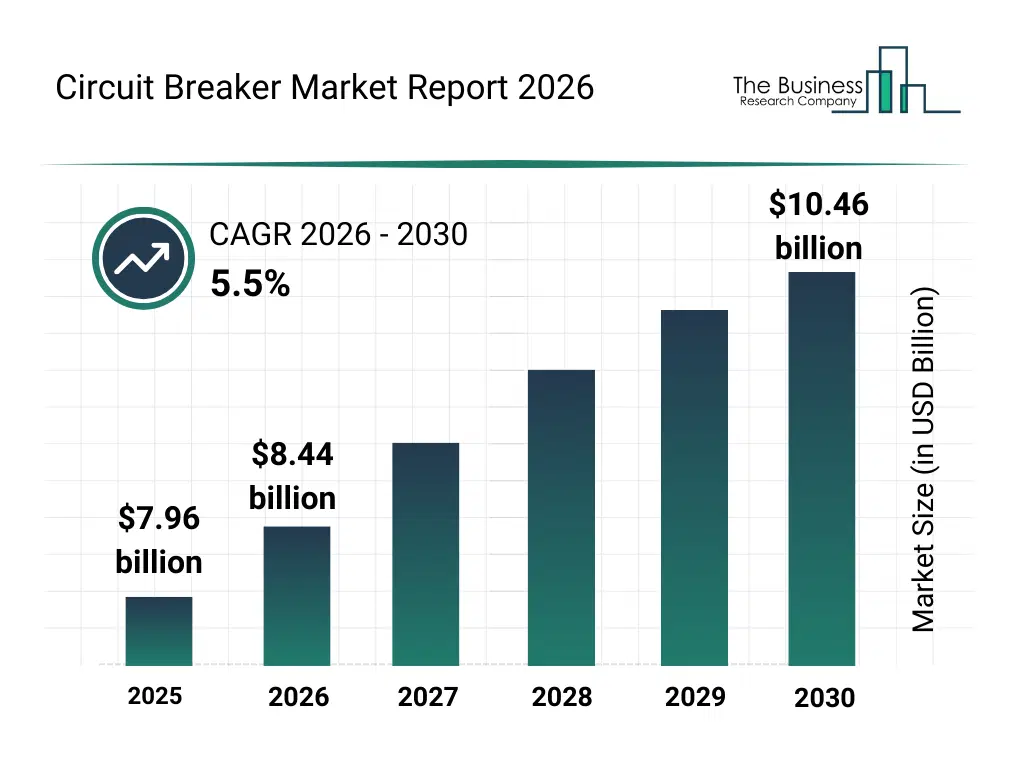
What Is The Circuit Breaker Market Size 2026 And Growth Rate?
The circuit breaker market size has grown strongly in recent years. It will grow from $7.96 billion in 2025 to $8.44 billion in 2026 at a compound annual growth rate (CAGR) of 6.0%. The growth in the historic period can be attributed to expansion of power distribution networks, rising industrial electrification, increased construction of residential buildings, growing need for electrical safety devices, adoption of standardized electrical codes.What Is The Circuit Breaker Market Growth Forecast?
The circuit breaker market size is expected to see strong growth in the next few years. It will grow to $10.46 billion in 2030 at a compound annual growth rate (CAGR) of 5.5%. The growth in the forecast period can be attributed to growth in renewable energy integration, expansion of smart grid infrastructure, rising electric vehicle charging installations, modernization of aging power infrastructure, increasing demand for reliable power protection. Major trends in the forecast period include smart and connected circuit breakers, compact and modular breaker designs, enhanced safety and arc fault protection, integration of advanced insulation technologies, rising adoption of energy-efficient protection devices.
Global Circuit Breaker Market Segmentation
1) By Type: Low voltage, Medium voltage, High voltage 2) By Insulation Type: Vacuum, Air, Gas, Oil 3) By Application: Indoor, Outdoor 4) By End User: Residential, Commercial, Industrial, Utilities Subsegments: 1) By Low Voltage: Miniature Circuit Breakers (MCB), Molded Case Circuit Breakers (MCCB), Residual Current Circuit Breakers (RCCB) 2) By Medium Voltage: Vacuum Circuit Breakers (VCB), Air Circuit Breakers (ACB), SF6 Circuit Breakers 3) By High Voltage: BOil Circuit Breakers (OCB), Gas Insulated Circuit Breakers (GIS), Air-Blast Circuit Breakers (ABC) The top segments in the circuit breaker market will be: • Medium voltage will reach $4.96 Billion by 2030. • Low voltage will reach $3.89 Billion by 2030. • High voltage will reach $1.6 Billion by 2030.What Is The Driver Of The Circuit Breaker Market?
The rise in demand for electricity is expected to propel the growth of the circuit breaker market going forward. The widespread use of electronic devices such as computers, smartphones, and appliances, increased household and commercial electricity consumption, the adoption of smart home technologies, and growth in industrialization contribute to the rising need for electricity. Circuit breakers are essential safety devices in electrical systems, designed to protect against overcurrents and short circuits while providing a means for manual control and maintenance of electrical circuits. For instance, in 2024, according to the Ember-Energy.Org, a UK-based an independent global energy think tank, data centre electricity demand, estimated at 176 TWh in 2023, is expected to grow by 8–55 TWh in 2024, corresponding to a 5%–31% increase.Therefore, the rise in demand for electricity is driving the growth of the circuit breaker industry.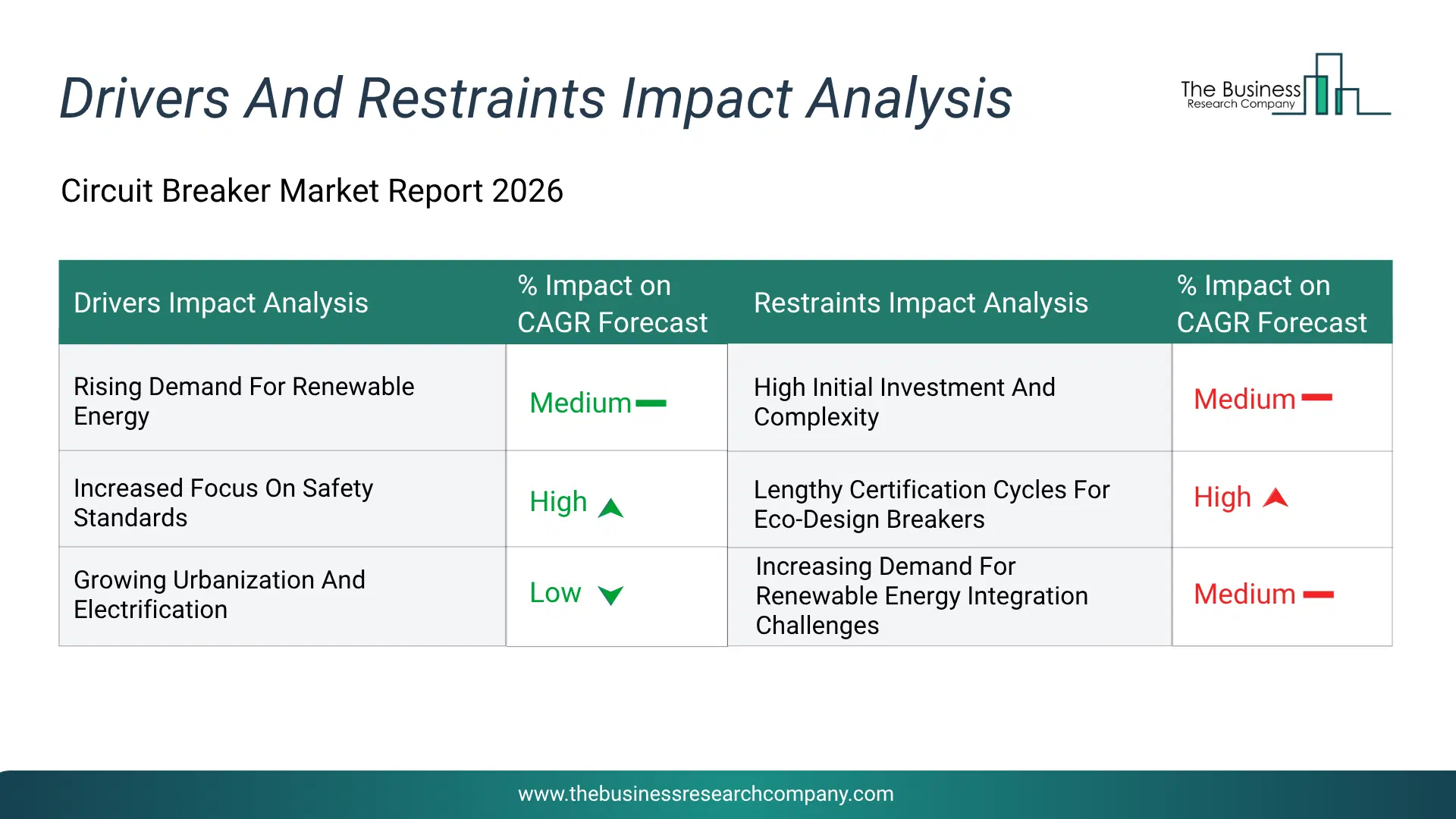
Infographic Chart Showing Key Market Drivers Analysis And Restraints For Circuit Breaker Market
The chart presents an impact analysis of key drivers and restraints, quantifying their relative influence on the market's growth rate and helping assess the balance between growth enablers and limiting factors. This chart offers a high-level perspective; the full report contains more detailed insights.
How Will The Drivers Impact Growth In The Global Circuit Breaker Market?
• Rising Demand For Renewable Energy (Medium) – During the forecast period, the rising demand for renewable energy is expected to become a key growth driver for the circuit breaker market by 2030. Rising demand for renewable energy is a significant driver of the Circuit Breaker Market as solar farms, wind parks, and other clean energy facilities require reliable protection systems for safe power distribution. Circuit breakers help prevent overloads, short circuits, and electrical faults within renewable energy networks. As governments and private investors continue expanding renewable energy infrastructure, the need for advanced circuit protection equipment increases. Modern renewable installations often operate under variable power conditions, creating demand for high-performance and intelligent circuit breakers. Grid integration of renewable sources also requires enhanced protection mechanisms to maintain system stability. Furthermore, large-scale renewable projects require medium- and high-voltage circuit breakers for efficient power transmission. • Increased Focus On Safety Standards (High) – During the forecast period, the increased focus on safety standards is expected to emerge as a major factor driving the expansion of the circuit breaker market by 2030. Increased focus on safety standards is driving the Circuit Breaker Market by encouraging the adoption of advanced electrical protection devices across industries and commercial facilities. Regulatory authorities are implementing stricter electrical safety regulations to reduce fire hazards, equipment failures, and workplace accidents. Circuit breakers play a critical role in automatically interrupting faulty electrical currents before serious damage occurs. Industries are upgrading aging electrical systems to comply with modern safety requirements, creating additional demand for reliable circuit protection solutions. Residential and commercial building projects are also incorporating advanced breakers to meet updated safety codes. Continuous inspections and compliance requirements further support replacement and installation activities. • Growing Urbanization And Electrification (Low) – During the forecast period, the growing urbanization and electrification is expected to act as a key growth catalyst for the circuit breaker market by 2030. Growing urbanization and electrification are major factors accelerating the growth of the Circuit Breaker Market. Rapid expansion of cities increases the need for residential complexes, commercial buildings, transportation systems, and utility infrastructure, all of which require dependable electrical protection. Rising electricity consumption from urban populations creates greater demand for efficient power distribution networks. Circuit breakers ensure uninterrupted and safe electricity flow by protecting systems from overloads and faults. Developing economies are investing heavily in electrification projects to improve energy access and support economic growth. The expansion of smart cities and public infrastructure further boosts installation of modern electrical systems.How Will The Restraints Impact Growth In The Global Circuit Breaker Market?
• High Initial Investment And Complexity (Medium) – During the forecast period, the high initial investment and complexity act as significant restraints on the Circuit Breaker Market by increasing the overall cost of deployment for end users. Advanced circuit breakers, particularly those used in industrial facilities, renewable energy projects, and high-voltage transmission networks, require substantial capital expenditure for procurement, installation, and integration. The incorporation of smart monitoring systems and digital protection technologies further raises costs, making adoption challenging for small and medium-sized enterprises. Additionally, the complexity of designing and configuring sophisticated circuit protection systems often necessitates specialized technical expertise. Organizations may delay modernization projects due to budget limitations and implementation challenges. Maintenance and training expenses add to the total ownership cost, discouraging rapid adoption. As a result, high upfront investments and operational complexities can slow market growth in cost-sensitive regions. • Lengthy Certification Cycles For Eco-Design Breakers (High) – During the forecast period, the lengthy certification cycles for eco-design breakers restrain the Circuit Breaker Market by delaying the commercialization of innovative products. Manufacturers developing environmentally friendly circuit breakers must undergo extensive testing and compliance procedures to meet regulatory and safety standards. These certification processes often require significant time, resources, and documentation before products can enter the market. Delays in approvals can postpone revenue generation and reduce the speed of product adoption among end users. Frequent updates to environmental regulations may further extend certification timelines and increase compliance costs. Smaller manufacturers may face greater difficulties managing these requirements due to limited resources. Consequently, prolonged certification cycles can hinder innovation, slow product launches, and restrict overall market expansion. • Increasing Demand For Renewable Energy Integration Challenges (Low) – During the forecast period, the increasing demand for renewable energy integration challenges acts as a restraint on the Circuit Breaker market because the transition toward renewable power systems requires specialized protection solutions capable of handling variable power generation and complex grid conditions. Existing circuit protection infrastructure may require significant upgrades to support distributed energy resources such as solar and wind power. Utilities and industrial operators often face challenges related to compatibility, system coordination, and investment requirements when integrating renewable energy sources. These complexities can delay grid modernization projects and increase deployment costs. As a result, technical challenges associated with renewable energy integration can slow the adoption of advanced circuit breaker solutions.Key Players In The Global Circuit Breaker Market
Major companies operating in the circuit breaker market are Panasonic Corporation, Schneider Electric SE, Mitsubishi Electric Corporation, Honeywell International Inc., Siemens Energy, ABB Ltd., Toshiba International Corporation, Larsen & Toubro Limited, Eaton Corporation plc, TE Connectivity Ltd., Fuji Electric Co. Ltd., Kirloskar Electric Company Ltd., Andeli Group Co. Ltd., CG Power and Industrial Solutions Ltd., Powell Industries Inc., Terasaki Electric Co. Ltd., Carling Technologies Inc., Industrial Electric Mfg, Efacec Power Solutions, Hitachi Industrial Equipment Systems Co. Ltd., ETA Elektrotechnische Apparate GmbH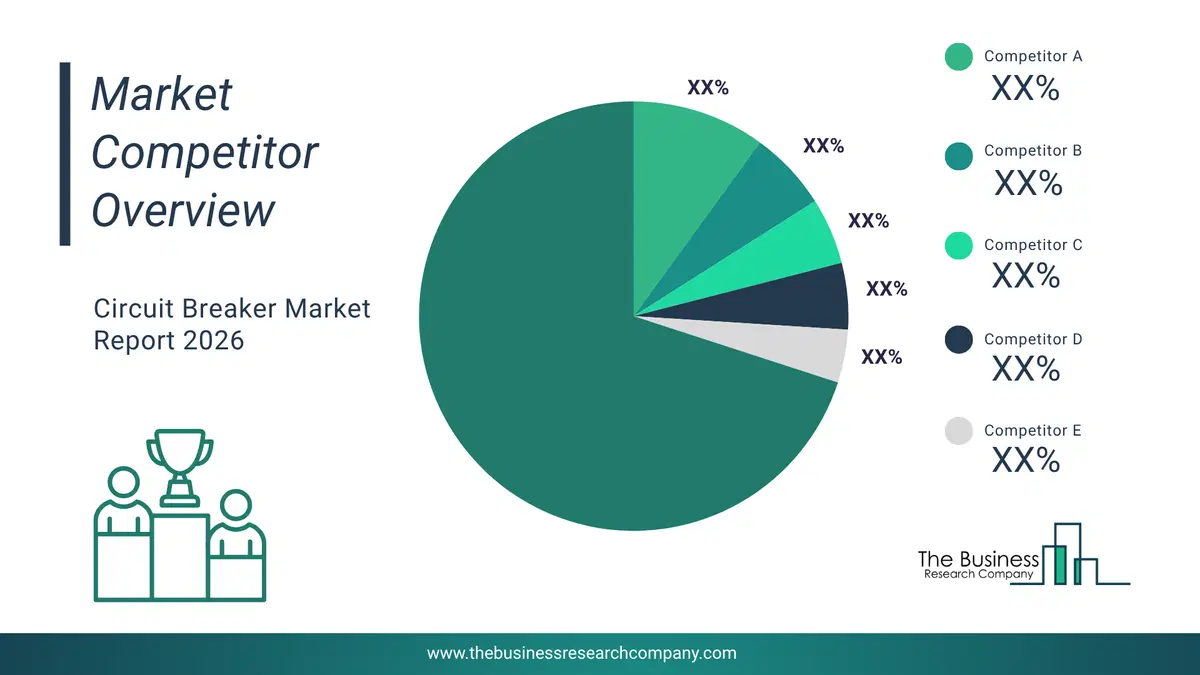
This chart is for illustrative purposes; the full report includes a detailed competitor analysis and comprehensive overview of the top 10 companies in the market.
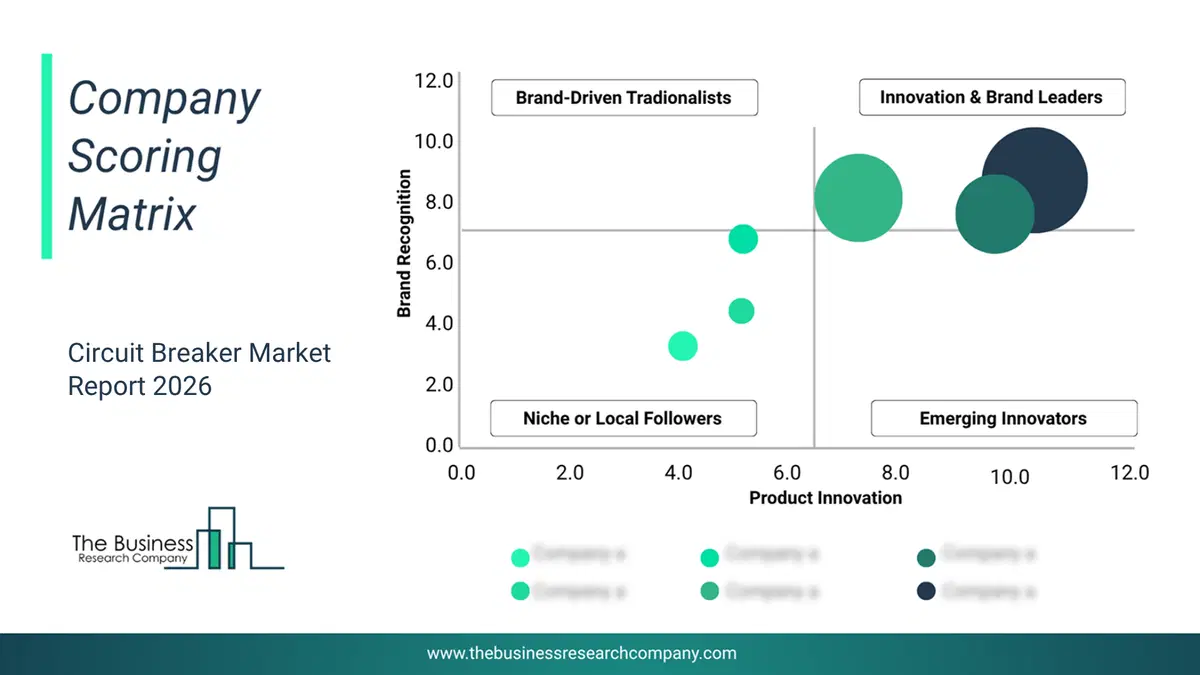
This chart maps companies by product innovation and brand strength, with bubble size indicating relative revenue, helping identify market leaders, challengers, and niche players. This is an illustrative chart; the full report provides a complete and accurate competitive analysis.
Global Circuit Breaker Market Trends and Insights
Major companies operating in the circuit breaker market are focusing on developing technological advancements such as active protection devices to enhance electrical safety, reliability, and operational efficiency in industrial and commercial applications. Active protection devices are advanced electrical systems that monitor, detect, and automatically respond to faults in real time to ensure safety, reliability, and efficient operation. For instance, in October 2024, Schneider Electric SE, a France-based energy management and automation solutions provider, launched the MasterPacT MTZ Active Circuit Breaker. The device offers intelligent protection for medium-voltage networks, improves grid stability, reduces downtime, and enables seamless integration with smart energy management systems. By leveraging digital monitoring and automated control, the MasterPacT MTZ enhances operational efficiency and ensures safe, reliable power distribution across industrial and commercial facilities.What Are Latest Mergers And Acquisitions In The Circuit Breaker Market?
In February 2023, Mitsubishi Electric Corp., a Japan-based global electrical and electronics company, acquired Scibreak AB for an undisclosed amount. With this acquisition, Mitsubishi Electric aims to strengthen its DC power protection solutions, enhance operational reliability in industrial and commercial applications, accelerate technological innovation, and expand its energy management portfolio. Scibreak AB is a Switzerland-based developer of DC circuit breakers that offers advanced protection solutions for industrial and commercial power systems.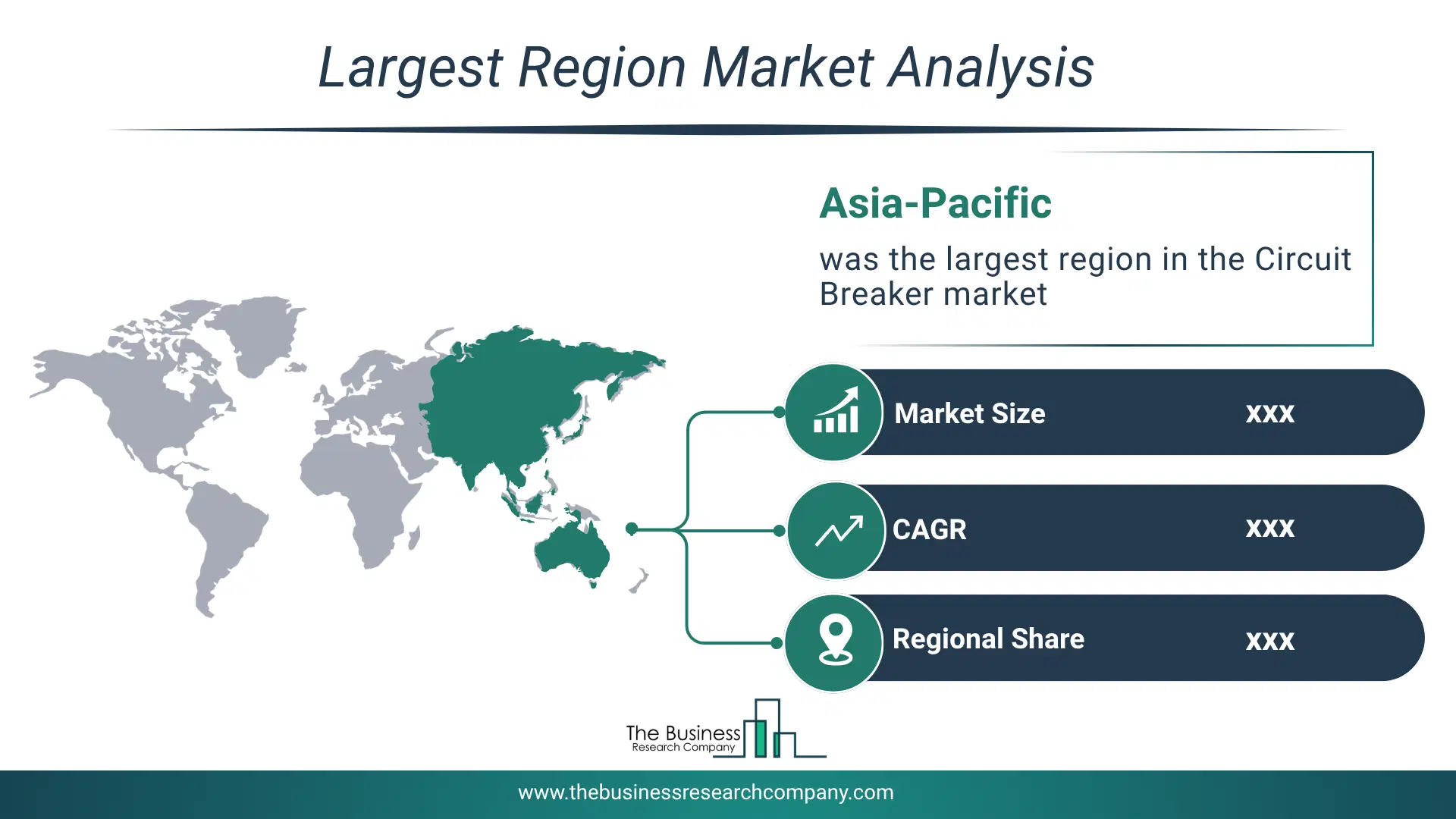
Regional Outlook
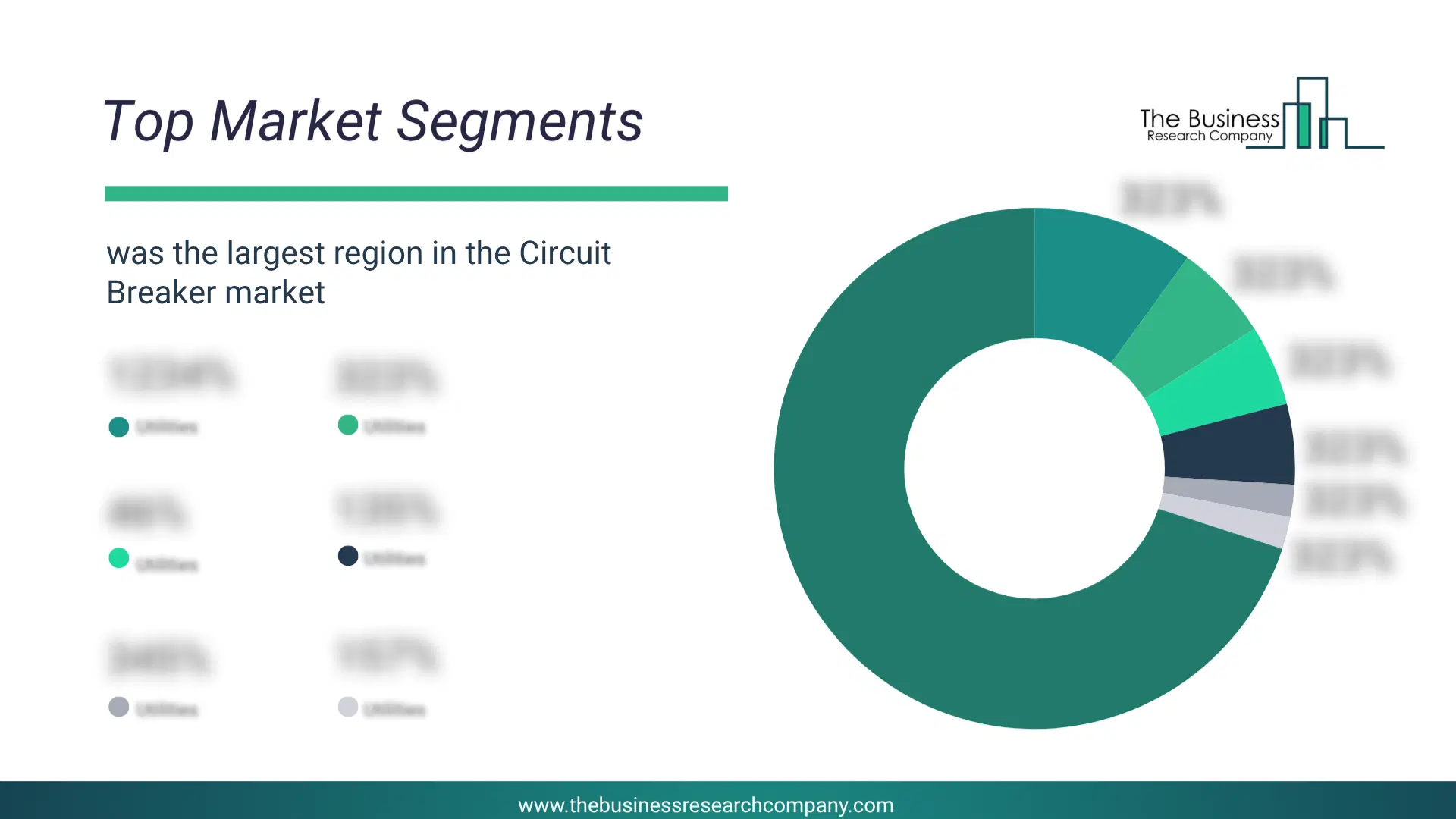
Asia-Pacific was the largest region in the circuit breaker market in 2025. North America is expected to be the fastest-growing region in the forecast period. The regions covered in this market report are Asia-Pacific, South East Asia, Western Europe, Eastern Europe, North America, South America, Middle East, Africa. The countries covered in this market report are Australia, Brazil, China, France, Germany, India, Indonesia, Japan, Taiwan, Russia, South Korea, UK, USA, Canada, Italy, Spain.What Defines the Circuit Breaker Market?
The circuit breakers market consists of the sale of miniature circuit breakers (MCBs), molded case circuit breakers (MCCBs), air circuit breakers (ACBs), vacuum circuit breakers, and gas circuit breakers. Values in this market are ‘factory gate’ values, that is the value of goods sold by the manufacturers or creators of the goods, whether to other entities (including downstream manufacturers, wholesalers, distributors and retailers) or directly to end customers. The value of goods in this market includes related services sold by the creators of the goods.How is Market Value Defined and Measured?
The market value is defined as the revenues that enterprises gain from the sale of goods and/or services within the specified market and geography through sales, grants, or donations in terms of the currency (in USD unless otherwise specified). The revenues for a specified geography are consumption values that are revenues generated by organizations in the specified geography within the market, irrespective of where they are produced. It does not include revenues from resales along the supply chain, either further along the supply chain or as part of other products.
This chart presents market attractiveness based on a quantitative evaluation of growth, competition, strategic alignment, and risk, offering a clear view of opportunity areas for decision-making. This chart is for illustrative purposes; the full report contains the complete analysis.

This chart highlights the Total Addressable Market (TAM) by estimating the maximum revenue opportunity using an assumption-driven approach, supporting strategic planning and opportunity sizing across markets. The chart is illustrative; the full report provides a more comprehensive analysis.
What Key Data and Analysis Are Included in the Circuit Breaker Market Report 2026?
The circuit breaker market research report is one of a series of new reports from The Business Research Company that provides market statistics, including industry global market size, regional shares, competitors with the market share, detailed market segments, market trends and opportunities, and any further data you may need to thrive in the circuit breaker industry. The market research report delivers a complete perspective of everything you need, with an in-depth analysis of the current and future state of the industry.Circuit Breaker Market Report 2026 Market Report Forecast Analysis
| Report Attribute | Details |
|---|---|
| Market Size Value In 2026 | $8.44 billion |
| Revenue Forecast In 2030 | $10.46 billion |
| Growth Rate | CAGR of 6.0% from 2026 to 2030 |
| Base Year For Estimation | 2025 |
| Actual Estimates/Historical Data | 2020-2025 |
| Forecast Period | 2026 - 2030 |
| Market Representation | Revenue in USD Billion and CAGR from 2026 to 2030 |
| Segments Covered | Type, Insulation Type, Application, End User |
| Regional Scope | Asia-Pacific, Western Europe, Eastern Europe, North America, South America, Middle East, Africa |
| Country Scope | The countries covered in the report are Australia, Brazil, China, France, Germany, India, ... |
| Key Companies Profiled | Panasonic Corporation, Schneider Electric SE, Mitsubishi Electric Corporation, Honeywell International Inc., Siemens Energy, ABB Ltd., Toshiba International Corporation, Larsen & Toubro Limited, Eaton Corporation plc, TE Connectivity Ltd., Fuji Electric Co. Ltd., Kirloskar Electric Company Ltd., Andeli Group Co. Ltd., CG Power and Industrial Solutions Ltd., Powell Industries Inc., Terasaki Electric Co. Ltd., Carling Technologies Inc., Industrial Electric Mfg, Efacec Power Solutions, Hitachi Industrial Equipment Systems Co. Ltd., ETA Elektrotechnische Apparate GmbH |
| Customization Scope | Request for Customization |
| Pricing And Purchase Options | Explore Purchase Options |