
Circular Economy Market Report 2026
Global Outlook – By Type (Clothing And Textile Waste, Electronic Waste, Food Waste, Glass Waste, Plastic Waste, Wood Waste), By Enterprise Size (Large Enterprises, Small And Medium Enterprises (SMEs)), By Industry Vertical (Manufacturing Industry, Consumer Goods, Waste Management And Recycling, Construction And Building Materials, Automotive And Transportation, Food And Agriculture, Other Industry Verticals) – Market Size, Trends, Strategies, and Forecast to 2030
Circular Economy Market Overview
• Circular Economy market size has reached to $517.79 billion in 2025 • Expected to grow to $888.22 billion in 2030 at a compound annual growth rate (CAGR) of 11.3% • Growth Driver: Rising Electronic Waste Drives Expansion Of The Circular Economy Market • Market Trend: Advanced Recycling Technologies Strengthen Feedstock Circularity And Increase Recycled Material Supply • Europe was the largest region in 2025.Market Gains By 2030 – Top Opportunities By Segment
Market Gain identifies the most promising market opportunities by highlighting the segments or products expected to generate the highest incremental revenue growth over the next five years.
What Is Covered Under Circular Economy Market?
The circular economy is an economic system aimed at minimizing waste and making the most of available resources by maintaining the value of products, materials, and resources in the economy for as long as possible. The circular economy focuses on creating closed-loop systems where waste and resource input are minimized. The circular economy represents a shift towards a more sustainable and regenerative economic model that benefits businesses, consumers, and the environment by emphasizing efficiency, longevity, and resource recovery. The main types of circular economy types include clothing and textile waste, electronic waste, food waste, glass waste, plastic waste, and wood waste. Clothing and textile waste refers to discarded garments, fabrics, and other materials that are no longer used or have been thrown away. It is used by both large enterprises and small and medium enterprises (SMEs) for various industries such as manufacturing industry, consumer goods, waste management and recycling, construction and building materials, automotive and transportation, food and agriculture, and others.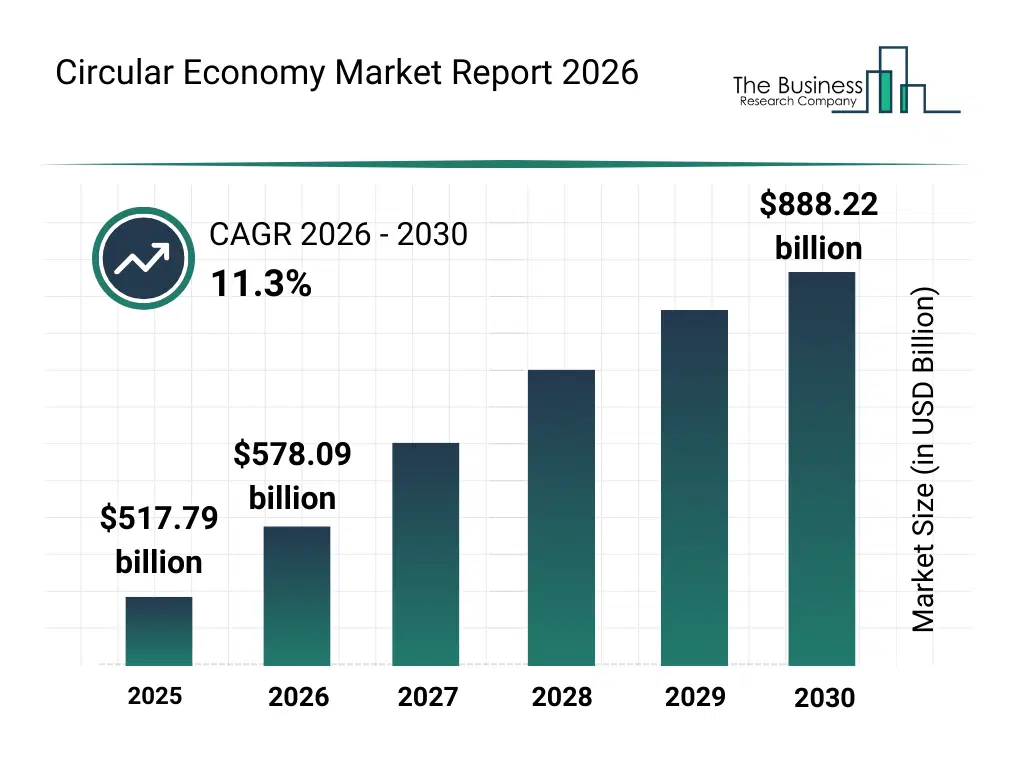
What Is The Circular Economy Market Size and Share 2026?
The circular economy market size has grown rapidly in recent years. It will grow from $517.79 billion in 2025 to $578.09 billion in 2026 at a compound annual growth rate (CAGR) of 11.6%. The growth in the historic period can be attributed to increasing waste generation levels, early recycling and reuse initiatives, rising regulatory pressure on waste reduction, growth of waste management infrastructure, increasing corporate sustainability commitments.What Is The Circular Economy Market Growth Forecast?
The circular economy market size is expected to see rapid growth in the next few years. It will grow to $888.22 billion in 2030 at a compound annual growth rate (CAGR) of 11.3%. The growth in the forecast period can be attributed to expansion of circular business models, rising investments in advanced recycling technologies, growing adoption of digital circular platforms, increasing focus on material traceability, strengthening extended producer responsibility regulations. Major trends in the forecast period include increasing adoption of closed-loop manufacturing models, rising focus on resource recovery and reuse, growing deployment of digital waste tracking platforms, expansion of product life extension strategies, enhanced emphasis on sustainable material design.
Global Circular Economy Market Segmentation
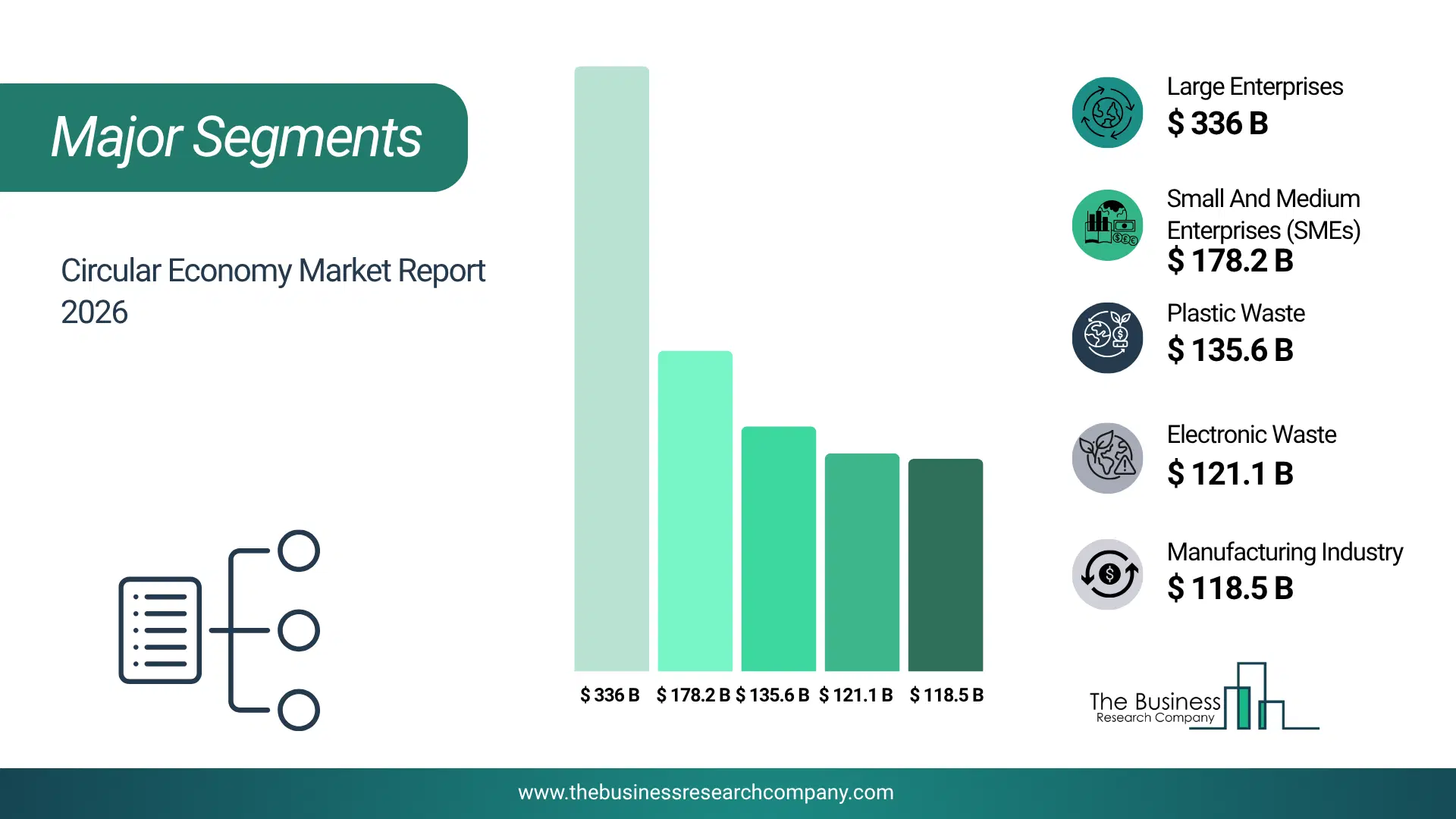
1) By Type: Clothing And Textile Waste, Electronic Waste, Food Waste, Glass Waste, Plastic Waste, Wood Waste 2) By Enterprise Size: Large Enterprises, Small And Medium Enterprises (SMEs) 3) By Industry Vertical: Manufacturing Industry, Consumer Goods, Waste Management And Recycling, Construction And Building Materials, Automotive And Transportation, Food And Agriculture, Other Industry Verticals Subsegments: 1) By Clothing and Textile Waste: Recycled Textiles, Upcycled Clothing, Textile Waste For Insulation 2) By Electronic Waste: E-Waste Recycling, Refurbished Electronics, Component Recovery 3) By Food Waste: Composting Solutions, Anaerobic Digestion, Food Recovery Programs 4) By Glass Waste: Recycled Glass Products, Glass Bottles And Containers, Glass For Construction Materials 5) By Plastic Waste: Recycled Plastic Products, Biodegradable Plastics, Plastic Waste For Fuel Production 6) By Wood Waste: Reclaimed Wood Products, Wood Waste For Biomass Energy, Wood Recycling For Furniture And Flooring The top segments in the circular economy market will be: • Large Enterprises will reach $336096.33 Million by 2025. • Small And Medium Enterprises (SMEs) will reach $178250 Million by 2025. • Plastic Waste will reach $135624.61 Million by 2025. • Electronic Waste will reach $121108.05 Million by 2025. • Manufacturing Industry will reach $118522.6 Million by 2025.What Is The Driver Of The Circular Economy Market?
The growing volume of electronic waste is expected to propel the growth of the circular economy market going forward. Electronic waste, or e-waste, refers to discarded electrical or electronic devices, such as computers, smartphones, and household appliances, that are no longer in use or have reached the end of their lifecycle. The volume of electronic waste is increasing due to rapid, frequent product upgrades, shorter device lifespans, and growing consumer demand for the latest electronic gadgets, leading to quicker obsolescence and disposal of older devices. The need to manage e-waste sustainably fosters advancements in recycling technologies, promotes the design of durable and repairable products, encourages new business models, and supports regulatory and consumer-driven changes. These factors collectively contribute to the growth of the circular economy by creating opportunities and innovations in e-waste management and resource recovery. For instance, in March 2024, according to a report published by the International Telecommunication Union, a Switzerland-based specialized agency for digital technology, around 62 million metric tons of e-waste were generated in 2022. With e-waste production increasing by 2.6 million metric tons annually, it is expected to reach 82 million metric tons by 2030, a 33 % rise from the 2022 total. Therefore, the growing volume of electronic waste is driving the growth of the circular economy industry.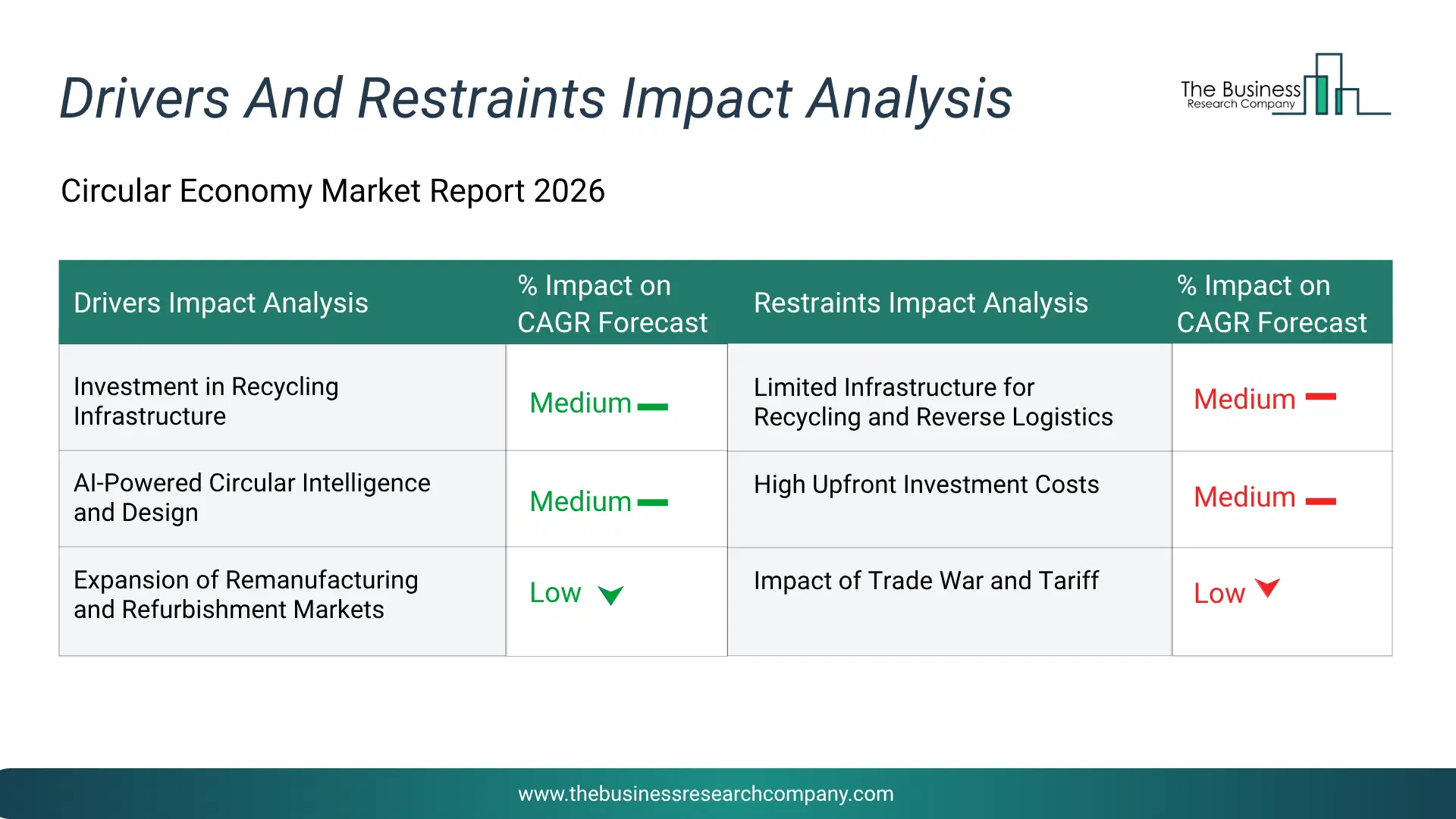
Infographic Chart Showing Key Market Drivers Analysis And Restraints For Circular Economy Market
The chart presents an impact analysis of key drivers and restraints, quantifying their relative influence on the market's growth rate and helping assess the balance between growth enablers and limiting factors. This chart offers a high-level perspective; the full report contains more detailed insights.
How Will The Drivers Impact Growth In The Global Circular Economy Market?
• Investment in Recycling Infrastructure (Medium) – The investment in recycling infrastructure will become a key driver of growth in the circular economy market by 2030. Investment in recycling infrastructure enhances the ability to efficiently collect, sort and process waste materials, turning them into reusable resources. This reduces dependence on virgin raw materials, lowers production costs and minimizes environmental pollution. Advanced recycling facilities also enable innovation in material recovery and product redesign, supporting sustainable manufacturing practices. As businesses gain access to more reliable and cost-effective recycled inputs, circular business models become more viable. Overall, such investments strengthen the transition toward a resource-efficient economy and promote long-term sustainability. As a result, the investment in recycling infrastructure is anticipated to contributing to a 1.2% annual growth in the market. • AI-Powered Circular Intelligence and Design (Medium) – The AI-powered circular intelligence and design will emerge as a major factor driving the expansion of the circular economy market by 2030. By enabling advanced material tracking, lifecycle analysis, and predictive modeling, AI helps companies design products for durability, reuse, and recyclability from the outset. It enhances supply chain transparency by identifying inefficiencies and opportunities for material recovery, reducing waste and costs. AI-driven insights also support circular business models such as product-as-a-service and reverse logistics optimization. Moreover, it empowers firms to meet regulatory requirements and sustainability goals more effectively. As organizations prioritize resource efficiency and low-carbon strategies, AI becomes a critical enabler of scalable and data-driven circular economy practices. Consequently, the AI-powered circular intelligence and design is projected to contributing to a 1.0% annual growth in the market. • Expansion of Remanufacturing and Refurbishment Markets (Low) – The expansion of remanufacturing and refurbishment markets will serve as a key growth catalyst for the circular economy market by 2030, The growth of remanufacturing and refurbishment drives the circular economy by enabling products and components to be reused, repaired, or upgraded instead of being discarded. This approach reduces raw material consumption, lowers production costs and minimizes environmental impact. Companies benefit from new revenue streams through selling refurbished products, while consumers gain access to affordable, high-quality alternatives. Additionally, it encourages innovation in product design for durability and ease of repair, fostering a more sustainable and resource-efficient economy overall. Therefore, this expansion of remanufacturing and refurbishment markets is projected to supporting to a 0.8% annual growth in the market. • Growing Consumer Demand for Sustainability (Low) – The growing consumer demand for sustainability will become a significant driver contributing to the growth of the circular economy market by 2030 Rising consumer demand for sustainability is encouraging companies to adopt eco-friendly practices, such as recycling, reusing and designing products for longer lifecycles. Environmentally conscious buyers increasingly prefer brands that minimize waste, reduce carbon footprints and use sustainable materials, creating a strong incentive for businesses to shift from linear to circular economic models. This demand drives innovation in product design, packaging and supply chain management, while also promoting transparency and ethical practices. As a result, organizations are motivated to implement strategies that align with consumer values, fostering a more sustainable and resource-efficient economy. Consequently, the growing consumer demand for sustainability is projected to contributing to a 0.5% annual growth in the market.How Will The Restraints Impact Growth In The Global Circular Economy Market?
• Limited Infrastructure for Recycling and Reverse Logistics (Medium) – Limited Infrastructure for Recycling and Reverse Logistics will restrict the growth of the Circular Economy market during the forecast period. Effective circular economy implementation requires extensive recycling facilities, reverse logistics networks, and waste sorting infrastructure. Many regions lack adequate infrastructure, particularly in developing economies, making it difficult to establish closed-loop supply chains. This infrastructure gap limits the scalability of circular economy initiatives and increases costs for material recovery and recycling. • High Upfront Investment Costs (Medium) – High Upfront Investment Costs will restrict the growth of the Circular Economy market during the forecast period. Transitioning from linear to circular business models requires substantial initial investment in new technologies, infrastructure, and process redesign. Companies must invest in advanced sorting equipment, product disassembly facilities, and digital tracking systems. These high capital expenditures, combined with uncertain returns on investment, discourage many organizations from pursuing full circular economy implementation. • Impact of Trade War and Tariff (Low) – Impact of Trade War and Tariff will restrict the growth of the Circular Economy market during the forecast period. Circular economy activities such as recycling and remanufacturing involve cross-border material flows that are affected by trade policies. Tariffs on recycled materials and waste shipments increase costs and complicate international recycling operations. Restrictions on waste imports in key markets, particularly China's National Sword policy, have disrupted global recycling markets and limited circular economy expansion.Key Players In The Global Circular Economy Market
Major companies operating in the circular economy market report are Nestlé S.A., Braskem S.A., Sony Group Corporation, Unilever PLC, Panasonic Holdings Corporation, Veolia Environnement S.A., Holcim Group, Adidas AG, H&M Hennes & Mauritz AB, Waste Management Inc., Remondis SE & Co. KG, Eastman Chemical Company, Levi Strauss & Co., Hitachi Zosen Corporation, Renewi plc, Daiseki Co. Ltd., Ragn-Sells Group AB, Patagonia Inc., Sims Lifecycle Services, TerraCycle Inc., ECOR Global Inc., Madewell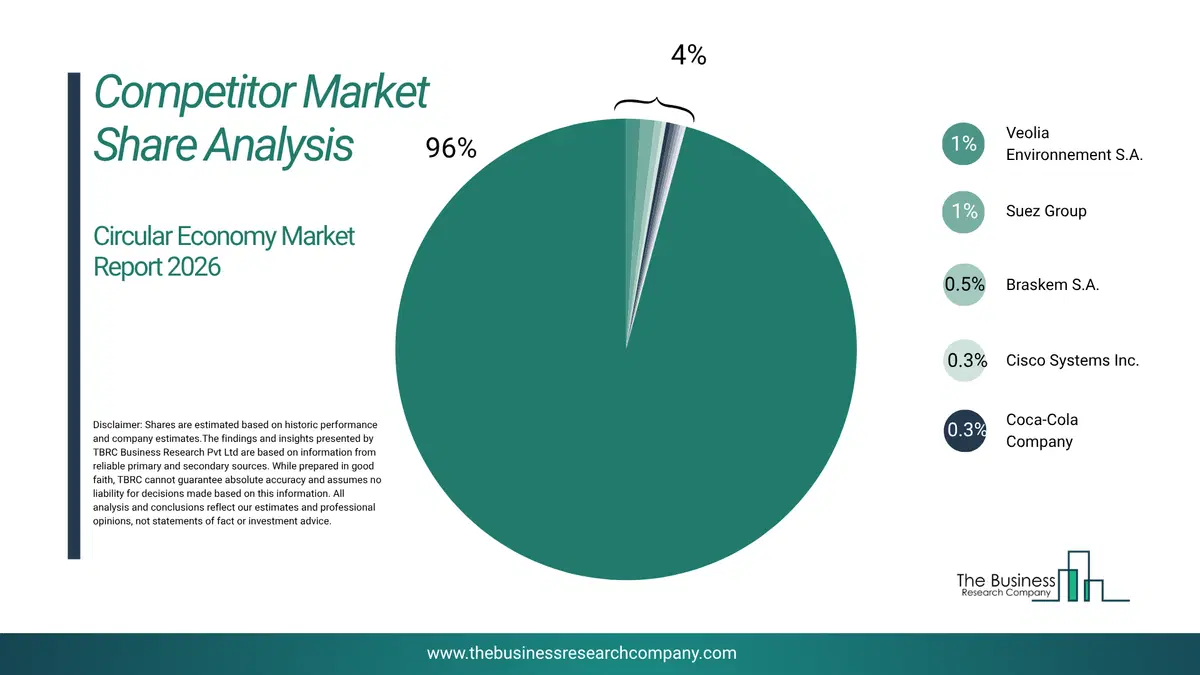
This chart is for illustrative purposes; the full report includes a detailed competitor analysis and comprehensive overview of the top 10 companies in the market.
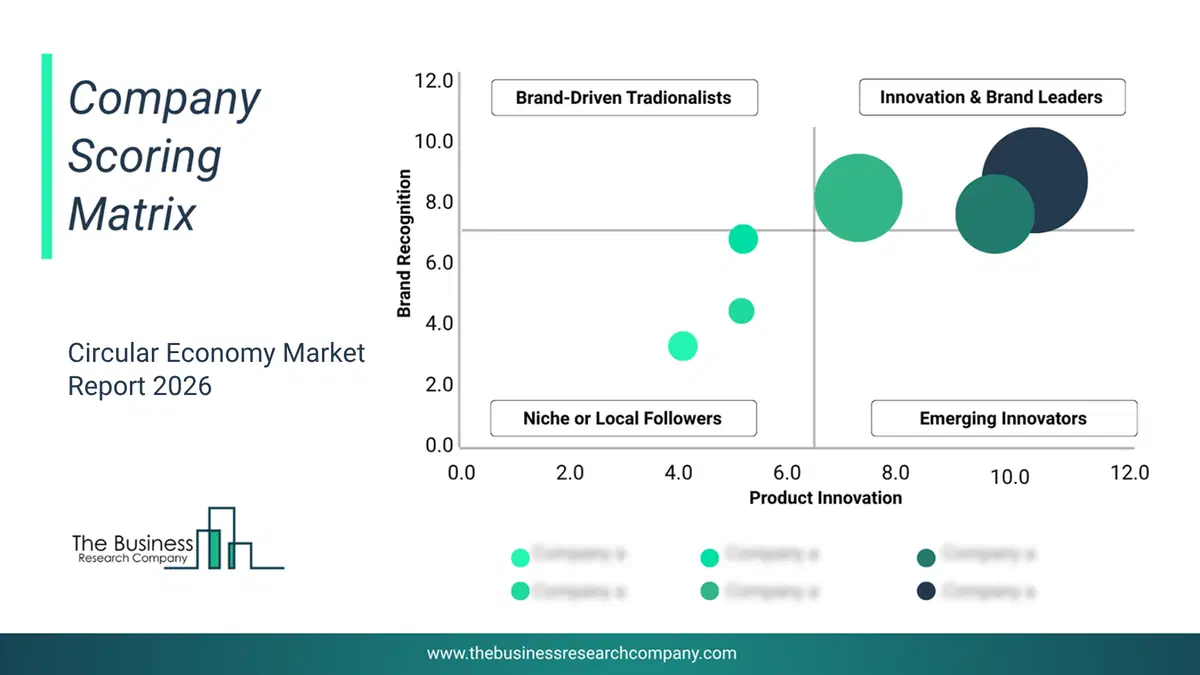
This chart maps companies by product innovation and brand strength, with bubble size indicating relative revenue, helping identify market leaders, challengers, and niche players. This is an illustrative chart; the full report provides a complete and accurate competitive analysis.
Global Circular Economy Market Trends and Insights
Major companies operating in the circular economy market are focusing on developing innovative products and solutions, such as advanced chemical and thermal recycling, to convert hard-to-recycle flexible packaging into high-quality feedstock and support closed-loop production systems. Advanced chemical and thermal recycling refers to processes that use controlled heat or catalysts to break multilayer polymers into reusable oils or monomers, enable full material traceability through digital certification platforms, and operate in modular units that companies can position close to waste-collection hubs. For instance, in May 2023, Greenback Recycling Technologies, a UK-based advanced-recycling company, opened its Enval pyrolysis plant in Cuautla, Mexico. The facility converts flexible multilayer packaging into π-Oil suitable for recycled-content applications, recovers aluminium from composite laminates through its separation process, and integrates the eco2Veritas blockchain-based system to verify waste origins and certify processed material volumes.What Are Latest Mergers And Acquisitions In The Circular Economy Market?
In November 2023, Jabil Inc., a US-based global manufacturing services company, acquired Retronix for an undisclosed amount. The acquisition aims to boost Jabil's ability to recover, refurbish, and recycle product components and materials by reducing electronic waste and advancing circular economy initiatives. Retronix is a UK-based company that provides services to support the circular economy.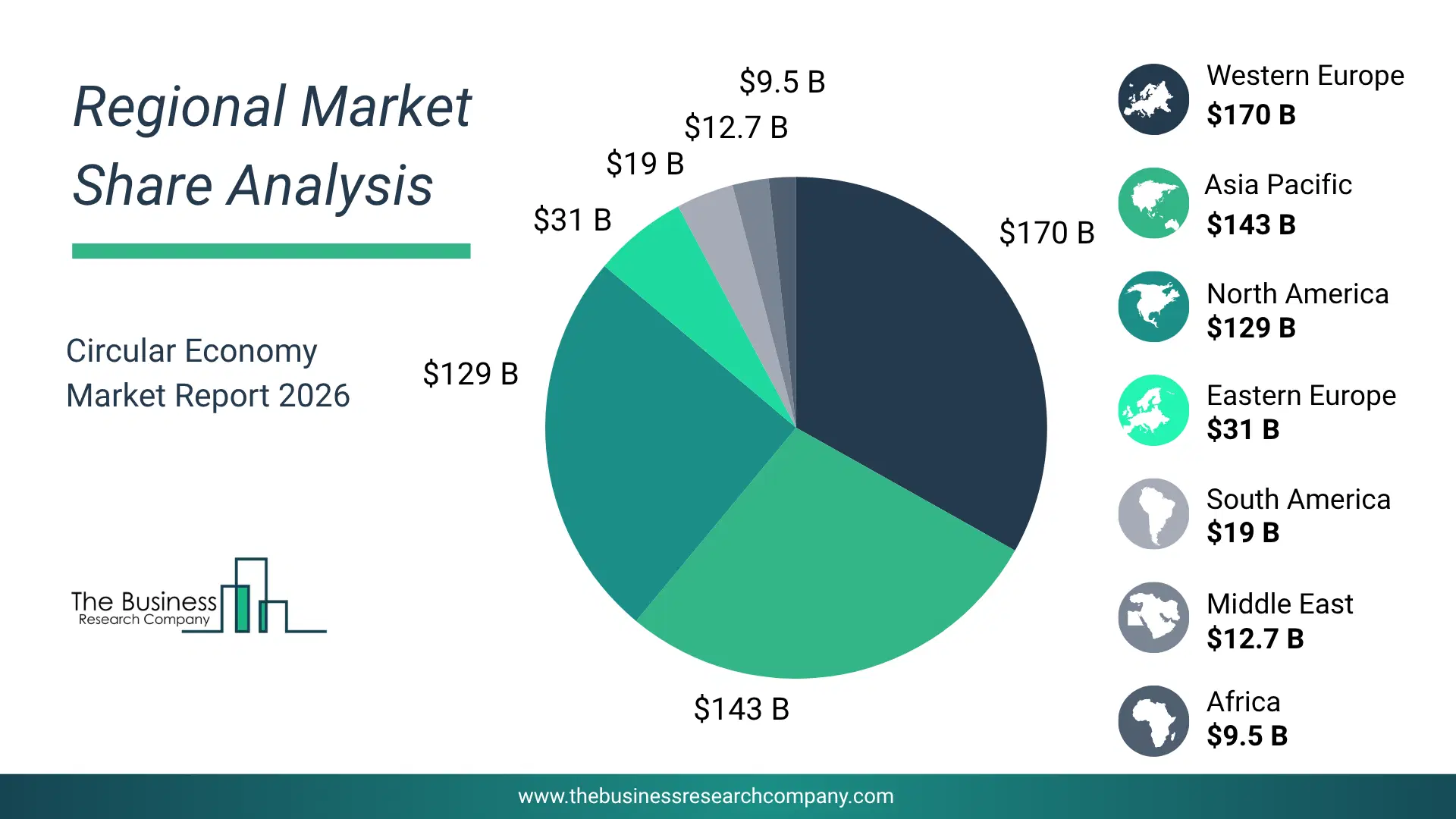
Regional Outlook
Europe was the largest region in the circular economy market in 2025. The regions covered in this market report are Asia-Pacific, South East Asia, Western Europe, Eastern Europe, North America, South America, Middle East, Africa. The countries covered in this market report are Australia, Brazil, China, France, Germany, India, Indonesia, Japan, Taiwan, Russia, South Korea, UK, USA, Canada, Italy, SpainWhat Defines the Circular Economy Market?
The circular economy market consists of revenues earned by entities by providing services such as product design and development, repair and maintenance services, remanufacturing and refurbishing, recycling and resource recovery, reverse logistics and circular supply chain consulting. The market value includes the value of related goods sold by the service provider or included within the service offering. The circular economy market also includes sales of modular furniture, recycled and upcycled clothing, refurbished electronics, reusable packaging, eco-friendly building materials and sustainable home appliances. Values in this market are ‘factory gate’ values, that is the value of goods sold by the manufacturers or creators of the goods, whether to other entities (including downstream manufacturers, wholesalers, distributors and retailers) or directly to end customers. The value of goods in this market includes related services sold by the creators of the goods.How is Market Value Defined and Measured?
The market value is defined as the revenues that enterprises gain from the sale of goods and/or services within the specified market and geography through sales, grants, or donations in terms of the currency (in USD unless otherwise specified). The revenues for a specified geography are consumption values that are revenues generated by organizations in the specified geography within the market, irrespective of where they are produced. It does not include revenues from resales along the supply chain, either further along the supply chain or as part of other products.
This chart presents market attractiveness based on a quantitative evaluation of growth, competition, strategic alignment, and risk, offering a clear view of opportunity areas for decision-making. This chart is for illustrative purposes; the full report contains the complete analysis.

This chart highlights the Total Addressable Market (TAM) by estimating the maximum revenue opportunity using an assumption-driven approach, supporting strategic planning and opportunity sizing across markets. The chart is illustrative; the full report provides a more comprehensive analysis.
What Key Data and Analysis Are Included in the Circular Economy Market Report 2026?
The circular economy market research report is one of a series of new reports from The Business Research Company that provides market statistics, including industry global market size, regional shares, competitors with the market share, detailed market segments, market trends and opportunities, and any further data you may need to thrive in the circular economy industry. The market research report delivers a complete perspective of everything you need, with an in-depth analysis of the current and future state of the industry.Circular Economy Market Report Forecast Analysis
| Report Attribute | Details |
|---|---|
| Market Size Value In 2026 | $578.09 billion |
| Revenue Forecast In 2030 | $888.22 billion |
| Growth Rate | CAGR of 11.6% from 2026 to 2030 |
| Base Year For Estimation | 2025 |
| Actual Estimates/Historical Data | 2020-2025 |
| Forecast Period | 2026 - 2030 |
| Market Representation | Revenue in USD Billion and CAGR from 2026 to 2030 |
| Segments Covered | Type, Enterprise Size, Industry Vertical |
| Regional Scope | Asia-Pacific, Western Europe, Eastern Europe, North America, South America, Middle East, Africa |
| Country Scope | The countries covered in the report are Australia, Brazil, China, France, Germany, India, Indonesia, Japan, Taiwan, Russia, South Korea, UK, USA, Canada, Italy, Spain. |
| Key Companies Profiled | Nestlé S.A., Braskem S.A., Sony Group Corporation, Unilever PLC, Panasonic Holdings Corporation, Veolia Environnement S.A., Holcim Group, Adidas AG, H&M Hennes & Mauritz AB, Waste Management Inc., Remondis SE & Co. KG, Eastman Chemical Company, Levi Strauss & Co., Hitachi Zosen Corporation, Renewi plc, Daiseki Co. Ltd., Ragn-Sells Group AB, Patagonia Inc., Sims Lifecycle Services, TerraCycle Inc., ECOR Global Inc., Madewell |
| Customization Scope | Request for Customization |
| Pricing And Purchase Options | Explore Purchase Options |