
Circular Polymer Market Report 2026
Global Outlook – By Polymer Topology (Monocyclic Polymers (Single Ring Structure), Multicyclic Polymers (Multiple Interconnected Rings), Figure-Eight And Linked Ring Polymers, Ring-Polymer Networks), By Chemical Backbone (Circular Polyolefins, Circular Polyesters, Circular Polyamides, Circular Polycarbonates, Circular Polyurethanes, Other Circular Polymer Backbones), By Synthesis Method (End-to-End Cyclization Polymerization, Ring-Expansion Polymerization, Click-Chemistry-Based Circular Polymerization, Living And Controlled Circular Polymer) By Application (Advanced Materials And Composites, High-Performance Coatings, Electronics And Nanotechnology, Biomedical And Drug Delivery Systems Academic Applications, Other Specialty Applications) – Market Size, Trends, Strategies, and Forecast to 2030
Circular Polymer Market Overview
• Circular Polymer market size has reached to $103.16 billion in 2025 • Expected to grow to $192.2 billion in 2030 at a compound annual growth rate (CAGR) of 13.2% • Growth Driver: Increasing Vehicle Production Fuels Growth Of The Circular Polymer Market • Market Trend: Innovative Single-Pellet Solutions Drive Sustainability In The Circular Polymer Market • Asia-Pacific was the largest region and fastest growing region.Market Gains By 2030 – Top Opportunities By Segment
Market Gain identifies the most promising market opportunities by highlighting the segments or products expected to generate the highest incremental revenue growth over the next five years.
What Is Covered Under Circular Polymer Market?
A circular polymer is a type of polymer in which the polymer chains are linked end-to-end, forming a closed loop or ring structure, rather than the linear or branched forms typically found in traditional polymers. This circular architecture has unique physical and chemical properties compared to linear polymers. Circular polymers can exhibit unique properties compared to their linear counterparts, such as improved thermal stability, enhanced mechanical strength, and different solubility characteristics. The main types of circular polymers are polyethylene (PE), polypropylene (PP), polyethylene terephthalate (PET), polyvinyl chloride (PVC), polyamide (PA), and others. Polyethylene is one of the most common thermoplastic polymers, made from ethylene gas through polymerization. The various forms include pellets and flakes. These are used by various end-users such as packaging, building and construction, automotive, electrical, and electronics, among others.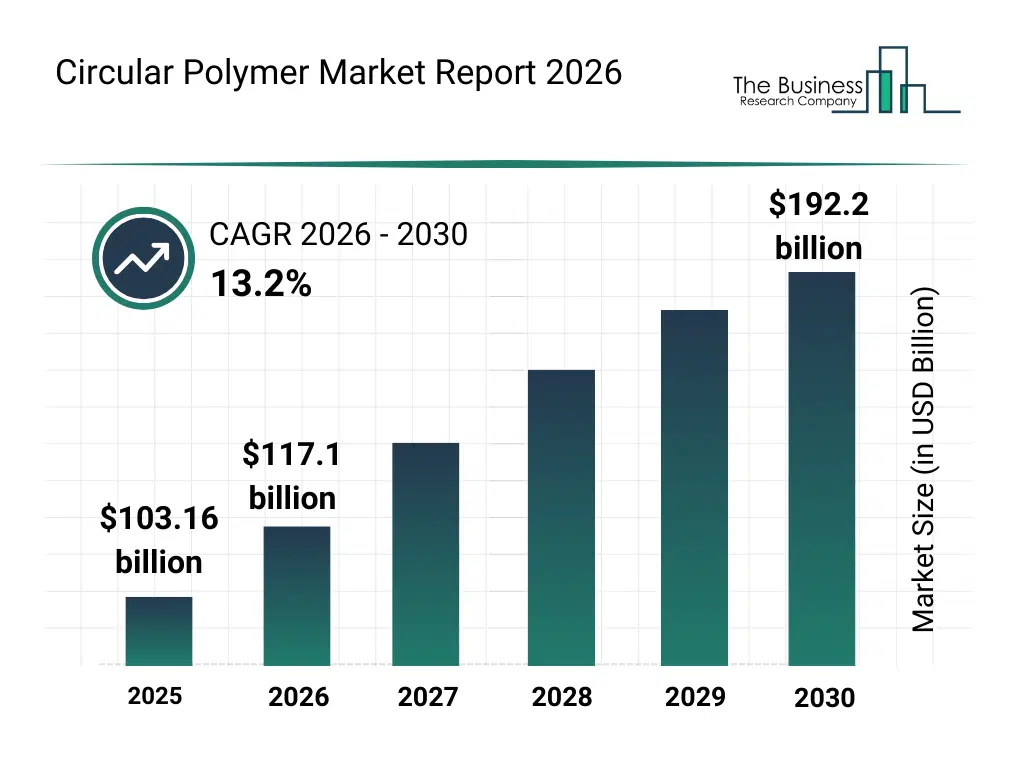
What Is The Circular Polymer Market Size and Share 2026?
The circular polymer market size has grown rapidly in recent years. It will grow from $103.16 billion in 2025 to $117.1 billion in 2026 at a compound annual growth rate (CAGR) of 13.5%. The growth in the historic period can be attributed to advancements in polymer chemistry, demand for high performance plastics, expansion of packaging industry, growth of automotive materials research, academic research funding.What Is The Circular Polymer Market Growth Forecast?
The circular polymer market size is expected to see rapid growth in the next few years. It will grow to $192.2 billion in 2030 at a compound annual growth rate (CAGR) of 13.2%. The growth in the forecast period can be attributed to circular economy initiatives, demand for recyclable polymers, innovation in polymer synthesis, growth of sustainable packaging, adoption in electronics applications. Major trends in the forecast period include rising development of advanced polymer architectures, growing focus on high thermal stability materials, increasing research in closed loop polymer systems, expansion of circular polymer use in packaging, higher adoption in lightweight automotive components.
Global Circular Polymer Market Segmentation
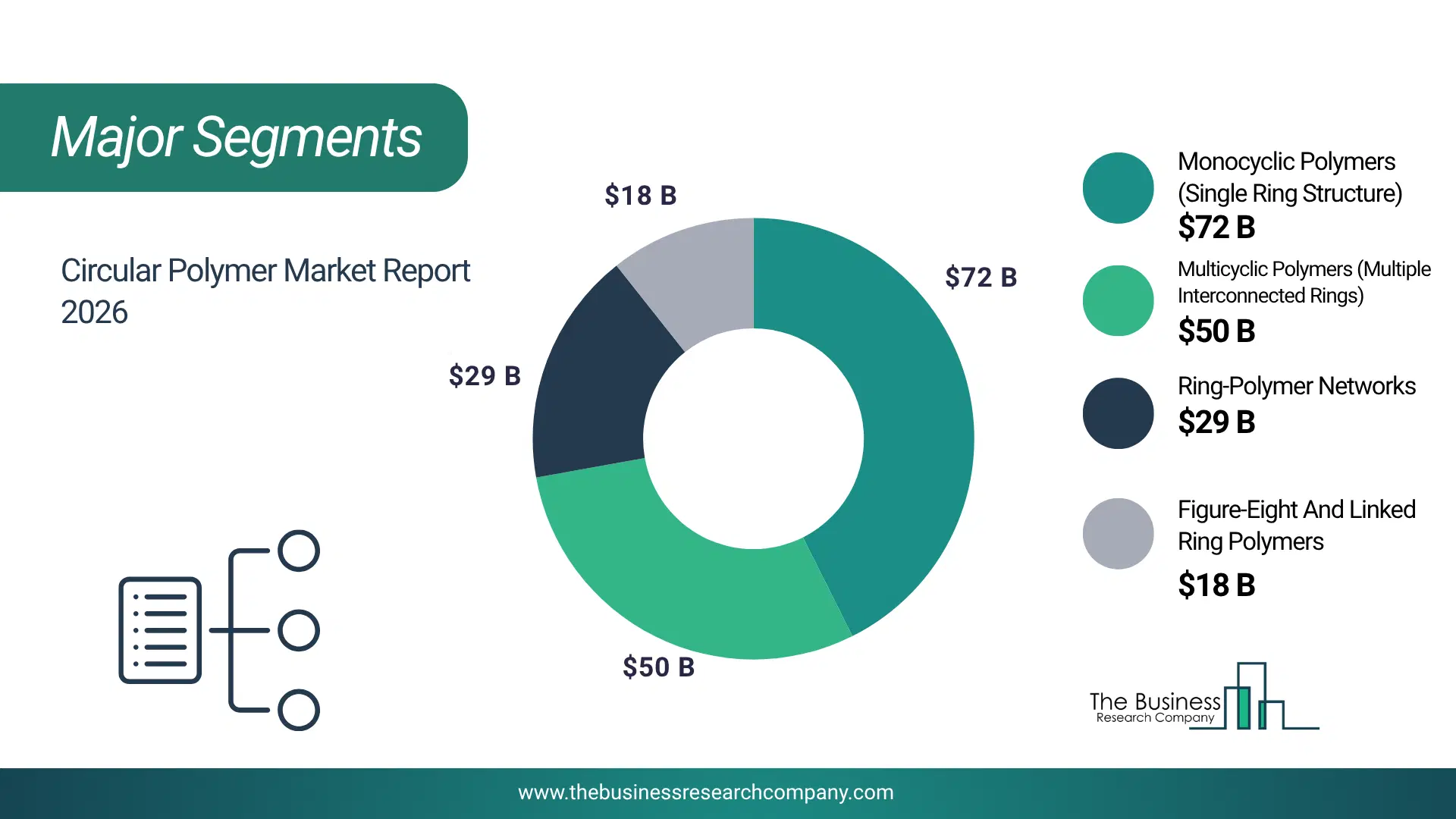
1) By Polymer Topology: Monocyclic Polymers (Single Ring Structure), Multicyclic Polymers (Multiple Interconnected Rings), Figure-Eight And Linked Ring Polymers, Ring-Polymer Networks 2) By Chemical Backbone: Circular Polyolefins, Circular Polyesters, Circular Polyamides, Circular Polycarbonates, Circular Polyurethanes, Other Circular Polymer Backbones 3) By Synthesis Method: End-to-End Cyclization Polymerization, Ring-Expansion Polymerization, Click-Chemistry-Based Circular Polymerization, Living And Controlled Circular Polymer Synthesis 4) By Application: Advanced Materials And Composites, High-Performance Coatings, Electronics And Nanotechnology, Biomedical And Drug Delivery Systems, Research And Academic Applications, Other Specialty Applications 5) By End-User: Research Institutes And Universities, Specialty Polymer Manufacturers, Electronics And Semiconductor Industry, Medical And Healthcare Industry, Advanced Materials And Nanotechnology Firms Subsegments: 1) By Monocyclic Polymers (Single Ring Structure): Simple Homocyclic Polymers, Heterocyclic Backbone Polymers, Small-Ring Circular Polymers, Macrocyclic Polymers 2) By Multicyclic Polymers (Multiple Interconnected Rings): Fused Ring Circular Polymers, Spirocyclic Polymers, Catenated Ring Polymers (Interlocked Rings), Ladder-Type Multicyclic Polymers 3) By Figure-Eight and Linked Ring Polymers: Figure-Eight (Bicyclic) Polymers, Linear Catenanes (Chain of Interlocked Rings), Branched Catenane Polymers, Mechanically Interlocked Circular Polymers 4) By Ring-Polymer Networks: Crosslinked Circular Polymer Networks, Entangled Ring-Polymer Networks, Physically Associated Ring Networks, Hybrid Ring–Linear Polymer Networks The top segments in the circular polymer market will be: • Monocyclic Polymers (Single Ring Structure) will reach $72.24 Billion by 2030. • Multicyclic Polymers (Multiple Interconnected Rings) will reach $49.97 Billion by 2030. • Ring-Polymer Networks will reach $29.08 Billion by 2030. • Figure-Eight And Linked Ring Polymers will reach $18.42 Billion by 2030.What Is The Driver Of The Circular Polymer Market?
The increasing vehicle production is expected to propel the growth of the circular polymer market going forward. Vehicle production refers to manufacturing various types of vehicles, including cars, trucks, buses, motorcycles, and other forms of motorized transportation. The increasing production of vehicles is due to economic growth in developing regions, urbanization, population growth, and advancements in automotive technology. Circular polymers are used in vehicle production as part of the automotive industry's efforts to enhance sustainability, reduce environmental impact, and maintain flexibility in the production process. For instance, in April 2024, according to the Serbian Association of Importers of Vehicles and Parts, a Serbia-based non-governmental organization, global vehicle production in 2023 reached about 93,546,599 units, up from approximately. Therefore, the increasing vehicle production is driving the growth of the circular polymer industry.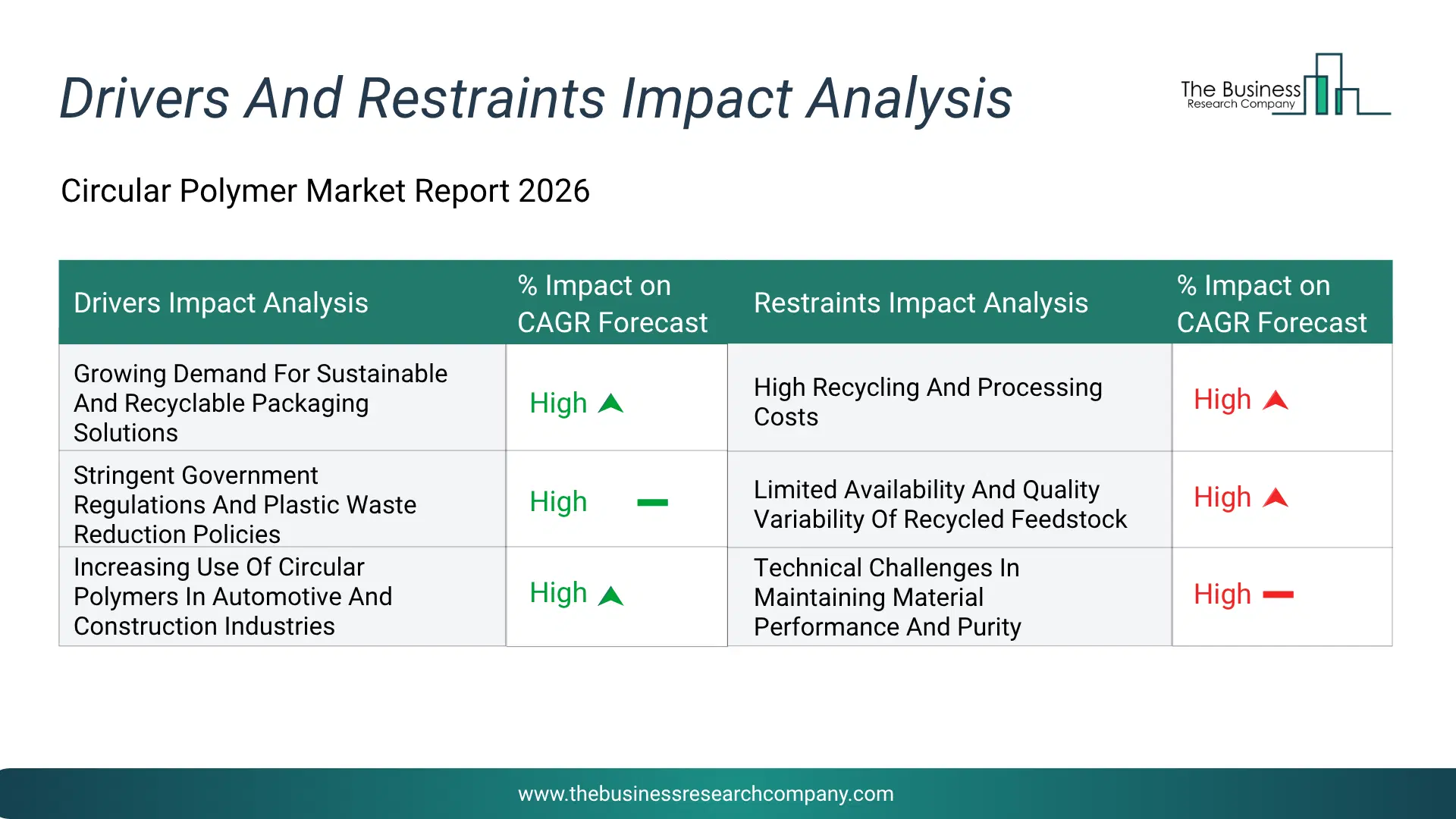
Infographic Chart Showing Key Market Drivers Analysis And Restraints For Circular Polymer Market
The chart presents an impact analysis of key drivers and restraints, quantifying their relative influence on the market's growth rate and helping assess the balance between growth enablers and limiting factors. This chart offers a high-level perspective; the full report contains more detailed insights.
How Will The Drivers Impact Growth In The Global Circular Polymer Market?
• Growing Demand For Sustainable And Recyclable Packaging Solutions (High) – During the forecast period, the growing demand for sustainable and recyclable packaging solutions is expected to become a key growth driver for the circular polymer market by 2030. Growing demand for sustainable and recyclable packaging solutions is driving the circular polymers market due to increasing environmental awareness, rising consumer preference for eco-friendly products, and strong demand for reducing plastic waste across food, beverage, consumer goods, and e-commerce industries. Companies are increasingly adopting circular polymers to meet sustainability goals, improve recycled content usage, and comply with evolving environmental regulations. The expansion of circular economy initiatives and recyclable packaging programs is further accelerating global market growth. • Stringent Government Regulations And Plastic Waste Reduction Policies (High) – During the forecast period, the stringent government regulations and plastic waste reduction policies are expected to emerge as a major factor driving the expansion of the circular polymer market by 2030. Stringent government regulations and plastic waste reduction policies are accelerating the growth of the circular polymers market as governments worldwide implement recycled content mandates, single-use plastic restrictions, extended producer responsibility programs, and sustainability targets to reduce environmental pollution. These regulations are encouraging manufacturers and packaging companies to adopt recyclable and circular polymer materials to ensure regulatory compliance and support circular economy objectives. Increasing investments in recycling infrastructure and sustainable material innovation are further strengthening market expansion globally. • Increasing Use Of Circular Polymers In Automotive And Construction Industries (High) – During the forecast period, the increasing use of circular polymers in automotive and construction industries is expected to act as a key growth catalyst for the circular polymer market by 2030. Increasing use of circular polymers in automotive and construction industries is driving market growth due to rising demand for lightweight, durable, and sustainable materials that help reduce environmental impact and improve resource efficiency. Automotive manufacturers are increasingly using recycled polymers in vehicle interiors, components, and lightweight structures to support sustainability goals and fuel efficiency targets. In the construction sector, circular polymers are gaining adoption in pipes, insulation materials, flooring, and building components as industries focus on green building practices and waste reduction initiatives.How Will The Restraints Impact Growth In The Global Circular Polymer Market?
• High Recycling And Processing Costs (High) – During the forecast period, the high recycling and processing costs restrain the growth of the circular polymers market because advanced recycling technologies, sorting systems, purification processes, and quality control requirements significantly increase production expenses compared to conventional virgin plastics. The need for specialized infrastructure, energy-intensive processing, and compliance with sustainability certifications further adds to operational costs for manufacturers. These financial challenges can limit large-scale adoption, especially among small and medium-sized enterprises operating in cost-sensitive markets. • Limited Availability And Quality Variability Of Recycled Feedstock (High) – During the forecast period, the limited availability and quality variability of recycled feedstock restrain the growth of the circular polymers market because inconsistent supply, contamination issues, and variations in recycled material quality can negatively impact polymer performance, manufacturing efficiency, and product reliability. The lack of standardized collection and sorting infrastructure in many regions further creates challenges in securing high-quality recyclable materials at scale. These issues can limit the use of circular polymers in high-performance applications that require strict material consistency and quality standards. • Technical Challenges In Maintaining Material Performance And Purity (High) – During the forecast period, the technical challenges in maintaining material performance and purity restrain the growth of the circular polymers market because recycled polymers can experience degradation, contamination, reduced mechanical strength, and inconsistent chemical properties during repeated recycling processes. Maintaining high purity levels and performance standards is particularly difficult for applications requiring durability, safety, and precise material specifications, such as automotive, healthcare, and food packaging industries. These technical limitations can reduce manufacturer confidence and restrict broader adoption of circular polymer materials in high-performance applicationsKey Players In The Global Circular Polymer Market
Major companies operating in the circular polymer market are BASF SE, Dow Chemical Company, Evonik Industries AG, Arkema S.A., DSM-Firmenich, Mitsubishi Chemical Group, Toray Industries Inc., Kuraray Co. Ltd., Asahi Kasei Corporation, UBE Corporation, Solvay S.A., Lanxess AG, Wacker Chemie AG, Shin-Etsu Chemical Co. Ltd., Sumitomo Chemical Company, LG Chem Ltd., SK Chemicals, SABIC, Covestro AG, Eastman Chemical Company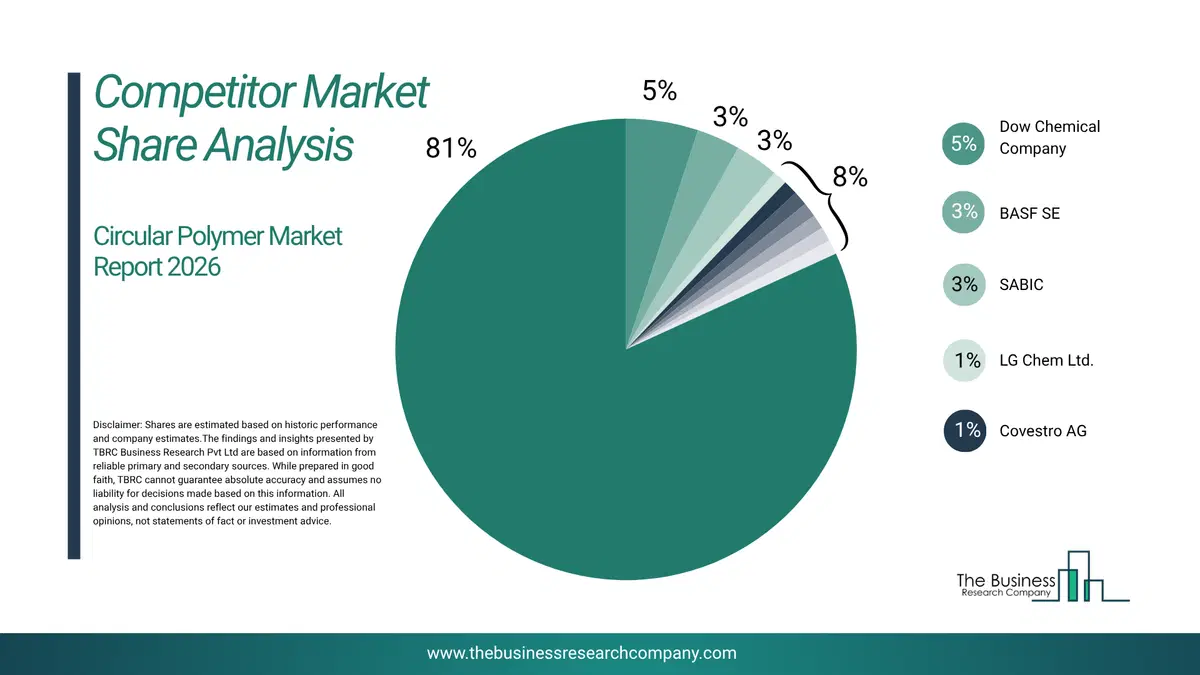
This chart is for illustrative purposes; the full report includes a detailed competitor analysis and comprehensive overview of the top 10 companies in the market.
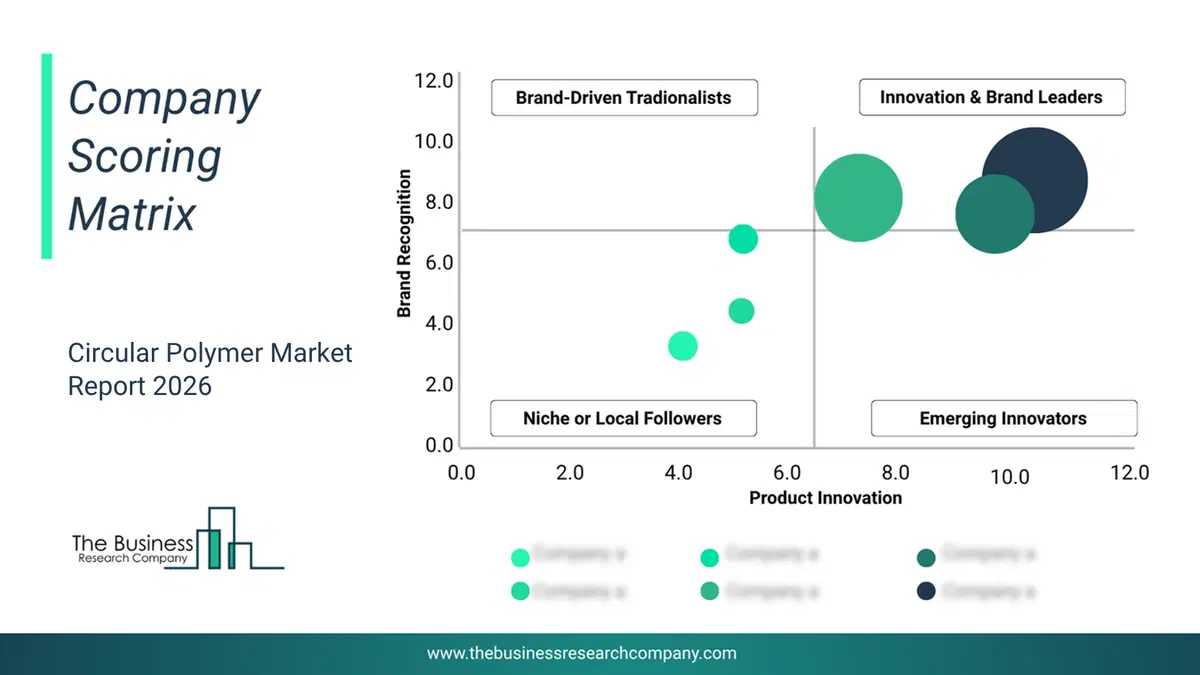
This chart maps companies by product innovation and brand strength, with bubble size indicating relative revenue, helping identify market leaders, challengers, and niche players. This is an illustrative chart; the full report provides a complete and accurate competitive analysis.
Global Circular Polymer Market Trends and Insights
Major companies operating in the circular polymer market are focusing on developing innovative products, such as single pellet solutions to enhance sustainability by improving material efficiency, reducing waste, and facilitating easier recycling processes. Single-pellet solutions refer to a type of masterbatch technology that simplifies the production process by eliminating the need for multiple additive components, improving efficiency, and ensuring consistent quality in the final product. For instance, in August 2023, LyondellBasell, a UK-based manufacturer of polymers, including circular polymers, launched the CirculenRecover portfolio categorized into CirculenRecover polymers, CirculenRevive polymers, and CirculenRenew polymers offering single pellet solutions. The CirculenRecover portfolio contains eight new-grade polymers aimed at enhancing sustainability in plastic packaging. CirculenRecover specifically includes polymers made from plastic waste through a mechanical recycling process. These polymers can contain up to 100% Post-Consumer Resin (PCR) and are designed to meet the performance requirements of various applications, particularly in industrial and food packaging.What Are Latest Mergers And Acquisitions In The Circular Polymer Market?
In September 2025, Shell Chemical Appalachia LLC, a US-based polymer manufacturing business, partnered with Charter Next Generation (CNG) Inc., to deliver certified circular film solutions. With this partnership, Shell Chemical Appalachia LLC and CNG aim to advance sustainable flexible packaging by supplying ISCC PLUS certified circular polyethylene that enables CNG to produce high-performance films for packaging applications, reducing plastic waste, supporting circular economy goals, and maintaining regulatory and functional requirements. Charter Next Generation (CNG) Inc. is a US-based material science company that specializes in producing specialty films and advanced packaging solutions for food, healthcare, industrial, and consumer applications.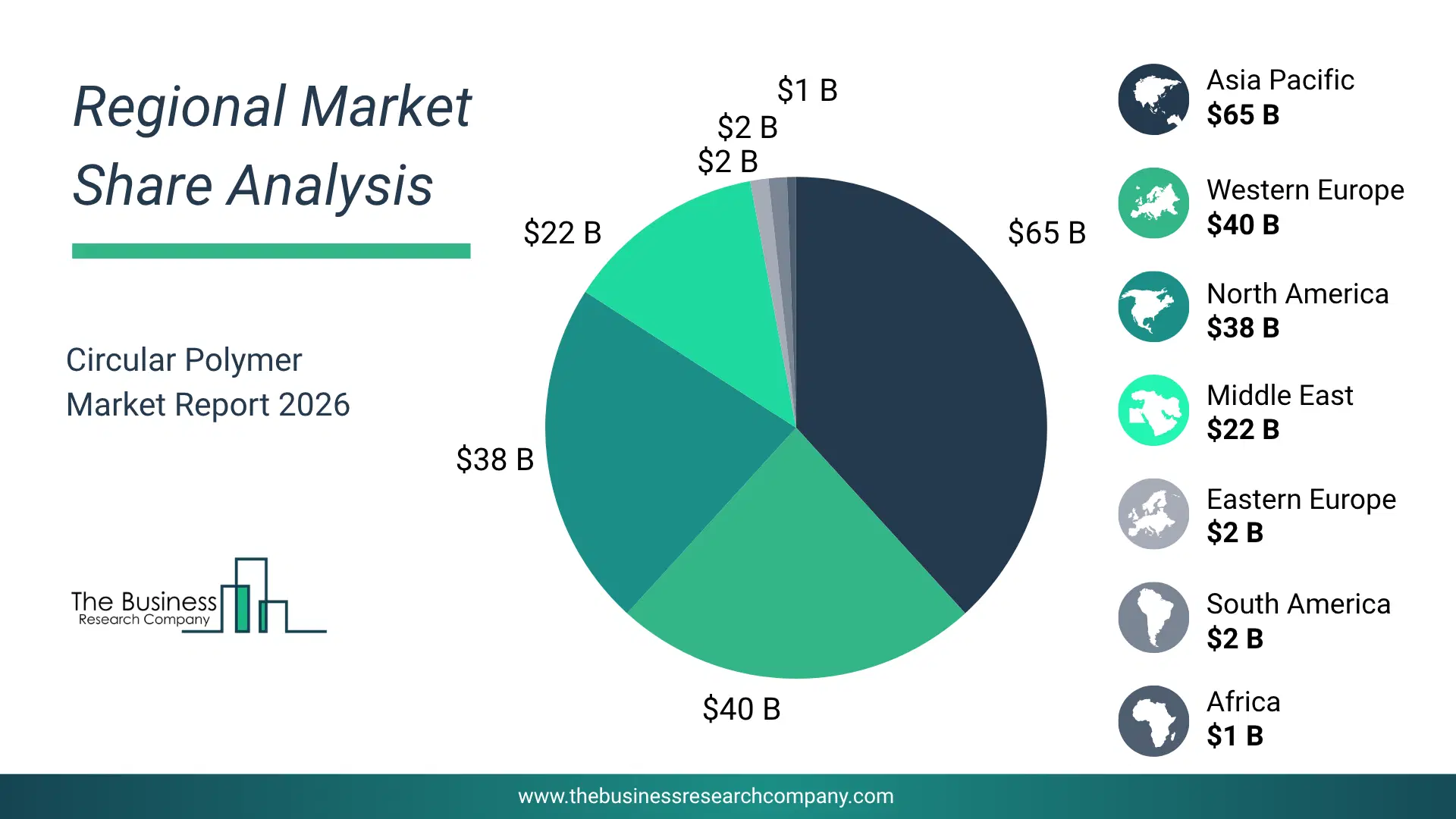
Regional Insights
Asia-Pacific was the largest region in the circular polymer market in 2025. Asia-Pacific is expected to be the fastest-growing region in the forecast period. The regions covered in this market report are Asia-Pacific, South East Asia, Western Europe, Eastern Europe, North America, South America, Middle East, Africa The countries covered in this market report are Australia, Brazil, China, France, Germany, India, Indonesia, Japan, Taiwan, Russia, South Korea, UK, USA, Canada, Italy, SpainWhat Defines the Circular Polymer Market?
The circular polymer market consists of sales of bio-based polymers, compostable polymers, and de-polymerizable polymers. Values in this market are ‘factory gate’ values, that is the value of goods sold by the manufacturers or creators of the goods, whether to other entities (including downstream manufacturers, wholesalers, distributors, and retailers) or directly to end customers. The value of goods in this market includes related services sold by the creators of the goods.How is Market Value Defined and Measured?
The market value is defined as the revenues that enterprises gain from the sale of goods and/or services within the specified market and geography through sales, grants, or donations in terms of the currency (in USD unless otherwise specified). The revenues for a specified geography are consumption values that are revenues generated by organizations in the specified geography within the market, irrespective of where they are produced. It does not include revenues from resales along the supply chain, either further along the supply chain or as part of other products.
This chart presents market attractiveness based on a quantitative evaluation of growth, competition, strategic alignment, and risk, offering a clear view of opportunity areas for decision-making. This chart is for illustrative purposes; the full report contains the complete analysis.

This chart highlights the Total Addressable Market (TAM) by estimating the maximum revenue opportunity using an assumption-driven approach, supporting strategic planning and opportunity sizing across markets. The chart is illustrative; the full report provides a more comprehensive analysis.
What Key Data and Analysis Are Included in the Circular Polymer Market Report 2026?
The circular polymer market research report is one of a series of new reports from The Business Research Company that provides market statistics, including industry global market size, regional shares, competitors with the market share, detailed market segments, market trends and opportunities, and any further data you may need to thrive in the circular polymer industry. The market research report delivers a complete perspective of everything you need, with an in-depth analysis of the current and future state of the industry.Circular Polymer Market Report Forecast Analysis
| Report Attribute | Details |
|---|---|
| Market Size Value In 2026 | $117.1 billion |
| Revenue Forecast In 2030 | $192.2 billion |
| Growth Rate | CAGR of 13.5% from 2026 to 2030 |
| Base Year For Estimation | 2025 |
| Actual Estimates/Historical Data | 2020-2025 |
| Forecast Period | 2026 - 2030 |
| Market Representation | Revenue in USD Billion and CAGR from 2026 to 2030 |
| Segments Covered | Polymer Topology, Chemical Backbone, Synthesis Method, Application, End-User |
| Regional Scope | Asia-Pacific, Western Europe, Eastern Europe, North America, South America, Middle East, Africa |
| Country Scope | The countries covered in the report are Australia, Brazil, China, France, Germany, India, Indonesia, Japan, Taiwan, Russia, South Korea, UK, USA, Canada, Italy, Spain. |
| Key Companies Profiled | BASF SE, Dow Chemical Company, Evonik Industries AG, Arkema S.A., DSM-Firmenich, Mitsubishi Chemical Group, Toray Industries Inc., Kuraray Co. Ltd., Asahi Kasei Corporation, UBE Corporation, Solvay S.A., Lanxess AG, Wacker Chemie AG, Shin-Etsu Chemical Co. Ltd., Sumitomo Chemical Company, LG Chem Ltd., SK Chemicals, SABIC, Covestro AG, Eastman Chemical Company |
| Customization Scope | Request for Customization |
| Pricing And Purchase Options | Explore Purchase Options |