
Civil Aircraft Fire Protection Systems Market Report 2026
Global Outlook – By Type (Fire Detection Systems, Alarm Or Warning Systems, Fire Suppression Systems), By Fit (Linefit, Replacement), By Application (Commercial Passenger Aircraft, Cargo Aircraft, General Aviation Aircraft) – Market Size, Trends, Strategies, and Forecast to 2030
Civil Aircraft Fire Protection Systems Market Report 2026 Market Overview
• Civil Aircraft Fire Protection Systems Market Report 2026 market size has reached to $1.02 billion in 2025 • Expected to grow to $1.61 billion in 2030 at a compound annual growth rate (CAGR) of 9.7% • Growth Driver: The Rising Air Passenger Traffic Driving The Growth Of The Market Due To Higher Disposable Incomes • Market Trend: Advanced Retrofit Upgrade Enhances Environmental Compliance In Regional Aviation • North America was the largest region in 2025 and Asia-Pacific is the fastest growing region.What Is Covered Under Civil Aircraft Fire Protection Systems Market?
Civil aircraft fire protection systems refer to integrated safety solutions designed to identify, control, and mitigate fire risks in various aircraft zones to ensure safe operation during flight and on ground. These systems are engineered to protect critical aircraft structures and occupants by enabling early hazard response and minimizing fire-related damage. The main types of civil aircraft fire protection systems include fire detection systems, alarm or warning systems, and fire suppression systems. Fire detection systems refer to safety mechanisms designed to identify the presence of smoke, heat, or fire conditions within aircraft systems and compartments. These systems are available in linefit and replacement configurations and find application in commercial passenger aircraft, cargo aircraft, and general aviation aircraft.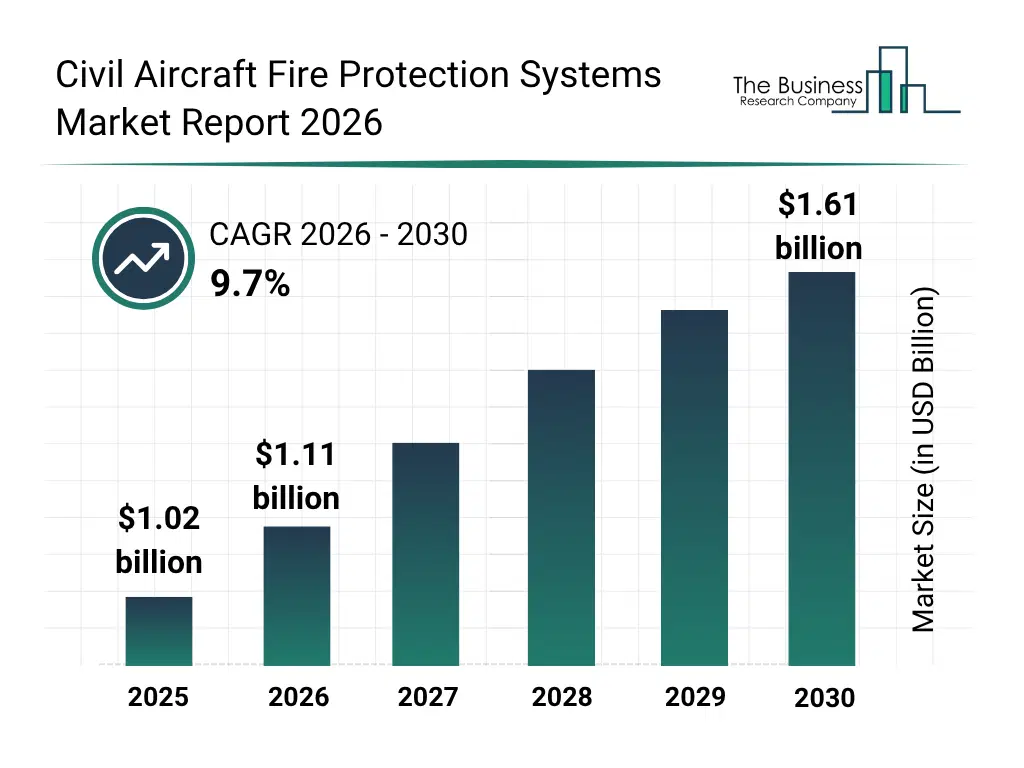
What Is The Civil Aircraft Fire Protection Systems Market Size and Share 2026?
The civil aircraft fire protection systems market size has grown strongly in recent years. It will grow from $1.02 billion in 2025 to $1.11 billion in 2026 at a compound annual growth rate (CAGR) of 9.5%. The growth in the historic period can be attributed to increasing global air passenger traffic, stricter aviation safety regulations, growth in commercial aircraft production, rising investments in aircraft safety systems, expansion of cargo aviation operations.What Is The Civil Aircraft Fire Protection Systems Market Growth Forecast?
The civil aircraft fire protection systems market size is expected to see strong growth in the next few years. It will grow to $1.61 billion in 2030 at a compound annual growth rate (CAGR) of 9.7%. The growth in the forecast period can be attributed to increasing adoption of next generation aircraft platforms, rising demand for advanced fire suppression technologies, growth in aircraft fleet modernization programs, increasing focus on predictive maintenance systems, expansion of sustainable aviation initiatives. Major trends in the forecast period include increasing integration of lightweight fire protection materials in aircraft systems, growing adoption of advanced smoke and heat detection technologies, rising replacement demand for aging aircraft fire safety systems, increasing focus on cabin and cargo compartment fire safety enhancement, expansion of modular and compact fire suppression system designs.
Global Civil Aircraft Fire Protection Systems Market Segmentation
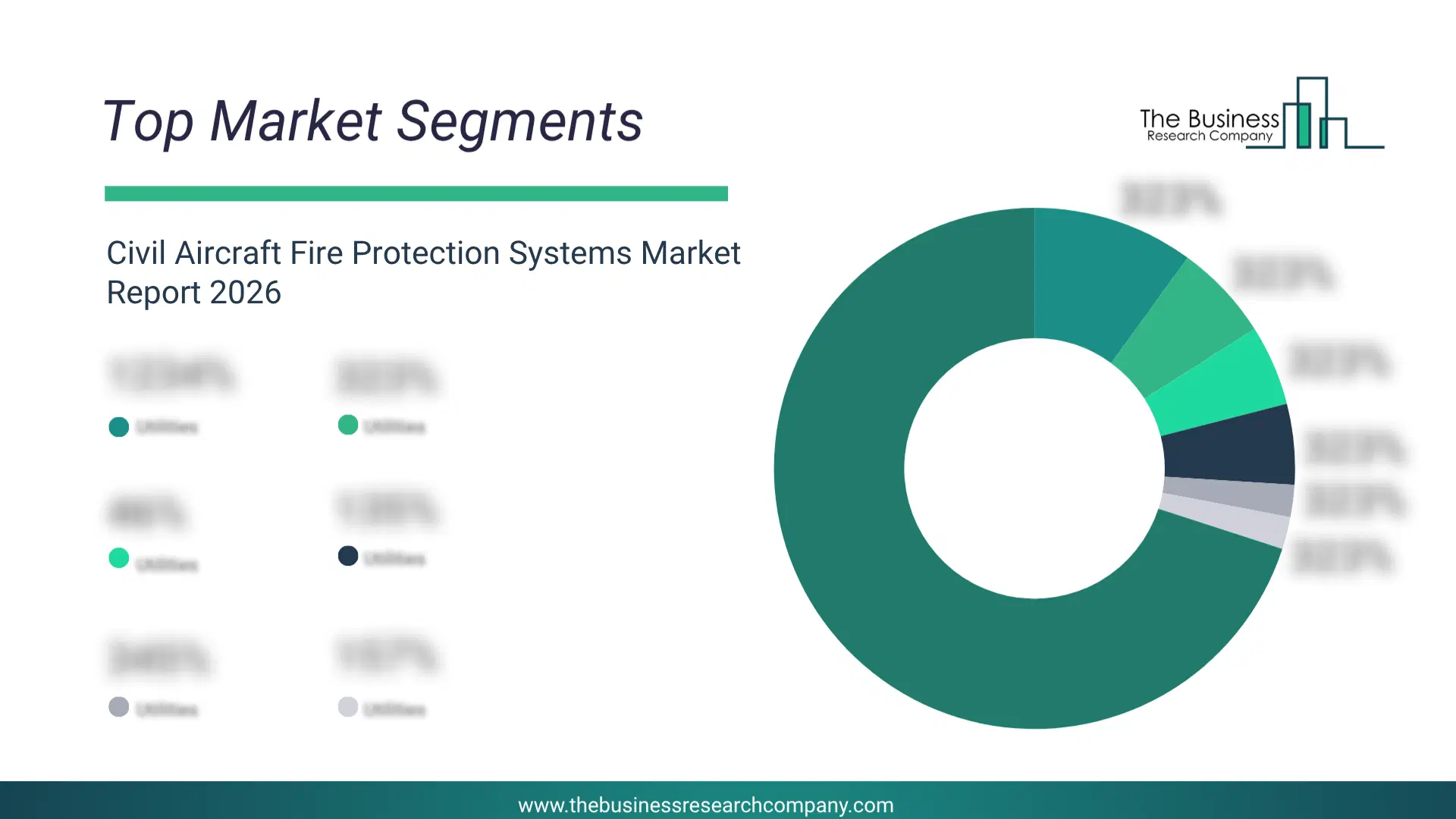
1) By Type: Fire Detection Systems, Alarm Or Warning Systems, Fire Suppression Systems 2) By Fit: Linefit, Replacement 3) By Application: Commercial Passenger Aircraft, Cargo Aircraft, General Aviation Aircraft Subsegments: 1) By Fire Detection Systems: Smoke Detectors, Heat Detectors, Flame Detectors 2) By Alarm Or Warning Systems: Visual Warning Systems, Audible Warning Systems, Centralized Fire Warning Panels 3) By Fire Suppression Systems: Halon Based Suppression Systems, Water Mist Systems, Foam Based Suppression SystemsWhat Are The Drivers Of The Civil Aircraft Fire Protection Systems Market?
The rising air passenger traffic is expected to propel the growth of the civil aircraft fire protection systems market going forward. Air passenger traffic refers to the total number of passengers transported by airlines through domestic and international air services over a specific period and serves as a key indicator of air travel demand. Air passenger traffic is rising due to higher disposable incomes, as more people can afford air travel for business and leisure. Rising air passenger traffic is driving demand for new commercial aircraft and fleet expansions, thereby increasing the need for advanced civil aircraft fire protection systems to ensure passenger safety, regulatory compliance, and reliable aircraft operations. For instance, in October 2024, according to the Department of Transportation, a US-based government department, in August 2024, 647,205 flights were operated, representing a 2.61% increase from the 630,761 flights in August 2023. Therefore, the rising air passenger traffic is driving the growth of the civil aircraft fire protection systems industry. The rising investments in airports are expected to propel the growth of the civil aircraft fire protection systems market going forward. Investments in airports refer to the allocation of capital toward the development, expansion, modernization, and maintenance of airport infrastructure, facilities, and technologies to enhance operational efficiency, capacity, safety, and passenger experience. Rising investments in airports is due to increasing air passenger traffic, which necessitates the expansion and modernization of airport infrastructure, terminals, and operational facilities to accommodate growing demand and improve efficiency. Rising investments in airports are driving the demand for civil aircraft fire protection systems by supporting airport expansion, fleet growth, and enhanced aviation safety infrastructure, which require advanced fire detection and suppression technologies. For instance, in March 2026, according to the Australian Competition and Consumer Commission (ACCC), an Australia-based independent statutory authority, Australia’s four largest airports, Brisbane Airport, Melbourne Airport, Perth Airport, and Sydney Airport, are increasing aeronautical infrastructure investment from approximately $1.04 billion in 2023–24 to $1.5 billion in 2024–25, representing a 43.6% year-over-year increase to support capacity expansion and terminal modernization. Therefore, the rising investments in airports are driving the growth of the civil aircraft fire protection systems industry.Key Players In The Global Civil Aircraft Fire Protection Systems Market
Major companies operating in the civil aircraft fire protection systems market report are Advanced Aircraft Extinguishers Limited, Amerex Corporation, AMETEK Inc., Curtiss-Wright Corporation, Diehl Aviation GmbH, Firetrace International, GENTEX Corporation, H3R Aviation Inc., Halma plc, Honeywell International Inc., HRD Aero Systems Inc., Jetaire Group LLC, Parker-Hannifin Corporation, RTX Corporation, Southern Electronics Pvt. Ltd., Ventura Aerospace Inc.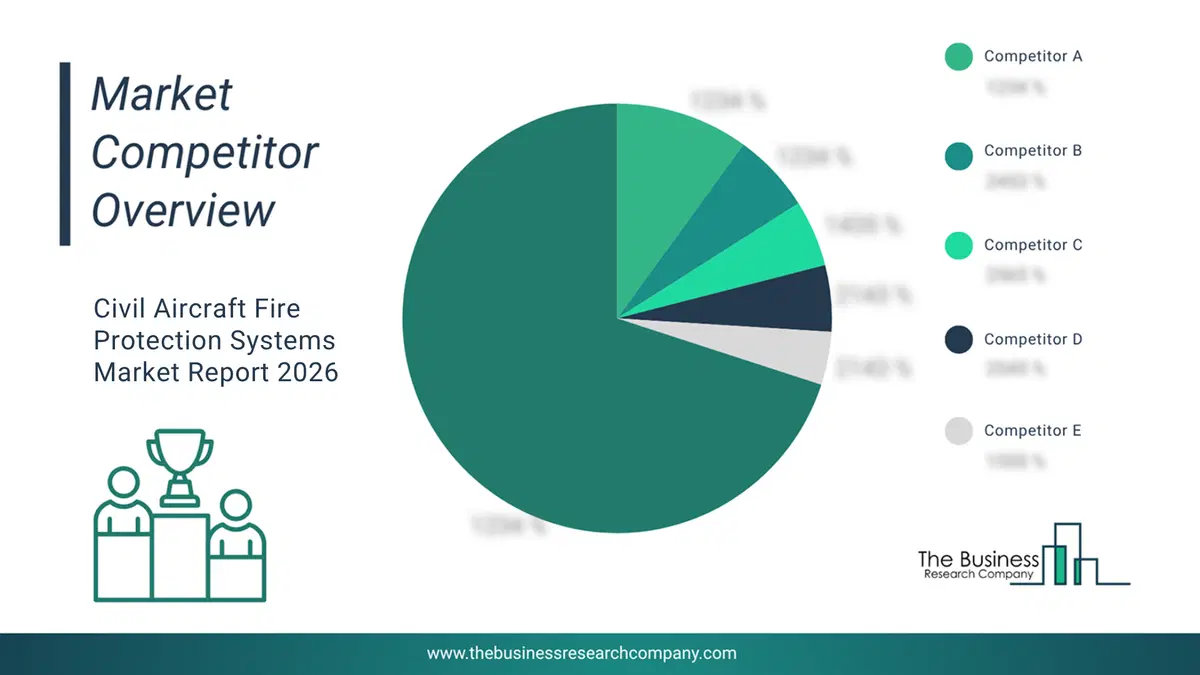
This chart is for illustrative purposes; the full report includes a detailed competitor analysis and comprehensive overview of the top 10 companies in the market.
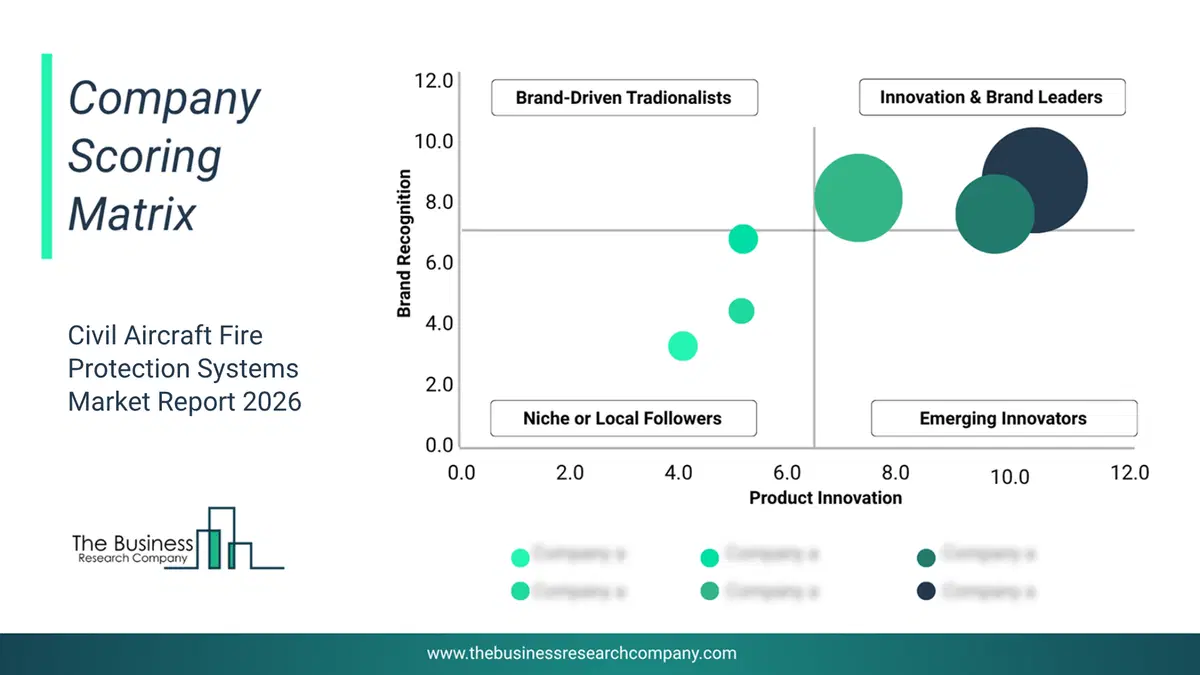
This chart maps companies by product innovation and brand strength, with bubble size indicating relative revenue, helping identify market leaders, challengers, and niche players. This is an illustrative chart; the full report provides a complete and accurate competitive analysis.
Global Civil Aircraft Fire Protection Systems Market Trends and Insights
Major companies operating in the civil aircraft fire protection systems market are focusing on developing innovative solutions, such as halon-free fire extinguishers to enhance environmental compliance, improve passenger safety, and support sustainable aviation operations. Halon-free fire extinguishers are advanced fire suppression systems that use environmentally friendly extinguishing agents instead of halon-based chemicals, providing effective fire protection while reducing ozone-depleting emissions and helping aircraft operators comply with evolving aviation regulations. For instance, in May 2025, PMV Group, a France-based aerospace engineering company, obtained a new Supplemental Type Certificate (STC) for the retrofit of halon-free fire extinguishers aboard ATR42 and ATR72 aircraft. The approved upgrade enables aircraft operators to replace traditional halon-based extinguishers with environmentally sustainable alternatives while maintaining compliance with stringent aviation safety standards. The solution is designed to support upcoming environmental and regulatory requirements aimed at phasing out ozone-depleting substances in aviation. By offering a certified retrofit option, the upgrade allows airlines to modernize existing aircraft fleets without extensive modifications, reducing implementation complexity and operational downtime.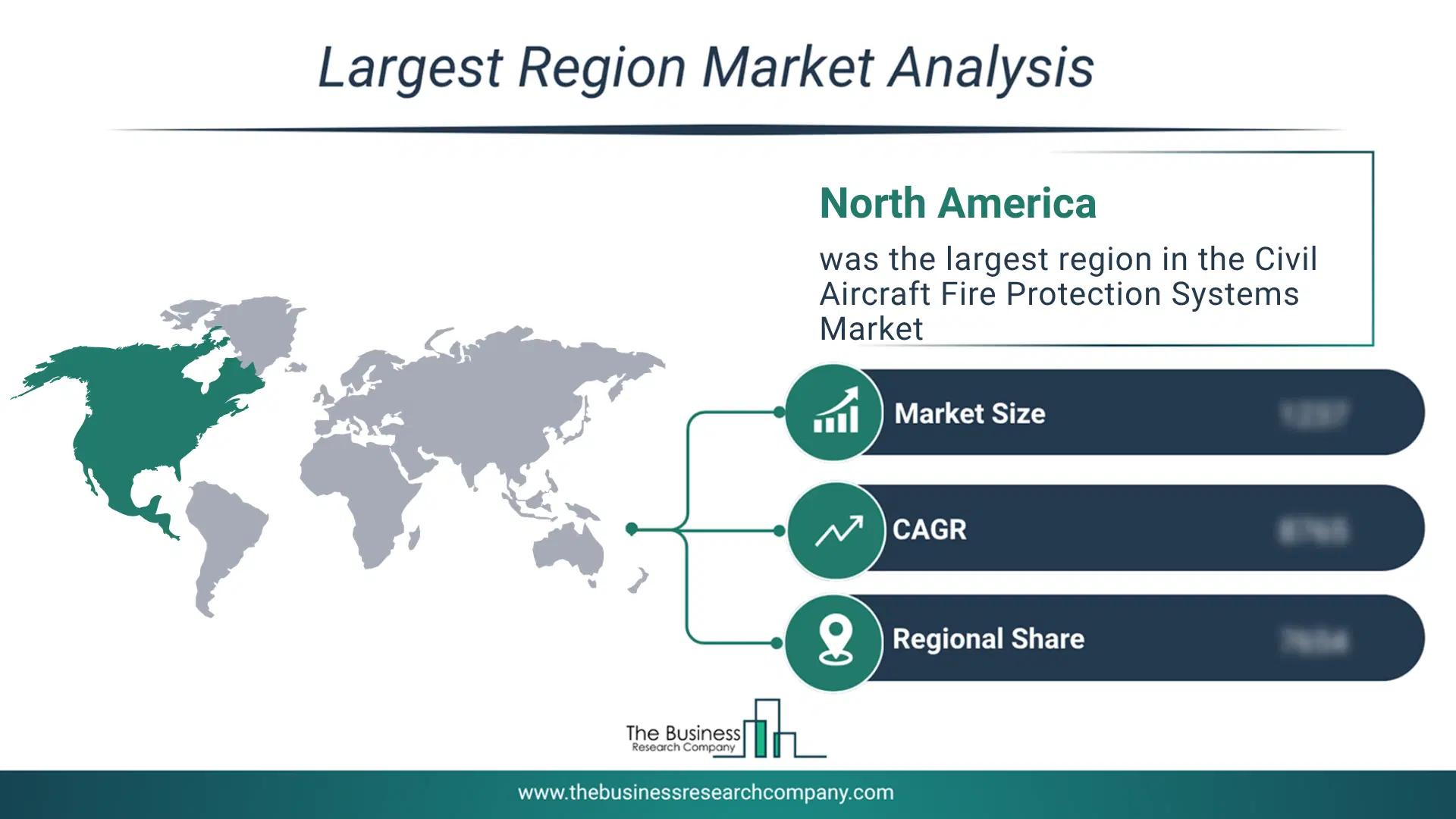
Regional Outlook
North America was the largest region in the civil aircraft fire protection systems market in 2025. Asia-Pacific is expected to be the fastest-growing region in the forecast period. The regions covered in this market report are Asia-Pacific, South East Asia, Western Europe, Eastern Europe, North America, South America, Middle East, Africa. The countries covered in this market report are Australia, Brazil, China, France, Germany, India, Indonesia, Japan, Taiwan, Russia, South Korea, UK, USA, Canada, Italy, Spain.What Defines the Civil Aircraft Fire Protection Systems Market?
The civil aircraft fire protection systems market consists of sales of fire extinguishers and portable suppression units, smoke and heat sensors used in aircraft compartments, fire-resistant cables and insulation materials, and fire containment blankets and barriers. Values in this market are ‘factory gate’ values, that is the value of goods sold by the manufacturers or creators of the goods, whether to other entities (including downstream manufacturers, wholesalers, distributors and retailers) or directly to end customers. The value of goods in this market includes related services sold by the creators of the goods.How is Market Value Defined and Measured?
The market value is defined as the revenues that enterprises gain from the sale of goods and/or services within the specified market and geography through sales, grants, or donations in terms of the currency (in USD unless otherwise specified). The revenues for a specified geography are consumption values that are revenues generated by organizations in the specified geography within the market, irrespective of where they are produced. It does not include revenues from resales along the supply chain, either further along the supply chain or as part of other products.
This chart presents market attractiveness based on a quantitative evaluation of growth, competition, strategic alignment, and risk, offering a clear view of opportunity areas for decision-making. This chart is for illustrative purposes; the full report contains the complete analysis.

This chart highlights the Total Addressable Market (TAM) by estimating the maximum revenue opportunity using an assumption-driven approach, supporting strategic planning and opportunity sizing across markets. The chart is illustrative; the full report provides a more comprehensive analysis.
What Key Data and Analysis Are Included in the Civil Aircraft Fire Protection Systems Market Report 2026?
The civil aircraft fire protection systems market research report is one of a series of new reports from The Business Research Company that provides market statistics, including industry global market size, regional shares, competitors with the market share, detailed market segments, market trends and opportunities, and any further data you may need to thrive in the civil aircraft fire protection systems industry. The market research report delivers a complete perspective of everything you need, with an in-depth analysis of the current and future state of the industry.Civil Aircraft Fire Protection Systems Market Report Forecast Analysis
| Report Attribute | Details |
|---|---|
| Market Size Value In 2026 | $1.11 billion |
| Revenue Forecast In 2030 | $1.61 billion |
| Growth Rate | CAGR of 9.7% from 2026 to 2030 |
| Base Year For Estimation | 2025 |
| Actual Estimates/Historical Data | 2020-2025 |
| Forecast Period | 2026 - 2030 |
| Market Representation | Revenue in USD Billion and CAGR from 2026 to 2030 |
| Segments Covered | Type, Fit, Application |
| Regional Scope | Asia-Pacific, Western Europe, Eastern Europe, North America, South America, Middle East, Africa |
| Country Scope | The countries covered in the report are Australia, Brazil, China, France, Germany, India, Indonesia, Japan, Taiwan, Russia, South Korea, UK, USA, Canada, Italy, Spain. |
| Key Companies Profiled | Advanced Aircraft Extinguishers Limited, Amerex Corporation, AMETEK Inc., Curtiss-Wright Corporation, Diehl Aviation GmbH, Firetrace International, GENTEX Corporation, H3R Aviation Inc., Halma plc, Honeywell International Inc., HRD Aero Systems Inc., Jetaire Group LLC, Parker-Hannifin Corporation, RTX Corporation, Southern Electronics Pvt. Ltd., Ventura Aerospace Inc. |
| Customization Scope | Request for Customization |
| Pricing And Purchase Options | Explore Purchase Options |