
Clean Coal Technology Market Report 2026
Global Outlook – By Type (Fluidized-Bed Combustion, Integrated Gasification Combined Cycle (IGCC), Flue Gas Desulfurization, Low Nitrogen Oxide (NOx) Burners, Selective Catalytic Reduction (SCR), Electrostatic Precipitators), By Combustion (Pulverized Coal, Supercritical Pulverized Coal, Circulating Fluidized Bed, Integrated Gasification Combined Cycle), By Technology (Supercritical, Ultra-Supercritical, Combined Heat and Power, Other Technologies), By Capture Method (Post-Combustion Capture, Pre-Combustion Capture, Oxy-Coal combustion), By End User (Chemical Industry, Commercial, Pharmaceutical Industry, Other End Users) – Market Size, Trends, Strategies, and Forecast to 2030
Clean Coal Technology Market Overview
• Clean Coal Technology market size has reached to $4.18 billion in 2025 • Expected to grow to $5.39 billion in 2030 at a compound annual growth rate (CAGR) of 5.2% • Growth Driver: Surging Demand For Clean Energy Propels Growth In The Clean Coal Technology Market • Market Trend: Strategic Investments in Clean Coal Technology for Enhanced Production and Sustainability • Asia-Pacific was the largest region and fastest growing region.Market Gains By 2030 – Top Opportunities By Segment
Market Gain identifies the most promising market opportunities by highlighting the segments or products expected to generate the highest incremental revenue growth over the next five years.
What Is Covered Under Clean Coal Technology Market?
Clean coal technologies (CCTs) are a new generation of improved coal utilization techniques that make them environmentally acceptable and efficient. Clean coal technology is used to reduce greenhouse gas emissions from fossil fuels. The main types of clean coal technologies are fluidized-bed combustion, integrated gasification combined cycle (IGCC), flue gas desulfurization, low nitrogen oxide (NOX) burners, selective catalytic reduction (SCR), and electrostatic precipitators. The Integrated Gasification Combined Cycle (IGCC) is a process of gasifying coal which involves burning finely crushed coal in an atmosphere with less oxygen than is necessary to completely burn the coal. The different types of combustions are pulverized coal, supercritical pulverized coal, circulating fluidized bed and integrated gasification combined cycle and various technologies used are supercritical, ultra-supercritical, combined heat and power and other technologies. The capture method used for clean coal technologies is post-combustion capture, pre-combustion capture and oxy-coal combustion. The end users using clean coal technologies are the chemical industry, commercial, pharmaceutical industry and other end users.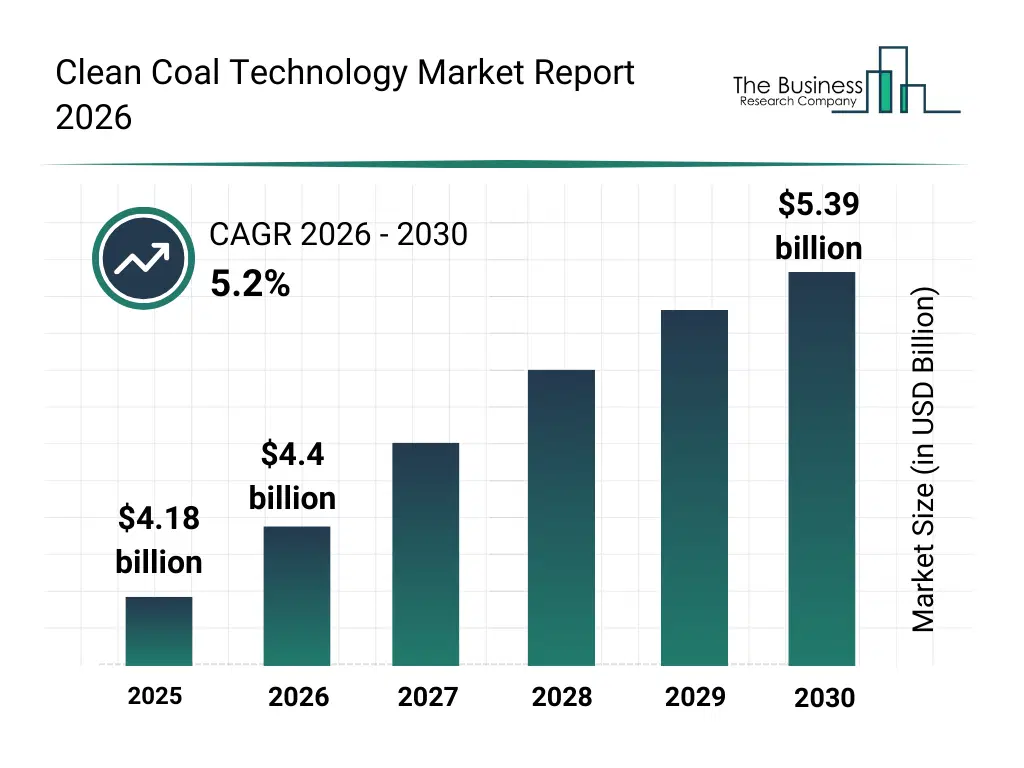
What Is The Clean Coal Technology Market Size and Share 2026?
The clean coal technology market size has grown strongly in recent years. It will grow from $4.18 billion in 2025 to $4.4 billion in 2026 at a compound annual growth rate (CAGR) of 5.2%. The growth in the historic period can be attributed to stringent environmental regulations for coal power, adoption of fluidized-bed combustion systems, growth in pulverized coal and supercritical coal technologies, technological improvements in emission control systems, early adoption of post-combustion capture methods.What Is The Clean Coal Technology Market Growth Forecast?
The clean coal technology market size is expected to see strong growth in the next few years. It will grow to $5.39 billion in 2030 at a compound annual growth rate (CAGR) of 5.2%. The growth in the forecast period can be attributed to rising demand for ultra-supercritical coal technology, growth in combined heat and power systems, increasing adoption of oxy-coal combustion, expansion of coal gasification power plants, government incentives for low-emission coal technologies. Major trends in the forecast period include rising adoption of integrated gasification combined cycle (igcc) systems, increasing deployment of flue gas desulfurization technologies, expansion of low nitrogen oxide (nox) burners in coal-fired plants, growing implementation of selective catalytic reduction (scr) systems, advancements in electrostatic precipitators for emission control.
Global Clean Coal Technology Market Segmentation
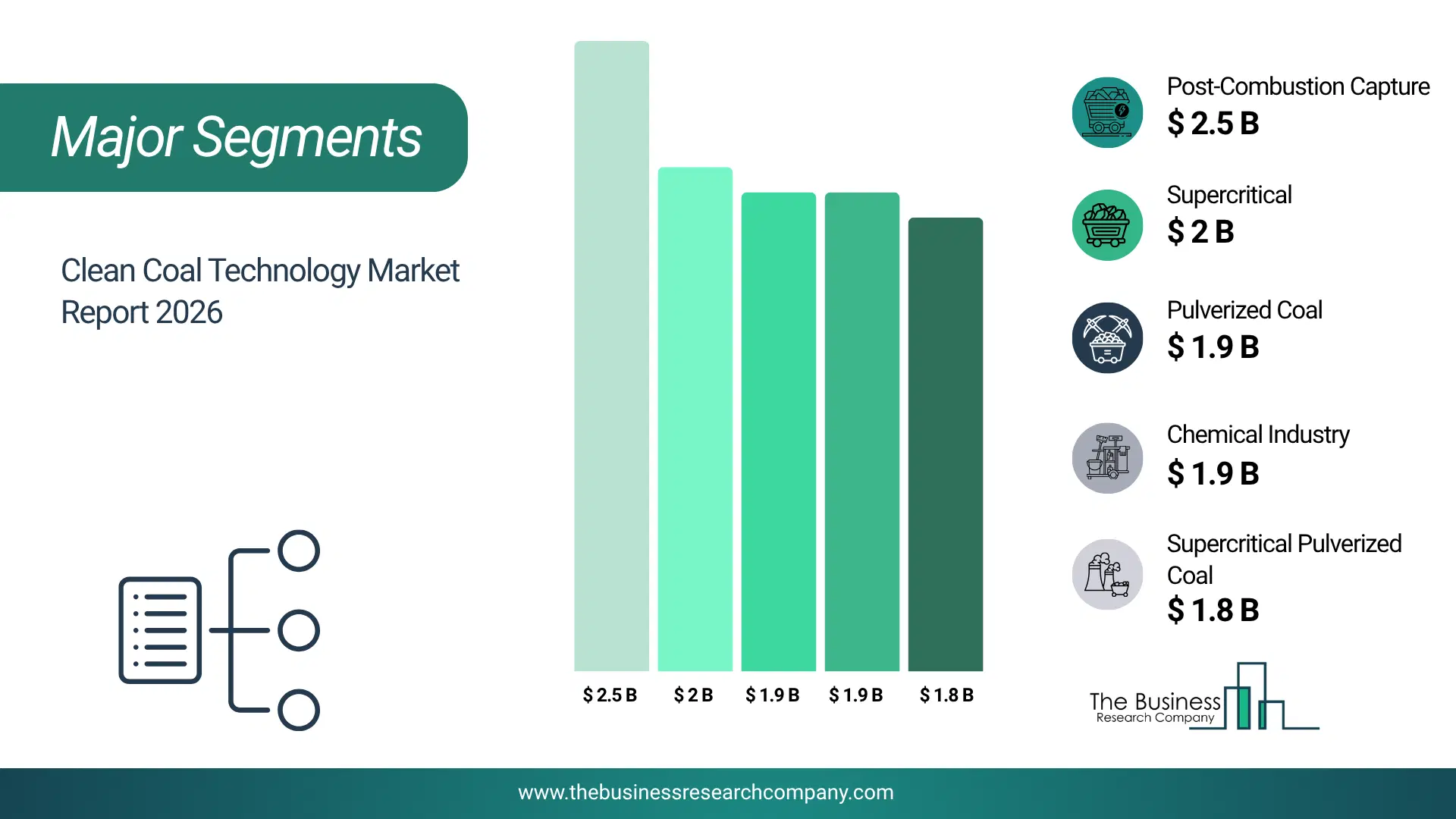
1) By Type: Fluidized-Bed Combustion, Integrated Gasification Combined Cycle (IGCC), Flue Gas Desulfurization, Low Nitrogen Oxide (NOx) Burners, Selective Catalytic Reduction (SCR), Electrostatic Precipitators 2) By Combustion: Pulverized Coal, Supercritical Pulverized Coal, Circulating Fluidized Bed, Integrated Gasification Combined Cycle 3) By Technology: Supercritical, Ultra-Supercritical, Combined Heat and Power, Other Technologies 4) By Capture Method: Post-Combustion Capture, Pre-Combustion Capture, Oxy-Coal combustion 5) By End User: Chemical Industry, Commercial, Pharmaceutical Industry, Other End Users Subsegments: 1) By Fluidized-Bed Combustion: Circulating Fluidized Bed (CFB) Systems, Bubbling Fluidized Bed (BFB) Systems 2) By Integrated Gasification Combined Cycle (IGCC): Coal Gasification Systems, Combined Cycle Power Generation 3) By Flue Gas Desulfurization: Wet Scrubbing Systems, Dry Scrubbing Systems 4) By Low Nitrogen Oxide (NOx) Burners: Ultra-low NOx Burners, Low-Emission Combustion Technologies 5) By Selective Catalytic Reduction (SCR): Ammonia-Based SCR Systems, Urea-Based SCR Systems 6) By Electrostatic Precipitators: Dry Electrostatic Precipitators, Wet Electrostatic Precipitators The top segments in the clean coal technology market will be: • Post-Combustion Capture will reach $2568.02 Million by 2030. • Pulverized Coal will reach $1984.92 Million by 2030. • Supercritical will reach $2033.06 Million by 2030. • Chemical Industry will reach $1971.4 Million by 2030. • Supercritical Pulverized Coal will reach $1798.92 Million by 2030.What Is The Driver Of The Clean Coal Technology Market?
The growing demand for clean energy is expected to boost the growth of the clean coal technology market going forward. Clean energy is an energy that is produced from renewable, non-emitting sources and energy that is conserved through energy-saving practices. It is used in different applications for various purposes, from electricity generation to heating water and more, depending on the source of the energy. One of the primary causes of the rising need for clean energy is the rising use of electricity. Electricity consumption is greater because of rising household incomes, the electrification of transport and heat, and the growing demand for digitally connected devices and air conditioning. For instance, in March 2024, according to the U.S. Energy Information Administration (EIA), a US-based energy data authority, renewable energy sources were expected to supply about 22% of total U.S. electricity generation in 2024, with solar generation projected to increase by 41% compared to 2023. Therefore, the growing demand for clean energy is driving the growth of the clean coal technology industry.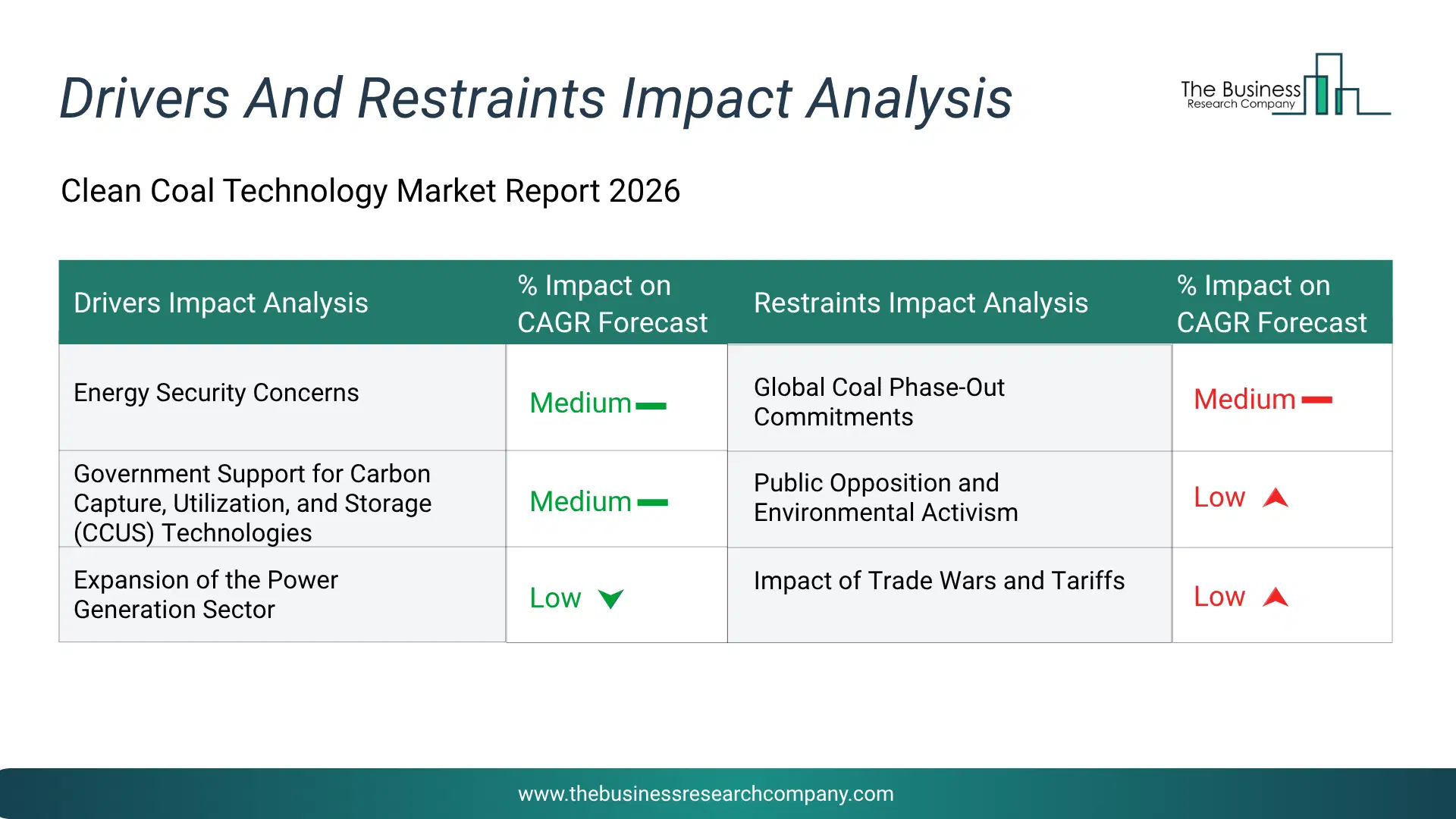
Infographic Chart Showing Key Market Drivers Analysis And Restraints For Clean Coal Technology Market
The chart presents an impact analysis of key drivers and restraints, quantifying their relative influence on the market's growth rate and helping assess the balance between growth enablers and limiting factors. This chart offers a high-level perspective; the full report contains more detailed insights.
How Will The Drivers Impact Growth In The Global Clean Coal Technology Market?
• Energy Security Concerns (Medium) – During the forecast period, the energy security concerns will become a key driver of growth in the clean coal technology market by 2030. governments aim to ensure reliable and uninterrupted access to domestic energy resources to protect economic stability and reduce reliance on fuel imports. analyst projections show that india’s domestic coal production reached nearly 998 million tons in 2023-24, securing a consistent electricity supply and reducing dependence on imported fuels. as nations prioritize resilient energy systems, coal continues to play a critical role by providing a stable and locally sourced energy option capable of meeting industrial, commercial, and residential demand. as a result, energy security concerns is anticipated to contributing to a 1.5% annual growth in the market. • Government Support for Carbon Capture, Utilization, and Storage (CCUS) Technologies (Medium) – During the forecast period, the government support for carbon capture, utilization, and storage (ccus) technologies will emerge as a major factor driving the expansion of the clean coal technology market by 2030. governments are increasingly allocating grants, tax credits, and investment programs to support carbon capture, utilization, and storage (ccus) technologies and advanced coal combustion systems, which reduces emissions and improves efficiency. analyst projections indicate that public funding for ccus initiatives has been increasing year on year, reflecting a global push toward cleaner energy production while maintaining coal’s role in power generation. as utilities and industrial operators implement these supported projects, they can integrate carbon capture technologies with existing coal facilities, optimize combustion processes, and achieve significant reductions in co₂ and pollutant emissions, thereby reinforcing the adoption of cleaner coal energy solutions. consequently, the increasing defense spending is projected to contributing to a 1.0% annual growth in the market. • Expansion of the Power Generation Sector (Low) – During the forecast period, the expansion of the power generation sector will serve as a key growth catalyst for the clean coal technology market by 2030. rapid industrialization, urbanization, and technological adoption drive the need for increased electricity generation capacity worldwide. analyst projections indicate that india’s total electricity generation reached approximately 1,821 billion units in fy 2024-25, a 5% year-on-year increase, with coal-based thermal generation continuing to supply the largest share of output. as countries expand generation infrastructure to meet rising demand, coal provides reliable base-load power, complements intermittent renewable sources, and ensures stable energy delivery for growing economies. therefore, this expansion of the power generation sector is projected to supporting to a 0.8% annual growth in the market. • Rising Prices and Volatility of Alternative Fuels (Low) – During the forecast period, rising prices and volatility of alternative fuels will propel the growth of coal-based energy solutions. As the cost of natural gas, oil, and other non-coal fuels fluctuates significantly, energy producers increasingly turn to coal, which offers more predictable pricing and stable supply. Analyst projections indicate that natural gas prices in the U.S. are expected to rise by 37% in 2025 compared to 2024, with spot prices at Henry Hub projected to increase by approximately 58%, highlighting the growing price volatility of alternative fuels. As energy producers seek stable and affordable sources to meet electricity demand, coal-based systems provide a reliable option that mitigates exposure to market fluctuations, supports consistent power generation, and complements broader energy planning objectives. The rising prices and volatility of alternative fuels growth contribution during the forecast period in 2025 is 0.5%.How Will The Restraints Impact Growth In The Global Clean Coal Technology Market?
• Global Coal Phase-Out Commitments (Medium) – During the forecast period, global coal phase-out commitments are restricting the expansion of coal-related energy infrastructure during the forecast period. governments and international alliances, such as the powering past coal alliance, are committing to retire existing coal plants and limit the development of new coal-fired power stations without operational carbon capture and storage. these policies reduce the strategic priority for retrofitting coal facilities with clean combustion technologies and carbon capture systems, as the regulatory and financing environment increasingly favors decommissioning coal assets. the early retirement of coal infrastructure undermines long-term investment incentives and slows the scaling of emissions-mitigating technologies. consequently, plans to deploy clean coal solutions are constrained by shifting policy focus toward renewable energy and accelerated coal phase-out commitments. growth affected by global coal phase-out commitments during the forecast period in 2025 is -2.0%. • Public Opposition and Environmental Activism (Medium) – During the forecast period, public opposition and environmental activism are expected to restrict the growth of the market in the forecast period. public opposition and environmental activism refer to organized efforts by community groups, ngos, and citizens to challenge and block the development, expansion, or operation of coal mines, coal fired power stations, and associated infrastructure due to concerns over pollution, land use, and climate change. this activism has intensified as climate policy scrutiny and community environmental awareness have grown, prompting legal challenges and protests against coal projects in multiple countries. these actions increase regulatory risk, delay project approvals, and raise the cost of permitting for new coal extraction and coal based energy facilities, discouraging investment in technologies linked to coal extraction and combustion. for example, local environmental activism against coal mining and forest diversion in india’s hasdeo forest region sparked political and legal disputes over forest land clearances in 2025, reflecting mounting resistance to fossil fuel projects in ecologically sensitive areas. therefore, public opposition and environmental activism restrain the expansion of coal related energy infrastructure. growth affected by public opposition and environmental activism during the forecast period in 2025 is -1.0% • Impact of Trade Wars and Tariffs (Low) – During the forecast period, the trade war and tariffs are expected to hinder the growth of the market during the forecast period. trade wars and tariffs refer to a series of protectionist policy measures where countries impose higher import duties and reciprocal trade barriers on each other’s goods, increasing the cost and uncertainty of global trade flows. escalating tariff activity raises costs for equipment and components used in energy sectors, creates volatility in international supply chains, and reduces predictability for long term investment decisions. heightened tariffs also contribute to a broader environment of regulatory uncertainty that can depress investment in integrated, cross border technology projects, particularly those requiring international supply chains and capital flows. the world trade organization reported that the value of global goods imports affected by new tariffs and import measures increased more than fourfold from mid-october 2024 to mid-october 2025 compared with the prior period, indicating a significant rise in trade restrictions that can impede capital intensive energy technologies requiring cross border inputs. therefore, trade wars and tariffs restrain international investment in complex energy infrastructure and long-term technology deployment. growth affected by trade war and tariffs across regions during the forecast period in 2025 is -0.1%.Key Players In The Global Clean Coal Technology Market
Major companies operating in the clean coal technology market are PetroChina Company Limited, Siemens AG, General Electric Company, China Energy Engineering Corporation, China Shenhua Energy Company Limited, Thyssenkrupp AG, RWE AG, Huaneng Power International Inc., Mitsubishi Heavy Industries Ltd., Toshiba Corporation, NTPC Limited, Sasol Limited, Shanghai Electric Group Company Limited, Doosan Heavy Industries & Construction, Kawasaki Heavy Industries Ltd., Shanxi Coking Coal Group Co.Ltd., Jindal Steel and Power Ltd., Dongfang Electric Corporation, PT Adaro Energy Tbk, Inner Mongolia Yitai Coal Co. Ltd., Sumitomo Heavy Industries Ltd., KBR Inc., Peabody Energy Corp., Babcock & Wilcox Enterprises Inc., JSW Energy Limited, Ramaco Resources Inc., White Energy Company Limited, Fuel Tech Inc., Clean Coal Technologies Inc.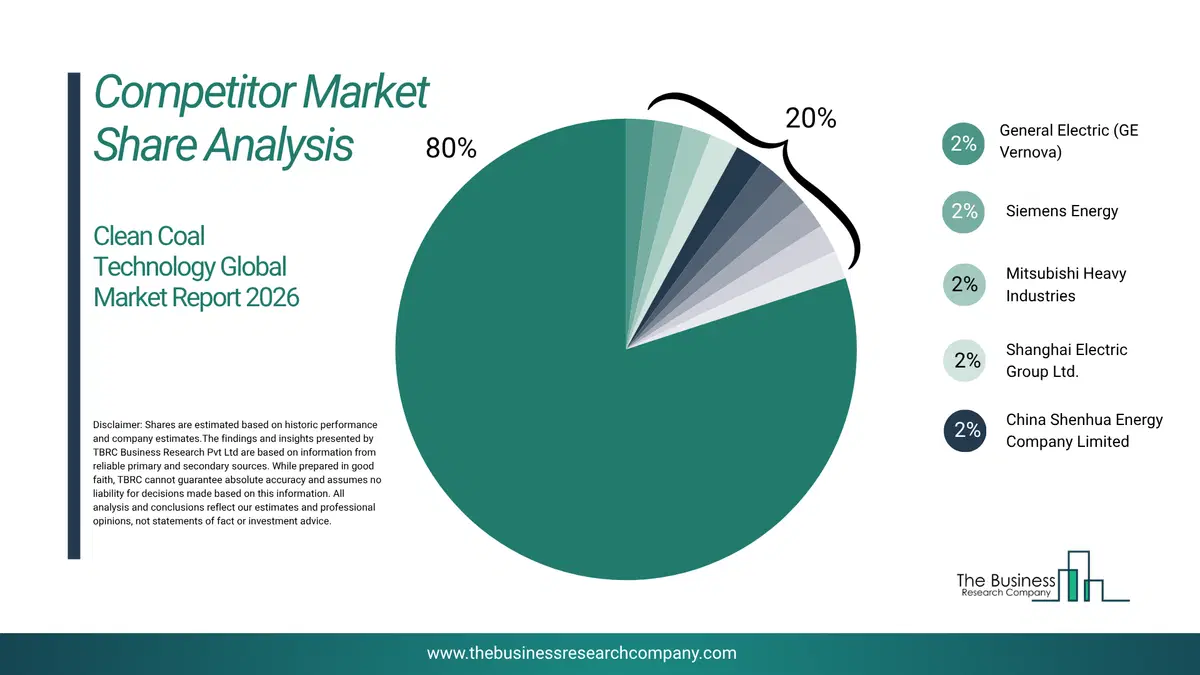
This chart is for illustrative purposes; the full report includes a detailed competitor analysis and comprehensive overview of the top 10 companies in the market.
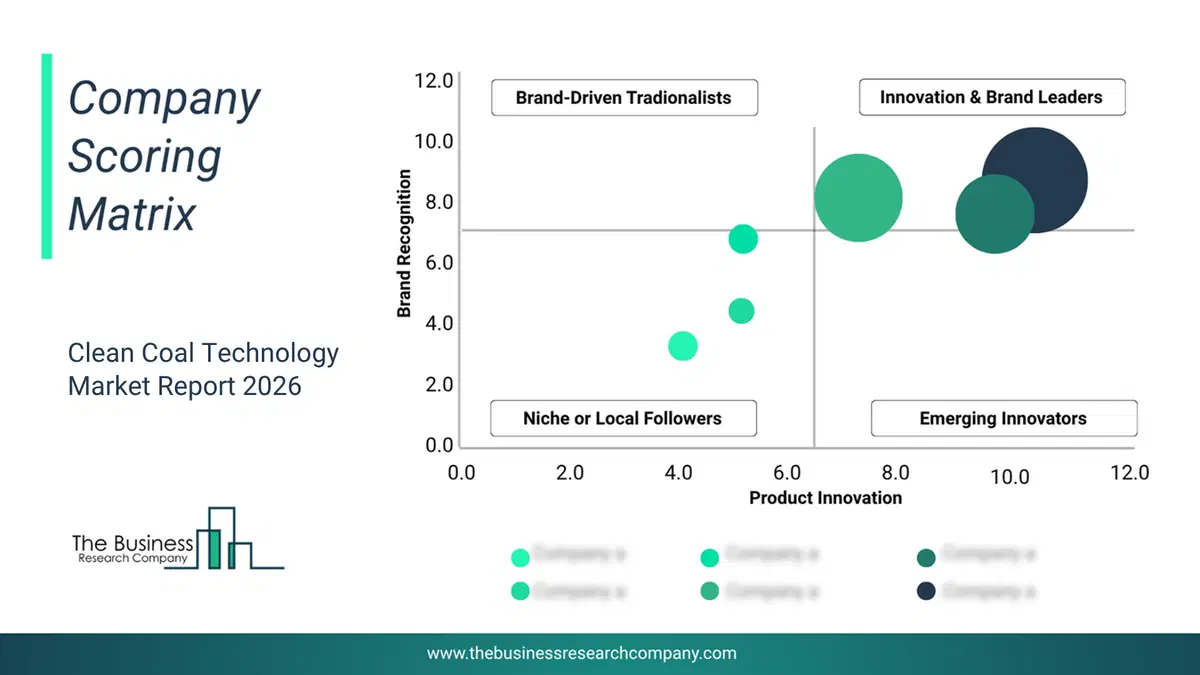
This chart maps companies by product innovation and brand strength, with bubble size indicating relative revenue, helping identify market leaders, challengers, and niche players. This is an illustrative chart; the full report provides a complete and accurate competitive analysis.
Global Clean Coal Technology Market Trends and Insights
Major companies in the clean coal technology market are focusing on strategic investments to enhance the production of cleaner and more efficient coal energy solutions. Strategic investments in the clean coal technology market boost production efficiency, promote product innovation, decrease operational costs, and expand market presence. These investments allow companies to meet rising demand and improve their competitive position. For instance, in July 2023, ArcelorMittal S.A., Luxembourg-based multinational steel manufacturing company, invested $4.76 million (C$6.6M) on CHAR Technologies Ltd., a Canada-based company. The investment in CHAR Technologies aims to develop sustainable alternatives to coal by producing biocarbon through the conversion of biomass and waste materials. This biocarbon can be used in steelmaking processes, providing a cleaner and more environmentally friendly substitute for traditional coal.What Are Latest Mergers And Acquisitions In The Clean Coal Technology Market?
In March 2023, Clean Coal Technologies Inc., a US-based energy technology company focused on coal upgrading and emissions reduction solutions, merged with NewStream Energy Technologies Group, Inc. Through this merger, Clean Coal Technologies and NewStream Energy Technologies Group aim to combine their capabilities in clean coal processing, carbon capture, and decarbonization technologies to create an integrated energy technology platform focused on lowering emissions from fossil-fuel-based energy systems. NewStream Energy Technologies Group, Inc. is a US-based energy technology company.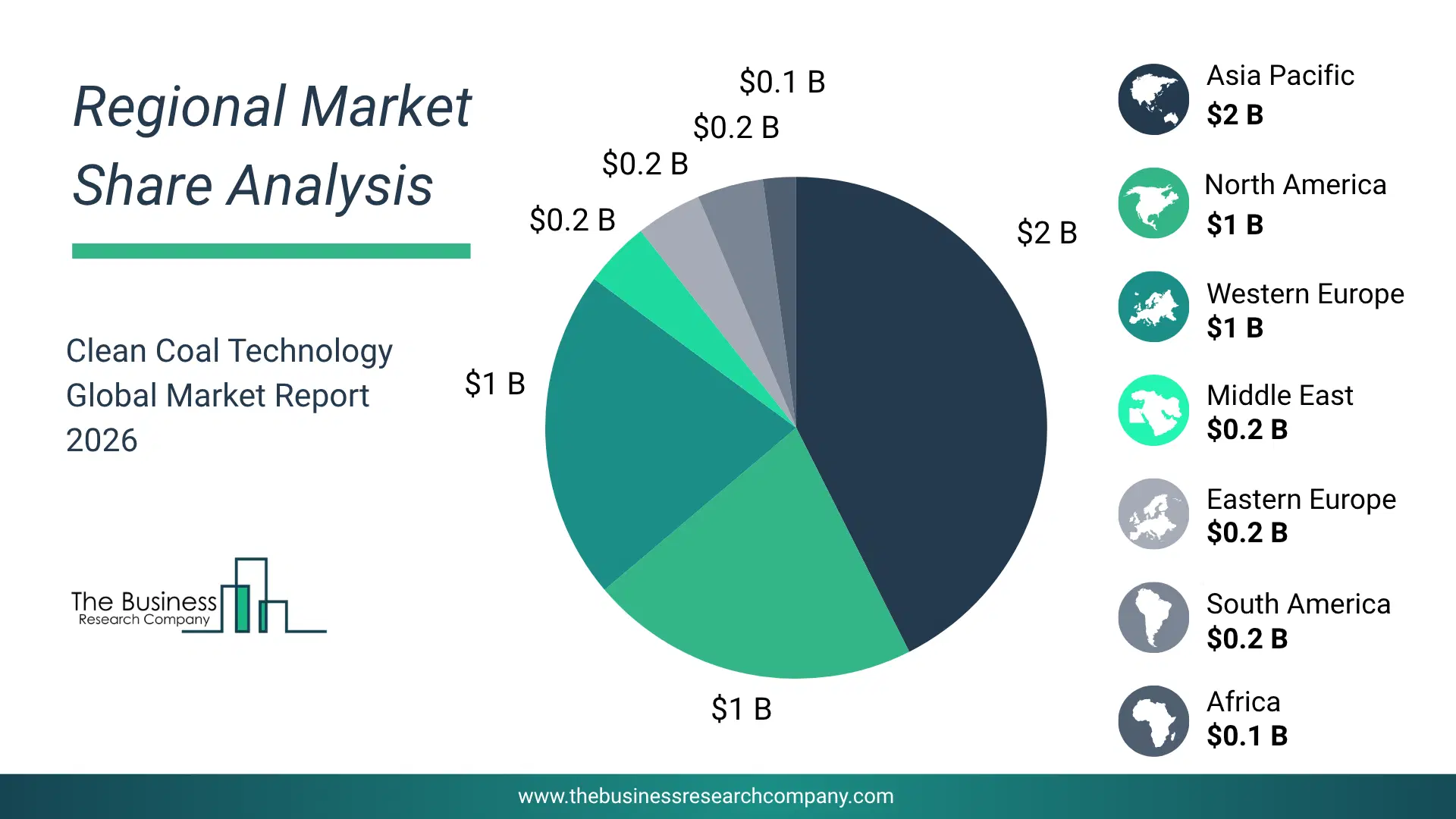
Regional Outlook
Asia-Pacific was the largest region in the clean coal technology market in 2025 and is expected to be the fastest-growing region in the forecast period. The regions covered in this market report are Asia-Pacific, South East Asia, Western Europe, Eastern Europe, North America, South America, Middle East, Africa. The countries covered in this market report are Australia, Brazil, China, France, Germany, India, Indonesia, Japan, Taiwan, Russia, South Korea, UK, USA, Canada, Italy, SpainWhat Defines the Clean Coal Technology Market?
The clean coal technology market includes revenues earned by entities by gasification technology, combustion technology and enabling technology. The market value includes the value of related goods sold by the service provider or included within the service offering. Only goods and services traded between entities or sold to end consumers are included.How is Market Value Defined and Measured?
The market value is defined as the revenues that enterprises gain from the sale of goods and/or services within the specified market and geography through sales, grants, or donations in terms of the currency (in USD unless otherwise specified). The revenues for a specified geography are consumption values that are revenues generated by organizations in the specified geography within the market, irrespective of where they are produced. It does not include revenues from resales along the supply chain, either further along the supply chain or as part of other products.
This chart presents market attractiveness based on a quantitative evaluation of growth, competition, strategic alignment, and risk, offering a clear view of opportunity areas for decision-making. This chart is for illustrative purposes; the full report contains the complete analysis.

This chart highlights the Total Addressable Market (TAM) by estimating the maximum revenue opportunity using an assumption-driven approach, supporting strategic planning and opportunity sizing across markets. The chart is illustrative; the full report provides a more comprehensive analysis.
What Key Data and Analysis Are Included in the Clean Coal Technology Market Report 2026?
The clean coal technology market research report is one of a series of new reports from The Business Research Company that provides market statistics, including Market Report 2026?global market size, regional shares, competitors with the market share, detailed market segments, market trends and opportunities, and any further data you may need to thrive in the clean coal technology Market Report 2026? The market research report delivers a complete perspective of everything you need, with an in-depth analysis of the current and future state of the Market Report 2026?Clean Coal Technology Market Report Forecast Analysis
| Report Attribute | Details |
|---|---|
| Market Size Value In 2026 | $4.4 billion |
| Revenue Forecast In 2030 | $5.39 billion |
| Growth Rate | CAGR of 5.2% from 2026 to 2030 |
| Base Year For Estimation | 2025 |
| Actual Estimates/Historical Data | 2020-2025 |
| Forecast Period | 2026 - 2030 - 2035 |
| Market Representation | Revenue in USD Billion and CAGR from 2026 to 2030 |
| Segments Covered | Type, Combustion, Technology, Capture Method, End User |
| Regional Scope | Asia-Pacific, Western Europe, Eastern Europe, North America, South America, Middle East, Africa |
| Country Scope | The countries covered in the report are Australia, Brazil, China, France, Germany, India, Indonesia, Japan, Taiwan, Russia, South Korea, UK, USA, Canada, Italy, Spain. |
| Key Companies Profiled | PetroChina Company Limited, Siemens AG, General Electric Company, China Energy Engineering Corporation, China Shenhua Energy Company Limited, Thyssenkrupp AG, RWE AG, Huaneng Power International Inc., Mitsubishi Heavy Industries Ltd., Toshiba Corporation, NTPC Limited, Sasol Limited, Shanghai Electric Group Company Limited, Doosan Heavy Industries & Construction, Kawasaki Heavy Industries Ltd., Shanxi Coking Coal Group Co.Ltd., Jindal Steel and Power Ltd., Dongfang Electric Corporation, PT Adaro Energy Tbk, Inner Mongolia Yitai Coal Co. Ltd., Sumitomo Heavy Industries Ltd., KBR Inc., Peabody Energy Corp., Babcock & Wilcox Enterprises Inc., JSW Energy Limited, Ramaco Resources Inc., White Energy Company Limited, Fuel Tech Inc., Clean Coal Technologies Inc. |
| Customization Scope | Request for Customization |
| Pricing And Purchase Options | Explore Purchase Options |