
Clinical Decision Support Systems Market Report 2026
Global Outlook – By Component (Services, Software, Hardware), By Model (Knowledge-Based CDSS, Non-Knowledge CDSS), By Delivery Mode (On Premise, Cloud Based), By Application (Medical Diagnosis, Alerts And Reminders, Prescription Decision Support, Information Retrieval, Other Applications), By End-User (Clinics, Hospitals, Ambulatory Surgical Centers, Other End Users) - Market Size, Trends, And Global Forecast 2026-2030
Clinical Decision Support Systems Market Overview
• Clinical Decision Support Systems market size has reached to $3.51 billion in 2025 • Expected to grow to $6.49 billion in 2030 at a compound annual growth rate (CAGR) of 13.1% • Growth Driver: Cloud Computing Soaring Demand Fuels Growth In The Clinical Decision Support Systems Market • Market Trend: Glytec Revolutionizes Insulin Management With New Glucommander Software Update and Advanced GlucoMetrics Analytics • North America was the largest region in 2025 and Asia-Pacific is the fastest growing region.Market Gains By 2030 – Top Opportunities By Segment
Market Gain identifies the most promising market opportunities by highlighting the segments or products expected to generate the highest incremental revenue growth over the next five years.
What Is Covered Under Clinical Decision Support Systems Market?
Clinical decision support systems (CDSS) are computer-based programs that analyze data within electronic health records (EHRs) to provide health care providers with reminders to assist them at the point of care to implement evidence-based clinical guidelines. The main components of clinical decision support systems are services, software, and hardware. The different models include knowledge-based CDSS and non-knowledge-based CDSS and involve various delivery modes such as premise and cloud-based. The on-premise CDSS is used in-house and within an enterprise's IT infrastructure. On-Premise clinical decision support systems software refers to the software that is installed and runs on computers in a premise or organization. It is used in medical diagnosis, alerts and reminders, prescription decision support, information retrieval, and other applications that are employed in clinics, hospitals, ambulatory surgical centers, and other end users.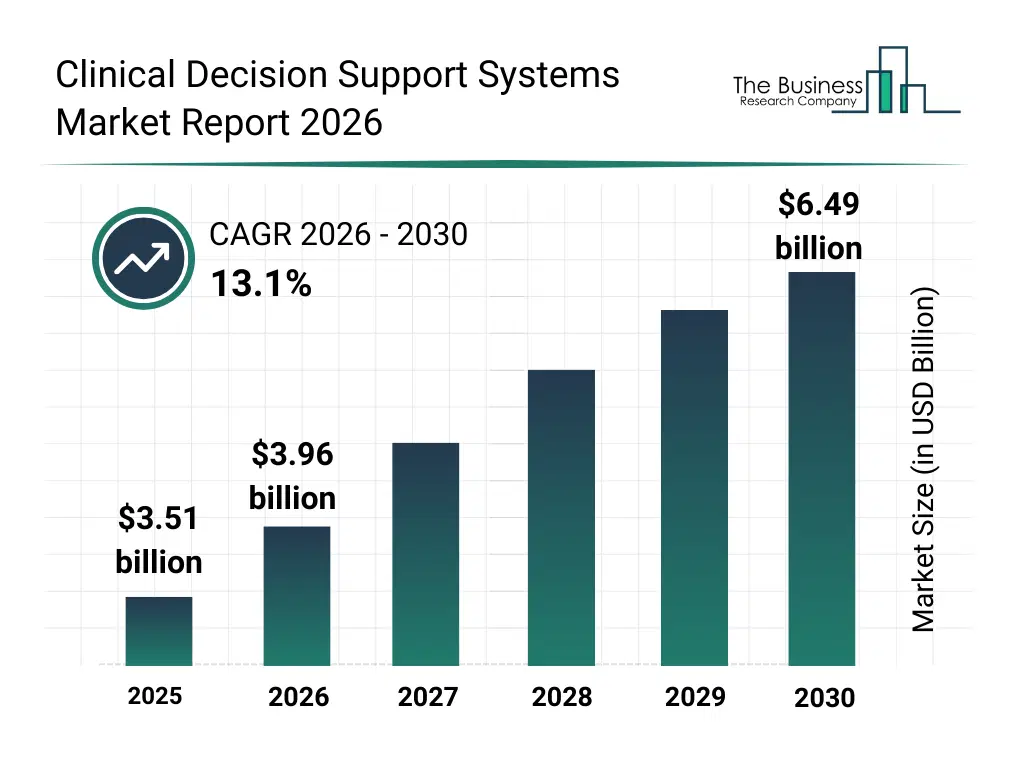
What Is The Clinical Decision Support Systems Market Size and Share 2026?
The clinical decision support systems market size has grown rapidly in recent years. It will grow from $3.51 billion in 2025 to $3.96 billion in 2026 at a compound annual growth rate (CAGR) of 12.9%. The growth in the historic period can be attributed to increasing adoption of electronic health records, rising clinical data complexity, growing emphasis on evidence-based medicine, expansion of digital hospital infrastructure, early adoption of rule-based decision systems.What Is The Clinical Decision Support Systems Market Growth Forecast?
The clinical decision support systems market size is expected to see rapid growth in the next few years. It will grow to $6.49 billion in 2030 at a compound annual growth rate (CAGR) of 13.1%. The growth in the forecast period can be attributed to increasing demand for personalized clinical decision-making, rising investments in ai-enabled healthcare solutions, expansion of remote and virtual care models, growing focus on reducing diagnostic errors, increased integration with population health platforms. Major trends in the forecast period include increasing integration of AI-driven clinical recommendations, rising deployment of ehr-integrated cdss solutions, growing use of predictive analytics in care decisions, expansion of cloud-based decision support platforms, enhanced focus on real-time clinical alerts.
Global Clinical Decision Support Systems Market Segmentation
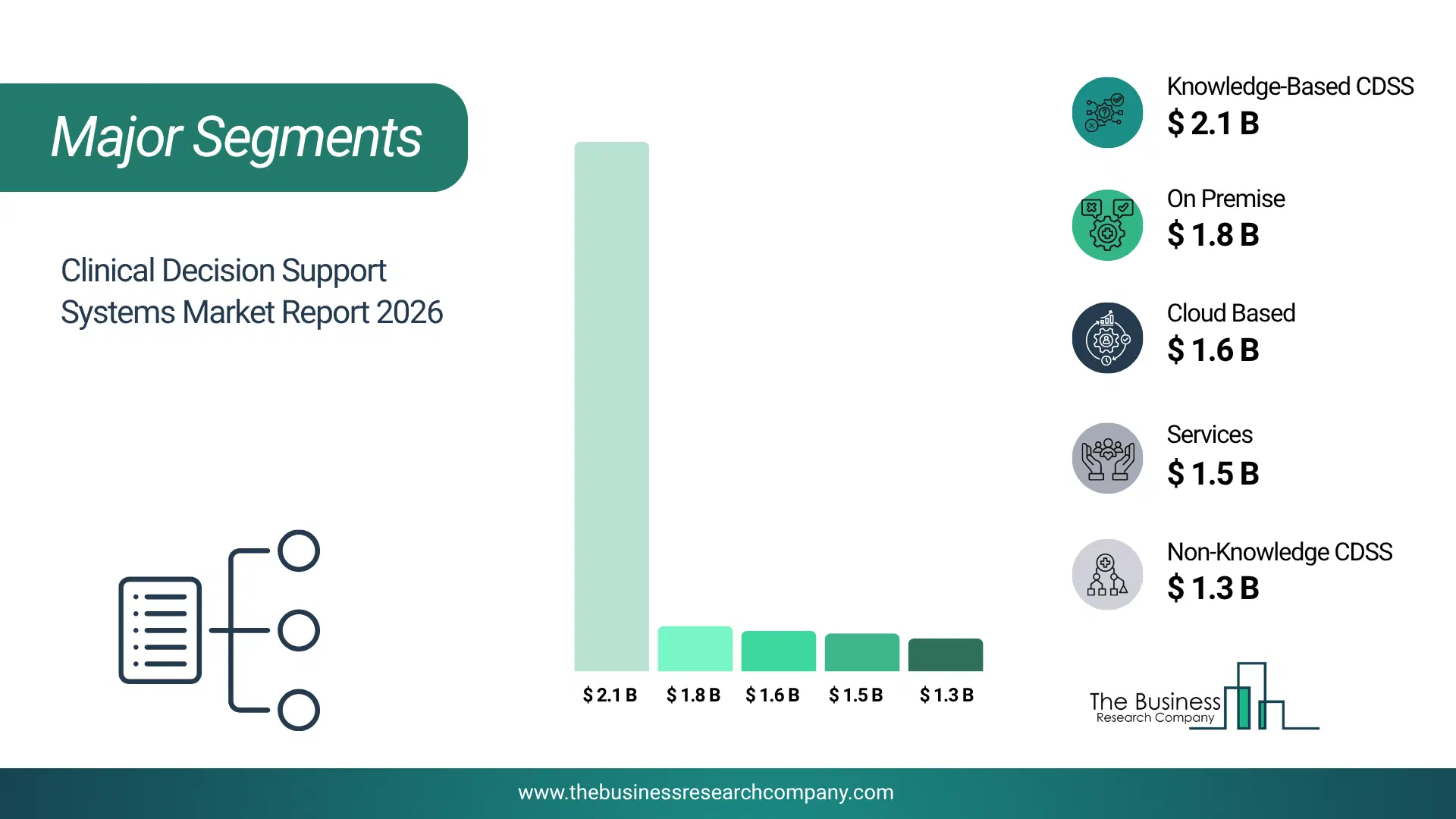
1) By Component: Services, Software, Hardware 2) By Model: Knowledge-Based CDSS, Non-Knowledge CDSS 3) By Delivery Mode: On Premise, Cloud Based 4) By Application: Medical Diagnosis, Alerts And Reminders, Prescription Decision Support, Information Retrieval, Other Applications 5) By End-User: Clinics, Hospitals, Ambulatory Surgical Centers, Other End Users Subsegments: 1) By Services: Implementation Services, Maintenance And Support Services, Consulting Services 2) By Software: Standalone Software Solutions, Integrated Software Solutions, Cloud-based Software 3) By Hardware: Servers, Workstations, Mobile Devices And Peripherals The top segments in the clinical decision support systems market will be: • Knowledge-Based CDSS will reach $2130.65 Million by 2025. • On Premise will reach $1887.4 Million by 2025. • Cloud Based will reach $1633.43 Million by 2025. • Services will reach $1586.62 Million by 2025. • Non-Knowledge CDSS will reach $1390.18 Million by 2025.What Is The Driver Of The Clinical Decision Support Systems Market?
The rising demand for cloud computing is expected to propel the growth of the clinical decision support systems market going forward. Cloud computing is a technology that enables the delivery of various computing services over the internet and is used by organizations and individuals to invest in and manage physical hardware and software infrastructure. Cloud computing is used in clinical decision support systems (CDSS) to allow healthcare organizations to store vast amounts of patient data, medical records, and relevant information on centralized cloud servers. For instance, in 2025, according to the Eurostat, a Luxembourg-based statistical office of the European Union, in 2023, 45% of EU businesses purchased cloud computing services. Large enterprises were significantly more inclined to adopt cloud solutions than SMEs, with 78% of large businesses using cloud services compared to 44% of SMEs. Therefore, the rising demand for cloud computing is driving the growth of the clinical decision support systems industry.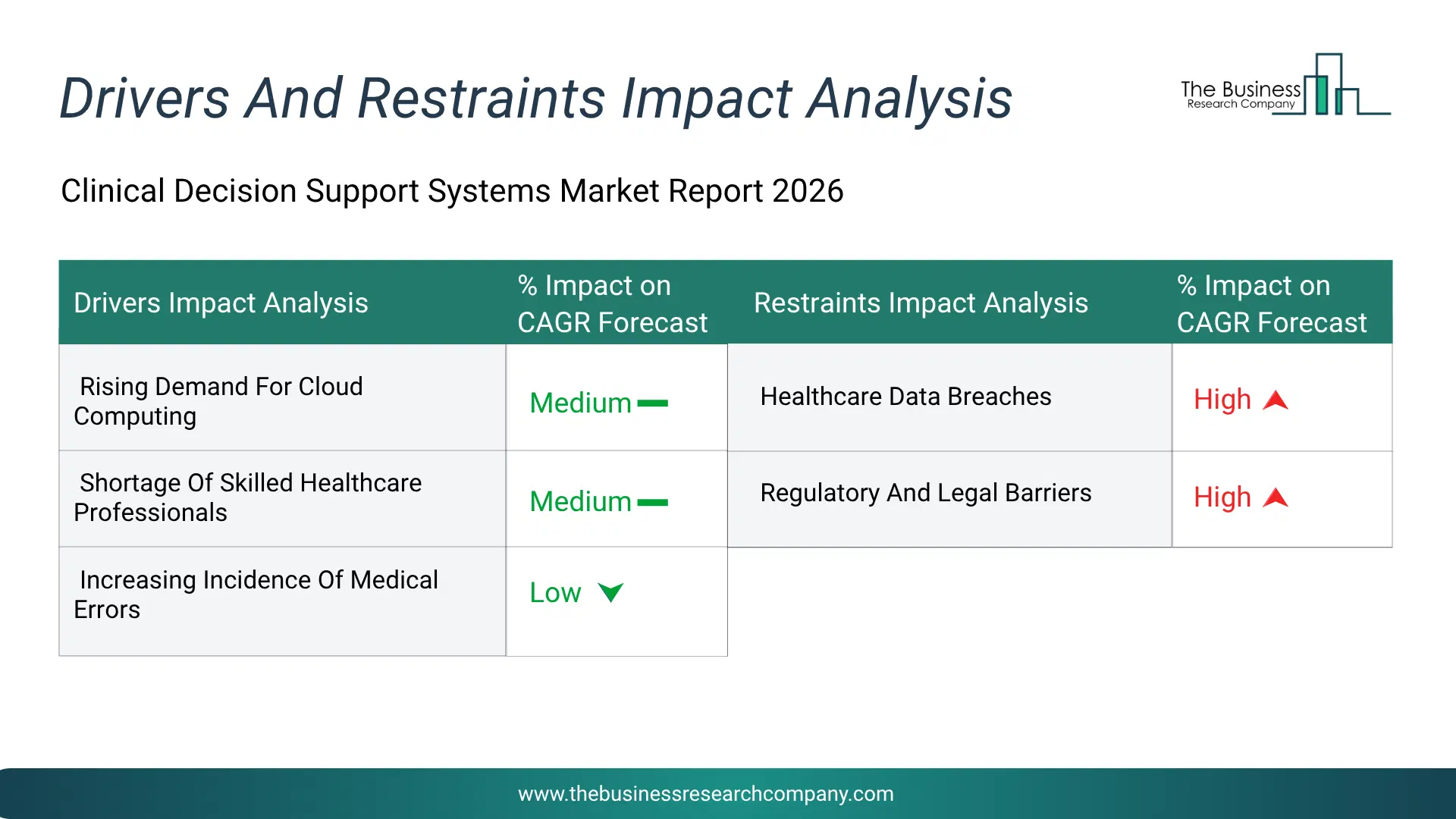
Infographic Chart Showing Key Market Drivers Analysis And Restraints For Clinical Decision Support Systems Market
The chart presents an impact analysis of key drivers and restraints, quantifying their relative influence on the market's growth rate and helping assess the balance between growth enablers and limiting factors. This chart offers a high-level perspective; the full report contains more detailed insights.
How Will The Drivers Impact Growth In The Global Clinical Decision Support Systems Market?
• Rising Demand For Cloud Computing (Medium) – The rising demand for cloud computing will become a key driver of growth in the clinical decision support systems market by 2030. Cloud-based CDSS improves healthcare efficiency by offering remote access to patient data and decision-support tools. Unlike expensive on-premises solutions, it provides scalable, subscription-based models that alleviate financial and IT challenges. By incorporating artificial intelligence and machine learning, cloud-based CDSS facilitates early disease detection, personalized treatment plans, and predictive analytics, leading to improved patient outcomes. As a result, the rising demand for cloud computing is anticipated to contributing to a 2.0% annual growth in the market. • Shortage Of Skilled Healthcare Professionals (Medium) – The shortage of skilled healthcare professionals will emerge as a major factor driving the expansion of the clinical decision support systems market by 2030. With a limited workforce, CDSS helps optimize workloads by automating routine decision-making, minimizing errors, and improving accuracy through evidence-based recommendations. It supports diagnosis, treatment, and patient monitoring, ensuring adherence to guidelines while allowing providers to focus on more complex cases. Moreover, CDSS offers real-time guidance to less experienced staff, helping maintain high-quality care despite workforce shortages. Consequently, the shortage of skilled healthcare professionals is projected to contributing to a 1.5% annual growth in the market. • Increasing Incidence Of Medical Errors (Low) – The increasing incidence of medical errors within digital manufacturing processes will serve as a key growth catalyst for the clinical decision support systems market by 2030. Medical errors, such as misdiagnoses, prescription errors, and incorrect treatments, can result in serious harm to patients. CDSS helps mitigate these risks by offering real-time alerts, reminders, and clinical guidelines. By analyzing medical history, allergies, and current prescriptions, CDSS aids in preventing adverse drug interactions and improving treatment accuracy. Therefore, this increasing incidence of medical errors is projected to supporting to a 1.0% annual growth in the market. • Favorable Government Initiatives (Low) – The favorable government initiatives will become a significant driver contributing to the growth of the clinical decision support systems market by 2030. Governments are setting healthcare quality standards that require the implementation of CDSS to reduce medication errors and improve diagnostic accuracy. Organizations such as the Patient Safety Movement Foundation (PSMF) actively promote the adoption of CDSS to enhance clinical outcomes and boost patient safety. Consequently, the favorable government initiatives is projected to contributing to a 0.5% annual growth in the market.How Will The Restraints Impact Growth In The Global Clinical Decision Support Systems Market?
• Healthcare Data Breaches (Medium) – Healthcare Data Breaches will restrict the growth of the Clinical Decision Support Systems market during the forecast period. CDSS platforms handle sensitive patient data, making them targets for cyberattacks and data breaches. Security breaches can lead to regulatory penalties and loss of patient trust. Data security concerns can affect healthcare provider adoption and limit market growth. • Regulatory And Legal Barriers (Low) – Regulatory And Legal Barriers will restrict the growth of the Clinical Decision Support Systems market during the forecast period. CDSS implementation faces regulatory and legal barriers related to liability and clinical validation. Regulatory requirements for clinical decision support tools add to development costs and timelines. Legal concerns about liability for CDSS recommendations can affect adoption and market growth.Key Players In The Global Clinical Decision Support Systems Market
Major companies operating in the clinical decision support systems market are McKesson Corporation, Siemens Healthineers AG, Koninklijke Philips N.V., GE Healthcare, Hera-MI LLC, Cerner Corporation, Epic Systems Corporation, Elsevier B.V., Change Healthcare Corporation, Allscripts Healthcare Solutions Inc., Athenahealth Inc., Wolters Kluwer Health, Premier Inc., eClinicalWorks Inc., Veradigm Inc., NextGen Healthcare Inc., Medical Information Technology Inc., Meditech Systems Network Inc., Health Catalyst, CareCloud Inc., CureMD Inc., Strata Decision Technology, Zynx Health, First Databank Inc., Clinical Architecture Inc., VisualDx Group Inc., Apervita Inc., IBM Watson Health, The Medical Algorithms Company LP, RAMPmedical Inc.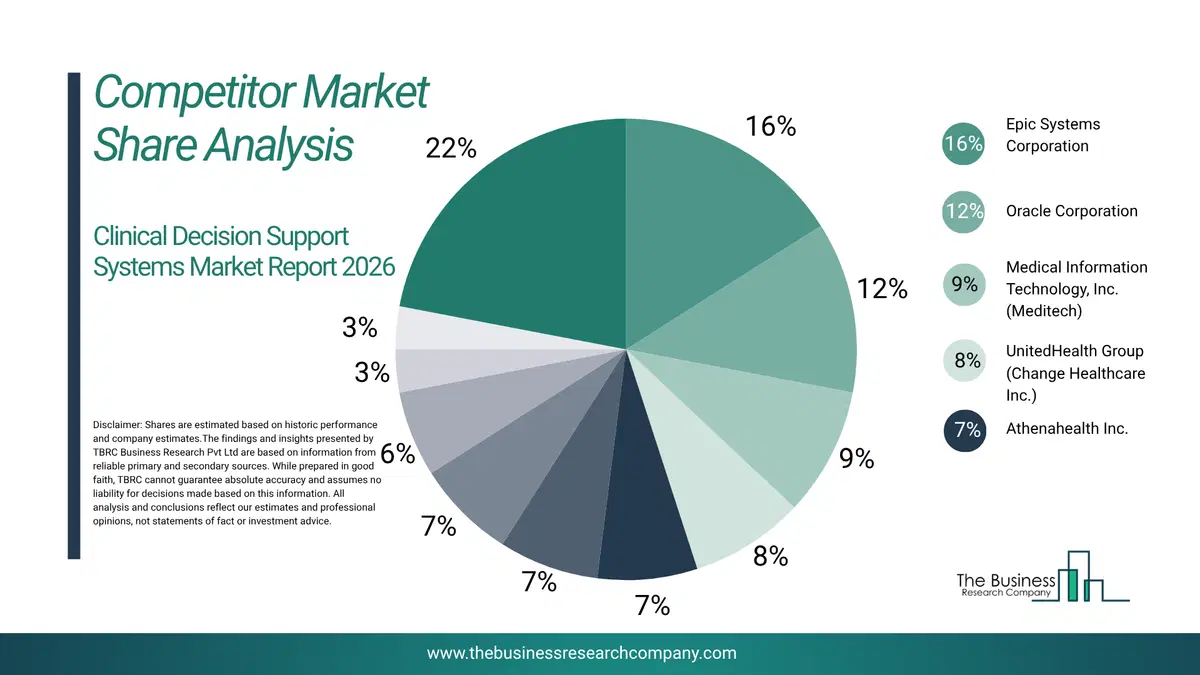
This chart is for illustrative purposes; the full report includes a detailed competitor analysis and comprehensive overview of the top 10 companies in the market.
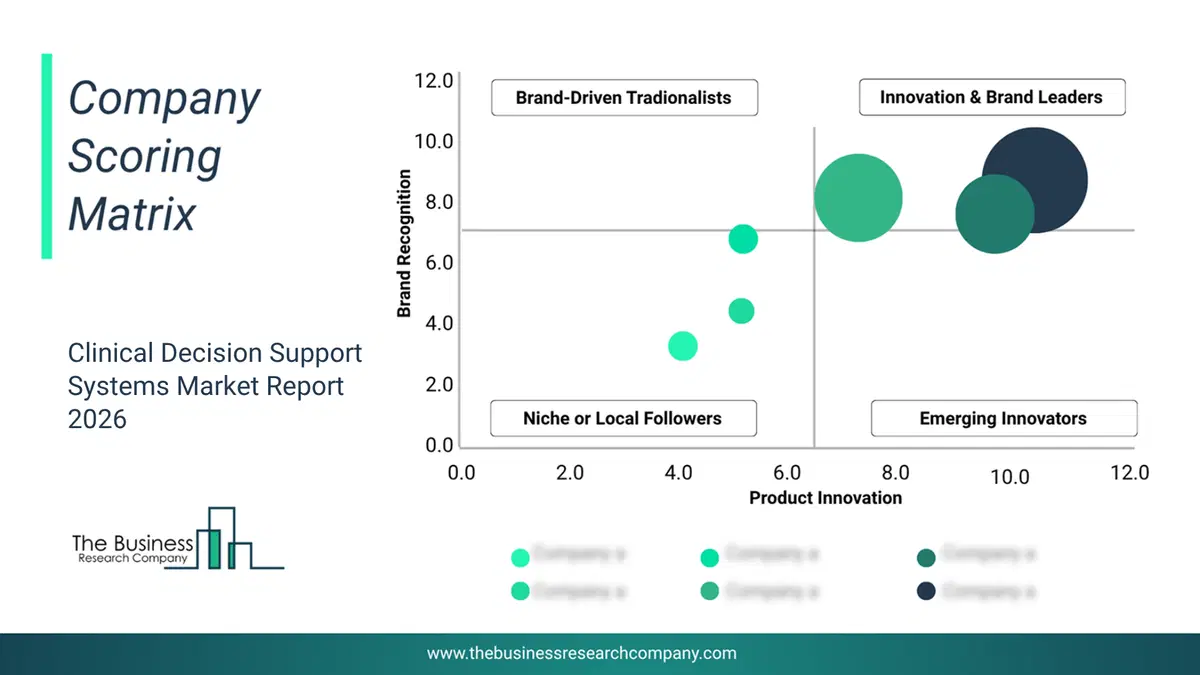
This chart maps companies by product innovation and brand strength, with bubble size indicating relative revenue, helping identify market leaders, challengers, and niche players. This is an illustrative chart; the full report provides a complete and accurate competitive analysis.
Global Clinical Decision Support Systems Market Trends and Insights
Major companies operating in the clinical decision support systems market are focused on introducing advanced solutions, such as insulin dosing software, to gain a competitive edge in the market. Insulin dosing software refers to specialized clinical decision support systems designed to assist healthcare providers in calculating and administering the appropriate dosages of insulin for patients, ensuring personalized and safe glycemic management. For instance, in April 2023, Glytec, a US-basedplatform, launched the latest version of its Glucommander insulin dosing platform. Glucommander is a cloud-based insulin dosing software developed by Glytec, designed to provide personalized intravenous (IV) and subcutaneous (SubQ) insulin dosing for patients, regardless of their diabetes status. It integrates with electronic health record (EHR) systems to enhance clinical workflows and improve patient safety in glycemic management.What Are Latest Mergers And Acquisitions In The Clinical Decision Support Systems Market?
In October 2024, VitalHub Corp., a US-based healthcare technology company, acquired MedCurrent Corporation for an undisclosed amount. This acquisition aligns with VitalHub’s strategy of integrating advanced technology solutions to enhance healthcare delivery. MedCurrent Corporation, a US-based healthcare technology company that specializes in providing Clinical decision support.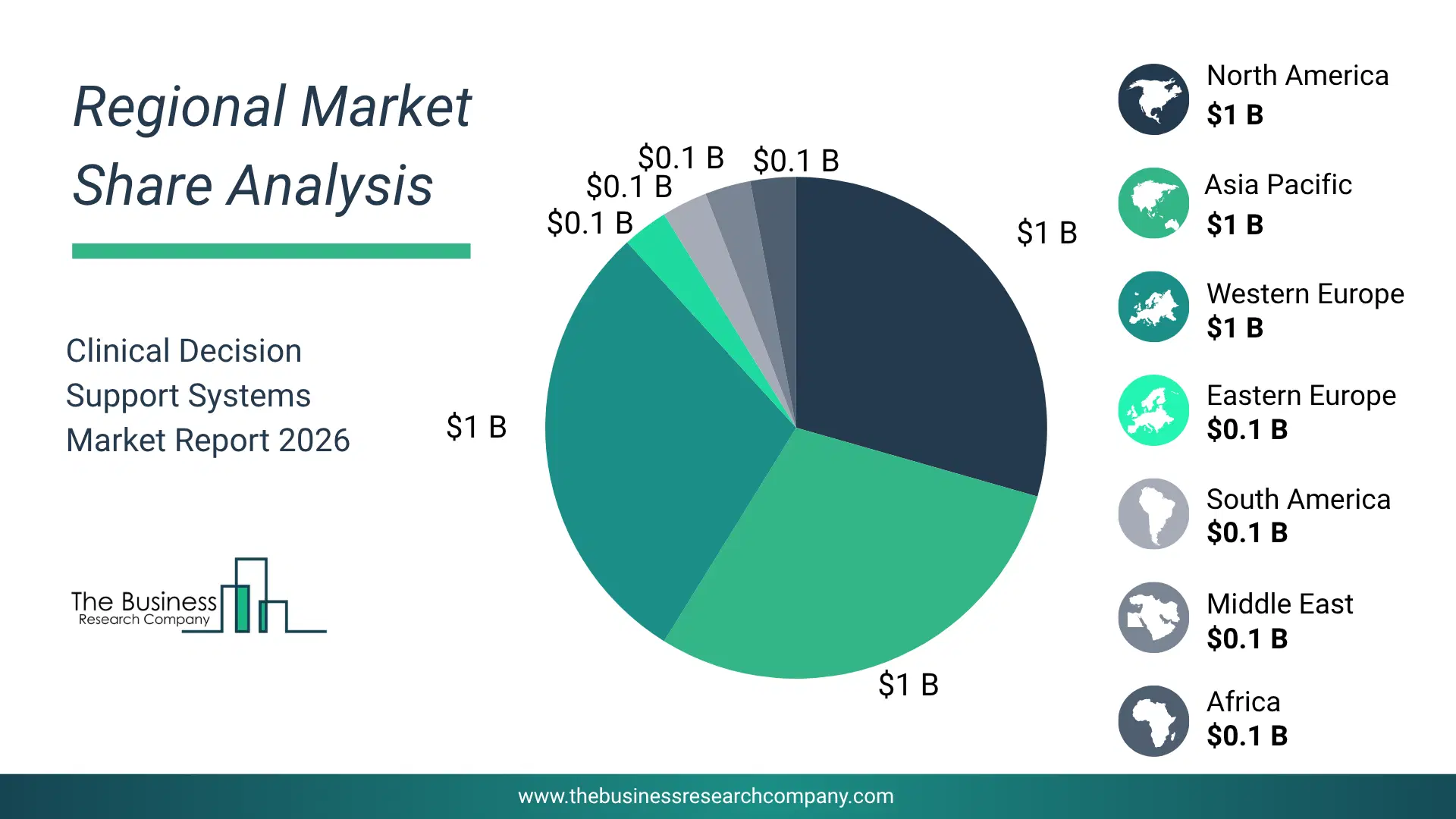
Regional Outlook
North America was the largest region in the clinical decision support systems market in 2025. Asia-Pacific is expected to be the fastest-growing region in the forecast period. The regions covered in this market report are Asia-Pacific, South East Asia, Western Europe, Eastern Europe, North America, South America, Middle East, Africa. The countries covered in this market report are Australia, Brazil, China, France, Germany, India, Indonesia, Japan, Taiwan, Russia, South Korea, UK, USA, Canada, Italy, Spain.What Defines the Clinical Decision Support Systems Market?
The clinical decision support systems (CDSS) market consists of sales of knowledge based CDSS, and non knowledge-based CDSS. Values in this market are ‘factory gate’ values, that is the value of goods sold by the manufacturers or creators of the goods, whether to other entities (including downstream manufacturers, wholesalers, distributors and retailers) or directly to end customers. The value of goods in this market includes related services sold by the creators of the goods.How is Market Value Defined and Measured?
The market value is defined as the revenues that enterprises gain from the sale of goods and/or services within the specified market and geography through sales, grants, or donations in terms of the currency (in USD unless otherwise specified). The revenues for a specified geography are consumption values that are revenues generated by organizations in the specified geography within the market, irrespective of where they are produced. It does not include revenues from resales along the supply chain, either further along the supply chain or as part of other products.
This chart presents market attractiveness based on a quantitative evaluation of growth, competition, strategic alignment, and risk, offering a clear view of opportunity areas for decision-making. This chart is for illustrative purposes; the full report contains the complete analysis.

This chart highlights the Total Addressable Market (TAM) by estimating the maximum revenue opportunity using an assumption-driven approach, supporting strategic planning and opportunity sizing across markets. The chart is illustrative; the full report provides a more comprehensive analysis.
What Key Data and Analysis Are Included in the Clinical Decision Support Systems Market Report 2026?
The clinical decision support systems market research report is one of a series of new reports from The Business Research Company that provides market statistics, including industry global market size, regional shares, competitors with the market share, detailed market segments, market trends and opportunities, and any further data you may need to thrive in the clinical decision support systems industry. The market research report delivers a complete perspective of everything you need, with an in-depth analysis of the current and future state of the industry.Clinical Decision Support Systems Market Report Forecast Analysis
| Report Attribute | Details |
|---|---|
| Market Size Value In 2026 | $3.96 billion |
| Revenue Forecast In 2030 | $6.49 billion |
| Growth Rate | CAGR of 12.9% from 2026 to 2030 |
| Base Year For Estimation | 2025 |
| Actual Estimates/Historical Data | 2020-2025 |
| Forecast Period | 2026 - 2030 |
| Market Representation | Revenue in USD Billion and CAGR from 2026 to 2030 |
| Segments Covered | Component, Model, Delivery Mode, Application, End-User |
| Regional Scope | Asia-Pacific, Western Europe, Eastern Europe, North America, South America, Middle East, Africa |
| Country Scope | The countries covered in the report are Australia, Brazil, China, France, Germany, India, Indonesia, Japan, Taiwan, Russia, South Korea, UK, USA, Canada, Italy, Spain. |
| Key Companies Profiled | McKesson Corporation, Siemens Healthineers AG, Koninklijke Philips N.V., GE Healthcare, Hera-MI LLC, Cerner Corporation, Epic Systems Corporation, Elsevier B.V., Change Healthcare Corporation, Allscripts Healthcare Solutions Inc., Athenahealth Inc., Wolters Kluwer Health, Premier Inc., eClinicalWorks Inc., Veradigm Inc., NextGen Healthcare Inc., Medical Information Technology Inc., Meditech Systems Network Inc., Health Catalyst, CareCloud Inc., CureMD Inc., Strata Decision Technology, Zynx Health, First Databank Inc., Clinical Architecture Inc., VisualDx Group Inc., Apervita Inc., IBM Watson Health, The Medical Algorithms Company LP, RAMPmedical Inc. |
| Customization Scope | Request for Customization |
| Pricing And Purchase Options | Explore Purchase Options |