

Cloud Carbon Management System Market Report 2026
Global Outlook – By Component (Solutions, Services), By Organization Size (Large Enterprises, Small And Medium Enterprises (SMEs)), By Industry (Energy And Utilities, Manufacturing, Residential And Commercial Building, Transportation And Logistics, IT And Telecom, Other Industries) – Market Size, Trends, Strategies, and Forecast to 2030
Cloud Carbon Management System Market Overview
• Cloud Carbon Management System market size has reached to $8.11 billion in 2025 • Expected to grow to $12.82 billion in 2030 at a compound annual growth rate (CAGR) of 9.6% • Growth Driver: Industrial Demand For Energy Consumption Propels Growth Of Cloud Carbon Management Systems Market • Market Trend: Innovative Cloud-Native Platforms Streamline Carbon Tracking And Sustainability Management • North America was the largest region in 2025 and Asia-Pacific is the fastest growing region.What Is Covered Under Cloud Carbon Management System Market?
Cloud carbon management systems are software platforms designed to help organizations measure, analyze, and mitigate carbon emissions and environmental impact through cloud-based solutions. These systems enable businesses to track their carbon footprint, identify improvement areas, and implement sustainability strategies. The main types of components in a cloud carbon management system are solutions and services. Solutions refer to software products and platforms designed to measure, analyze, and mitigate carbon emissions associated with cloud computing. It is used in various applications, such as large enterprises and small and medium enterprises (SMEs), and is also employed in various industries, including energy and utilities, manufacturing, residential and commercial building, transportation and logistics, IT and telecom, and other industries.
What Is The Cloud Carbon Management System Market Size and Share 2026?
The cloud carbon management system market size has grown strongly in recent years. It will grow from $8.11 billion in 2025 to $8.89 billion in 2026 at a compound annual growth rate (CAGR) of 9.5%. The growth in the historic period can be attributed to growing awareness of climate change impacts, early corporate sustainability initiatives, introduction of environmental reporting standards, increased energy consumption monitoring, initial adoption of cloud-based sustainability tools.What Is The Cloud Carbon Management System Market Growth Forecast?
The cloud carbon management system market size is expected to see strong growth in the next few years. It will grow to $12.82 billion in 2030 at a compound annual growth rate (CAGR) of 9.6%. The growth in the forecast period can be attributed to net zero emission commitments by enterprises, tightening environmental regulations, rising demand for ESG reporting, expansion of carbon pricing mechanisms, integration of sustainability into business strategy. Major trends in the forecast period include cloud-based carbon footprint tracking, automated emissions data collection, centralized sustainability reporting platforms, real-time carbon performance monitoring, scalable carbon management for enterprises.
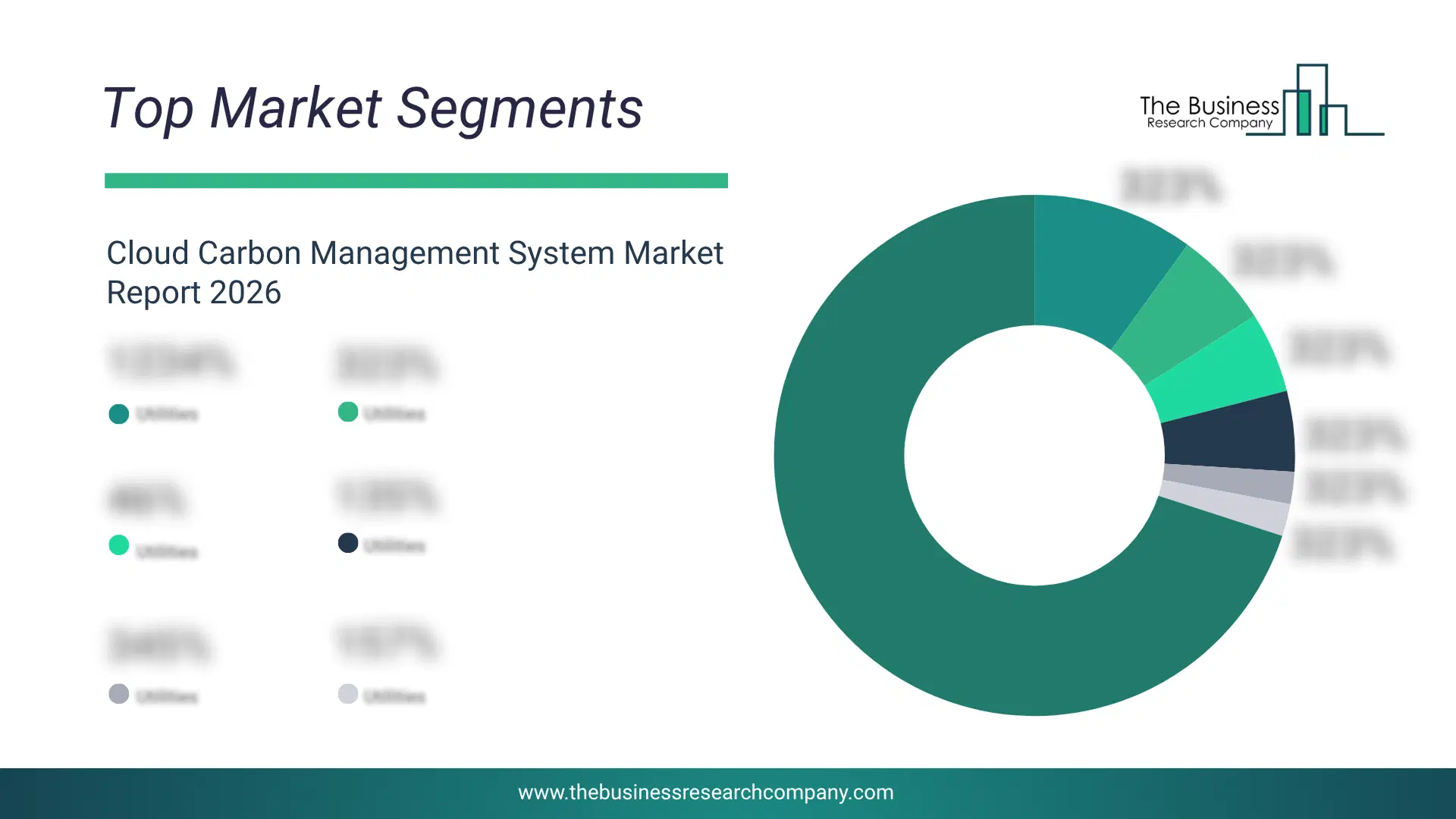
Global Cloud Carbon Management System Market Segmentation
1) By Component: Solutions, Services 2) By Organization Size: Large Enterprises, Small And Medium Enterprises (SMEs) 3) By Industry: Energy And Utilities, Manufacturing, Residential And Commercial Building, Transportation And Logistics, IT And Telecom, Other Industries Subsegments: 1) By Solutions: Carbon Footprint Management Solutions, Emission Tracking And Reporting Solutions, Carbon Accounting Software, Sustainability Analytics Tools, Renewable Energy Certificates (REC) Management Solutions 2) By Services: Consulting Services, Implementation Services, Training And Support Services, Managed Services, Audit And Compliance ServicesWhat Is The Driver Of The Cloud Carbon Management System Market?
The growing industrial demand for energy consumption is expected to propel the growth of the cloud carbon management system market going forward. Energy consumption refers to the total amount of energy utilized by individuals, organizations, or systems within a specific timeframe, often measured in kilowatt-hours or joules. It arises due to expanding manufacturing activities, technological advancements requiring more energy-intensive processes, and population growth driving product demand. Cloud carbon management systems address industrial demand for energy consumption by providing tools and insights to optimize energy usage, reduce carbon emissions, and promote sustainability within industrial operations. For instance, in April 2023, according to a report published by the United States Energy Information Administration (EIA), a US-based statistical agency, between 2022 and 2050, residential consumption of purchased electricity is projected to rise by approximately 14% to 22%, reaching 5.9 to 6.3 quads, while electricity purchased for transportation, driven by increased adoption of electric vehicles (EVs), is expected to surge from 0.1 quads in 2022 to between 0.6 and 1.3 quads in 2050, marking a substantial 900% to 2,000% increase across all scenarios. Therefore, the growing industrial demand for energy consumption is driving the growth of the cloud carbon management system industry.Key Players In The Global Cloud Carbon Management System Market
Major companies operating in the cloud carbon management system market are IBM; Schneider Electric SE; SAP SE; Salesforce Inc.; Enablon (Wolters Kluwer N.V.); Enviance Inc.; Thinkstep; Intelex Technologies ULC; IsoMetrix Software; Hara Software; Locus Technologies; EnergyCAP LLC; FirstCarbon Solutions; Envirosoft Corporation; Carbon Footprint Ltd.; Climate Earth; Greenstone+; Dakota Software; COzero; Ecometrica; Engie SA; IHS Markit; Trinity Consultants Inc.; Carbon Lighthouse; Energetics; Native Energy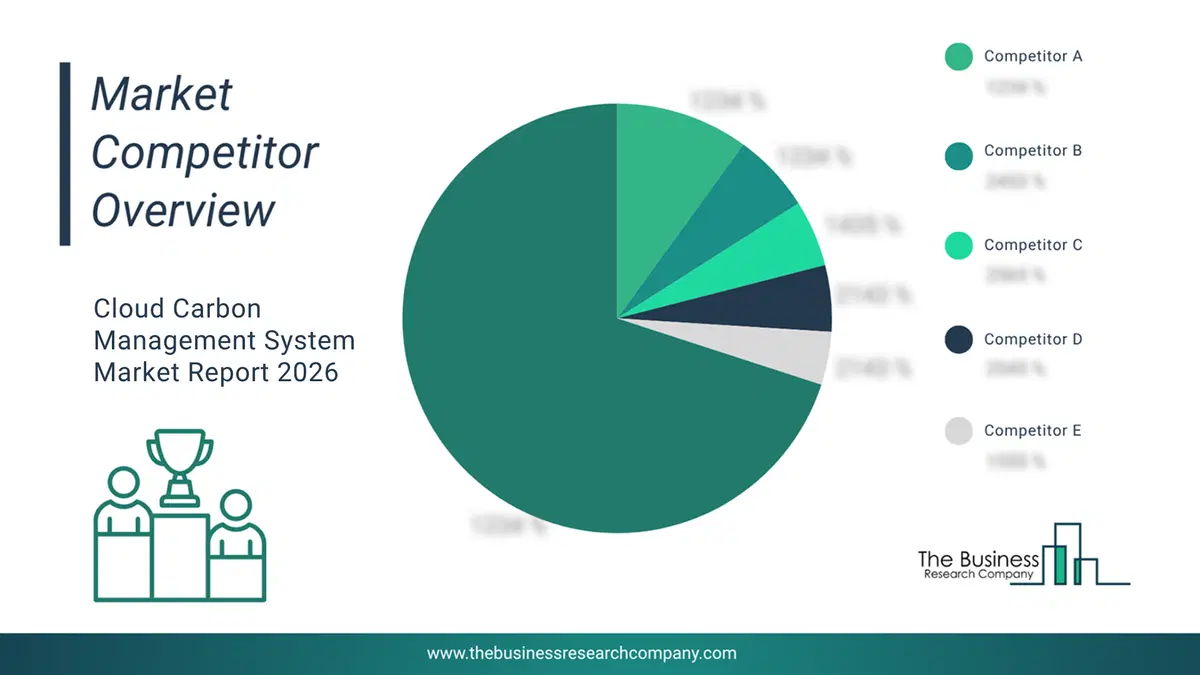
This chart is for illustrative purposes; the full report includes a detailed competitor analysis and comprehensive overview of the top 10 companies in the market.
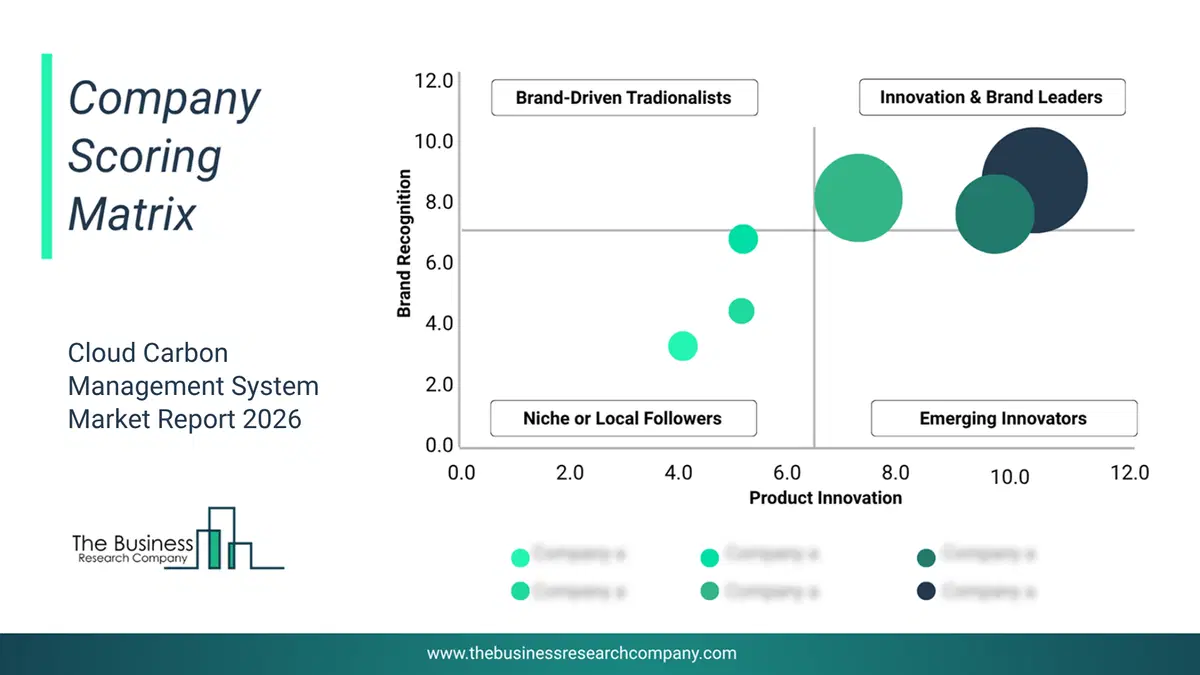
This chart maps companies by product innovation and brand strength, with bubble size indicating relative revenue, helping identify market leaders, challengers, and niche players. This is an illustrative chart; the full report provides a complete and accurate competitive analysis.
Global Cloud Carbon Management System Market Trends and Insights
Major companies in the cloud-based carbon management system market are developing advanced solutions, such as cloud-native carbon management platforms, to enable precise tracking, analysis, and reporting of greenhouse gas emissions across corporate operations and value chains. These platforms integrate data from ERP, accounting, and utility systems to support regulatory compliance, sustainability goals, and operational optimization. For example, in June 2024, Workiva, a US-based sustainability software company, launched Workiva Carbon, an integrated platform that helps organizations measure, manage, and report carbon emissions across Scope 1, 2, and 3. The platform collects real-time data from ERP systems, accounting platforms, and utility providers, using validated emissions factors covering over 240 countries. It supports science-based target setting and net-zero management, enabling businesses to track progress and develop decarbonization plans. Workiva Carbon also facilitates supplier engagement through surveys to enhance supply chain emissions visibility and ensures compliance with global climate regulations such as CSRD, SEC climate rules, and California’s SB 253. By integrating emissions data with finance, legal, and risk management functions, the platform reduces errors, enhances collaboration, and delivers audit-ready ESG reporting, streamlining carbon accounting and sustainability management for companies aiming to meet stakeholder and regulatory expectations.What Are Latest Mergers And Acquisitions In The Cloud Carbon Management System Market?
In April 2024, LevelUp, a Singapore-based technology company that specializes in climate technology, acquired Zevero for an undisclosed amount. The acquisition aims to combine Zevero's carbon accounting platform with LEVELUP's agriculture expertise, enhancing decarbonization capabilities and expanding into new industries and markets. This merger will enable companies to measure and reduce their carbon footprints in real-time and strengthen Zevero's position in the carbon accounting market, aiding the fight against climate change. Zevero is a UK-based decarbonization platform that enables companies to achieve net-zero emissions by leveraging AI-driven carbon modeling and real-time analytics.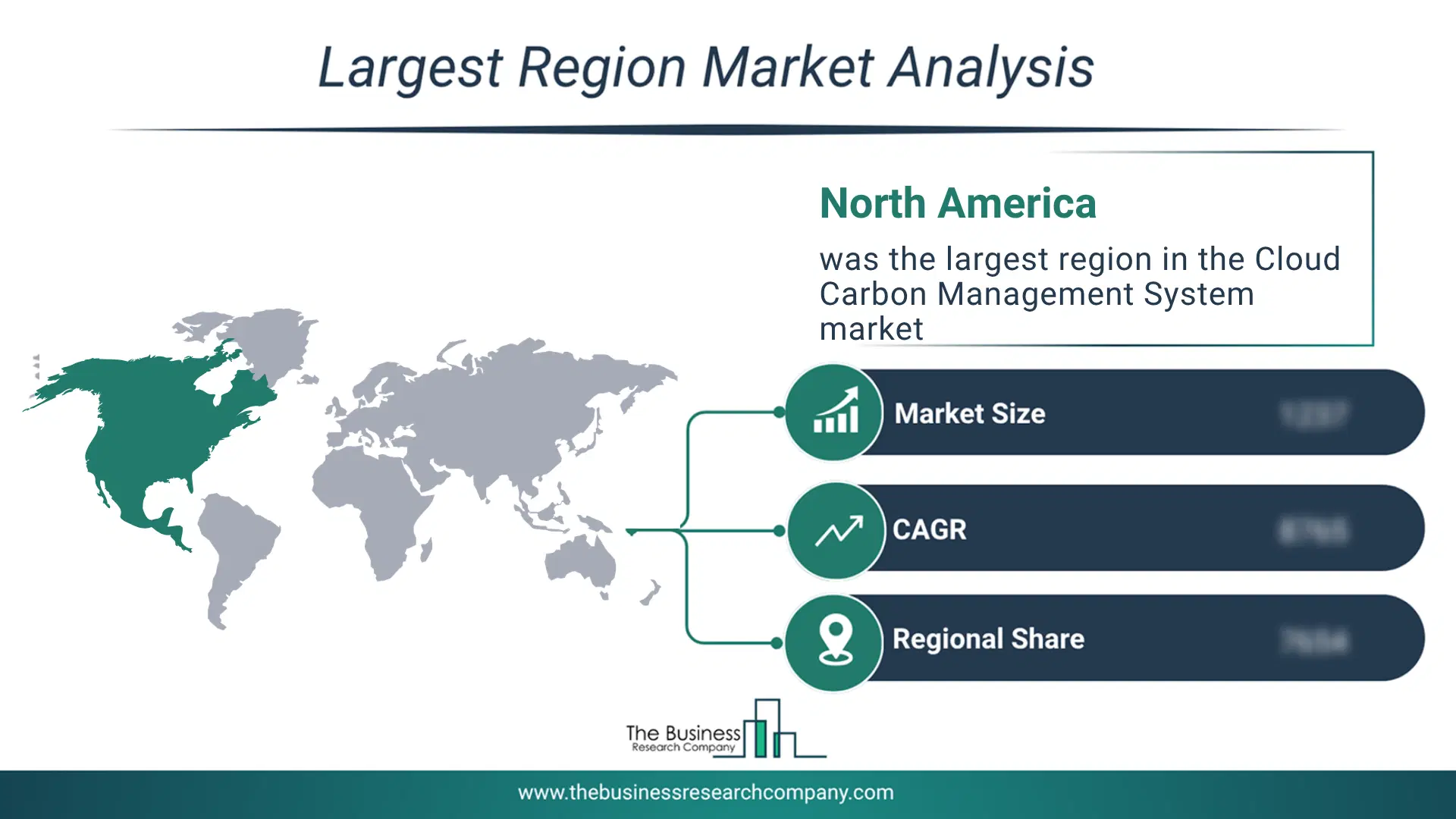
Regional Insights
North America was the largest region in the cloud carbon management system market in 2025. Asia-Pacific is expected to be the fastest-growing region in the forecast period. The regions covered in this market report are Asia-Pacific, South East Asia, Western Europe, Eastern Europe, North America, South America, Middle East, Africa. The countries covered in this market report are Australia, Brazil, China, France, Germany, India, Indonesia, Japan, Taiwan, Russia, South Korea, UK, USA, Canada, Italy, SpainWhat Defines the Cloud Carbon Management System Market?
The cloud carbon management system market consists of revenues earned by entities by providing services such as carbon footprint tracking, emissions analysis, sustainability reporting, environmental impact assessment, carbon offsetting solutions, energy consumption monitoring, compliance management and supply chain carbon tracking. The market value includes the value of related goods sold by the service provider or included within the service offering. The cloud carbon management system market also includes sales of products such as carbon management software, energy management systems, emissions tracking systems, environmental impact assessment tools, energy consumption monitoring systems, compliance management software, carbon offsetting platforms, etc. Values in this market are ‘factory gate’ values, that is the value of goods sold by the manufacturers or creators of the goods, whether to other entities (including downstream manufacturers, wholesalers, distributors and retailers) or directly to end customers. The value of goods in this market includes related services sold by the creators of the goods.How is Market Value Defined and Measured?
The market value is defined as the revenues that enterprises gain from the sale of goods and/or services within the specified market and geography through sales, grants, or donations in terms of the currency (in USD unless otherwise specified). The revenues for a specified geography are consumption values that are revenues generated by organizations in the specified geography within the market, irrespective of where they are produced. It does not include revenues from resales along the supply chain, either further along the supply chain or as part of other products.
This chart presents market attractiveness based on a quantitative evaluation of growth, competition, strategic alignment, and risk, offering a clear view of opportunity areas for decision-making. This chart is for illustrative purposes; the full report contains the complete analysis.

This chart highlights the Total Addressable Market (TAM) by estimating the maximum revenue opportunity using an assumption-driven approach, supporting strategic planning and opportunity sizing across markets. The chart is illustrative; the full report provides a more comprehensive analysis.
What Key Data and Analysis Are Included in the Cloud Carbon Management System Market Report 2026?
The cloud carbon management system market research report is one of a series of new reports from The Business Research Company that provides market statistics, including industry global market size, regional shares, competitors with the market share, detailed market segments, market trends and opportunities, and any further data you may need to thrive in the cloud carbon management system industry. The market research report delivers a complete perspective of everything you need, with an in-depth analysis of the current and future state of the industry.Cloud Carbon Management System Market Report Forecast Analysis
| Report Attribute | Details |
|---|---|
| Market Size Value In 2026 | $8.89 billion |
| Revenue Forecast In 2030 | $12.82 billion |
| Growth Rate | CAGR of 9.6% from 2026 to 2030 |
| Base Year For Estimation | 2025 |
| Actual Estimates/Historical Data | 2020-2025 |
| Forecast Period | 2026 - 2030 |
| Market Representation | Revenue in USD Billion and CAGR from 2026 to 2030 |
| Segments Covered | Component, Organization Size, Industry |
| Regional Scope | Asia-Pacific, Western Europe, Eastern Europe, North America, South America, Middle East, Africa |
| Country Scope | The Countries Covered In This Market Report Are Australia, Brazil, China, France, Germany, India, Indonesia, Japan, Taiwan, Russia, South Korea, Uk, Usa, Canada, Italy, Spain. |
| Key Companies Profiled | IBM, Schneider Electric SE, SAP SE, Salesforce Inc., Enablon (Wolters Kluwer N.V.), Enviance Inc., Thinkstep, Intelex Technologies ULC, IsoMetrix Software, Hara Software, Locus Technologies, EnergyCAP LLC, FirstCarbon Solutions, Envirosoft Corporation, Carbon Footprint Ltd., Climate Earth, Greenstone+, Dakota Software, COzero, Ecometrica, Engie SA, IHS Markit, Trinity Consultants Inc., Carbon Lighthouse, Energetics, Native Energy |
| Customization Scope | Request for Customization |
| Pricing And Purchase Options | Explore Purchase Options |