

Cloud-Native Network Function Market Report 2026
Global Outlook – By Component (Solutions, Services), By Deployment Mode (Public Cloud, Private Cloud, Hybrid Cloud), By Organization Size (Large Enterprises, Small And Medium Enterprises), By Application (Virtualized Network Functions, Security Functions, Routing And Switching, Other Applications), By End User (Telecommunications, Enterprises, Cloud Service Providers, Other End Users) – Market Size, Trends, Strategies, and Forecast to 2030
Cloud-Native Network Function Market Overview
• Cloud-Native Network Function market size has reached to $21.74 billion in 2025 • Expected to grow to $72.49 billion in 2030 at a compound annual growth rate (CAGR) of 27.2% • Growth Driver: Rapid Expansion Of 5G Networks Fueling The Growth Of The Market Due To Increasing Demand For Scalable And Automated Network Infrastructure • Market Trend: Technological Advancements In AI-Based Network Platforms Drive Scalable And Software-Defined Network Operations • North America was the largest region in 2025 and Asia-Pacific is the fastest growing region.What Is Covered Under Cloud-Native Network Function Market?
Cloud-native network functions (CNFs) refer to software-based network functions designed and developed using cloud-native principles to run in containerized environments orchestrated by platforms such as Kubernetes. They enable network services to be deployed, scaled, updated, and managed dynamically across cloud infrastructures, improving agility, resource efficiency, automation, resilience, and service reliability while supporting modern telecommunications and enterprise network architectures. The main components of cloud-native network function include solutions and services. Solutions refer to software-based network functions designed to operate within cloud-native environments, enabling flexible deployment, scalability, automation, and efficient management of network services. These solutions are deployed through public cloud, private cloud, and hybrid cloud models and are adopted by large enterprises and small and medium enterprises. The key applications of virtualized network functions, security functions, routing and switching, and others, while the end-users telecommunications, enterprises, cloud service providers, and others.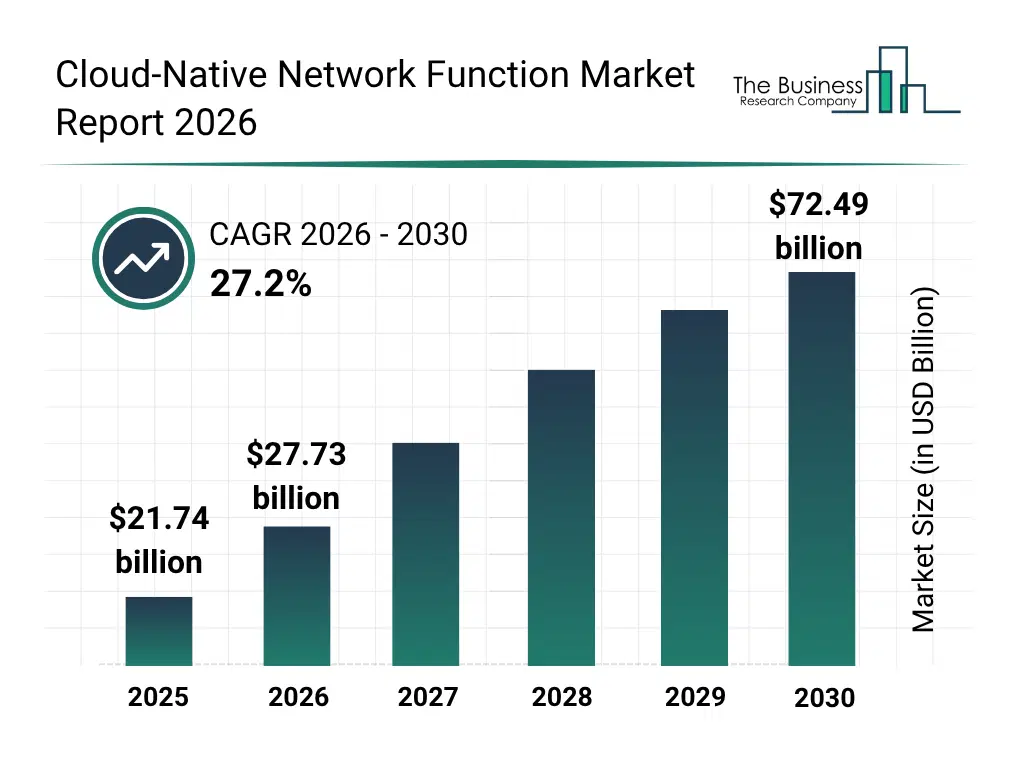
What Is The Cloud-Native Network Function Market Size and Share 2026?
The cloud-native network function market size has grown exponentially in recent years. It will grow from $21.74 billion in 2025 to $27.73 billion in 2026 at a compound annual growth rate (CAGR) of 27.6%. The growth in the historic period can be attributed to increasing virtualization of network infrastructure, rising adoption of containerized workloads, growing demand for network agility, increasing telecom network modernization, rising need for automated network management.What Is The Cloud-Native Network Function Market Growth Forecast?
The cloud-native network function market size is expected to see exponential growth in the next few years. It will grow to $72.49 billion in 2030 at a compound annual growth rate (CAGR) of 27.2%. The growth in the forecast period can be attributed to expanding 5G standalone network deployments, increasing demand for dynamic network scaling, rising adoption of cloud-native telecom architectures, growing need for network function portability, increasing demand for automated CNF lifecycle management. Major trends in the forecast period include increasing adoption of containerized network functions, rising integration of kubernetes-based network orchestration, growing adoption of service mesh architectures for network services, increasing use of network function automation and lifecycle management, rising demand for vendor-neutral and interoperable cnf solutions.
Global Cloud-Native Network Function Market Segmentation
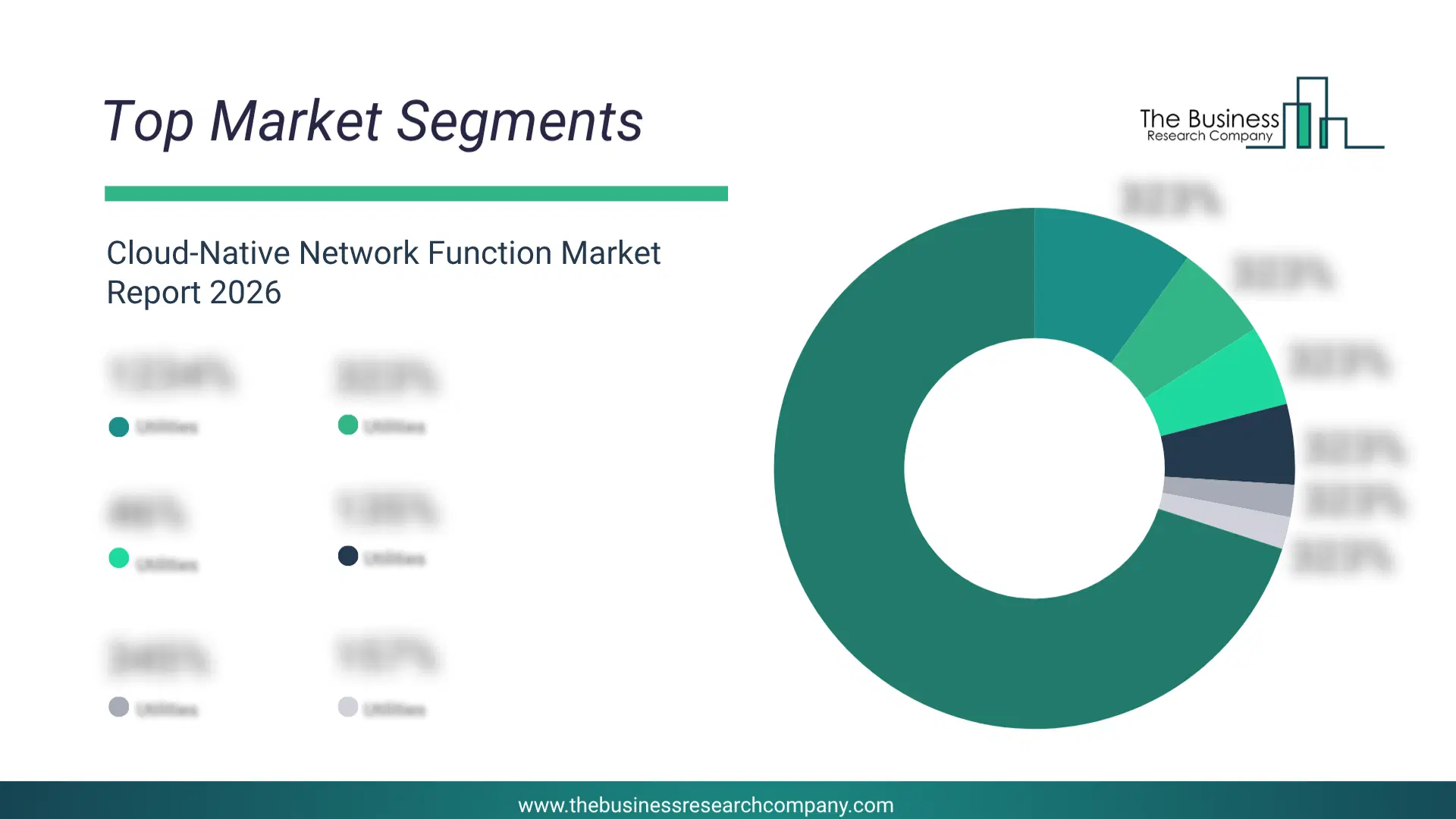
1) By Component: Solutions, Services 2) By Deployment Mode: Public Cloud, Private Cloud, Hybrid Cloud 3) By Organization Size: Large Enterprises, Small And Medium Enterprises 4) By Application: Virtualized Network Functions, Security Functions, Routing And Switching, Other Applications 5) By End User: Telecommunications, Enterprises, Cloud Service Providers, Other End Users Subsegments: 1) By Solutions: Core Network Functions, Network Orchestration Solutions, Service Mesh Solutions, Network Automation Solutions, Security Solutions, Monitoring And Analytics Solutions 2) By Services: Consulting Services, Integration Services, Deployment Services, Managed Services, Maintenance And Support Services, Training ServicesWhat Is The Driver Of The Cloud-Native Network Function Market?
The rapid expansion of 5G networks is expected to propel the growth of the cloud-native network function market going forward. 5G networks refer to fifth-generation wireless communication systems that deliver high-speed connectivity, low latency, and enhanced network capacity. The 5G networks are growing due to increasing demand for high-speed, low-latency connectivity, which enables advanced applications such as IoT, autonomous systems, and real-time digital services. 5G networks enable cloud-native network functions (CNFs) through containerization, microservices, orchestration, and dynamic resource management, allowing network functions to be deployed, scaled, and managed efficiently while improving flexibility, scalability, reliability, and low-latency service delivery. For instance, in March 2025, according to 5G Americas, a US-based wireless industry trade organization, 5G connections in North America increased from 196 million in 2023 to 289 million in 2024, representing a 67% year-over-year growth. Therefore, the rapid expansion of 5G networks is driving the growth of the cloud-native network function industry.Key Players In The Global Cloud-Native Network Function Market
Major companies operating in the cloud-native network function market are Huawei Technologies Co. Ltd., Dell Technologies Inc., Cisco Systems Inc., Hewlett Packard Enterprise Development LP, Telefonaktiebolaget LM Ericsson, Nokia Corporation, Ciena Corporation, Ribbon Communications Inc., Mavenir Systems Inc., Parallel Wireless Inc., DriveNets Ltd., Enea AB, RADCOM Ltd., NetNumber Inc., Alianza Inc., Alepo Technologies Inc., 6WIND S.A.S., Druid Software Limited, Expeto Wireless Inc., Cumucore Oy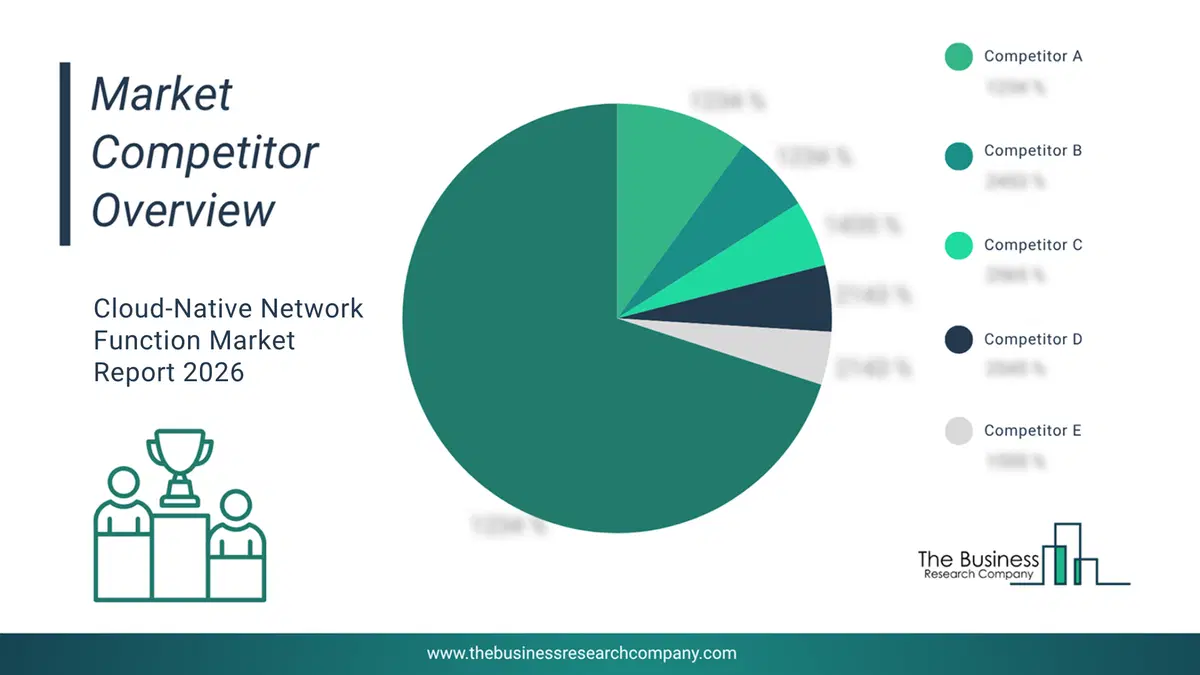
This chart is for illustrative purposes; the full report includes a detailed competitor analysis and comprehensive overview of the top 10 companies in the market.
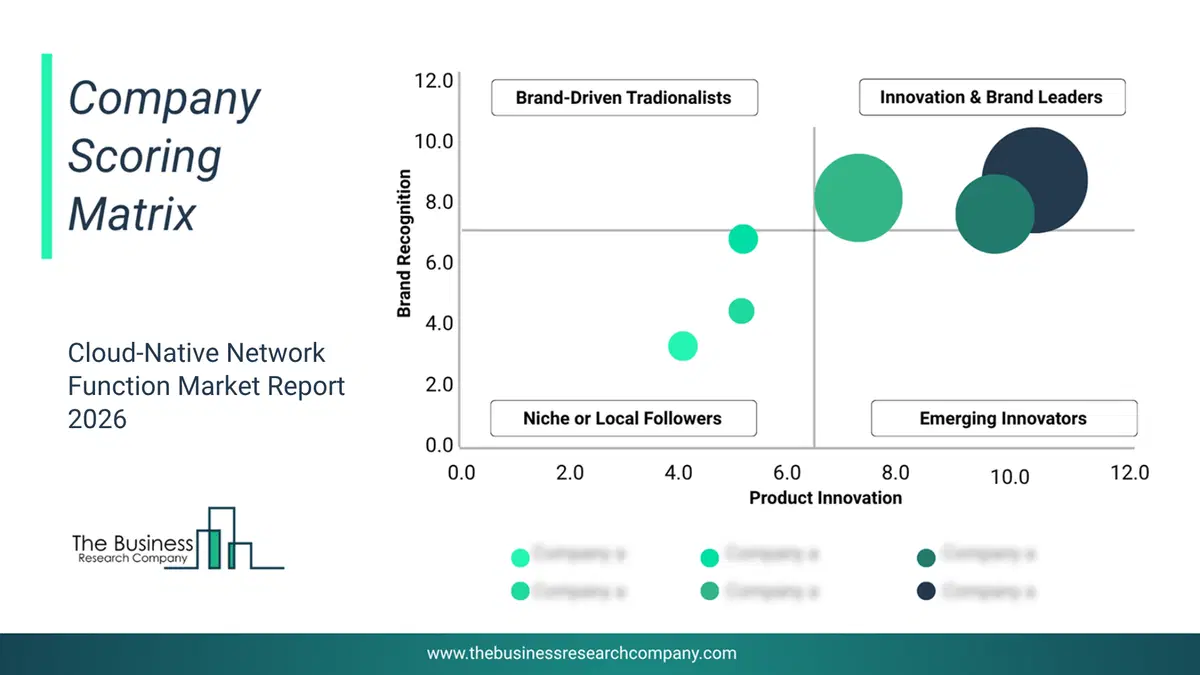
This chart maps companies by product innovation and brand strength, with bubble size indicating relative revenue, helping identify market leaders, challengers, and niche players. This is an illustrative chart; the full report provides a complete and accurate competitive analysis.
Global Cloud-Native Network Function Market Trends and Insights
Major companies operating in the cloud-native network functions market are focusing on leveraging innovative technologies such as, artificial intelligence (AI)-based cloud-native virtualized network platforms to enhance network automation, scalability, and seamless connectivity. Artificial intelligence (AI)-based cloud-native virtualized network platforms are software-defined networking solutions that use artificial intelligence to automate network operations, optimize resource allocation, predict and resolve faults, and enhance scalability, enabling more efficient, reliable, and flexible network management than traditional hardware-based network systems. For instance, in February 2026, Mavenir Systems, Inc., a US-based telecommunications software company, powered the commercial launch of Terrestar’s Hybrid Satellite IoT Service using its cloud-native virtualized RAN (vRAN), Converged Packet Core, and network management and analytics solutions. Built on 3GPP Release 17 standards, the platform integrates satellite and cellular networks to deliver resilient IoT connectivity across Canada's urban, rural, remote, and northern regions. The fully containerized cloud-native architecture provides carrier-grade reliability, high availability, elastic scalability, and advanced network service assurance, while supporting future capabilities such as voice, messaging, and 5G NR Non-Terrestrial Network (NTN) services. This innovation highlights the increasing adoption of cloud-native network functions to enable software-defined, scalable, and interoperable next-generation communication networks.What Are Latest Mergers And Acquisitions In The Cloud-Native Network Function Market?
In July 2025, Hewlett Packard Enterprise Company, a US-based technology company, completed the acquisition of Juniper Networks Inc. for $14 billion ($13.4 billion all-cash). With this acquisition, Hewlett Packard Enterprise Company aimed to create a comprehensive cloud-native, AI-driven networking portfolio by combining Juniper Networks, Inc.’s AI-native networking, routing, switching, wireless, and security technologies with HPE’s hybrid cloud and edge solutions, strengthening its position in the AI and hybrid cloud markets while delivering an end-to-end networking stack for enterprise and service provider customers. Juniper Networks Inc. is a US-based networking technology company that specializes in providing cloud-native network functions.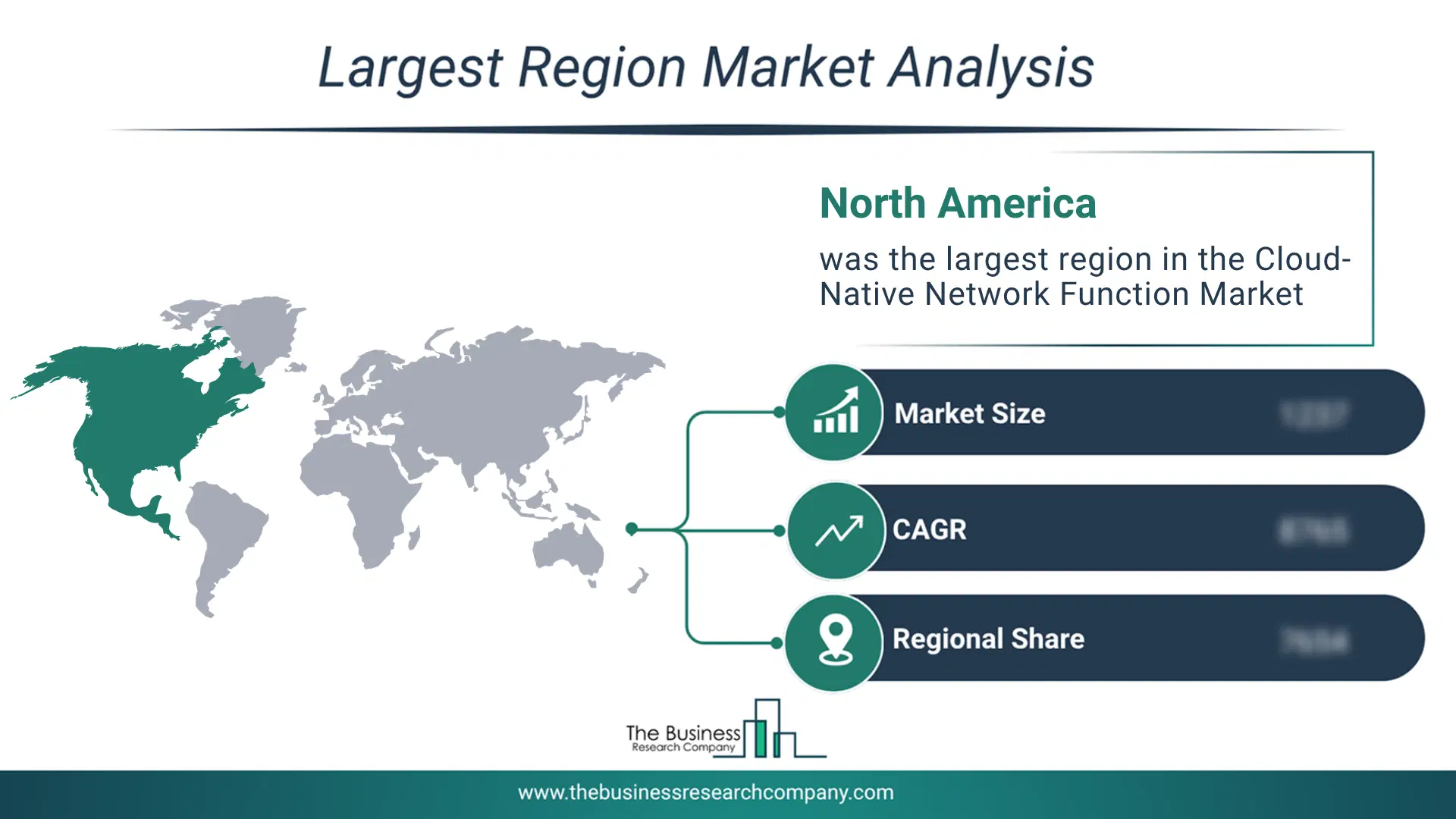
Regional Insights
North America was the largest region in the cloud-native network function market in 2025. Asia-Pacific is expected to be the fastest-growing region in the forecast period. The regions covered in this market report are Asia-Pacific, South East Asia, Western Europe, Eastern Europe, North America, South America, Middle East, Africa. The countries covered in this market report are Australia, Brazil, China, France, Germany, India, Indonesia, Japan, Taiwan, Russia, South Korea, UK, USA, Canada, Italy, Spain.What Defines the Cloud-Native Network Function Market?
The cloud-native network function market includes revenues earned by entities by providing services such as CNF development and deployment, network orchestration and automation, lifecycle management, containerized network management, cloud integration, performance monitoring, security management, and technical support and maintenance. The market value includes the value of related goods sold by the service provider or included within the service offering. Only goods and services traded between entities or sold to end consumers are included.How is Market Value Defined and Measured?
The market value is defined as the revenues that enterprises gain from the sale of goods and/or services within the specified market and geography through sales, grants, or donations in terms of the currency (in USD unless otherwise specified). The revenues for a specified geography are consumption values that are revenues generated by organizations in the specified geography within the market, irrespective of where they are produced. It does not include revenues from resales along the supply chain, either further along the supply chain or as part of other products.
This chart presents market attractiveness based on a quantitative evaluation of growth, competition, strategic alignment, and risk, offering a clear view of opportunity areas for decision-making. This chart is for illustrative purposes; the full report contains the complete analysis.

This chart highlights the Total Addressable Market (TAM) by estimating the maximum revenue opportunity using an assumption-driven approach, supporting strategic planning and opportunity sizing across markets. The chart is illustrative; the full report provides a more comprehensive analysis.
What Key Data and Analysis Are Included in the Cloud-Native Network Function Market Report 2026?
The cloud-native network function market research report is one of a series of new reports from The Business Research Company that provides market statistics, including industry global market size, regional shares, competitors with the market share, detailed market segments, market trends and opportunities, and any further data you may need to thrive in the cloud-native network function industry. The market research report delivers a complete perspective of everything you need, with an in-depth analysis of the current and future state of the industry.Cloud-Native Network Function Market Report Forecast Analysis
| Report Attribute | Details |
|---|---|
| Market Size Value In 2026 | $27.73 billion |
| Revenue Forecast In 2030 | $72.49 billion |
| Growth Rate | CAGR of 27.2% from 2026 to 2030 |
| Base Year For Estimation | 2025 |
| Actual Estimates/Historical Data | 2020-2025 |
| Forecast Period | 2026 - 2030 |
| Market Representation | Revenue in USD Billion and CAGR from 2026 to 2030 |
| Segments Covered | Component, Deployment Mode, Organization Size, Application, End User |
| Regional Scope | Asia-Pacific, Western Europe, Eastern Europe, North America, South America, Middle East, Africa |
| Country Scope | The countries covered in the report are Australia, Brazil, China, France, Germany, India, Indonesia, Japan, Taiwan, Russia, South Korea, UK, USA, Canada, Italy, Spain. |
| Key Companies Profiled | Huawei Technologies Co. Ltd., Dell Technologies Inc., Cisco Systems Inc., Hewlett Packard Enterprise Development LP, Telefonaktiebolaget LM Ericsson, Nokia Corporation, Ciena Corporation, Ribbon Communications Inc., Mavenir Systems Inc., Parallel Wireless Inc., DriveNets Ltd., Enea AB, RADCOM Ltd., NetNumber Inc., Alianza Inc., Alepo Technologies Inc., 6WIND S.A.S., Druid Software Limited, Expeto Wireless Inc., Cumucore Oy |
| Customization Scope | Request for Customization |
| Pricing And Purchase Options | Explore Purchase Options |