
Coagulation Factor Deficiency Market Report 2026
Global Outlook – By Product (Recombinant Coagulation Factor Concentrates, Plasma-Derived Coagulation Factor Concentrates, Biologics, Desmopressin, Other Product Types), By Deficiency Type (Haemophilia A, Hemophilia B, Von Willebrand Disease, Factor XI Deficiency, Factor XIII Deficiency, Other Treatment Types), By End Users (Hospitals, Clinics, Home Care, Other End Users) - Market Size, Trends, Strategies, and Forecast to 2030
Coagulation Factor Deficiency Market Overview
• Coagulation Factor Deficiency market size has reached to $4.93 billion in 2025 • Expected to grow to $7.05 billion in 2030 at a compound annual growth rate (CAGR) of 7.4% • Growth Driver: Rising Blood Disorders Drive Growth In The Market • Market Trend: Biotechnology Breakthrough Enables Self-Production Of Coagulation Factors Through One-Time Gene Therapy • North America was the largest region in 2025 and Asia-Pacific is the fastest growing region.What Is Covered Under Coagulation Factor Deficiency Market?
Coagulation factor deficiency refers to a condition where the body lacks one or more clotting factors necessary for blood coagulation, leading to prolonged bleeding or difficulty in stopping bleeding. These deficiencies are treated with clotting factor concentrates and other therapies, which are used to manage and prevent bleeding episodes in patients with conditions like hemophilia. The main product types of coagulation factor deficiency are recombinant coagulation factor concentrates, plasma-derived coagulation factor concentrates, biologics, desmopressin, and others. Recombinant coagulation factor concentrates are lab-engineered proteins designed to replace deficient clotting factors in patients. The deficiency types are hemophilia A, hemophilia B, von Willebrand disease, factor XI deficiency, factor XIII deficiency, and others, and it is used by various end users such as hospitals, clinics, home care, and others.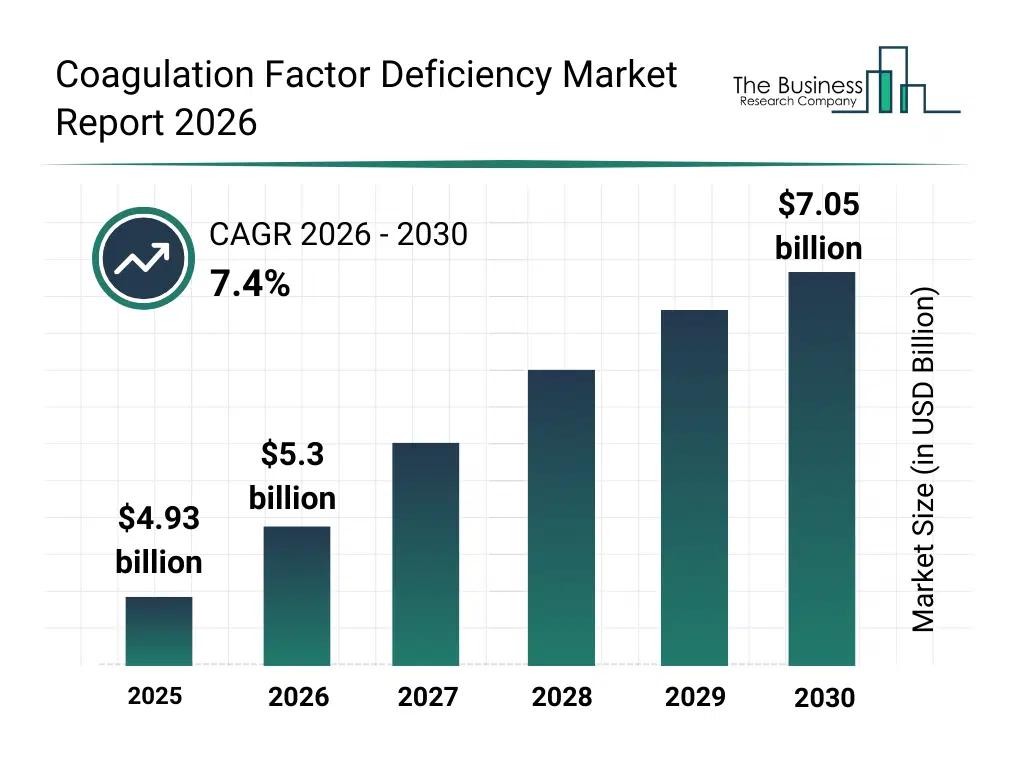
What Is The Coagulation Factor Deficiency Market Size and Share 2026?
The coagulation factor deficiency market size has grown strongly in recent years. It will grow from $4.93 billion in 2025 to $5.3 billion in 2026 at a compound annual growth rate (CAGR) of 7.6%. The growth in the historic period can be attributed to improved diagnosis of bleeding disorders, wider availability of plasma-derived therapies, expansion of hemophilia treatment centers, increased patient awareness programs, growth in specialty healthcare services.What Is The Coagulation Factor Deficiency Market Growth Forecast?
The coagulation factor deficiency market size is expected to see strong growth in the next few years. It will grow to $7.05 billion in 2030 at a compound annual growth rate (CAGR) of 7.4%. The growth in the forecast period can be attributed to advancements in gene therapy development, rising demand for personalized bleeding disorder treatments, expansion of home care treatment models, increasing focus on reducing treatment frequency, growing investments in rare disease therapeutics. Major trends in the forecast period include increasing adoption of recombinant coagulation factors, rising use of gene therapy-based treatments, growing preference for prophylactic treatment regimens, expansion of home-based infusion therapies, enhanced focus on long-acting factor products.
Global Coagulation Factor Deficiency Market Segmentation
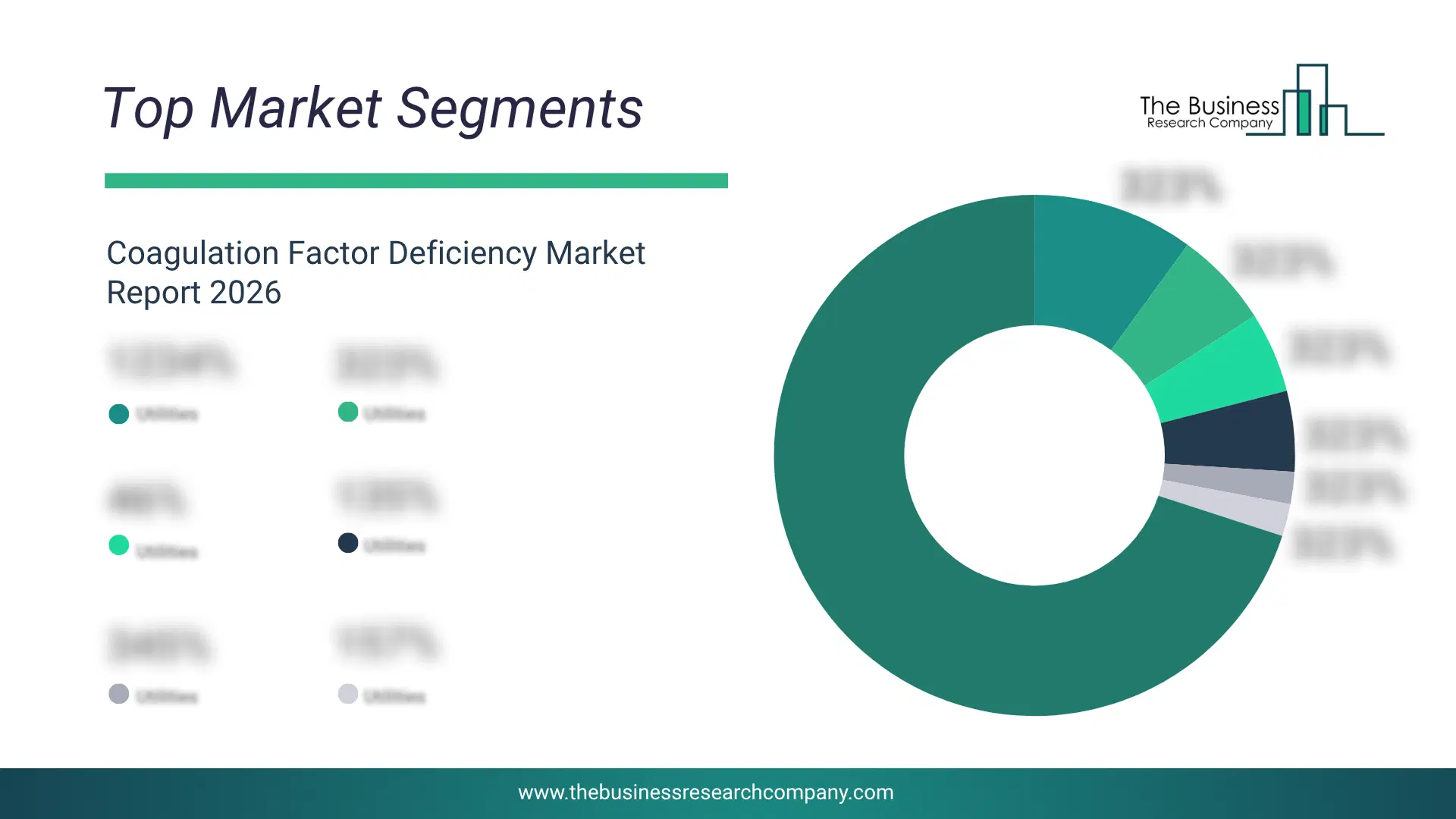
1) By Product: Recombinant Coagulation Factor Concentrates, Plasma-Derived Coagulation Factor Concentrates, Biologics, Desmopressin, Other Product Types 2) By Deficiency Type: Haemophilia A, Hemophilia B, Von Willebrand Disease, Factor XI Deficiency, Factor XIII Deficiency, Other Treatment Types 3) By End Users: Hospitals, Clinics, Home Care, Other End Users Subsegments: 1) By Recombinant Coagulation Factor Concentrates: Recombinant Factor VIII, Recombinant Factor IX, Recombinant Factor VIIa 2) By Plasma-Derived Coagulation Factor Concentrates: Plasma-Derived Factor VIII, Plasma-Derived Factor IX, Plasma-Derived Factor VII 3) By Biologics: Monoclonal Antibodies, Gene Therapy Products 4) By Desmopressin: Intravenous Desmopressin, Intranasal Desmopressin 5) By Other Product Types: Fresh Frozen Plasma (FFP), Prothrombin Complex Concentrates (PCC)What Is The Driver Of The Coagulation Factor Deficiency Market?
The increasing incidences of blood-related disorders are expected to propel the growth of the coagulation factor deficiency market going forward. Blood-related disorders refer to a group of conditions that affect the production, function, or composition of blood cells, platelets, or plasma, leading to issues such as anemia, clotting problems, or immune system deficiencies. Blood-related disorders are increasing due to factors such as aging populations, genetic predispositions, rising awareness, environmental factors, lifestyle changes, and the growing burden of chronic diseases and advancements in diagnostic technologies that allow for earlier detection. Coagulation factor deficiency helps manage blood-related disorders by providing the essential clotting factors needed to prevent or control excessive bleeding in conditions like hemophilia, where the body's natural ability to form blood clots is impaired. For instance, in September 2024, according to the Leukemia and Lymphoma Society, a US-based professional organization company Every 3 minutes, one person in the US is diagnosed with leukemia, lymphoma, or myeloma. In 2024, an estimated 187,740 individuals face these cancers, representing 9.4% of the expected 2,001,140 new cancer cases in the US. Moreover, in May 2024, according to the National Health Service (NHS) England, a UK-based government-funded healthcare system, in England, approximately 17,000 people are living with sickle cell disease, an inherited blood disorder, with around 250 new cases diagnosed annually. Therefore, the increasing incidences of blood-related disorders are driving the growth of the coagulation factor deficiency industry.Key Players In The Global Coagulation Factor Deficiency Market
Major companies operating in the coagulation factor deficiency market are Pfizer Inc., Bayer HealthCare Pharmaceuticals, Sanofi Genzyme, Novo Nordisk A/S, Baxter International Inc., CSL Behring LLC, Grifols S.A., Octapharma AG, Takeda Pharmaceutical Company Limited, Swedish Orphan Biovitrum AB, Kedrion Biopharma Inc., Shanghai RAAS Blood Products Co. Ltd., LFB S.A., Biotest AG, BioMarin Pharmaceutical Inc., uniQure, Prothya Biosolutions, Bio Products Laboratory Ltd, Green Cross Corporation, Freeline Therapeutics, Aptevo Therapeutics, Hema Biologics LLC, Generation Bio Co, Intellia Therapeutics Inc.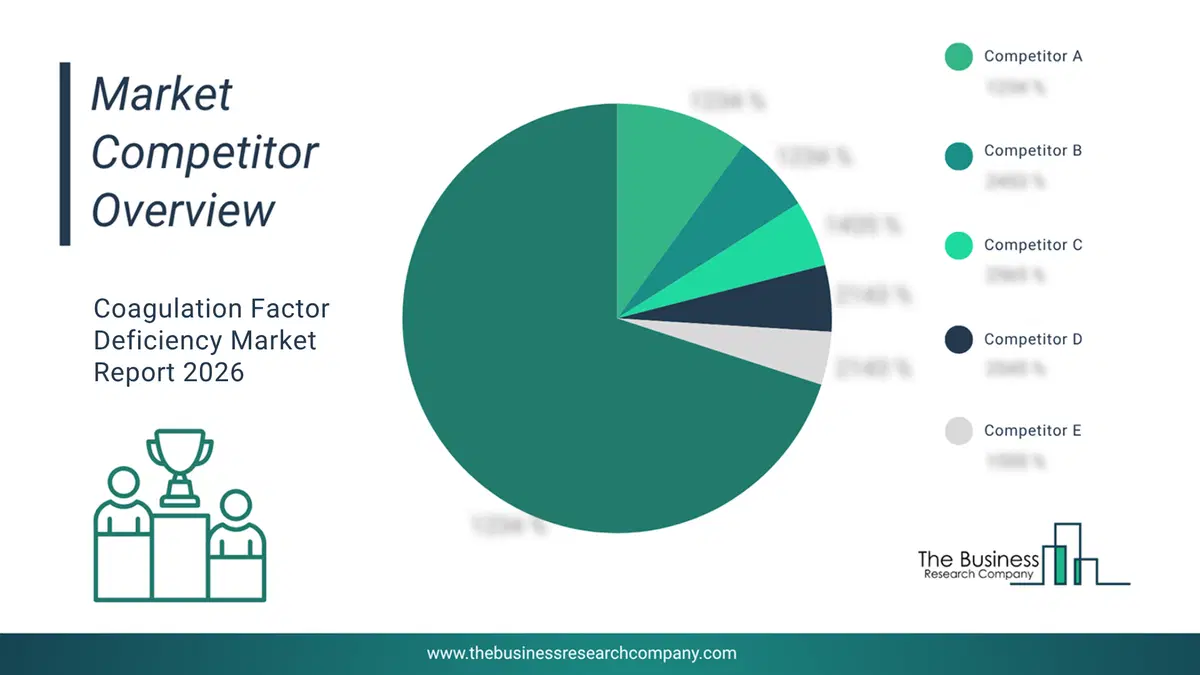
This chart is for illustrative purposes; the full report includes a detailed competitor analysis and comprehensive overview of the top 10 companies in the market.
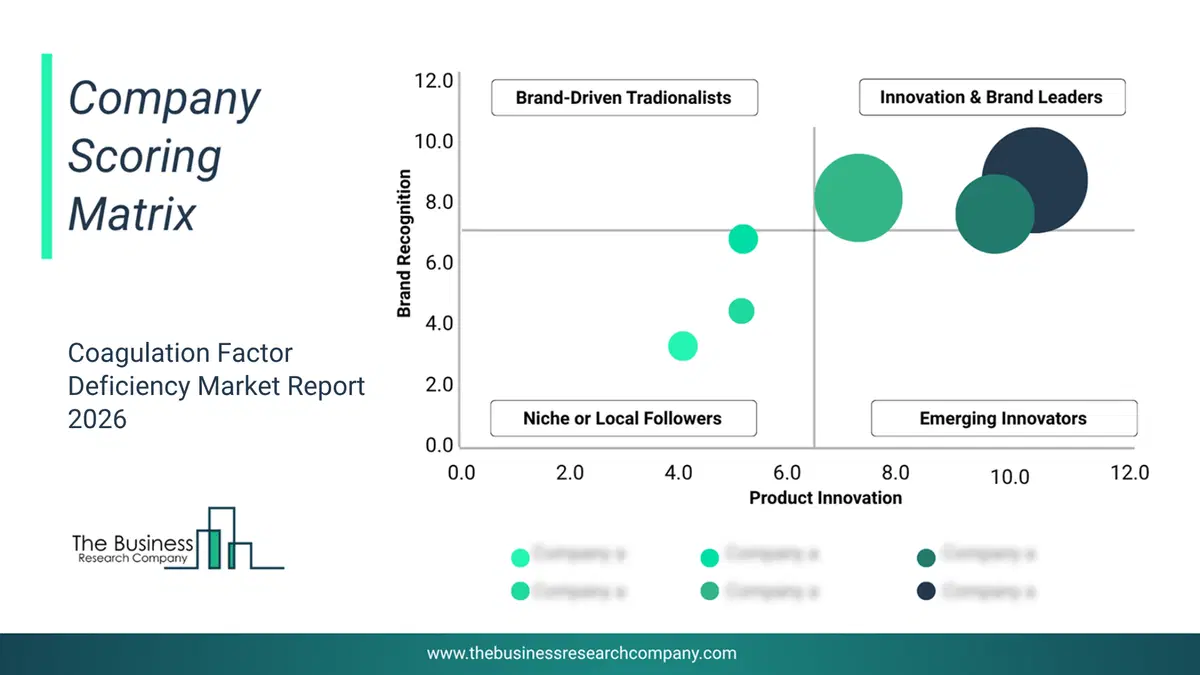
This chart maps companies by product innovation and brand strength, with bubble size indicating relative revenue, helping identify market leaders, challengers, and niche players. This is an illustrative chart; the full report provides a complete and accurate competitive analysis.
Global Coagulation Factor Deficiency Market Trends and Insights
Major companies operating in the coagulation factor deficiency market are focusing on developing innovative therapies, such as one-time gene therapy, to provide long-term or potentially curative solutions for patients with bleeding disorders like hemophilia, reducing the need for lifelong infusions of clotting factors. One-time gene therapy refers to a medical treatment that involves the introduction or alteration of genetic material within a patient's cells to treat or cure a disease, with the aim of providing long-lasting or permanent therapeutic effects after a single administration. For instance, in April 2024, Pfizer Inc., a US-based pharmaceutical and biotechnology company, announced that the U.S. Food and Drug Administration (FDA) has approved BEQVEZ (fidanacogene elaparvovec-dzkt) for the treatment of adults with moderate to severe hemophilia B who currently use factor IX (FIX) prophylaxis therapy. It is a one-time adeno-associated virus (AAV)-based gene therapy designed to introduce in the transduced cells a functional copy of the FIX gene encoding a high-activity FIX variant. For patients with hemophilia B, the gene therapy enables them to produce FIX themselves via this one-time treatment rather than having to receive frequent infusions of FIX.What Are Latest Mergers And Acquisitions In The Coagulation Factor Deficiency Market?
In March 2024, ReciBioPharm, a US-based contract development and manufacturing organization (CDMO) in the pharmaceutical industry, collaborated with GeneVentiv Therapeutics to advance the development of an adeno-associated virus (AAV)-based universal gene therapy for hemophilia, the first to treat hemophilia patients with inhibitors. This collaboration will see ReciBioPharm accelerate the development of the technology using its cutting-edge AAV manufacturing platform. GeneVentiv Therapeutics is a US-based preclinical gene therapy company.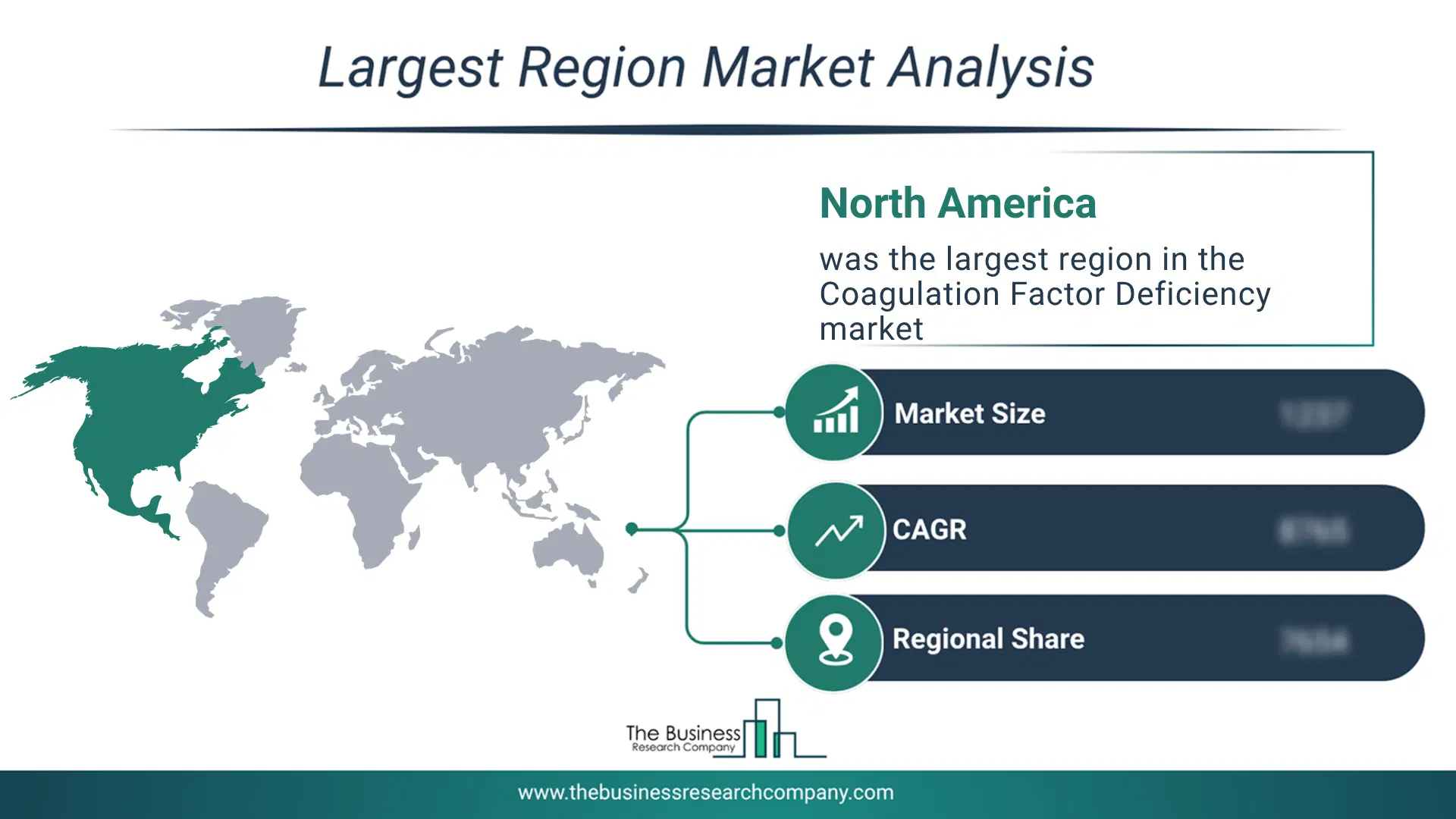
Regional Outlook
North America was the largest region in the coagulation factor deficiency market in 2025. Asia-Pacific is expected to be the fastest-growing region in the forecast period. The regions covered in this market report are Asia-Pacific, South East Asia, Western Europe, Eastern Europe, North America, South America, Middle East, Africa. The countries covered in this market report are Australia, Brazil, China, France, Germany, India, Indonesia, Japan, Taiwan, Russia, South Korea, UK, USA, Canada, Italy, Spain.What Defines the Coagulation Factor Deficiency Market?
The coagulation factor deficiency market consists of sales of factor VIII concentrates, prothrombin complex concentrates, and fresh frozen plasma (FFP). Values in this market are ‘factory gate’ values, that is the value of goods sold by the manufacturers or creators of the goods, whether to other entities (including downstream manufacturers, wholesalers, distributors and retailers) or directly to end customers. The value of goods in this market includes related services sold by the creators of the goods.How is Market Value Defined and Measured?
The market value is defined as the revenues that enterprises gain from the sale of goods and/or services within the specified market and geography through sales, grants, or donations in terms of the currency (in USD unless otherwise specified). The revenues for a specified geography are consumption values that are revenues generated by organizations in the specified geography within the market, irrespective of where they are produced. It does not include revenues from resales along the supply chain, either further along the supply chain or as part of other products.
This chart presents market attractiveness based on a quantitative evaluation of growth, competition, strategic alignment, and risk, offering a clear view of opportunity areas for decision-making. This chart is for illustrative purposes; the full report contains the complete analysis.

This chart highlights the Total Addressable Market (TAM) by estimating the maximum revenue opportunity using an assumption-driven approach, supporting strategic planning and opportunity sizing across markets. The chart is illustrative; the full report provides a more comprehensive analysis.
What Key Data and Analysis Are Included in the Coagulation Factor Deficiency Market Report 2026?
The coagulation factor deficiency market research report is one of a series of new reports from The Business Research Company that provides market statistics, including industry global market size, regional shares, competitors with the market share, detailed market segments, market trends and opportunities, and any further data you may need to thrive in the coagulation factor deficiency industry. The market research report delivers a complete perspective of everything you need, with an in-depth analysis of the current and future state of the industry.Coagulation Factor Deficiency Market Report Forecast Analysis
| Report Attribute | Details |
|---|---|
| Market Size Value In 2026 | $5.3 billion |
| Revenue Forecast In 2030 | $7.05 billion |
| Growth Rate | CAGR of 7.4% from 2026 to 2030 |
| Base Year For Estimation | 2025 |
| Actual Estimates/Historical Data | 2020-2025 |
| Forecast Period | 2026 - 2030 |
| Market Representation | Revenue in USD Billion and CAGR from 2026 to 2030 |
| Segments Covered | Product, Deficiency Type, End Users |
| Regional Scope | Asia-Pacific, Western Europe, Eastern Europe, North America, South America, Middle East, Africa |
| Country Scope | The countries covered in the report are Australia, Brazil, China, France, Germany, India, Indonesia, Japan, Taiwan, Russia, South Korea, UK, USA, Canada, Italy, Spain |
| Key Companies Profiled | Pfizer Inc., Bayer HealthCare Pharmaceuticals, Sanofi Genzyme, Novo Nordisk A/S, Baxter International Inc., CSL Behring LLC, Grifols S.A., Octapharma AG, Takeda Pharmaceutical Company Limited, Swedish Orphan Biovitrum AB, Kedrion Biopharma Inc., Shanghai RAAS Blood Products Co. Ltd., LFB S.A., Biotest AG, BioMarin Pharmaceutical Inc., uniQure, Prothya Biosolutions, Bio Products Laboratory Ltd, Green Cross Corporation, Freeline Therapeutics, Aptevo Therapeutics, Hema Biologics LLC, Generation Bio Co, Intellia Therapeutics Inc. |
| Customization Scope | Request for Customization |
| Pricing And Purchase Options | Explore Purchase Options |