
Coccidioidomycosis Drug Market Report 2026
Global Outlook – By Drug Type (Azoles, Echinocandins, Polyenes), By Route Of Administration (Oral, Intravenous), By Treatment Phase (Acute Phase, Chronic Phase, Prophylactic Treatment), By Group Of Patients (Immunocompetent Patients, Immunocompromised Patients), By End-User (Speciality Clinics, Hospitals, Homecare, Other End-Users) – Market Size, Trends, Strategies, and Forecast to 2030
Coccidioidomycosis Drug Market Overview
• Coccidioidomycosis Drug market size has reached to $0.35 billion in 2025 • Expected to grow to $0.51 billion in 2030 at a compound annual growth rate (CAGR) of 7.7% • Growth Driver: Growing Vulnerability To Infections Among Immunocompromised Individuals • Market Trend: R&D Investments Strengthen Progress Toward Advanced Antifungal Therapies • North America was the largest region in 2025 and Asia-Pacific is the fastest growing region.What Is Covered Under Coccidioidomycosis Drug Market?
Coccidioidomycosis drug is a medication designed to combat infections caused by Coccidioides species, the fungi responsible for valley fever. These drugs including azole antifungals and polyene antifungals, help control fungal growth and reduce symptoms. Depending on the severity of infection, treatment may be oral, intravenous, or long-term to prevent complications, especially in immunocompromised patients. The main types of drugs in the coccidioidomycosis drug market are azoles, echinocandins, and polyenes. Azoles refer to a class of antifungal drugs that inhibit the synthesis of ergosterol, an essential component of fungal cell membranes. The routes of administration for treatment include oral and intravenous methods, with distinct treatment phases such as the acute phase, chronic phase, and prophylactic treatment. Patient groups are categorized into immunocompetent and immunocompromised individuals, while end-users encompass specialty clinics, hospitals, homecare, and others.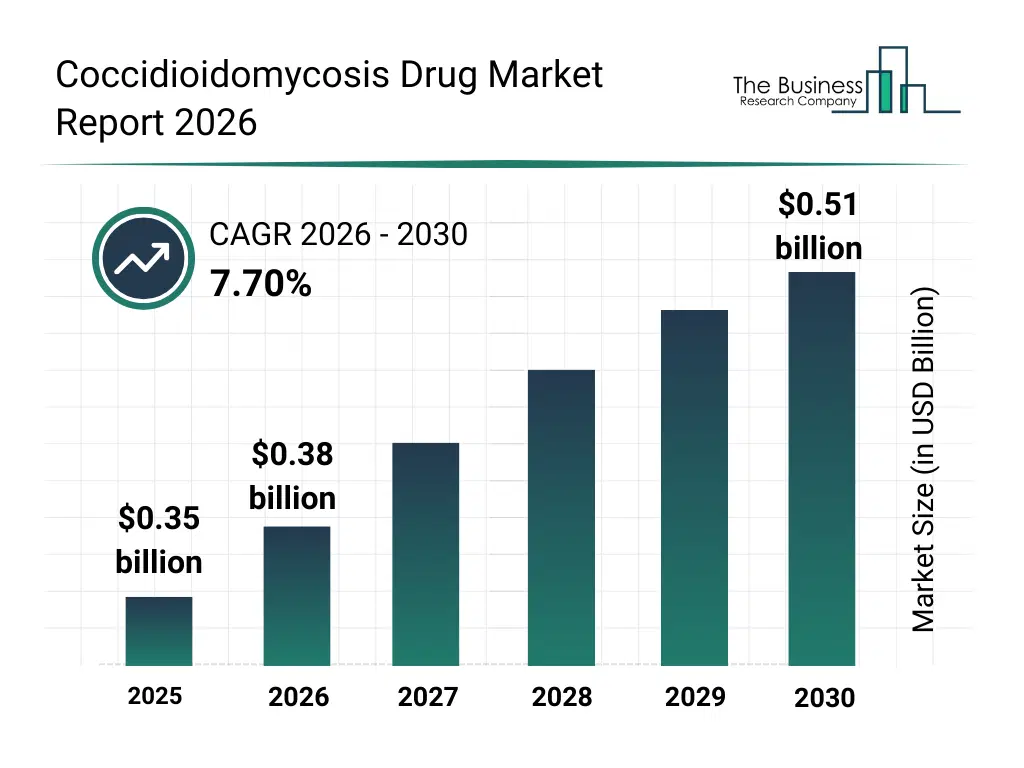
What Is The Coccidioidomycosis Drug Market Size and Share 2026?
The coccidioidomycosis drug market size has grown strongly in recent years. It will grow from $0.35 billion in 2025 to $0.38 billion in 2026 at a compound annual growth rate (CAGR) of 7.8%. The growth in the historic period can be attributed to increasing fungal infection incidence, widespread fluconazole usage, expansion of infectious disease clinics, improved diagnostic testing, rising immunocompromised population.What Is The Coccidioidomycosis Drug Market Growth Forecast?
The coccidioidomycosis drug market size is expected to see strong growth in the next few years. It will grow to $0.51 billion in 2030 at a compound annual growth rate (CAGR) of 7.7%. The growth in the forecast period can be attributed to climate-related disease spread, rising awareness of valley fever, growth in antifungal drug development, expansion of specialty clinics, increasing healthcare access. Major trends in the forecast period include rising use of azole antifungal therapies, increasing focus on long-term antifungal treatment, growing diagnosis in endemic regions, expansion of hospital-based infectious disease care, increased attention to immunocompromised patients.
Global Coccidioidomycosis Drug Market Segmentation
1) By Drug Type: Azoles, Echinocandins, Polyenes 2) By Route Of Administration: Oral, Intravenous 3) By Treatment Phase: Acute Phase, Chronic Phase, Prophylactic Treatment 4) By Group Of Patients: Immunocompetent Patients, Immunocompromised Patients 5) By End-User: Speciality Clinics, Hospitals, Homecare, Other End-Users Subsegments: 1) By Azoles: Fluconazole, Itraconazole, Voriconazole, Posaconazole 2) By Echinocandins: Caspofungin, Micafungin, Anidulafungin 3) By Polyenes: Amphotericin B, Liposomal Amphotericin BWhat Is The Driver Of The Coccidioidomycosis Drug Market?
The increasing number of immunocompromised population is expected to propel the growth of the coccidioidomycosis drug market going forward. Immunocompromised population refer to individuals with weakened immune systems, making them more susceptible to infections and illnesses including those with human immunodeficiency virus (HIV), cancer and previous transplants. The immunocompromised populations are increasing due to factors such as the rising prevalence of chronic diseases, higher rates of organ transplants, the widespread use of immunosuppressive therapies and the growing incidence of human immunodeficiency virus (HIV)/acquired immunodeficiency syndrome (AIDS). Coccidioidomycosis drugs help immunocompromised patients by controlling fungal infection, reducing disease severity, and preventing complications such as disseminated coccidioidomycosis, which can be life-threatening due to their weakened immune response. For instance, in July 2024, according to the Joint United Nations Programme on HIV/AIDS (UNAIDS), a Switzerland-based United Nations organization, approximately 39.9 million people were living with HIV in 2023, an increase from 39.0 million in 2022. Therefore, the increasing number of immunocompromised populations is driving the growth of the coccidioidomycosis drug industry.Key Players In The Global Coccidioidomycosis Drug Market
Major companies operating in the coccidioidomycosis drug market are Pfizer Inc., Johnson & Johnson, Merck & Co. Inc., Bayer AG, Novartis AG, Viatris Inc., Teva Pharmaceuticals USA Inc., Baxter International Inc., Astellas Pharma Inc., Bausch Health Companies Inc., Sun Pharmaceutical Industries Ltd., Apotex Inc., Cipla Limited, Dr. Reddy's Laboratories, Zydus Group, Amneal Pharmaceuticals Inc., Recordati S.p.A., Glenmark Pharmaceuticals Limited, Xellia Pharmaceuticals Pvt. Ltd., Brundavan laboratories Pvt.Ltd., LGM Pharma, Enomark Pharma
This chart is for illustrative purposes; the full report includes a detailed competitor analysis and comprehensive overview of the top 10 companies in the market.
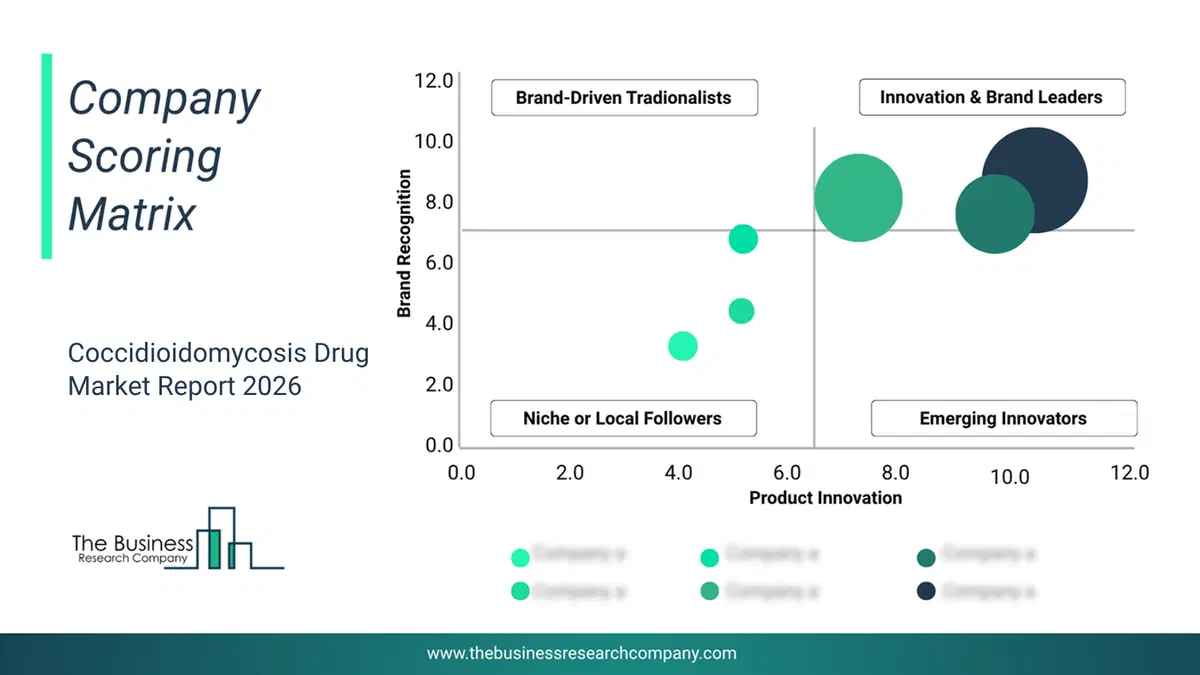
This chart maps companies by product innovation and brand strength, with bubble size indicating relative revenue, helping identify market leaders, challengers, and niche players. This is an illustrative chart; the full report provides a complete and accurate competitive analysis.
Global Coccidioidomycosis Drug Market Trends and Insights
Major companies operating in the coccidioidomycosis drug market are focusing on renewed R&D investments in novel antifungal therapies and vaccines, such as chitin synthase inhibitors and next-generation systemic agents, to counter increasing incidence and resistance. A chitin synthase inhibitor is a therapeutic molecule that blocks fungal chitin synthase enzymes, impairing fungal cell wall synthesis and reducing the viability of Coccidioides species. For instance, in June 2025, Valley Fever Solutions, a US-based biotech company, advanced NikZ (Nikkomycin Z) into Phase I/II trials, the drug features inhalable delivery, potent chitin synthase inhibition against both acute and chronic forms, and orphan drug designations, targeting improved efficacy with shorter treatment durations. Additional support comes from governmental bodies: the U.S. National Institute of Allergy and Infectious Diseases (NIAID) through its 2025 Valley Fever Strategic Plan continues to prioritize clinical trial infrastructure, vaccine development, and antifungal innovation.What Are Latest Mergers And Acquisitions In The Coccidioidomycosis Drug Market?
In November 2023, Basilea Pharmaceutica Ltd., a Switzerland-based biopharmaceutical company, acquired the rights to fosmanogepix from Amplyx Pharmaceuticals Inc. for an undisclosed amount. With this acquisition, Basilea plans to initiate the first phase III study with fosmanogepix in 2024, reinforcing its position in the antifungal treatment market and addressing the urgent need for new antifungal therapies. Amplyx Pharmaceuticals Inc. is a US-based pharmaceutical company and an affiliate of Pfizer Inc that develops drugs for treating infectious diseases, including coccidioidomycosis.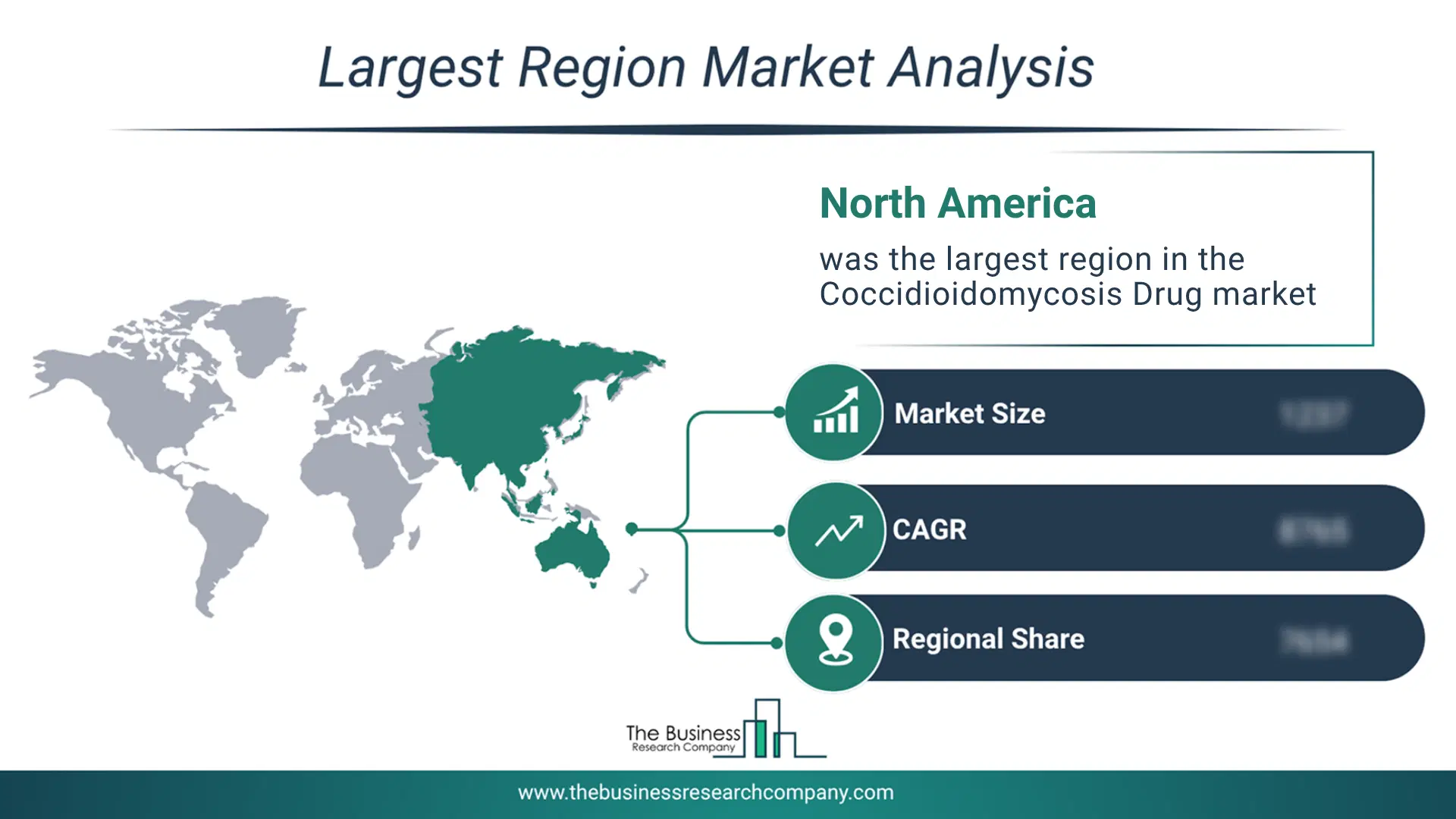
Regional Insights
North America was the largest region in the coccidioidomycosis drug market in 2025. Asia-Pacific is expected to be the fastest-growing region in the forecast period. The regions covered in this market report are Asia-Pacific, South East Asia, Western Europe, Eastern Europe, North America, South America, Middle East, Africa. The countries covered in this market report are Australia, Brazil, China, France, Germany, India, Indonesia, Japan, Taiwan, Russia, South Korea, UK, USA, Canada, Italy, Spain.What Defines the Coccidioidomycosis Drug Market?
The coccidioidomycosis drug market consists of revenues earned by entities by providing services such as diagnostic testing, patient management programs, pharmacovigilance services, drug consultation and advisory, clinical trials for new treatments, and education and awareness campaigns aimed at improving diagnosis, treatment adherence and overall patient outcomes. The market value includes the value of related goods sold by the service provider or included within the service offering. The coccidioidomycosis drug market also includes sales of antifungal medications and other treatment options, along with diagnostic kits, treatment formulations, intravenous therapies, and combination drug therapies designed to manage and treat valley fever and related complications. Values in this market are ‘factory gate’ values, that is the value of goods sold by the manufacturers or creators of the goods, whether to other entities (including downstream manufacturers, wholesalers, distributors and retailers) or directly to end customers. The value of goods in this market includes related services sold by the creators of the goods.How is Market Value Defined and Measured?
The market value is defined as the revenues that enterprises gain from the sale of goods and/or services within the specified market and geography through sales, grants, or donations in terms of the currency (in USD unless otherwise specified). The revenues for a specified geography are consumption values that are revenues generated by organizations in the specified geography within the market, irrespective of where they are produced. It does not include revenues from resales along the supply chain, either further along the supply chain or as part of other products.
This chart presents market attractiveness based on a quantitative evaluation of growth, competition, strategic alignment, and risk, offering a clear view of opportunity areas for decision-making. This chart is for illustrative purposes; the full report contains the complete analysis.

This chart highlights the Total Addressable Market (TAM) by estimating the maximum revenue opportunity using an assumption-driven approach, supporting strategic planning and opportunity sizing across markets. The chart is illustrative; the full report provides a more comprehensive analysis.
What Key Data and Analysis Are Included in the Coccidioidomycosis Drug Market Report 2026?
The coccidioidomycosis drug market research report is one of a series of new reports from The Business Research Company that provides market statistics, including industry global market size, regional shares, competitors with the market share, detailed market segments, market trends and opportunities, and any further data you may need to thrive in the coccidioidomycosis drug industry. The market research report delivers a complete perspective of everything you need, with an in-depth analysis of the current and future state of the industry.Coccidioidomycosis Drug Market Report Forecast Analysis
| Report Attribute | Details |
|---|---|
| Market Size Value In 2026 | $0.38 billion |
| Revenue Forecast In 2030 | $0.51 billion |
| Growth Rate | CAGR of 7.8% from 2026 to 2030 |
| Base Year For Estimation | 2025 |
| Actual Estimates/Historical Data | 2020-2025 |
| Forecast Period | 2026 - 2030 |
| Market Representation | Revenue in USD Billion and CAGR from 2026 to 2030 |
| Segments Covered | Drug Type, Route Of Administration, Treatment Phase, Group Of Patients, End-User |
| Regional Scope | Asia-Pacific, Western Europe, Eastern Europe, North America, South America, Middle East, Africa |
| Country Scope | The countries covered in the report are Australia, Brazil, China, France, Germany, India, Indonesia, Japan, Taiwan, Russia, South Korea, UK, USA, Canada, Italy, Spain. |
| Key Companies Profiled | Pfizer Inc., Johnson & Johnson, Merck & Co. Inc., Bayer AG, Novartis AG, Viatris Inc., Teva Pharmaceuticals USA Inc., Baxter International Inc., Astellas Pharma Inc., Bausch Health Companies Inc., Sun Pharmaceutical Industries Ltd., Apotex Inc., Cipla Limited, Dr. Reddy's Laboratories, Zydus Group, Amneal Pharmaceuticals Inc., Recordati S.p.A., Glenmark Pharmaceuticals Limited, Xellia Pharmaceuticals Pvt. Ltd., Brundavan laboratories Pvt.Ltd., LGM Pharma, Enomark Pharma |
| Customization Scope | Request for Customization |
| Pricing And Purchase Options | Explore Purchase Options |