
Coffee Franchise Market Report 2026
Global Outlook – By Cuisine (Lunch, Brunch, Coffee, Bar), By Delivery Type (Dine-In, Dine-Out), By Application (Café Franchises, Espresso Franchises) – Market Size, Trends, Strategies, and Forecast to 2030
Coffee Franchise Market Overview
• Coffee Franchise market size has reached to $115.5 billion in 2025 • Expected to grow to $179.7 billion in 2030 at a compound annual growth rate (CAGR) of 9.2% • Growth Driver: The Rising Proliferation Of Coffee Culture And Its Impact On The Coffee Franchise Market • Market Trend: Innovative Drive-Thrus Boost Convenience In The Coffee Franchise Market • Asia-Pacific was the largest region in 2025.Market Gains By 2030 – Top Opportunities By Segment
Market Gain identifies the most promising market opportunities by highlighting the segments or products expected to generate the highest incremental revenue growth over the next five years.
What Is Covered Under Coffee Franchise Market?
A coffee franchise refers to a business model where an individual or group (the franchisee) is granted the rights by a larger company (the franchisor) to operate a coffee shop or chain of coffee shops under the franchisor's brand name, using its established business practices, trademarks, and systems. This arrangement allows the franchisee to benefit from the brand recognition, marketing strategies, operational support, and proven business model of the franchisor while the franchisor expands its market presence and brand reach without directly managing additional locations. The main types of cuisine in coffee franchises include lunch, brunch, coffee, and bar. Lunch refers to a meal eaten around midday, and coffee franchises offer lunch menus to attract the daytime crowd and increase sales during lunch hours. The delivery types include dine-in and dine-out, and the applications include café franchises and espresso franchises.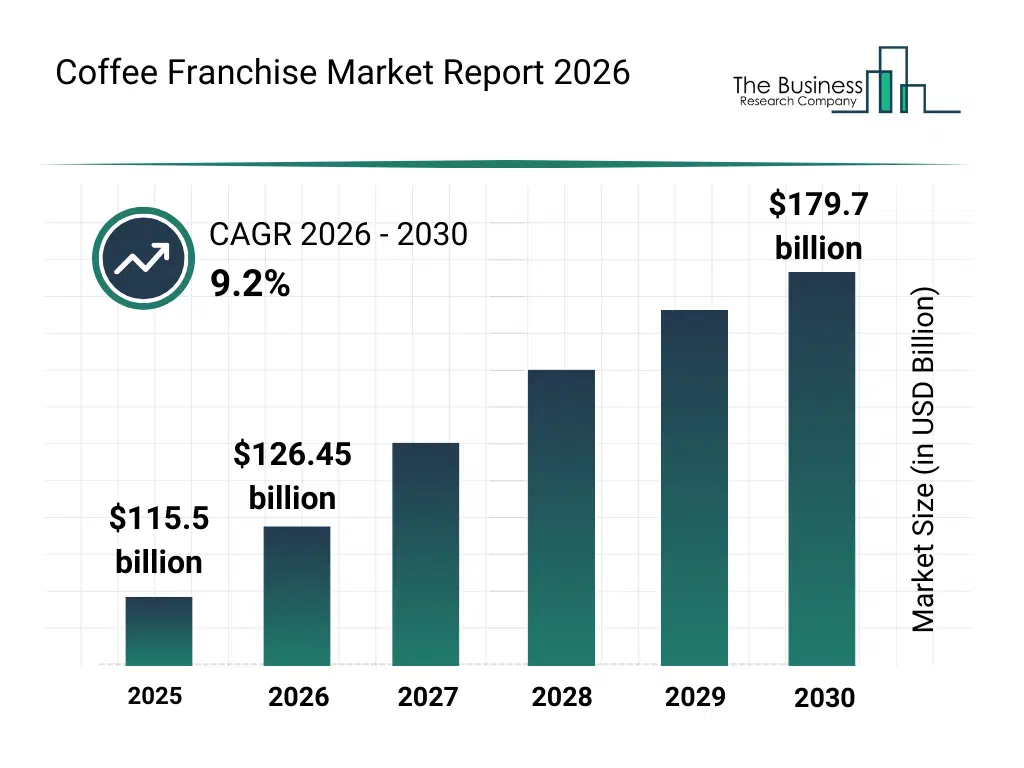
What Is The Coffee Franchise Market Size and Share 2026?
The coffee franchise market size has grown strongly in recent years. It will grow from $115.5 billion in 2025 to $126.45 billion in 2026 at a compound annual growth rate (CAGR) of 9.5%. The growth in the historic period can be attributed to expansion of urban café culture, rising disposable incomes, growing popularity of specialty coffee, scalability of franchise business models, increasing consumer spending on out-of-home beverages.What Is The Coffee Franchise Market Growth Forecast?
The coffee franchise market size is expected to see strong growth in the next few years. It will grow to $179.7 billion in 2030 at a compound annual growth rate (CAGR) of 9.2%. The growth in the forecast period can be attributed to increasing demand for premium and experiential coffee formats, expansion into emerging markets, growing adoption of delivery and takeaway models, rising investments in technology-enabled stores, increasing focus on ethical and sustainable branding. Major trends in the forecast period include expansion of asset-light franchise models, rising integration of digital ordering and payment platforms, growing focus on sustainable coffee sourcing, increasing customization of menu offerings, enhanced emphasis on brand experience consistency.
Global Coffee Franchise Market Segmentation
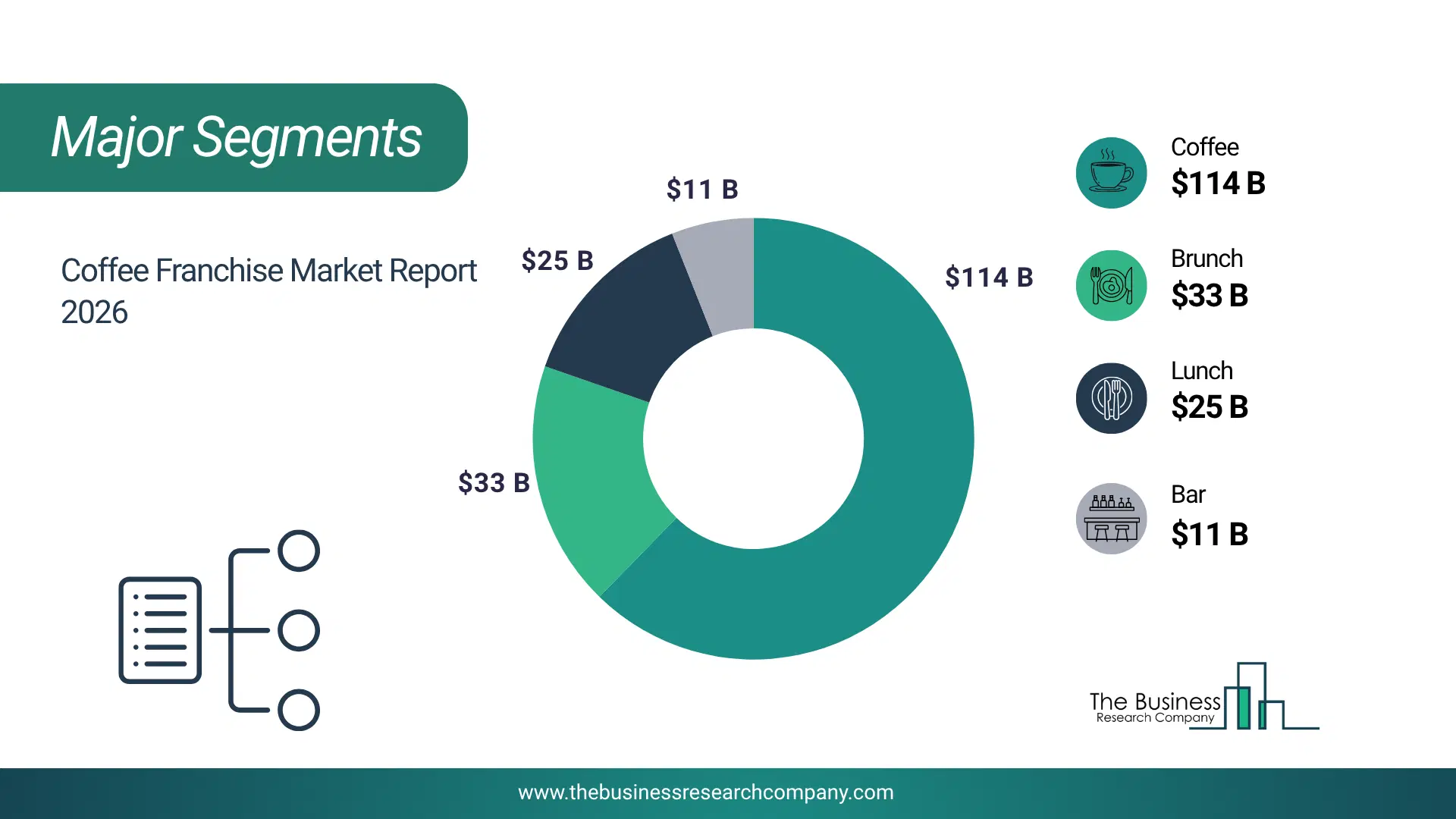
1) By Cuisine: Lunch, Brunch, Coffee, Bar 2) By Delivery Type: Dine-In, Dine-Out 3) By Application: Café Franchises, Espresso Franchises Subsegments: 1) By Lunch: Sandwiches and Wraps, Salads and Soups, Paninis and Baked Goods, Light Meals and Snacks 2) By Brunch: Eggs And Omelets, Pancakes, Waffles, and French Toast, Bagels and Pastries, Smoothies and Bowls 3) By Coffee: Espresso-Based Drinks, Brewed Coffee, Cold Brew and Iced Coffee, Specialty Coffee Drinks 4) By Bar: Coffee Cocktails, Alcoholic Beverages Paired with Coffee, Non-Alcoholic Beverages The top segments in the coffee franchise market will be: • Coffee will reach $113.98 Billion by 2030. • Brunch will reach $32.75 Billion by 2030. • Lunch will reach $25.47 Billion by 2030. • Bar will reach $10.8 Billion by 2030.What Is The Driver Of The Coffee Franchise Market?
The rising proliferation of coffee culture is expected to propel the growth of the coffee franchise market going forward. Coffee culture refers to the social and cultural practices, traditions, and norms surrounding the consumption and appreciation of coffee. The increasing proliferation of coffee culture is due to the rise of specialty coffee shops, the global spread of coffeehouse chains, the growing appreciation for gourmet and artisanal coffee, the influence of social media, and the cultural significance of coffee as a social beverage. Coffee franchises enhance and spread coffee culture by offering convenient and consistent coffee experiences while helping companies expand their brand presence, maintain quality standards, and meet the growing demand for specialty coffee in various locations. For instance, in December 2023, a report published by the International Coffee Organization stated that world coffee production increased by 0.1% to 168.2 million bags in the coffee year 2022–2023. The output for the coffee year 2023–24 is expected to grow by 5.8% to 178.0 million bags, with Arabica's output rising to 102.2 million bags and Robusta's increasing to 75.8 million bags. Therefore, a rising proliferation of coffee culture is driving the coffee franchise industry.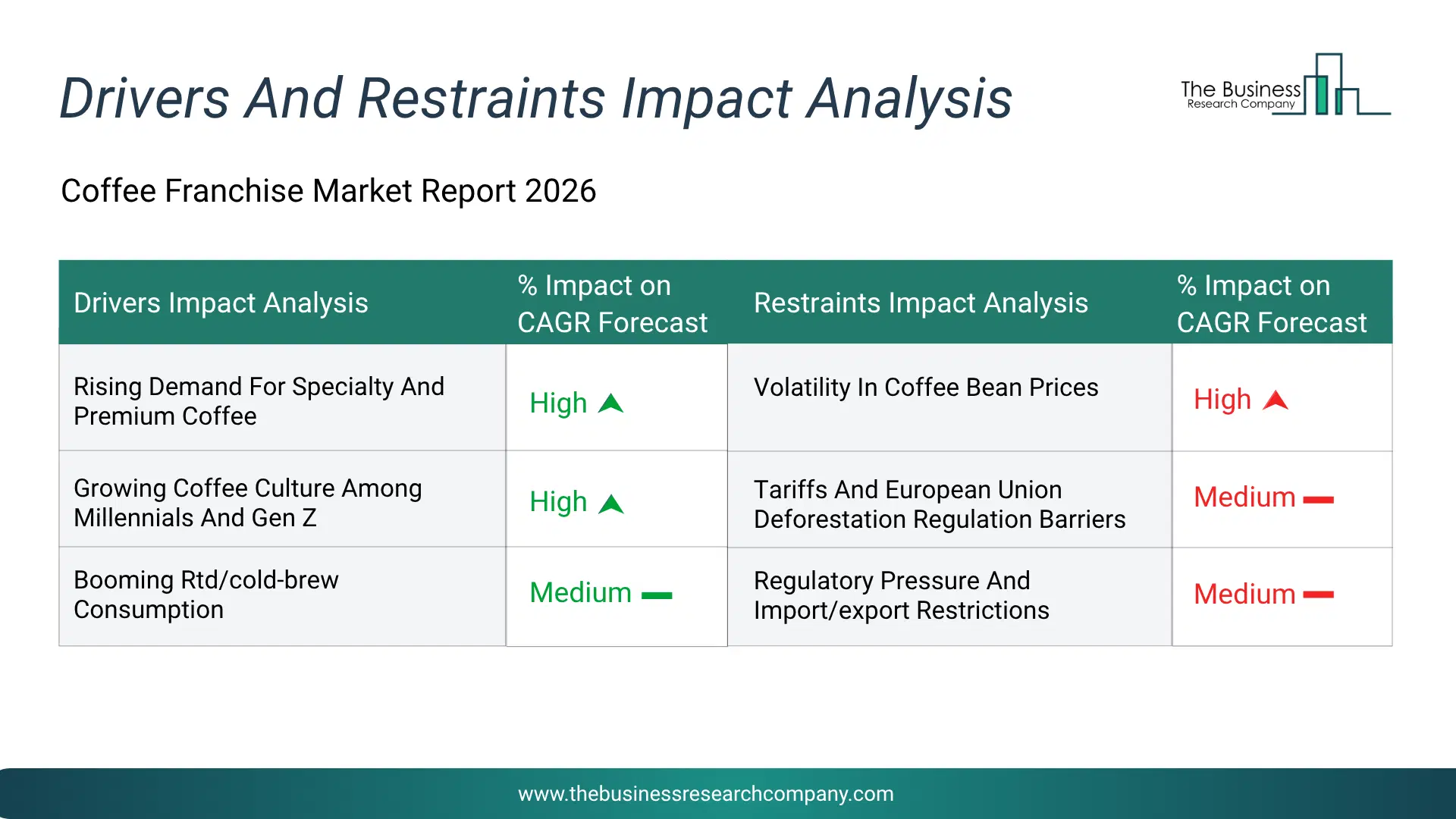
Infographic Chart Showing Key Market Drivers Analysis And Restraints For Coffee Franchise Market
The chart presents an impact analysis of key drivers and restraints, quantifying their relative influence on the market's growth rate and helping assess the balance between growth enablers and limiting factors. This chart offers a high-level perspective; the full report contains more detailed insights.
How Will The Drivers Impact Growth In The Global Coffee Franchise Market?
• Rising Demand For Specialty And Premium Coffee (High) – During the forecast period,the rising demand for specialty and premium coffee is expected to become a key growth driver for the coffee franchise market by 2030. Rising demand for specialty and premium coffee acts as a major driver for the market by shifting consumer preferences toward high-quality, ethically sourced, and uniquely flavored coffee products. Consumers are increasingly willing to pay a premium for artisanal coffee experiences, which boosts revenue margins for producers and retailers. Specialty coffee shops and boutique roasters are expanding rapidly, creating a strong ecosystem that supports this trend. This demand also encourages innovation in brewing techniques, flavor profiles, and packaging. Additionally, the emphasis on origin transparency and sustainability further enhances brand value. As disposable incomes rise globally, especially in urban areas, more consumers are opting for premium coffee options. This consistent shift toward quality over quantity fuels long-term market growth. • Growing Coffee Culture Among Millennials And Gen Z (High) – During the forecast period,the growing coffee culture among millennials and gen Z is expected to emerge as a major factor driving the expansion of the coffee franchise market by 2030. Growing coffee culture among millennials and gen Z is significantly driving the market as these demographics view coffee not just as a beverage but as a lifestyle and social experience. Coffee consumption is deeply integrated with social media trends, café culture, and work-life routines. Younger consumers actively seek out new flavors, brewing styles, and aesthetically appealing coffee experiences, boosting demand across various segments. The influence of digital platforms and influencers further amplifies this trend, making coffee a symbol of identity and status. Additionally, co-working spaces and café-based working environments contribute to increased consumption frequency. These generations also value sustainability and ethical sourcing, pushing brands to innovate responsibly. As their purchasing power grows, their preferences continue to shape market expansion. • Booming Rtd/cold-brew Consumption (Medium) – During the forecast period,the booming Rtd/cold-brew consumption is expected to act as a key growth catalyst for the coffee franchise market by 2030. Booming RTD/cold-brew consumption is acting as a strong driver due to the increasing demand for convenience and on-the-go beverages. Consumers with busy lifestyles prefer ready-to-drink coffee options that offer both quality and portability. Cold-brew coffee, known for its smoother taste and lower acidity, is gaining popularity among health-conscious consumers. This segment has witnessed rapid innovation in flavors, packaging, and functional ingredients such as added proteins or vitamins. Retail channels, including supermarkets and e-commerce platforms, are expanding their offerings to cater to this demand. The longer shelf life of RTD products also makes them attractive for distribution and export. As urbanization increases, this trend continues to accelerate market growth.How Will The Restraints Impact Growth In The Global Coffee Franchise Market?
• Volatility In Coffee Bean Prices (High) – During the forecast period,the volatility in coffee bean prices acts as a significant restraint on the market by creating uncertainty in production costs and profit margins. Coffee is highly sensitive to climate conditions, and factors such as droughts, pests, and changing weather patterns can disrupt supply. This unpredictability leads to frequent price fluctuations in global markets. Producers and manufacturers often struggle to maintain stable pricing strategies, which can affect consumer demand. Small-scale farmers are particularly vulnerable, as they lack the resources to absorb price shocks. Additionally, supply chain disruptions and geopolitical factors can further intensify price instability. Companies may be forced to pass increased costs onto consumers, potentially reducing consumption. This ongoing volatility creates challenges for long-term planning and investment. • Tariffs And European Union Deforestation Regulation Barriers (High) – During the forecast period,the tariffs and European Union deforestation regulation barriers act as a restraint by increasing compliance costs and limiting market access for exporters. Stringent regulations require companies to ensure that coffee production does not contribute to deforestation, which adds complexity to sourcing and supply chain management. Meeting these standards often involves additional certification processes, monitoring systems, and documentation. Smaller producers may find it difficult to comply due to limited financial and technical resources. Tariffs imposed by different countries can further increase the cost of exporting coffee, reducing competitiveness in international markets. These barriers can slow down trade flows and discourage new market entrants. Additionally, delays in regulatory approvals can impact supply consistency. Overall, these factors create operational and financial challenges for market participants. • Regulatory Pressure And Import/export Restrictions (Medium) – During the forecast period,the regulatory pressure and import/export restrictions serve as a restraint by creating hurdles in the smooth movement of coffee across global markets. Governments impose various rules related to quality standards, labeling, and safety, which companies must strictly follow. Non-compliance can result in penalties, shipment delays, or bans. Import/export restrictions can also arise due to political tensions, trade policies, or economic sanctions. These limitations disrupt supply chains and increase operational complexity for businesses. Companies often need to invest heavily in compliance systems and legal expertise. Such regulations can also limit market expansion opportunities, especially for smaller firms. Furthermore, frequent changes in policies make it difficult for businesses to plan strategically. This regulatory burden ultimately slows down overall market growth.Key Players In The Global Coffee Franchise Market
Major companies operating in the coffee franchise market are Starbucks Corporation, Tim Hortons Inc., Philz Coffee Inc., Costa Limited, Dunkin' Brands Group Inc., Scooter's Coffee LLC, Dutch Bros Coffee LLC, The Second Cup Ltd., Peet's Coffee Inc., Black Rock Coffee Bar LLC, Caribou Coffee Company Inc., Gloria Jean's Coffees International Pty. Ltd., Ballard Brands LLC, Caffè Nero Group Ltd., Coffee Republic Ltd., Tully's Coffee Corporation, Ziggi’s Coffee LLC, Ellianos Coffee Company, Frespresso Hospitality Pvt Ltd, International Coffee And Tea LLC, The Human Bean, Xpresso Delight LLC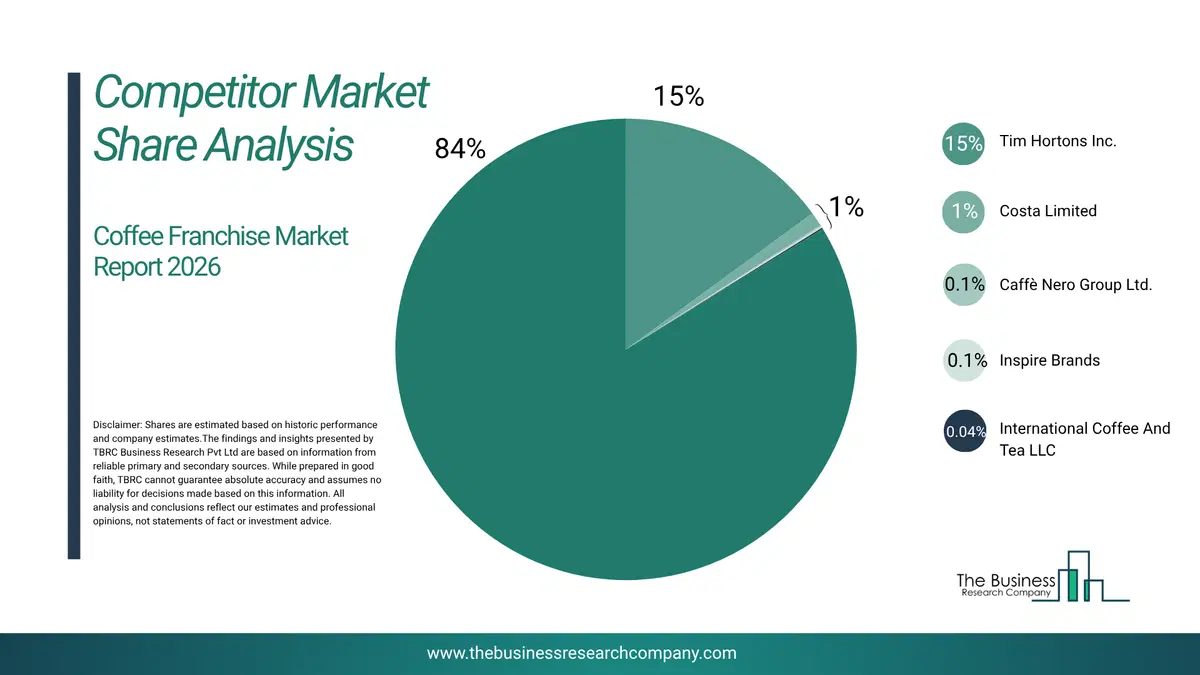
This chart is for illustrative purposes; the full report includes a detailed competitor analysis and comprehensive overview of the top 10 companies in the market.
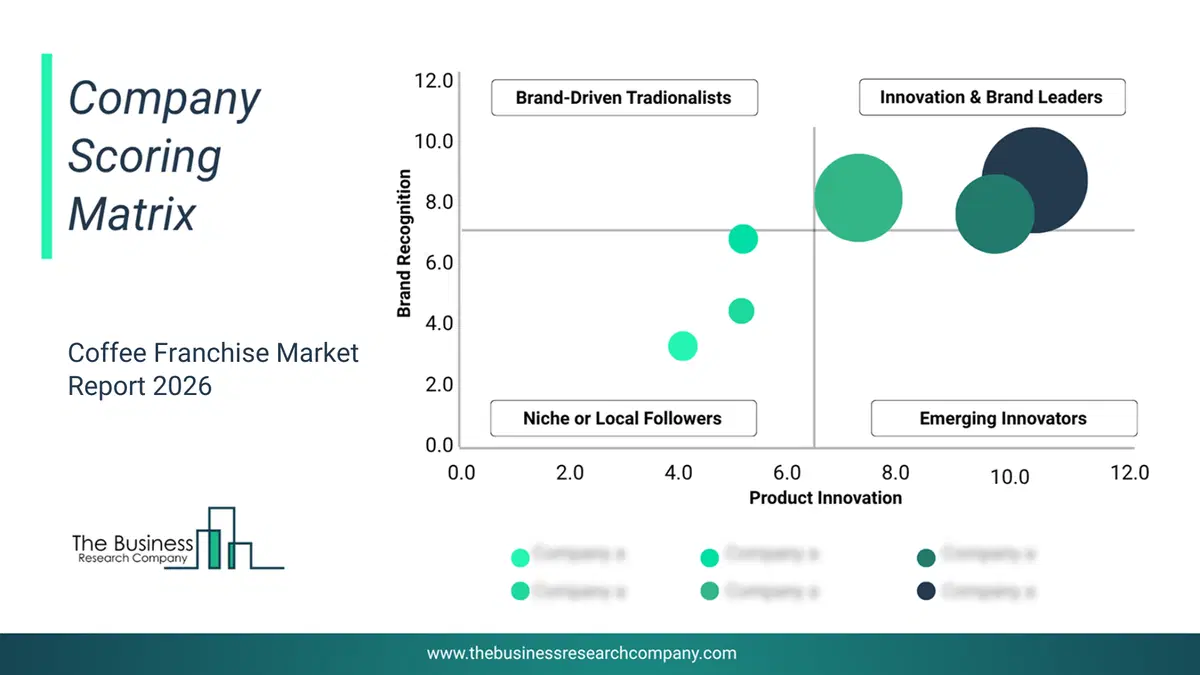
This chart maps companies by product innovation and brand strength, with bubble size indicating relative revenue, helping identify market leaders, challengers, and niche players. This is an illustrative chart; the full report provides a complete and accurate competitive analysis.
Global Coffee Franchise Market Trends and Insights
Major companies in the coffee franchise market focus on innovative services such as drive-thru stores to enhance customer convenience, increase accessibility, and cater to the growing demand for quick and efficient service. Drive-thru stores allow customers to easily purchase coffee without leaving their vehicles, saving time and providing a seamless experience. For instance, in December 2023, Arabica Ltd., a Japan-based coffee chain brand, opened its first drive-thru store in Asia at Golf Island PIK in Jakarta, Indonesia. This new store, situated at the PIK Icon roundabout, is designed to offer seamless and effortless ordering through its innovative drive-thru concept. Additionally, the store introduces a decaffeinated coffee variant to cater to customers with caffeine sensitivity. This expansion builds on the brand's strong presence in Indonesia's vibrant coffee culture.What Are Latest Mergers And Acquisitions In The Coffee Franchise Market?
In November 2023, Quench USA Inc., a US-based company that designs and manufactures filtered water coolers and ice dispensers, acquired Neighbors Coffee Co. for an undisclosed amount. The aim of the acquisition of Neighbors Coffee by Quench is to enhance Quench's service offering by expanding its coffee solutions and providing commercial customers with a broader array of premium point-of-use products. This strategic move aligns with Quench's goal of becoming a comprehensive provider of breakroom needs, including filtered drinking water, ice, and coffee solutions. Neighbors Coffee Co. is a US-based company that supplies and services coffee solutions for office environments.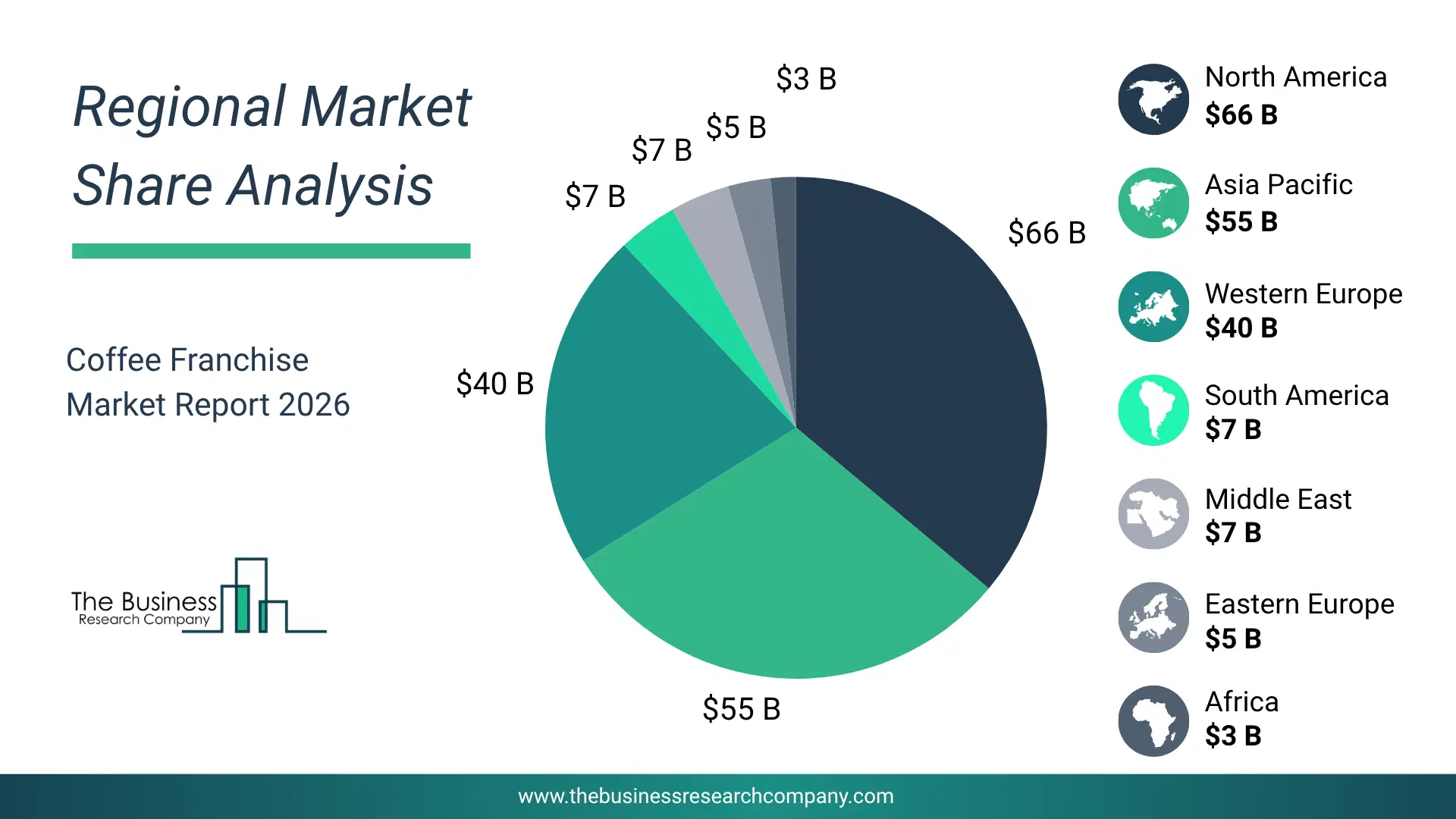
Regional Outlook
Asia-Pacific was the largest region in the coffee franchise market in 2025. The regions covered in this market report are Asia-Pacific, South East Asia, Western Europe, Eastern Europe, North America, South America, Middle East and Africa. The countries covered in this market report are Australia, Brazil, China, France, Germany, India, Indonesia, Japan, Taiwan, Russia, South Korea, UK, USA, Italy, Spain, CanadaWhat Defines the Coffee Franchise Market?
The coffee franchise market includes revenues earned by entities through services such as beverage sales, food sales, whole-bean and ground coffee sales, merchandise sales, in-store dining, takeaway, and drive-thru services. The market value includes the value of related goods sold by the service provider or included within the service offering. Only goods and services traded between entities or sold to end consumers are included.How is Market Value Defined and Measured?
The market value is defined as the revenues that enterprises gain from the sale of goods and/or services within the specified market and geography through sales, grants, or donations in terms of the currency (in USD unless otherwise specified). The revenues for a specified geography are consumption values that are revenues generated by organizations in the specified geography within the market, irrespective of where they are produced. It does not include revenues from resales along the supply chain, either further along the supply chain or as part of other products.
This chart presents market attractiveness based on a quantitative evaluation of growth, competition, strategic alignment, and risk, offering a clear view of opportunity areas for decision-making. This chart is for illustrative purposes; the full report contains the complete analysis.

This chart highlights the Total Addressable Market (TAM) by estimating the maximum revenue opportunity using an assumption-driven approach, supporting strategic planning and opportunity sizing across markets. The chart is illustrative; the full report provides a more comprehensive analysis.
What Key Data and Analysis Are Included in the Coffee Franchise Market Report 2026?
The coffee franchise market research report is one of a series of new reports from The Business Research Company that provides market statistics, including industry global market size, regional shares, competitors with the market share, detailed market segments, market trends and opportunities, and any further data you may need to thrive in the coffee franchise industry. The market research report delivers a complete perspective of everything you need, with an in-depth analysis of the current and future state of the industry.Coffee Franchise Market Report Forecast Analysis
| Report Attribute | Details |
|---|---|
| Market Size Value In 2026 | $126.45 billion |
| Revenue Forecast In 2030 | $179.7 billion |
| Growth Rate | CAGR of 9.5% from 2026 to 2030 |
| Base Year For Estimation | 2025 |
| Actual Estimates/Historical Data | 2020-2025 |
| Forecast Period | 2026 - 2030 |
| Market Representation | Revenue in USD Billion and CAGR from 2026 to 2030 |
| Segments Covered | Cuisine, Delivery Type, Application |
| Regional Scope | Asia-Pacific, Western Europe, Eastern Europe, North America, South America, Middle East, Africa |
| Country Scope | The countries covered in the report are Australia, Brazil, China, France, Germany, India, Indonesia, Japan, Taiwan, Russia, South Korea, UK, USA, Canada, Italy, Spain. |
| Key Companies Profiled | Starbucks Corporation, Tim Hortons Inc., Philz Coffee Inc., Costa Limited, Dunkin' Brands Group Inc., Scooter's Coffee LLC, Dutch Bros Coffee LLC, The Second Cup Ltd., Peet's Coffee Inc., Black Rock Coffee Bar LLC, Caribou Coffee Company Inc., Gloria Jean's Coffees International Pty. Ltd., Ballard Brands LLC, Caffè Nero Group Ltd., Coffee Republic Ltd., Tully's Coffee Corporation, Ziggi’s Coffee LLC, Ellianos Coffee Company, Frespresso Hospitality Pvt Ltd, International Coffee And Tea LLC, The Human Bean, Xpresso Delight LLC |
| Customization Scope | Request for Customization |
| Pricing And Purchase Options | Explore Purchase Options |