
Coffee Fruit Energy Drinks Market Report 2026
Global Outlook – By Product Type (Ready To Drink, Concentrates, Shots, Other Product Types), By Ingredient Type (Arabica Coffee Fruit, Robusta Coffee Fruit, Blends, Other Ingredient Types), By Distribution Channel (Supermarkets Or Hypermarkets, Convenience Stores, Online Retail, Specialty Stores, Other Distribution Channels), By Application (Sports And Fitness, Daily Consumption, Healthcare, Other Applications), By End User (Adults, Teenagers, Athletes, Other End Users) – Market Size, Trends, Strategies, and Forecast to 2035
Coffee Fruit Energy Drinks Market Overview
• Coffee Fruit Energy Drinks market size has reached to $1.36 billion in 2025 • Expected to grow to $2.13 billion in 2030 at a compound annual growth rate (CAGR) of 9.5% • Growth Driver: Growing Popularity Of Plant-Based And Vegan Lifestyles Driving The Market Growth Due To Rising Preference For Sustainable And Natural Consumption Choices • Market Trend: Sustainable Functional Drinks Gaining Momentum With Natural Caffeine Sources • North America was the largest region in 2025 and Asia-Pacific is the fastest growing region.What Is Covered Under Coffee Fruit Energy Drinks Market?
Coffee fruit energy drinks refer to beverages formulated using extracts derived from the fruit of the coffee plant (cascara) combined with natural caffeine and other functional ingredients to enhance energy, focus, and overall alertness. These drinks are designed to provide a plant-based alternative to traditional energy beverages, offering antioxidant properties and a balanced energy release while supporting hydration and cognitive performance. The main product types of coffee fruit energy drinks include ready to drink, concentrates, shots, and other product types. Ready to drink refers to pre-packaged beverage formulations made from coffee fruit extracts designed for immediate consumption with energy-boosting properties. These products are categorized by ingredient type including arabica coffee fruit, robusta coffee fruit, blends, and other ingredient types and are distributed through supermarkets or hypermarkets, convenience stores, online retail, specialty stores, and other distribution channels. They find applications such as sports and fitness, daily consumption, healthcare, and others, while the end-use includes adults, teenagers, athletes, and others.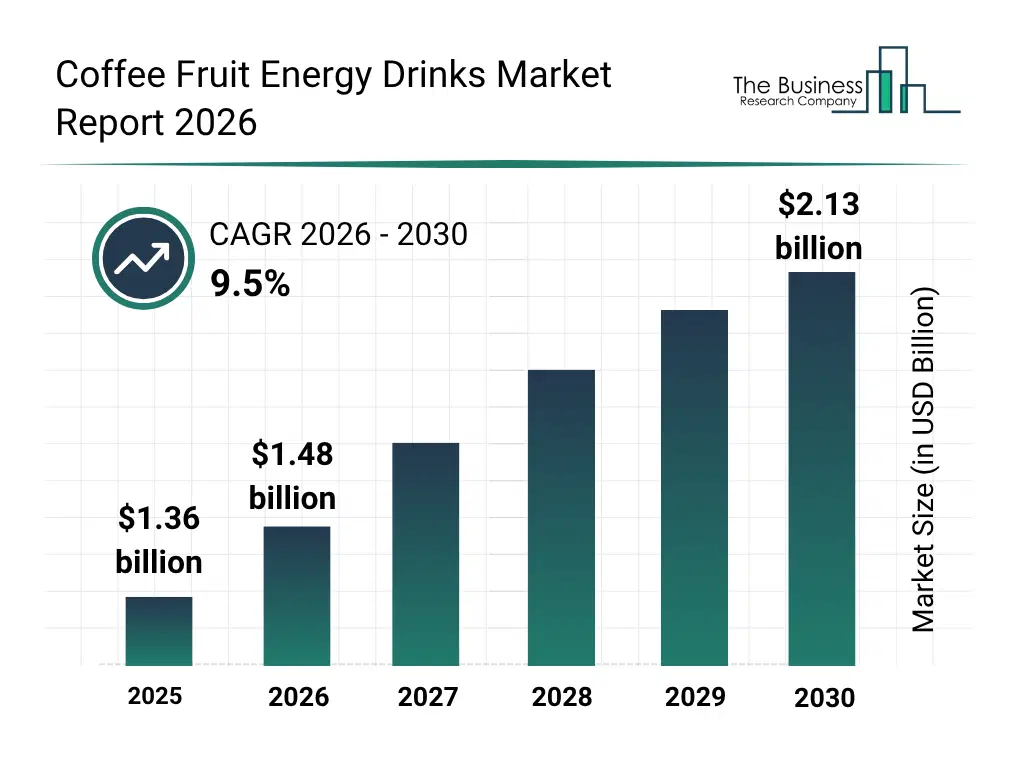
What Is The Coffee Fruit Energy Drinks Market Size and Share 2026?
The coffee fruit energy drinks market size has grown strongly in recent years. It will grow from $1.36 billion in 2025 to $1.48 billion in 2026 at a compound annual growth rate (CAGR) of 9.2%. The growth in the historic period can be attributed to growing consumer preference for natural caffeine alternatives, rising awareness regarding antioxidant rich beverages, expansion of ready to drink functional beverage consumption, increasing fitness and sports nutrition participation, growth in specialty beverage retail channels.What Is The Coffee Fruit Energy Drinks Market Growth Forecast?
The coffee fruit energy drinks market size is expected to see strong growth in the next few years. It will grow to $2.13 billion in 2030 at a compound annual growth rate (CAGR) of 9.5%. The growth in the forecast period can be attributed to rising innovation in organic and clean label formulations, increasing demand for cognitive wellness and focus enhancement drinks, expansion of online retail and direct to consumer beverage sales, growing adoption of sustainable and upcycled beverage ingredients, increasing penetration of functional beverages among teenagers and athletes. Major trends in the forecast period include increasing adoption of AI driven personalized functional beverage formulations, growing demand for sustainable and upcycled coffee fruit ingredients, rising integration of biotechnology in natural energy and cognitive enhancement solutions, expansion of digital consumer engagement and smart beverage analytics platforms, increasing use of connected retail and smart distribution ecosystems.
Global Coffee Fruit Energy Drinks Market Segmentation
1) By Product Type: Ready To Drink, Concentrates, Shots, Other Product Types 2) By Ingredient Type: Arabica Coffee Fruit, Robusta Coffee Fruit, Blends, Other Ingredient Types 3) By Distribution Channel: Supermarkets Or Hypermarkets, Convenience Stores, Online Retail, Specialty Stores, Other Distribution Channels 4) By Application: Sports And Fitness, Daily Consumption, Healthcare, Other Applications 5) By End User: Adults, Teenagers, Athletes, Other End Users Subsegments: 1) By Ready To Drink: Carbonated Ready To Drink Coffee Fruit Energy Drinks, Non Carbonated Ready To Drink Coffee Fruit Energy Drinks, Cold Brew Based Ready To Drink Variants, Flavored Ready To Drink, Functional Ready To Drink, Organic Or Clean Label Ready To Drink 2) By Concentrates: Liquid Coffee Fruit Concentrates, Syrup Based Concentrates, Powdered Concentrates, Sugar Free Concentrates, High Caffeine Concentrates, Flavored Concentrates 3) By Shots: Single Serve Energy Shots, High Caffeine Shots, Low Calorie Or Zero Sugar Shots, Functional Shots, Herbal Infused Coffee Fruit Shots, Organic Or Natural Energy Shots 4) By Other Product Types: Powdered Drink Mixes, Ready To Mix Sachets, Functional Beverage Blends, Frozen Or Chilled Specialty FormatsWhat Is The Driver Of The Coffee Fruit Energy Drinks Market?
The growing popularity of plant-based and vegan lifestyles is expected to propel the growth of the coffee fruit energy drinks market going forward. Plant-based and vegan lifestyles refer to dietary and consumption patterns that prioritize foods and products derived entirely from plants, avoiding animal-based ingredients. The popularity of plant-based and vegan lifestyles is rising due to increasing concerns about health, as consumers seek nutrient-rich, natural foods that help reduce the risk of chronic diseases and improve overall well-being. Plant-based and vegan lifestyles increase the adoption of coffee fruit energy drinks by driving preference for natural, plant-derived beverages that align with clean-label expectations and provide functional benefits such as energy and antioxidants without animal-based ingredients. For instance, according to the 2024 Plant-Based Foods State of the Marketplace Report by the Plant Based Foods Industry Association (PBFIA), a US-based organization, plant-based protein powders and beverages in USA grew by 11% in value and 13% in volume, reaching $450 million. Therefore, the growing popularity of plant-based and vegan lifestyles is driving the growth of the coffee fruit energy drinks industry.Key Players In The Global Coffee Fruit Energy Drinks Market
Major companies operating in the coffee fruit energy drinks market are Nestlé S.A., PepsiCo Inc., Starbucks Corporation, Keurig Dr Pepper Inc., Red Bull GmbH, Monin Incorporated, Suja Life LLC, FutureCeuticals Inc., Bai Brands LLC, Caskai GmbH, JSE Coffee, Riff Cold Brewed Coffee LLC, KonaRed Corporation, MAD Drinks B.V., Alldae Inc., Up to Good, cherrycol, Sustainable Coffee Fruit Co. Inc., Coffee Fruit PureGlobal Coffee Fruit Energy Drinks Market Trends and Insights
Major companies operating in the coffee fruit energy drinks market are focusing on developing innovative products such as cascara-based functional energy beverages, to enhance sustainability and provide natural caffeine alternatives with added health benefits. Cascara-based energy drinks are formulated using the dried husk of the coffee fruit, which is typically discarded during coffee production, and are infused with natural plant extracts to deliver caffeine, antioxidants, and mild sweetness. For instance, in April 2023, Up to Good Inc., a US-based beverage company, launched a naturally caffeinated energy drink line derived from upcycled coffee fruit. The product line includes flavors such as Cascara Mint, Lemon Ginger, and Hibiscus Berry, each containing around 70 mg of caffeine sourced naturally from cascara. The beverages are made using plant-based ingredients, contain no added sugar, and provide approximately 35 calories per can, appealing to health-conscious consumers. Utilizing cascara, an often-discarded byproduct of coffee production, reduces food waste, conserves water resources, and supports sustainable sourcing practices.What Are Latest Mergers And Acquisitions In The Coffee Fruit Energy Drinks Market?
In October 2024, Keurig Dr Pepper, a US-based beverage manufacturing company, acquired a 60% stake in GHOST Lifestyle LLC for an undisclosed amount, with the remaining 40% stake expected to be acquired in 2028. Through this acquisition, Keurig Dr Pepper aims to strengthen its position in the rapidly growing energy drink market by leveraging GHOST’s strong brand identity, innovative product portfolio, and loyal consumer base among younger demographics. GHOST Lifestyle LLC is a US-based beverage and lifestyle company that specializes in providing energy drinks including coffee fruit energy drinks.Regional Outlook/Insights
North America was the largest region in the coffee fruit energy drinks market in 2025. Asia-Pacific is expected to be the fastest-growing region in the forecast period. The regions covered in this market report are Asia-Pacific, South East Asia, Western Europe, Eastern Europe, North America, South America, Middle East, Africa. The countries covered in this market report are Australia, Brazil, China, France, Germany, India, Indonesia, Japan, Taiwan, Russia, South Korea, UK, USA, Canada, Italy, Spain.What Defines the Coffee Fruit Energy Drinks Market?
The coffee fruit energy drinks market consists of sales of caffeinated coffee fruit-based beverages, sparkling energy beverages derived from coffee fruit, functional energy drinks with botanical ingredients, carbonated and non-carbonated energy beverages, and other coffee fruit-derived drink formulations. Values in this market are ‘factory gate’ values, that is, the value of goods sold by the manufacturers or creators of the goods, whether to other entities (including downstream manufacturers, wholesalers, distributors, and retailers) or directly to end customers. The value of goods in this market includes related services sold by the creators of the goods.How is Market Value Defined and Measured?
The market value is defined as the revenues that enterprises gain from the sale of goods and/or services within the specified market and geography through sales, grants, or donations in terms of the currency (in USD unless otherwise specified). The revenues for a specified geography are consumption values that are revenues generated by organizations in the specified geography within the market, irrespective of where they are produced. It does not include revenues from resales along the supply chain, either further along the supply chain or as part of other products.What Key Data and Analysis Are Included in the Coffee Fruit Energy Drinks Market Report 2026?
The coffee fruit energy drinks market research report is one of a series of new reports from The Business Research Company that provides market statistics, including industry global market size, regional shares, competitors with the market share, detailed market segments, market trends and opportunities, and any further data you may need to thrive in the coffee fruit energy drinks industry. The market research report delivers a complete perspective of everything you need, with an in-depth analysis of the current and future state of the industry.Coffee Fruit Energy Drinks Market Report Forecast Analysis
| Report Attribute | Details |
|---|---|
| Market Size Value In 2026 | $1.48 billion |
| Revenue Forecast In 2035 | $2.13 billion |
| Growth Rate | CAGR of 9.5% from 2026 to 2035 |
| Base Year For Estimation | 2025 |
| Actual Estimates/Historical Data | 2020-2025 |
| Forecast Period | 2026 - 2030 - 2035 |
| Market Representation | Revenue in USD Billion and CAGR from 2026 to 2035 |
| Segments Covered | Product Type, Ingredient Type, Distribution Channel, Application, End User |
| Regional Scope | Asia-Pacific, Western Europe, Eastern Europe, North America, South America, Middle East, Africa |
| Country Scope | The countries covered in the report are Australia, Brazil, China, France, Germany, India, Indonesia, Japan, Taiwan, Russia, South Korea, UK, USA, Canada, Italy, Spain. |
| Key Companies Profiled | Nestlé S.A., PepsiCo Inc., Starbucks Corporation, Keurig Dr Pepper Inc., Red Bull GmbH, Monin Incorporated, Suja Life LLC, FutureCeuticals Inc., Bai Brands LLC, Caskai GmbH, JSE Coffee, Riff Cold Brewed Coffee LLC, KonaRed Corporation, MAD Drinks B.V., Alldae Inc., Up to Good, cherrycol, Sustainable Coffee Fruit Co. Inc., Coffee Fruit Pure |
| Customization Scope | Request for Customization |
| Pricing And Purchase Options | Explore Purchase Options |