
Cold Chain Logistics Market Report 2026
Global Outlook – By Type (Refrigerated Warehouses; Refrigerated Transportation), By Process (Pre-Cooling Facilities; Cold Storage; Refrigerated Carriers; Packaging; Information Management System), By Technology (Dry Ice; Gel Packs; Eutectic Plates; Liquid Nitrogen; Quilts), By Temperature Type (Frozen; Chilled), By Application (Fruits And Vegetables; Fish, Meat, And Seafood; Dairy And Frozen Desserts; Bakery And Confectionery; Processed Food; Pharmaceuticals; Other Applications) – Market Size, Trends, Strategies, and Forecast to 2030
Cold Chain Logistics Market Overview
• Cold Chain Logistics market size has reached to $325.68 billion in 2025 • Expected to grow to $603.29 billion in 2030 at a compound annual growth rate (CAGR) of 13.1% • Growth Driver: Rise In E-Commerce Driving The Growth Of The Market Due To Increasing Demand For Temperature-Sensitive Deliveries • Market Trend: Strengthening Pharmaceutical Distribution Through Specialized Temperature-Controlled Logistics • North America was the largest region in 2025 and Asia-Pacific is the fastest growing region.Market Gains By 2030 – Top Opportunities By Segment
Market Gain identifies the most promising market opportunities by highlighting the segments or products expected to generate the highest incremental revenue growth over the next five years.
What Is Covered Under Cold Chain Logistics Market?
Cold chain logistics is a temperature-controlled supply chain for transporting and storing sensitive products like beverages, ensuring freshness and quality through refrigerated trucks, storage facilities, and monitoring systems. This logistics process is crucial for maintaining product integrity and safety, particularly for dairy, juices, and alcoholic beverages, throughout all stages of handling and distribution. The main types of cold chain logistics are refrigerated warehouses, refrigerated transportation. Refrigerated warehouses are large storage facilities equipped with cooling systems to keep perishable goods like food and medicines at specific low temperatures. The various process includes pre-cooling facilities, cold storage, refrigerated carriers, packaging, information management system with various technologies such as dry ice, gel packs, eutectic plates, liquid nitrogen, quilts. The various temperature types include frozen, chilled. These are used by various applications such as fruits and vegetables, fish, meat, and seafood, dairy and frozen desserts, bakery and confectionery, processed food, pharmaceuticals, others.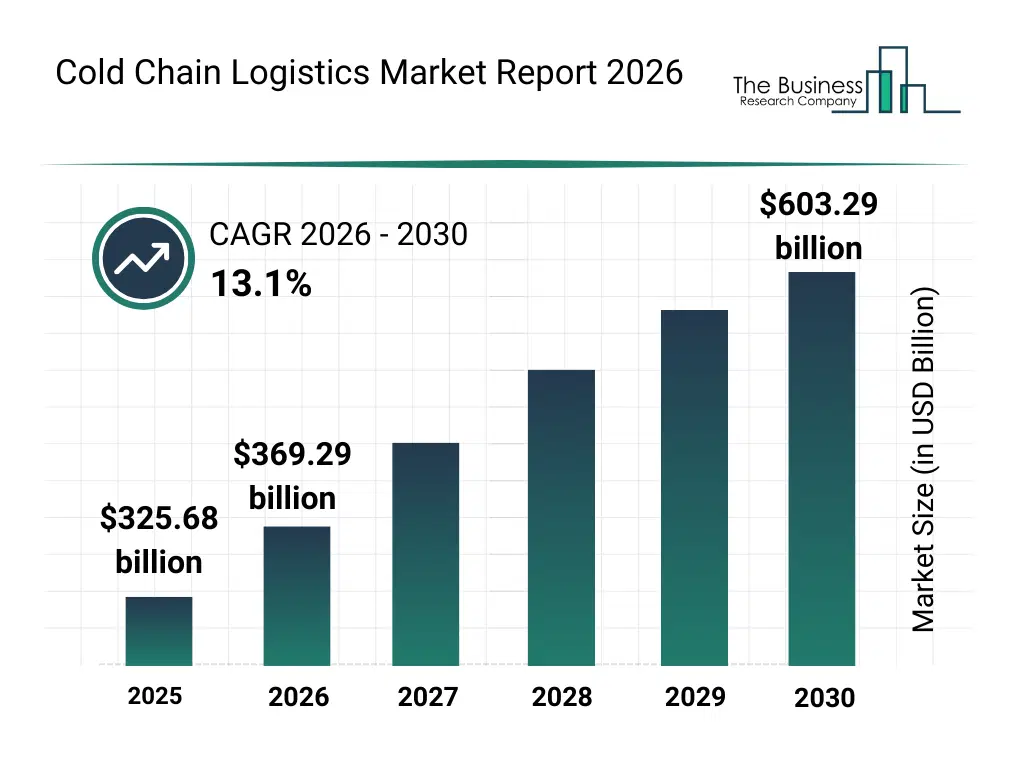
What Is The Cold Chain Logistics Market Size and Share 2026?
The cold chain logistics market size has grown rapidly in recent years. It will grow from $325.68 billion in 2025 to $369.29 billion in 2026 at a compound annual growth rate (CAGR) of 13.4%. The growth in the historic period can be attributed to expansion of frozen and chilled food consumption, growth of refrigerated transportation fleets, rising pharmaceutical distribution needs, development of cold storage infrastructure, adoption of basic monitoring technologies.What Is The Cold Chain Logistics Market Growth Forecast?
The cold chain logistics market size is expected to see rapid growth in the next few years. It will grow to $603.29 billion in 2030 at a compound annual growth rate (CAGR) of 13.1%. The growth in the forecast period can be attributed to increasing investments in smart cold warehouses, rising demand for pharmaceutical cold logistics, expansion of intermodal refrigerated transport, growing adoption of energy-efficient refrigeration, increasing regulatory compliance requirements. Major trends in the forecast period include expansion of automated cold storage facilities, growing use of real-time temperature tracking, rising adoption of refrigerated transportation networks, enhanced focus on end-to-end cold chain visibility, increasing integration of data-driven logistics platforms.
Global Cold Chain Logistics Market Segmentation
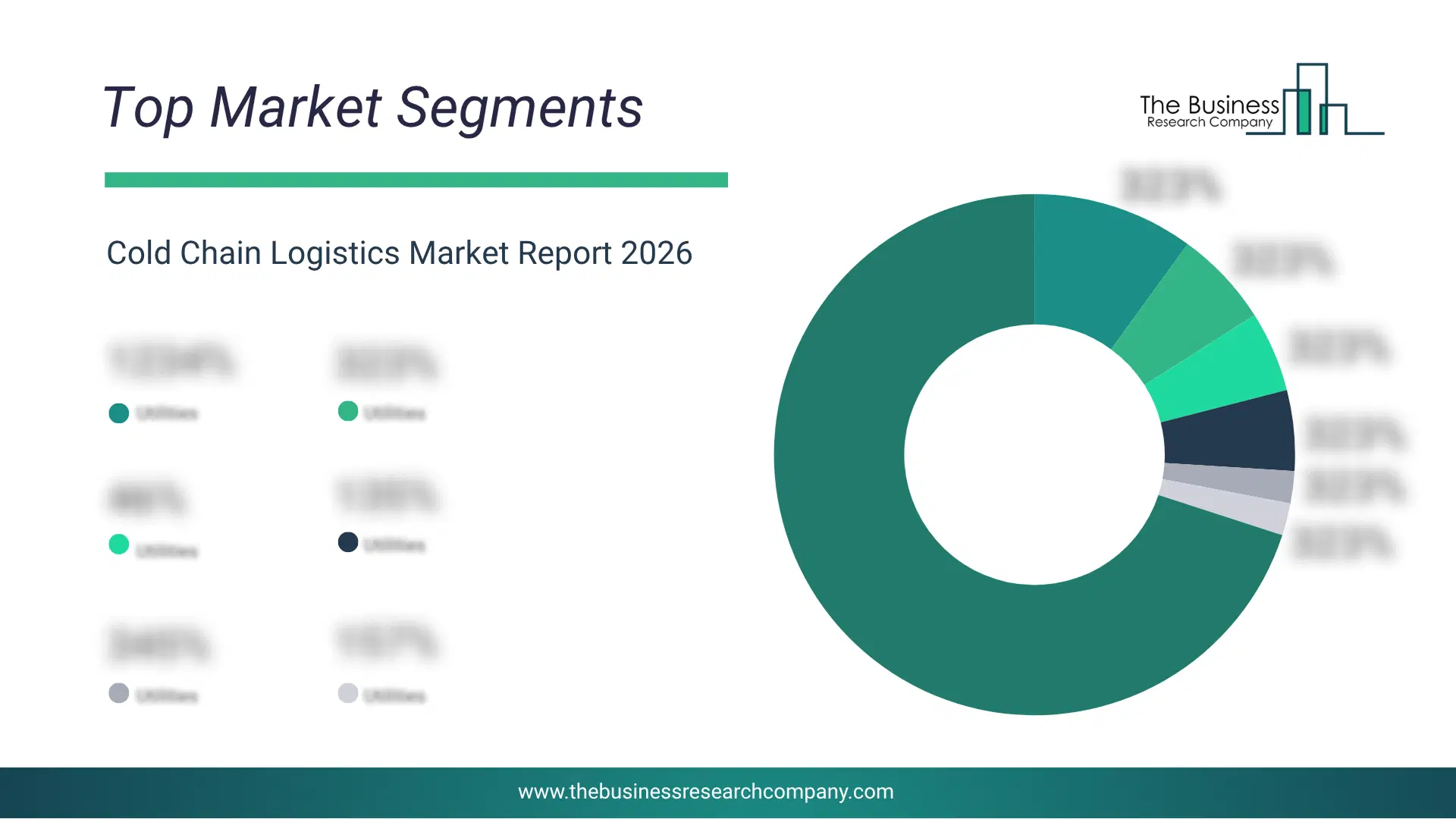
1) By Type: Refrigerated Warehouses, Refrigerated Transportation 2) By Process: Pre-Cooling Facilities, Cold Storage, Refrigerated Carriers, Packaging, Information Management System 3) By Technology: Dry Ice, Gel Packs, Eutectic Plates, Liquid Nitrogen, Quilts 4) By Temperature Type: Frozen, Chilled 5) By Application: Fruits And Vegetables, Fish, Meat, And Seafood, Dairy And Frozen Desserts, Bakery And Confectionery, Processed Food, Pharmaceuticals, Other Applications Subsegments: 1) By Refrigerated Warehouses: Frozen Storage, Chilled Storage, Automated Cold Storage, Dedicated Warehouses, Multi-Client Warehouses 2) By Refrigerated Transportation: Refrigerated Trucks, Refrigerated Railcars, Refrigerated Ships, Air Cargo, Intermodal Transportation The top segments in the cold chain logistics market will be: • Refrigerated Warehousing will reach $341.37 Billion by 2030. • Refrigerated Transport will reach $266.98 Billion by 2030.What Is The Driver Of The Cold Chain Logistics Market?
The rise of e-commerce activities is expected to propel the growth of the cold chain logistics market going forward. E-commerce, or electronic commerce, is the buying and selling of goods or services over the internet, involving online transactions, digital payments, and the electronic transfer of data between businesses, consumers, or governments. E-commerce activities are increasing due to the convenience of shopping from home, saving time and effort for busy consumers. Cold chain logistics helps e-commerce by ensuring temperature-sensitive products transported under controlled conditions to maintain freshness and safety during delivery. For instance, in August 2024, according to United States Census Bureau, a US-based government agency, U.S. retail e-commerce sales for the second quarter of 2024 reached an estimated $282.3 billion, marking a 5.3% increase compared to the first quarter of 2023. Therefore, the rise of e-commerce activities drives the growth of the cold chain logistics industry.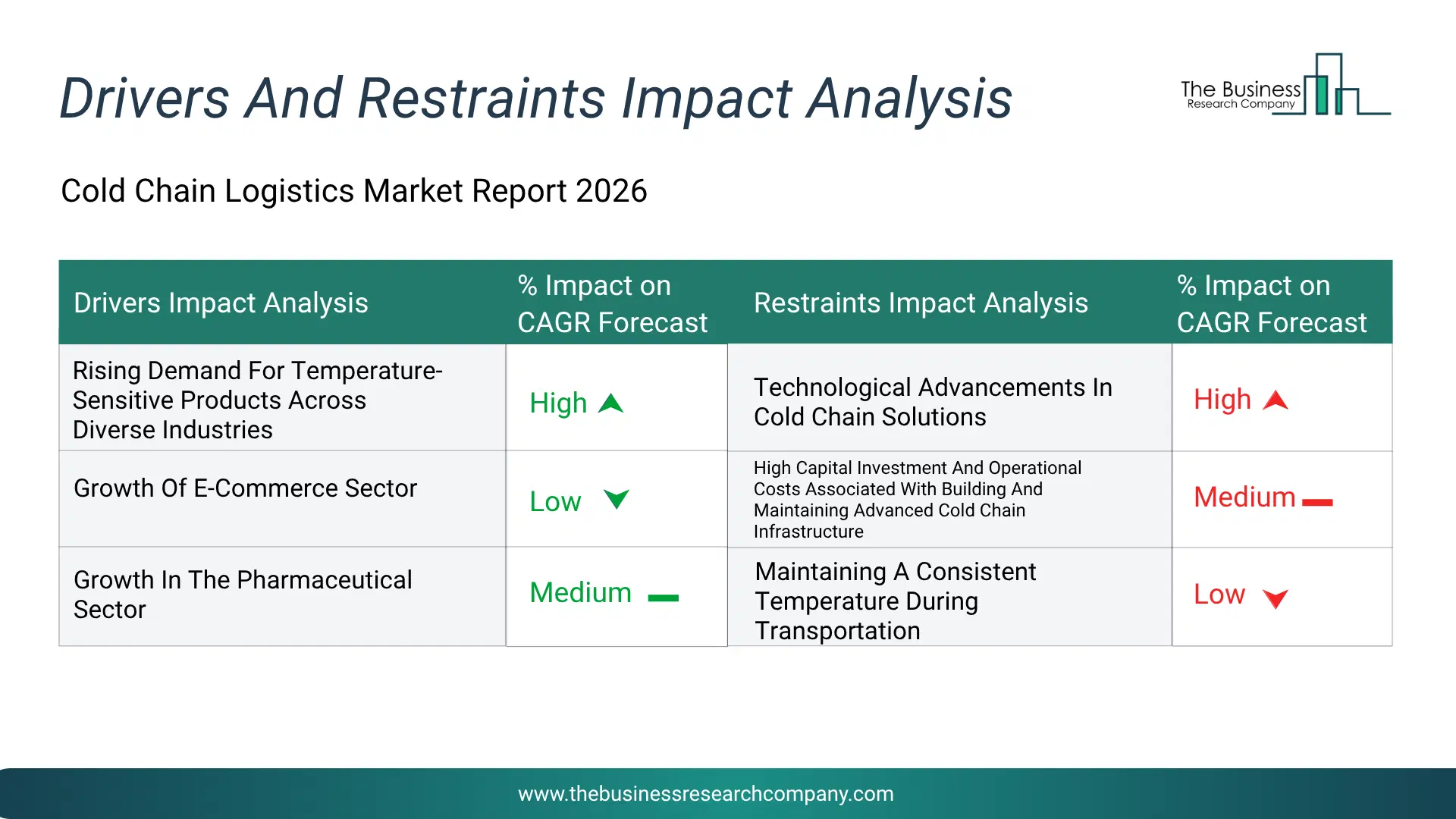
Infographic Chart Showing Key Market Drivers Analysis And Restraints For Cold Chain Logistics Market
The chart presents an impact analysis of key drivers and restraints, quantifying their relative influence on the market's growth rate and helping assess the balance between growth enablers and limiting factors. This chart offers a high-level perspective; the full report contains more detailed insights.
How Will The Drivers Impact Growth In The Global Cold Chain Logistics Market?
• Rising Demand For Temperature-Sensitive Products Across Diverse Industries (High) – During the forecast period, the rising demand for temperature-sensitive products across diverse industries is expected to become a key growth driver for the cold chain logistics market by 2030. Rising demand for temperature-sensitive products across diverse industries acts as a major driver for the cold chain logistics market because sectors such as food, pharmaceuticals, and chemicals require strict temperature control to maintain product quality and safety. Increasing consumption of dairy, frozen foods, biologics, and specialty chemicals is pushing companies to adopt reliable cold storage and transportation solutions. This growing dependence on controlled environments enhances the need for advanced cold chain infrastructure and monitoring systems. Businesses are investing in efficient logistics networks to minimize spoilage and comply with quality standards. As a result, this demand significantly boosts market expansion and technological adoption. • Growth Of E-Commerce Sector (Low) – During the forecast period, the growth of e-commerce sector is expected to emerge as a major factor driving the expansion of the cold chain logistics market by 2030. Growth of e-commerce sector acts as a major driver for the cold chain logistics market because online grocery and food delivery platforms are rapidly increasing the need for efficient last-mile cold delivery solutions. Consumers expect quick and safe delivery of perishable items, which requires robust refrigerated storage and transportation systems. The rise of quick-commerce models further accelerates demand for localized cold storage facilities. Companies are investing in advanced logistics networks to meet delivery speed and quality expectations. This trend strengthens the role of cold chain logistics in supporting modern retail and digital commerce ecosystems. • Growth In The Pharmaceutical Sector (Medium) – During the forecast period, the growth in the pharmaceutical sector is expected to act as a key growth catalyst for the cold chain logistics market by 2030. Growth in the pharmaceutical sector acts as a major driver for the cold chain logistics market because many drugs, vaccines, and biologics require strict temperature control throughout storage and distribution. The increasing production of temperature-sensitive medicines, including vaccines and insulin, drives the need for reliable cold chain systems. Regulatory requirements for drug safety and efficacy further enforce the adoption of advanced monitoring and storage solutions. Pharmaceutical companies are partnering with specialized logistics providers to ensure compliance and minimize product loss. This growing sector significantly contributes to the expansion of the cold chain logistics market.How Will The Restraints Impact Growth In The Global Cold Chain Logistics Market?
• Technological Advancements In Cold Chain Solutions (High) – During the forecast period, the technological advancements in cold chain solutions act as a major driver for the market because innovations such as IoT-enabled monitoring, real-time tracking, and automated refrigeration systems improve efficiency and reliability. These technologies help reduce product spoilage, ensure regulatory compliance, and optimize supply chain operations. Advanced data analytics and telematics allow companies to monitor temperature conditions continuously and respond quickly to deviations. Businesses are increasingly adopting smart cold chain solutions to enhance transparency and operational control. This continuous innovation supports market growth by making cold chain logistics more efficient and cost-effective. • High Capital Investment And Operational Costs Associated With Building And Maintaining Advanced Cold Chain Infrastructure (Low) – During the forecast period, the high capital investment and operational costs associated with building and maintaining advanced cold chain infrastructure act as a major restraint on the market by increasing the financial burden on companies. Establishing refrigerated warehouses, specialized transport fleets, and monitoring systems requires substantial upfront investment, which limits entry for small and medium enterprises. Ongoing expenses such as energy consumption, maintenance, and skilled labor further strain profitability. These high costs reduce the willingness of businesses to expand cold chain networks, especially in developing regions. As a result, market growth is slowed due to limited infrastructure development and reduced participation. • Maintaining A Consistent Temperature During Transportation (Medium) – During the forecast period, the maintaining a consistent temperature during transportation acts as a critical restraint by creating operational challenges across the cold chain logistics process. Variations in temperature due to delays, equipment failures, or external environmental conditions can compromise product quality and safety. Ensuring uninterrupted temperature control requires advanced tracking systems and reliable infrastructure, increasing complexity and costs. Any deviation can lead to spoilage, financial losses, and regulatory non-compliance for logistics providers. Consequently, the difficulty of preserving temperature integrity throughout transit restricts efficiency and scalability in the market.Key Players In The Global Cold Chain Logistics Market
Major companies operating in the cold chain logistics market are DHL International GmbH, United Parcel Service Incorporated, Mærsk A/S, C.H. Robinson Worldwide Incorporated, Deutsche Bahn Schenker AG, Lineage Logistics Holdings LLC, AmeriCold Logistics LLC, Fritz SchäFer GmbH, VersaCold Logistics Services, OOCL Logistics Limited, Comfrio Soluções Logísticas S.A., NewCold Coöperatief UA, Burris Logistics Incorporated, AGRO Merchants Group LLC, Congebec Logistics Inc., Friozem Armazens Frigorificos Ltda, CEVA Logistics SA, Localfrio S.A., Frialsa Frigorificos SA, Conestoga Cold Storage Limited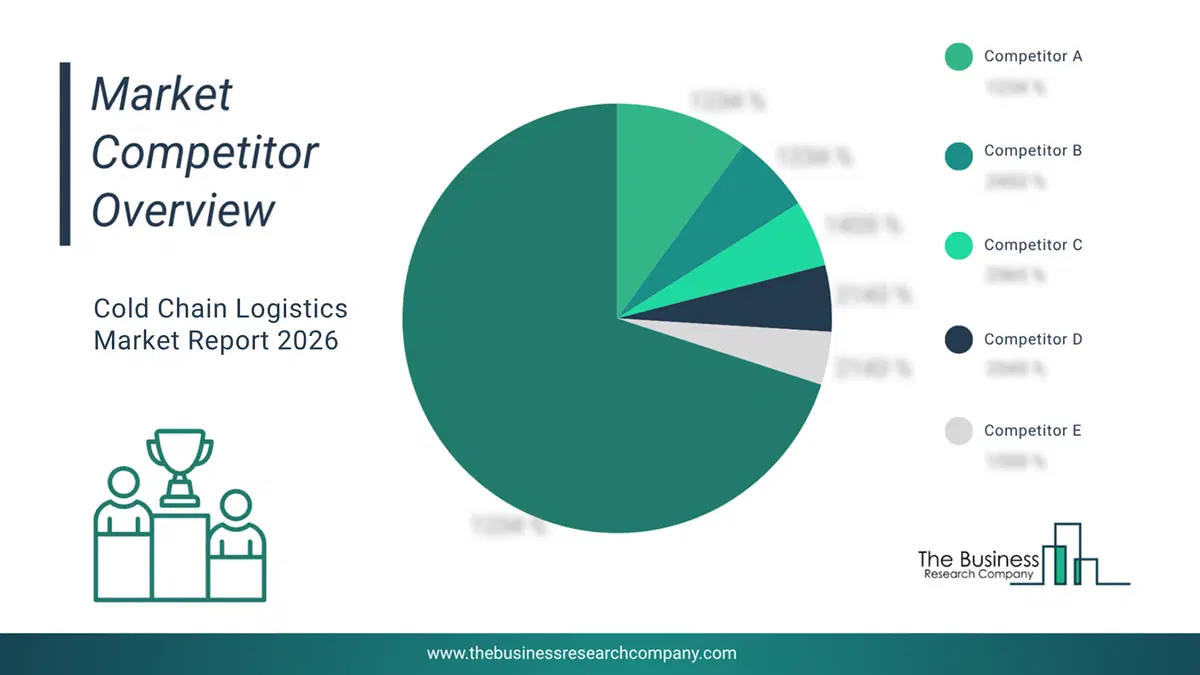
This chart is for illustrative purposes; the full report includes a detailed competitor analysis and comprehensive overview of the top 10 companies in the market.
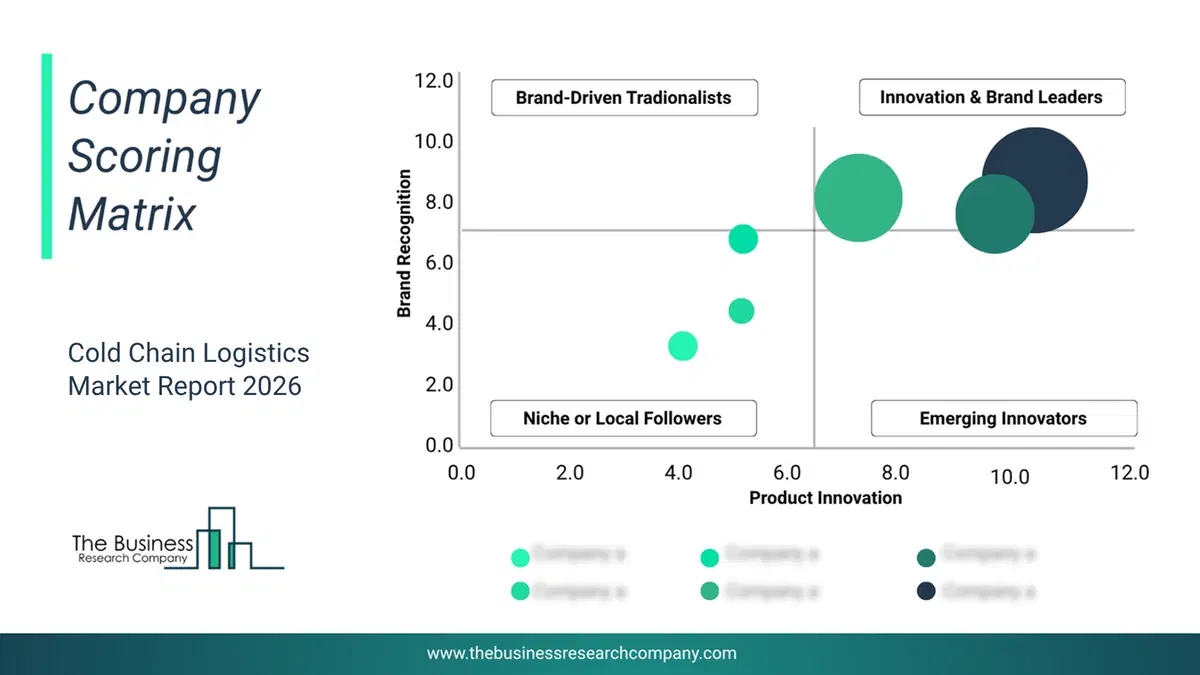
This chart maps companies by product innovation and brand strength, with bubble size indicating relative revenue, helping identify market leaders, challengers, and niche players. This is an illustrative chart; the full report provides a complete and accurate competitive analysis.
Global Cold Chain Logistics Market Trends and Insights
Major companies operating in the cold chain logistics market are focusing on developing innovative solutions, such as integrated temperature‑controlled logistics service verticals to ensure regulatory compliance, real-time temperature monitoring, and safe transport of medicines and vaccines across India. Integrated temperature‑controlled logistics service verticals combine dedicated refrigerated transport, smart monitoring systems, regulatory compliance frameworks, and specialized handling to maintain precise temperature conditions for pharmaceutical products throughout the supply chain. For instance, in August 2025, Celcius Logistics, an India-based provider of end-to-end cold chain transportation, warehousing, and last-mile logistics solutions, launched Celcius+, a technology-enabled logistics vertical exclusively for pharmaceutical cold chain services. Celcius+ features real-time temperature tracking, dedicated refrigerated vehicles, and infrastructure optimized for urban and semi-urban markets, ensuring product integrity from pickup to delivery. This launch strengthens Celcius Logistics’ capacity to scale pharma cold chain operations, enhance supply chain resilience, and deliver quality-assured pharmaceutical distribution across India.What Are Latest Mergers And Acquisitions In The Cold Chain Logistics Market?
In January 2025, United Parcel Service Inc., a US-based package delivery company acquired Frigo-Trans and BPL for an undisclosed amount. With this acquisition, United Parcel Service Inc. aims to expand its capabilities in temperature-controlled logistics and strengthen its position in the pharmaceutical and healthcare supply chain sector by integrating Frigo-Trans and BPL’s specialized cold chain networks and expertise. FT Beteiligungsgeschaft is a Germany-based company that offers cold chain logistics. BPL is a Germany-based company that offers cold-chain logistics.Regional Outlook
North America was the largest region in the cold chain logistics market in 2025. Asia-Pacific is expected to be the fastest-growing region in the forecast period. The regions covered in this market report are Asia-Pacific, South East Asia, Western Europe, Eastern Europe, North America, South America, Middle East, Africa. The countries covered in this market report are Australia; Brazil; China; France; Germany; India; Indonesia; Japan; Taiwan; Russia; South Korea; UK; USA; Canada; Italy; Spain.What Defines the Cold Chain Logistics Market?
The cold chain logistics market includes revenues earned by entities by providing last mile cold delivery, cold chain monitoring, and temperature-controlled packaging. The market value encompasses the revenue from goods sold as part of the service offering or directly by the service provider. The market value includes the value of related goods sold by the service provider or included within the service offering. Only goods and services traded between entities or sold to end consumers are included.How is Market Value Defined and Measured?
The market value is defined as the revenues that enterprises gain from the sale of goods and/or services within the specified market and geography through sales, grants, or donations in terms of the currency (in USD unless otherwise specified). The revenues for a specified geography are consumption values that are revenues generated by organizations in the specified geography within the market, irrespective of where they are produced. It does not include revenues from resales along the supply chain, either further along the supply chain or as part of other products.
This chart presents market attractiveness based on a quantitative evaluation of growth, competition, strategic alignment, and risk, offering a clear view of opportunity areas for decision-making. This chart is for illustrative purposes; the full report contains the complete analysis.

This chart highlights the Total Addressable Market (TAM) by estimating the maximum revenue opportunity using an assumption-driven approach, supporting strategic planning and opportunity sizing across markets. The chart is illustrative; the full report provides a more comprehensive analysis.
What Key Data and Analysis Are Included in the Cold Chain Logistics Market Report 2026?
The cold chain logistics market research report is one of a series of new reports from The Business Research Company that provides market statistics, including Market Report 2026?global market size, regional shares, competitors with the market share, detailed market segments, market trends and opportunities, and any further data you may need to thrive in the cold chain logistics Market Report 2026? The market research report delivers a complete perspective of everything you need, with an in-depth analysis of the current and future state of the Market Report 2026?Cold Chain Logistics Market Report Forecast Analysis
| Report Attribute | Details |
|---|---|
| Market Size Value In 2026 | $369.29 billion |
| Revenue Forecast In 2030 | $603.29 billion |
| Growth Rate | CAGR of 13.4% from 2026 to 2030 |
| Base Year For Estimation | 2025 |
| Actual Estimates/Historical Data | 2020-2025 |
| Forecast Period | 2026 - 2030 |
| Market Representation | Revenue in USD Billion and CAGR from 2026 to 2030 |
| Segments Covered | Type, Process, Technology, Temperature Type, Application |
| Regional Scope | Asia-Pacific, Western Europe, Eastern Europe, North America, South America, Middle East, Africa |
| Country Scope | The countries covered in the report are Australia, Brazil, China, France, Germany, India, Indonesia, Japan, Taiwan, Russia, South Korea, UK, USA, Canada, Italy, Spain. |
| Key Companies Profiled | DHL International GmbH, United Parcel Service Incorporated, Mærsk A/S, C.H. Robinson Worldwide Incorporated, Deutsche Bahn Schenker AG, Lineage Logistics Holdings LLC, AmeriCold Logistics LLC, Fritz SchäFer GmbH, VersaCold Logistics Services, OOCL Logistics Limited, Comfrio Soluções Logísticas S.A., NewCold Coöperatief UA, Burris Logistics Incorporated, AGRO Merchants Group LLC, Congebec Logistics Inc., Friozem Armazens Frigorificos Ltda, CEVA Logistics SA, Localfrio S.A., Frialsa Frigorificos SA, Conestoga Cold Storage Limited |
| Customization Scope | Request for Customization |
| Pricing And Purchase Options | Explore Purchase Options |