

Collaborative Robots Market Report 2026
Global Outlook – By Component (Hardware, Software), By Payload Capacity (Up To 5kg, Up To 10kg, Above 10kg), By Application (Assembly, Pick And Place, Handling, Packaging, Quality Testing, Gluing And Welding, Other Applications), By Vertical (Automotive, Food And Beverage, Furniture, Plastic And Polymers, Metal And Machinery, Electronics, Pharmaceuticals, Other Verticals) – Market Size, Trends, Strategies, and Forecast to 2030
Collaborative Robots Market Overview
• Collaborative Robots market size has reached to $4.18 billion in 2025 • Expected to grow to $15.55 billion in 2030 at a compound annual growth rate (CAGR) of 30.1% • Growth Driver: Rising Labor Costs Fueling Growth In Collaborative Robots Market • Market Trend: Rapid Robotics Teams Up With Universal Robots • Asia-Pacific was the largest region in 2025.Market Gains By 2030 – Top Opportunities By Segment
Market Gain identifies the most promising market opportunities by highlighting the segments or products expected to generate the highest incremental revenue growth over the next five years.
What Is Covered Under Collaborative Robots Market?
Collaborative robots refer to robotic automation that is built in a collaborative workspace to work safely and assist human workers. These robots are used in an industrial setting to complete repetitive tasks and work hand-in-hand with employees. The main components of collaborative robots are hardware and software. Hardware refers to the physical component that is required for a computer to function. The various payload capacity includes up to 5kg, up to 10kg, and above 10kg. These are applied in assembly, pick and place, handling, packaging, quality testing, gluing and welding, and others, and are used by various verticals such as automotive, food and beverage, furniture, plastic and polymers, metal and machinery, electronics, pharmaceuticals, and others.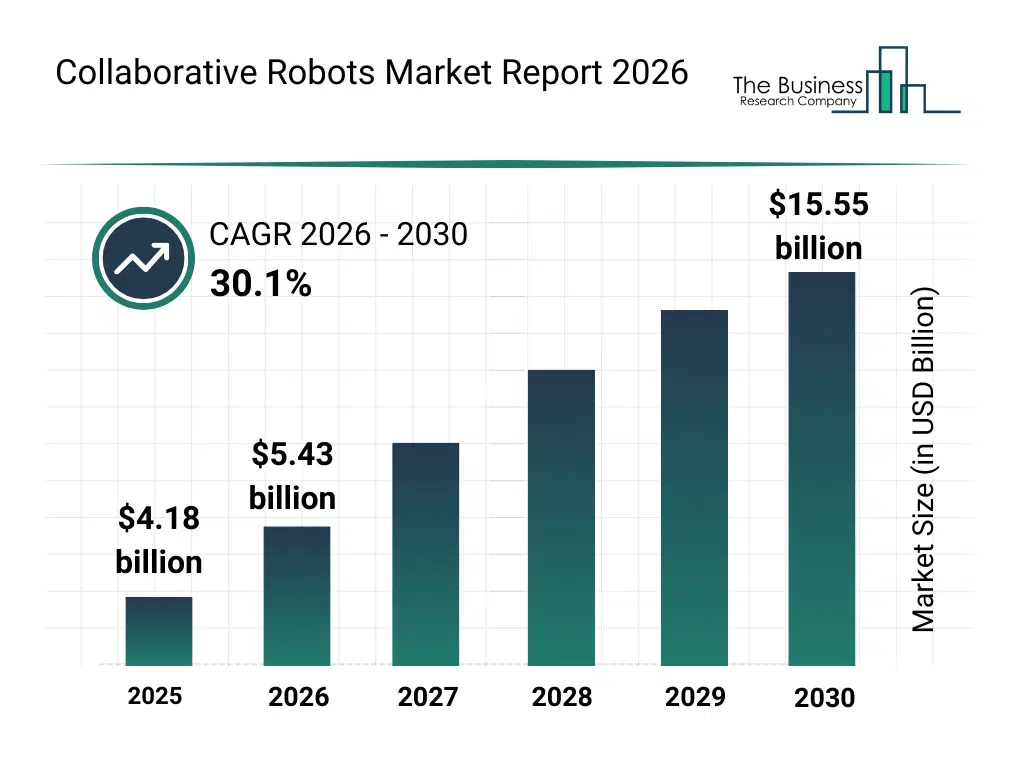
What Is The Collaborative Robots Market Size and Share 2026?
The collaborative robots market size has grown exponentially in recent years. It will grow from $4.18 billion in 2025 to $5.43 billion in 2026 at a compound annual growth rate (CAGR) of 29.9%. The growth in the historic period can be attributed to expansion of industrial automation initiatives, rising labor shortages in manufacturing, growing demand for flexible production lines, improved safety certification standards, increasing affordability of collaborative robots.What Is The Collaborative Robots Market Growth Forecast?
The collaborative robots market size is expected to see exponential growth in the next few years. It will grow to $15.55 billion in 2030 at a compound annual growth rate (CAGR) of 30.1%. The growth in the forecast period can be attributed to growing integration of AI-enabled robot perception, rising adoption in non-automotive industries, expansion of smart factory investments, increasing demand for rapid deployment automation, growing use of collaborative robots in logistics and packaging. Major trends in the forecast period include increasing deployment of human-robot collaborative workcells, rising adoption of low-payload cobots in SMEs, growing use of vision-guided collaborative robots, expansion of flexible and reprogrammable robotic systems, enhanced focus on worker safety and ergonomics.
Global Collaborative Robots Market Segmentation
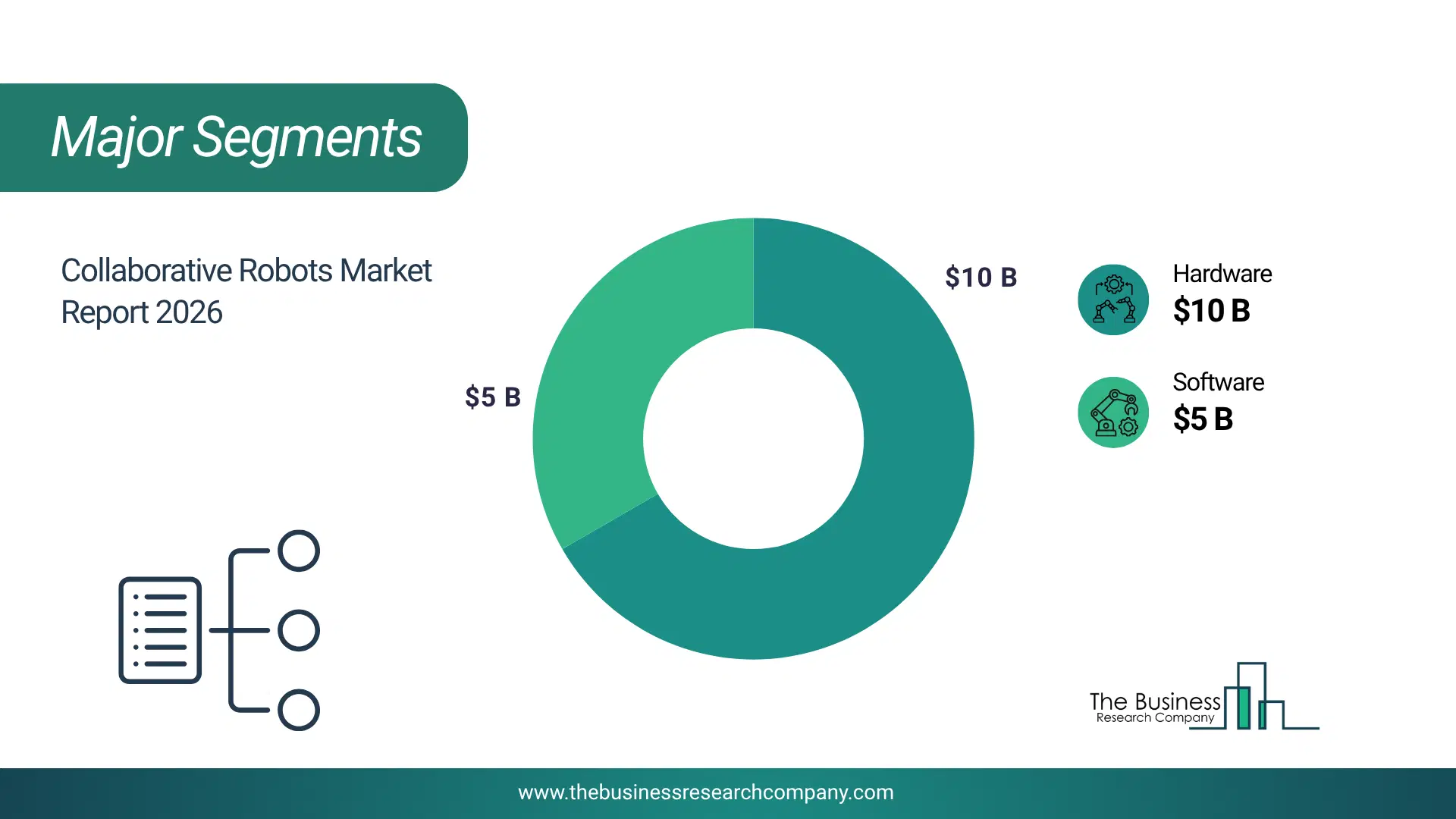
1) By Component: Hardware, Software 2) By Payload Capacity: Up To 5kg, Up To 10kg, Above 10kg 3) By Application: Assembly, Pick And Place, Handling, Packaging, Quality Testing, Gluing And Welding, Other Applications 4) By Vertical: Automotive, Food And Beverage, Furniture, Plastic And Polymers, Metal And Machinery, Electronics, Pharmaceuticals, Other Verticals Subsegments: 1) By Hardware: Robot Arms, End Effectors, Sensors, Controllers, Safety Systems 2) By Software: Robot Programming Software, Monitoring And Analytics Software, Integration Software, User Interfaces The top segments in the collaborative robots market will be: • Hardware will reach $2955.12 Million by 2025. • Up To 5kg will reach $1990.65 Million by 2025. • Assembly will reach $1540.66 Million by 2025. • Up To 10kg will reach $1466.71 Million by 2025. • Software will reach $1255.39 Million by 2025.What Is The Driver Of The Collaborative Robots Market?
Rising labor costs are expected to propel the growth of the collaborative robots market going forward. Labor costs are the sums that a company must spend to cover each employee's salary and benefits, in addition to any associated payroll taxes and benefits. Accounting and finance experts consider labor costs as a significant variable when determining an organization's direct and indirect labor expenses. Rising labor costs would increase the adoption of collaborative robots, as they would lower labor costs and solve the growing labor shortages. For instance, in September 2024, according to Eurostat, a Luxembourg-based statistical office of the European Union in the second quarter of 2024, hourly labor costs increased by 4.7% in the euro area and by 5.2% in the EU compared to the same quarter the previous year. Therefore, the rising labor costs are driving the collaborative robots industry.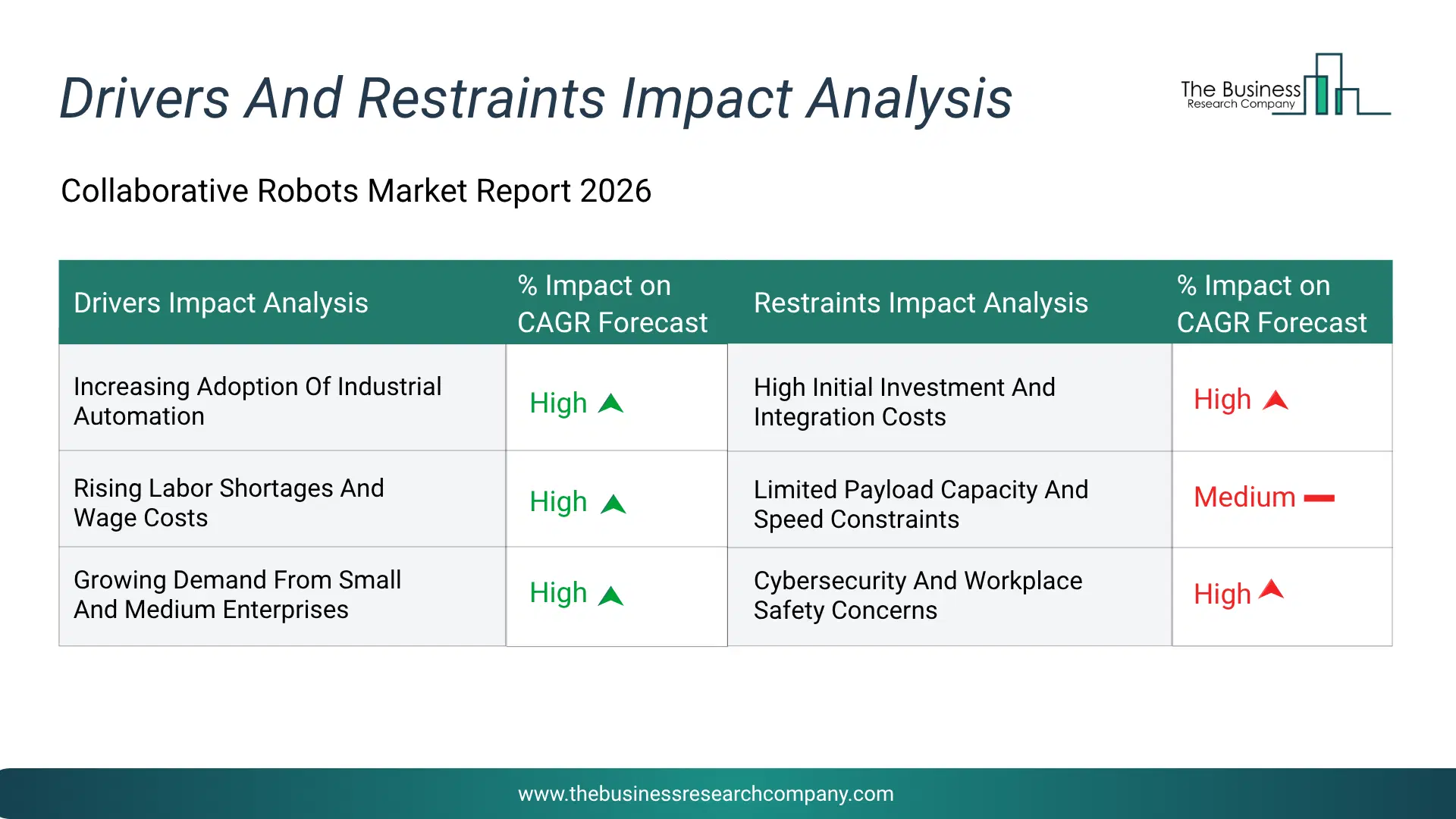
Infographic Chart Showing Key Market Drivers Analysis And Restraints For Collaborative Robots Market
The chart presents an impact analysis of key drivers and restraints, quantifying their relative influence on the market's growth rate and helping assess the balance between growth enablers and limiting factors. This chart offers a high-level perspective; the full report contains more detailed insights.
How Will The Drivers Impact Growth In The Global Collaborative Robots Market?
• Growing Focus on Workplace Safety (High) – The growing focus on workplace safety will become a key driver of growth in the collaborative robots market by 2030. Many industries face challenges involving physically demanding, repetitive, or hazardous tasks such as heavy lifting, welding, or handling dangerous materials. Collaborative robots effectively assume these high-risk activities, significantly enhancing workplace safety and reducing injury rates. Equipped with advanced sensors and safety mechanisms, cobots can operate alongside human workers without requiring physical barriers. This facilitates a safer, more efficient collaborative environment by minimizing accident risks while maintaining worker protection. The deployment of cobots signals a strong organizational commitment to employee safety and well-being, fostering a culture that values innovation and continuous improvement, thereby encouraging broader acceptance and sustainable integration of automation technologies. As a result, the growing focus on workplace safety is anticipated to contributing to a 2.0% annual growth in the market. • Rising Demand for Precision and Quality Control (Medium) – The rising demand for precision and quality control will emerge as a major factor driving the expansion of the market by 2030. As industry regulations become more stringent, cobots help companies maintain compliance while improving customer satisfaction and strengthening brand reputation through superior product quality. Consequently, the rising demand for precision and quality control is projected to contributing to a 1.5% annual growth in the market. • Rising Use in Medical Procedures and Patient Care (Medium) – The rising use in medical procedures and patient care will serve as a key growth catalyst for the market by 2030. As the volume and complexity of medical procedures and patient care increase, healthcare systems are turning to collaborative robots to enhance efficiency, accuracy and scalability. This automation not only streamlines operations but also enables faster, safer and more frequent treatment interventions ultimately driving a significant rise in pharmaceutical consumption across both clinical and home care settings. Amid global healthcare labor shortages, these robots alleviate workforce pressures by ensuring consistent and efficient task execution, driving increased adoption across medical facilities. Therefore, this rising use in medical procedures and patient care is projected to supporting to a 1.0% annual growth in the market. • Rise in E-Commerce and Logistics (Low) – The rise in e-commerce and logistics will become a significant driver contributing to the growth of the market by 2030. The rapid expansion of e-commerce has significantly increased the volume of orders processed daily by warehouses and distribution centers. Collaborative robots streamline operations by automating key tasks such as picking, packing, sorting and palletizing, driving greater speed and efficiency. Their adaptability allows for quick reprogramming to manage diverse product types and evolving workflows typical of dynamic logistics environments. Addressing industry challenges like labor shortages and rising costs, cobots augment human labor to enhance throughput and reduce operational expenses. Additionally, they improve order accuracy, minimizing errors and returns, which strengthens supply chain reliability. Their ability to operate continuously supports 24/7 logistics, meeting rising consumer demands for faster delivery and higher service levels. Consequently, the rise in e-commerce and logistics is projected to contributing to a 0.5% annual growth in the market.How Will The Restraints Impact Growth In The Global Collaborative Robots Market?
• High Initial Investment Costs (Medium) – High Initial Investment Costs will restrict the growth of the Collaborative Robots market during the forecast period. Collaborative robots involve significant capital investment for purchase, installation, and integration. High costs create barriers for smaller manufacturers with limited budgets. Investment requirements can limit the adoption of cobots and affect market growth in cost-sensitive segments. • Labor Union Pushback (Medium) – Labor Union Pushback will restrict the growth of the Collaborative Robots market during the forecast period. Labor unions may resist the introduction of collaborative robots due to concerns about job displacement. Union resistance can slow adoption rates in unionized manufacturing environments. Pushback from workers and unions can create challenges for cobot implementation and market growth. • Impact of Trade War and Tariffs (Low) – Impact of Trade War and Tariffs will restrict the growth of the Collaborative Robots market during the forecast period. Cobot production relies on imported components and sensors subject to trade tariffs. Trade barriers can increase equipment costs and affect product availability. Trade tensions may also impact manufacturing investment and automation adoption.Key Players In The Global Collaborative Robots Market
Major companies operating in the collaborative robots market are Teradyne Inc., FANUC Corporation, KUKA AG, Denso Corporation, ABB Ltd., Mitsubishi Electric Corporation, Yaskawa Electric Corporation, Doosan Robotics Inc., Kawasaki Heavy Industries Ltd., Omron Corporation, AUBO (Beijing AUBO Robotics Technology Co., Ltd.), JAKA Robotics Co., Ltd., Universal Robots A/S, OnRobot A/S, Kinova Inc., Kassow Robots ApS, United Robotics Group GmbH, Seed Robotics Lda, TIRA Robotics, NEO Robotics GmbH, GLITZ Robotics Pvt. Ltd.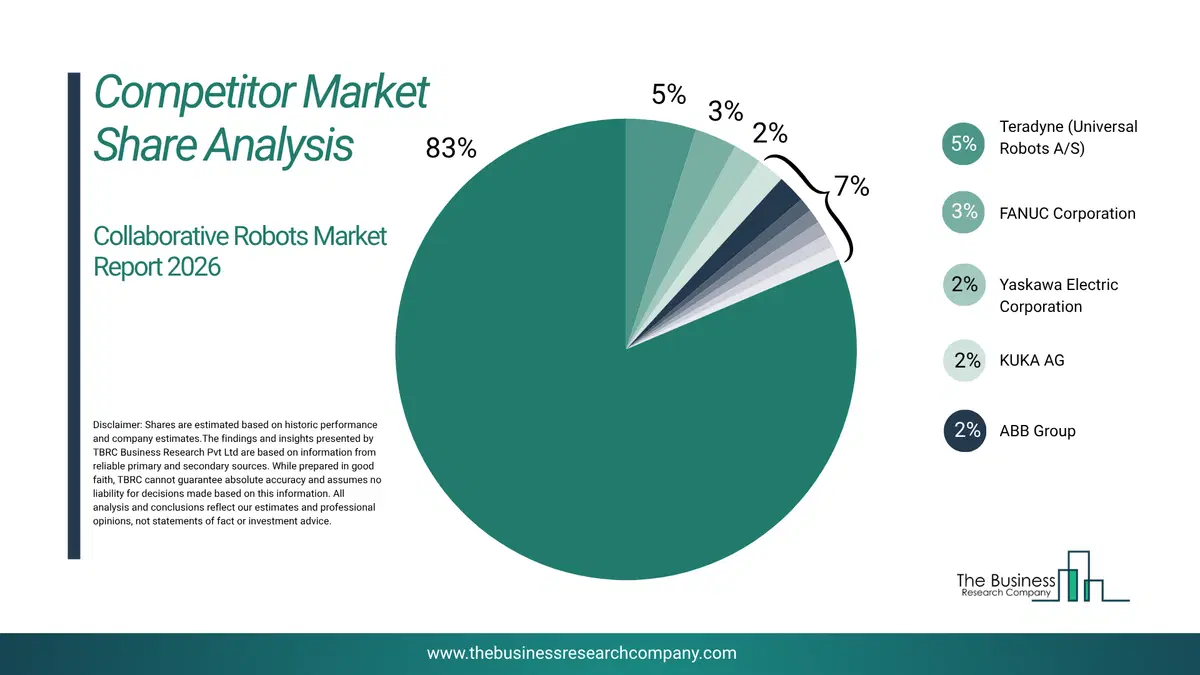
This chart is for illustrative purposes; the full report includes a detailed competitor analysis and comprehensive overview of the top 10 companies in the market.
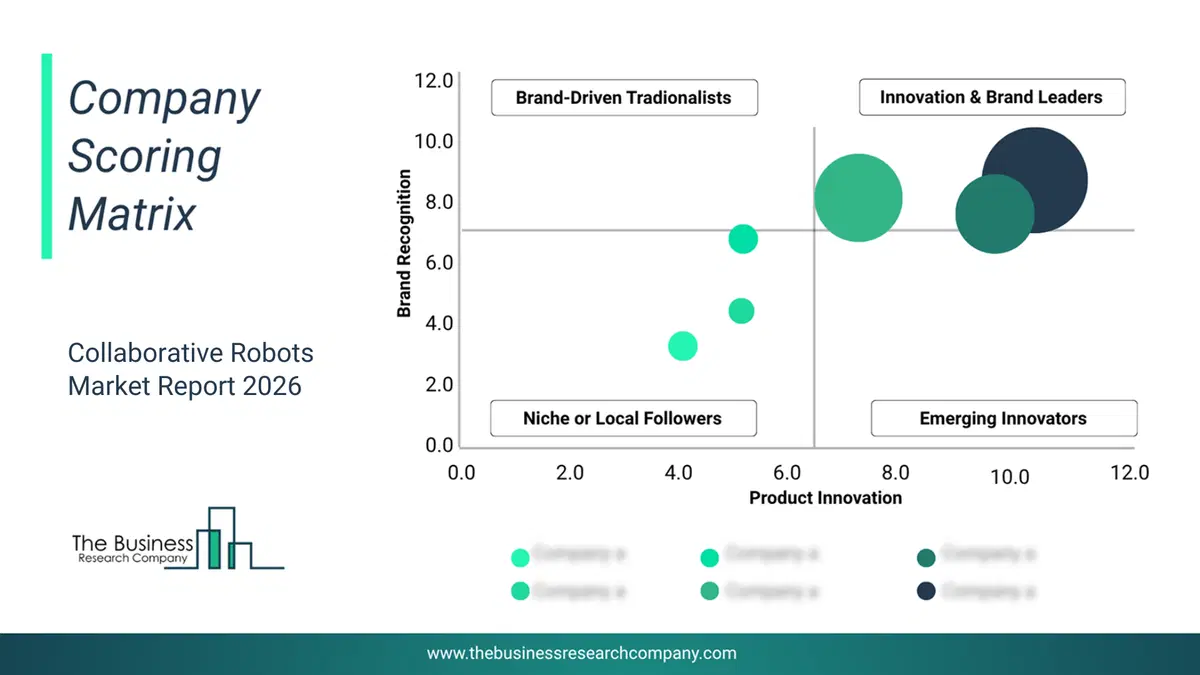
This chart maps companies by product innovation and brand strength, with bubble size indicating relative revenue, helping identify market leaders, challengers, and niche players. This is an illustrative chart; the full report provides a complete and accurate competitive analysis.
Global Collaborative Robots Market Trends and Insights
Major companies operating in the collaborative robots market are focusing on strategic partnerships and collaborations to leverage each other’s resources and expand in the market. For example, in February 2023, Rapid Robotics, a US-based manufacturer of robotic solutions, entered into a partnership with Universal Robots, a Denmark-based manufacturer of smaller, flexible industrial collaborative robots. Through this partnership, Rapid Robotics and Universal Robots aim to accelerate cobot deployments in new ways. Further, in May 2023, Universal Robots, a Denmark-based manufacturer of smaller, flexible industrial collaborative robots, entered into a new partnership with Denali Advanced Integration, a US-based integrator of services and global technology. This partnership is in line with a rising interest in cobot automation among major enterprises and will provide them with end-to-end integration and service support.What Are Latest Mergers And Acquisitions In The Collaborative Robots Market?
In August 2025, OPTEL Group, a Canada-based provider of pharmaceutical traceability and supply chain solutions, acquired Vanguard Robotics for an undisclosed amount. With this acquisition, OPTEL aims to enhance its pharmaceutical automation capabilities by integrating collaborative robot (cobot) technology, improving operational efficiency, and addressing labor constraints in the pharmaceutical sector. Vanguard Robotics is a Canada-based provider of end-of-line collaborative robotic systems.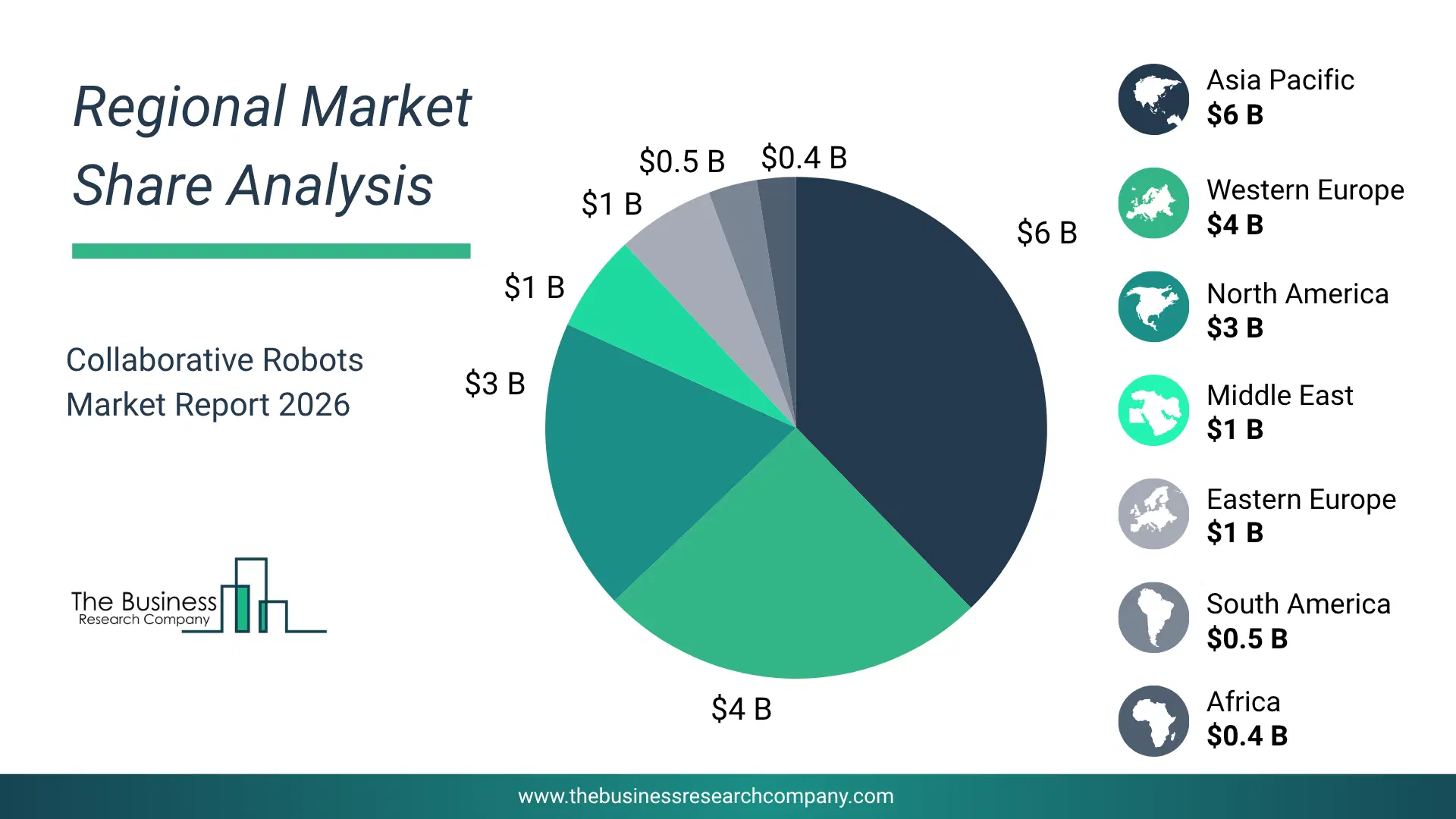
Regional Outlook
Asia-Pacific was the largest region in the collaborative robots market in 2025. The regions covered in this market report are Asia-Pacific, South East Asia, Western Europe, Eastern Europe, North America, South America, Middle East, Africa The countries covered in this market report are Australia, Brazil, China, France, Germany, India, Indonesia, Japan, Taiwan, Russia, South Korea, UK, USA, Canada, Italy, Spain.What Defines the Collaborative Robots Market?
The collaborative robots market consists of revenues earned by entities by providing hand guiding, safety monitored stop, and speed and separation. The market value includes the value of related goods sold by the service provider or included within the service offering. The collaborative robots market also includes the sales of grippers, robotic arms, controllers, and sensors. Values in this market are ‘factory gate’ values, that is the value of goods sold by the manufacturers or creators of the goods, whether to other entities (including downstream manufacturers, wholesalers, distributors, and retailers) or directly to end customers. The value of goods in this market includes related services sold by the creators of the goods.How is Market Value Defined and Measured?
The market value is defined as the revenues that enterprises gain from the sale of goods and/or services within the specified market and geography through sales, grants, or donations in terms of the currency (in USD unless otherwise specified). The revenues for a specified geography are consumption values that are revenues generated by organizations in the specified geography within the market, irrespective of where they are produced. It does not include revenues from resales along the supply chain, either further along the supply chain or as part of other products.
This chart presents market attractiveness based on a quantitative evaluation of growth, competition, strategic alignment, and risk, offering a clear view of opportunity areas for decision-making. This chart is for illustrative purposes; the full report contains the complete analysis.

This chart highlights the Total Addressable Market (TAM) by estimating the maximum revenue opportunity using an assumption-driven approach, supporting strategic planning and opportunity sizing across markets. The chart is illustrative; the full report provides a more comprehensive analysis.
What Key Data and Analysis Are Included in the Collaborative Robots Market Report 2026?
The collaborative robots market research report is one of a series of new reports from The Business Research Company that provides market statistics, including industry global market size, regional shares, competitors with the market share, detailed market segments, market trends and opportunities, and any further data you may need to thrive in the collaborative robots industry. The market research report delivers a complete perspective of everything you need, with an in-depth analysis of the current and future state of the industry.Collaborative Robots Market Report Forecast Analysis
| Report Attribute | Details |
|---|---|
| Market Size Value In 2026 | $5.43 billion |
| Revenue Forecast In 2030 | $15.55 billion |
| Growth Rate | CAGR of 29.9% from 2026 to 2030 |
| Base Year For Estimation | 2025 |
| Actual Estimates/Historical Data | 2020-2025 |
| Forecast Period | 2026 - 2030 |
| Market Representation | Revenue in USD Billion and CAGR from 2026 to 2030 |
| Segments Covered | Component, Payload Capacity, Application, Vertical |
| Regional Scope | Asia-Pacific, Western Europe, Eastern Europe, North America, South America, Middle East, Africa |
| Country Scope | The countries covered in the report are Australia, Brazil, China, France, Germany, India, Indonesia, Japan, Taiwan, Russia, South Korea, UK, USA, Canada, Italy, Spain. |
| Key Companies Profiled | Teradyne Inc., FANUC Corporation, KUKA AG, Denso Corporation, ABB Ltd., Mitsubishi Electric Corporation, Yaskawa Electric Corporation, Doosan Robotics Inc., Kawasaki Heavy Industries Ltd., Omron Corporation, AUBO (Beijing AUBO Robotics Technology Co., Ltd.), JAKA Robotics Co., Ltd., Universal Robots A/S, OnRobot A/S, Kinova Inc., Kassow Robots ApS, United Robotics Group GmbH, Seed Robotics Lda, TIRA Robotics, NEO Robotics GmbH, GLITZ Robotics Pvt. Ltd. |
| Customization Scope | Request for Customization |
| Pricing And Purchase Options | Explore Purchase Options |