

Combined Pituitary Hormone Deficiencies Market Report 2026
Global Outlook – By Inheritance (Autosomal Dominant, Autosomal Recessive, X-Linked Recessive), By Diagnosis (Blood Tests, Imaging Tests, Other Diagnosis), By Treatment (Hormone Replacement Therapy Medication, Levothyroxine, Corticosteroids, Other Treatments), By Distribution Channel (Hospital Pharmacy, Retail Pharmacy, Online Pharmacy, Other Distribution Channels), By End-Users (Hospitals, Specialty Clinics, Homecare, Other End Users) - Market Size, Trends, Strategies, and Forecast to 2030
Combined Pituitary Hormone Deficiencies Market Overview
• Combined Pituitary Hormone Deficiencies market size has reached to $2.07 billion in 2025 • Expected to grow to $2.77 billion in 2030 at a compound annual growth rate (CAGR) of 6% • Growth Driver: Rising Incidence Of Pituitary Tumors Expected To Increase Combined Pituitary Hormone Deficiencies • Market Trend: Technological Advancements In Combined Pituitary Hormone Deficiencies Market • North America was the largest region in 2025.What Is Covered Under Combined Pituitary Hormone Deficiencies Market?
Combined pituitary hormone deficiencies are a rare disorder characterized by inadequate production of two or more hormones by the pituitary gland. It typically results from developmental or functional abnormalities, which lead to symptoms that vary depending on which hormones are deficient and may include growth and developmental delays, infertility, and metabolic issues. The treatment format involves lifelong hormone replacement therapy to manage symptoms and improve quality of life. The main inheritances of combined pituitary hormone deficiencies are autosomal dominant, autosomal recessive, and x-linked recessive. Autosomal dominant inheritance refers to a genetic pattern where a single copy of a mutated gene from one parent is sufficient to cause the disorder. The various diagnoses include blood tests, imaging tests, and others. The different treatment format are hormone replacement therapy medication, levothyroxine, corticosteroids, and others, are provided through many distribution channels, including hospital pharmacies, retail pharmacies, online pharmacies, and others. The end users are hospitals, specialty clinics, home care, and others.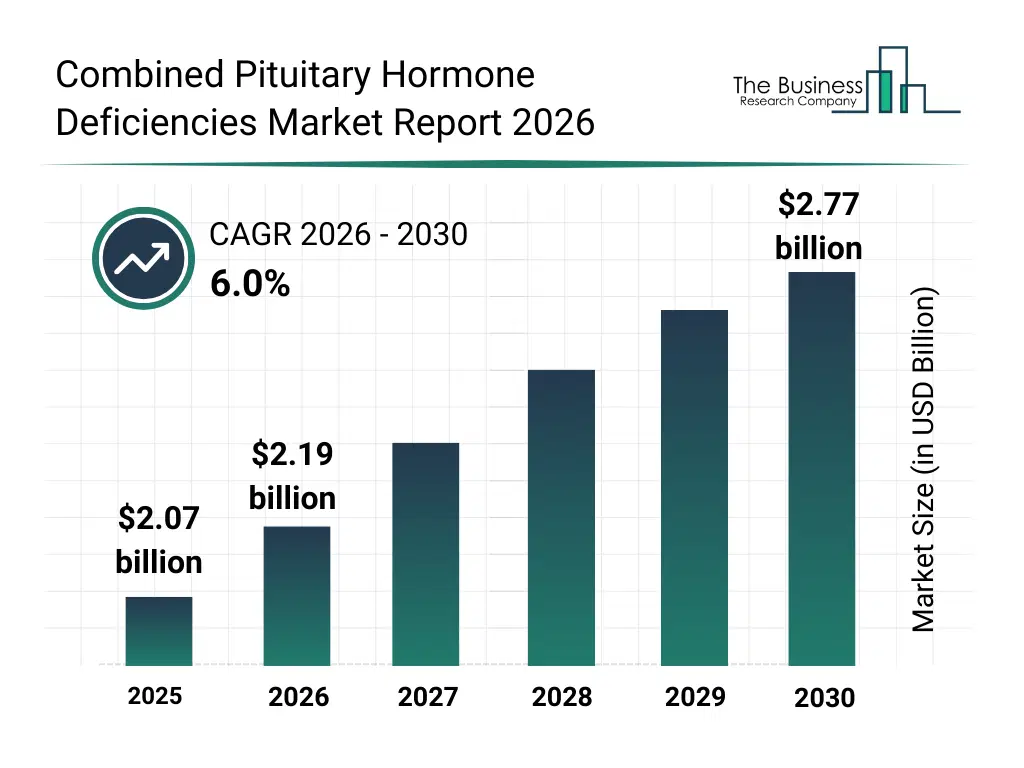
What Is The Combined Pituitary Hormone Deficiencies Market Size and Share 2026?
The combined pituitary hormone deficiencies market size has grown strongly in recent years. It will grow from $2.07 billion in 2025 to $2.19 billion in 2026 at a compound annual growth rate (CAGR) of 6.2%. The growth in the historic period can be attributed to improved understanding of pituitary disorders, availability of synthetic hormone therapies, expansion of endocrine specialty clinics, increased clinical research on rare diseases, growing diagnostic capabilities.What Is The Combined Pituitary Hormone Deficiencies Market Growth Forecast?
The combined pituitary hormone deficiencies market size is expected to see strong growth in the next few years. It will grow to $2.77 billion in 2030 at a compound annual growth rate (CAGR) of 6.0%. The growth in the forecast period can be attributed to increasing investments in rare disease research, rising adoption of precision medicine approaches, expansion of tele-endocrinology services, growing patient awareness and early diagnosis rates, development of long-acting hormone formulations. Major trends in the forecast period include improved genetic screening and early diagnosis, growing adoption of personalized hormone replacement therapy, increasing use of advanced imaging and diagnostic tools, expansion of long-term patient monitoring programs, rising focus on rare endocrine disorder awareness.
Global Combined Pituitary Hormone Deficiencies Market Segmentation
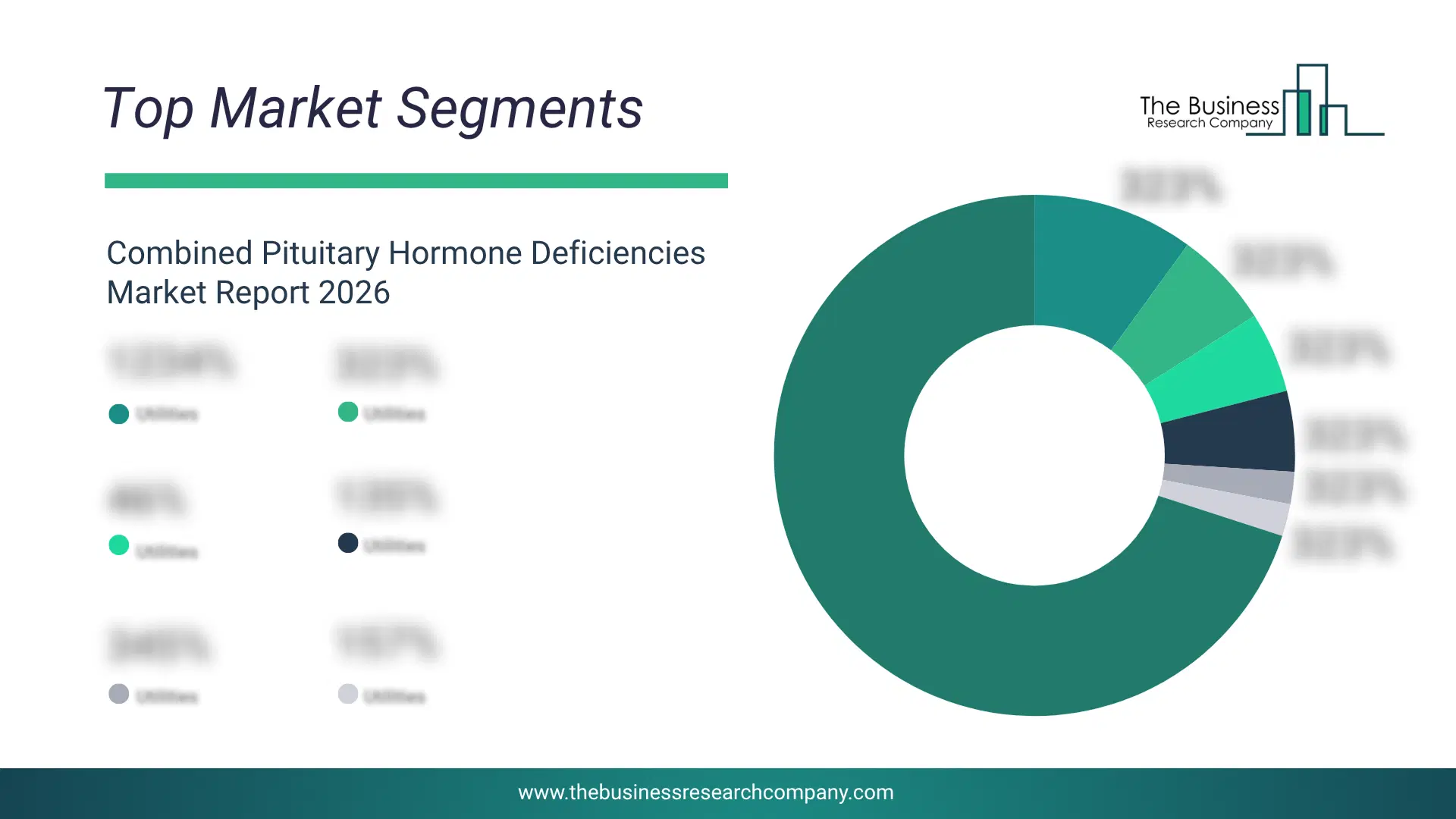
1) By Inheritance: Autosomal Dominant, Autosomal Recessive, X-Linked Recessive 2) By Diagnosis: Blood Tests, Imaging Tests, Other Diagnosis 3) By Treatment: Hormone Replacement Therapy Medication, Levothyroxine, Corticosteroids, Other Treatments 4) By Distribution Channel: Hospital Pharmacy, Retail Pharmacy, Online Pharmacy, Other Distribution Channels 5) By End-Users: Hospitals, Specialty Clinics, Homecare, Other End Users Subsegments: 1) By Autosomal Dominant: Single Gene Mutation, Family History Of Genetic Disorder 2) By Autosomal Recessive: Both Parents Are Carriers, Homozygous Mutations 3) By X-Linked Recessive: Carrier Females, Affected MalesWhat Is The Driver Of The Combined Pituitary Hormone Deficiencies Market?
The increasing incidence of pituitary tumors is expected to propel the growth of combined pituitary hormone deficiencies market going forward. Pituitary tumors are unusual growths in the pituitary gland, which controls hormone production in the brain. The exposure to endocrine-disrupting chemicals in some plastics, pesticides, and personal care products may contribute to hormonal imbalances and pituitary gland abnormalities. Pituitary tumors can cause combined pituitary hormone deficiency by interfering with the gland's ability to produce multiple hormones, leading to hormonal imbalances. For instance, in June 2025, according to a report published by the Oxford Academic, a UK-based online research platform, the prevalence of clinically significant pituitary tumors is estimated at 70–100 cases per 100,000 people, with an annual incidence of about 4 new cases per 100,000, which varies depending on age and sex. Therefore, the increasing incidence of pituitary tumors is driving the growth of combined pituitary hormone deficiencies industry.Key Players In The Global Combined Pituitary Hormone Deficiencies Market
Major companies operating in the combined pituitary hormone deficiencies market are Pfizer Inc., Merck & Co Inc., Bristol-Myers Squibb Company, Abbott Laboratories, Novartis AG, Sanofi S.A., F. Hoffmann-La Roche Ltd., Takeda Pharmaceutical Company Limited, GlaxoSmithKline plc, Eli Lilly and Company, Novo Nordisk A/S, Teva Pharmaceutical Industries Ltd., Sun Pharmaceutical Industries Ltd., Aurobindo Pharma Limited, Ipsen Group, Cipla Inc., Ferring Pharmaceuticals, Lupin Limited, LEO Pharma A/S, Glenmark Pharmaceuticals Limited, AnkeBio Co Ltd., Aeterna Zentaris Inc., Anhui Anke Biotechnology Co Ltd., GeneScience Pharmaceuticals Co Ltd., Strongbridge Biopharma plc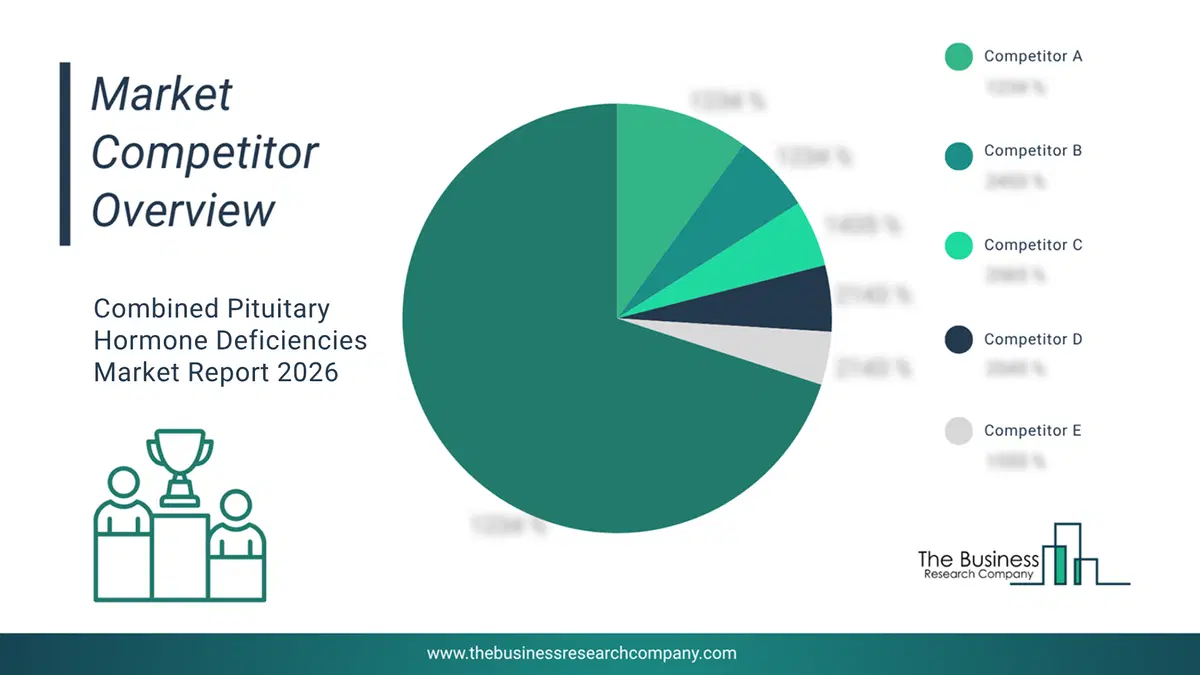
This chart is for illustrative purposes; the full report includes a detailed competitor analysis and comprehensive overview of the top 10 companies in the market.
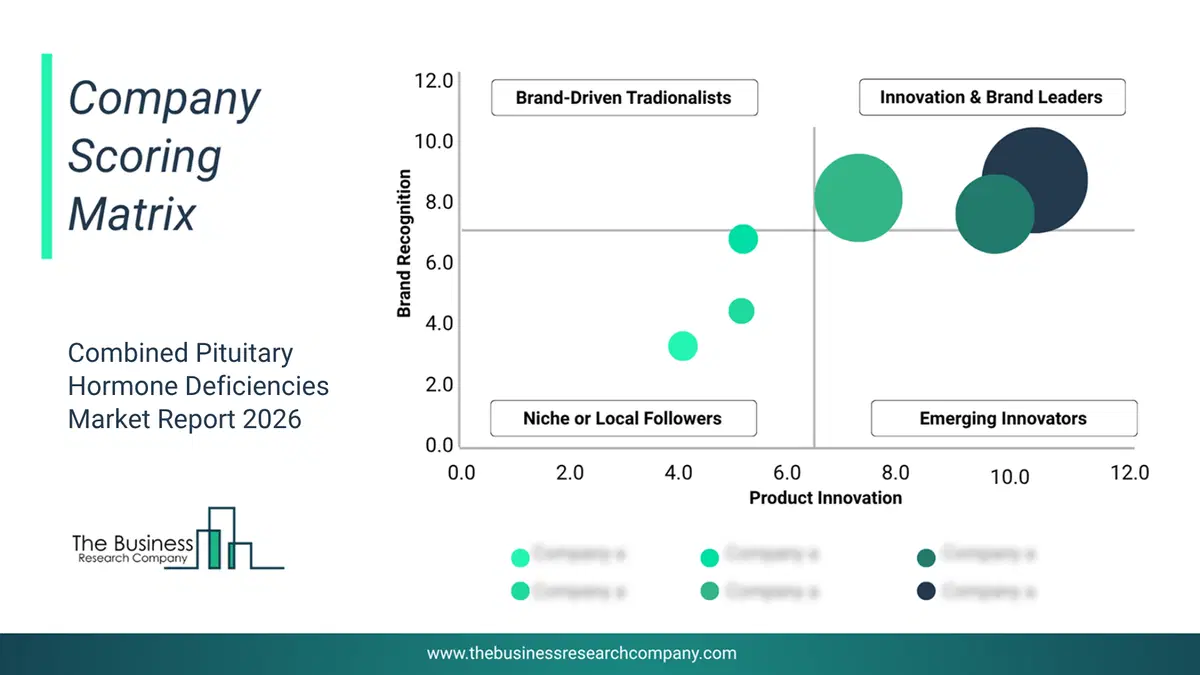
This chart maps companies by product innovation and brand strength, with bubble size indicating relative revenue, helping identify market leaders, challengers, and niche players. This is an illustrative chart; the full report provides a complete and accurate competitive analysis.
Global Combined Pituitary Hormone Deficiencies Market Trends and Insights
Major companies operating in the combined pituitary hormone deficiencies market are developing advanced treatment options such as body-identical hormone therapy treatment (HRT), to enhance patient compliance, reduce the frequency of administration, and improve overall treatment outcomes. Body-identical HRT involves using hormones that are exactly similar to the ones naturally made by the body to address hormone deficiencies or imbalances. For instance, in June 2023, Theramex, a UK-based specialty pharmaceutical company, launched Bijuva. It is a combined hormone therapy for post-menopausal women that combines 1 mg of estradiol and 100 mg of progesterone in a single daily capsule, mimicking the body's natural hormones. It's intended for women with an intact uterus who are at least a year post-menopause, offering a body-identical solution for estrogen deficiency symptoms.What Are Latest Mergers And Acquisitions In The Combined Pituitary Hormone Deficiencies Market?
In December 2023, Xponential Fitness Inc., a US-based health and wellness company, acquired Lindora for an undisclosed amount. With this acquisition, Xponential's goal is to cater to the increasing consumer demand for comprehensive health solutions and capitalize on the growing market for wellness services globally. Lindora Clinic is a US-based clinic focusing on metabolic health and offers a range of services, including weight loss programs, hormone replacement therapy, and IV hydration.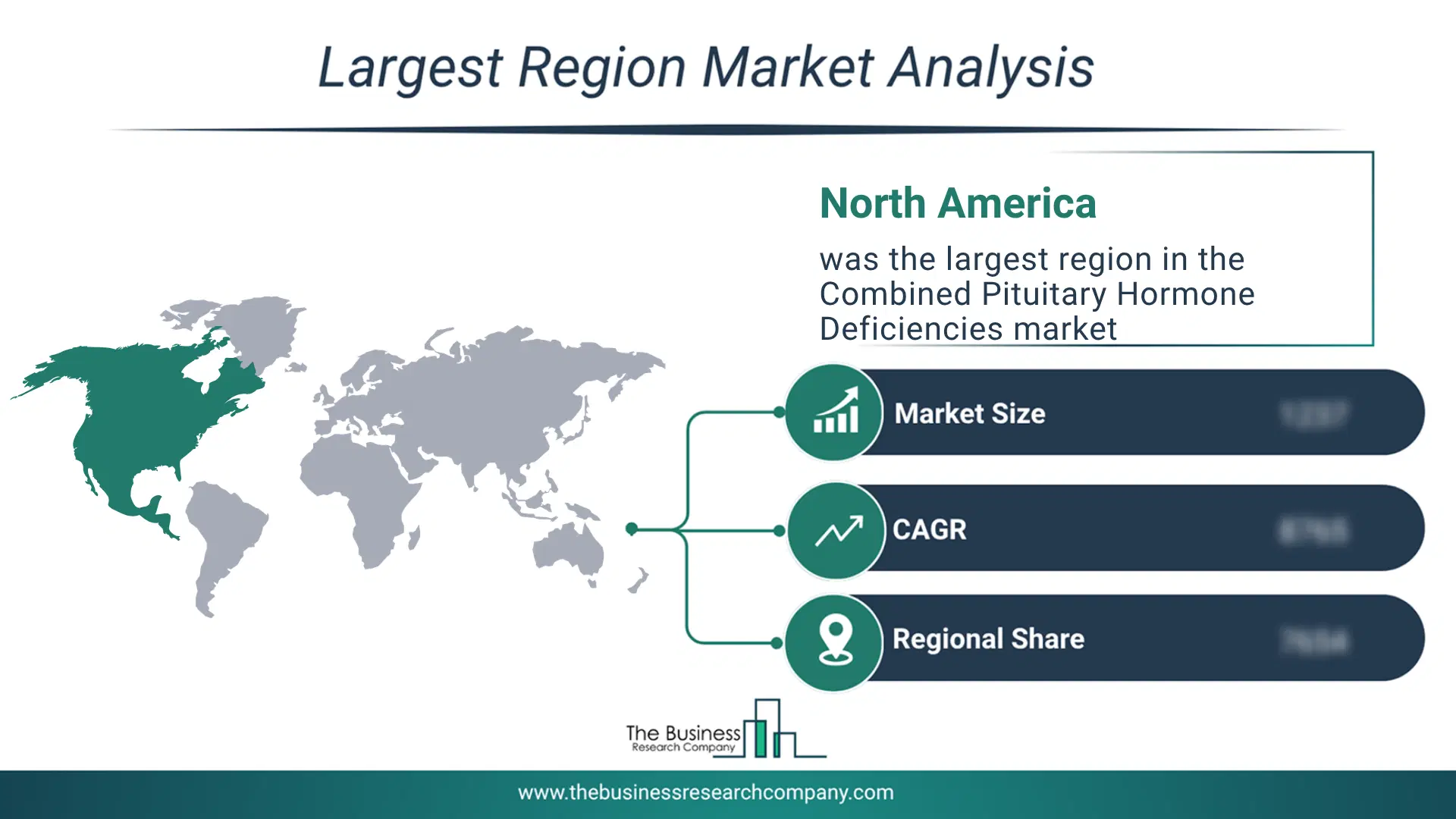
Regional Outlook
North America was the largest region in the combined pituitary hormone deficiencies market in 2025. The regions covered in this market report are Asia-Pacific, South East Asia, Western Europe, Eastern Europe, North America, South America, Middle East, Africa. The countries covered in this market report are Australia, Brazil, China, France, Germany, India, Indonesia, Japan, Taiwan, Russia, South Korea, UK, USA, Canada, Italy, Spain.What Defines the Combined Pituitary Hormone Deficiencies Market?
The combined pituitary hormone deficiencies market includes revenues earned by entities providing services such as diagnosis and monitoring, multidisciplinary care, and nutritional and psychological support. The market value includes the value of related goods sold by the service provider or included within the service offering. The combined pituitary hormone deficiencies market also consists of sales of growth hormone products, insulin pens, and auto-injectors. Values in this market are ‘factory gate’ values, that is, the value of goods sold by the manufacturers or creators of the goods, whether to other entities (including downstream manufacturers, wholesalers, distributors, and retailers) or directly to end customers. The value of goods in this market includes related services sold by the creators of the goods.How is Market Value Defined and Measured?
The market value is defined as the revenues that enterprises gain from the sale of goods and/or services within the specified market and geography through sales, grants, or donations in terms of the currency (in USD unless otherwise specified). The revenues for a specified geography are consumption values that are revenues generated by organizations in the specified geography within the market, irrespective of where they are produced. It does not include revenues from resales along the supply chain, either further along the supply chain or as part of other products.
This chart presents market attractiveness based on a quantitative evaluation of growth, competition, strategic alignment, and risk, offering a clear view of opportunity areas for decision-making. This chart is for illustrative purposes; the full report contains the complete analysis.

This chart highlights the Total Addressable Market (TAM) by estimating the maximum revenue opportunity using an assumption-driven approach, supporting strategic planning and opportunity sizing across markets. The chart is illustrative; the full report provides a more comprehensive analysis.
What Key Data and Analysis Are Included in the Combined Pituitary Hormone Deficiencies Market Report 2026?
The combined pituitary hormone deficiencies market research report is one of a series of new reports from The Business Research Company that provides market statistics, including industry global market size, regional shares, competitors with the market share, detailed market segments, market trends and opportunities, and any further data you may need to thrive in the combined pituitary hormone deficiencies industry. The market research report delivers a complete perspective of everything you need, with an in-depth analysis of the current and future state of the industry.Combined Pituitary Hormone Deficiencies Market Report Forecast Analysis
| Report Attribute | Details |
|---|---|
| Market Size Value In 2026 | $2.19 billion |
| Revenue Forecast In 2030 | $2.77 billion |
| Growth Rate | CAGR of 6% from 2026 to 2030 |
| Base Year For Estimation | 2025 |
| Actual Estimates/Historical Data | 2020-2025 |
| Forecast Period | 2026 - 2030 |
| Market Representation | Revenue in USD Billion and CAGR from 2026 to 2030 |
| Segments Covered | Inheritance, Diagnosis, Treatment, Distribution Channel, End-Users |
| Regional Scope | Asia-Pacific, Western Europe, Eastern Europe, North America, South America, Middle East, Africa |
| Country Scope | The countries covered in the report are Australia, Brazil, China, France, Germany, India, Indonesia, Japan, Taiwan, Russia, South Korea, UK, USA, Canada, Italy, Spain |
| Key Companies Profiled | Pfizer Inc., Merck & Co Inc., Bristol-Myers Squibb Company, Abbott Laboratories, Novartis AG, Sanofi S.A., F. Hoffmann-La Roche Ltd., Takeda Pharmaceutical Company Limited, GlaxoSmithKline plc, Eli Lilly and Company, Novo Nordisk A/S, Teva Pharmaceutical Industries Ltd., Sun Pharmaceutical Industries Ltd., Aurobindo Pharma Limited, Ipsen Group, Cipla Inc., Ferring Pharmaceuticals, Lupin Limited, LEO Pharma A/S, Glenmark Pharmaceuticals Limited, AnkeBio Co Ltd., Aeterna Zentaris Inc., Anhui Anke Biotechnology Co Ltd., GeneScience Pharmaceuticals Co Ltd., Strongbridge Biopharma plc |
| Customization Scope | Request for Customization |
| Pricing And Purchase Options | Explore Purchase Options |