

Communication-Based Train Control System Market Report 2026
Global Outlook – By System (Basic Communications-Based Train Control (CBTC), Integrated-Communications-Based Train Control (CBTC)), By Automation Grade (GoA1, GoA2, GoA3, GoA4), By Train Type (Metros, Commuter trains) – Market Size, Trends, Strategies, and Forecast to 2030
Communication-Based Train Control System Market Overview
• Communication-Based Train Control System market size has reached to $5.03 billion in 2025 • Expected to grow to $7.88 billion in 2030 at a compound annual growth rate (CAGR) of 9.4% • Growth Driver: High-Speed Train Services Driving Growth For Communication-Based Train Control Systems • Market Trend: Technological Innovations In Communication-Based Train Control System • North America was the largest region in 2025 and Asia-Pacific is the fastest growing region.What Is Covered Under Communication-Based Train Control System Market?
The communications-based train control system (CBTC) is a modern railway signaling system that utilizes telecommunications between trains and track equipment for precise train position determination. This technology enables continuous, automatic control, high-resolution train location determination, and bidirectional train-to-wayside data communications. The main types of communication-based train control systems are basic and integrated. The basic communication-based train control system (CBTC) is a modern signaling system used in railways for train control that relies on continuous, bi-directional communication between trains and wayside equipment to manage train movements and ensure safety. The automation grade category includes GoA1, GoA2, GoA3, and GoA4 for trains such as metros, commuter trains, and high-speed trains.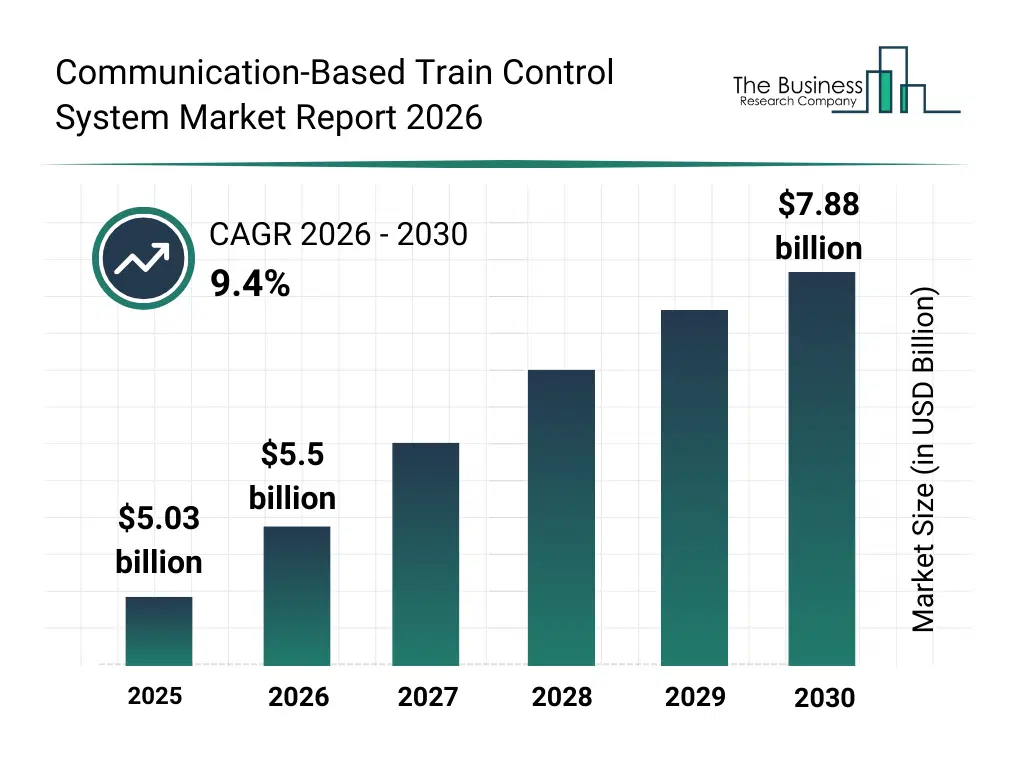
What Is The Communication-Based Train Control System Market Size and Share 2026?
The communication-based train control system market size has grown strongly in recent years. It will grow from $5.03 billion in 2025 to $5.5 billion in 2026 at a compound annual growth rate (CAGR) of 9.4%. The growth in the historic period can be attributed to urban rail expansion, congestion reduction initiatives, traditional signaling limitations, public transport investments, rail safety requirements.What Is The Communication-Based Train Control System Market Growth Forecast?
The communication-based train control system market size is expected to see strong growth in the next few years. It will grow to $7.88 billion in 2030 at a compound annual growth rate (CAGR) of 9.4%. The growth in the forecast period can be attributed to smart city rail projects, full automation adoption, digital rail infrastructure, demand for energy-efficient transit, integration with iot platforms. Major trends in the forecast period include expansion of automated train operations, adoption of driverless metro systems, integration of real-time data analytics, demand for high-capacity urban transit, modernization of rail signaling systems.
Global Communication-Based Train Control System Market Segmentation
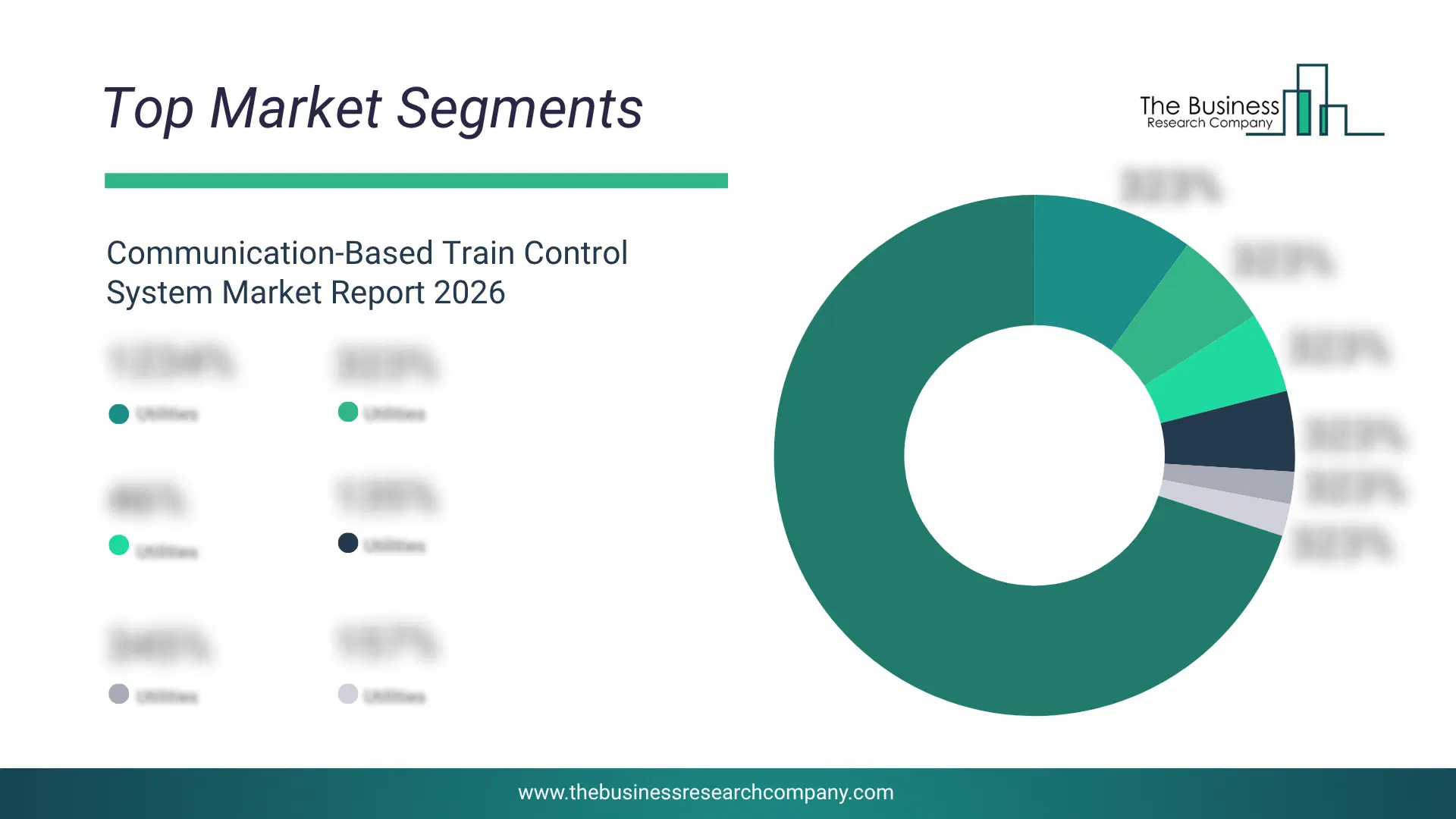
1) By System: Basic Communications-Based Train Control (CBTC), Integrated-Communications-Based Train Control (CBTC) 2) By Automation Grade: GoA1, GoA2, GoA3, GoA4 3) By Train Type: Metros, Commuter trains Subsegments: 1) By Basic Communications-Based Train Control (CBTC): Train Position Detection Systems, Trackside Equipment, Train-To-Trackside Communication Systems, Centralized Control Systems 2) By Integrated Communications-Based Train Control (CBTC): Fully Integrated Train Control Systems, Automatic Train Operation (ATO) Integration, Integrated Traffic Management Solutions, Signaling And Control Systems IntegrationWhat Is The Driver Of The Communication-Based Train Control System Market?
A rising demand for high-speed train services is expected to propel the growth of the communication-based train control system market going forward. High-speed train services offer rapid and efficient transportation between major urban centers, catering to passengers who prioritize speed and convenience. With frequent departures and arrivals, high-speed train services offer passengers enhanced journey flexibility, further complemented by the accessibility of city center train stations, adding to the convenience of utilizing high-speed rail. Using advanced communication technologies, communication-based train control (CBTC) systems are extensively employed in high-speed rail networks to enable real-time monitoring and control of train movements, ensuring safe and efficient operations while allowing for tighter spacing between trains and higher operating speeds. For instance, in July 2023, according to the International Energy Agency (IEA), a France-based autonomous intergovernmental organization, China's railway network, which includes 42,000 km of high-speed railways among its total of 155,000 km, has experienced remarkable growth over the past two decades and expected to reach 50,000 km by 2025. Therefore, the rising demand for high-speed train services drives the communication-based train control system industry.Key Players In The Global Communication-Based Train Control System Market
Major companies operating in the communication-based train control system market report include Huawei Technologies Co. Ltd., Hitachi Ltd., Cisco Systems Inc., Mitsubishi Electric Corporation, CRRC Corporation Limited, ABB Ltd., Toshiba Infrastructure Systems & Solutions Corporation, Ericsson AB, Nokia Corporation, Thales Group, ZTE Corporation, Network Rail Limited, Alstom SA, Wabtec Corporation, Knorr-Bremse AG, Indra Sistemas S.A., Stadler Rail AG, CAF Signaling S.L., Belden Inc., Siemens Mobility AS, Nippon Signal Co. Ltd., Kyosan Electric Manufacturing Co. Ltd., UniTTEC Co. Ltd., Teleste Corporation, Argenia Railway Technologies Inc.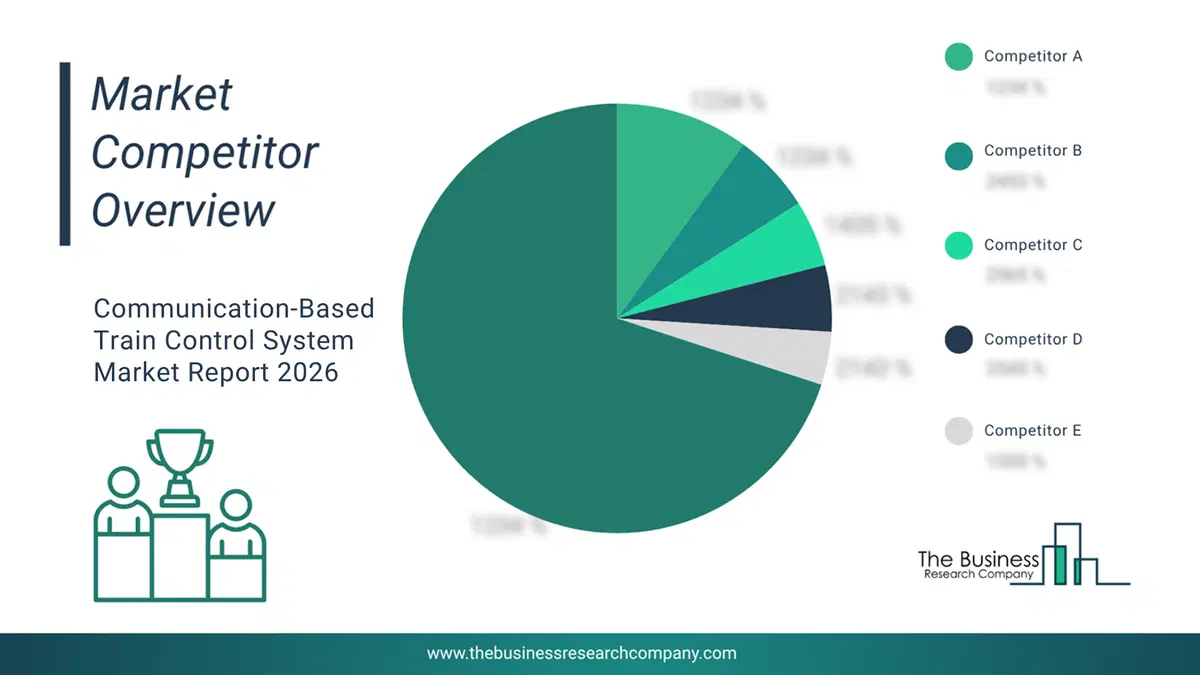
This chart is for illustrative purposes; the full report includes a detailed competitor analysis and comprehensive overview of the top 10 companies in the market.
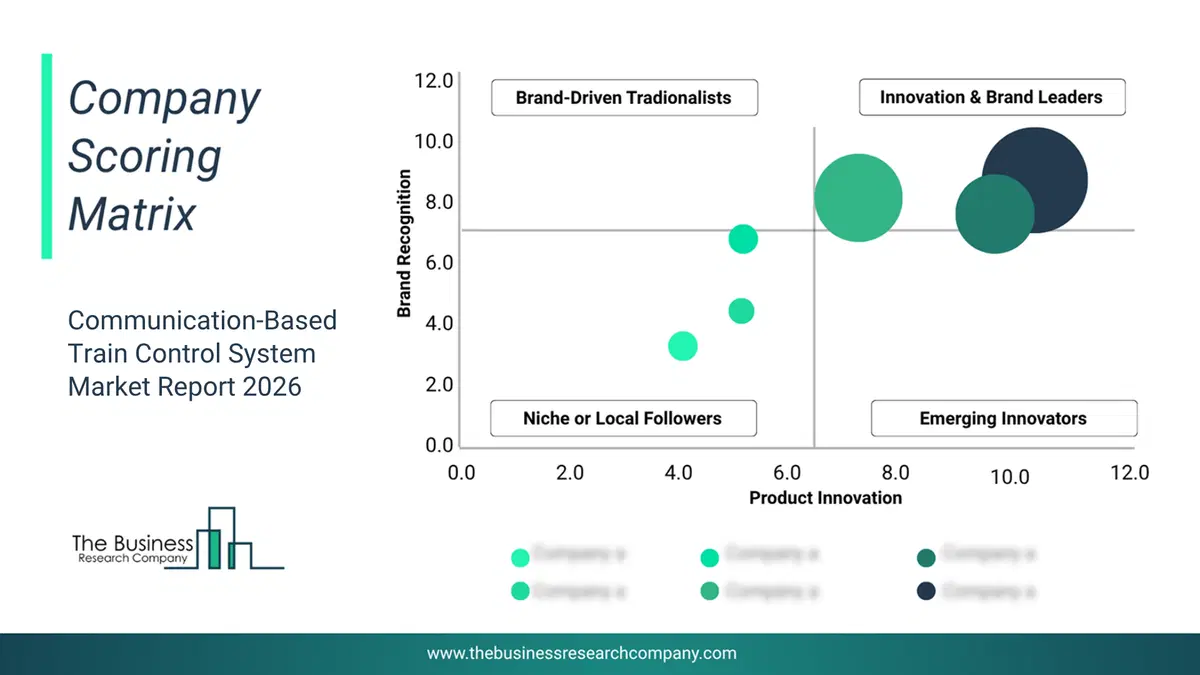
This chart maps companies by product innovation and brand strength, with bubble size indicating relative revenue, helping identify market leaders, challengers, and niche players. This is an illustrative chart; the full report provides a complete and accurate competitive analysis.
Global Communication-Based Train Control System Market Trends and Insights
Major companies operating in the communication-based train control system market are focused on developing technological innovations, such as automatic train supervision, to enhance railway safety and efficiency. This is a rail control system that monitors and manages train movement, scheduling, and routing to optimize efficiency, safety, and punctuality within a railway network. For instance, in February 2023, Delhi Metro, based in India, specializes in operating and managing the Delhi Metro network, launched the India’s first indigenously developed Train Control and Supervision System. The i-ATS (Indigenous Automatic Train Supervision), implemented on the Red Line (Rithala to Shaheed Sthal), was developed collaboratively by Navratna Defence PSU Bharat Electronics Limited (BEL) and the Delhi Metro Rail Corporation (DMRC). This fully indigenous signaling system was created under the Government of India’s 'Make in India' and 'AatmaNirbhar Bharat' initiatives for Metro Rail Transit Systems. The i-ATS represents a crucial step toward developing a locally built Communication-Based Train Control (CBTC) signaling system, as ATS is a vital subsystem of CBTC. ATS, a computer-based system essential for high-density operations like Metro rail, manages train operations, ensuring frequent services. Traditionally, CBTC technology has been controlled by foreign countries, but the deployment of i-ATS will greatly reduce Indian Metros’ reliance on foreign vendors for such advanced technologies.What Are Latest Mergers And Acquisitions In The Communication-Based Train Control System Market?
In February 2024, Tokyo Metro, Japan-based, major rapid transit system, in collaboration with Japan’s Railway Technology Research Institute (RTRI), Hitachi, Mitsubishi Electric, and NTT Communications will trial 5G technology. This marks the first test of a Japanese-designed communications-based train control (CBTC) system using 5G in the country. The trial will take place on a 3km section of the Marunouchi Line between Shin-otsuka and Korakuen stations, aiming to evaluate the technology’s effectiveness in a real-world rail environment. Railway Technology Research Institute (RTRI), based in Japan, focuses on advancing railway technology and innovation. Hitachi, based in Japan, is a multinational conglomerate specializing in information technology, social infrastructure, high functional materials, and systems. Mitsubishi Electric, based in Japan, is a global leader in electrical and electronic equipment, and NTT Communications, Japan-based provider of information and communications technology solutions.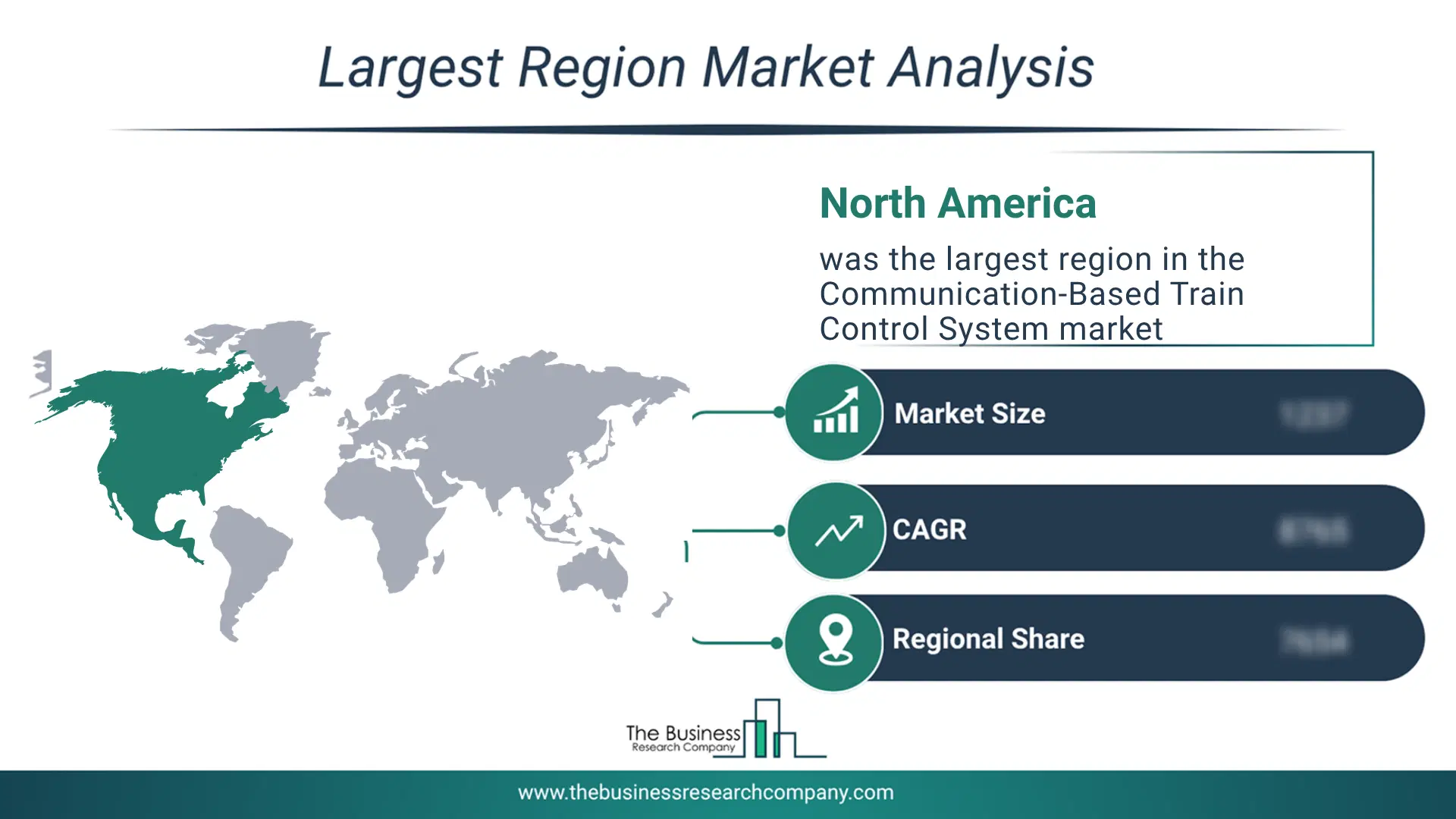
Regional Outlook
North America was the largest region in the communication-based train control system market in 2025. Asia-Pacific is expected to be the fastest-growing region in the forecast period. The regions covered in this market report include Asia-Pacific, South East Asia, Western Europe, Eastern Europe, North America, South America, Middle East, Africa. The countries covered in this market report include Australia, Brazil, China, France, Germany, India, Indonesia, Japan, Taiwan, Russia, South Korea, UK, USA, Canada, Italy, SpainWhat Defines the Communication-Based Train Control System Market?
The communication-based train control system market consists of revenues earned by entities by providing services such as automatic train protection, train positioning and localization, optimized train control, precise control of acceleration, deceleration, stopping, and turning through real-time monitoring of train positions and speeds. The market value includes the value of related goods sold by the service provider or included within the service offering. The communication-based train control system market also includes sales of GPS and onboard receivers, data communication systems, antennas, transponders, beacons, track circuits, cameras and train detectors. Values in this market are ‘factory gate’ values, that is the value of goods sold by the manufacturers or creators of the goods, whether to other entities (including downstream manufacturers, wholesalers, distributors and retailers) or directly to end customers. The value of goods in this market includes related services sold by the creators of the goods.How is Market Value Defined and Measured?
The market value is defined as the revenues that enterprises gain from the sale of goods and/or services within the specified market and geography through sales, grants, or donations in terms of the currency (in USD unless otherwise specified). The revenues for a specified geography are consumption values that are revenues generated by organizations in the specified geography within the market, irrespective of where they are produced. It does not include revenues from resales along the supply chain, either further along the supply chain or as part of other products.
This chart presents market attractiveness based on a quantitative evaluation of growth, competition, strategic alignment, and risk, offering a clear view of opportunity areas for decision-making. This chart is for illustrative purposes; the full report contains the complete analysis.

This chart highlights the Total Addressable Market (TAM) by estimating the maximum revenue opportunity using an assumption-driven approach, supporting strategic planning and opportunity sizing across markets. The chart is illustrative; the full report provides a more comprehensive analysis.
What Key Data and Analysis Are Included in the Communication-Based Train Control System Market Report 2026?
The communication-based train control system market research report is one of a series of new reports from The Business Research Company that provides market statistics, including industry global market size, regional shares, competitors with the market share, detailed market segments, market trends and opportunities, and any further data you may need to thrive in the communication-based train control system industry. The market research report delivers a complete perspective of everything you need, with an in-depth analysis of the current and future state of the industry.Communication-Based Train Control System Market Report Forecast Analysis
| Report Attribute | Details |
|---|---|
| Market Size Value In 2026 | $5.5 billion |
| Revenue Forecast In 2030 | $7.88 billion |
| Growth Rate | CAGR of 9.4% from 2026 to 2030 |
| Base Year For Estimation | 2025 |
| Actual Estimates/Historical Data | 2020-2025 |
| Forecast Period | 2026 - 2030 - 2030 |
| Market Representation | Revenue in USD Billion and CAGR from 2026 to 2030 |
| Segments Covered | System, Automation Grade, Train Type |
| Regional Scope | Asia-Pacific, Western Europe, Eastern Europe, North America, South America, Middle East, Africa |
| Country Scope | The countries covered in the report are Australia, Brazil, China, France, Germany, India, Indonesia, Japan, Taiwan, Russia, South Korea, UK, USA, Canada, Italy, Spain. |
| Key Companies Profiled | Huawei Technologies Co. Ltd., Hitachi Ltd., Cisco Systems Inc., Mitsubishi Electric Corporation, CRRC Corporation Limited, ABB Ltd., Toshiba Infrastructure Systems & Solutions Corporation, Ericsson AB, Nokia Corporation, Thales Group, ZTE Corporation, Network Rail Limited, Alstom SA, Wabtec Corporation, Knorr-Bremse AG, Indra Sistemas S.A., Stadler Rail AG, CAF Signaling S.L., Belden Inc., Siemens Mobility AS, Nippon Signal Co. Ltd., Kyosan Electric Manufacturing Co. Ltd., UniTTEC Co. Ltd., Teleste Corporation, Argenia Railway Technologies Inc. |
| Customization Scope | Request for Customization |
| Pricing And Purchase Options | Explore Purchase Options |