

Complement Inhibitors Market Report 2026
Global Outlook – By Product Type (Complement Component 3 (C, Inhibitors, Complement Component 5 (C, Inhibitors, Complement Factor D Inhibitors), By Mechanism Of Action (Alternative Pathway Inhibitors, Classic Pathway Inhibitors, Lectin Pathway Inhibitors), By Indication (Atypical Hemolytic Uremic Syndrome (aHUS), Generalized Myasthenia Gravis (gMG), Paroxysmal Nocturnal Hemoglobinuria (PNH)), By Route Of Administration (Intravenous (IV), Subcutaneous (SC)), By Patient Demographics (Adult, Geriatric, Pediatric) – Market Size, Trends, Strategies, and Forecast to 2030
Complement Inhibitors Market Overview
• Complement Inhibitors market size has reached to $21.26 billion in 2025 • Expected to grow to $77.86 billion in 2030 at a compound annual growth rate (CAGR) of 29.6% • Growth Driver: Impact Of Personalized Medicine On Advancements In Targeted Therapies • Market Trend: Advancements In Monoclonal Antibody Therapies For Autoimmune And Inflammatory Diseases • North America was the largest region in 2025 and Asia-Pacific is the fastest growing region.What Is Covered Under Complement Inhibitors Market?
Complement inhibitors are therapeutic agents designed to regulate or block the activity of the complement system, a part of the immune system responsible for inflammation, pathogen elimination and cell lysis. These inhibitors target specific complement components such as complement component 3 (C3) or complement component 5 (C5) to prevent overactivation and protect against tissue damage in diseases like paroxysmal nocturnal hemoglobinuria (PNH) or atypical hemolytic uremic syndrome (aHUS). The main types of products in the complement inhibitors market are complement component 3 (C3) inhibitors, complement component 5 (C5) inhibitors, and complement factor D inhibitors. Complement Component 3 (C3) inhibitors refer to a class of therapeutic agents designed to block the activation of C3, a central protein in the complement cascade. The mechanisms of action for complement inhibitors include alternative pathway inhibitors, classical pathway inhibitors, and lectin pathway inhibitors. These therapies address various indications such as atypical hemolytic uremic syndrome (aHUS), generalized myasthenia gravis (GMG), and paroxysmal nocturnal hemoglobinuria (PNH). They are administered through intravenous (IV) and subcutaneous (SC) routes, catering to diverse patient demographics, including adults, geriatrics, and pediatrics.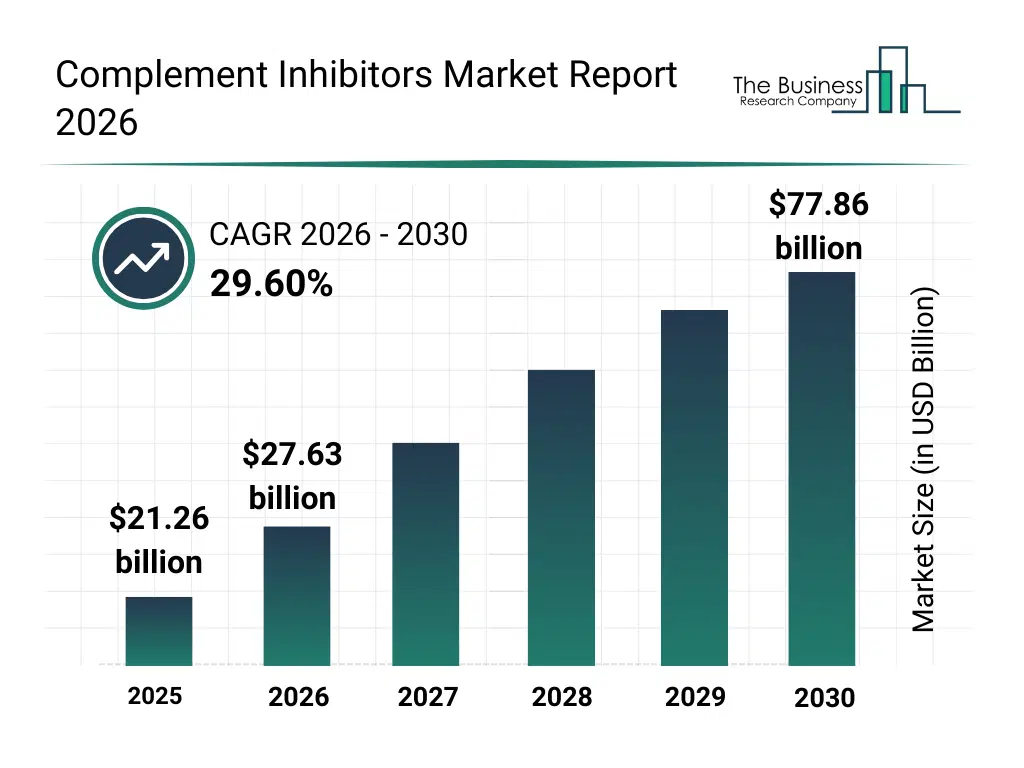
What Is The Complement Inhibitors Market Size and Share 2026?
The complement inhibitors market size has grown exponentially in recent years. It will grow from $21.26 billion in 2025 to $27.63 billion in 2026 at a compound annual growth rate (CAGR) of 30.0%. The growth in the historic period can be attributed to advances in complement biology, rising pnh and ahus diagnosis, biologics approval growth, expansion of specialty care, increased immunology research.What Is The Complement Inhibitors Market Growth Forecast?
The complement inhibitors market size is expected to see exponential growth in the next few years. It will grow to $77.86 billion in 2030 at a compound annual growth rate (CAGR) of 29.6%. The growth in the forecast period can be attributed to growth in rare disease treatments, expanding complement research, rising personalized medicine adoption, increasing biologics funding, improved diagnostic capabilities. Major trends in the forecast period include rising use in rare immune-mediated disorders, increasing adoption of c5 inhibitors, growing focus on targeted immune regulation, expansion of biologic drug pipelines, increased long-term therapy utilization.
Global Complement Inhibitors Market Segmentation
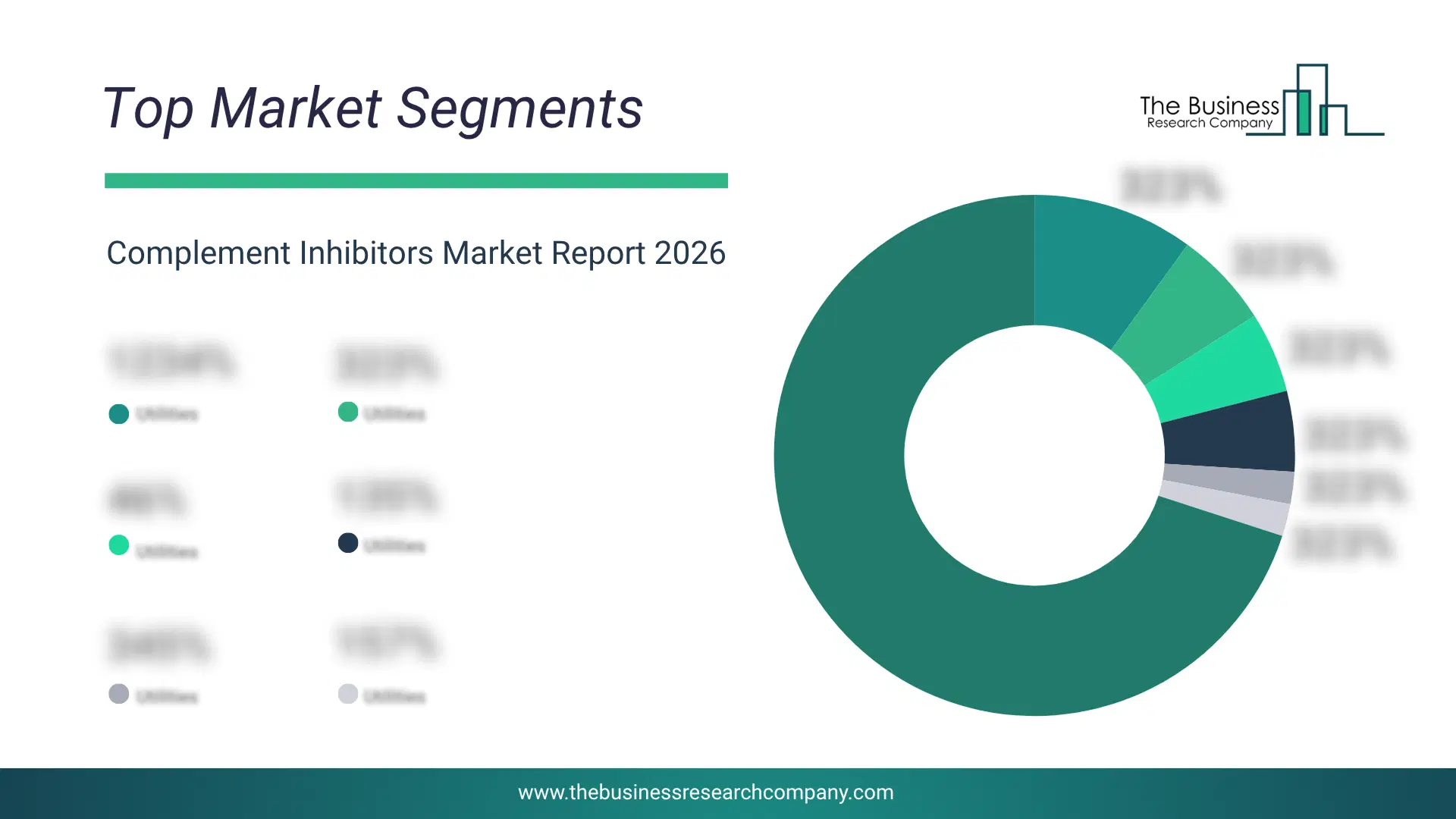
1) By Product Type: Complement Component 3 (C3) Inhibitors, Complement Component 5 (C5) Inhibitors, Complement Factor D Inhibitors 2) By Mechanism Of Action: Alternative Pathway Inhibitors, Classic Pathway Inhibitors, Lectin Pathway Inhibitors 3) By Indication: Atypical Hemolytic Uremic Syndrome (aHUS), Generalized Myasthenia Gravis (gMG), Paroxysmal Nocturnal Hemoglobinuria (PNH) 4) By Route Of Administration: Intravenous (IV), Subcutaneous (SC) 5) By Patient Demographics: Adult, Geriatric, Pediatric Subsegments: 1) By Complement Component 3 (C3) Inhibitors: Small Molecule C3 Inhibitors, Monoclonal Antibody C3 Inhibitors, Peptide-Based C3 Inhibitors 2) By Complement Component 5 (C5) Inhibitors: Monoclonal Antibody C5 Inhibitors, Small Molecule C5 Inhibitors, RNA-Based C5 Inhibitors 3) By Complement Factor D Inhibitors: Small Molecule Factor D Inhibitors, Monoclonal Antibody Factor D InhibitorsWhat Is The Driver Of The Complement Inhibitors Market?
The growing focus on personalized medicine is expected to propel the growth of the complement inhibitors market going forward. Personalized medicine involves tailoring treatments to individual patients based on their genetic, environmental, and lifestyle factors to optimize outcomes and improve care. The adoption of personalized medicine is increasing due to factors such as advancements in genomics, growing availability of biomarker-based diagnostics, improved data analytics technologies and a rising demand for more targeted and effective therapies. Complement inhibitors function like personalized medicine by targeting specific components of the complement system based on a patient's unique disease profile, genetic makeup, and complement activity levels. For instance, in February 2024, according to the Personalized Medicine Coalition (PMC), a US-based nonprofit organization, the U.S. Food and Drug Administration (FDA) approved 26 new personalized medicines in 2023, a significant increase from the 12 approved in 2022. Therefore, the growing focus on personalized medicine is driving the growth of the complement inhibitors industry.Key Players In The Global Complement Inhibitors Market
Major companies operating in the complement inhibitors market are F. Hoffmann-La Roche AG, Bayer AG, Sanofi S.A., AstraZeneca plc, Novartis AG, Amgen Inc., Regeneron Pharmaceuticals Inc., Astellas Pharma Inc., CSL Behring, UCB S.A., Takeda Pharmaceutical Company Limited, Alnylam Pharmaceuticals Inc., Innovent Biologics Inc., BioCryst Pharmaceuticals Inc., Pharming Group N.V., Apellis Pharmaceuticals Inc., Omeros Corporation, Akari Therapeutics Plc, InflaRx N.V., Kira Pharmaceuticals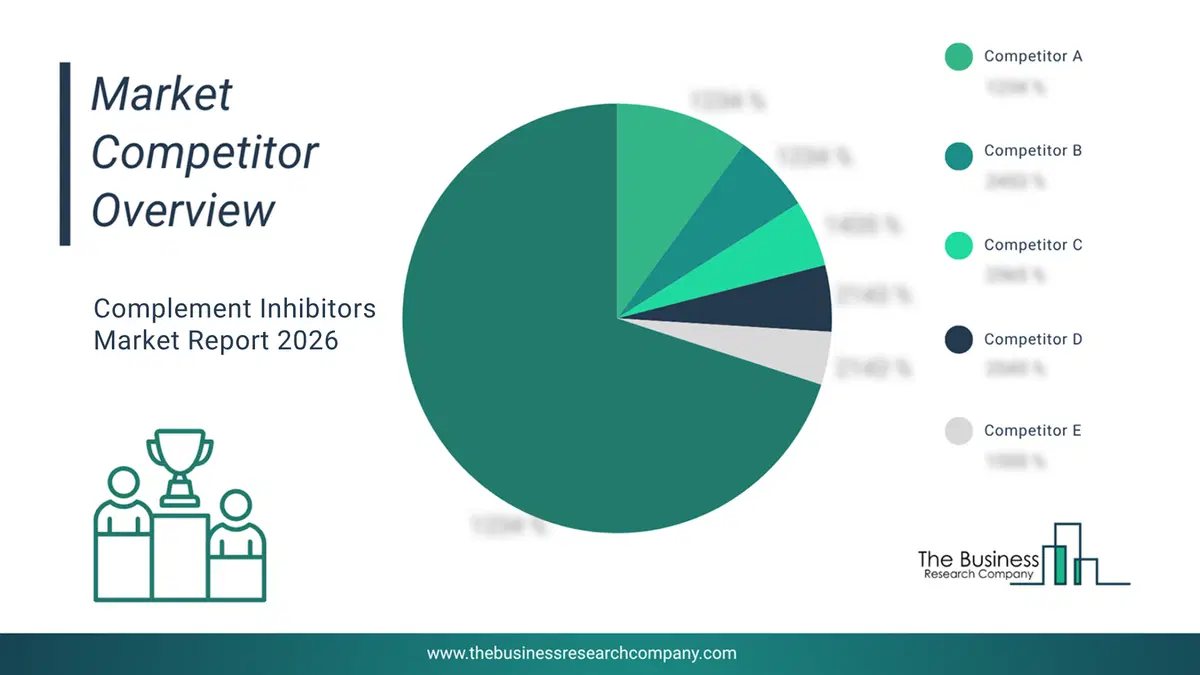
This chart is for illustrative purposes; the full report includes a detailed competitor analysis and comprehensive overview of the top 10 companies in the market.
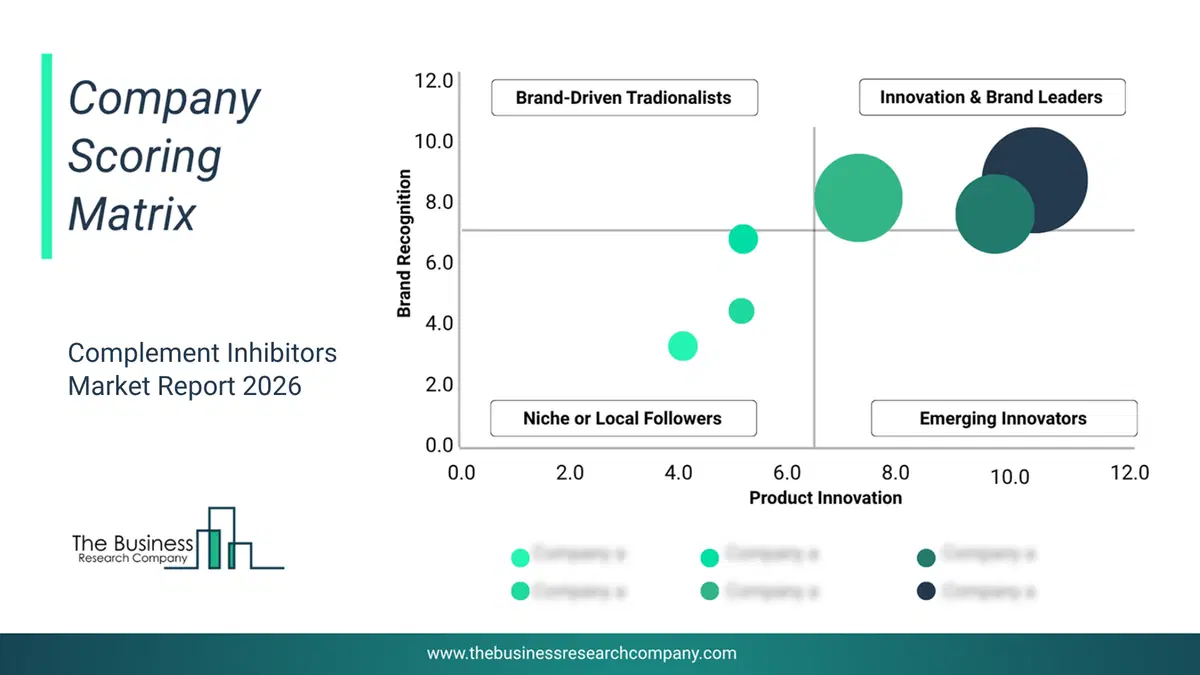
This chart maps companies by product innovation and brand strength, with bubble size indicating relative revenue, helping identify market leaders, challengers, and niche players. This is an illustrative chart; the full report provides a complete and accurate competitive analysis.
Global Complement Inhibitors Market Trends and Insights
Major companies operating in the complement inhibitors market are focusing on developing monoclonal antibodies, such as C5-targeted complement inhibition therapy to enhance terminal complement regulation and provide sustained protection against haemolysis in individuals with paroxysmal nocturnal haemoglobinuria (PNH). C5-targeted complement inhibition therapy refers to a therapeutic approach that specifically blocks the complement protein C5 to prevent its activation and subsequent cleavage into C5a and C5b. For instance, in August 2024, F. Hoffmann-La Roche AG, a Switzerland-based pharmaceutical company, received approval for PiaSky (crovalimab) from the European Commission for adults and adolescents with paroxysmal nocturnal haemoglobinuria (PNH) who are either new to or have been previously treated with C5 inhibitors. PiaSky (crovalimab) is a monoclonal antibody that targets complement protein C5 to prevent its cleavage, thus preventing the formation of the membrane attack complex (MAC). This inhibits terminal complement-mediated intravascular haemolysis. By reducing hemolysis, PiaSky helps improve hemoglobin levels, decreases the need for blood transfusions, and alleviates symptoms like fatigue and anemia, enhancing patients' quality of life.What Are Latest Mergers And Acquisitions In The Complement Inhibitors Market?
In September 2023, Magenta Therapeutics Inc., a US-based clinical-stage biotechnology company, merged with Dianthus Therapeutics Inc. for an undisclosed amount. The combined company will focus on advancing Dianthus’ pipeline of next-generation complement inhibitors, including DNTH103 currently in a Phase I clinical trial. Dianthus Therapeutics Inc. is a US-based clinical-stage biotechnology company focused on developing next-generation antibody complement therapeutics for severe autoimmune diseases.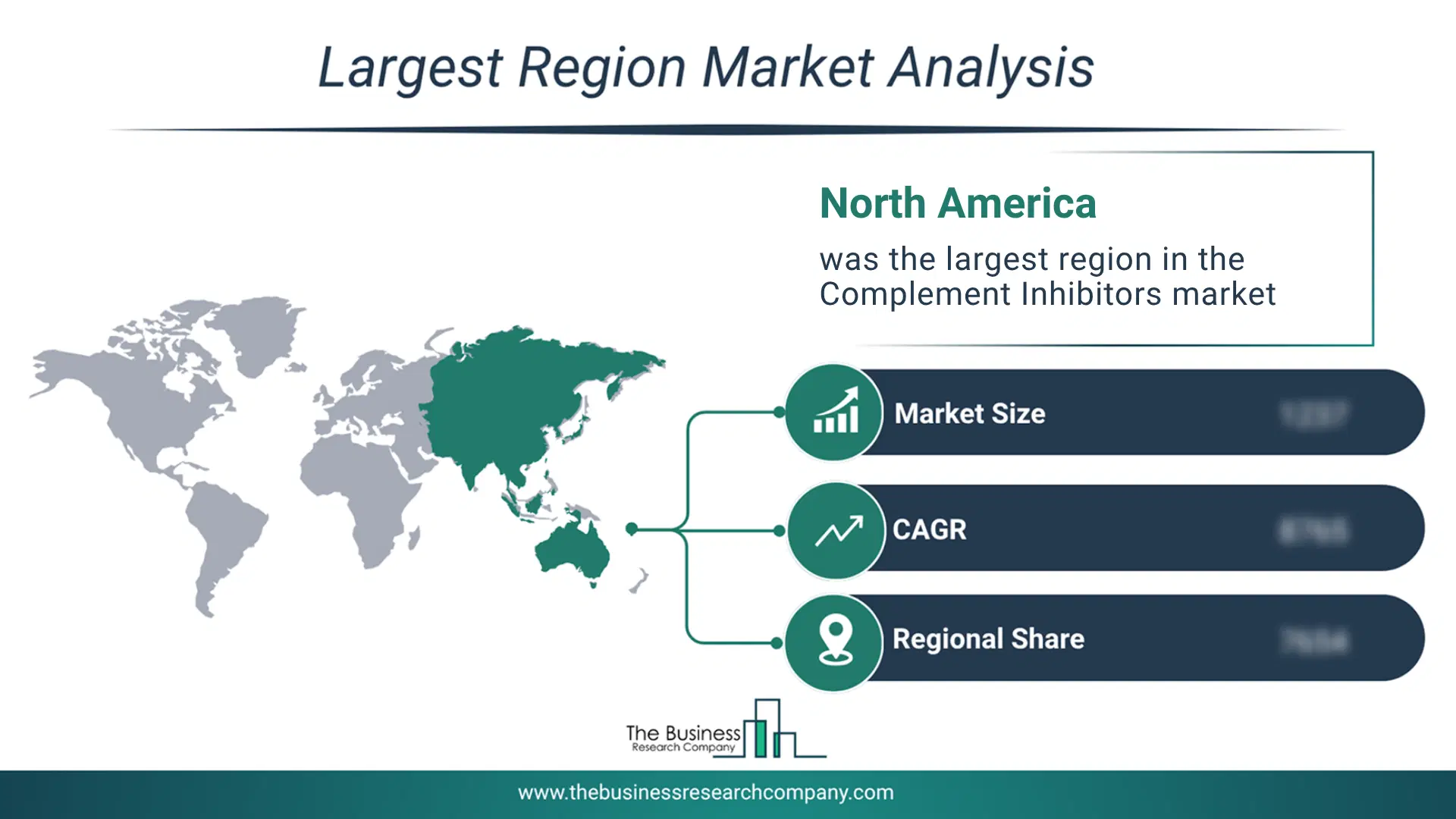
Regional Insights
North America was the largest region in the complement inhibitors market in 2025. Asia-Pacific is expected to be the fastest-growing region in the forecast period. The regions covered in this market report are Asia-Pacific, South East Asia, Western Europe, Eastern Europe, North America, South America, Middle East, Africa. The countries covered in this market report are Australia, Brazil, China, France, Germany, India, Indonesia, Japan, Taiwan, Russia, South Korea, UK, USA, Canada, Italy, Spain.What Defines the Complement Inhibitors Market?
The complement inhibitors market consists of sales of small molecule inhibitors, recombinant proteins and biologics designed to regulate the complement system and treat complement-mediated diseases. Values in this market are ‘factory gate’ values, that is, the value of goods sold by the manufacturers or creators of the goods, whether to other entities (including downstream manufacturers, wholesalers, distributors, and retailers) or directly to end customers. The value of goods in this market includes related services sold by the creators of the goods.How is Market Value Defined and Measured?
The market value is defined as the revenues that enterprises gain from the sale of goods and/or services within the specified market and geography through sales, grants, or donations in terms of the currency (in USD unless otherwise specified). The revenues for a specified geography are consumption values that are revenues generated by organizations in the specified geography within the market, irrespective of where they are produced. It does not include revenues from resales along the supply chain, either further along the supply chain or as part of other products.
This chart presents market attractiveness based on a quantitative evaluation of growth, competition, strategic alignment, and risk, offering a clear view of opportunity areas for decision-making. This chart is for illustrative purposes; the full report contains the complete analysis.

This chart highlights the Total Addressable Market (TAM) by estimating the maximum revenue opportunity using an assumption-driven approach, supporting strategic planning and opportunity sizing across markets. The chart is illustrative; the full report provides a more comprehensive analysis.
What Key Data and Analysis Are Included in the Complement Inhibitors Market Report 2026?
The complement inhibitors market research report is one of a series of new reports from The Business Research Company that provides market statistics, including industry global market size, regional shares, competitors with the market share, detailed market segments, market trends and opportunities, and any further data you may need to thrive in the complement inhibitors industry. The market research report delivers a complete perspective of everything you need, with an in-depth analysis of the current and future state of the industry.Complement Inhibitors Market Report Forecast Analysis
| Report Attribute | Details |
|---|---|
| Market Size Value In 2026 | $27.63 billion |
| Revenue Forecast In 2030 | $77.86 billion |
| Growth Rate | CAGR of 30.0% from 2026 to 2030 |
| Base Year For Estimation | 2025 |
| Actual Estimates/Historical Data | 2020-2025 |
| Forecast Period | 2026 - 2030 |
| Market Representation | Revenue in USD Billion and CAGR from 2026 to 2030 |
| Segments Covered | Product Type, Mechanism Of Action, Indication, Route Of Administration, Patient Demographics |
| Regional Scope | Asia-Pacific, Western Europe, Eastern Europe, North America, South America, Middle East, Africa |
| Country Scope | The countries covered in the report are Australia, Brazil, China, France, Germany, India, Indonesia, Japan, Taiwan, Russia, South Korea, UK, USA, Canada, Italy, Spain. |
| Key Companies Profiled | F. Hoffmann-La Roche AG, Bayer AG, Sanofi S.A., AstraZeneca plc, Novartis AG, Amgen Inc., Regeneron Pharmaceuticals Inc., Astellas Pharma Inc., CSL Behring, UCB S.A., Takeda Pharmaceutical Company Limited, Alnylam Pharmaceuticals Inc., Innovent Biologics Inc., BioCryst Pharmaceuticals Inc., Pharming Group N.V., Apellis Pharmaceuticals Inc., Omeros Corporation, Akari Therapeutics Plc, InflaRx N.V., Kira Pharmaceuticals |
| Customization Scope | Request for Customization |
| Pricing And Purchase Options | Explore Purchase Options |