

Complex Injectable Market Report 2026
Global Outlook – By Product Type (Monoclonal Antibodies, Gene Therapies, Vaccines Proteins and Peptides, Antibody-Drug Conjugates (ADCs)), By Therapeutic Area (Oncology, Diabetes, Autoimmune Disorders, Neurological Disorders, Cardiovascular Diseases, Infectious Diseases), By Route of Administration (Intravenous (IV), Subcutaneous (SC), Intramuscular (IM), Epidural, Intradermal), By Distribution Channel (Direct Sale, Pharmacies, E-Commerce, Distributors, Wholesalers), By End User (Hospitals, Ambulatory Surgical Centers, Specialty Clinics, Home Healthcare, Research Institutions) – Market Size, Trends, Strategies, and Forecast to 2030
Complex Injectable Market Overview
• Complex Injectable market size has reached to $19.77 billion in 2025 • Expected to grow to $33.75 billion in 2030 at a compound annual growth rate (CAGR) of 11.2% • Growth Driver: The Increasing Prevalence Of Chronic Diseases Is Fueling The Growth Of The Market Due To Rising Need For Long-Term Treatment And Management Solutions • Market Trend: Innovations In Safer And More Convenient Delivery Option Introduced For Biologic Therapy • North America was the largest region in 2025 and Asia-Pacific is the fastest growing region.What Is Covered Under Complex Injectable Market?
Complex injectables refer to advanced pharmaceutical products that require sophisticated formulation and sterile manufacturing processes for injection. Complex injectables are utilized to deliver targeted therapies, vaccines, or biologics directly into the body, treating diseases that cannot be effectively managed with conventional oral medications. The main product types of complex injectables are monoclonal antibodies, gene therapies, vaccines, proteins and peptides, and antibody-drug conjugates (ADCs). Monoclonal antibodies refer to laboratory-produced molecules that mimic the immune system’s ability to recognize and bind to specific antigens. They are used in various therapeutic areas such as oncology, diabetes, autoimmune disorders, neurological disorders, cardiovascular diseases, and infectious diseases, with different routes of administration including intravenous (IV), subcutaneous (SC), intramuscular (IM), epidural, and intradermal. They are distributed through various channels such as direct sales, pharmacies, e-commerce, distributors, and wholesalers, with key end users including hospitals, ambulatory surgical centers, specialty clinics, home healthcare providers, and research institutions.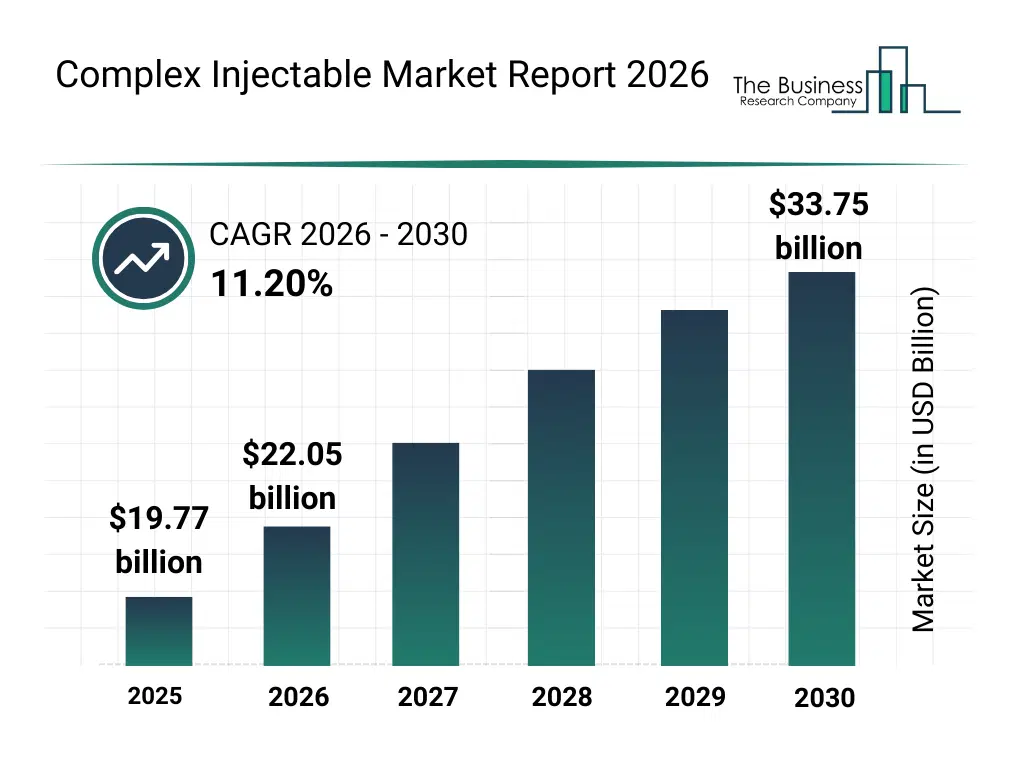
What Is The Complex Injectable Market Size and Share 2026?
The complex injectable market size has grown rapidly in recent years. It will grow from $19.77 billion in 2025 to $22.05 billion in 2026 at a compound annual growth rate (CAGR) of 11.5%. The growth in the historic period can be attributed to increasing prevalence of chronic and complex diseases, advancements in injectable drug delivery technologies, expansion of hospital-based injectable treatments, rising adoption of biologics, improvements in sterile manufacturing capabilities.What Is The Complex Injectable Market Growth Forecast?
The complex injectable market size is expected to see rapid growth in the next few years. It will grow to $33.75 billion in 2030 at a compound annual growth rate (CAGR) of 11.2%. The growth in the forecast period can be attributed to increasing investments in complex injectable pipelines, rising demand for oncology and specialty injectables, expansion of contract manufacturing services, growing focus on self-administered injectables, increasing regulatory approvals for advanced formulations. Major trends in the forecast period include increasing demand for sterile injectable drug products, rising development of biologic and advanced injectable therapies, growing use of high-precision manufacturing processes, expansion of antibody-drug conjugate injectables, enhanced focus on cold-chain compatible formulations.
Global Complex Injectable Market Segmentation
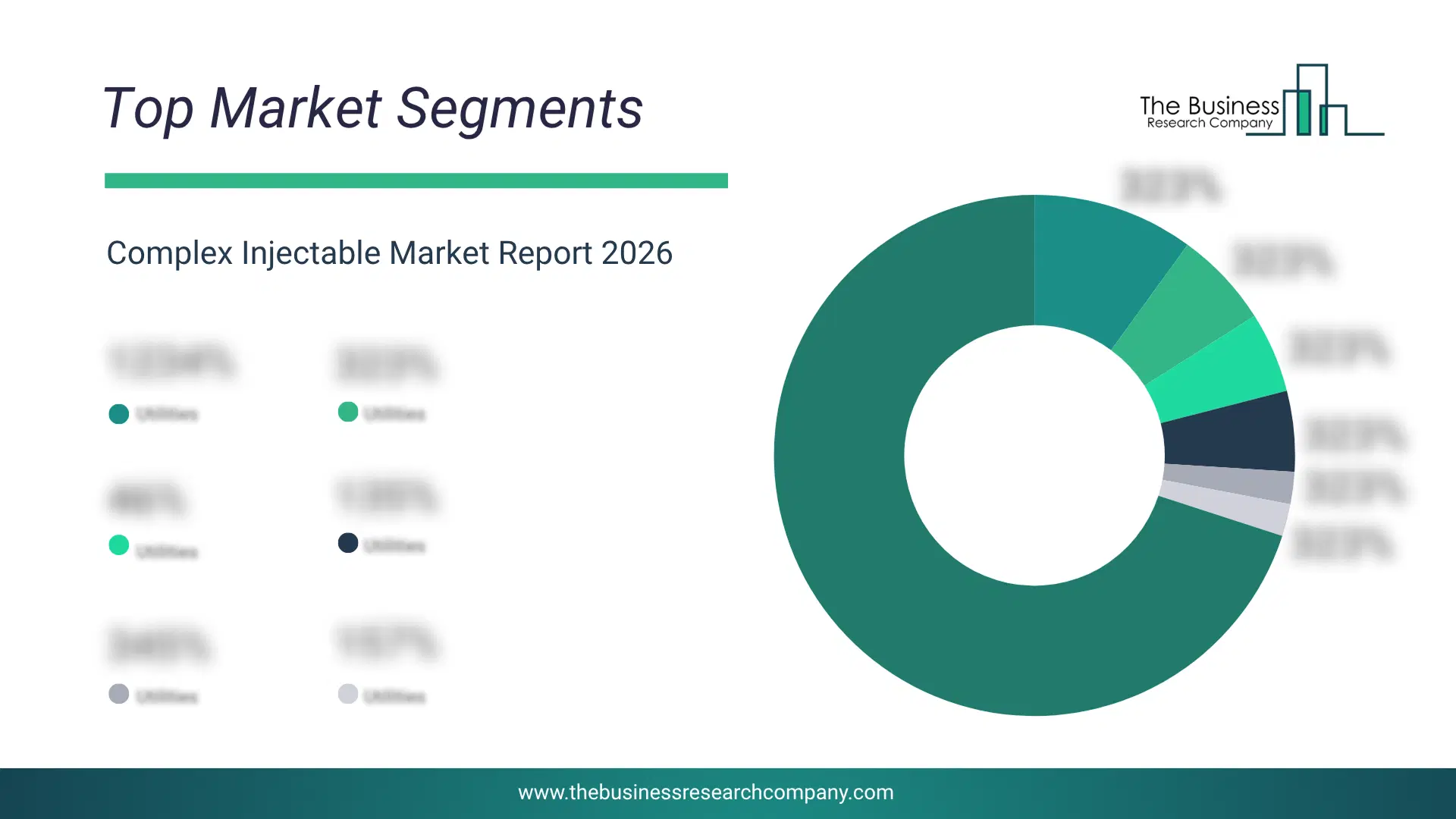
1) By Product Type: Monoclonal Antibodies, Gene Therapies, Vaccines Proteins and Peptides, Antibody-Drug Conjugates (ADCs) 2) By Therapeutic Area: Oncology, Diabetes, Autoimmune Disorders, Neurological Disorders, Cardiovascular Diseases, Infectious Diseases 3) By Route of Administration: Intravenous (IV), Subcutaneous (SC), Intramuscular (IM), Epidural, Intradermal 4) By Distribution Channel: Direct Sale, Pharmacies, E-Commerce, Distributors, Wholesalers 5) By End User: Hospitals, Ambulatory Surgical Centers, Specialty Clinics, Home Healthcare, Research Institutions Subsegments: 1) By Monoclonal Antibodies: Chimeric Monoclonal Antibodies, Humanized Monoclonal Antibodies, Fully Human Monoclonal Antibodies, Bispecific Monoclonal Antibodies 2) By Gene Therapies: Somatic Gene Therapy, Germline Gene Therapy, Ex Vivo Gene Therapy, In Vivo Gene Therapy 3) By Vaccines Proteins And Peptides: Recombinant Proteins, Synthetic Peptides, mRNA Vaccines, Viral Vector Vaccines 4) By Antibody Drug Conjugates: Cleavable Linker Antibody Drug Conjugates, Non-cleavable Linker Antibody Drug Conjugates, Cytotoxic Payload Antibody Drug Conjugates, Target-specific Antibody Drug ConjugatesWhat Is The Driver Of The Complex Injectable Market?
The increasing prevalence of chronic diseases is expected to propel the growth of the complex injectable market going forward. Chronic diseases refer to long-lasting medical conditions that typically progress slowly and require ongoing management. The rising prevalence of chronic diseases is due to factors such as aging populations because older individuals are more susceptible to long-term conditions such as diabetes, heart disease, and arthritis. Complex injectables help manage chronic diseases by delivering targeted medications that control symptoms and slow disease progression. For instance, according to the Office for Health Improvement & Disparities (OHID), a UK-based public health agency, the global prevalence of diabetes is projected to rise from 537 million adults in 2021 to 643 million by 2030. Therefore, the increasing prevalence of chronic diseases drives growth in the complex injectable industry.Key Players In The Global Complex Injectable Market
Major companies operating in the complex injectable market are Johnson & Johnson Pharmaceutical, Merck & Co. Inc., Pfizer Inc., Bayer AG, Novartis AG, Bristol-Myers Squibb Company, Novo Nordisk, Takeda Pharmaceutical Company Limited, Amgen Inc., Boehringer Ingelheim GmbH, Baxter Healthcare Corporation, Fresenius Kabi, Sun Pharmaceutical Industries Ltd., Hikma Pharmaceuticals, Indivior PLC, Amphastar Pharmaceuticals Inc., Braun Melsungen AG, Ferring Pharmaceuticals, Oakwood Labs, ForDoz Pharma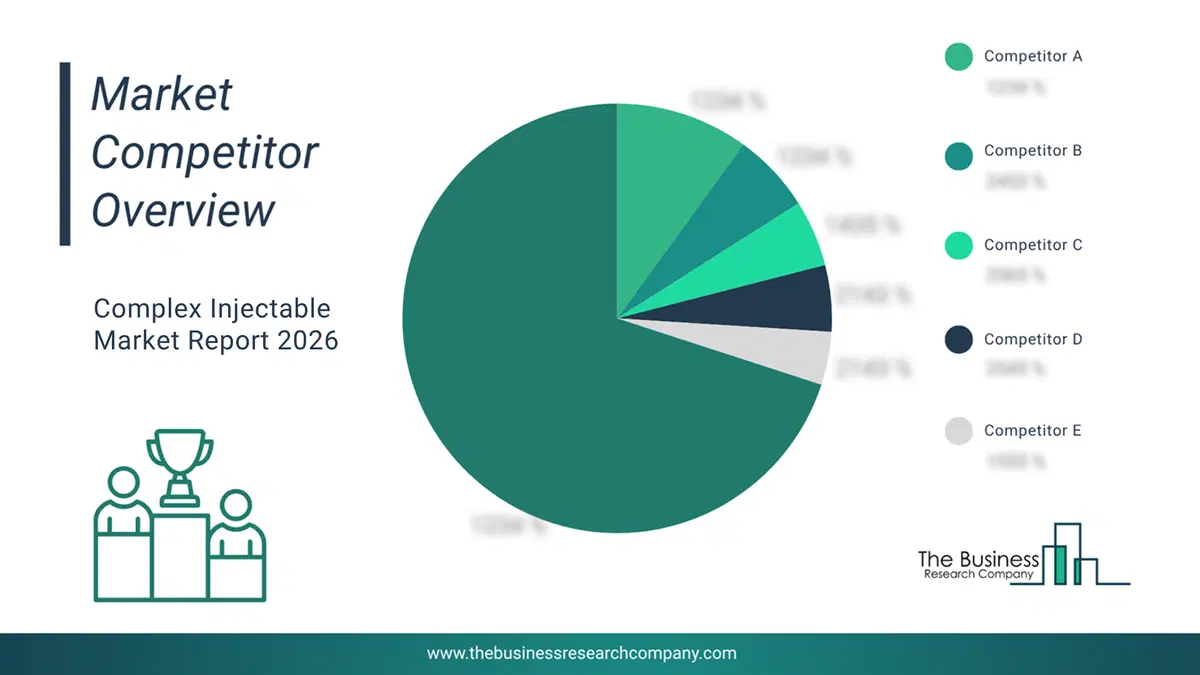
This chart is for illustrative purposes; the full report includes a detailed competitor analysis and comprehensive overview of the top 10 companies in the market.
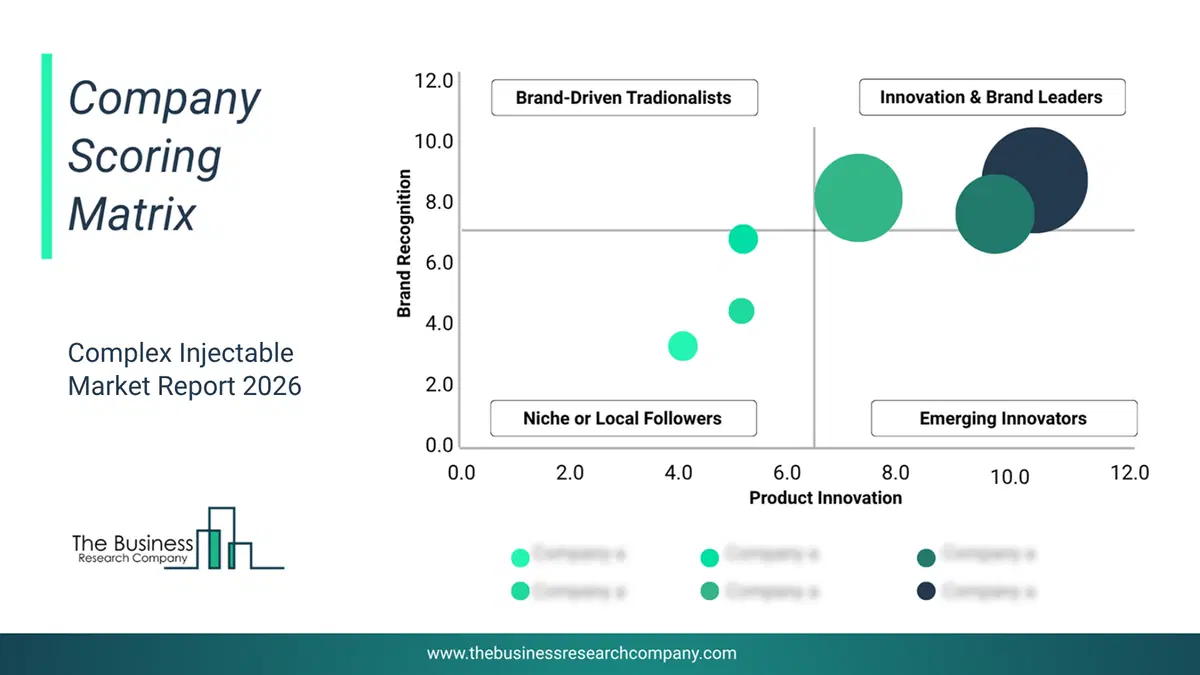
This chart maps companies by product innovation and brand strength, with bubble size indicating relative revenue, helping identify market leaders, challengers, and niche players. This is an illustrative chart; the full report provides a complete and accurate competitive analysis.
Global Complex Injectable Market Trends and Insights
Major companies operating in the drug delivery systems market are focusing on advancements in drug delivery systems, such as autoinjector dosage forms, to enhance patient convenience, improve adherence to treatment, ensure precise and safe drug administration, and support the effective delivery of complex biologic therapies. Autoinjector dosage forms refer to pre-filled, self-administered injection devices designed to deliver a precise dose of medication safely and conveniently, often used for biologics and other complex therapies. For instance, in January 2024, Taisho Pharmaceutical Co. Ltd., a Japan-based generic drug manufacturing company, launched Nanozora 30 mg for subcutaneous injection, offering a patient-friendly device designed for easy self-administration. The product ensures safety with a needle-covering mechanism to prevent accidental needle sticks and allows patients with rheumatoid arthritis to receive treatment conveniently once every four weeks. This expands Taisho’s treatment options alongside the previously available syringe formulation.What Are Latest Mergers And Acquisitions In The Complex Injectable Market?
In April 2024, Eli Lilly And Company, a US-based pharmaceutical company, acquired Nexus Pharmaceuticals Inc. for an undisclosed amount. Through this acquisition, Eli Lilly expands its parenteral (injectable) manufacturing capabilities by integrating a state-of-the-art sterile facility from Nexus Pharmaceuticals. This move strengthens Lilly’s capacity to meet growing demand for complex injectable medications and supports its robust pipeline for conditions such as diabetes, obesity, and migraine. Nexus Pharmaceuticals Inc. is a US-based pharmaceutical company that is involved in the development and production of generic and specialty injectable drugs.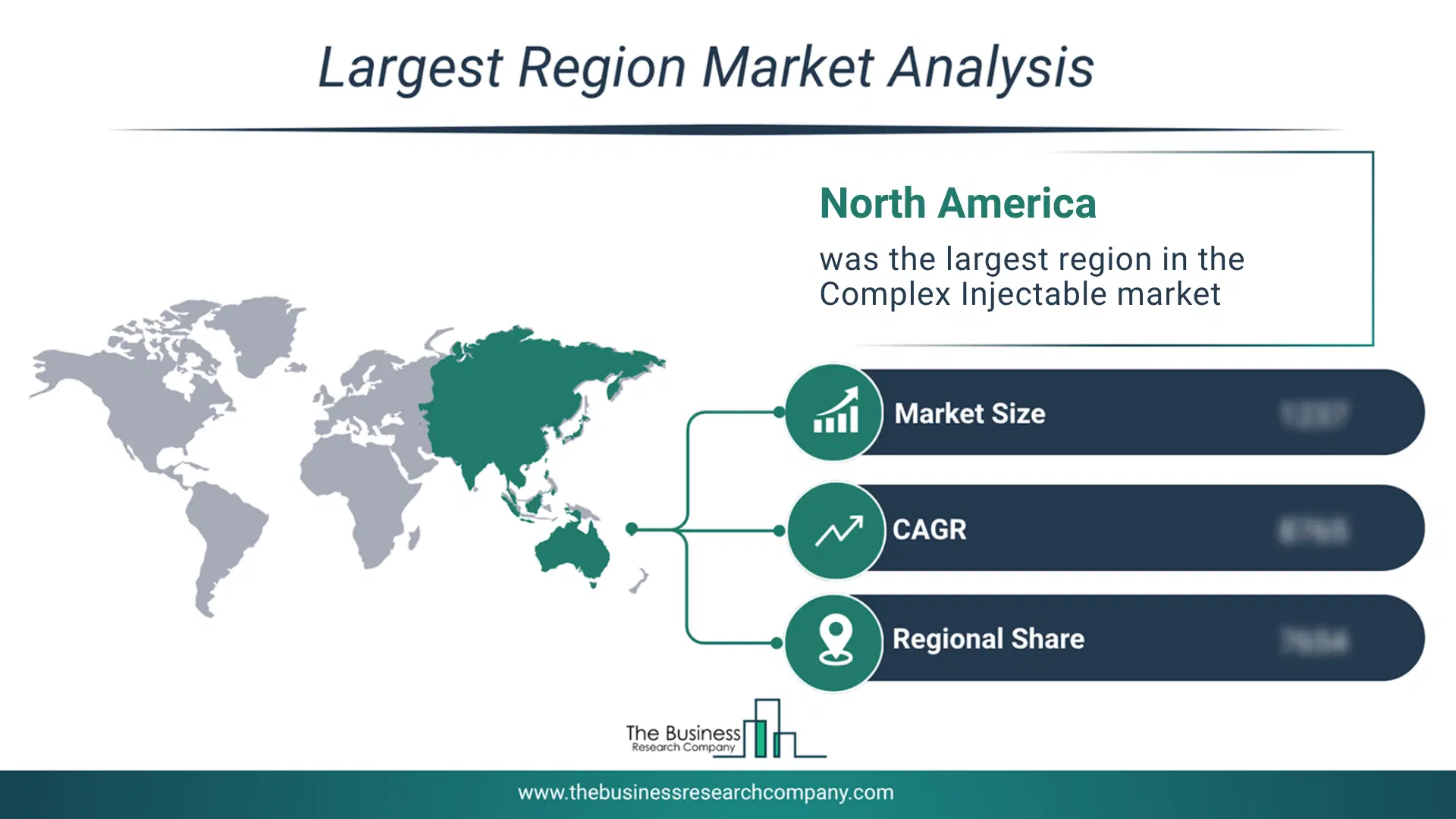
Regional Insights
North America was the largest region in the complex injectable market in 2025. Asia-Pacific is expected to be the fastest-growing region in the forecast period. The regions covered in this market report are Asia-Pacific, South East Asia, Western Europe, Eastern Europe, North America, South America, Middle East, Africa. The countries covered in this market report are Australia, Brazil, China, France, Germany, India, Indonesia, Japan, Taiwan, Russia, South Korea, UK, USA, Canada, Italy, Spain.What Defines the Complex Injectable Market?
The complex injectable market consists of sales of liposomal injections, depot injections, nanoparticle-based injectables, emulsions, and suspensions. Values in this market are ‘factory gate’ values, that is, the value of goods sold by the manufacturers or creators of the goods, whether to other entities (including downstream manufacturers, wholesalers, distributors, and retailers) or directly to end customers. The value of goods in this market includes related services sold by the creators of the goods.How is Market Value Defined and Measured?
The market value is defined as the revenues that enterprises gain from the sale of goods and/or services within the specified market and geography through sales, grants, or donations in terms of the currency (in USD unless otherwise specified). The revenues for a specified geography are consumption values that are revenues generated by organizations in the specified geography within the market, irrespective of where they are produced. It does not include revenues from resales along the supply chain, either further along the supply chain or as part of other products.
This chart presents market attractiveness based on a quantitative evaluation of growth, competition, strategic alignment, and risk, offering a clear view of opportunity areas for decision-making. This chart is for illustrative purposes; the full report contains the complete analysis.

This chart highlights the Total Addressable Market (TAM) by estimating the maximum revenue opportunity using an assumption-driven approach, supporting strategic planning and opportunity sizing across markets. The chart is illustrative; the full report provides a more comprehensive analysis.
What Key Data and Analysis Are Included in the Complex Injectable Market Report 2026?
The complex injectable market research report is one of a series of new reports from The Business Research Company that provides market statistics, including industry global market size, regional shares, competitors with the market share, detailed market segments, market trends and opportunities, and any further data you may need to thrive in the complex injectable industry. The market research report delivers a complete perspective of everything you need, with an in-depth analysis of the current and future state of the industry.Complex Injectable Market Report Forecast Analysis
| Report Attribute | Details |
|---|---|
| Market Size Value In 2026 | $22.05 billion |
| Revenue Forecast In 2030 | $33.75 billion |
| Growth Rate | CAGR of 11.5% from 2026 to 2030 |
| Base Year For Estimation | 2025 |
| Actual Estimates/Historical Data | 2020-2025 |
| Forecast Period | 2026 - 2030 |
| Market Representation | Revenue in USD Billion and CAGR from 2026 to 2030 |
| Segments Covered | Product Type, Therapeutic Area, Route of Administration, Distribution Channel, End User |
| Regional Scope | Asia-Pacific, Western Europe, Eastern Europe, North America, South America, Middle East, Africa |
| Country Scope | The countries covered in the report are Australia, Brazil, China, France, Germany, India, Indonesia, Japan, Taiwan, Russia, South Korea, UK, USA, Canada, Italy, Spain. |
| Key Companies Profiled | Johnson & Johnson Pharmaceutical, Merck & Co. Inc., Pfizer Inc., Bayer AG, Novartis AG, Bristol-Myers Squibb Company, Novo Nordisk, Takeda Pharmaceutical Company Limited, Amgen Inc., Boehringer Ingelheim GmbH, Baxter Healthcare Corporation, Fresenius Kabi, Sun Pharmaceutical Industries Ltd., Hikma Pharmaceuticals, Indivior PLC, Amphastar Pharmaceuticals Inc., Braun Melsungen AG, Ferring Pharmaceuticals, Oakwood Labs, ForDoz Pharma |
| Customization Scope | Request for Customization |
| Pricing And Purchase Options | Explore Purchase Options |