

Composable Infrastructure Market Report 2026
Global Outlook – By Component Outlook ( Software, Hardware), By Cloud ( Public, Private, Hybrid), By Vertical ( BFSI, IT & Telecom, Government, Healthcare, Manufacturing, Other Verticals) – Market Size, Trends, Strategies, and Forecast to 2030
Composable Infrastructure Market Overview
• Composable Infrastructure market size has reached to $10.66 billion in 2025 • Expected to grow to $42.81 billion in 2030 at a compound annual growth rate (CAGR) of 32% • Growth Driver: The Role Of Cloud Services In Driving Composable Infrastructure Growth • Market Trend: Advancing Data Center Efficiency Through AI-Driven And Sustainable Innovations • North America was the largest region in 2025 and Asia-Pacific is the fastest growing region.Market Gains By 2030 – Top Opportunities By Segment
Market Gain identifies the most promising market opportunities by highlighting the segments or products expected to generate the highest incremental revenue growth over the next five years.
What Is Covered Under Composable Infrastructure Market?
The composable infrastructure refer to the framework for decoupling device resources so that they can be treated as services. The device resources that can be treated as services include physical computing, storage and network fabric resources. The composable infrastructure aims to be cost-effective by reducing waste and the amount of time taken to deploy a new application. The main type of composable infrastructure include software and hardware. Composable infrastructure abstracts compute, storage, and networking resources from their physical locations and allow the software to manage them via a web-based interface. They are deployed in public, private, and hybrid cloud infrastructures. The end-users of composable infrastructure include BFSI, it & telecom, government, healthcare, manufacturing, and other verticals.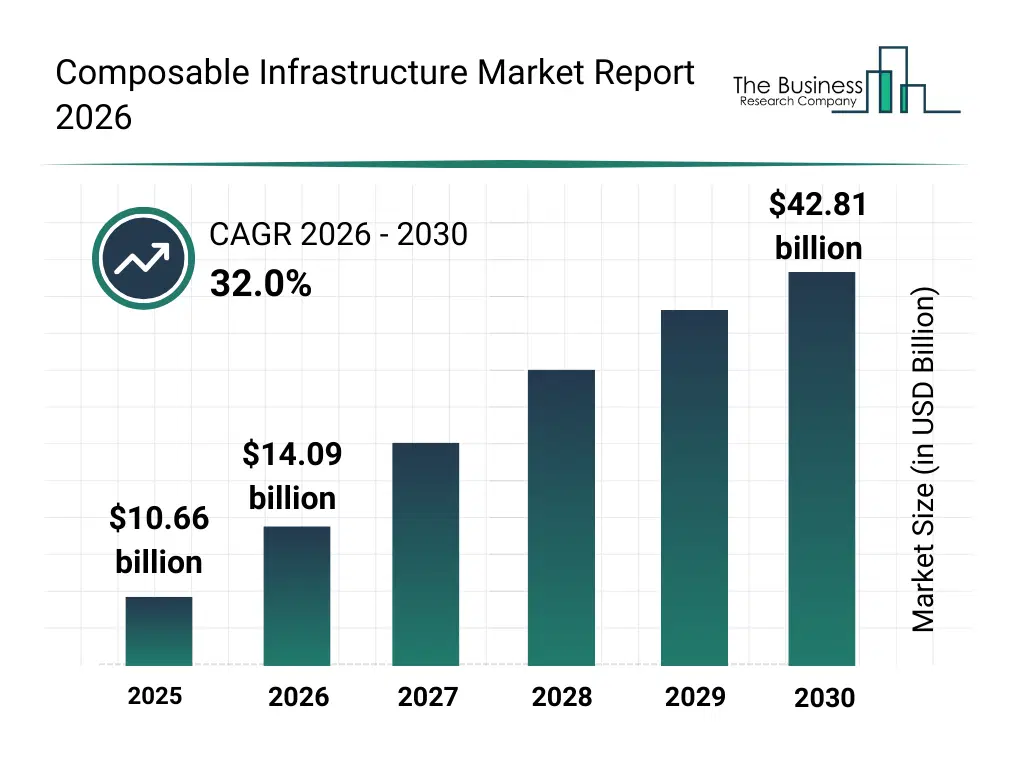
What Is The Composable Infrastructure Market Size 2026 And Growth Rate?
The composable infrastructure market size has grown exponentially in recent years. It will grow from $10.66 billion in 2025 to $14.09 billion in 2026 at a compound annual growth rate (CAGR) of 32.1%. The growth in the historic period can be attributed to rise in adoption of software-defined infrastructure, increasing deployment of modular hardware components, expansion in BFSI, IT & Telecom and government sectors, integration in healthcare and manufacturing, growing emphasis on scalable IT solutions.What Is The Composable Infrastructure Market Growth Forecast?
The composable infrastructure market size is expected to see exponential growth in the next few years. It will grow to $42.81 billion in 2030 at a compound annual growth rate (CAGR) of 32.0%. The growth in the forecast period can be attributed to increase in AI-driven infrastructure management, rising adoption of cloud orchestration software, growth in automated provisioning and analytics, expansion in hybrid and multi-cloud implementations, increase in predictive resource optimization and monitoring. Major trends in the forecast period include AI-based resource orchestration, cloud-enabled composable infrastructure management, IoT-connected monitoring, automated provisioning and deployment, predictive analytics for it resource optimization.
Global Composable Infrastructure Market Segmentation
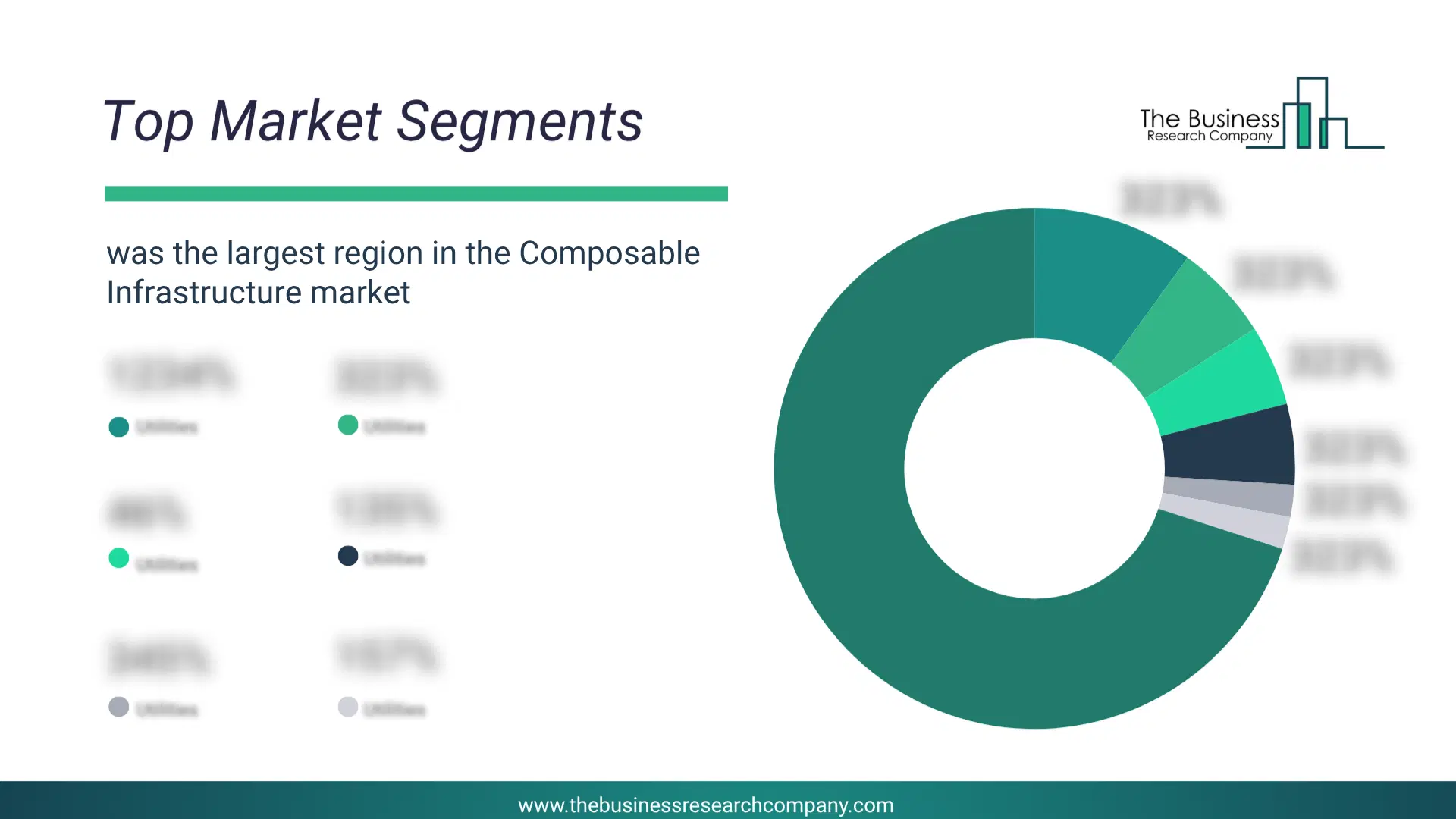
1) By Component Outlook: Software, Hardware 2) By Cloud: Public, Private, Hybrid 3) By Vertical: BFSI, IT & Telecom, Government, Healthcare, Manufacturing, Other Verticals Subsegments: 1) By Software: Infrastructure Management Software, Resource Orchestration Software, Monitoring and Analytics Software, Automation and Provisioning Software 2) By Hardware: Compute, Storage, Network, Chassis and Enclosures The top segments in the composable infrastructure market will be: • Hardware will reach $7945.36 Million by 2025. • Public will reach $4523.24 Million by 2025. • IT & Telecom will reach $3602.01 Million by 2025. • Hybrid will reach $3398.21 Million by 2025. • Private will reach $2783.52 Million by 2025.What Is The Driver Of The Composable Infrastructure Market?
The growing demand for cloud services is expected to drive the growth of the composable infrastructure market forward. Cloud services refer to a broad range of on-demand computing resources and applications that are delivered over the internet. These services are hosted on remote servers, often in data centers, and can be accessed and utilized by individuals, businesses, and organizations through the internet. Cloud services are increasingly used in composable infrastructure to enhance flexibility, scalability, and overall operational efficiency and create a highly adaptable, efficient, and agile IT environment that can rapidly respond to changing business demands. For instance, in January 2025, according to AAG IT Services, a UK-based non-government organization, In 2022, 57% of SMB workloads and 56% of SMB data were hosted in public clouds, with an additional 6% of each expected to migrate to the cloud within the next 12 months. Consequently, by 2023, approximately 63% of SMB workloads and 62% of SMB data are projected to be cloud-hosted. Therefore, the growing demand for cloud services is expected to propel the growth of the composable infrastructure industry.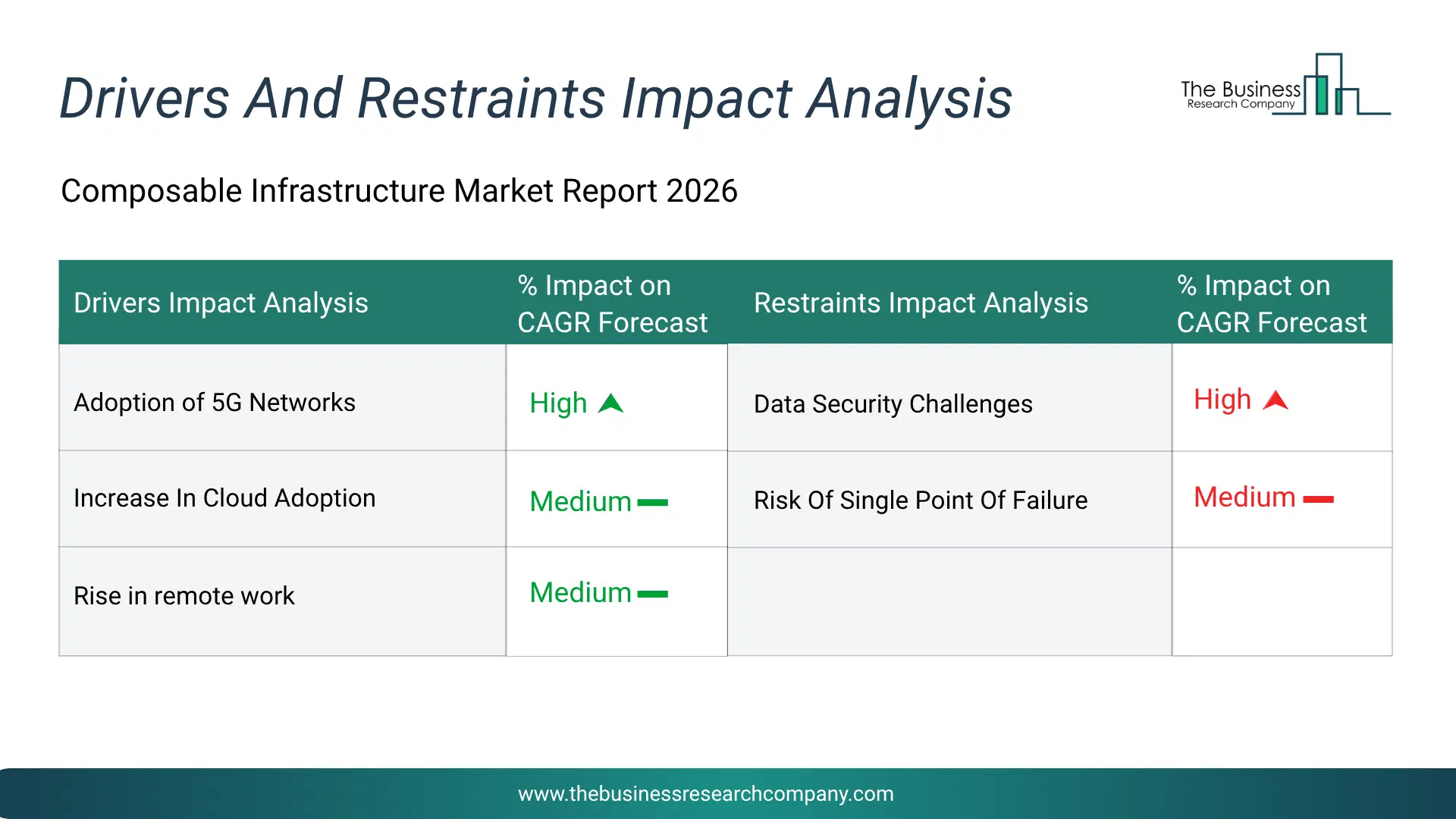
Infographic Chart Showing Key Market Drivers Analysis And Restraints For Composable Infrastructure Market
The chart presents an impact analysis of key drivers and restraints, quantifying their relative influence on the market's growth rate and helping assess the balance between growth enablers and limiting factors. This chart offers a high-level perspective; the full report contains more detailed insights.
How Will The Drivers Impact Growth In The Global Composable Infrastructure Market?
• Adoption of 5G Networks (High) – The adoption of 5g networks markets will become a key driver of growth in the composable infrastructure market by 2030. 5G technology, the fifth generation of mobile networks, delivers ultra-fast speeds, low latency and enhanced connectivity, supporting innovations such as IoT, autonomous vehicles and smart cities. The rising deployment of 5G is fuelled by the increasing demand for high-speed, low-latency connectivity to enable advanced applications across various industries. By providing seamless, high-performance connectivity, 5G facilitates dynamic allocation of compute, storage and networking resources, enhancing the efficiency of AI, IoT and cloud-native applications within composable infrastructure. As a result, adoption of 5g networks market is anticipated to contributing to a 2.0% annual growth in the market. • Increase In Cloud Adoption (Medium) – The increase in cloud adoption will become a key driver of growth in the composable infrastructure market by 2030. As businesses seek scalable, cost-effective, and flexible IT solutions, cloud computing offers on-demand access to resources like servers, storage, and analytics. This shift reduces capital expenses and supports dynamic resource allocation, workload optimization, cost efficiency, and automation across hybrid and multi-cloud environments. As a result, increase in cloud adoption is anticipated to contributing to a 1.5% annual growth in the market. • Rise in remote work (Medium) – The rise in remote work will serve as a key growth catalyst composable infrastructure market by 2030. As more employees work from various locations using digital tools, businesses require scalable computing, storage, and networking solutions. Composable infrastructure enables real-time allocation of IT resources, supporting distributed workforces and improving operational efficiency. Therefore, this rise in remote work is projected to supporting to a 1.0% annual growth in the market. • Rising Volume Of Data Generation (Low) – The rising volume of data generation will serve as a key growth catalyst for composable infrastructure market by 2030. With data created from IoT devices, AI, social media, and digital transactions, businesses need scalable storage, real-time processing, and dynamic resource allocation. Composable infrastructure meets these demands, supporting efficient data management and evolving IT needs. Therefore, this rising volume of data generation is projected to supporting to a 0.5% annual growth in the market.How Will The Restraints Impact Growth In The Global Composable Infrastructure Market?
• Data Security Challenges (High) – Data Security Challenges will restrict the growth of the Composable Infrastructure market during the forecast period. Composable infrastructure environments involve software-defined resources and dynamic allocation, creating security challenges. The increased complexity and abstraction levels can introduce vulnerabilities and attack surfaces. Data security concerns about multi-tenancy and resource sharing may slow adoption, particularly in regulated industries where data protection is critical. • Risk Of Single Point Of Failure (Medium) – Risk Of Single Point Of Failure will restrict the growth of the Composable Infrastructure market during the forecast period. Composable infrastructure relies on centralized management software and fabric, creating potential single points of failure. System failures can affect entire infrastructure pools, leading to service disruptions and operational risks. The risk of cascading failures and the criticality of management software create concerns about system reliability, potentially affecting adoption in mission-critical applications.Key Players In The Global Composable Infrastructure Market
Major companies operating in the composable infrastructure market are Lenovo Group Limited, One Stop Systems Inc., Dolphin Interconnect Solutions, Liqid Inc., Inspur Group Co. Ltd., Hewlett Packard Enterprise Company, NetApp Inc., Dell Inc., Nutanix Inc., Juniper Networks Inc., TidalScale Inc., Quanta Cloud Technology LLC, Cloudistics Inc., DriveScale Inc., Cisco Systems Inc., Fungible Inc., Pure Storage Inc., Super Micro Computer Inc., Fujitsu Limited, NEC Corporation, Huawei Technologies Co. Ltd., Hitachi Ltd., International Business Machines Corporation, Oracle Corporation, Microsoft Corporation, Amazon Web Services Inc., Google LLC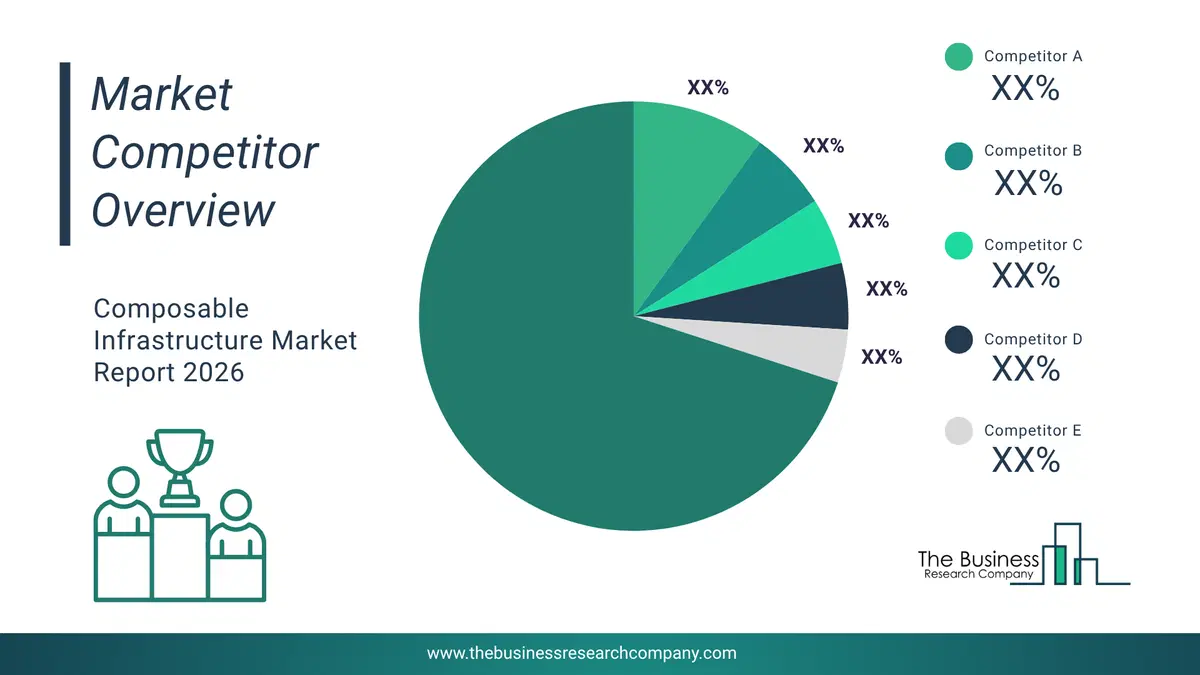
This chart is for illustrative purposes; the full report includes a detailed competitor analysis and comprehensive overview of the top 10 companies in the market.
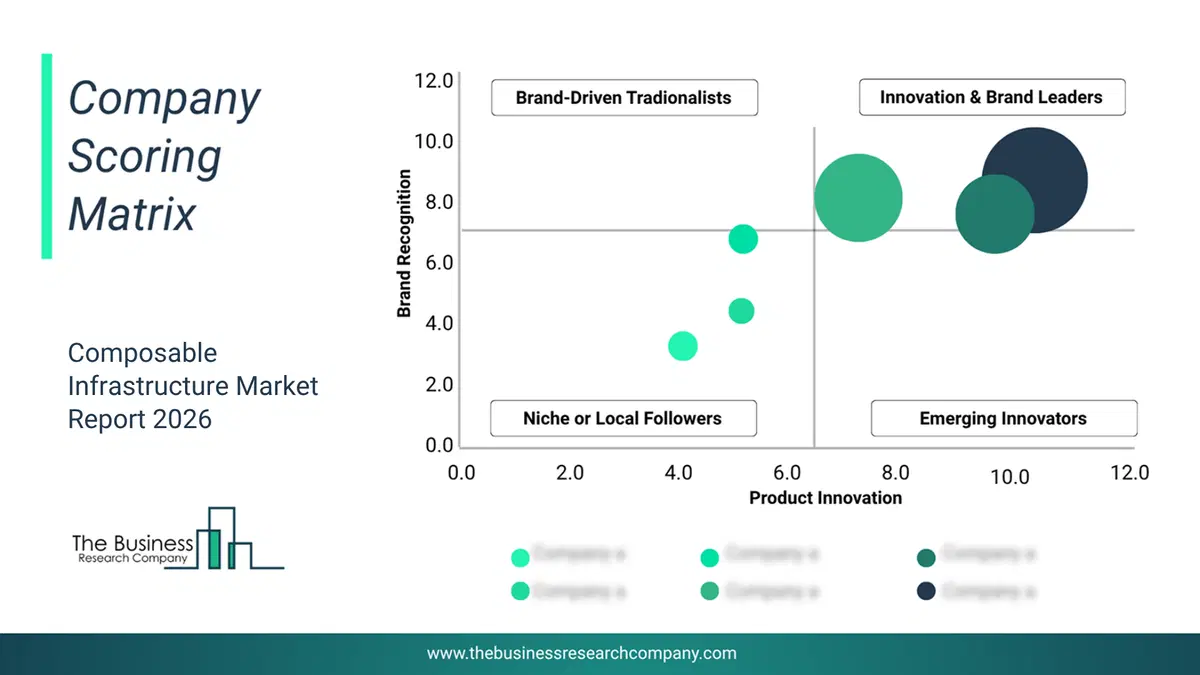
This chart maps companies by product innovation and brand strength, with bubble size indicating relative revenue, helping identify market leaders, challengers, and niche players. This is an illustrative chart; the full report provides a complete and accurate competitive analysis.
Global Composable Infrastructure Market Trends and Insights
Major companies operating in the composable infrastructure market are focusing on developing innovative products such as vertical solutions and energy-efficient innovations to optimize data center performance, reduce power consumption, and support scalable AI-driven operations. Vertical solutions and energy-efficient innovations refer to industry-specific technologies and sustainable designs that enhance operational efficiency, reduce energy usage, and tailor infrastructure performance to specific business needs. For instance, in October 2024, Lenovo Group Limited, a China-based technology company, launched its next-generation business-ready AI solutions and advanced liquid cooling technologies. These innovations are designed to power AI workloads more efficiently, improve thermal management in high-performance computing environments, and enable enterprises to build sustainable, intelligent infrastructure for the AI era.What Are Latest Mergers And Acquisitions In The Composable Infrastructure Market?
In January 2023, Dell Technologies, a US-based technology company, acquired Cloudify Platform Ltd. for $100 million. Through this acquisition, Dell aims to grow its company by providing cloud services. DevOps and IT service management may be better connected using Cloudify's environment-as-a-service packages that include networking, infrastructure, and automation technologies. Cloudify Platform Ltd., an Israil-based automation platform that develops composable infrastructure services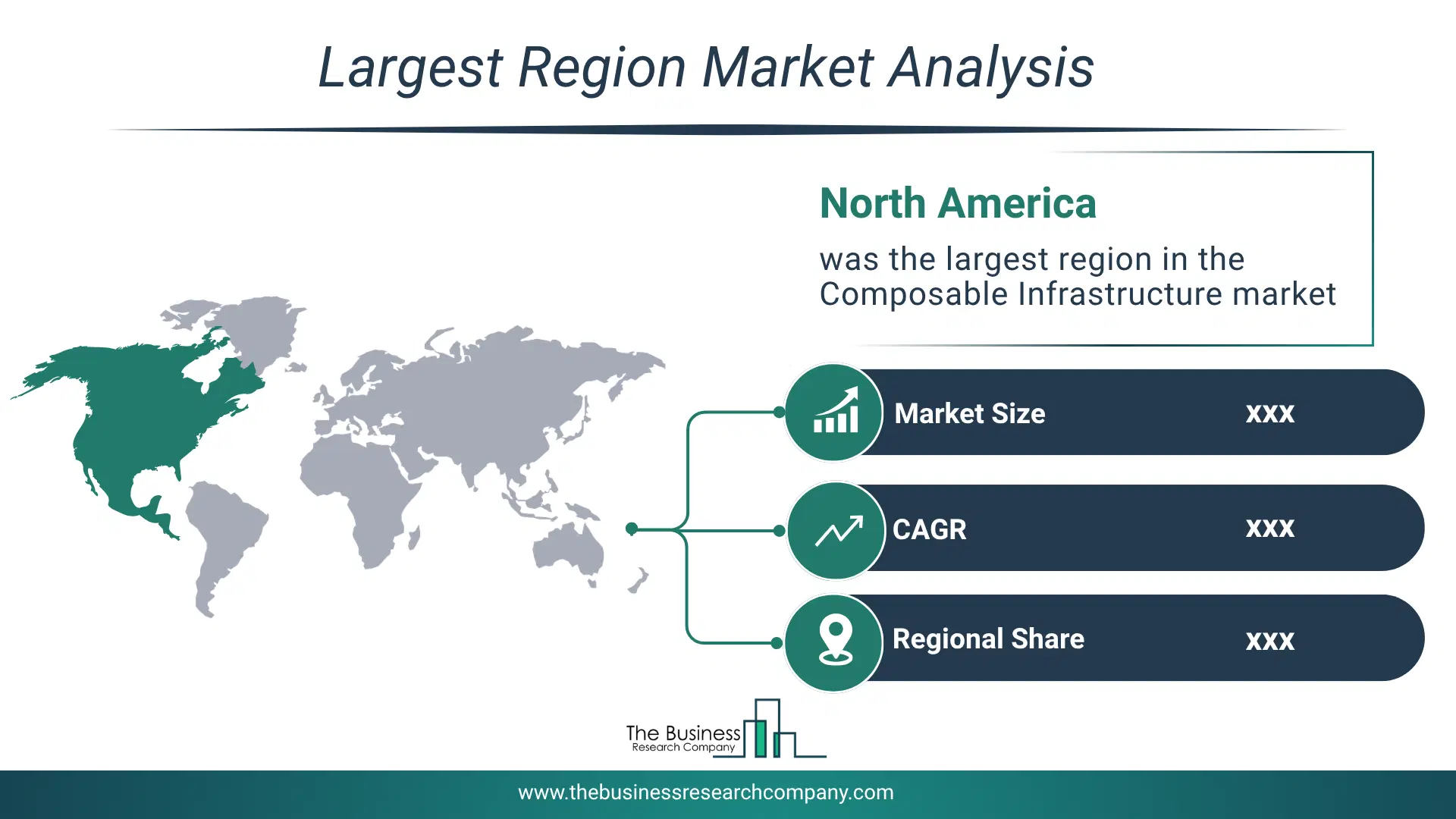
Regional Outlook
North America was the largest region in the composable infrastructure market in 2025. Asia-Pacific is expected to be the fastest-growing region in the forecast period. The regions covered in this market report are Asia-Pacific, South East Asia, Western Europe, Eastern Europe, North America, South America, Middle East, Africa. The countries covered in this market report are Australia, Brazil, China, France, Germany, India, Indonesia, Japan, Taiwan, Russia, South Korea, UK, USA, Canada, Italy, Spain.What Defines the Composable Infrastructure Market?
The composable infrastructure market includes revenues earned by entities by providing various composable infrastructure services such as managing physical servers, storage, network components, and allocation of resources to leverage operations of data centers. The market value includes the value of related goods sold by the service provider or included within the service offering. Only goods and services traded between entities or sold to end consumers are included.How is Market Value Defined and Measured?
The market value is defined as the revenues that enterprises gain from the sale of goods and/or services within the specified market and geography through sales, grants, or donations in terms of the currency (in USD unless otherwise specified). The revenues for a specified geography are consumption values that are revenues generated by organizations in the specified geography within the market, irrespective of where they are produced. It does not include revenues from resales along the supply chain, either further along the supply chain or as part of other products.
This chart presents market attractiveness based on a quantitative evaluation of growth, competition, strategic alignment, and risk, offering a clear view of opportunity areas for decision-making. This chart is for illustrative purposes; the full report contains the complete analysis.

This chart highlights the Total Addressable Market (TAM) by estimating the maximum revenue opportunity using an assumption-driven approach, supporting strategic planning and opportunity sizing across markets. The chart is illustrative; the full report provides a more comprehensive analysis.
What Key Data and Analysis Are Included in the Composable Infrastructure Market Report 2026?
The composable infrastructure market research report is one of a series of new reports from The Business Research Company that provides market statistics, including industry global market size, regional shares, competitors with the market share, detailed market segments, market trends and opportunities, and any further data you may need to thrive in the composable infrastructure industry. The market research report delivers a complete perspective of everything you need, with an in-depth analysis of the current and future state of the industry.Composable Infrastructure Market Report 2026 Market Report Forecast Analysis
| Report Attribute | Details |
|---|---|
| Market Size Value In 2026 | $14.09 billion |
| Revenue Forecast In 2030 | $42.81 billion |
| Growth Rate | CAGR of 32.1% from 2026 to 2030 |
| Base Year For Estimation | 2025 |
| Actual Estimates/Historical Data | 2020-2025 |
| Forecast Period | 2026 - 2030 |
| Market Representation | Revenue in USD Billion and CAGR from 2026 to 2030 |
| Segments Covered | Component Outlook, Cloud, Vertical |
| Regional Scope | Asia-Pacific, Western Europe, Eastern Europe, North America, South America, Middle East, Africa |
| Country Scope | The countries covered in the report are Australia, Brazil, China, France, Germany, India, Indonesia, Japan, Taiwan, Russia, South Korea, UK, USA, Canada, Italy, Spain. |
| Key Companies Profiled | Lenovo Group Limited, One Stop Systems Inc., Dolphin Interconnect Solutions, Liqid Inc., Inspur Group Co. Ltd., Hewlett Packard Enterprise Company, NetApp Inc., Dell Inc., Nutanix Inc., Juniper Networks Inc., TidalScale Inc., Quanta Cloud Technology LLC, Cloudistics Inc., DriveScale Inc., Cisco Systems Inc., Fungible Inc., Pure Storage Inc., Super Micro Computer Inc., Fujitsu Limited, NEC Corporation, Huawei Technologies Co. Ltd., Hitachi Ltd., International Business Machines Corporation, Oracle Corporation, Microsoft Corporation, Amazon Web Services Inc., Google LLC |
| Customization Scope | Request for Customization |
| Pricing And Purchase Options | Explore Purchase Options |