
Compost Market Report 2026
Global Outlook – By Product Type (Yard Trimming, Food Waste, Manure, Mushroom Compost, Vermicomposting), By Source (Agricultural Waste, Municipal Solid Waste, Food & Beverage Waste, Animal Manure), By Application (Agriculture, Home Gardening, Landscaping, Horticulture, Other Applications) – Market Size, Trends, Strategies, and Forecast to 2030
Compost Market Overview
• Compost market size has reached to $8.7 billion in 2025 • Expected to grow to $12.55 billion in 2030 at a compound annual growth rate (CAGR) of 7.6% • Growth Driver: Water Shortages Is Anticipated To Fuel The Compost Market • Market Trend: Sustainable Compost For Eco-Friendly Soil Enhancement • Asia-Pacific was the largest region and fastest growing region.Market Gains By 2030 – Top Opportunities By Segment
Market Gain identifies the most promising market opportunities by highlighting the segments or products expected to generate the highest incremental revenue growth over the next five years.
What Is Covered Under Compost Market?
The compost refers to a mixture that is used for fertilizing, enhancing soil structure, offering a variety of nutrients to plants, and increasing the number of helpful bacteria in the soil. Compost can be manufactured artificially by creating ideal environment for composting by regulating the aerobic, biological breakdown of biodegradable materials. The main products of compost are yard trimming, food waste, manure, mushroom compost, and vermicomposting. The yard trimming is made from discarded grass, leaves, and tree and brush trimmings from residential, institutional, and commercial sources. It is also made by chopping woody stalks and twigs with a shovel or machete or run them over with a lawn mower or through a shredder. The application of compost include agriculture, home gardening, landscaping, horticulture, construction, and other applications.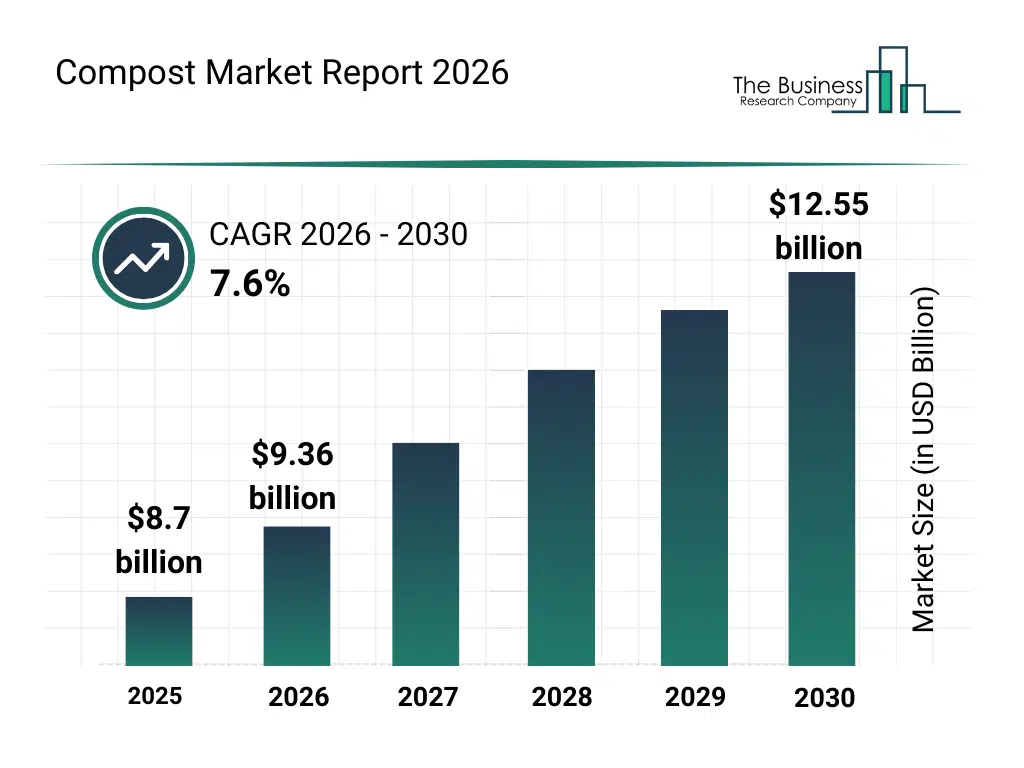
What Is The Compost Market Size and Share 2026?
The compost market size has grown strongly in recent years. It will grow from $8.7 billion in 2025 to $9.36 billion in 2026 at a compound annual growth rate (CAGR) of 7.5%. The growth in the historic period can be attributed to expansion of agricultural activities, increasing organic waste generation, growing awareness of soil fertility management, rising adoption of organic farming practices, availability of biodegradable feedstock materials.What Is The Compost Market Growth Forecast?
The compost market size is expected to see strong growth in the next few years. It will grow to $12.55 billion in 2030 at a compound annual growth rate (CAGR) of 7.6%. The growth in the forecast period can be attributed to increasing emphasis on circular waste management, rising demand for organic fertilizers, expansion of municipal composting programs, growing adoption in landscaping applications, increasing regulatory support for organic inputs. Major trends in the forecast period include increasing adoption of organic soil amendments, rising demand for waste recycling solutions, expansion of commercial composting facilities, growing use in sustainable agriculture, enhanced focus on soil health improvement.
Global Compost Market Segmentation
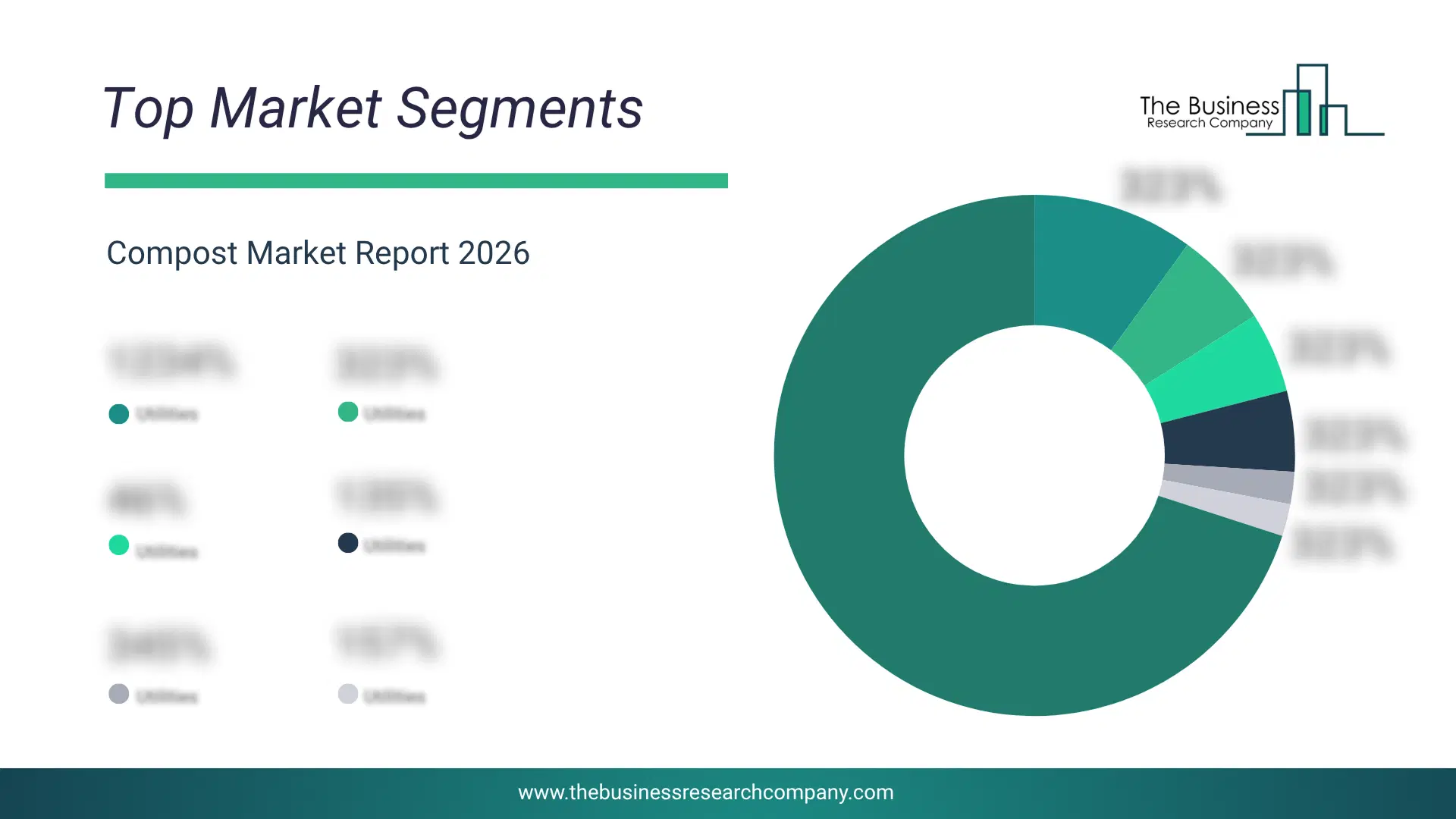
1) By Product Type: Yard Trimming, Food Waste, Manure, Mushroom Compost, Vermicomposting 2) By Source: Agricultural Waste, Municipal Solid Waste, Food & Beverage Waste, Animal Manure 3) By Application: Agriculture, Home Gardening, Landscaping, Horticulture, Other Applications Subsegments: 1) By Yard Trimming: Grass Clippings, Leaves, Small Branches and Twigs 2) By Food Waste: Fruit and Vegetable Scraps, Cooked Food Waste, Eggshells 3) By Manure: Dairy Manure, Poultry Manure, Horse Manure 4) By Mushroom Compost: Spent Mushroom Substrate, Organic Mushroom Compost Mixes 5) By Vermicomposting: Worm Castings, Vermicompost Mixes The top segments in the compost market will be: • Yard Trimming will reach $4525.03 Million by 2025. • Agriculture will reach $3694.72 Million by 2025. • Home Gardening will reach $2033.62 Million by 2025. • Landscaping will reach $1688.9 Million by 2025. • Food Waste will reach $1523.39 Million by 2025.What Is The Driver Of The Compost Market?
The water shortages are expected to propel the growth of the compost market going forward. Water shortages refer to insufficient availability of freshwater resources to meet the demands of a particular region or population. Compost can aid in mitigating water shortages by enhancing soil water retention, promoting moisture absorption, and reducing the need for excessive irrigation. For instance, in March 2023, according to UNESCO, a France-based specialized agency promoting world peace stated that worldwide, 2 billion individuals, which is 26% of the global population, are without access to clean drinking water. Furthermore, 3.6 billion people, accounting for 46% of the world's population, do not have access to adequately managed sanitation services. The number of urban residents facing water shortages is expected to increase twofold by 2050. Therefore, a water shortage is driving the compost industry.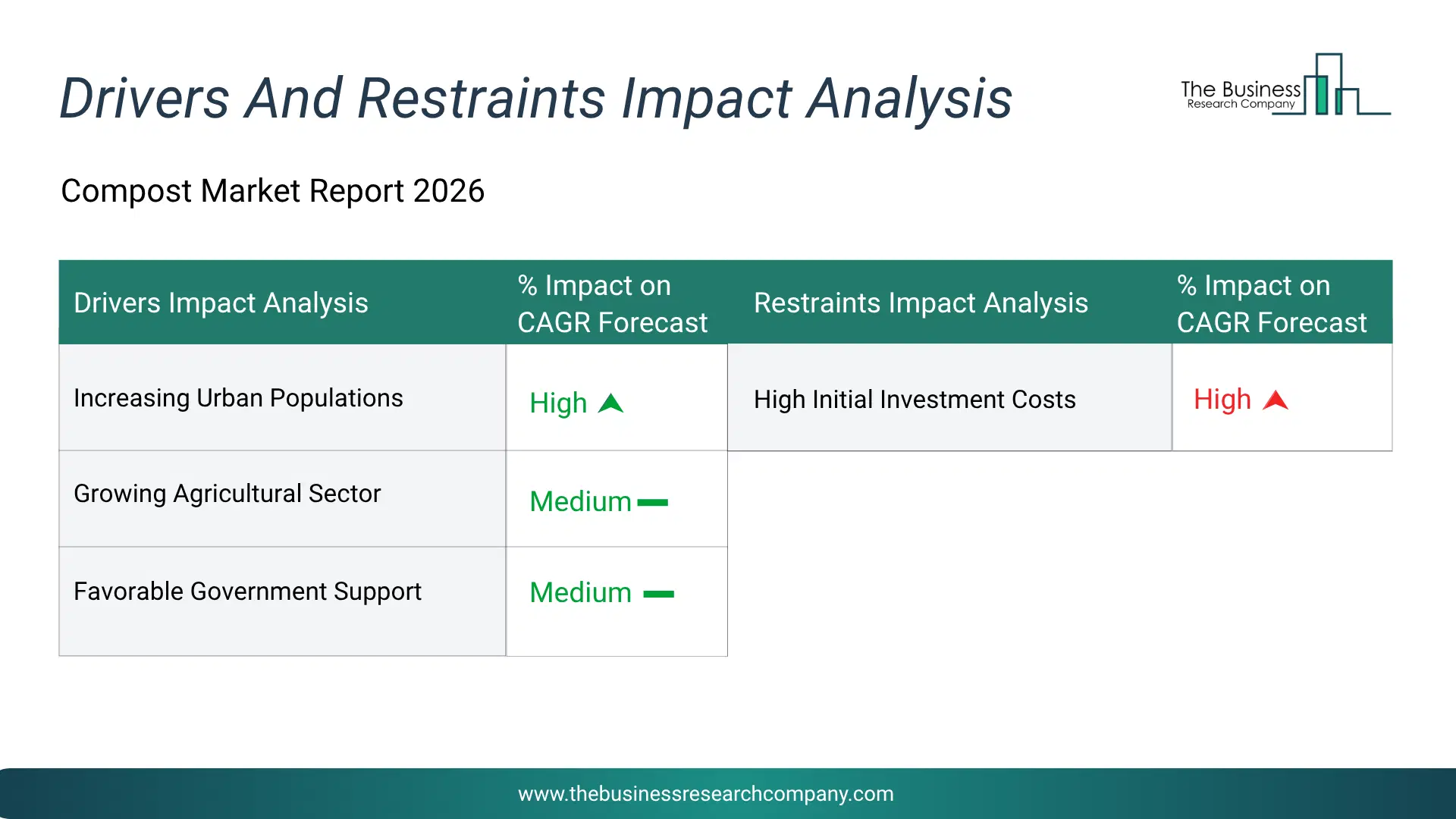
Infographic Chart Showing Key Market Drivers Analysis And Restraints For Compost Market
The chart presents an impact analysis of key drivers and restraints, quantifying their relative influence on the market's growth rate and helping assess the balance between growth enablers and limiting factors. This chart offers a high-level perspective; the full report contains more detailed insights.
How Will The Drivers Impact Growth In The Global Compost Market?
• Increasing Urban Populations (High) – The increasing urban populations will become a key driver of growth in the compost market by 2030. With the increasing number of people living in cities, there is a higher volume of organic waste, such as food scraps and yard waste that needs proper disposal. Urban residents are becoming more environmentally conscious, seeking sustainable alternatives to waste management. This growing awareness has led to an increased demand for composting solutions, as individuals and businesses aim to reduce landfill waste and promote soil health. As a result, the increasing urban populations is anticipated to contributing to annual growth in the market. • Growing Agricultural Sector (Medium) – The growing agricultural sector will emerge as a major factor driving the expansion of the compost market by 2030. Compost plays a crucial role in improving soil structure and lowering the need for artificial fertilizers as farmers look for environmentally responsible ways to increase crop yields and soil fertility. The use of compost will increase due to the growing demand for sustainable practices and organic farming and sustainable agriculture. Consequently, the growing agricultural sector is projected to contributing to annual growth in the market. • Favorable Government Support (Medium) – The favorable government support within digital manufacturing processes will serve as a key growth catalyst for the compost market by 2030. Governments are increasingly recognizing composting’s environmental benefits, including waste reduction and improved soil health. Through subsidies, tax incentives and regulations, they are promoting compost adoption in agriculture and urban waste management. With rising sustainability goals and growing demand for organic farming, these measures will drive compost demand, fostering market expansion and innovation in the forecast period. Therefore, this favorable government support is projected to supporting to annual growth in the market. • Growing Water Scarcity Concerns (Low) – The growing water scarcity concerns will become a significant driver contributing to the growth of the compost market by 2030. As water scarcity increases, particularly in arid regions, compost helps retain soil moisture, reducing irrigation needs and enhancing drought resistance. This makes compost vital for sustainable farming, improving soil fertility while conserving water. With growing awareness of water conservation and climate change, demand for compost is expected to rise, driving market growth as farmers seek efficient, eco-friendly solutions. Consequently, the growing water scarcity concerns is projected to contributing to annual growth in the market. • Increasing Food Wastage (Low) – The increasing food wastage will become a significant driver contributing to the growth of the compost market by 2030. Discarded food, rich in organic material, serves as a key raw material for compost production, reducing landfill burden and greenhouse gas emissions. Governments and environmental organizations are promoting composting as an eco-friendly solution to address food waste issues. Consequently, the increasing food wastage is projected to contributing to annual growth in the market.How Will The Restraints Impact Growth In The Global Compost Market?
• High Initial Investment Costs (High) – High Initial Investment Costs will restrict the growth of the Compost market during the forecast period. Establishing commercial composting facilities requires substantial capital investment in infrastructure, equipment, and technology. The high initial costs of setting up collection systems, processing facilities, and quality control laboratories create barriers to entry. These investment requirements can be challenging for smaller operators and municipalities with limited budgets, affecting market growth.Key Players In The Global Compost Market
Major companies operating in the compost market are MEC Recycling Corporation, Davo's Worm Farms, Veolia Environnement S.A., NutriSoil, Sri Gayathri Biotec, Charlie's Compost, WormUp LLC, Dirt Dynasty LLC, McGill Environmental Systems, Kahariam Farms, Mobius Environmental Solutions Inc., WeCare Organics Inc., Compost Crew, Wormpower, Biophilica LTD, Solum Gruppen AB, Harvest Quest, Suman Vermi Compost, San Luis Obispo County Worm Farm LLC, Circulus Agtech Corporation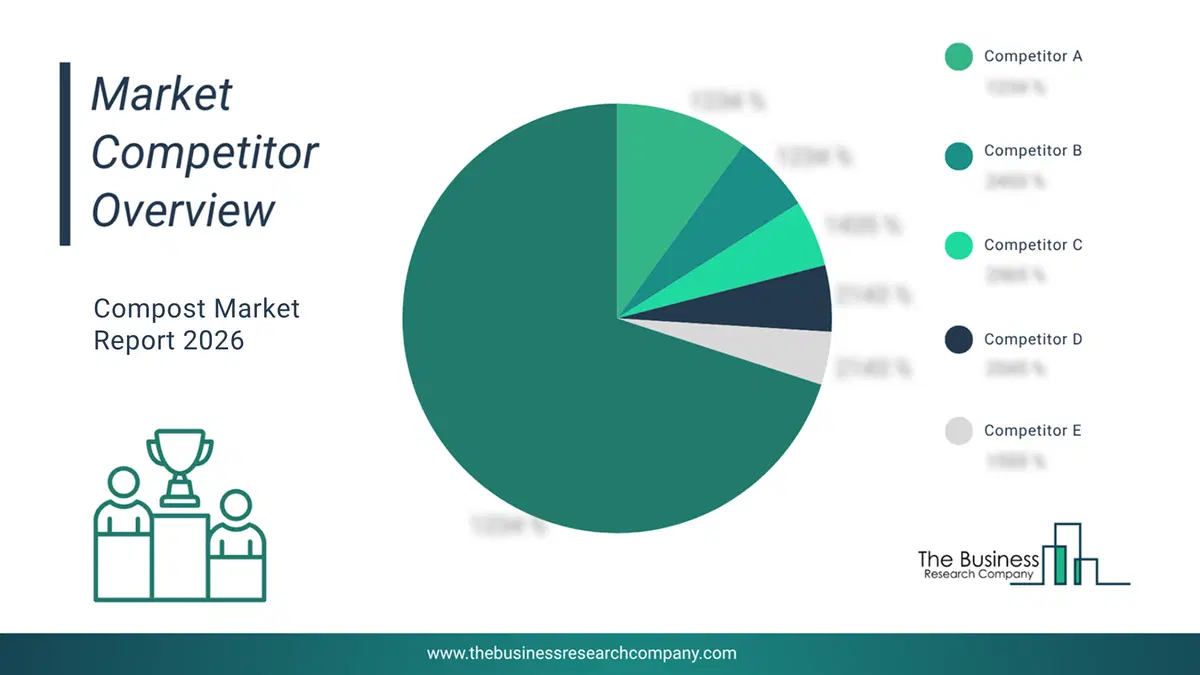
This chart is for illustrative purposes; the full report includes a detailed competitor analysis and comprehensive overview of the top 10 companies in the market.
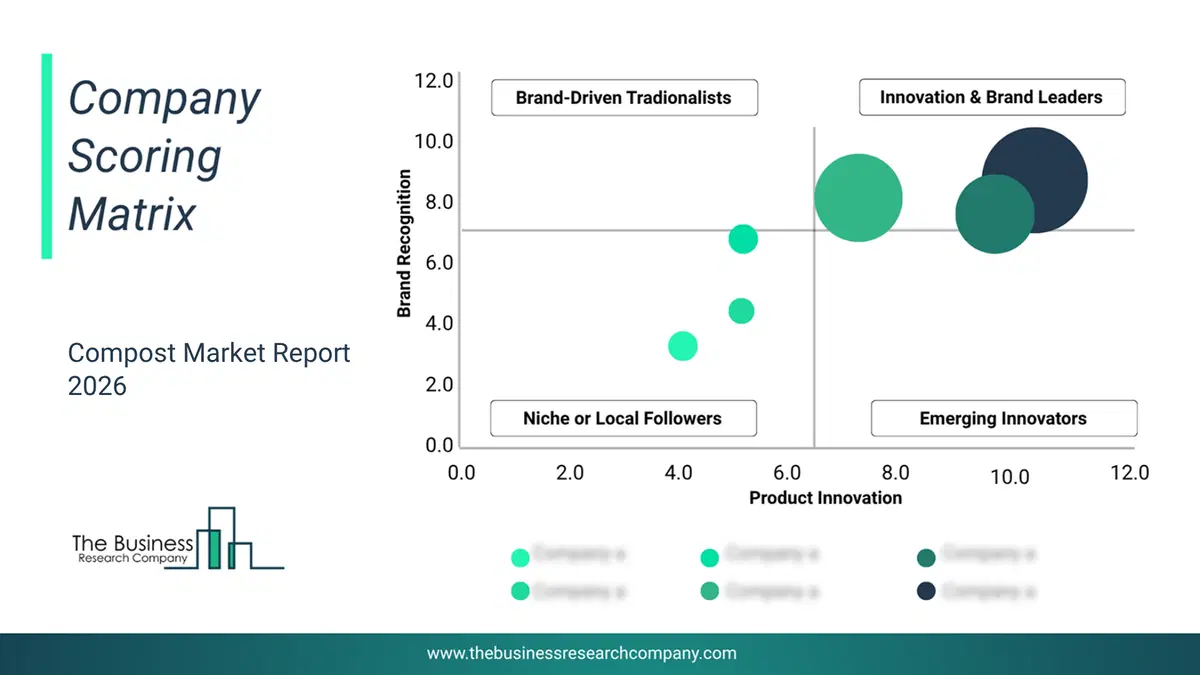
This chart maps companies by product innovation and brand strength, with bubble size indicating relative revenue, helping identify market leaders, challengers, and niche players. This is an illustrative chart; the full report provides a complete and accurate competitive analysis.
Global Compost Market Trends and Insights
Major companies in the compost market are focused on developing sustainable compost made from organic material, such as by-products of mushroom cultivation, for eco-friendly soil enhancement and to gain a competitive edge in the market. A by-product of mushroom cultivation refers to secondary materials generated during the process, such as spent substrate, utilized for various purposes, such as composting. For instance, in May 2023, Envar Composting Ltd., a UK-based organic waste and biomass recycling operator, launched Spent Mushroom Compost, a by-product of mushroom cultivation, ideal for home gardens and allotments. It is composed of organic materials such as horse bedding, poultry manure, wheat straw, gypsum, and casing soil, has good water retention, and is odor-free. With benefits such as enhancing soil structure, aeration, and drainage, it also serves as a sustainable choice by repurposing waste, reducing agricultural landfill waste, and lowering greenhouse gas emissions. This versatile compost, high in nutrients, is poised to be a favorite among gardeners and industry professionals.What Are Latest Mergers And Acquisitions In The Compost Market?
In November 2025, Circular Services Inc., a US-based specialty chemical solutions provider, acquired Atlas Organics, for an undisclosed amount. With this acquisition, Circular Services aims to expand its sustainable and specialty chemicals portfolio, strengthen operational capabilities, enhance market reach in North America, and drive long-term growth and profitability. Atlas Organics Pvt. Ltd. is a US-based manufacturer of organic and specialty chemical products serving multiple industrial applications.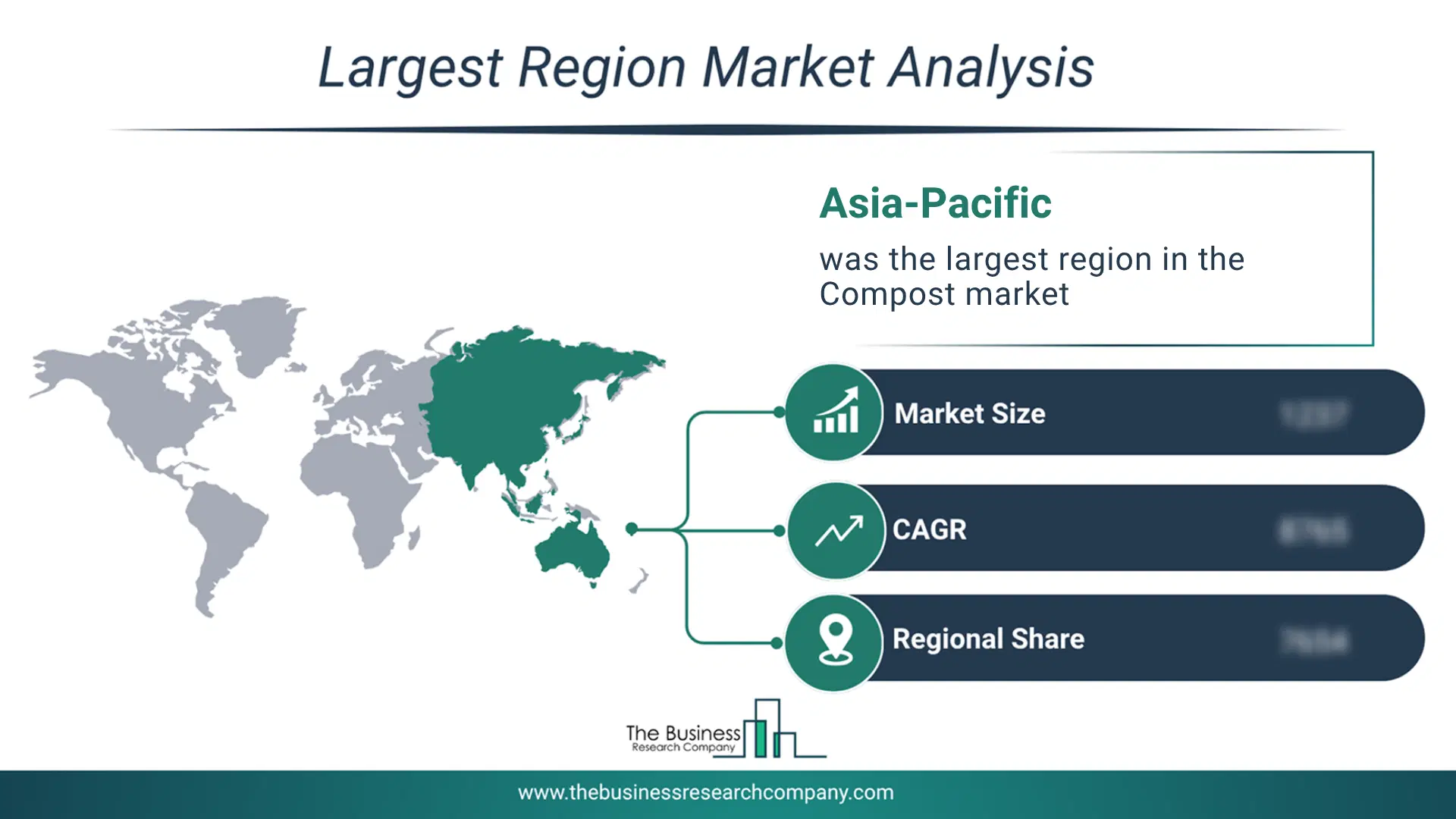
Regional Insights
Asia-Pacific was the largest region in the compost market in 2025. Asia-Pacific is expected to be the fastest-growing region in the forecast period. The regions covered in this market report are Asia-Pacific, South East Asia, Western Europe, Eastern Europe, North America, South America, Middle East, Africa The countries covered in this market report are Australia, Brazil, China, France, Germany, India, Indonesia, Japan, Taiwan, Russia, South Korea, UK, USA, Canada, Italy, SpainWhat Defines the Compost Market?
The compost market consists of sales of anaerobic, aerobic and vermicomposting. Values in this market are ‘factory gate’ values, that is the value of goods sold by the manufacturers or creators of the goods, whether to other entities (including downstream manufacturers, wholesalers, distributors, and retailers) or directly to end customers. The value of goods in this market includes related services sold by the creators of the goods.How is Market Value Defined and Measured?
The market value is defined as the revenues that enterprises gain from the sale of goods and/or services within the specified market and geography through sales, grants, or donations in terms of the currency (in USD unless otherwise specified). The revenues for a specified geography are consumption values that are revenues generated by organizations in the specified geography within the market, irrespective of where they are produced. It does not include revenues from resales along the supply chain, either further along the supply chain or as part of other products.
This chart presents market attractiveness based on a quantitative evaluation of growth, competition, strategic alignment, and risk, offering a clear view of opportunity areas for decision-making. This chart is for illustrative purposes; the full report contains the complete analysis.

This chart highlights the Total Addressable Market (TAM) by estimating the maximum revenue opportunity using an assumption-driven approach, supporting strategic planning and opportunity sizing across markets. The chart is illustrative; the full report provides a more comprehensive analysis.
What Key Data and Analysis Are Included in the Compost Market Report 2026?
The compost market research report is one of a series of new reports from The Business Research Company that provides market statistics, including industry global market size, regional shares, competitors with the market share, detailed market segments, market trends and opportunities, and any further data you may need to thrive in the compost industry. The market research report delivers a complete perspective of everything you need, with an in-depth analysis of the current and future state of the industry.Compost Market Report Forecast Analysis
| Report Attribute | Details |
|---|---|
| Market Size Value In 2026 | $9.36 billion |
| Revenue Forecast In 2030 | $12.55 billion |
| Growth Rate | CAGR of 7.5% from 2026 to 2030 |
| Base Year For Estimation | 2025 |
| Actual Estimates/Historical Data | 2020-2025 |
| Forecast Period | 2026 - 2030 |
| Market Representation | Revenue in USD Billion and CAGR from 2026 to 2030 |
| Segments Covered | Product Type, Source, Application |
| Regional Scope | Asia-Pacific, Western Europe, Eastern Europe, North America, South America, Middle East, Africa |
| Country Scope | The countries covered in the report are Australia, Brazil, China, France, Germany, India, Indonesia, Japan, Taiwan, Russia, South Korea, UK, USA, Canada, Italy, Spain. |
| Key Companies Profiled | MEC Recycling Corporation, Davo's Worm Farms, Veolia Environnement S.A., NutriSoil, Sri Gayathri Biotec, Charlie's Compost, WormUp LLC, Dirt Dynasty LLC, McGill Environmental Systems, Kahariam Farms, Mobius Environmental Solutions Inc., WeCare Organics Inc., Compost Crew, Wormpower, Biophilica LTD, Solum Gruppen AB, Harvest Quest, Suman Vermi Compost, San Luis Obispo County Worm Farm LLC, Circulus Agtech Corporation |
| Customization Scope | Request for Customization |
| Pricing And Purchase Options | Explore Purchase Options |