
Computer-Aided Detection Market Report 2026
Global Outlook – By Product (Mammography, Ultrasound Imaging, Magnetic Resonance Imaging, Tomosynthesis, Computed Tomography, Other Products), By Application (Tuberculosis, Breast Cancer, Lung Cancer, Colon Cancer, Prostate Cancer, Liver Cancer, Bone Cancer, Neurological Indications), By End-User (Hospitals, Clinics, Diagnostic Centres, Other End-Users) - Market Size, Trends, Strategies, and Forecast to 2030
Computer-Aided Detection Market Overview
• Computer-Aided Detection market size has reached to $1.08 billion in 2025 • Expected to grow to $1.69 billion in 2030 at a compound annual growth rate (CAGR) of 9.3% • Growth Driver: Rising Prevalence Of Breast Cancer Fueling Growth Of The Market Due To Increasing Aging Population And Demand For Early Diagnosis • Market Trend: AI-Powered Computer-Aided Detection Software Enhances Diagnostic Accuracy And Workflow Efficiency • North America was the largest region in 2025 and Asia-Pacific is the fastest growing region.What Is Covered Under Computer-Aided Detection Market?
Computer-aided detection (CAD) is a medical imaging technology that employs algorithms and artificial intelligence (AI) to examine scans and identify potential signs of abnormalities such as tumors or fractures. It serves as a supportive tool for radiologists, offering a second opinion to aid in early and precise diagnosis. By improving detection accuracy and minimizing missed findings, CAD boosts overall diagnostic reliability. The main products of computer-aided detection are mammography, ultrasound imaging, magnetic resonance imaging, tomosynthesis, computed tomography, and others. Mammography uses low-dose X-rays and computer-aided detection to identify early signs of breast cancer and abnormalities with enhanced accuracy. It is applicable for various applications such as tuberculosis, breast cancer, lung cancer, colon cancer, prostate cancer, liver cancer, bone cancer, and neurological indications, and is used by several end-users, including hospitals, clinics, diagnostic centers, and others.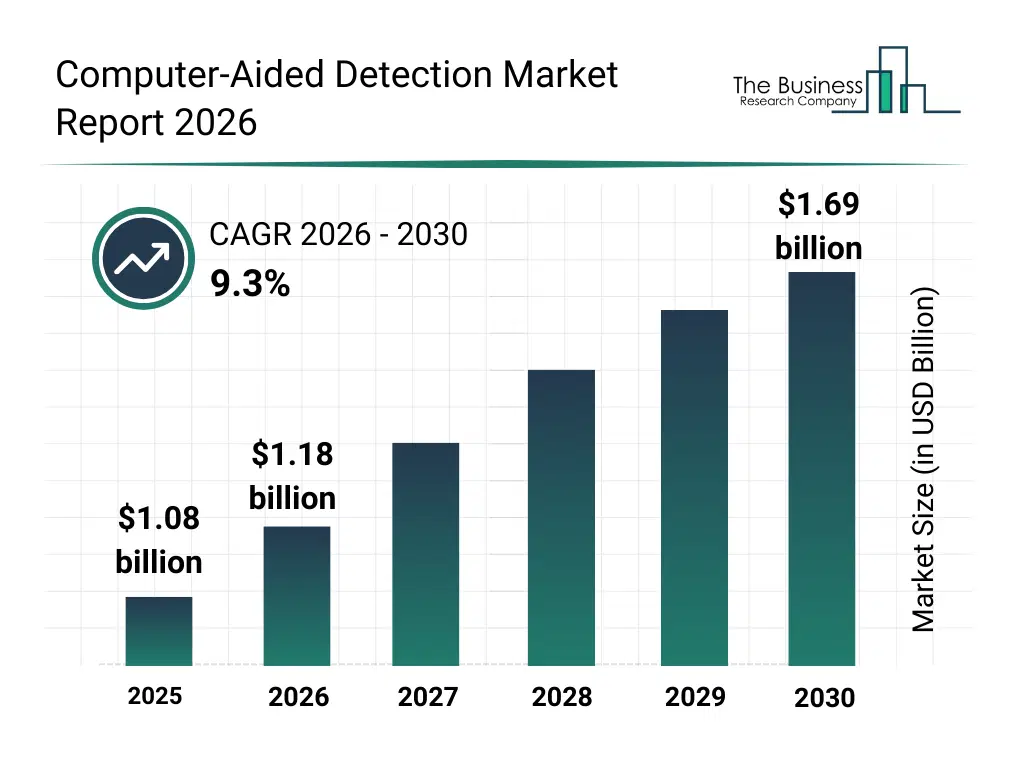
What Is The Computer-Aided Detection Market Size and Share 2026?
The computer-aided detection market size has grown strongly in recent years. It will grow from $1.08 billion in 2025 to $1.18 billion in 2026 at a compound annual growth rate (CAGR) of 9.6%. The growth in the historic period can be attributed to increasing volume of medical imaging procedures, rising cancer screening programs, expansion of radiology departments, improvements in digital imaging technologies, availability of large annotated imaging datasets.What Is The Computer-Aided Detection Market Growth Forecast?
The computer-aided detection market size is expected to see strong growth in the next few years. It will grow to $1.69 billion in 2030 at a compound annual growth rate (CAGR) of 9.3%. The growth in the forecast period can be attributed to increasing demand for early and accurate diagnosis, rising adoption of ai-driven clinical decision support, expansion of precision medicine initiatives, growing investments in healthcare ai solutions, increasing regulatory approvals for cad systems. Major trends in the forecast period include increasing use of AI-based image analysis tools, rising adoption of cad in oncology screening, growing integration of cad with imaging modalities, expansion of multi-modal diagnostic platforms, enhanced focus on early disease detection.
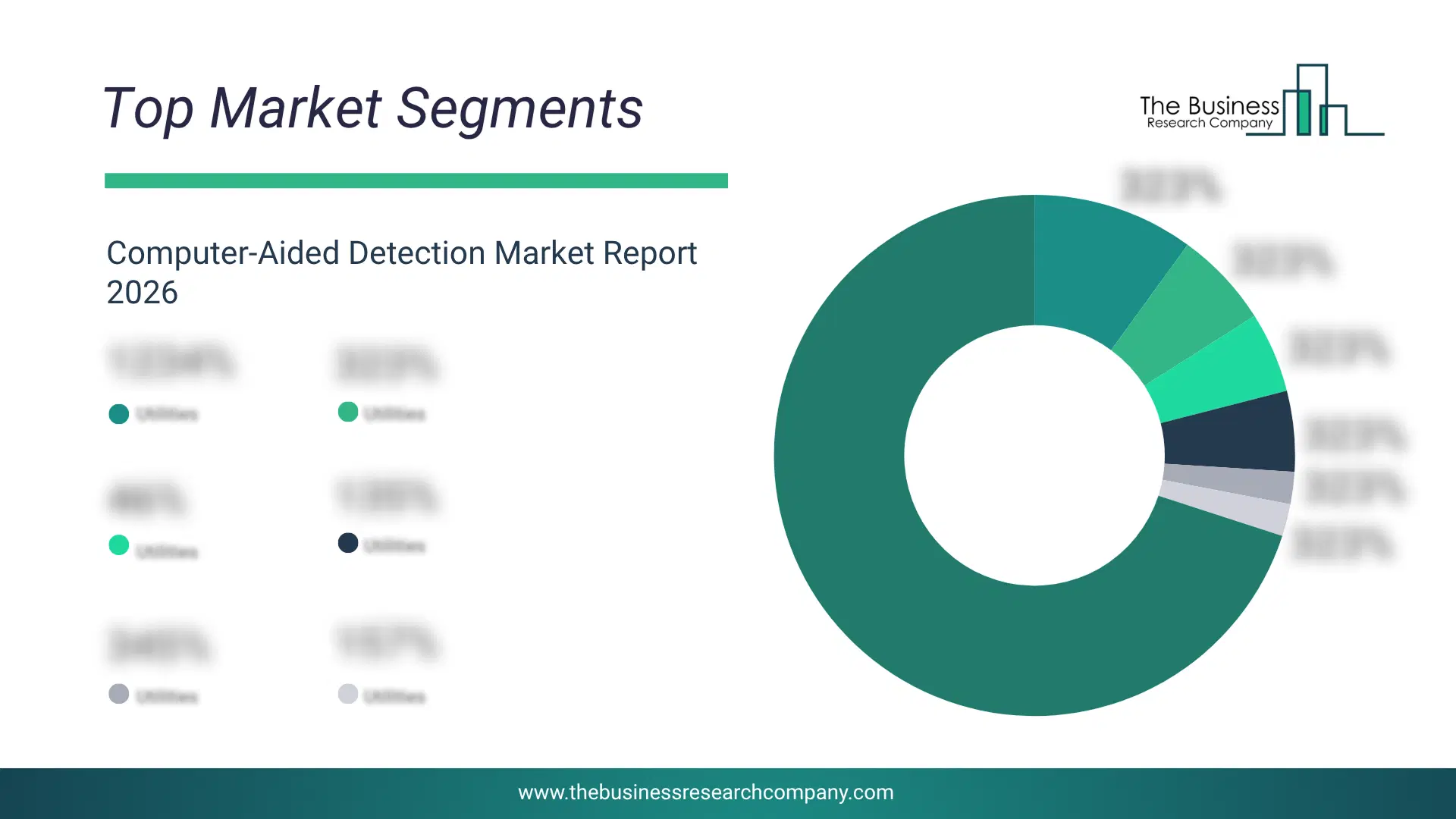
Global Computer-Aided Detection Market Segmentation
1) By Product: Mammography, Ultrasound Imaging, Magnetic Resonance Imaging, Tomosynthesis, Computed Tomography, Other Products 2) By Application: Tuberculosis, Breast Cancer, Lung Cancer, Colon Cancer, Prostate Cancer, Liver Cancer, Bone Cancer, Neurological Indications 3) By End-User: Hospitals, Clinics, Diagnostic Centres, Other End-Users Subsegments: 1) By Mammography: Full-Field Digital Mammography (FFDM), Screen-Film Mammography (SFM), Three-Dimensional (3D) Mammography 2) By Ultrasound Imaging: Automated Breast Ultrasound (ABUS), Handheld Ultrasound, Doppler Ultrasound, Elastography 3) By Magnetic Resonance Imaging: Breast Magnetic Resonance Imaging (MRI), Brain Magnetic Resonance Imaging (MRI), Abdominal Magnetic Resonance Imaging (MRI), Musculoskeletal Magnetic Resonance Imaging (MRI) 4) By Tomosynthesis: Breast Tomosynthesis, Chest Tomosynthesis, Orthopedic Tomosynthesis 5) By Computed Tomography: Chest Computed Tomography (CT), Abdominal Computed Tomography (CT), Brain Computed Tomography (CT), Cardiac Computed Tomography (CT) 6) By Other Products: Nuclear Medicine, X-Ray Imaging, Optical Imaging, ThermographyWhat Is The Driver Of The Computer-Aided Detection Market?
The rising prevalence of breast cancer is expected to propel the growth of the computer-aided detection market going forward. Breast cancer refers to a malignant tumor that develops in the cells of the breast, most commonly originating in the ducts or lobules, and can spread to surrounding tissues or other parts of the body if not detected and treated early. Breast cancer rates are increasing mainly because lifestyle changes, such as rising obesity, elevate estrogen levels, which can encourage cancer growth. Computer-aided detection (CAD) enhances breast cancer diagnosis by scanning medical images to identify potential abnormalities, enabling earlier and more precise detection. It aids radiologists in spotting tumors that could be overlooked, boosting the accuracy of screenings. For instance, in October 2024, according to the American Cancer Society, a US-based cancer organization, the number of new invasive breast cancer cases among US women rose to approximately 310,720. Similarly, diagnoses of ductal carcinoma in situ (DCIS) were increased to 56,500. For instance, in October 2025, according to Breastcancer.org, a US-based nonprofit research and awareness organization, in 2025 an estimated 316,950 women in the United States will be diagnosed with invasive breast cancer, with an additional 59,080 new cases of ductal carcinoma in situ (DCIS), while approximately 42,170 women are projected to die from the disease, and breast cancer continues to account for about 32% of all new cancer cases among U.S. women annually. Therefore, the rising prevalence of breast cancer is driving the growth of the computer-aided detection industry.Key Players In The Global Computer-Aided Detection Market
Major companies operating in the computer-aided detection market are Hitachi Ltd., IBM, Fujifilm Holdings Corporation, Siemens Healthineers AG, Koninklijke Philips N.V., GE Healthcare Technologies Inc., Hologic Inc., Canon Medical Systems Corporation, Agfa‑Gevaert NV, Carestream Health Inc., ESAOTE S.p.A., Aidoc Medical Ltd., Median Technologies S.A., iCAD Inc., Riverain Technologies LLC, Zebra Medical Vision Ltd., CureMetrix Inc., THERAPIXEL S.A.S., ScreenPoint Medical B.V., Lunit Inc., Qure.ai, Delft Imaging, VinBrain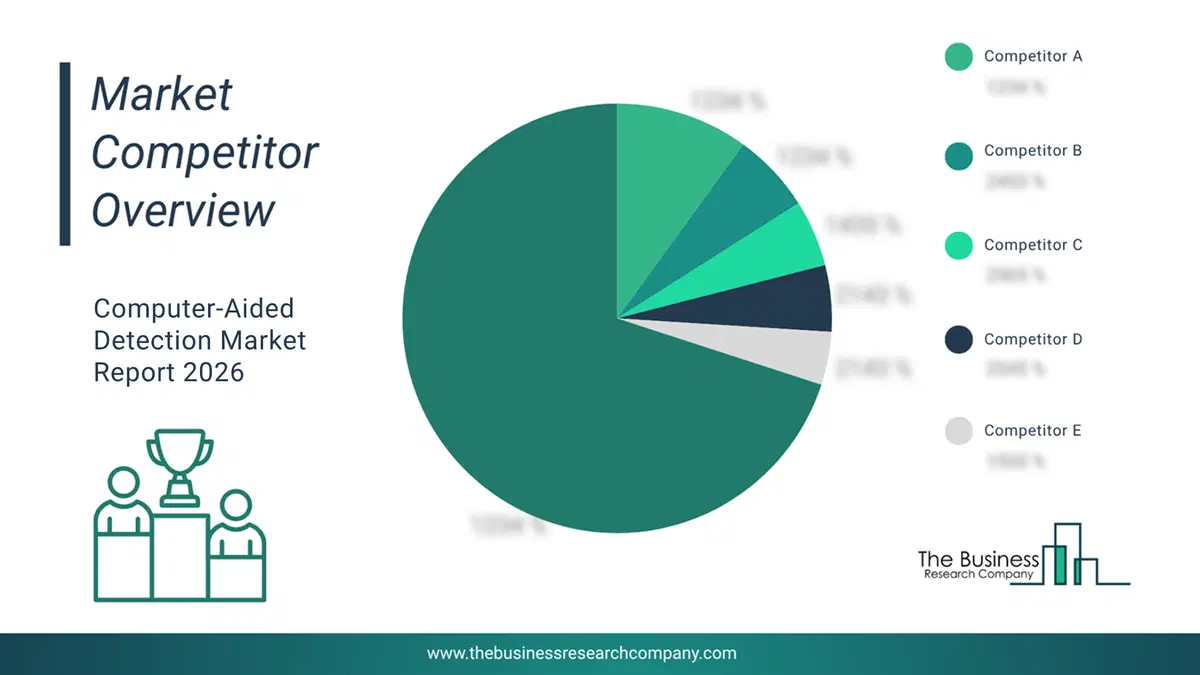
This chart is for illustrative purposes; the full report includes a detailed competitor analysis and comprehensive overview of the top 10 companies in the market.
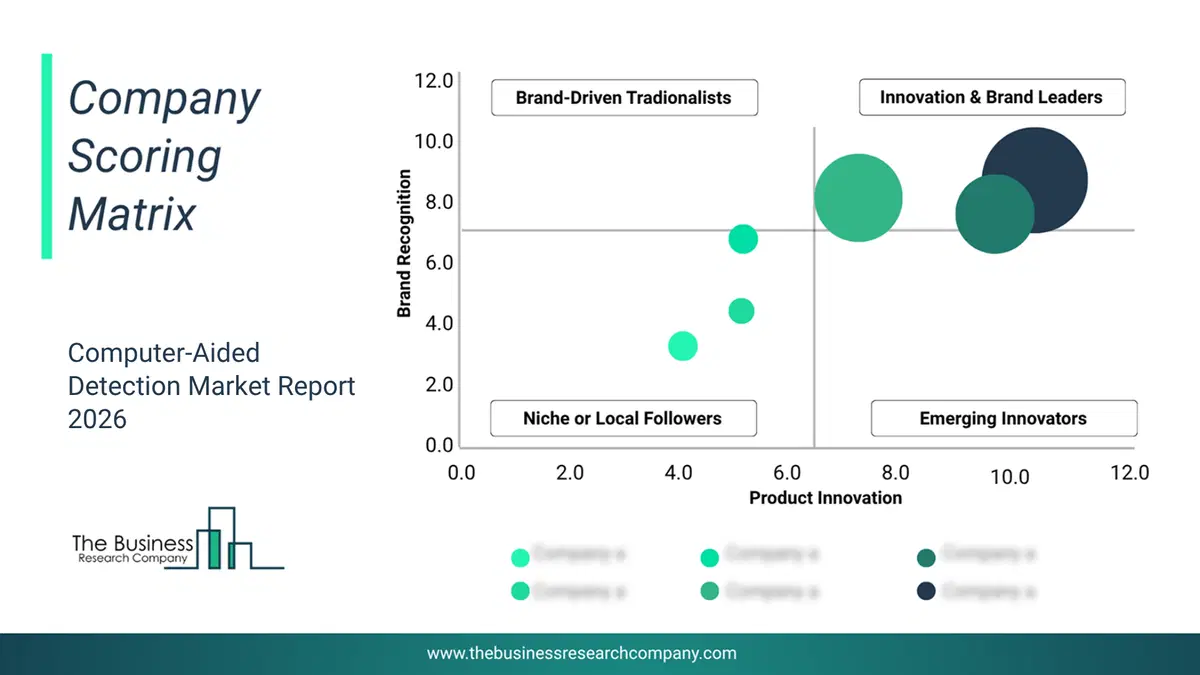
This chart maps companies by product innovation and brand strength, with bubble size indicating relative revenue, helping identify market leaders, challengers, and niche players. This is an illustrative chart; the full report provides a complete and accurate competitive analysis.
Global Computer-Aided Detection Market Trends and Insights
Major companies operating in the computer-aided detection market are focused on developing advanced solutions such as artificial intelligence (AI)-powered computer-aided detection (CADe) software to enhance diagnostic accuracy, streamline image analysis, and support early disease detection. AI-powered computer-aided detection (CADe) software leverages artificial intelligence to scan medical images for signs of abnormalities. It enhances diagnostic precision and aids in the early detection of conditions such as cancer. For instance, in March 2025, Align Technology, Inc., a Switzerland-based provider of digital orthodontics and restorative dentistry, launched Align X-ray Insights for dental radiograph analysis. It uses AI to enhance dental imaging analysis for more accurate diagnostics. It improves workflow efficiency by providing real-time insights directly within existing imaging systems. The software aims to support dental professionals in delivering precise, timely patient care across the EU and UK.What Are Latest Mergers And Acquisitions In The Computer-Aided Detection Market?
In June 2023, Olympus Corporation, a Japan-based provider of medical and surgical equipment and solutions, acquired Odin Vision for $75.31 million. The acquisition strengthens Olympus’s position in the digital health space by integrating Odin Vision’s advanced artificial intelligence (AI) capabilities into its endoscopy portfolio, thereby enhancing the precision and efficiency of diagnostic procedures. This strategic move underscores Olympus’s commitment to innovation and advancing healthcare through transformative technology. Odin Vision is a UK-based cloud-AI endoscopy company that provides computer-aided detection or diagnostic (CAD) solutions.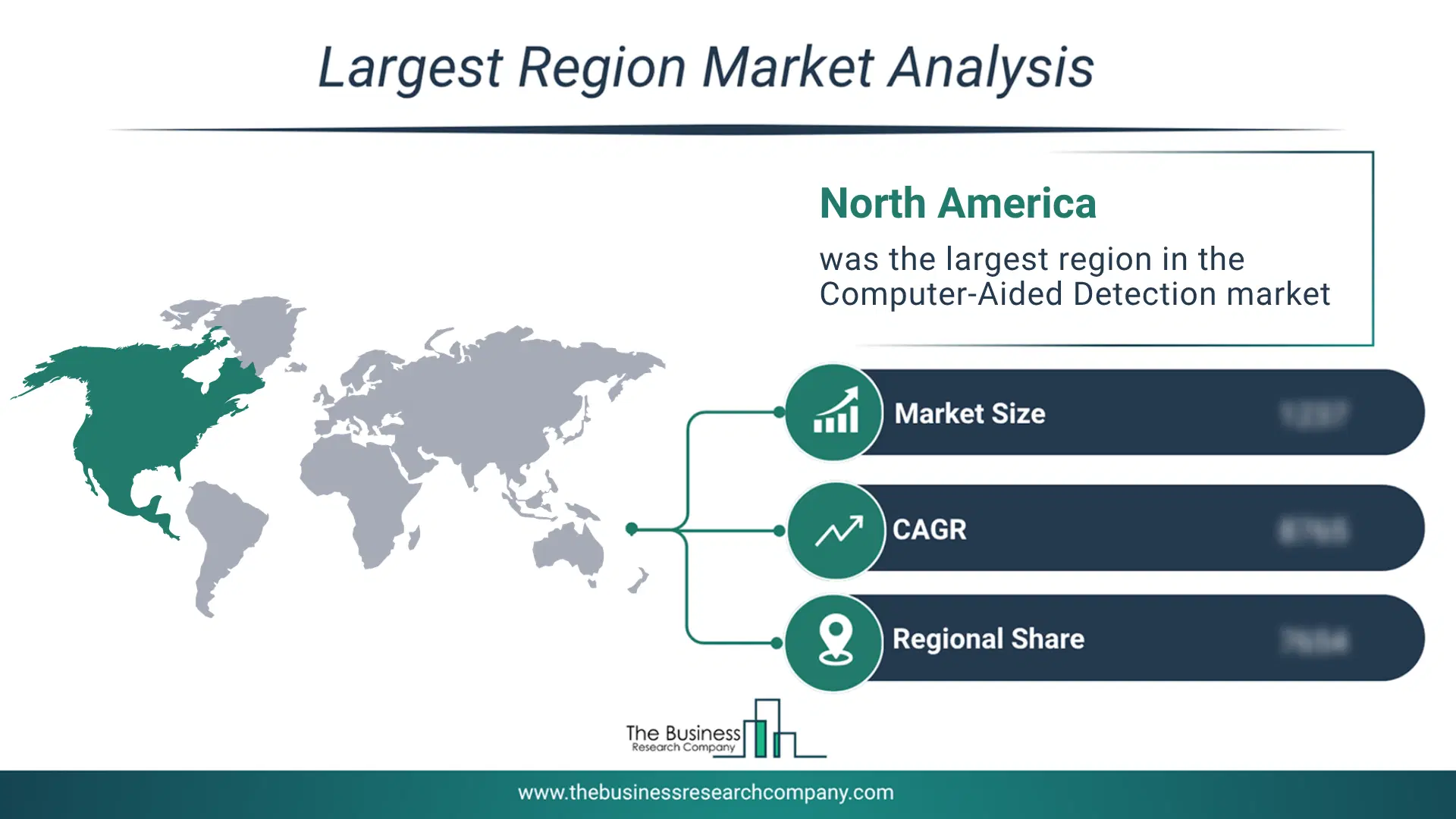
Regional Outlook
North America was the largest region in the computer-aided detection market in 2025. Asia-Pacific is expected to be the fastest-growing region in the forecast period. The regions covered in this market report are Asia-Pacific, South East Asia, Western Europe, Eastern Europe, North America, South America, Middle East, Africa. The countries covered in this market report are Australia, Brazil, China, France, Germany, India, Indonesia, Japan, Taiwan, Russia, South Korea, UK, USA, Canada, Italy, Spain.What Defines the Computer-Aided Detection Market?
The computer-aided detection market consists of revenues earned by entities by providing services such as medical image analysis, diagnosis assistance, data management and reporting, and pre-screening support. The market value includes the value of related goods sold by the service provider or included within the service offering. The computer-aided detection market also includes sales of nuclear medicine imaging systems, endoscopy-based computer-aided detection systems, and dermoscopic imaging computer-aided detection systems. Values in this market are ‘factory gate’ values, that is, the value of goods sold by the manufacturers or creators of the goods, whether to other entities (including downstream manufacturers, wholesalers, distributors, and retailers) or directly to end customers. The value of goods in this market includes related services sold by the creators of the goods.How is Market Value Defined and Measured?
The market value is defined as the revenues that enterprises gain from the sale of goods and/or services within the specified market and geography through sales, grants, or donations in terms of the currency (in USD unless otherwise specified). The revenues for a specified geography are consumption values that are revenues generated by organizations in the specified geography within the market, irrespective of where they are produced. It does not include revenues from resales along the supply chain, either further along the supply chain or as part of other products.
This chart presents market attractiveness based on a quantitative evaluation of growth, competition, strategic alignment, and risk, offering a clear view of opportunity areas for decision-making. This chart is for illustrative purposes; the full report contains the complete analysis.

This chart highlights the Total Addressable Market (TAM) by estimating the maximum revenue opportunity using an assumption-driven approach, supporting strategic planning and opportunity sizing across markets. The chart is illustrative; the full report provides a more comprehensive analysis.
What Key Data and Analysis Are Included in the Computer-Aided Detection Market Report 2026?
The computer-aided detection market research report is one of a series of new reports from The Business Research Company that provides market statistics, including industry global market size, regional shares, competitors with the market share, detailed market segments, market trends and opportunities, and any further data you may need to thrive in the computer-aided detection industry. The market research report delivers a complete perspective of everything you need, with an in-depth analysis of the current and future state of the industry.Computer-Aided Detection Market Report Forecast Analysis
| Report Attribute | Details |
|---|---|
| Market Size Value In 2026 | $1.18 billion |
| Revenue Forecast In 2030 | $1.69 billion |
| Growth Rate | CAGR of 9.3% from 2026 to 2030 |
| Base Year For Estimation | 2025 |
| Actual Estimates/Historical Data | 2020-2025 |
| Forecast Period | 2026 - 2030 |
| Market Representation | Revenue in USD Billion and CAGR from 2026 to 2030 |
| Segments Covered | Product, Application, End-User |
| Regional Scope | Asia-Pacific, Western Europe, Eastern Europe, North America, South America, Middle East, Africa |
| Country Scope | The countries covered in the report are Australia, Brazil, China, France, Germany, India, Indonesia, Japan, Taiwan, Russia, South Korea, UK, USA, Canada, Italy, Spain |
| Key Companies Profiled | Hitachi Ltd., IBM, Fujifilm Holdings Corporation, Siemens Healthineers AG, Koninklijke Philips N.V., GE Healthcare Technologies Inc., Hologic Inc., Canon Medical Systems Corporation, Agfa‑Gevaert NV, Carestream Health Inc., ESAOTE S.p.A., Aidoc Medical Ltd., Median Technologies S.A., iCAD Inc., Riverain Technologies LLC, Zebra Medical Vision Ltd., CureMetrix Inc., THERAPIXEL S.A.S., ScreenPoint Medical B.V., Lunit Inc., Qure.ai, Delft Imaging, VinBrain |
| Customization Scope | Request for Customization |
| Pricing And Purchase Options | Explore Purchase Options |