

Computer-Aided Drug Discovery Market Report 2026
Global Outlook – By Type (Structure Based Drug Design, Ligand-Based Drug Design, Sequence-Based Approaches), By Therapeutic Area (Oncology, Neurology, Cardiovascular Disease, Respiratory Disease, Diabetes, Other Therapeutic Areas), By End User (Pharmaceutical Companies, Biotechnology Companies, Research Laboratories ) - Market Size, Trends, Strategies, and Forecast to 2030
Computer-Aided Drug Discovery Market Overview
• Computer-Aided Drug Discovery market size has reached to $7.56 billion in 2025 • Expected to grow to $13.69 billion in 2030 at a compound annual growth rate (CAGR) of 12.5% • Growth Driver: Prevalence Of Cancer Driving Growth In The Computer-Aided Drug Discovery Market • Market Trend: Innovative AI-Driven Approaches Transforming Drug Discovery Enhancing Precision, Speed, And Efficiency • North America was the largest region in 2025.What Is Covered Under Computer-Aided Drug Discovery Market?
Computer-aided drug discovery (CADD) refers to a methodology that employs computational techniques and algorithms to accelerate the drug discovery process. It involves the use of computer software and advanced technologies to identify, design, and optimize potential drug candidates for specific biological targets. The main types of computer-aided drug discovery are structure-based drug design, ligand-based drug design, and sequence-based approaches. Structure-based drug design (SBDD) involves designing molecules based on the 3D structure of a biological target, typically a protein, obtained through techniques like X-ray crystallography or NMR spectroscopy. These are used in various therapeutic areas such as oncology, neurology, cardiovascular disease, respiratory disease, diabetes, and others, and also by various end users such as pharmaceutical companies, biotechnology companies, and research laboratories.
What Is The Computer-Aided Drug Discovery Market Size and Share 2026?
The computer-aided drug discovery market size has grown rapidly in recent years. It will grow from $7.56 billion in 2025 to $8.54 billion in 2026 at a compound annual growth rate (CAGR) of 12.9%. The growth in the historic period can be attributed to increasing complexity of drug development processes, rising R&D expenditure in pharmaceuticals, expansion of computational biology capabilities, growing availability of biological data, adoption of in silico modeling techniques.What Is The Computer-Aided Drug Discovery Market Growth Forecast?
The computer-aided drug discovery market size is expected to see rapid growth in the next few years. It will grow to $13.69 billion in 2030 at a compound annual growth rate (CAGR) of 12.5%. The growth in the forecast period can be attributed to increasing investments in ai-enabled drug discovery, rising demand for faster drug development cycles, expansion of personalized medicine research, growing integration of machine learning in pharmacology, increasing use of cloud computing for large-scale simulations. Major trends in the forecast period include increasing use of AI-driven virtual screening, rising adoption of molecular docking simulations, growing integration of genomic data in drug design, expansion of cloud-based drug discovery platforms, enhanced focus on predictive modeling accuracy.
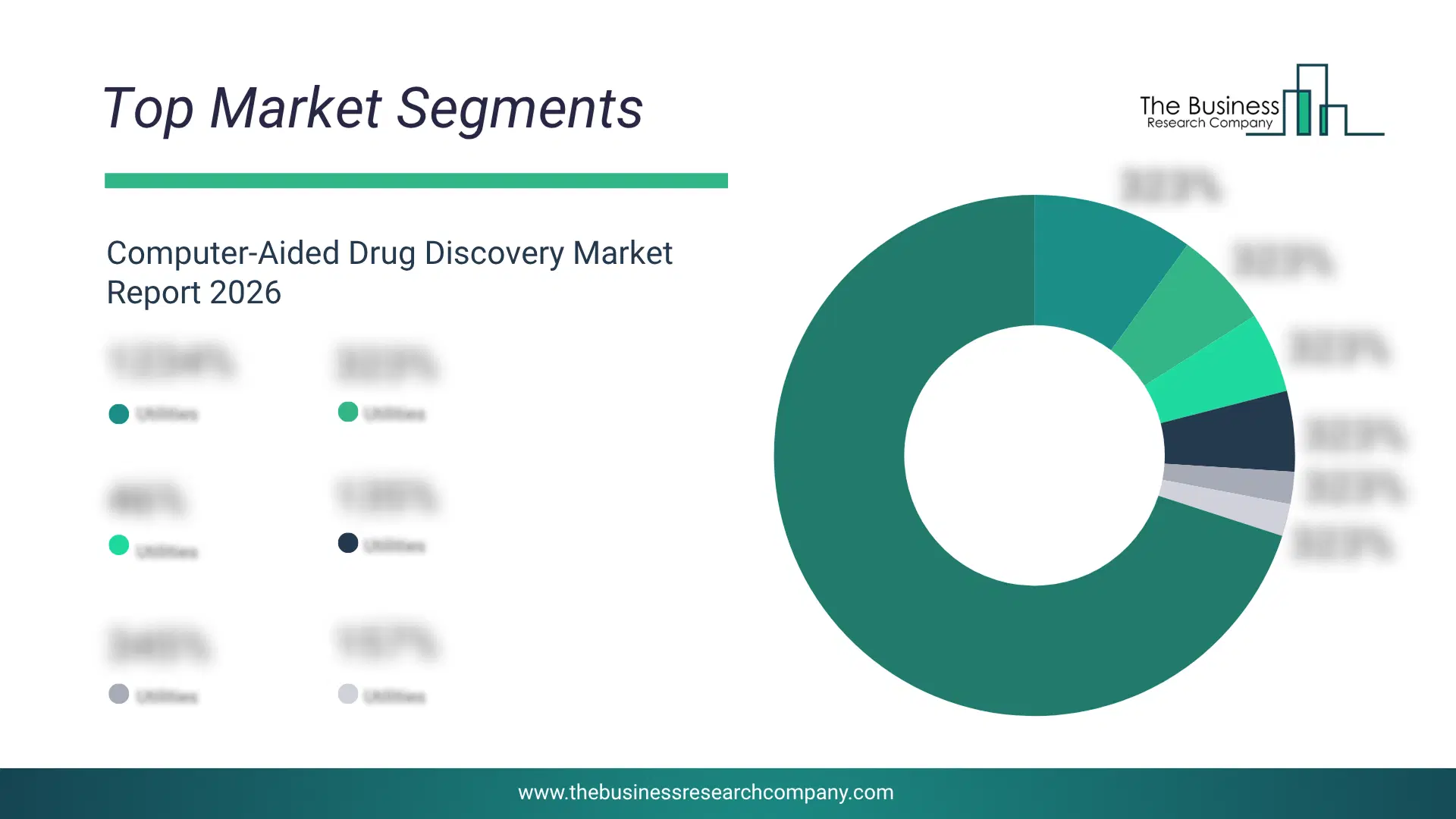
Global Computer-Aided Drug Discovery Market Segmentation
1) By Type: Structure Based Drug Design, Ligand-Based Drug Design, Sequence-Based Approaches 2) By Therapeutic Area: Oncology, Neurology, Cardiovascular Disease, Respiratory Disease, Diabetes, Other Therapeutic Areas 3) By End User: Pharmaceutical Companies, Biotechnology Companies, Research Laboratories Subsegments: 1) By Structure Based Drug Design: X-ray Crystallography, Nuclear Magnetic Resonance (NMR) Spectroscopy, Molecular Docking Studies, Virtual Screening 2) By Ligand-Based Drug Design: Quantitative Structure-Activity Relationship (QSAR) Models, Pharmacophore Modeling, Ligand Similarity Searching, Fragment-Based Drug Design 3) By Sequence-Based Approaches: Protein Structure Prediction, Homology Modeling, Bioinformatics for Drug Target Identification, Genomic Data Analysis for Drug DiscoveryWhat Is The Driver Of The Computer-Aided Drug Discovery Market?
The rising prevalence of cancer cases is expected to propel the growth of the computer-aided drug discovery market going forward. Cancer is a group of diseases characterized by the uncontrolled growth and division of abnormal cells in the body. The increasing number of cancer cases is due to several factors such as lifestyle changes and urbanization, environmental pollution, tobacco and alcohol consumption, healthcare access, and awareness. Computer-aided drug discovery can help design drugs targeting cancer cells with particular genetic mutations, paving the way for more personalized and effective cancer therapies. For instance, in July 2024, according to the Australian Institute of Health and Welfare, an Australia-based government agency, around 165,000 new cancer cases were diagnosed in 2023, with projections indicating that approximately 204,000 cases will be diagnosed annually by 2033, contributing to an estimated total of 1.9 million cancer cases between 2024 and 2033. Therefore, the rising prevalence of cancer cases drives the computer-aided drug discovery industry.Key Players In The Global Computer-Aided Drug Discovery Market
Major companies operating in the computer-aided drug discovery market are Dassault Systèmes SE, PerkinElmer Inc., Roivant Sciences Ltd., Certara Inc., Schrödinger Inc., XtalPi Inc., Dotmatics Limited, Simulations Plus Inc., ChemAxon Ltd., Exscientia Ltd., Insilico Medicine Inc., Collaborative Drug Discovery Inc., OpenEye Scientific Software Inc., Nimbus Therapeutics LLC, Atomwise Inc., GNS Healthcare Inc., BenevolentAI Limited, EpiVax Inc., Numerate Inc., Cloud Pharmaceuticals Inc., Aris Pharmaceuticals Inc., Cyclica Inc., BioSolveIT GmbH, Chemical Computing Group ULC, InSilicoTrials Technologies S.p.A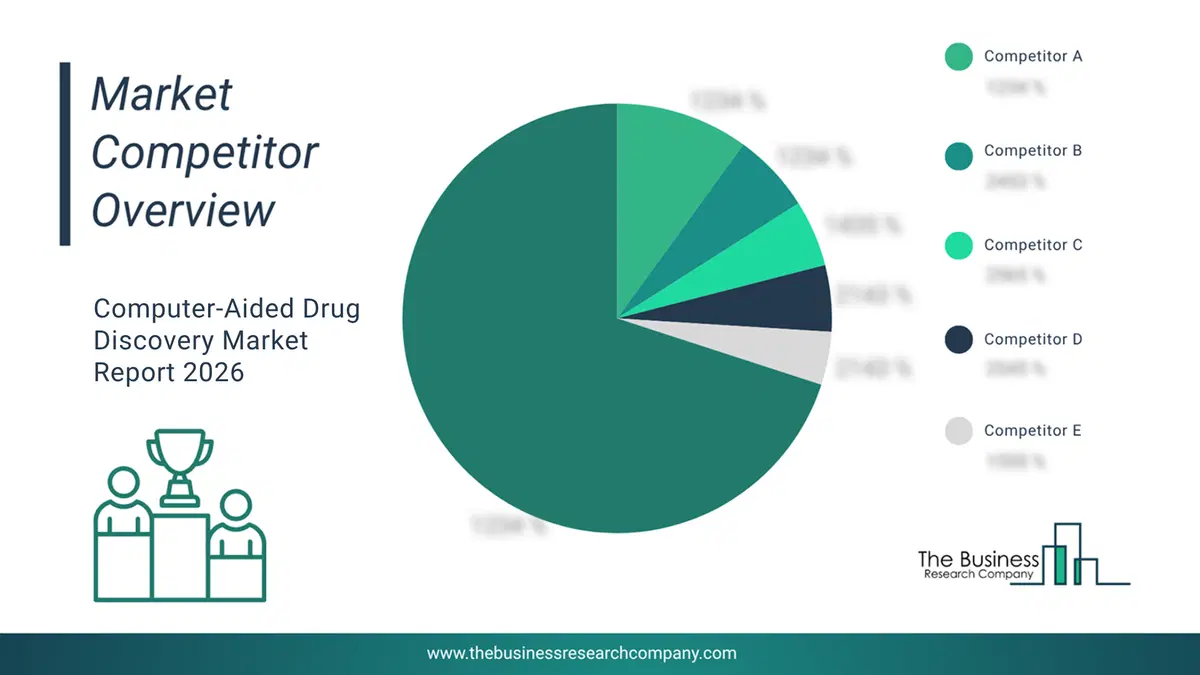
This chart is for illustrative purposes; the full report includes a detailed competitor analysis and comprehensive overview of the top 10 companies in the market.
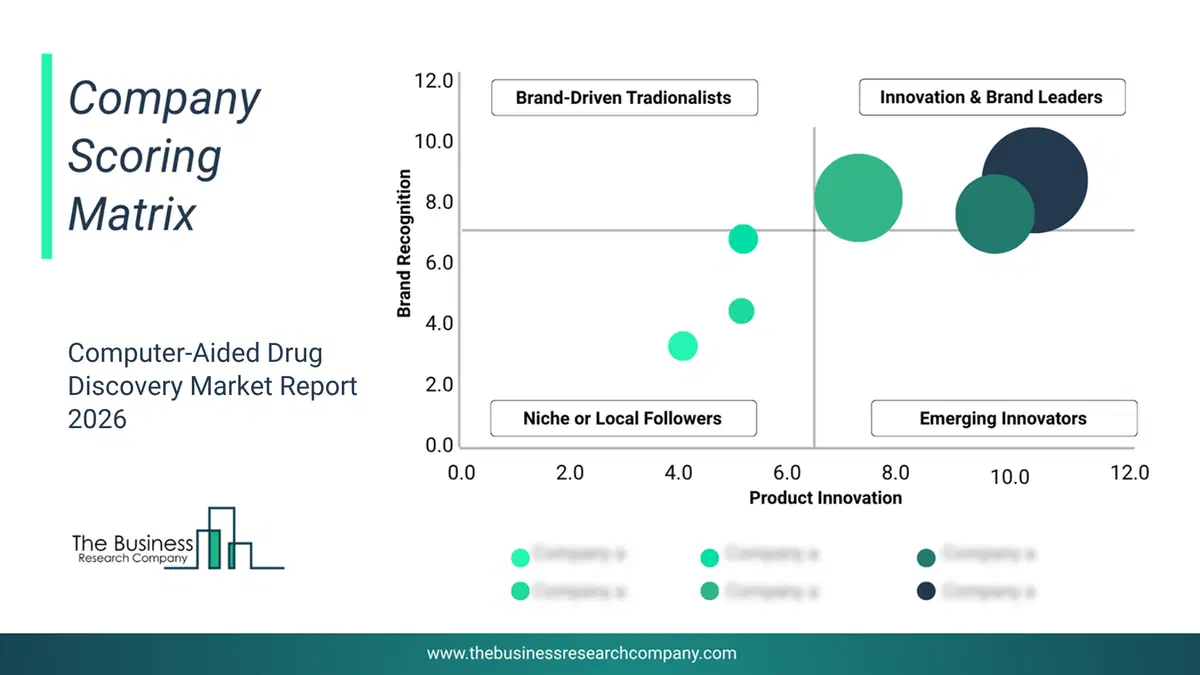
This chart maps companies by product innovation and brand strength, with bubble size indicating relative revenue, helping identify market leaders, challengers, and niche players. This is an illustrative chart; the full report provides a complete and accurate competitive analysis.
Global Computer-Aided Drug Discovery Market Trends and Insights
Major companies operating in the computer-aided drug discovery (CADD) market are developing innovative solutions such as artificial intelligence in drug discovery to enhance the accuracy, speed, and efficiency of identifying potential drug candidates, optimize lead compounds, and facilitate the development of personalized medicine. Artificial intelligence (AI) in drug discovery refers to applying AI technologies, such as machine learning and deep learning, leveraging advanced algorithms to make discovering and developing new drugs faster, more efficient, and more precise. For instance, in December 2023, Merck KGaA, a Germany-based science and technology company, launched AIDDISONTM, the first software-as-a-service platform that integrates drug discovery and synthesis. Combining generative AI, machine learning, and computer-aided drug design, AIDDISONTM accelerates drug development by virtually screening compounds from over 60 billion chemical targets and recommending optimal synthesis routes. The platform is trained on two decades of pharmaceutical R&D data to identify drug-like candidates with properties like non-toxicity and stability. By incorporating Merck's SynthiaTM retrosynthesis API, AIDDISONTM optimizes drug manufacturing for efficiency and sustainability, aiming to reduce the cost and time of drug discovery.What Are Latest Mergers And Acquisitions In The Computer-Aided Drug Discovery Market?
In October 2024, Certara Inc., a US-based provider of biosimulation software and model-informed drug-development services, acquired Chemaxon for USD 90 million. With this acquisition, Certara gains access to Chemaxon’s cheminformatics and scientific-informatics software, including tools for chemical-structure drawing, property prediction, chemical-database management, and compound registration, thereby expanding and enhancing Certara’s drug-discovery capabilities through integration of chemistry-level informatics into its existing biosimulation and predictive-analytics platform. Chemaxon Ltd. is a Hungary-based provider of cheminformatics and bioinformatics software used globally in life-sciences and research industries, known for its widely used tools such as Marvin, JChem, and Chemicalize.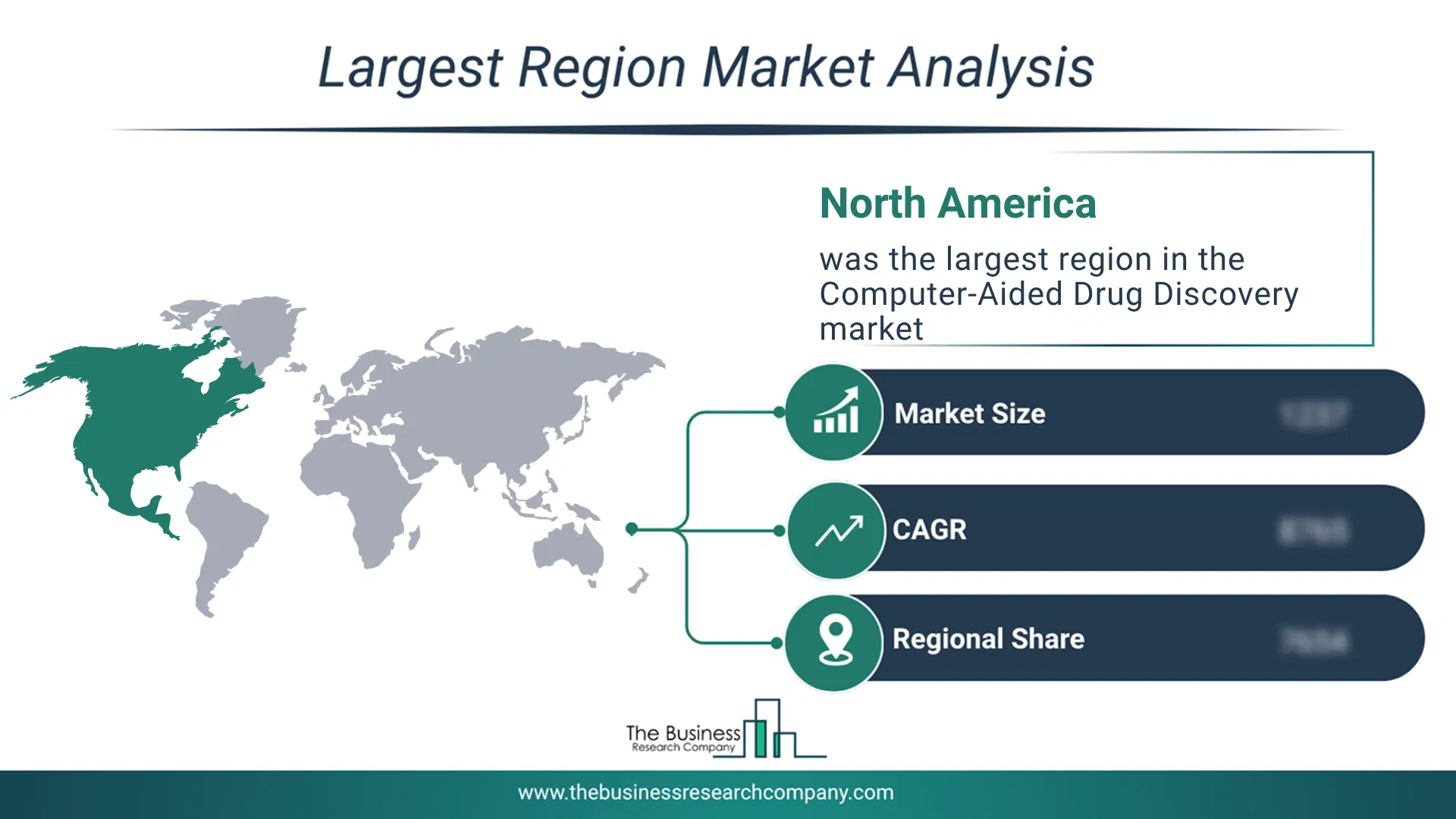
Regional Outlook
North America was the largest region in the computer-aided drug discovery (CADD) market in 2025. The regions covered in this market report are Asia-Pacific, South East Asia, Western Europe, Eastern Europe, North America, South America, Middle East, Africa. The countries covered in this market report are Australia, Brazil, China, France, Germany, India, Indonesia, Japan, Taiwan, Russia, South Korea, UK, USA, Canada, Italy, Spain.What Defines the Computer-Aided Drug Discovery Market?
The computer-aided drug discovery market consists of revenues earned by entities by providing molecular modeling, virtual screening, and pharmacophore modeling. The computer-aided drug discovery(CADD) market also includes sales of multi-target drug design and 3D-QSAR. Values in this market are ‘factory gate’ values, that is the value of goods sold by the manufacturers or creators of the goods, whether to other entities (including downstream manufacturers, wholesalers, distributors, and retailers) or directly to end customers. The value of goods in this market includes related services sold by the creators of the goods.How is Market Value Defined and Measured?
The market value is defined as the revenues that enterprises gain from the sale of goods and/or services within the specified market and geography through sales, grants, or donations in terms of the currency (in USD unless otherwise specified). The revenues for a specified geography are consumption values that are revenues generated by organizations in the specified geography within the market, irrespective of where they are produced. It does not include revenues from resales along the supply chain, either further along the supply chain or as part of other products.
This chart presents market attractiveness based on a quantitative evaluation of growth, competition, strategic alignment, and risk, offering a clear view of opportunity areas for decision-making. This chart is for illustrative purposes; the full report contains the complete analysis.

This chart highlights the Total Addressable Market (TAM) by estimating the maximum revenue opportunity using an assumption-driven approach, supporting strategic planning and opportunity sizing across markets. The chart is illustrative; the full report provides a more comprehensive analysis.
What Key Data and Analysis Are Included in the Computer-Aided Drug Discovery Market Report 2026?
The computer-aided drug discovery market research report is one of a series of new reports from The Business Research Company that provides market statistics, including industry global market size, regional shares, competitors with the market share, detailed market segments, market trends and opportunities, and any further data you may need to thrive in the computer-aided drug discovery industry. The market research report delivers a complete perspective of everything you need, with an in-depth analysis of the current and future state of the industry.Computer-Aided Drug Discovery Market Report Forecast Analysis
| Report Attribute | Details |
|---|---|
| Market Size Value In 2026 | $8.54 billion |
| Revenue Forecast In 2030 | $13.69 billion |
| Growth Rate | CAGR of 12.5% from 2026 to 2030 |
| Base Year For Estimation | 2025 |
| Actual Estimates/Historical Data | 2020-2025 |
| Forecast Period | 2026 - 2030 |
| Market Representation | Revenue in USD Billion and CAGR from 2026 to 2030 |
| Segments Covered | Type, Therapeutic Area, End User |
| Regional Scope | Asia-Pacific, Western Europe, Eastern Europe, North America, South America, Middle East, Africa |
| Country Scope | The countries covered in the report are Australia, Brazil, China, France, Germany, India, Indonesia, Japan, Taiwan, Russia, South Korea, UK, USA, Canada, Italy, Spain |
| Key Companies Profiled | Dassault Systèmes SE, PerkinElmer Inc., Roivant Sciences Ltd., Certara Inc., Schrödinger Inc., XtalPi Inc., Dotmatics Limited, Simulations Plus Inc., ChemAxon Ltd., Exscientia Ltd., Insilico Medicine Inc., Collaborative Drug Discovery Inc., OpenEye Scientific Software Inc., Nimbus Therapeutics LLC, Atomwise Inc., GNS Healthcare Inc., BenevolentAI Limited, EpiVax Inc., Numerate Inc., Cloud Pharmaceuticals Inc., Aris Pharmaceuticals Inc., Cyclica Inc., BioSolveIT GmbH, Chemical Computing Group ULC, InSilicoTrials Technologies S.p.A |
| Customization Scope | Request for Customization |
| Pricing And Purchase Options | Explore Purchase Options |