
Conductive Carbon Black Market Report 2026
Global Outlook – By Product Type (Furnace Black, Acetylene Black, Thermal Black, Channel Black, Specialty Conductive Carbon Black), By Sales Channel (Direct Sales, Distributors, Online Sales), By Application (Lithium Ion Batteries, Lead Acid Batteries, Plastics, Rubber, Paints And Coatings, Inks, Adhesives And Sealants, Antistatic Packaging, Cable Compounds, Conductive Textiles), By End Use Industry (Automotive, Electronics And Semiconductors, Energy Storage, Industrial Manufacturing, Construction, Aerospace And Defense, Consumer Goods, Packaging) – Market Size, Trends, Strategies, and Forecast to 2030
Conductive Carbon Black Market Overview
• Conductive Carbon Black market size has reached to $3.88 billion in 2025 • Expected to grow to $7.79 billion in 2030 at a compound annual growth rate (CAGR) of 14.9% • Growth Driver: Growing Demand For Lithium-ion Batteries Is Fueling The Growth Of The Market Due To Increasing Adoption Of Electric Vehicles • Market Trend: Technology Advancement In High Conductivity Carbon Black Grades Enhancing Performance In Energy Storage And Conductive Applications • North America was the largest region in 2025 and Asia-Pacific is the fastest growing region.What Is Covered Under Conductive Carbon Black Market?
Conductive carbon black is a specialized form of carbon black engineered to provide high electrical conductivity while maintaining the reinforcing and processing characteristics of conventional carbon black. It is widely used in batteries, plastics, rubber compounds, coatings, inks, cables, and electronic applications requiring conductivity and electrostatic discharge protection. The main product types of conductive carbon black include furnace black, acetylene black, thermal black, channel black, and specialty conductive carbon black. Furnace black is a form of carbon black produced through the partial combustion or thermal decomposition of hydrocarbons and is used to impart electrical conductivity and reinforcement properties to materials. These products are distributed through direct sales, distributors, and online sales. The various applications involved are lithium-ion batteries, lead-acid batteries, plastics, rubber, paints and coatings, inks, adhesives and sealants, antistatic packaging, cable compounds, and conductive textiles, and they are used by several end use industries such as automotive, electronics and semiconductors, energy storage, industrial manufacturing, construction, aerospace and defense, consumer goods, and packaging.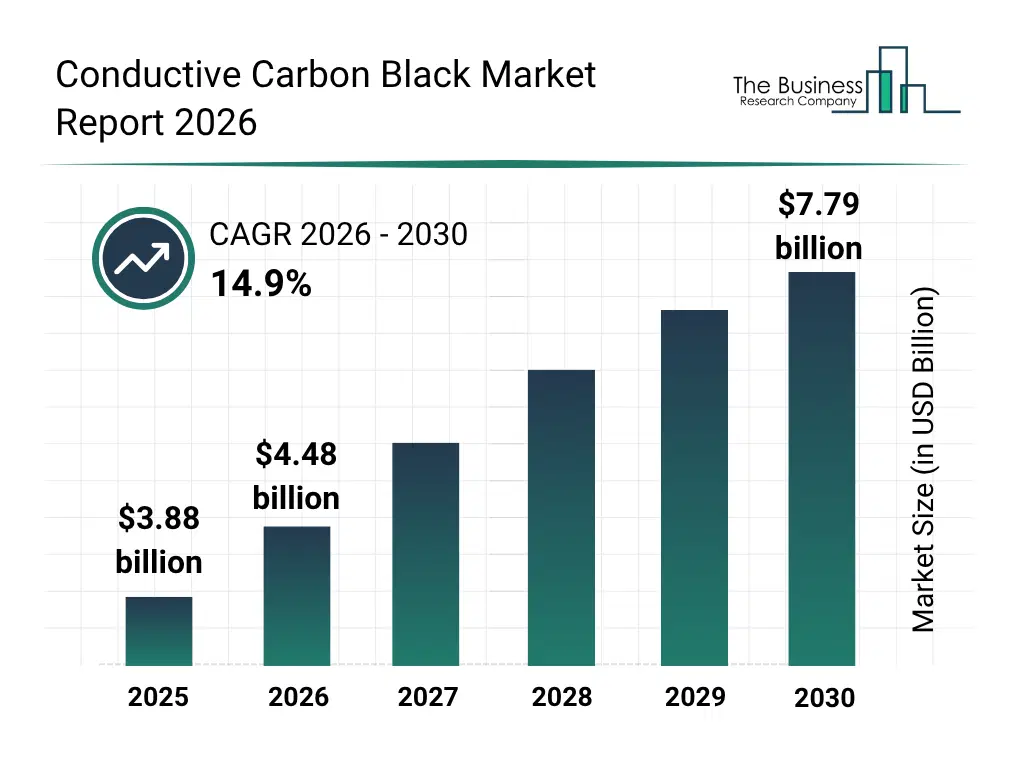
What Is The Conductive Carbon Black Market Size and Share 2026?
The conductive carbon black market size has grown rapidly in recent years. It will grow from $3.88 billion in 2025 to $4.48 billion in 2026 at a compound annual growth rate (CAGR) of 15.5%. The growth in the historic period can be attributed to growth in lithium ion battery production, increasing use of conductive additives in plastics, expansion of automotive electronics, rising demand for electrostatic discharge protection, growth in conductive rubber applications.What Is The Conductive Carbon Black Market Growth Forecast?
The conductive carbon black market size is expected to see rapid growth in the next few years. It will grow to $7.79 billion in 2030 at a compound annual growth rate (CAGR) of 14.9%. The growth in the forecast period can be attributed to increasing electric vehicle production, expansion of energy storage systems, rising demand for advanced battery materials, growing adoption of conductive packaging solutions, increasing deployment of conductive electronic components. Major trends in the forecast period include increasing demand for high-purity conductive carbon black, growing adoption of battery-grade conductive carbon black, rising development of high surface area grades, increasing use of specialized carbon black in antistatic applications, expanding demand for conductive carbon black in cable compounds.Tariff Impact On Conductive Carbon Black Market
Tariffs are impacting the conductive carbon black market by increasing the cost of imported carbon black feedstocks, specialty grades, processing equipment, and battery-related raw materials used in conductive applications. This is raising production costs across lithium ion batteries, plastics, rubber, cables, coatings, inks, and antistatic packaging, particularly in regions dependent on imported specialty carbon black such as Asia-Pacific, Europe, and North America. Battery-grade and high-purity conductive carbon black segments are most affected due to specialized supply chain dependencies and stringent quality requirements. However, tariffs are also encouraging domestic production, regional supplier diversification, and investment in localized conductive carbon black manufacturing capacity.
Global Conductive Carbon Black Market Segmentation
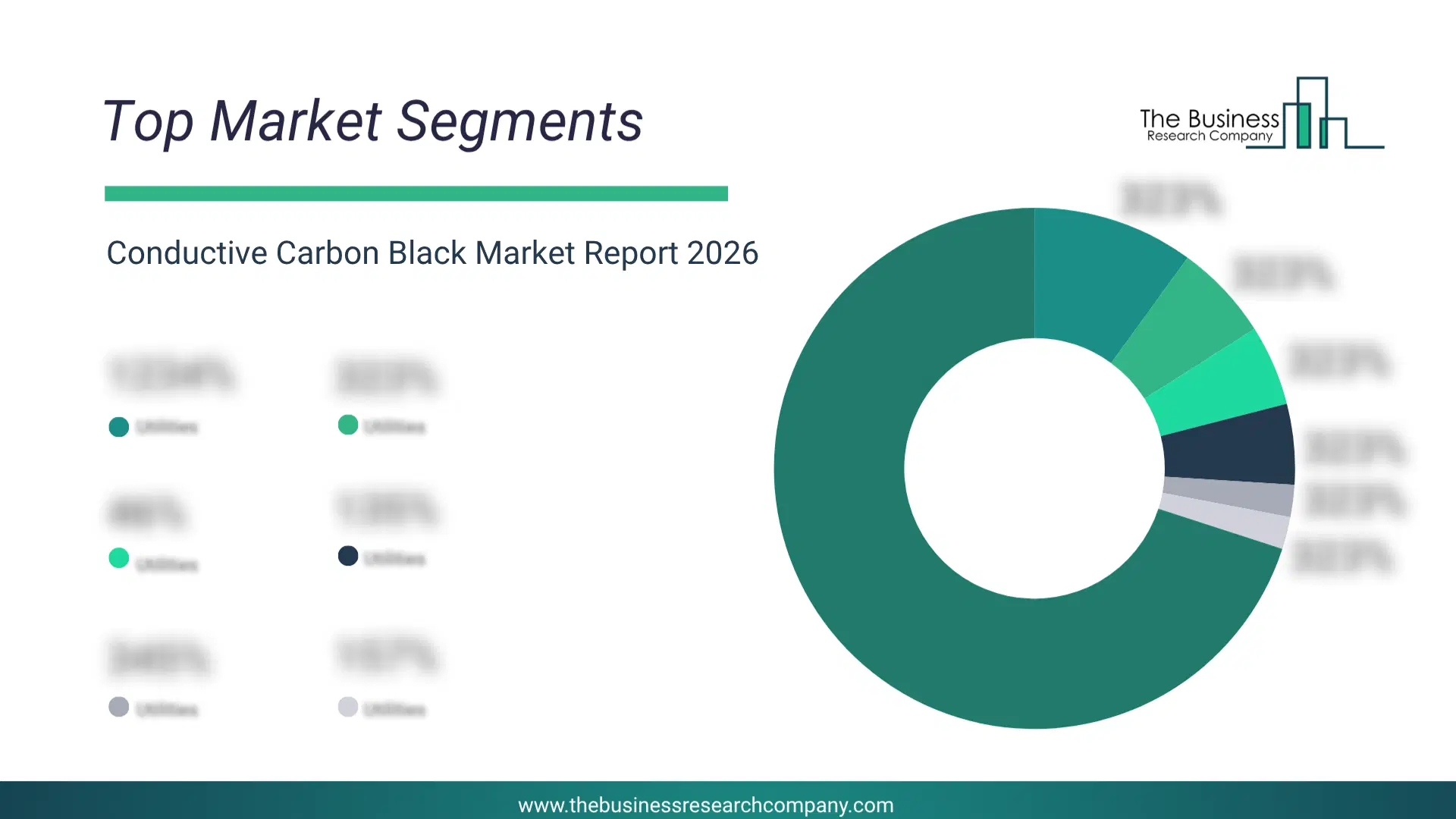
1) By Product Type: Furnace Black, Acetylene Black, Thermal Black, Channel Black, Specialty Conductive Carbon Black 2) By Sales Channel: Direct Sales, Distributors, Online Sales 3) By Application: Lithium Ion Batteries, Lead Acid Batteries, Plastics, Rubber, Paints And Coatings, Inks, Adhesives And Sealants, Antistatic Packaging, Cable Compounds, Conductive Textiles 4) By End Use Industry: Automotive, Electronics And Semiconductors, Energy Storage, Industrial Manufacturing, Construction, Aerospace And Defense, Consumer Goods, Packaging Subsegments: 1) By Furnace Black: High Structure Furnace Black, Low Structure Furnace Black, High Conductivity Furnace Black, Medium Conductivity Furnace Black 2) By Acetylene Black: Standard Acetylene Black, High Purity Acetylene Black, High Conductivity Acetylene Black, Battery Grade Acetylene Black 3) By Thermal Black: Fine Thermal Black, Medium Thermal Black, Coarse Thermal Black, High Purity Thermal Black 4) By Channel Black: Hard Channel Black, Soft Channel Black, High Surface Area Channel Black, Low Surface Area Channel Black 5) By Specialty Conductive Carbon Black: Battery Grade Conductive Carbon Black, Antistatic Conductive Carbon Black, Electroconductive Carbon Black, High Surface Area Conductive Carbon BlackWhat Is The Driver Of The Conductive Carbon Black Market?
The growing demand for lithium ion batteries is expected to propel the growth of the conductive carbon black market going forward. Lithium ion batteries refer to rechargeable energy storage devices that use lithium ions to transfer charge between the anode and cathode, offering high energy density, long cycle life, and fast charging capabilities. The growing demand for lithium-ion batteries is due to the rapid adoption of electric vehicles, as lithium-ion batteries provide high energy density, longer lifespan, and efficient power storage for electric mobility. The growing demand for lithium-ion batteries supports conductive carbon black by increasing the need for conductive additives that enhance electrical conductivity, battery performance, and energy storage efficiency. For instance, in April 2026, according to the International Energy Agency (IEA), a France-based intergovernmental organization, global lithium ion battery manufacturing capacity surpassed 4 TWh by the end of 2025, representing an approximately 30% increase compared with 2024. Therefore, the growing demand for lithium ion batteries is driving the growth of the conductive carbon black industry.Key Players In The Global Conductive Carbon Black Market
Major companies operating in the conductive carbon black market are Cabot Corporation, Mitsubishi Chemical Group Corporation, Birla Carbon, Orion S.A., Imerys, Denka Company Limited, Tokai Carbon Co. Ltd., PCBL Limited, Himadri Speciality Chemical Ltd., OCI Holdings Co. Ltd., Jiangxi Black Cat Carbon Black Inc. Ltd., Jinneng Science & Technology Co. Ltd., Omsk Carbon Group, Longxing Chemical Stock Co. Ltd., Continental Carbon Company, Asbury Carbons, Monolith Inc., Lion Specialty Chemicals Co. Ltd., Shandong Huadong Rubber Materials Co. Ltd., Beilum Carbon Chemical Limited, Klean Industries Inc., Shanxi Huachang Chemical Co. Ltd.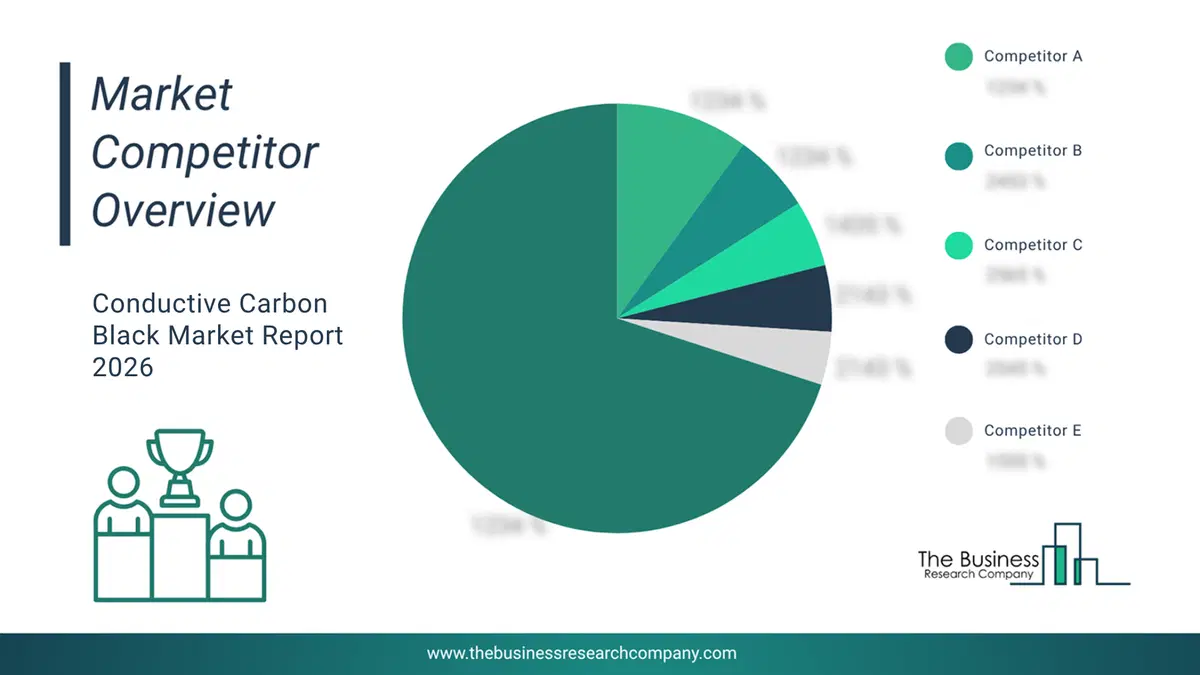
This chart is for illustrative purposes; the full report includes a detailed competitor analysis and comprehensive overview of the top 10 companies in the market.
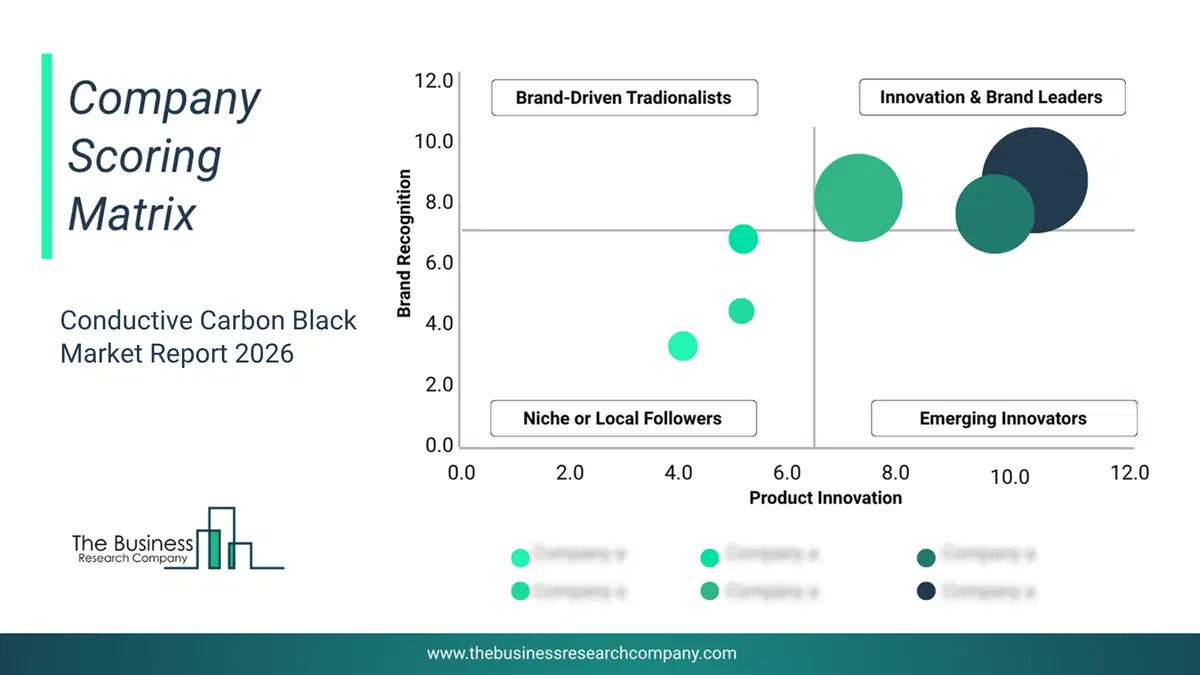
This chart maps companies by product innovation and brand strength, with bubble size indicating relative revenue, helping identify market leaders, challengers, and niche players. This is an illustrative chart; the full report provides a complete and accurate competitive analysis.
Global Conductive Carbon Black Market Trends and Insights
Major companies operating in the conductive carbon black market are focusing on developing advanced solutions, such as battery-grade conductive additives, to enhance electrical conductivity, improve battery performance, and support the growing demand for lithium-ion batteries across electric vehicles, energy storage systems, and consumer applications. Battery-grade conductive additives refer to carbon-based materials added to lithium-ion battery electrodes to create conductive networks that improve electron transfer, enhance charging and discharging efficiency, and increase overall battery power performance. For instance, in August 2025, Orion S.A., a US-based specialty chemicals company, launched PRINTEX kappa 10, a high-quality conductive additive designed for lithium-ion battery applications. The product enables efficient electrical energy transfer within battery cells by forming a percolating network that allows electrons to flow more effectively. It is compatible with both anode and cathode materials, including lithium-ferrous-phosphate (LFP) and nickel-manganese-cobalt (NMC) battery chemistries, supporting improved battery performance for electric vehicles, energy storage systems, and consumer applications.What Are Latest Mergers And Acquisitions In The Conductive Carbon Black Market?
In July 2025, Imerys Graphite and Carbon Switzerland Ltd., a Switzerland-based company specializing in high-tech carbon-based solutions, partnered with Jiangsu Cnano Technology Co. Ltd. to advance next-generation conductive additive solutions for lithium-ion batteries. As a result of the collaboration, the companies are developing innovative conductive additive solutions that combine carbon black and carbon nanotubes to enhance the performance of next-generation electric vehicle (EV) batteries. Jiangsu Cnano Technology Co. Ltd. is a China-based company specializing in nano-level carbon materials, including carbon nanotubes and graphene products.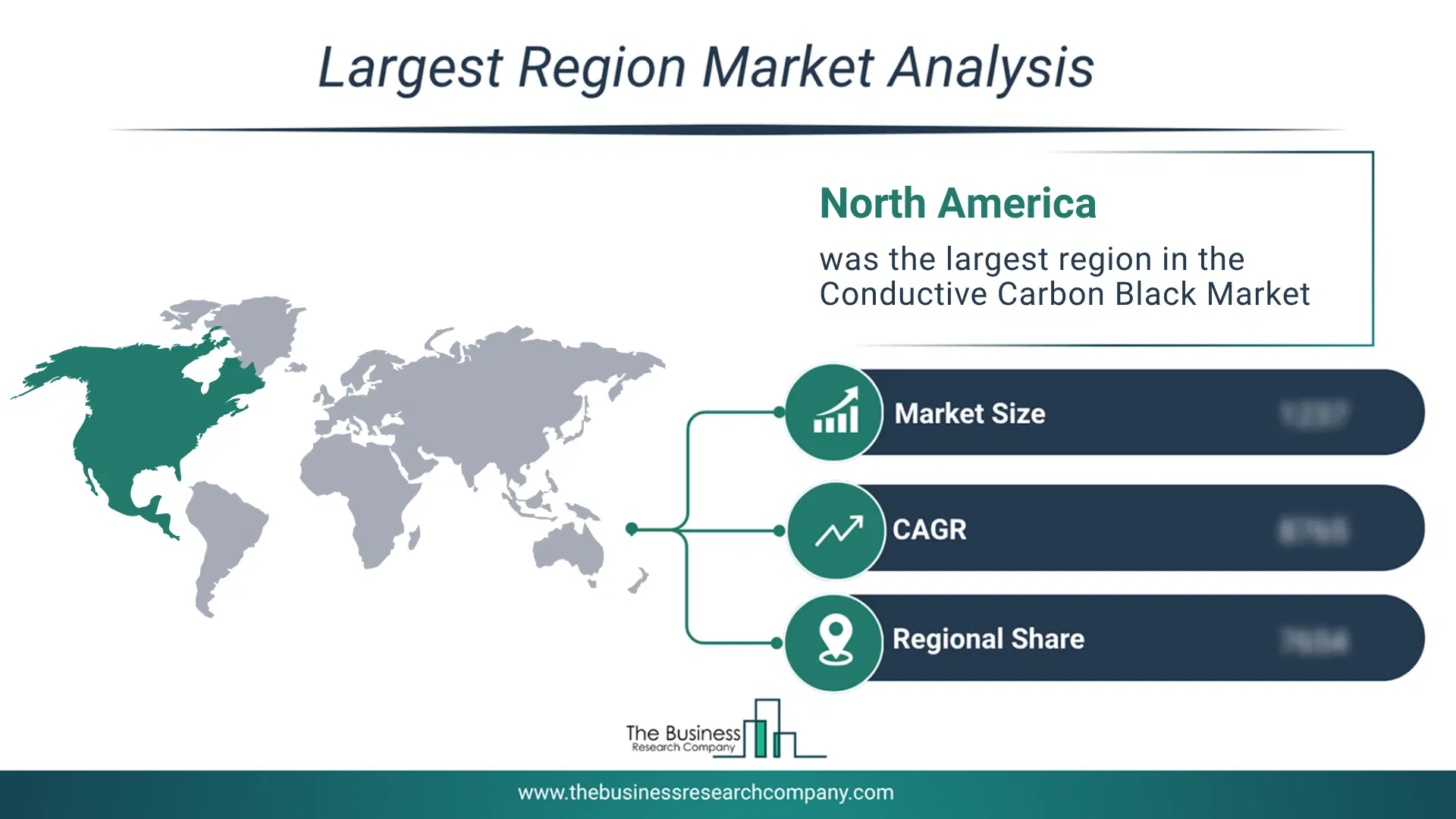
Regional Outlook
North America was the largest region in the conductive carbon black market in 2025. Asia-Pacific is expected to be the fastest-growing region in the forecast period. The regions covered in this market report are Asia-Pacific, South East Asia, Western Europe, Eastern Europe, North America, South America, Middle East, Africa. The countries covered in this market report are Australia, Brazil, China, France, Germany, India, Indonesia, Japan, Taiwan, Russia, South Korea, UK, USA, Canada, Italy, Spain.What Defines the Conductive Carbon Black Market?
The conductive carbon black market consists of sales of conductive masterbatch, conductive polymer compound, battery electrode, cathode slurry, anode slurry, battery separator coating, conductive plastic pellets, and conductive rubber compound. Values in this market are factory gate values, that is, the value of goods sold by the manufacturers or creators of the goods, whether to other entities (including downstream manufacturers, wholesalers, distributors, and retailers) or directly to end customers. The value of goods in this market includes related services sold by the creators of the goods.How is Market Value Defined and Measured?
The market value is defined as the revenues that enterprises gain from the sale of goods and/or services within the specified market and geography through sales, grants, or donations in terms of the currency (in USD unless otherwise specified). The revenues for a specified geography are consumption values that are revenues generated by organizations in the specified geography within the market, irrespective of where they are produced. It does not include revenues from resales along the supply chain, either further along the supply chain or as part of other products.
This chart presents market attractiveness based on a quantitative evaluation of growth, competition, strategic alignment, and risk, offering a clear view of opportunity areas for decision-making. This chart is for illustrative purposes; the full report contains the complete analysis.

This chart highlights the Total Addressable Market (TAM) by estimating the maximum revenue opportunity using an assumption-driven approach, supporting strategic planning and opportunity sizing across markets. The chart is illustrative; the full report provides a more comprehensive analysis.
What Key Data and Analysis Are Included in the Conductive Carbon Black Market Report 2026?
The conductive carbon black market research report is one of a series of new reports from The Business Research Company that provides market statistics, including industry global market size, regional shares, competitors with the market share, detailed market segments, market trends and opportunities, and any further data you may need to thrive in the conductive carbon black industry. The market research report delivers a complete perspective of everything you need, with an in-depth analysis of the current and future state of the industry.Conductive Carbon Black Market Report Forecast Analysis
| Report Attribute | Details |
|---|---|
| Market Size Value In 2026 | $4.48 billion |
| Revenue Forecast In 2030 | $7.79 billion |
| Growth Rate | CAGR of 14.9% from 2026 to 2030 |
| Base Year For Estimation | 2025 |
| Actual Estimates/Historical Data | 2020-2025 |
| Forecast Period | 2026 - 2030 |
| Market Representation | Revenue in USD Billion and CAGR from 2026 to 2030 |
| Segments Covered | Product Type, Sales Channel, Application, End Use Industry |
| Regional Scope | Asia-Pacific, Western Europe, Eastern Europe, North America, South America, Middle East, Africa |
| Country Scope | The countries covered in the report are Australia, Brazil, China, France, Germany, India, Indonesia, Japan, Taiwan, Russia, South Korea, UK, USA, Canada, Italy, Spain. |
| Key Companies Profiled | Cabot Corporation, Mitsubishi Chemical Group Corporation, Birla Carbon, Orion S.A., Imerys, Denka Company Limited, Tokai Carbon Co. Ltd., PCBL Limited, Himadri Speciality Chemical Ltd., OCI Holdings Co. Ltd., Jiangxi Black Cat Carbon Black Inc. Ltd., Jinneng Science & Technology Co. Ltd., Omsk Carbon Group, Longxing Chemical Stock Co. Ltd., Continental Carbon Company, Asbury Carbons, Monolith Inc., Lion Specialty Chemicals Co. Ltd., Shandong Huadong Rubber Materials Co. Ltd., Beilum Carbon Chemical Limited, Klean Industries Inc., Shanxi Huachang Chemical Co. Ltd. |
| Customization Scope | Request for Customization |
| Pricing And Purchase Options | Explore Purchase Options |