

Congenital Heart Disease (CHD) Market Report 2026
Global Outlook – By Type (Heart Valve Defects, Heart Wall Defects, Blood Vessel Defects, Other Types), By Diagnosis (Electrocardiogram, Chest X-ray, Echocardiogram, Transesophageal Echocardiogram, Pulse Oximetry, Exercise Stress Test, Cardiac Computed Tomography (CT) Scan Or Magnetic Resonance Imaging (MRI), Cardiac Catheterization, Other Diagnosis), By Treatment (Interventional Cardiology, Cardiac Surgery, Telemedicine, Medication Management, Lifestyle Modifications), By Age Group (Infants, Children, Adolescents, Adults), By Application (Hospitals And Clinics, Diagnostic Centers, Ambulatory Surgical Centers, Research And Academic Institutions) - Market Size, Trends, Strategies, and Forecast to 2030
Congenital Heart Disease (CHD) Market Overview
• Congenital Heart Disease (CHD) market size has reached to $4.85 billion in 2025 • Expected to grow to $7.27 billion in 2030 at a compound annual growth rate (CAGR) of 8.1% • Growth Driver: Maternal Diabetes Driving Congenital Heart Disease Market Growth • Market Trend: Innovative Non-Surgical Heart Valves Transforming Congenital Heart Disease Treatment • North America was the largest region in 2025.What Is Covered Under Congenital Heart Disease (CHD) Market?
Congenital heart disease (CHD) refers to a range of birth defects affecting the structure and function of the heart that are present at birth. These defects can involve the walls of the heart, the valves of the heart, and the arteries and veins near the heart. The treatment for CHD depends on the type and severity of the defect and may include medications, catheter-based interventions, open-heart surgery, or heart transplantation. The main types of congenital heart disease (CHD) are heart valve defects, heart wall defects, blood vessel defects, and others. Heart valve defects refer to abnormalities or malfunctions in the heart valves, which regulate blood flow through the heart. They can be diagnosed by electrocardiogram, chest X-ray, echocardiogram, transesophageal echocardiogram, pulse oximetry, exercise stress test, Cardiac computed tomography (CT) scan or magnetic resonance imaging (MRI), cardiac catheterization, other diagnosis and treatment include interventional cardiology, cardiac surgery, telemedicine, medication management, and lifestyle modifications. The age groups include infants, children, adolescents, and adults, who are treated in hospitals and clinics, diagnostic centers, ambulatory surgical centers, research and academic institutions applications.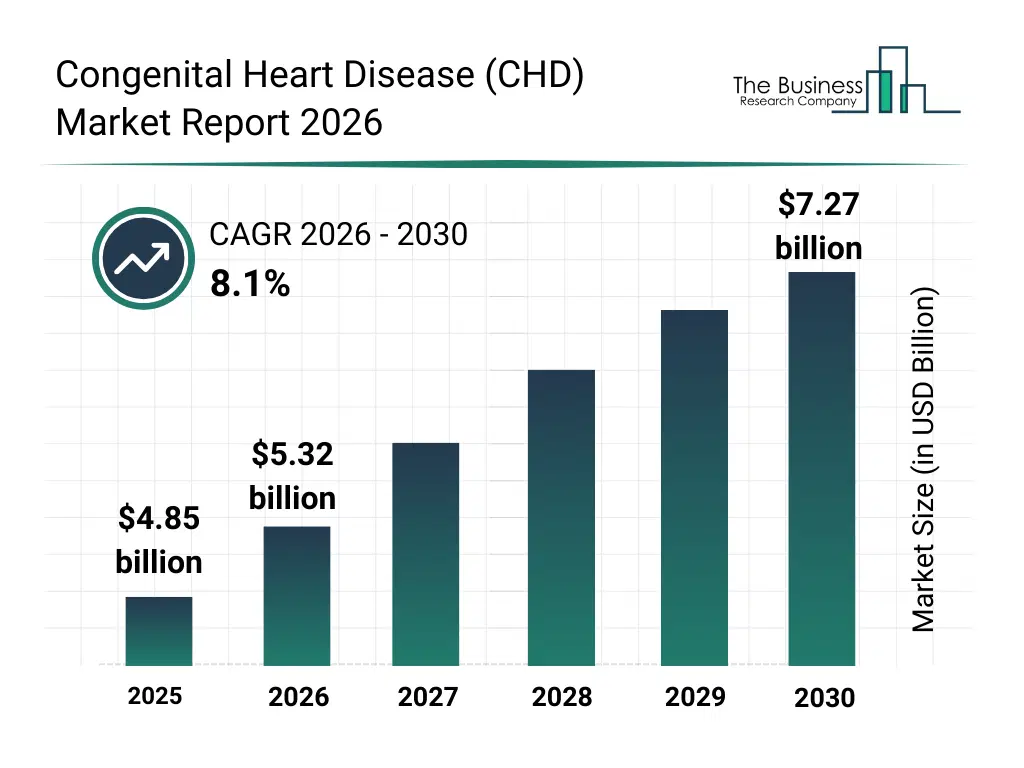
What Is The Congenital Heart Disease (CHD) Market Size and Share 2026?
The congenital heart disease (chd) market size has grown strongly in recent years. It will grow from $4.85 billion in 2025 to $5.32 billion in 2026 at a compound annual growth rate (CAGR) of 9.7%. The growth in the historic period can be attributed to high prevalence of structural birth defects, limited early diagnostic capabilities, reliance on open-heart surgery, high infant mortality rates, concentration of care in tertiary hospitals.What Is The Congenital Heart Disease (CHD) Market Growth Forecast?
The congenital heart disease (chd) market size is expected to see strong growth in the next few years. It will grow to $7.27 billion in 2030 at a compound annual growth rate (CAGR) of 8.1%. The growth in the forecast period can be attributed to advancements in minimally invasive cardiology, improved imaging and diagnostics, growing adult chd population, expansion of specialized cardiac centers, rising healthcare investments. Major trends in the forecast period include growth in early prenatal and neonatal screening, rising adoption of catheter-based interventions, expansion of pediatric and adult chd care programs, increasing survival rates driving adult chd care, multidisciplinary long-term disease management.
Global Congenital Heart Disease (CHD) Market Segmentation
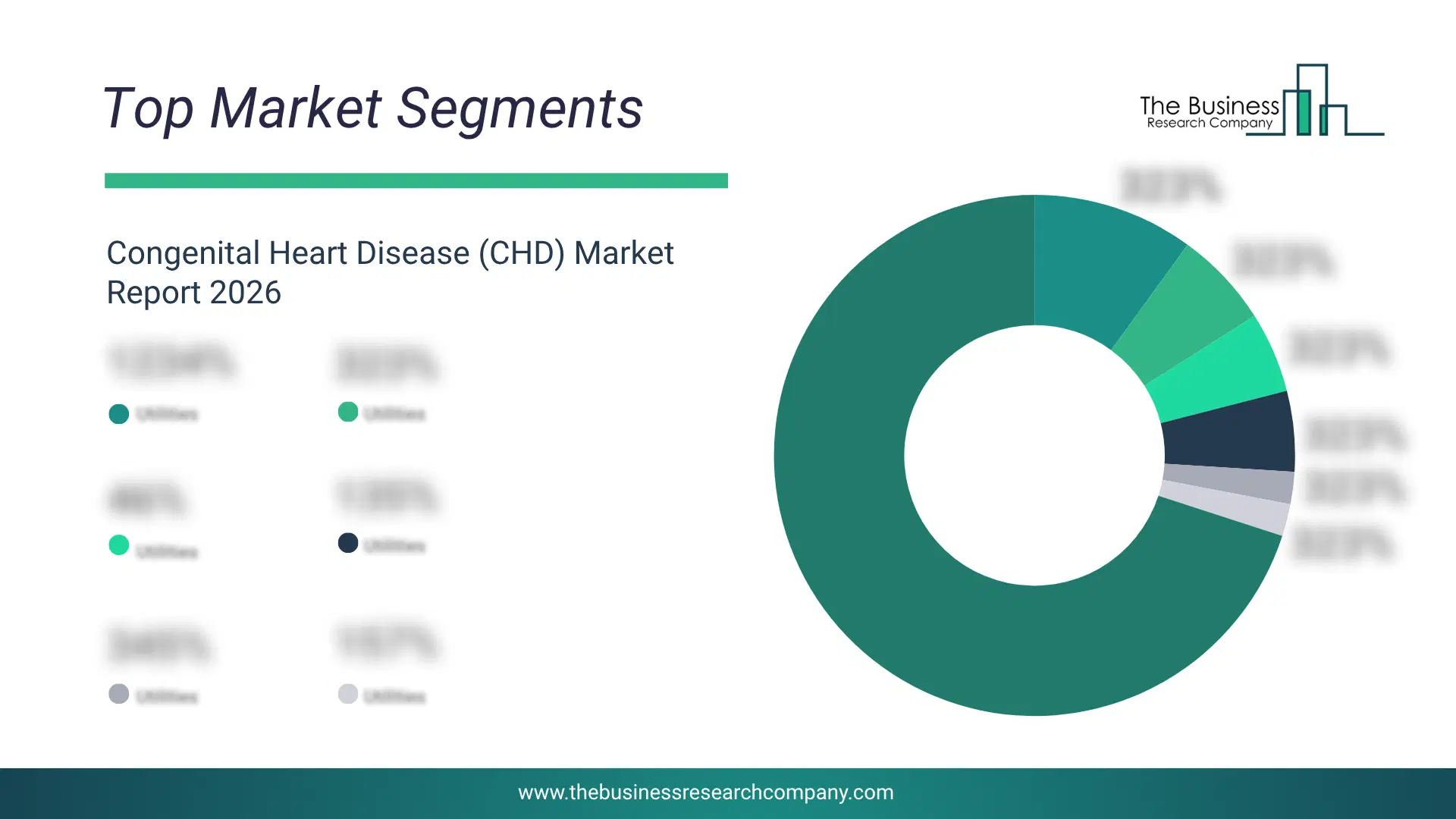
1) By Type: Heart Valve Defects, Heart Wall Defects, Blood Vessel Defects, Other Types 2) By Diagnosis: Electrocardiogram, Chest X-ray, Echocardiogram, Transesophageal Echocardiogram, Pulse Oximetry, Exercise Stress Test, Cardiac Computed Tomography (CT) Scan Or Magnetic Resonance Imaging (MRI), Cardiac Catheterization, Other Diagnosis 3) By Treatment: Interventional Cardiology, Cardiac Surgery, Telemedicine, Medication Management, Lifestyle Modifications 4) By Age Group: Infants, Children, Adolescents, Adults 5) By Application: Hospitals And Clinics, Diagnostic Centers, Ambulatory Surgical Centers, Research And Academic Institutions Subsegments: 1) By Heart Valve Defects: Aortic Valve Stenosis, Pulmonary Valve Stenosis, Mitral Valve Prolapse, Tricuspid Valve Defects, Valve Regurgitation 2) By Heart Wall Defects: Atrial Septal Defect (ASD), Ventricular Septal Defect (VSD), Atrioventricular Septal Defect (AVSD), Hypoplastic Left Heart Syndrome (HLHS), Tetralogy of Fallot (TOF) 3) By Blood Vessel Defects: Coarctation Of The Aorta, Patent Ductus Arteriosus (PDA), Pulmonary Artery Stenosis, Transposition Of The Great Arteries (TGA), Truncus Arteriosus 4) By Other Types: Single Ventricle Defects, Ebstein’s Anomaly, Total Anomalous Pulmonary Venous Return (TAPVR), Coronary Artery Anomalies, Pulmonary Venous ObstructionWhat Is The Driver Of The Congenital Heart Disease (CHD) Market?
The increase in maternal diabetes cases is expected to propel the growth of the congenital heart disease (CHD) market going forward. Maternal diabetes, or gestational diabetes mellitus (GDM), refers to diabetes that arises during pregnancy in women who did not have diabetes before conception. Maternal diabetes is caused by changes in lifestyle, including sedentary behavior and unhealthy dietary habits, and an overall rise in obesity rates among women of childbearing age. Maternal diabetes can lead to congenital heart disease (CHD) in infants due to the high blood sugar levels affecting fetal heart development. The elevated glucose levels in the mother's blood can disrupt the normal development of the baby's heart, increasing the risk of CHD. For instance, in November 2025, according to the Society For Maternal Fetal Medicine, a US-based organisation, gestational diabetes mellitus (GDM) impacts approximately 15.6% of women worldwide, with an estimated 23.3 million live births affected by hyperglycemia during pregnancy in 2024. Therefore, the increase in maternal diabetes cases is driving the growth of the congenital heart disease (CHD) industry.Key Players In The Global Congenital Heart Disease (CHD) Market
Major companies operating in the congenital heart disease (chd) market are Abbott Laboratories, Medtronic, Siemens Healthineers, Philips Healthcare, Roche Diagnostics International Ltd., Boston Scientific Corp., Laboratory Corporation of America Holdings (LabCorp), Terumo Corporation, Mindray Medical International Limited, Canon Medical Systems Corporation, Masimo Corporation, Carestream Health, Schiller AG, BPL Medical Technologies, Bionet America Inc., Edwards Lifesciences Corporation, GE Healthcare, BIOTRONIK SE & Co KG, W L Gore & Associates Inc, Cook Medical, Lepu Medical Technology Co Ltd, Getinge AB, Merit Medical Systems Inc, Eurocor Tech GmbH, Braile Biomedica
This chart is for illustrative purposes; the full report includes a detailed competitor analysis and comprehensive overview of the top 10 companies in the market.
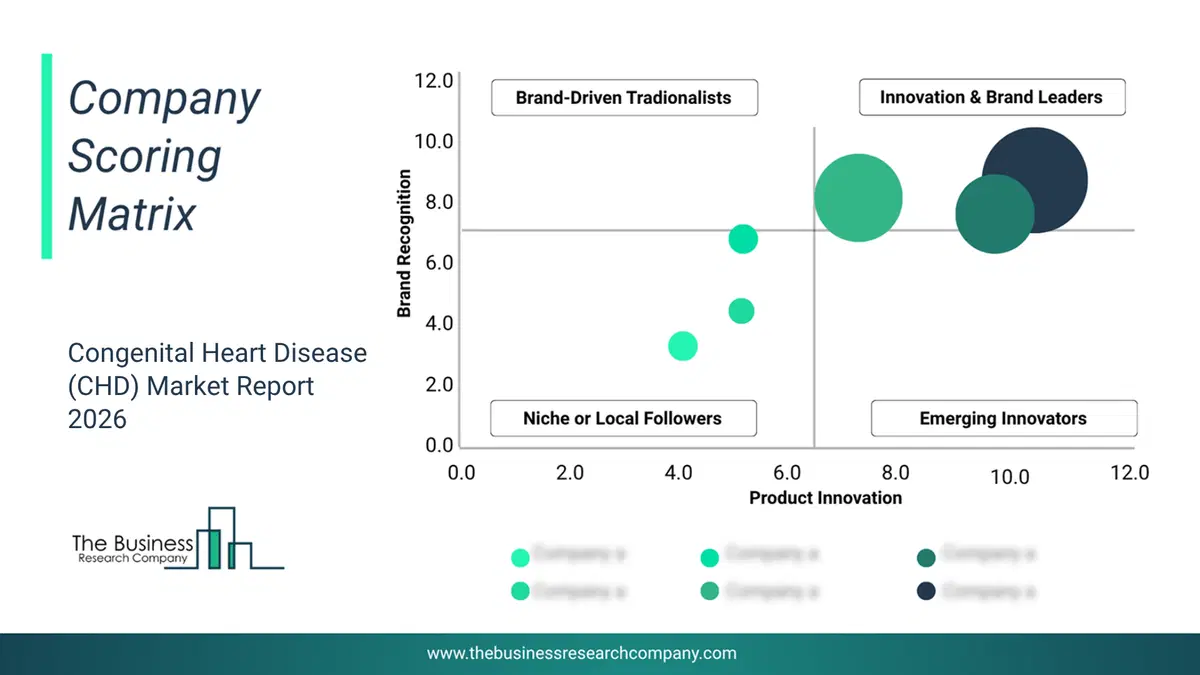
This chart maps companies by product innovation and brand strength, with bubble size indicating relative revenue, helping identify market leaders, challengers, and niche players. This is an illustrative chart; the full report provides a complete and accurate competitive analysis.
Global Congenital Heart Disease (CHD) Market Trends and Insights
Major companies operating in the congenital heart disease market are developing non-surgical heart valves to improve patient outcomes and quality of life. Non-surgical heart valves, or transcatheter, are medical devices that treat heart valve diseases without needing traditional open-heart surgery. For instance, in February 2023, Medtronic, a US-based medical technology company, reintroduced its Harmony Transcatheter Pulmonary Valve (TPV) System. It is a groundbreaking, minimally invasive alternative to open-heart surgery for patients with congenital heart disease, specifically those with native or surgically repaired right ventricular outflow tract (RVOT) anomalies. This system is the first FDA-approved valve designed for the right side, providing a non-surgical solution for patients with severe pulmonary valve regurgitation. The Harmony TPV System received U.S. FDA approval in 2021. It was reintroduced following a voluntary recall, demonstrating Medtronic's commitment to advancing solutions for congenital heart disease patients.What Are Latest Mergers And Acquisitions In The Congenital Heart Disease (CHD) Market?
In May 2024, Novartis Healthcare Private Limited, a Switzerland-based pharmaceutical company partnered with Ayala Healthcare Holdings, Inc. (AC Health) and launched an Integrated Cardiovascular and Cancer Care. This partnership that aims to broaden access to innovative medicines for breast cancer, heart failure, and high cholesterol. Ayala Healthcare Holdings, Inc. (AC Health) is a Philippines-based pharma company focused on generic drugs.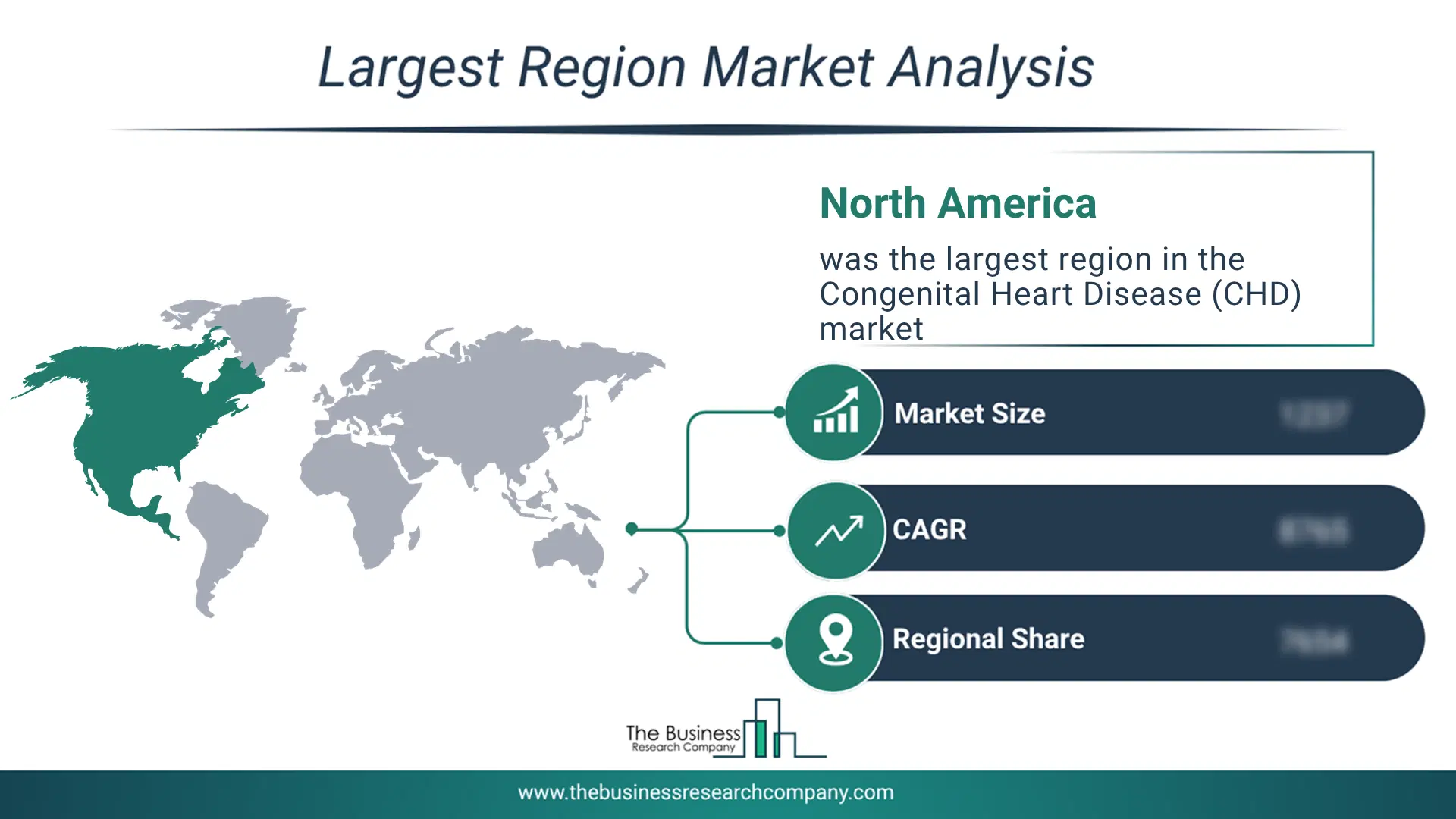
Regional Outlook
North America was the largest region in the congenital heart disease (CHD) market in 2025. The regions covered in this market report are Asia-Pacific, South East Asia, Western Europe, Eastern Europe, North America, South America, Middle East, Africa. The countries covered in this market report are Australia, Brazil, China, France, Germany, India, Indonesia, Japan, Taiwan, Russia, South Korea, UK, USA, Canada, Italy, Spain.What Defines the Congenital Heart Disease (CHD) Market?
The congenital heart disease (CHD) market consists of revenues earned by entities by providing services such as medical consultations, diagnostic tests, and support services. The market value includes the value of related goods sold by the service provider or included within the service offering. The congenital heart disease (CHD) market also includes sales of cardiac implants such as pacemakers, implantable cardioverter-defibrillators (ICDs), and ventricular assist devices (VADs). Values in this market are ‘factory gate’ values, that is, the value of goods sold by the manufacturers or creators of the goods, whether to other entities (including downstream manufacturers, wholesalers, distributors, and retailers) or directly to end customers. The value of goods in this market includes related services sold by the creators of the goods.How is Market Value Defined and Measured?
The market value is defined as the revenues that enterprises gain from the sale of goods and/or services within the specified market and geography through sales, grants, or donations in terms of the currency (in USD unless otherwise specified). The revenues for a specified geography are consumption values that are revenues generated by organizations in the specified geography within the market, irrespective of where they are produced. It does not include revenues from resales along the supply chain, either further along the supply chain or as part of other products.
This chart presents market attractiveness based on a quantitative evaluation of growth, competition, strategic alignment, and risk, offering a clear view of opportunity areas for decision-making. This chart is for illustrative purposes; the full report contains the complete analysis.

This chart highlights the Total Addressable Market (TAM) by estimating the maximum revenue opportunity using an assumption-driven approach, supporting strategic planning and opportunity sizing across markets. The chart is illustrative; the full report provides a more comprehensive analysis.
What Key Data and Analysis Are Included in the Congenital Heart Disease (CHD) Market Report 2026?
The congenital heart disease (chd) market research report is one of a series of new reports from The Business Research Company that provides market statistics, including industry global market size, regional shares, competitors with the market share, detailed market segments, market trends and opportunities, and any further data you may need to thrive in the congenital heart disease (chd) industry. The market research report delivers a complete perspective of everything you need, with an in-depth analysis of the current and future state of the industry.Congenital Heart Disease (CHD) Market Report Forecast Analysis
| Report Attribute | Details |
|---|---|
| Market Size Value In 2026 | $5.32 billion |
| Revenue Forecast In 2030 | $7.27 billion |
| Growth Rate | CAGR of 8.1% from 2026 to 2030 |
| Base Year For Estimation | 2025 |
| Actual Estimates/Historical Data | 2020-2025 |
| Forecast Period | 2026 - 2030 |
| Market Representation | Revenue in USD Billion and CAGR from 2026 to 2030 |
| Segments Covered | Type, Diagnosis, Treatment, Age Group, Application |
| Regional Scope | Asia-Pacific, Western Europe, Eastern Europe, North America, South America, Middle East, Africa |
| Country Scope | The countries covered in the report are Australia, Brazil, China, France, Germany, India, Indonesia, Japan, Taiwan, Russia, South Korea, UK, USA, Canada, Italy, Spain |
| Key Companies Profiled | Abbott Laboratories, Medtronic, Siemens Healthineers, Philips Healthcare, Roche Diagnostics International Ltd., Boston Scientific Corp., Laboratory Corporation of America Holdings (LabCorp), Terumo Corporation, Mindray Medical International Limited, Canon Medical Systems Corporation, Masimo Corporation, Carestream Health, Schiller AG, BPL Medical Technologies, Bionet America Inc., Edwards Lifesciences Corporation, GE Healthcare, BIOTRONIK SE & Co KG, W L Gore & Associates Inc, Cook Medical, Lepu Medical Technology Co Ltd, Getinge AB, Merit Medical Systems Inc, Eurocor Tech GmbH, Braile Biomedica |
| Customization Scope | Request for Customization |
| Pricing And Purchase Options | Explore Purchase Options |