
Conjugated Monoclonal Antibodies Market Report 2026
Global Outlook – By Drugs (Adcetris, Kadcyla), By Technology (Cleavable Linker, Non-cleavable Linker), By Application (Blood Cancer, Breast Cancer, Ovarian Cancer, Lung Cancer, Brain Tumor, Other Applications) – Market Size, Trends, Strategies, and Forecast to 2030
Conjugated Monoclonal Antibodies Market Overview
• Conjugated Monoclonal Antibodies market size has reached to $12.09 billion in 2025 • Expected to grow to $16.76 billion in 2030 at a compound annual growth rate (CAGR) of 6.8% • Growth Driver: Rising Cancer Prevalence Fuels Growth Of Conjugated Monoclonal Antibodies Market • Market Trend: Strategic Partnerships Driving Innovation In Conjugated Monoclonal Antibodies • North America was the largest region in 2025 and Middle East is the fastest growing region.Market Gains By 2030 – Top Opportunities By Segment
Market Gain identifies the most promising market opportunities by highlighting the segments or products expected to generate the highest incremental revenue growth over the next five years.
What Is Covered Under Conjugated Monoclonal Antibodies Market?
Conjugated monoclonal antibodies refer to a compound formed from a monoclonal antibody that has been chemically coupled to a medication. The monoclonal antibody binds to particular proteins or receptors that are present in particular cell types, such as cancer cells. The associated medicine enters these cells, kills them, and leaves the rest of the cells alone. The main types of drugs in conjugated monoclonal antibodies are advertised and kadcyla. Adcetris is a brand-name pharmaceutical drug intended to cure adults with certain types of lymphoma. Lymphoma is a cancer that attacks the lymphatic system and lymphocytes, which are white blood cells. The different technologies include cleavable linkers and non-cleavable linkers and are used in blood cancer, breast cancer, ovarian cancer, lung cancer, brain tumors, and others.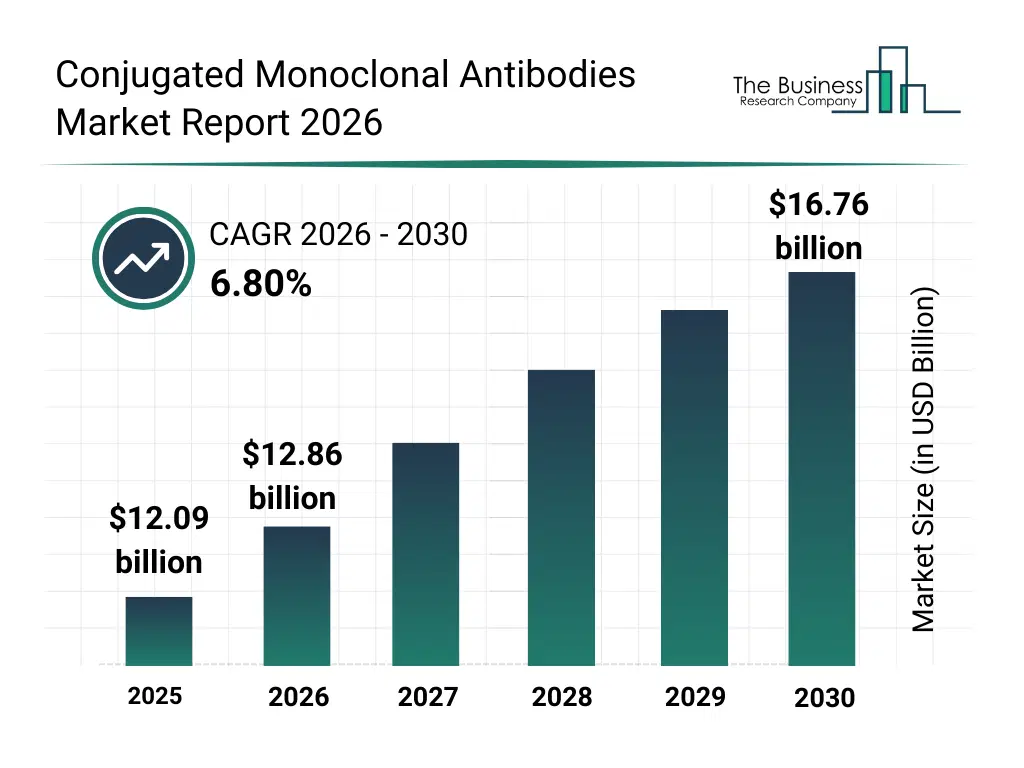
What Is The Conjugated Monoclonal Antibodies Market Size and Share 2026?
The conjugated monoclonal antibodies market size has grown strongly in recent years. It will grow from $12.09 billion in 2025 to $12.86 billion in 2026 at a compound annual growth rate (CAGR) of 6.4%. The growth in the historic period can be attributed to limited availability of conjugated monoclonal antibodies, reliance on conventional chemotherapy, growing cancer prevalence, increasing research on targeted therapies, initial approvals of adc-based drugs.What Is The Conjugated Monoclonal Antibodies Market Growth Forecast?
The conjugated monoclonal antibodies market size is expected to see strong growth in the next few years. It will grow to $16.76 billion in 2030 at a compound annual growth rate (CAGR) of 6.8%. The growth in the forecast period can be attributed to development of new linker technologies, expansion of adc applications to multiple cancers, rising adoption of personalized medicine approaches, increasing funding for oncology research, growing number of clinical trials and pipeline drugs. Major trends in the forecast period include rising adoption of conjugated monoclonal antibodies in oncology, growth in targeted therapies for blood and solid tumors, development of cleavable and non-cleavable linker technologies, expansion of personalized medicine and precision oncology, increasing investment in clinical trials and cancer research.
Global Conjugated Monoclonal Antibodies Market Segmentation
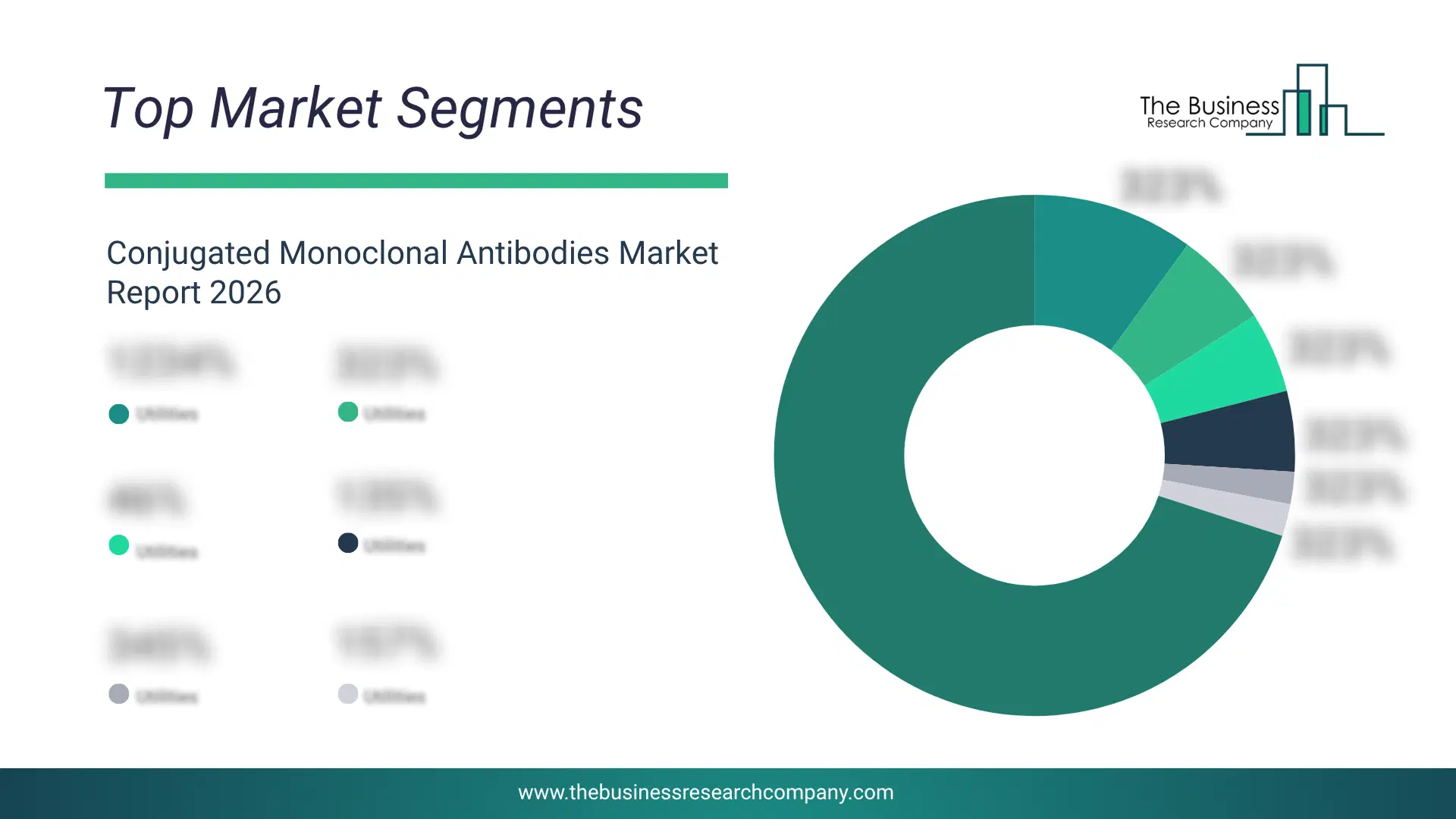
1) By Drugs: Adcetris, Kadcyla 2) By Technology: Cleavable Linker, Non-cleavable Linker 3) By Application: Blood Cancer, Breast Cancer, Ovarian Cancer, Lung Cancer, Brain Tumor, Other Applications The top segments in the conjugated monoclonal antibodies market will be: • Kadcyla will reach $10.05 Billion by 2030. • Adcetris will reach $8.5 Billion by 2030. • Besponsa will reach $2.15 Billion by 2030. • Mylotarg will reach $1.62 Billion by 2030.What Is The Driver Of The Conjugated Monoclonal Antibodies Market?
The high prevalence of cancer is expected to propel the growth of the conjugated monoclonal antibodies market going forward. Cancer refers to a group of diseases characterized by the uncontrolled growth and spread of abnormal cells in the body. Cancer is rising due to aging populations, as the risk of developing cancer increases with age and more people are living longer than before. Conjugated monoclonal antibodies help cancer by specifically targeting cancer cells and delivering potent therapeutic agents directly to them, improving treatment effectiveness while minimizing damage to healthy tissue. For instance, in October 2025, according to the NHS England, a UK-based publicly funded healthcare system, there were 354,820 new cancer diagnoses in 2023, which is 8,605 more than in 2022. Therefore, the high prevalence of cancer is driving the growth of the conjugated monoclonal antibodies industry.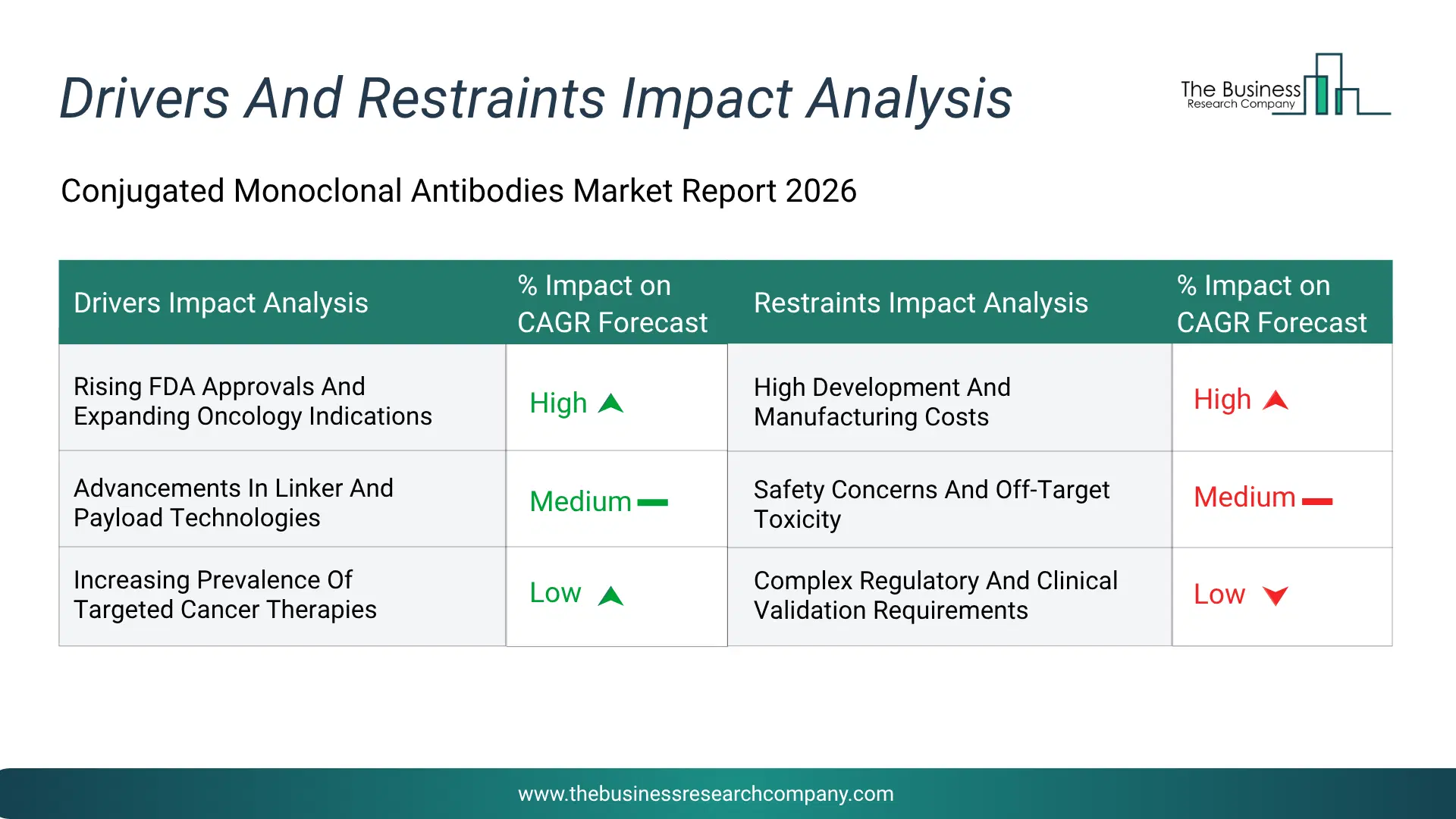
Infographic Chart Showing Key Market Drivers Analysis And Restraints For Conjugated Monoclonal Antibodies Market
The chart presents an impact analysis of key drivers and restraints, quantifying their relative influence on the market's growth rate and helping assess the balance between growth enablers and limiting factors. This chart offers a high-level perspective; the full report contains more detailed insights.
How Will The Drivers Impact Growth In The Global Conjugated Monoclonal Antibodies Market?
• Rising FDA Approvals And Expanding Oncology Indications (High) – During the forecast period, the rising FDA approvals and expanding oncology indications are expected to become a key growth driver for the conjugated monoclonal antibodies market by 2030. Pharmaceutical companies are increasing development efforts for antibody-drug conjugates and related conjugated antibody therapies to address a wider range of hematologic malignancies and solid tumors. Expanding regulatory approvals are improving treatment accessibility while encouraging broader clinical adoption across oncology settings. Manufacturers are therefore accelerating pipeline expansion and commercialization strategies to strengthen therapeutic portfolios. This expansion of approved applications is reinforcing steady market growth. • Advancements In Linker And Payload Technologies (Medium) – During the forecast period, the advancements in linker and payload technologies are expected to emerge as a major factor driving the expansion of the conjugated monoclonal antibodies market by 2030. Continuous innovation in linker stability and cytotoxic payload engineering is improving therapeutic precision and minimizing off-target toxicity. Advanced conjugation approaches are enabling improved drug delivery efficiency while enhancing safety and efficacy outcomes in targeted therapies. Research organizations and biopharmaceutical manufacturers are increasingly investing in next-generation platform technologies to optimize treatment performance. • Increasing Prevalence Of Targeted Cancer Therapies (Low) – During the forecast period, the increasing prevalence of targeted cancer therapies is expected to act as a key growth catalyst for the conjugated monoclonal antibodies market by 2030. Healthcare systems are increasingly adopting precision-based treatment approaches that selectively target cancer cells while reducing systemic adverse effects. Growing physician preference for biomarker-driven therapies is strengthening demand for conjugated monoclonal antibodies across multiple oncology applications. Additionally, expanding integration of personalized medicine frameworks is supporting wider therapeutic utilization globally. As targeted treatment adoption accelerates, demand for advanced conjugated antibody therapies is expected to strengthen further.How Will The Restraints Impact Growth In The Global Conjugated Monoclonal Antibodies Market?
• High Development And Manufacturing Costs (High) – During the forecast period, the development and manufacturing of conjugated monoclonal antibodies involve highly complex biological and chemical processes, resulting in extremely high production costs. ADC manufacturing requires specialized facilities, advanced conjugation technologies, high-purity monoclonal antibodies, and potent cytotoxic payload handling systems. Maintaining product stability and ensuring accurate drug-antibody ratios also increase operational complexity. In addition, clinical trials for ADCs are expensive because of stringent safety monitoring and oncology-specific regulatory requirements. These high expenditures often limit the entry of smaller biotechnology firms into the market. Elevated treatment pricing can also restrict patient accessibility, especially in low- and middle-income economies. Consequently, cost-intensive production and commercialization remain significant restraints for widespread market expansion. • Safety Concerns And Off-Target Toxicity (Medium) – During the forecast period, the despite their targeted mechanism, conjugated monoclonal antibodies can still produce serious side effects and toxicities that limit broader clinical utilization. Premature payload release or unintended interaction with healthy tissues may lead to organ toxicity, hematologic complications, neuropathy, or lung-related adverse events. Some ADC therapies have shown dose-limiting toxicities during clinical development, resulting in delayed approvals or discontinued programs. Additionally, long-term safety data for several newly approved ADCs remain limited. Physicians and regulators continue to exercise caution regarding toxicity management and patient selection. The requirement for continuous monitoring and supportive care also increases treatment complexity in clinical settings. These safety-related challenges may hinder adoption rates and reduce physician confidence in certain therapeutic applications. • Complex Regulatory And Clinical Validation Requirements (Low) – During the forecast period, the regulatory approval pathways for conjugated monoclonal antibodies are highly demanding because ADCs combine biologics with cytotoxic drugs. Regulatory agencies require extensive evaluation of pharmacokinetics, immunogenicity, linker stability, payload toxicity, and manufacturing consistency before granting approvals. Clinical trials must demonstrate not only efficacy but also long-term safety and targeted delivery performance. Variability in drug-antibody ratios and conjugation methods can complicate quality control and regulatory validation. Furthermore, evolving global guidelines for ADC development create additional compliance burdens for manufacturers. Delays in regulatory review and stringent documentation requirements can significantly extend product development timelines. These complexities increase financial risk and slow the pace of commercialization for new entrants in the market.Key Players In The Global Conjugated Monoclonal Antibodies Market
Major companies operating in the conjugated monoclonal antibodies market are Pfizer Inc., F. Hoffmann-La Roche AG, Bristol -Myers Squibb, Merck & Co. Inc., Immunomedics Inc., Takeda Pharmaceuticals Industries Ltd., Daiichi Sankyo Company Limited, Actinium Pharmaceutical, Nordic Nanovector Inc., AbbVie Inc., Bayer AG, AstraZeneca plc, Novartis AG, Amgen, Celgene, Genzyme, Incyte Corporation, MorphoSys AG, Regeneron Pharmaceuticals, Seattle Genetics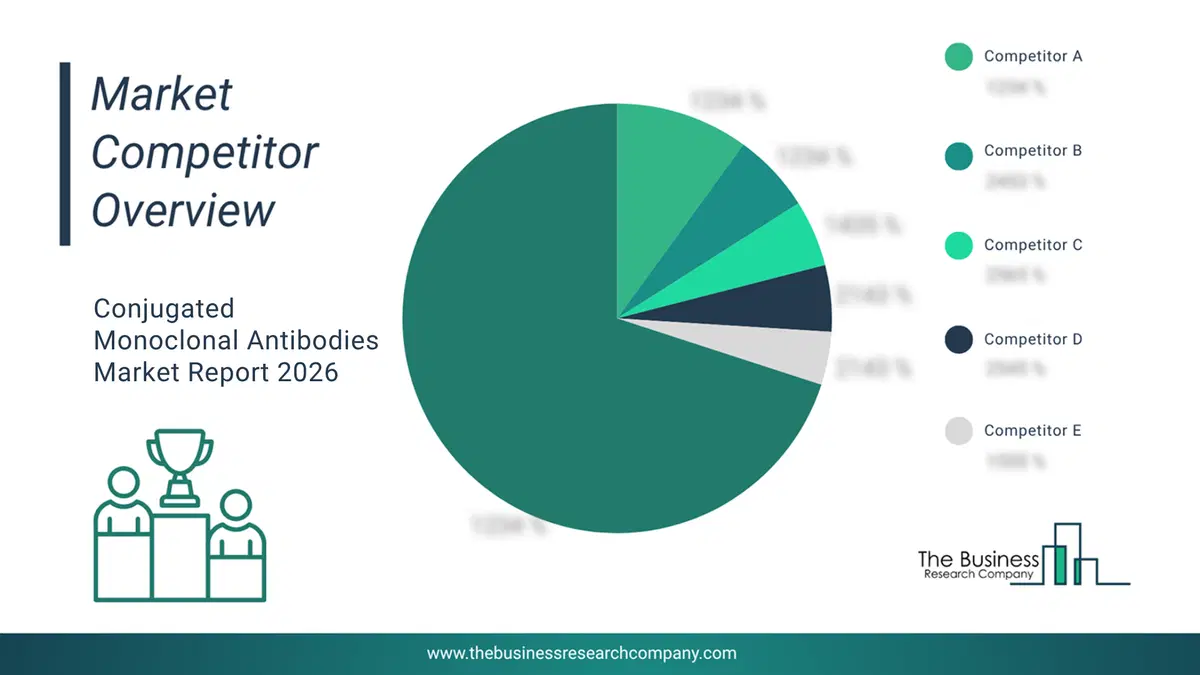
This chart is for illustrative purposes; the full report includes a detailed competitor analysis and comprehensive overview of the top 10 companies in the market.
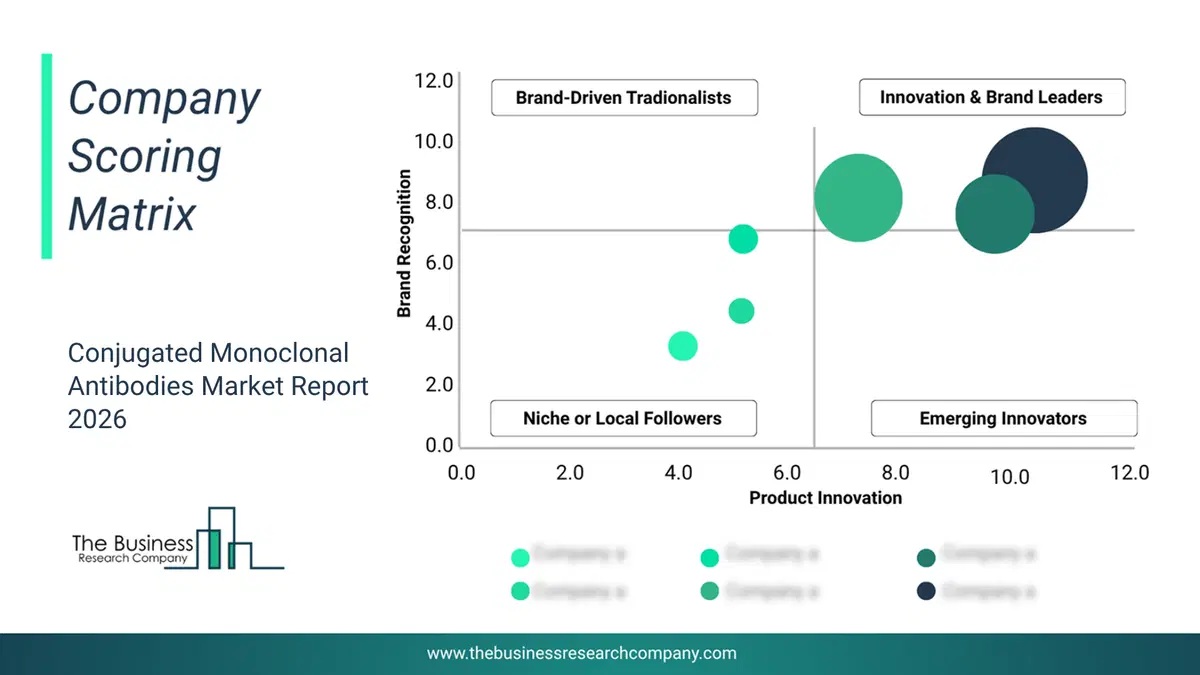
This chart maps companies by product innovation and brand strength, with bubble size indicating relative revenue, helping identify market leaders, challengers, and niche players. This is an illustrative chart; the full report provides a complete and accurate competitive analysis.
Global Conjugated Monoclonal Antibodies Market Trends and Insights
Major companies operating in conjugated monoclonal antibodies are adopting a strategic partnership approach to provide comprehensive solutions and advance their capabilities. Strategic partnerships refer to a process in which companies leverage each other's strengths and resources to achieve mutual benefits and success. For instance, in July 2023, BeiGene Ltd., a US-based biotechnology company, partnered with Duality Biologics, a China-based clinical-stage company. With this partnership, they aim to develop and commercialize a preclinical antibody-drug conjugate (ADC) therapy for patients with select solid tumors. The strengths of both companies will accelerate the development and commercialization of this promising ADC therapy.What Are Latest Mergers And Acquisitions In The Conjugated Monoclonal Antibodies Market?
In June 2023, Lonza Group AG, a Switzerland-based manufacturing company, acquired Synaffix BV for an undisclosed amount. Through this acquisition, Lonza aims to strengthen its development and manufacturing capabilities, expand its ADC portfolio, and gain access to Synaffix's pipeline of ADC candidates. Synaffix BV is a Netherlands-based manufacturer of lithium-ion battery binders.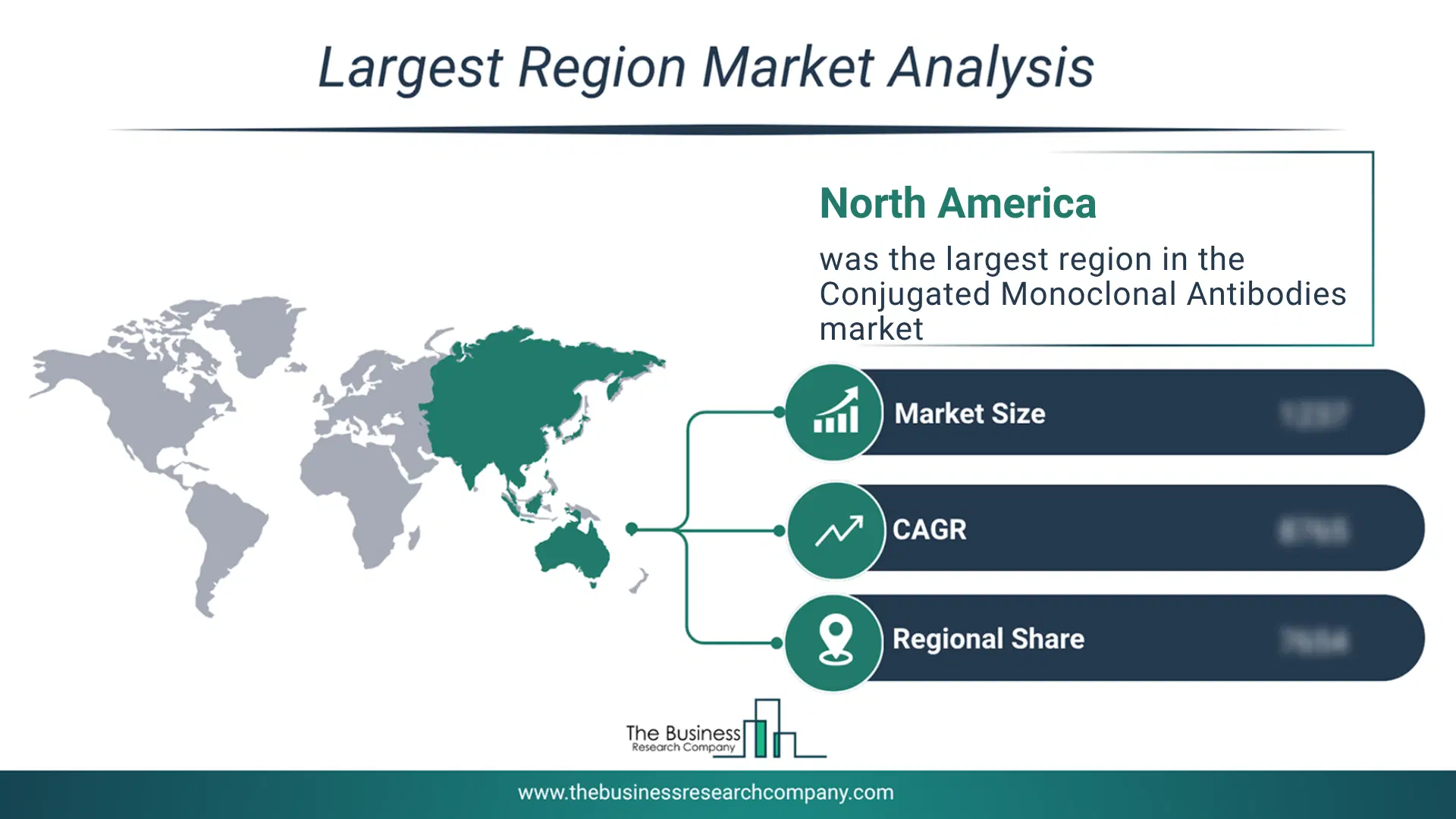
Regional Insights
North America was the largest region in the conjugated monoclonal antibody market in 2025. The Middle East is expected to be the fastest-growing region in the global conjugated monoclonal antibodies market share during the forecast period. The regions covered in this market report are Asia-Pacific, South East Asia, Western Europe, Eastern Europe, North America, South America, Middle East, Africa. The countries covered in this market report are Australia, Brazil, China, France, Germany, India, Indonesia, Japan, Taiwan, Russia, South Korea, UK, USA, Canada, Italy, Spain.What Defines the Conjugated Monoclonal Antibodies Market?
The conjugated monoclonal antibodies market consists of sales of Brentuximab vedotin and Ado-trastuzumab emtansine. Values in this market are 'factory gate values,' that is, the value of goods sold by the manufacturers or creators of the goods, whether to other entities (including downstream manufacturers, wholesalers, distributors, and retailers) or directly to end customers. The value of goods in this market includes related services sold by the creators of the goods.How is Market Value Defined and Measured?
The market value is defined as the revenues that enterprises gain from the sale of goods and/or services within the specified market and geography through sales, grants, or donations in terms of the currency (in USD unless otherwise specified). The revenues for a specified geography are consumption values that are revenues generated by organizations in the specified geography within the market, irrespective of where they are produced. It does not include revenues from resales along the supply chain, either further along the supply chain or as part of other products.
This chart presents market attractiveness based on a quantitative evaluation of growth, competition, strategic alignment, and risk, offering a clear view of opportunity areas for decision-making. This chart is for illustrative purposes; the full report contains the complete analysis.

This chart highlights the Total Addressable Market (TAM) by estimating the maximum revenue opportunity using an assumption-driven approach, supporting strategic planning and opportunity sizing across markets. The chart is illustrative; the full report provides a more comprehensive analysis.
What Key Data and Analysis Are Included in the Conjugated Monoclonal Antibodies Market Report 2026?
The conjugated monoclonal antibodies market research report is one of a series of new reports from The Business Research Company that provides market statistics, including industry global market size, regional shares, competitors with the market share, detailed market segments, market trends and opportunities, and any further data you may need to thrive in the conjugated monoclonal antibodies industry. The market research report delivers a complete perspective of everything you need, with an in-depth analysis of the current and future state of the industry.Conjugated Monoclonal Antibodies Market Report Forecast Analysis
| Report Attribute | Details |
|---|---|
| Market Size Value In 2026 | $12.86 billion |
| Revenue Forecast In 2030 | $16.76 billion |
| Growth Rate | CAGR of 6.4% from 2026 to 2030 |
| Base Year For Estimation | 2025 |
| Actual Estimates/Historical Data | 2020-2025 |
| Forecast Period | 2026 - 2030 |
| Market Representation | Revenue in USD Billion and CAGR from 2026 to 2030 |
| Segments Covered | Drugs, Technology, Application |
| Regional Scope | Asia-Pacific, Western Europe, Eastern Europe, North America, South America, Middle East, Africa |
| Country Scope | The countries covered in the report are Australia, Brazil, China, France, Germany, India, Indonesia, Japan, Taiwan, Russia, South Korea, UK, USA, Canada, Italy, Spain. |
| Key Companies Profiled | Pfizer Inc., F. Hoffmann-La Roche AG, Bristol -Myers Squibb, Merck & Co. Inc., Immunomedics Inc., Takeda Pharmaceuticals Industries Ltd., Daiichi Sankyo Company Limited, Actinium Pharmaceutical, Nordic Nanovector Inc., AbbVie Inc., Bayer AG, AstraZeneca plc, Novartis AG, Amgen, Celgene, Genzyme, Incyte Corporation, MorphoSys AG, Regeneron Pharmaceuticals, Seattle Genetics |
| Customization Scope | Request for Customization |
| Pricing And Purchase Options | Explore Purchase Options |