
Connected Drug Delivery Devices Market Report 2026
Global Outlook – By Type (Standalone Components And Software, Integrated Devices), By Technology (Bluetooth, Near-Field Communication (NFC), Other Technologies), By Administration (Parenteral, Inhalational), By Application (Asthma, Chronic Obstructive Pulmonary Disease, Diabetes Management, Other Applications) – Market Size, Trends, Strategies, and Forecast to 2030
Connected Drug Delivery Devices Market Overview
• Connected Drug Delivery Devices market size has reached to $9.27 billion in 2025 • Expected to grow to $27.02 billion in 2030 at a compound annual growth rate (CAGR) of 23.9% • Growth Driver: Accelerating Connected Drug Delivery Devices With The Rise Of Remote Patient Monitoring • Market Trend: Next-Generation Long-Duration Connected Sensors Enhancing Digital Therapeutic Integration And Patient Convenience • North America was the largest region in 2025.What Is Covered Under Connected Drug Delivery Devices Market?
Connected drug delivery devices are smart pharmaceutical devices that utilize digital technology to monitor, manage, and control the dispensation of medications, enhancing adherence and patient outcomes. These devices can connect to the internet, allowing for data sharing between patients and healthcare providers to track medication usage, adjust dosages, and improve treatment strategies. The main types of connected drug delivery devices are standalone components, software, and integrated devices. Standalone components and software refer to software or hardware that can operate independently or separately from a medical device that produces or uses it. They use various technologies, such as Bluetooth, near-field communication (NFC), and others. The main types of routes of administration include parenteral and inhalational. They are used for various applications, such as asthma, chronic obstructive pulmonary disease, diabetes management, and others.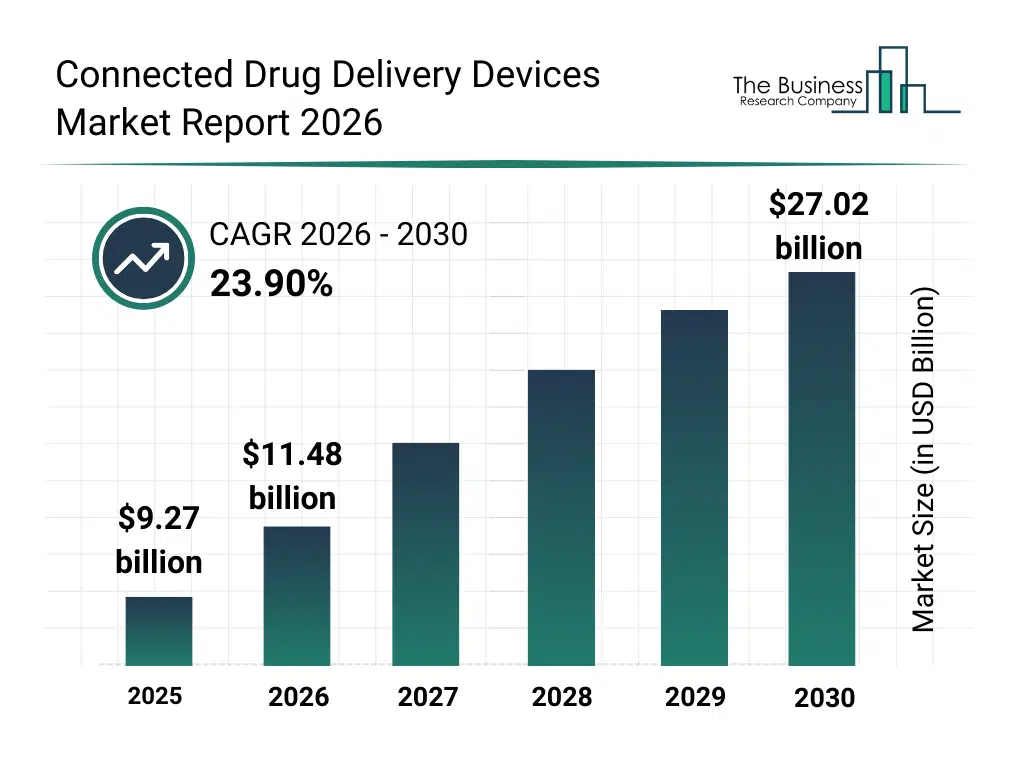
What Is The Connected Drug Delivery Devices Market Size and Share 2026?
The connected drug delivery devices market size has grown exponentially in recent years. It will grow from $9.27 billion in 2025 to $11.48 billion in 2026 at a compound annual growth rate (CAGR) of 23.8%. The growth in the historic period can be attributed to growing adoption of chronic disease management devices, increasing prevalence of diabetes and respiratory disorders, technological advancements in smart syringes and inhalers, rising healthcare digitization initiatives, increasing awareness about medication adherence.What Is The Connected Drug Delivery Devices Market Growth Forecast?
The connected drug delivery devices market size is expected to see exponential growth in the next few years. It will grow to $27.02 billion in 2030 at a compound annual growth rate (CAGR) of 23.9%. The growth in the forecast period can be attributed to rising demand for remote patient monitoring, expansion of connected healthcare ecosystems, integration of ai-based predictive analytics, growth of wearable drug delivery devices, supportive government initiatives for digital health adoption. Major trends in the forecast period include personalized medication adherence monitoring, remote patient monitoring solutions, integration with electronic health records (ehr), data-driven dose optimization, real-time alerts and notifications.
Global Connected Drug Delivery Devices Market Segmentation
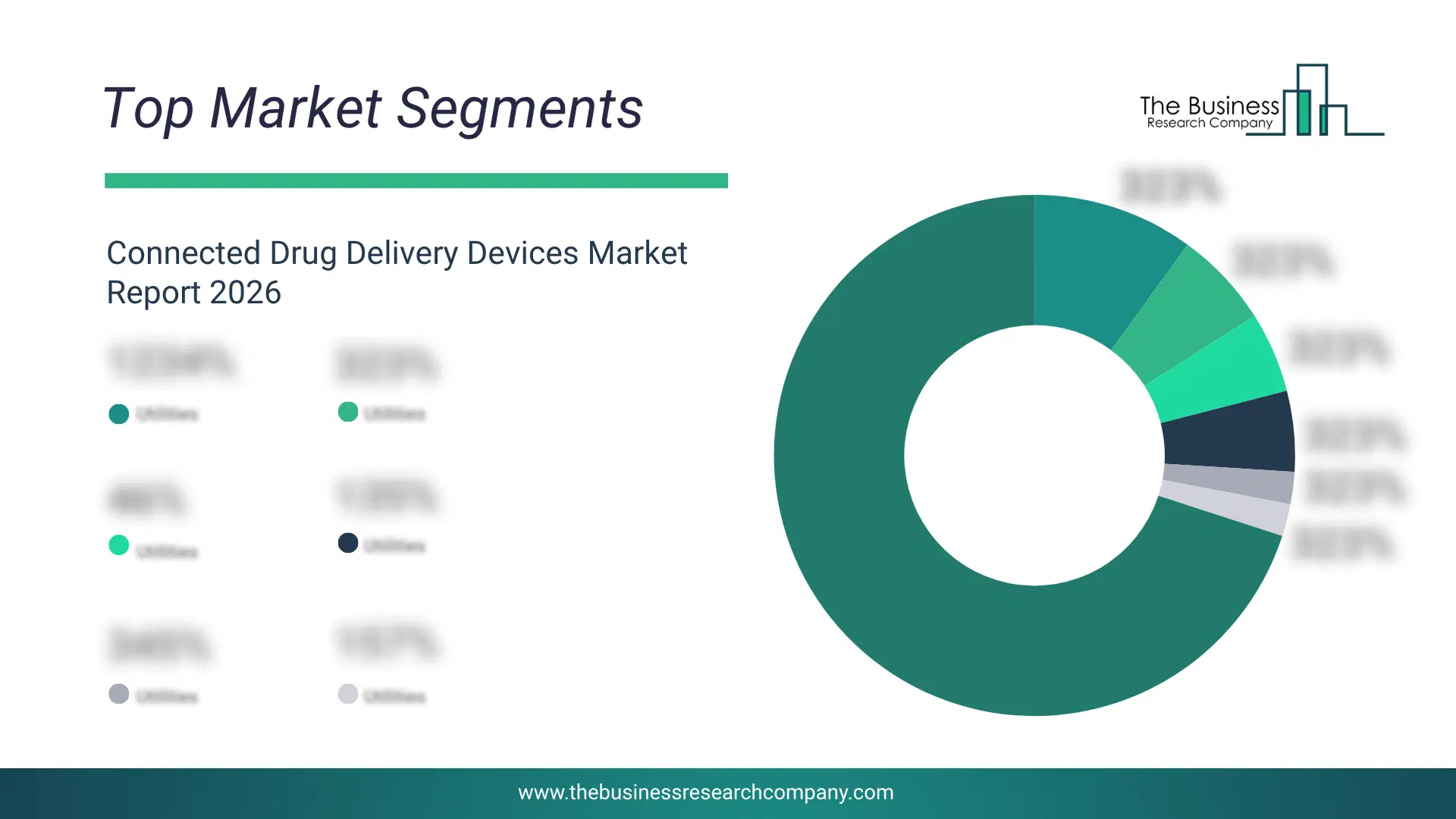
1) By Type: Standalone Components And Software, Integrated Devices 2) By Technology: Bluetooth, Near-Field Communication (NFC), Other Technologies 3) By Administration: Parenteral, Inhalational 4) By Application: Asthma, Chronic Obstructive Pulmonary Disease, Diabetes Management, Other Applications Subsegments: 1) By Standalone Components And Software: Mobile Applications, Connectivity Modules, Data Analytics Software 2) By Integrated Devices: Smart Inhalers, Smart Auto-injectors, Connected Syringes, Wearable Drug Delivery DevicesWhat Is The Driver Of The Connected Drug Delivery Devices Market?
The increasing importance of remote patient monitoring is expected to propel the growth of the connected drug delivery device market going forward. Remote patient monitoring is a healthcare delivery method that uses technology to track patient health and medical data from a distance. Connected drug delivery devices enhance RPM by enabling accurate tracking of medication usage and adherence, facilitating timely interventions, and providing personalized care management. For instance, in May 2024, according to the Journal of Medical Internet Research, a Canada-based peer-reviewed journal, reported that 38.78% of US adults had used telehealth services in the past year. Therefore, the increasing importance of remote patient monitoring is driving the growth of the connected drug delivery device industry.Key Players In The Global Connected Drug Delivery Devices Market
Major companies operating in the connected drug delivery devices market are Pfizer Inc., Johnson & Johnson, Abbott Laboratories, Medtronic PLC, Eli Lilly and Company, Novo Nordisk A/S, Becton Dickinson and Company, Phillips-Medisize Corporation, AptarGroup Inc., Dexcom Inc., West Pharmaceutical Services Inc., Insulet Corporation, Tandem Diabetes Care Inc., Ypsomed AG, Meridian Medical Technologies LLC, Propeller Health, Findair Sp. z.o.o, Omron Healthcare Co. Ltd, Omnicell Inc., BD Medical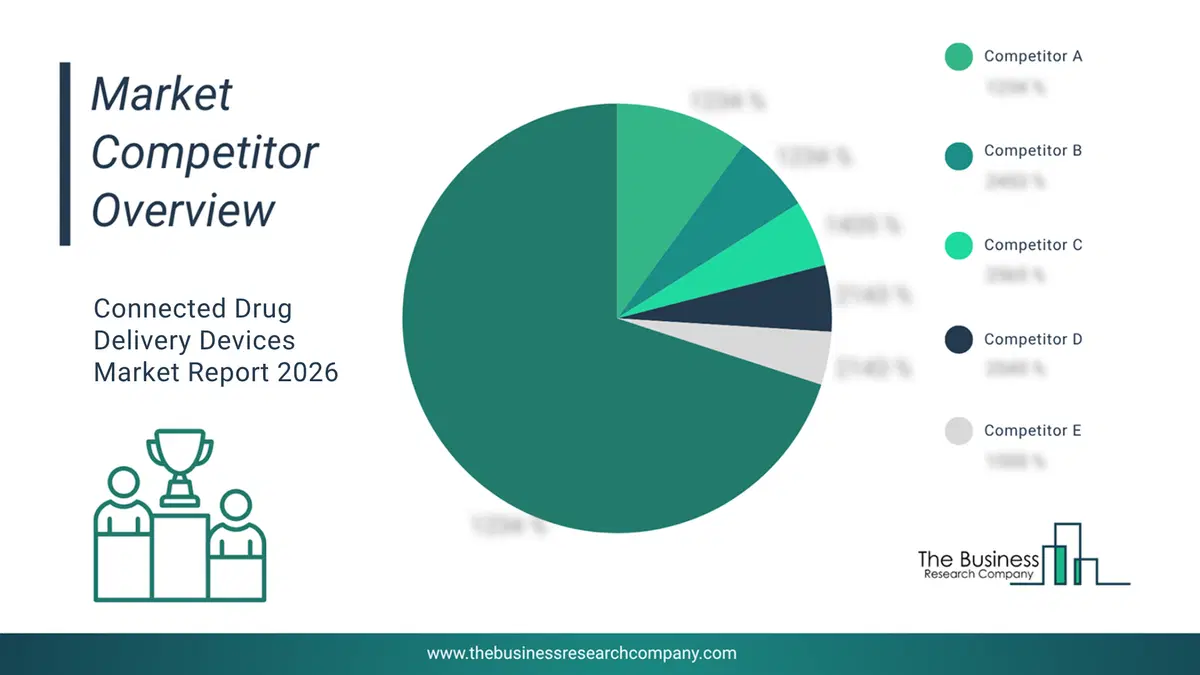
This chart is for illustrative purposes; the full report includes a detailed competitor analysis and comprehensive overview of the top 10 companies in the market.
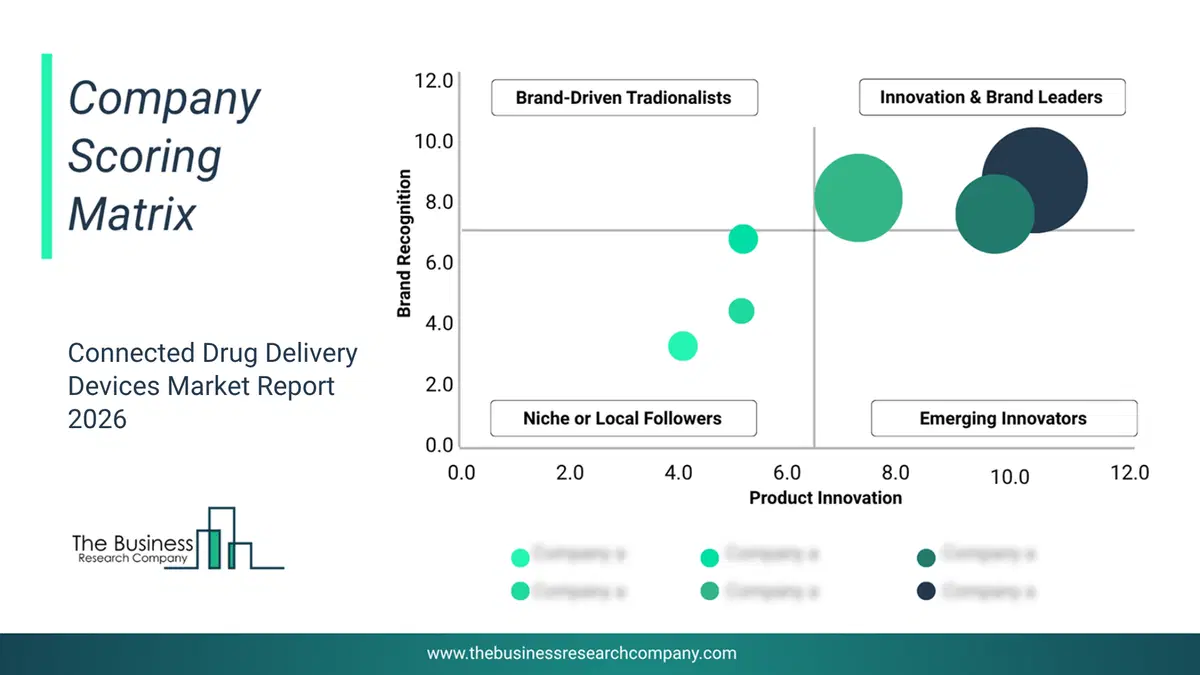
This chart maps companies by product innovation and brand strength, with bubble size indicating relative revenue, helping identify market leaders, challengers, and niche players. This is an illustrative chart; the full report provides a complete and accurate competitive analysis.
Global Connected Drug Delivery Devices Market Trends and Insights
Major companies operating in the connected drug delivery devices market are focusing on launching advanced, longer-lasting, and more integrated digital health solutions that enhance treatment convenience, improve monitoring accuracy, and support seamless connectivity with automated therapy systems. For instance, in November 2025, Dexcom, a US-based healthcare company, launch its new G7 15 Day continuous glucose monitor in the U.S. on December 1, 2025, for adults with diabetes. The device, which recently received FDA clearance, becomes the longest-wearing CGM available, offering up to 15.5 days of use with an improved accuracy MARD of 8%. At launch, it will be available through DME providers and covered for Medicare users. The updated sensor integrates with the iLet Bionic Pancreas, Omnipod 5, and soon Tandem pumps, and also supports Dexcom’s new Smart Basal insulin optimization system. With fewer sensor changes, waterproof design, smartwatch connectivity, and simplified logging features, the G7 15 Day aims to deliver greater convenience and better long-term glucose management.What Are Latest Mergers And Acquisitions In The Connected Drug Delivery Devices Market?
In August 2023, Novo Nordisk A/S, a Denmark-based healthcare company, acquired BIOCORP Production SA for approximately €154 million (≈ $170 million). With this acquisition, Novo Nordisk aimed to accelerate its strategy in digital drug-delivery by integrating Biocorp’s Bluetooth-enabled smart sensor technology to enhance its connected pen injector offerings. BIOCORP is a France-based company that designs and manufactures innovative delivery systems, including the Mallya Bluetooth-enabled add-on cap for insulin pens, enabling automatic dose logging and connectivity.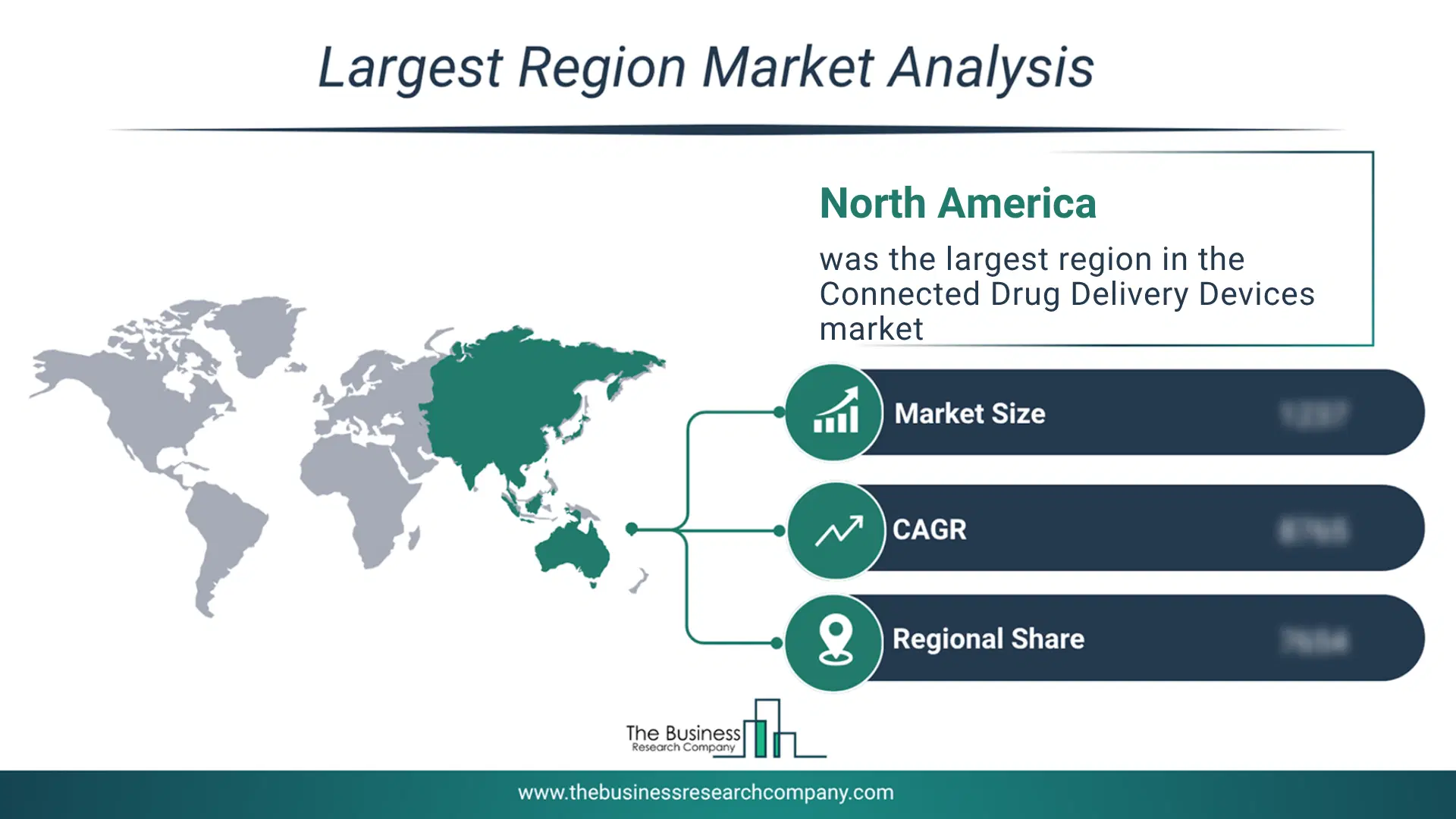
Regional Insights
North America was the largest region in the connected drug delivery market in 2025. The regions covered in this market report are Asia-Pacific, South East Asia, Western Europe, Eastern Europe, North America, South America, Middle East, Africa. The countries covered in this market report are Australia, Brazil, China, France, Germany, India, Indonesia, Japan, Taiwan, Russia, South Korea, UK, USA, Canada, Italy, Spain.What Defines the Connected Drug Delivery Devices Market?
The connected drug delivery device market consists of revenues earned by entities by providing services such as medication reminders and alerts, dose tracking, data sharing, adjustable dosing, and integration with health records. The market value includes the value of related goods sold by the service provider or included within the service offering. The connected drug delivery device market also includes sales of smart inhalers, connected insulin pumps, smart pill dispensers, wearable drug delivery devices, and digital pills that are used in providing services. Values in this market are ‘factory gate’ values, that is, the value of goods sold by the manufacturers or creators of the goods, whether to other entities (including downstream manufacturers, wholesalers, distributors, and retailers) or directly to end customers. The value of goods in this market includes related services sold by the creators of the goods.How is Market Value Defined and Measured?
The market value is defined as the revenues that enterprises gain from the sale of goods and/or services within the specified market and geography through sales, grants, or donations in terms of the currency (in USD unless otherwise specified). The revenues for a specified geography are consumption values that are revenues generated by organizations in the specified geography within the market, irrespective of where they are produced. It does not include revenues from resales along the supply chain, either further along the supply chain or as part of other products.
This chart presents market attractiveness based on a quantitative evaluation of growth, competition, strategic alignment, and risk, offering a clear view of opportunity areas for decision-making. This chart is for illustrative purposes; the full report contains the complete analysis.

This chart highlights the Total Addressable Market (TAM) by estimating the maximum revenue opportunity using an assumption-driven approach, supporting strategic planning and opportunity sizing across markets. The chart is illustrative; the full report provides a more comprehensive analysis.
What Key Data and Analysis Are Included in the Connected Drug Delivery Devices Market Report 2026?
The connected drug delivery devices market research report is one of a series of new reports from The Business Research Company that provides market statistics, including industry global market size, regional shares, competitors with the market share, detailed market segments, market trends and opportunities, and any further data you may need to thrive in the connected drug delivery devices industry. The market research report delivers a complete perspective of everything you need, with an in-depth analysis of the current and future state of the industry.Connected Drug Delivery Devices Market Report Forecast Analysis
| Report Attribute | Details |
|---|---|
| Market Size Value In 2026 | $11.48 billion |
| Revenue Forecast In 2030 | $27.02 billion |
| Growth Rate | CAGR of 23.8% from 2026 to 2030 |
| Base Year For Estimation | 2025 |
| Actual Estimates/Historical Data | 2020-2025 |
| Forecast Period | 2026 - 2030 |
| Market Representation | Revenue in USD Billion and CAGR from 2026 to 2030 |
| Segments Covered | Type, Technology, Administration, Application |
| Regional Scope | Asia-Pacific, Western Europe, Eastern Europe, North America, South America, Middle East, Africa |
| Country Scope | The countries covered in the report are Australia, Brazil, China, France, Germany, India, Indonesia, Japan, Taiwan, Russia, South Korea, UK, USA, Canada, Italy, Spain. |
| Key Companies Profiled | Pfizer Inc., Johnson & Johnson, Abbott Laboratories, Medtronic PLC, Eli Lilly and Company, Novo Nordisk A/S, Becton Dickinson and Company, Phillips-Medisize Corporation, AptarGroup Inc., Dexcom Inc., West Pharmaceutical Services Inc., Insulet Corporation, Tandem Diabetes Care Inc., Ypsomed AG, Meridian Medical Technologies LLC, Propeller Health, Findair Sp. z.o.o, Omron Healthcare Co. Ltd, Omnicell Inc., BD Medical |
| Customization Scope | Request for Customization |
| Pricing And Purchase Options | Explore Purchase Options |