
Connected Forestry Equipment Market Report 2026
Global Outlook – By Product Type (Harvesters, Forwarders, Skidders, Feller Bunchers, Loaders, Other Product Types), By Technology (Telematics, Global Positioning System, Internet Of Things Sensors, Remote Monitoring, Other Technologies), By Application (Logging, Silviculture, Forest Management, Fire Management, Other Applications), By End-User (Commercial, Government, Other End-Users) – Market Size, Trends, Strategies, and Forecast to 2030
Connected Forestry Equipment Market Overview
• Connected Forestry Equipment market size has reached to $6.22 billion in 2025 • Expected to grow to $11.44 billion in 2030 at a compound annual growth rate (CAGR) of 12.9% • Growth Driver: Rising Labor Shortages Fueling The Growth Of The Market Due To Increasing Need For Automation And Workforce Efficiency • Market Trend: New Integrated System Enhances Real-Time Forestry Data Management • North America was the largest region in 2025 and Asia-Pacific is the fastest growing region.What Is Covered Under Connected Forestry Equipment Market?
Connected forestry equipment refers to forestry machinery integrated with advanced digital technologies to enable real-time monitoring, data collection, and remote management of operations. It is used to improve operational efficiency, safety, and sustainability in forest management by providing actionable insights on machine performance, location, and environmental conditions. This technology also helps optimize fuel usage, reduce downtime, and support sustainable logging practices. The main product types of connected forestry equipment are harvesters, forwarders, skidders, feller bunchers, loaders, and others. Harvesters are smart machines that are used to cut and process trees, equipped with IoT and GPS technologies for real-time monitoring, improved efficiency, and data-driven forest operations. The various technologies utilized are telematics, global positioning systems (GPS), internet of things (IoT) sensors, remote monitoring, and others. It finds applications in logging, silviculture, forest management, fire management, and others, serving end users such as commercial, government, and others.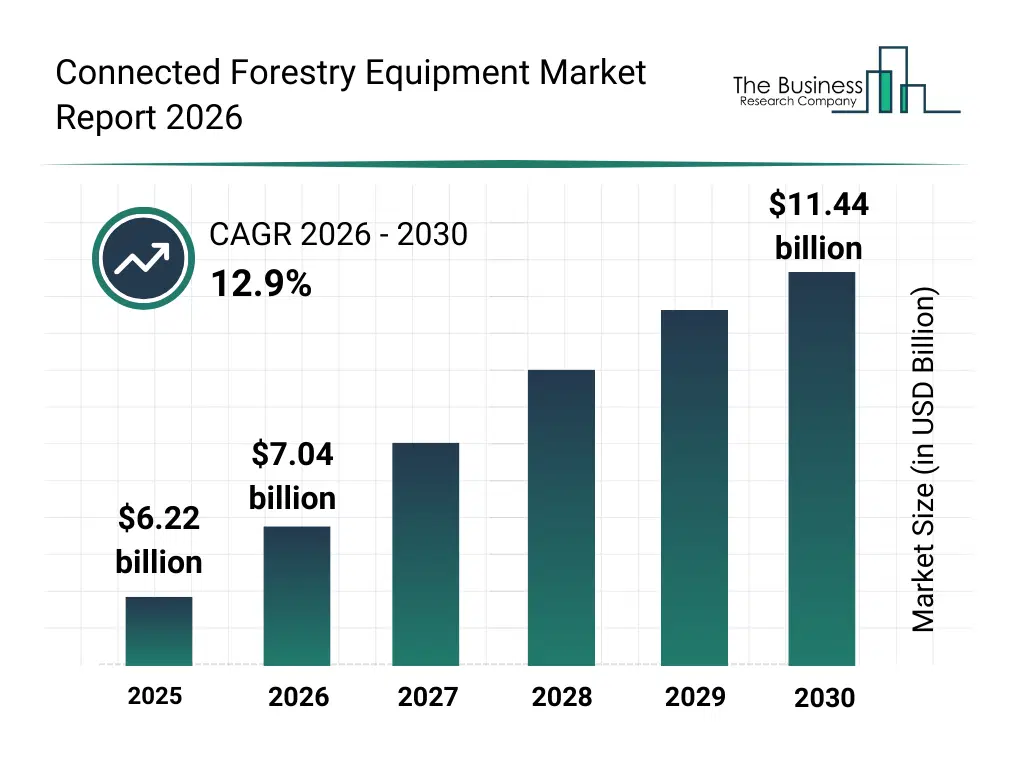
What Is The Connected Forestry Equipment Market Size and Share 2026?
The connected forestry equipment market size has grown rapidly in recent years. It will grow from $6.22 billion in 2025 to $7.04 billion in 2026 at a compound annual growth rate (CAGR) of 13.2%. The growth in the historic period can be attributed to rise in mechanized logging, growth in commercial forestry operations, increasing need for safety compliance, expansion of large-scale forest management programs, rising timber harvesting volumes.What Is The Connected Forestry Equipment Market Growth Forecast?
The connected forestry equipment market size is expected to see rapid growth in the next few years. It will grow to $11.44 billion in 2030 at a compound annual growth rate (CAGR) of 12.9%. The growth in the forecast period can be attributed to growing adoption of connected machinery, increasing regulatory pressure for sustainable forestry, rising demand for automation in remote forest areas, expansion of data-driven decision-making, increasing investment in digital forestry platforms. Major trends in the forecast period include increasing focus on real-time equipment performance monitoring, rising demand for enhanced worker safety in forestry operations, growing need for sustainable and low-impact logging practices, expansion of predictive maintenance adoption in forestry machinery, increasing integration of remote operations in forest management.
Global Connected Forestry Equipment Market Segmentation
1) By Product Type: Harvesters, Forwarders, Skidders, Feller Bunchers, Loaders, Other Product Types 2) By Technology: Telematics, Global Positioning System, Internet Of Things Sensors, Remote Monitoring, Other Technologies 3) By Application: Logging, Silviculture, Forest Management, Fire Management, Other Applications 4) By End-User: Commercial, Government, Other End-Users Subsegments: 1) By Harvesters: Single Grip Harvesters, Dual Grip Harvesters, Tracked Harvesters, Wheeled Harvesters 2) By Forwarders: Small Forwarders, Medium Forwarders, Large Forwarders, Wheeled Forwarders 3) By Skidders: Cable Skidders, Grapple Skidders, Tracked Skidders, Wheeled Skidders 4) By Feller Bunchers: Tracked Feller Bunchers, Wheeled Feller Bunchers 5) By Loaders: Knuckleboom Loaders, Wheel Loaders, Tracked Loaders, Swing Boom Loaders 6) By Other Product Types: Chippers, Mulchers, Delimbers, Log Processors, Slashers, Stump GrindersWhat Is Driver Of The Connected Forestry Equipment Market?
The rising labor shortages are expected to propel the growth of the connected forestry equipment market going forward. Labor shortages refer to a lack of available workers with the necessary skills to fill job vacancies; they occur when labor demand exceeds supply. The increase in labor shortages is due to an aging population, as more workers retire, reducing the available workforce and creating gaps in key industries. Connected forestry equipment support during labor shortages by enabling remote monitoring and automated operations, reducing dependency on manual labor. They enhance productivity through real-time data insights and machine optimization, ensuring continuous and efficient forestry activities even with limited workforce availability. For instance, in October 2025, according to the Parliament of the United Kingdom, a UK-based supreme legislative body, the UK’s unemployment rate stood at 4.8%, with approximately 1.74 million people aged 16 and over unemployed, an increase of about 297,000 compared to the previous year. Therefore, the rising labor shortages are driving the growth of the connected forestry equipment industry.Key Players In The Global Connected Forestry Equipment Market
Major companies operating in the connected forestry equipment market are Caterpillar Inc., Deere & Company (John Deere), Komatsu Ltd., CNH Industrial N.V., Liebherr-International Deutschland GmbH, Sumitomo Forestry Co. Ltd., Husqvarna Group AB, Hitachi Construction Machinery Co. Ltd., Ponsse Plc, Tigercat Industries Inc., Andreas Stihl AG & Co. KG, Logset Oy, Terraformation Inc., Rottne Industri AB, Trimble Forestry, Chloris Geospatial Inc., Kesla Oyj, Kodama Systems Inc., Forest Metrix LLC, Neuson Forest GmbH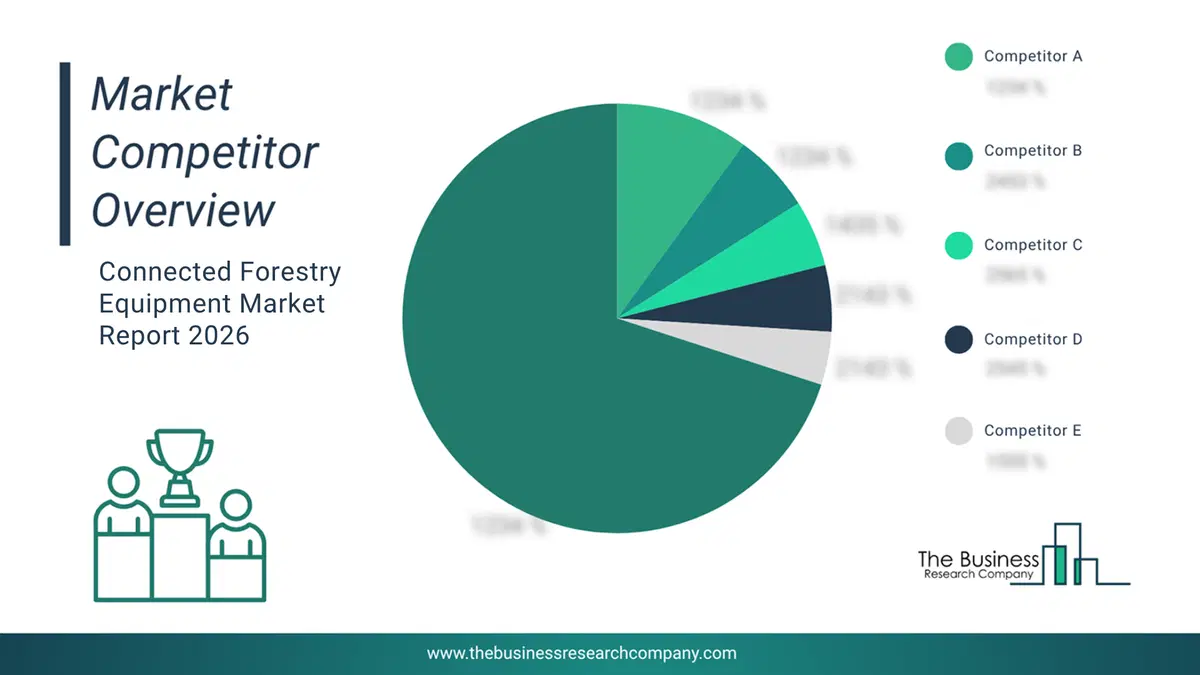
This chart is for illustrative purposes; the full report includes a detailed competitor analysis and comprehensive overview of the top 10 companies in the market.
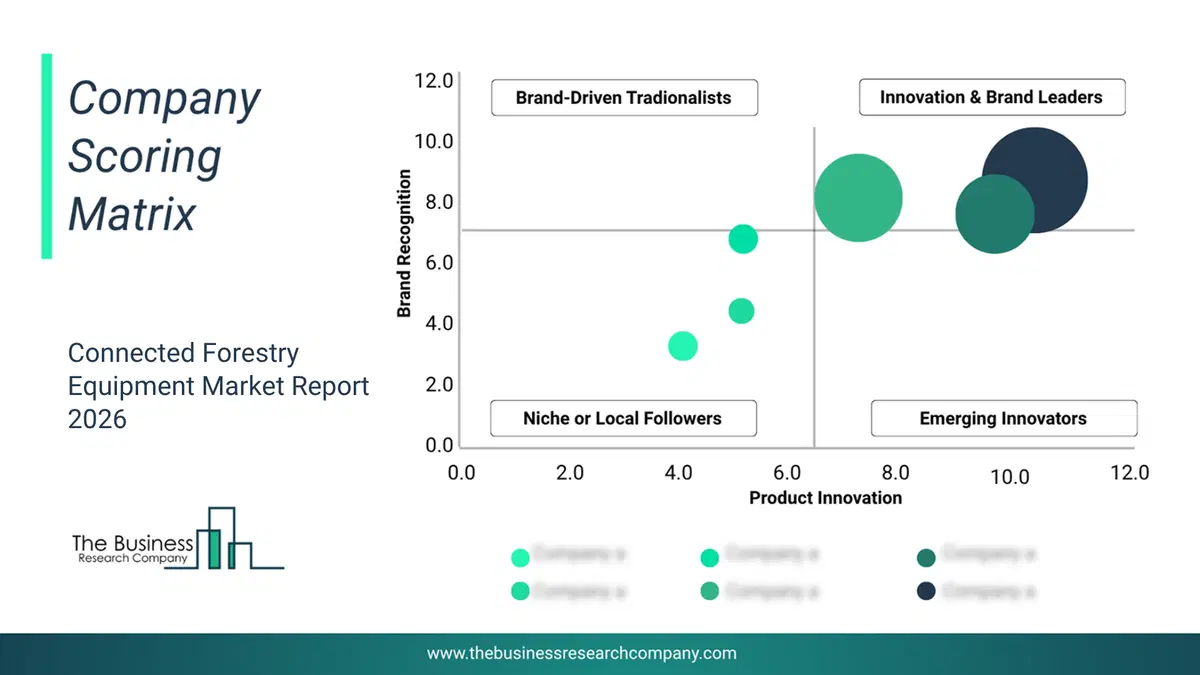
This chart maps companies by product innovation and brand strength, with bubble size indicating relative revenue, helping identify market leaders, challengers, and niche players. This is an illustrative chart; the full report provides a complete and accurate competitive analysis.
Global Connected Forestry Equipment Market Trends and Insights
Major companies operating in the connected forestry equipment market are focusing on developing technologically advanced solutions, such as integrated forestry platforms, to boost efficiency, enhance data visibility, and streamline resource management. Integrated forestry platforms refer to cloud-based systems that connect various operational stages from planning and harvesting to hauling and financial analysis into a single, unified data environment. For instance, in May 2025, Trimble Inc., a US-based technology company, launched Trimble Forestry One, a unified integrated forestry platform aimed at connecting and optimizing forestry operations. It consolidates operational, spatial, and environmental data to provide real-time inventory oversight, timber tracking, and regulatory compliance. It includes features for harvest planning, machine monitoring, production tracking and logistics, enabling seamless information flow across different teams and reducing operational silos.What Are Latest Mergers And Acquisitions In The Connected Forestry Equipment Market? Ponsse Partners With Tamtron To Boost Real-Time Timber Weighing
In August 2024, Ponsse plc, a Finland-based company that manufactures integrated connected forestry solutions and digital services, partnered with Tamtron Group plc to enhance real-time timber weighing accuracy in forestry operations. Through this partnership, Ponsse aims to enhance machine productivity and data accuracy by enabling precise, real-time timber weighing and seamless data flow directly from the equipment to the operator. Tamtron Group plc is a Finland-based technology supplier that provides weighing and data connectivity solutions used in connected forestry equipment.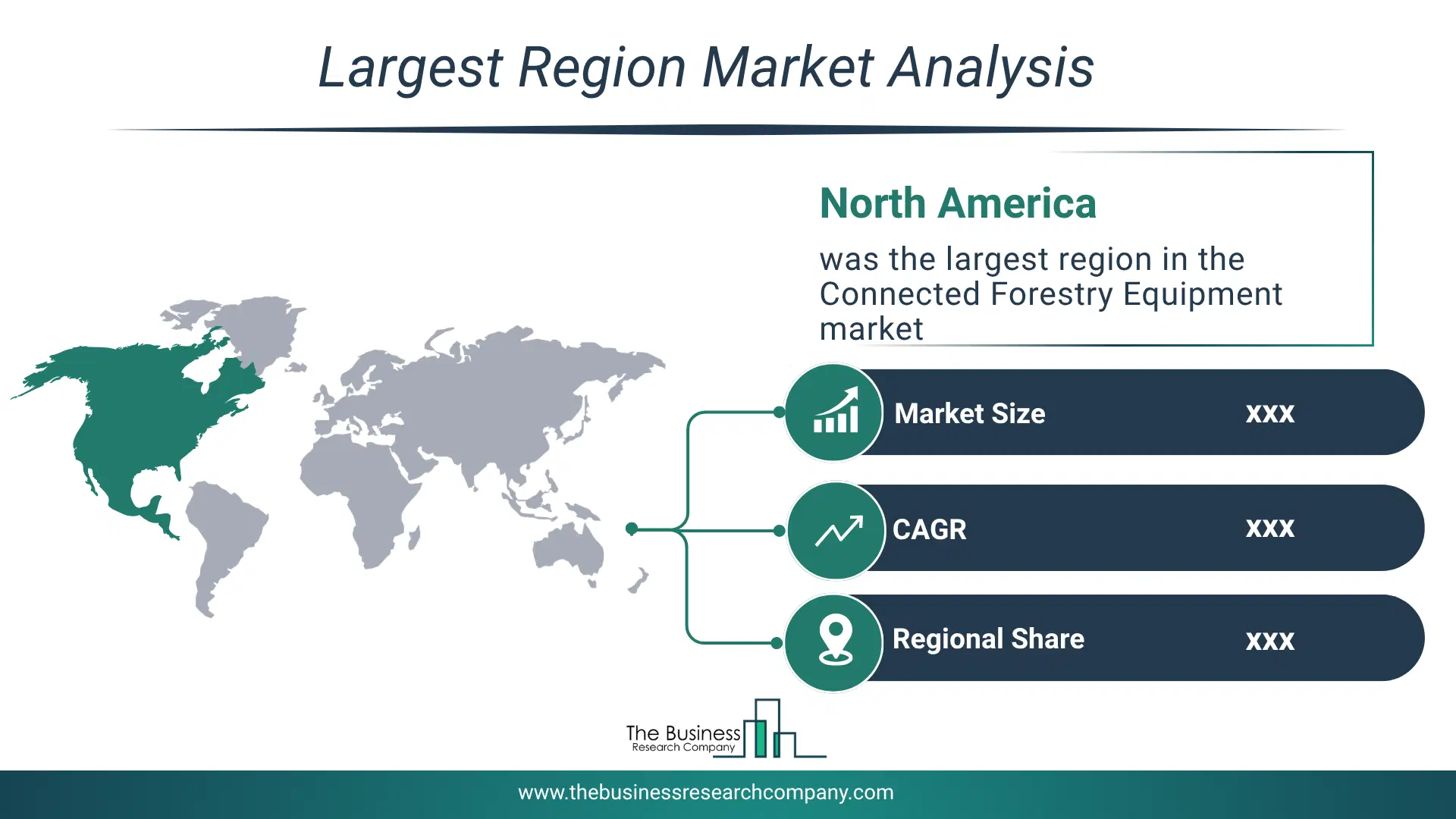
Regional Outlook
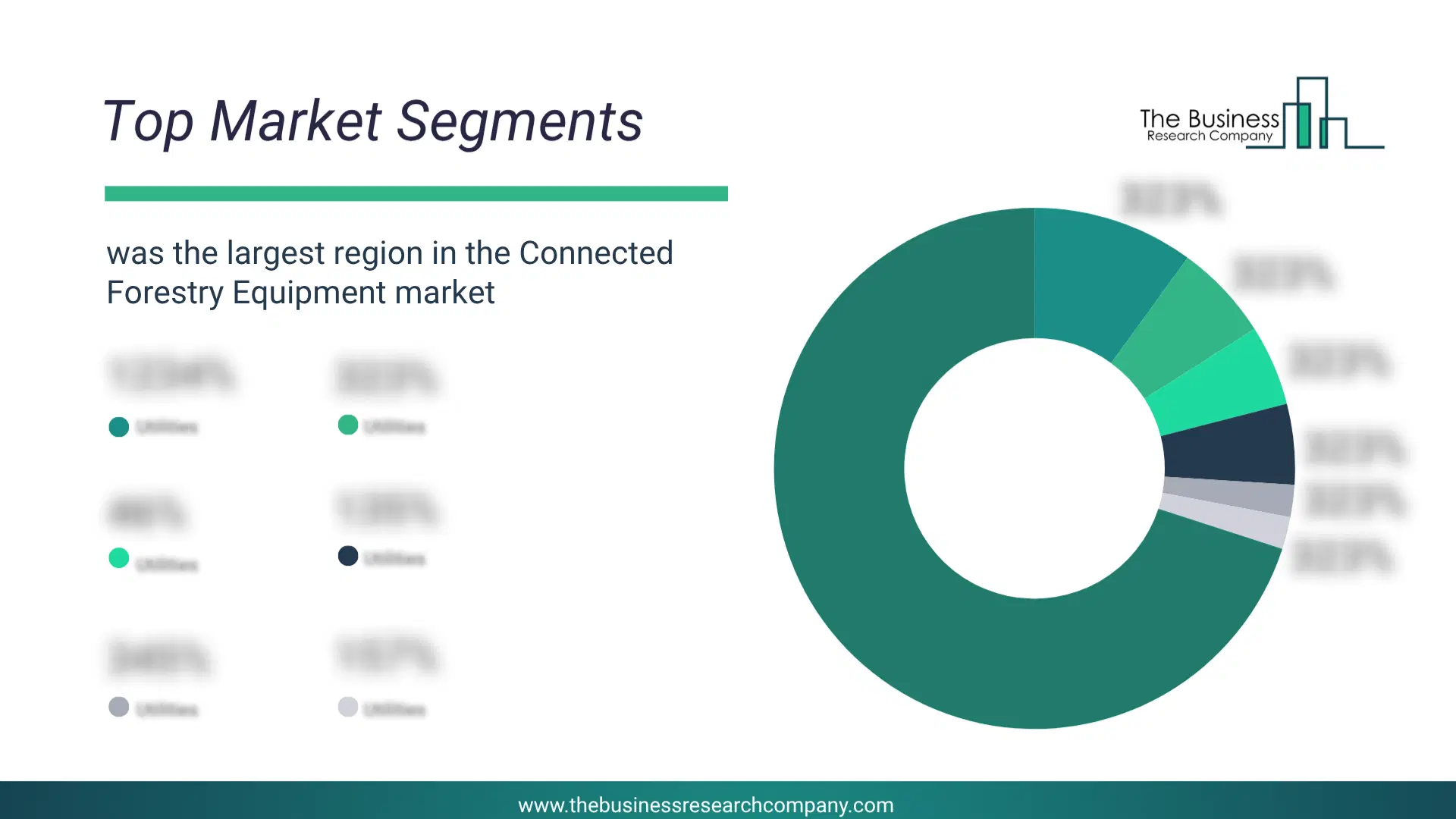
North America was the largest region in the connected forestry equipment market in 2025. Asia-Pacific is expected to be the fastest-growing region in the forecast period. The regions covered in this market report are Asia-Pacific, South East Asia, Western Europe, Eastern Europe, North America, South America, Middle East, Africa. The countries covered in this market report are Australia, Brazil, China, France, Germany, India, Indonesia, Japan, Taiwan, Russia, South Korea, UK, USA, Canada, Italy, SpainWhat Defines the Connected Forestry Equipment Market?
The connected forestry equipment market consists of revenues earned by entities by providing services such as data analytics, predictive maintenance, equipment monitoring, remote diagnostics, fleet management, software integration services, and connectivity management services. The market value includes the value of related goods sold by the service provider or included within the service offering. The connected forestry equipment market also includes sales of tractors, cranes, chippers, mulchers, bulldozers, excavators, log splitters, stump grinders, sawmills, and grapples. Values in this market are ‘factory gate’ values, that is the value of goods sold by the manufacturers or creators of the goods, whether to other entities (including downstream manufacturers, wholesalers, distributors and retailers) or directly to end customers. The value of goods in this market includes related services sold by the creators of the goods.How is Market Value Defined and Measured?
The market value is defined as the revenues that enterprises gain from the sale of goods and/or services within the specified market and geography through sales, grants, or donations in terms of the currency (in USD unless otherwise specified). The revenues for a specified geography are consumption values that are revenues generated by organizations in the specified geography within the market, irrespective of where they are produced. It does not include revenues from resales along the supply chain, either further along the supply chain or as part of other products.
This chart presents market attractiveness based on a quantitative evaluation of growth, competition, strategic alignment, and risk, offering a clear view of opportunity areas for decision-making. This chart is for illustrative purposes; the full report contains the complete analysis.

This chart highlights the Total Addressable Market (TAM) by estimating the maximum revenue opportunity using an assumption-driven approach, supporting strategic planning and opportunity sizing across markets. The chart is illustrative; the full report provides a more comprehensive analysis.
What Key Data and Analysis Are Included in the Connected Forestry Equipment Market Report 2026?
The connected forestry equipment market research report is one of a series of new reports from The Business Research Company that provides market statistics, including industry global market size, regional shares, competitors with the market share, detailed market segments, market trends and opportunities, and any further data you may need to thrive in the connected forestry equipment industry. The market research report delivers a complete perspective of everything you need, with an in-depth analysis of the current and future state of the industry.Connected Forestry Equipment Market Report Forecast Analysis
| Report Attribute | Details |
|---|---|
| Market Size Value In 2026 | $7.04 billion |
| Revenue Forecast In 2030 | $11.44 billion |
| Growth Rate | CAGR of 12.9% from 2026 to 2030 |
| Base Year For Estimation | 2025 |
| Actual Estimates/Historical Data | 2020-2025 |
| Forecast Period | 2026 - 2030 |
| Market Representation | Revenue in USD Billion and CAGR from 2026 to 2030 |
| Segments Covered | Product Type, Technology, Application, End-User |
| Regional Scope | Asia-Pacific, Western Europe, Eastern Europe, North America, South America, Middle East, Africa |
| Country Scope | The countries covered in the report are Australia, Brazil, China, France, Germany, India, Indonesia, Japan, Taiwan, Russia, South Korea, UK, USA, Canada, Italy, Spain |
| Key Companies Profiled | Caterpillar Inc., Deere & Company (John Deere), Komatsu Ltd., CNH Industrial N.V., Liebherr-International Deutschland GmbH, Sumitomo Forestry Co. Ltd., Husqvarna Group AB, Hitachi Construction Machinery Co. Ltd., Ponsse Plc, Tigercat Industries Inc., Andreas Stihl AG & Co. KG, Logset Oy, Terraformation Inc., Rottne Industri AB, Trimble Forestry, Chloris Geospatial Inc., Kesla Oyj, Kodama Systems Inc., Forest Metrix LLC, Neuson Forest GmbH |
| Customization Scope | Request for Customization |
| Pricing And Purchase Options | Explore Purchase Options |