
Connected Medical Device Market Report 2026
Global Outlook – By Product Type (Wearable Devices, Implantable Devices, Stationary Devices), By Connectivity Technology (Bluetooth, Wi-Fi, Cellular, Other Connectivity Technologies), By Application (Remote Patient Monitoring, Telemedicine, Clinical Decision Support, Chronic Disease Management, Fitness And Wellness, Other Applications), By End-User (Hospitals And Clinics, Home Care Settings, Long-Term Care Facilities, Ambulatory Surgical Centers, Other End-Users) – Market Size, Trends, Strategies, and Forecast to 2030
Connected Medical Device Market Overview
• Connected Medical Device market size has reached to $56.74 billion in 2025 • Expected to grow to $117.68 billion in 2030 at a compound annual growth rate (CAGR) of 15.7% • Growth Driver: Rise In Telemedicine Services Fueling The Growth Of The Market Due To Increasing Demand For Remote Patient Monitoring • Market Trend: Advancements In AI-Powered Solutions Driving Personalized Healthcare And Improved Patient Outcomes • North America was the largest region in 2025 and Asia-Pacific is the fastest growing region.What Is Covered Under Connected Medical Device Market?
A connected medical device is a digitally integrated healthcare tool that communicates and exchanges data with other systems or networks through wireless or wired connections. These devices are designed to collect, transmit, and sometimes analyze health-related information in real time or over specified intervals, enabling continuous monitoring and timely medical insights. The main product types of connected medical devices include wearable devices, implantable devices, and stationary devices. Wearable devices are electronic gadgets that patients can wear on their bodies, such as smartwatches or fitness bands, which track health data like heart rate, activity, and sleep. It uses various connectivity technologies such as bluetooth, wi-fi, cellular, and others and is applied for remote patient monitoring, telemedicine, clinical decision support, chronic disease management, fitness and wellness, and others. It is used by various end-users including hospitals and clinics, home care settings, long-term care facilities, ambulatory surgical centers, and others.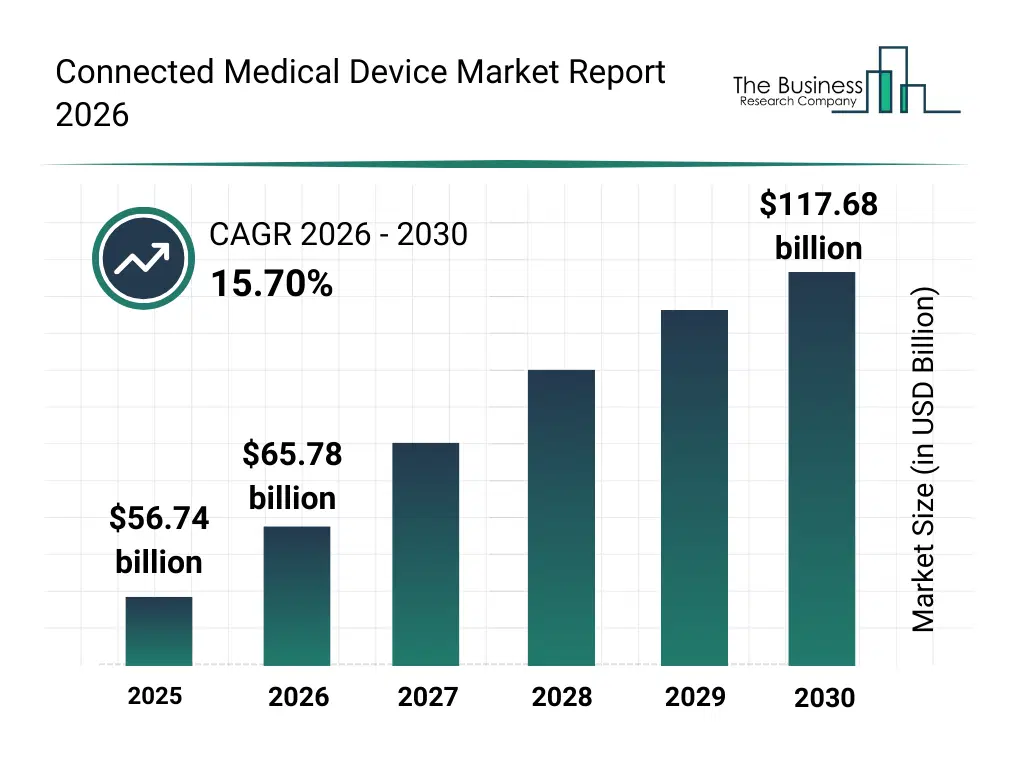
What Is The Connected Medical Device Market Size and Share 2026?
The connected medical device market size has grown rapidly in recent years. It will grow from $56.74 billion in 2025 to $65.78 billion in 2026 at a compound annual growth rate (CAGR) of 15.9%. The growth in the historic period can be attributed to limited connectivity infrastructure in healthcare facilities, slow adoption of digital health technologies, reliance on traditional patient monitoring systems, increasing prevalence of chronic diseases, need for real-time patient data collection.What Is The Connected Medical Device Market Growth Forecast?
The connected medical device market size is expected to see rapid growth in the next few years. It will grow to $117.68 billion in 2030 at a compound annual growth rate (CAGR) of 15.7%. The growth in the forecast period can be attributed to expansion of wearable and implantable medical devices, rising investment in telehealth and remote monitoring, integration with artificial intelligence for predictive insights, growth in home care and long-term care adoption, increasing regulatory support for connected medical devices. Major trends in the forecast period include integration of connected devices with electronic health records (ehrs), increasing adoption of remote patient monitoring solutions, growth in chronic disease management programs, enhanced data analytics for clinical decision support, rising focus on home-based healthcare and telemedicine.
Global Connected Medical Device Market Segmentation
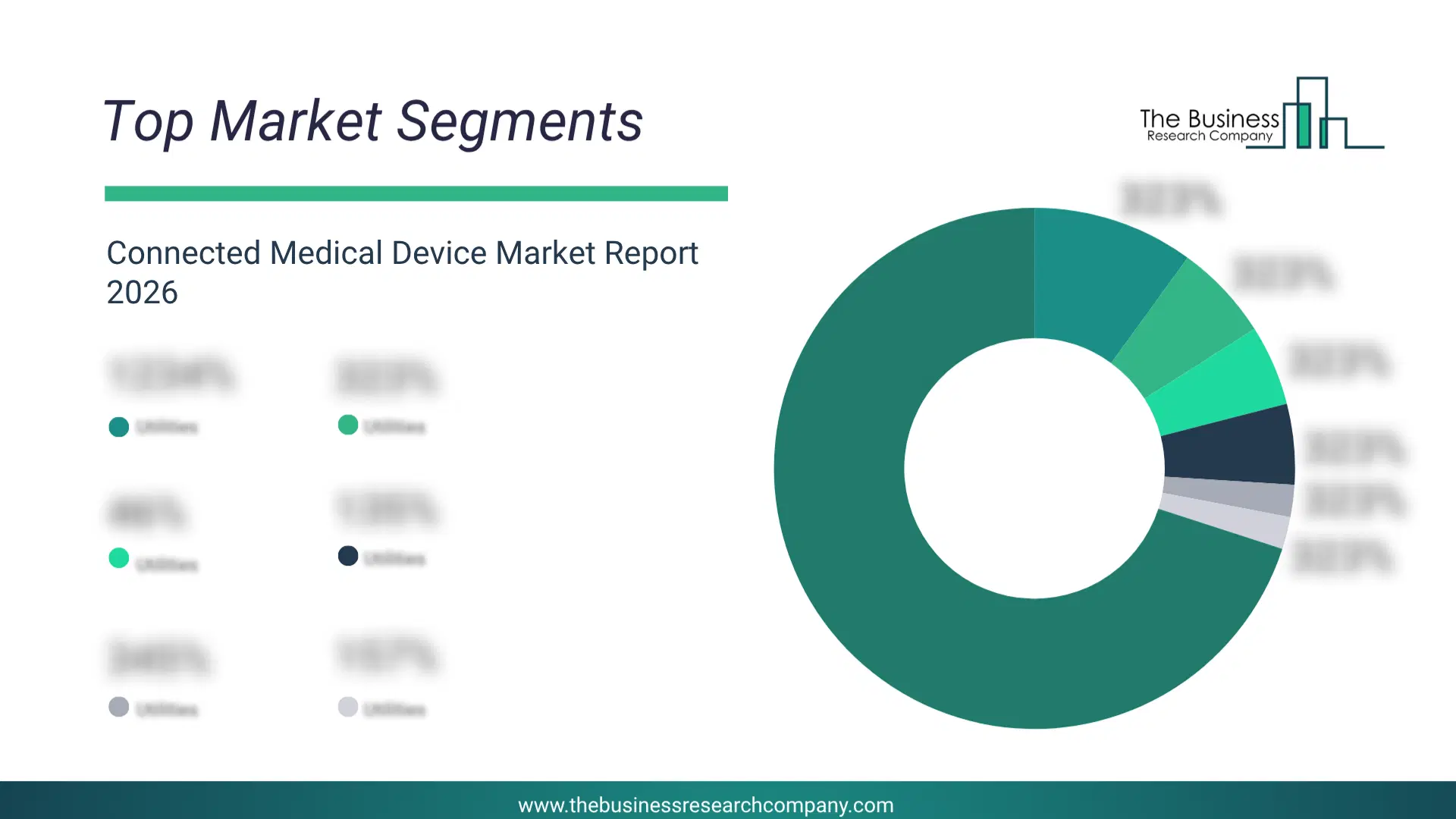
1) By Product Type: Wearable Devices, Implantable Devices, Stationary Devices 2) By Connectivity Technology: Bluetooth, Wi-Fi, Cellular, Other Connectivity Technologies 3) By Application: Remote Patient Monitoring, Telemedicine, Clinical Decision Support, Chronic Disease Management, Fitness And Wellness, Other Applications 4) By End-User: Hospitals And Clinics, Home Care Settings, Long-Term Care Facilities, Ambulatory Surgical Centers, Other End-Users Subsegments: 1) By Wearable Devices: Fitness Trackers, Smartwatches, Continuous Glucose Monitors (CGM), Wearable ECG Monitors, Blood Pressure Monitors, Pulse Oximeters, Sleep Trackers 2) By Implantable Devices: Cardiac Pacemakers, Implantable Cardioverter Defibrillators (ICDs), Neurostimulators, Cochlear Implants, Implantable Glucose Sensors, Drug Delivery Implants 3) By Stationary Devices: Remote Patient Monitoring Stations, Telehealth Kiosks, Connected Imaging Devices, Connected Ventilators, Connected Dialysis Machines, Connected Infusion PumpsWhat Is The Driver Of The Connected Medical Device Market?
The rise of telemedicine services is anticipated to fuel the growth of the connected medical device market in the coming years. Telemedicine is the use of technology to provide medical care and consultation from a distance without needing in-person visits. The demand for telemedicine is rising as it offers convenient access to healthcare, allowing patients to consult doctors quickly from their homes, which saves time and reduces the need for travel. The rise in telemedicine services supports the demand for connected medical devices by enabling remote patient monitoring, which requires real-time data transmission from patients to healthcare providers to ensure accurate diagnosis and timely intervention without in-person visits. For instance, in April 2025, according to the American Hospital Association, a US-based nonprofit trade association, reported that in the last quarter of 2023, over 12.6% of Medicare beneficiaries received a telehealth service. Recent data suggest that the United States will face a physician shortage of up to 86,000 physicians by 2036. Telehealth is a critical supporting element to address the growing shortage of physicians. Therefore, the rise of telemedicine services will drive the growth of the connected medical device industry.Key Players In The Global Connected Medical Device Market
Major companies operating in the connected medical device market are Johnson and Johnson, Abbott Laboratories, Medtronic plc, F Hoffmann La Roche Ltd, Siemens Healthineers AG, Fresenius Medical Care AG and Co KGaA, Becton Dickinson and Company, Koninklijke Philips NV, GE Healthcare Technologies Inc, Boston Scientific Corporation, Baxter International Inc, Olympus Corporation, Terumo Corporation, Garmin Ltd, ResMed Inc, Omron Healthcare Inc, Epitel Inc, Masimo Corporation, AliveCor Inc, DexCom Inc, Insulet Corporation, iRhythm Technologies Inc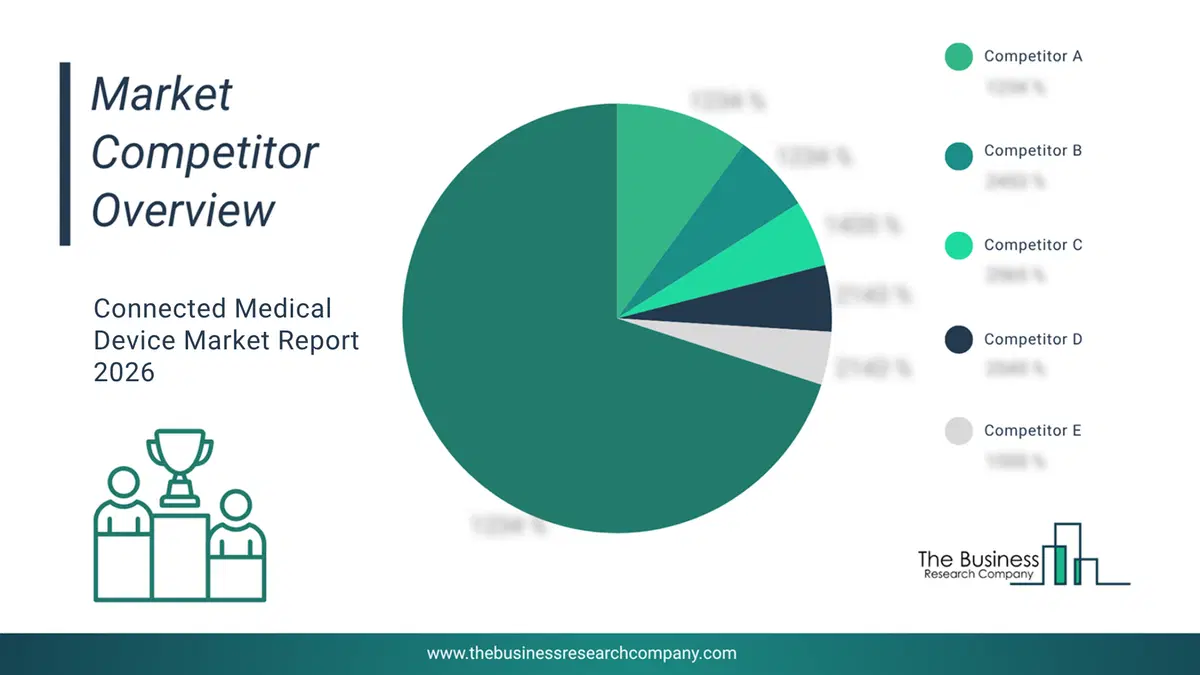
This chart is for illustrative purposes; the full report includes a detailed competitor analysis and comprehensive overview of the top 10 companies in the market.
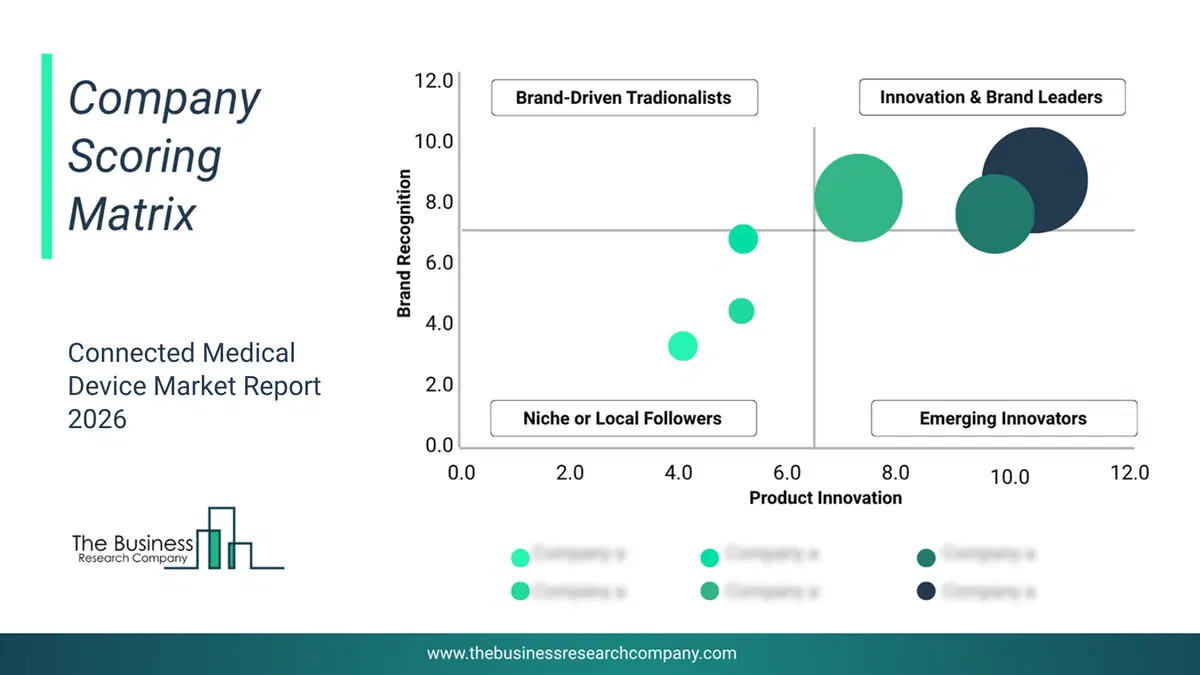
This chart maps companies by product innovation and brand strength, with bubble size indicating relative revenue, helping identify market leaders, challengers, and niche players. This is an illustrative chart; the full report provides a complete and accurate competitive analysis.
Global Connected Medical Device Market Trends and Insights
Major companies operating in the connected medical device market are focusing on developing advanced solutions, such as AI-powered platforms, to enable personalized user experiences by adapting to individual behaviors and preferences in real-time. AI-powered platforms are digital systems that use artificial intelligence technologies to analyze data, make decisions, and automate tasks with minimal human intervention. For instance, in October 2023, ZS, a US-based technology company, launched the ZAIDYN Connected Health solution. It uniquely delivers trusted, AI-powered insights to help pharmaceutical companies, healthcare providers, and payers address unmet medical needs and enhance patient outcomes. Its health insights suite identifies care gaps and provides personalized recommendations for physicians, patients, and manufacturers to improve treatment access and coordination. The patient engagement suite focuses on understanding individual patient needs to offer customized support and enhance the effectiveness of patient programs. Connected research utilizes advanced digital engagement tools to gather reliable evidence that aids healthcare organizations in validating innovations and supporting strategic decisions.What Are Latest Mergers And Acquisitions In The Connected Medical Device Market?
In September 2024, Stryker Corporation, a US-based provider of medical technologies including surgical equipment, hospital systems, and connected medical devices, acquired care.ai for an undisclosed amount. With this acquisition, Stryker aimed to enhance its connected medical device portfolio and integrate AI-powered hospital monitoring and workflow solutions to improve clinical efficiency and patient safety. Care.ai is a US-based provider of AI-assisted virtual care platforms, smart-room ambient intelligence, and sensor-driven patient monitoring solutions.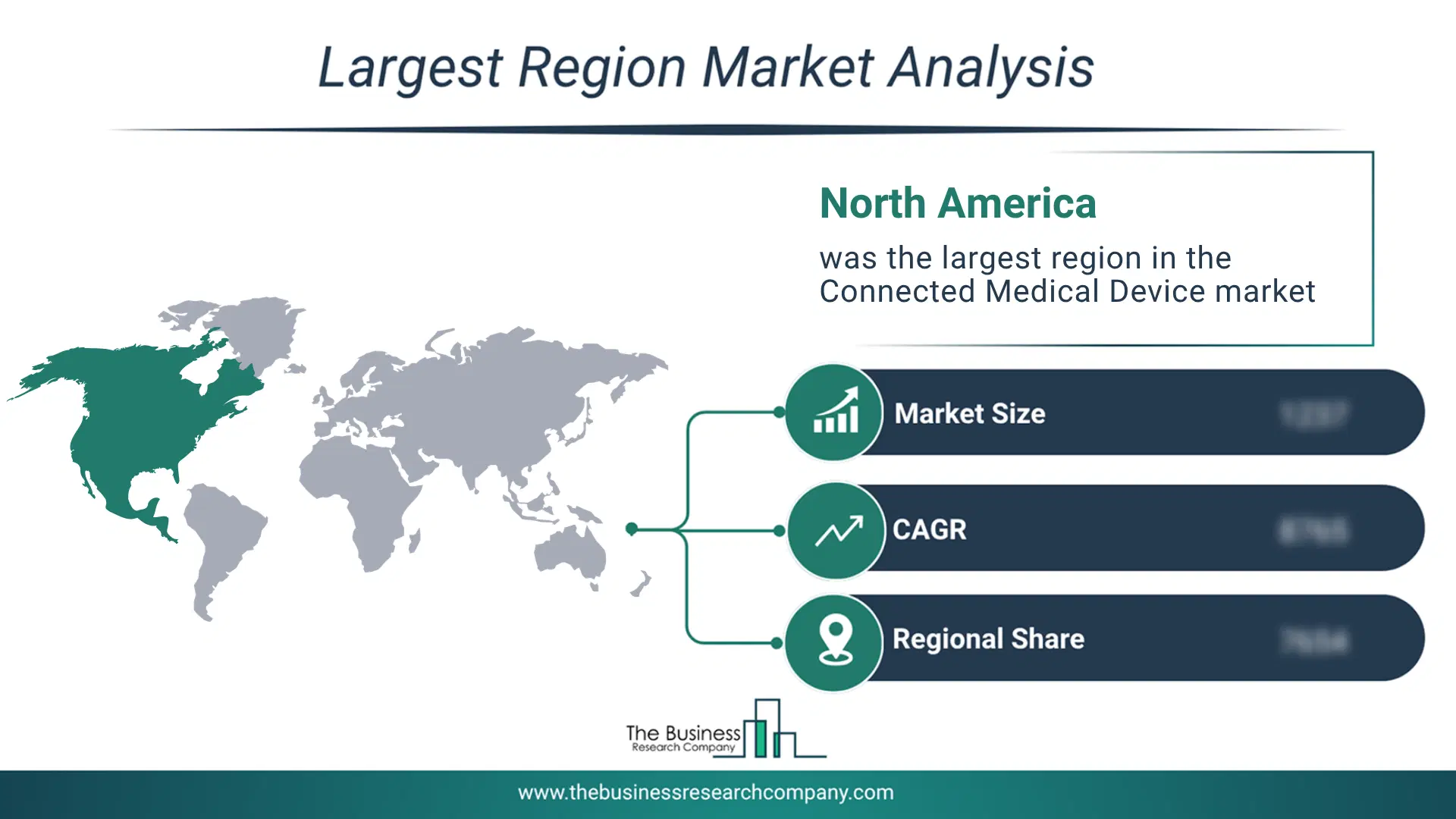
Regional Outlook
North America was the largest region in the connected medical device market in 2025. Asia-Pacific is expected to be the fastest-growing region in the forecast period. The regions covered in this market report are Asia-Pacific, South East Asia, Western Europe, Eastern Europe, North America, South America, Middle East, Africa. The countries covered in this market report are Australia, Brazil, China, France, Germany, India, Indonesia, Japan, Taiwan, Russia, South Korea, UK, USA, Canada, Italy, SpainWhat Defines the Connected Medical Device Market?
The connected medical device market consists of sales of remote monitoring systems, connected imaging systems, smart drug delivery systems, and IoT-enabled surgical tools. Values in this market are ‘factory gate’ values, that is the value of goods sold by the manufacturers or creators of the goods, whether to other entities (including downstream manufacturers, wholesalers, distributors and retailers) or directly to end customers. The value of goods in this market includes related services sold by the creators of the goods.How is Market Value Defined and Measured?
The market value is defined as the revenues that enterprises gain from the sale of goods and/or services within the specified market and geography through sales, grants, or donations in terms of the currency (in USD unless otherwise specified). The revenues for a specified geography are consumption values that are revenues generated by organizations in the specified geography within the market, irrespective of where they are produced. It does not include revenues from resales along the supply chain, either further along the supply chain or as part of other products.
This chart presents market attractiveness based on a quantitative evaluation of growth, competition, strategic alignment, and risk, offering a clear view of opportunity areas for decision-making. This chart is for illustrative purposes; the full report contains the complete analysis.

This chart highlights the Total Addressable Market (TAM) by estimating the maximum revenue opportunity using an assumption-driven approach, supporting strategic planning and opportunity sizing across markets. The chart is illustrative; the full report provides a more comprehensive analysis.
What Key Data and Analysis Are Included in the Connected Medical Device Market Report 2026?
The connected medical device market research report is one of a series of new reports from The Business Research Company that provides market statistics, including industry global market size, regional shares, competitors with the market share, detailed market segments, market trends and opportunities, and any further data you may need to thrive in the connected medical device industry. The market research report delivers a complete perspective of everything you need, with an in-depth analysis of the current and future state of the industry.Connected Medical Device Market Report Forecast Analysis
| Report Attribute | Details |
|---|---|
| Market Size Value In 2026 | $65.78 billion |
| Revenue Forecast In 2030 | $117.68 billion |
| Growth Rate | CAGR of 15.7% from 2026 to 2030 |
| Base Year For Estimation | 2025 |
| Actual Estimates/Historical Data | 2020-2025 |
| Forecast Period | 2026 - 2030 |
| Market Representation | Revenue in USD Billion and CAGR from 2026 to 2030 |
| Segments Covered | Product Type, Connectivity Technology, Application, End-User |
| Regional Scope | Asia-Pacific, Western Europe, Eastern Europe, North America, South America, Middle East, Africa |
| Country Scope | The countries covered in the report are Australia, Brazil, China, France, Germany, India, Indonesia, Japan, Taiwan, Russia, South Korea, UK, USA, Canada, Italy, Spain. |
| Key Companies Profiled | Johnson and Johnson, Abbott Laboratories, Medtronic plc, F Hoffmann La Roche Ltd, Siemens Healthineers AG, Fresenius Medical Care AG and Co KGaA, Becton Dickinson and Company, Koninklijke Philips NV, GE Healthcare Technologies Inc, Boston Scientific Corporation, Baxter International Inc, Olympus Corporation, Terumo Corporation, Garmin Ltd, ResMed Inc, Omron Healthcare Inc, Epitel Inc, Masimo Corporation, AliveCor Inc, DexCom Inc, Insulet Corporation, iRhythm Technologies Inc |
| Customization Scope | Request for Customization |
| Pricing And Purchase Options | Explore Purchase Options |