
Connected Rail Market Report 2026
Global Outlook – By Service (Passenger Mobility, Passenger Information System (PIS), Train Tracking And Monitoring, Automated Fare Collection System, Predictive Maintenance), By Rail Signaling System (Positive Train Control (PTC), Communication Based Train Control (CBTC), Automated Train Control (ATC)), By Rolling Stock Type (Electric Multiple Unit (EMU), Diesel Locomotive, Electric Locomotive, Passenger Wagons, Light Rail Or Tram Car, Other Rolling Stock Types) – Market Size, Trends, Strategies, and Forecast to 2030
Connected Rail Market Overview
• Connected Rail market size has reached to $98.99 billion in 2025 • Expected to grow to $131.4 billion in 2030 at a compound annual growth rate (CAGR) of 5.8% • Growth Driver: Government Initiatives Drive Growth Of Connected Rail Through Enhanced Infrastructure And Digital Solutions • Market Trend: Advancements In Fully Autonomous Railway Systems • North America was the largest region in 2025 and Asia-Pacific is the fastest growing region.Market Gains By 2030 – Top Opportunities By Segment
Market Gain identifies the most promising market opportunities by highlighting the segments or products expected to generate the highest incremental revenue growth over the next five years.
What Is Covered Under Connected Rail Market?
Connected rail refers to an integrated rail system that leverages advanced communication and information technologies to enhance safety, efficiency, and the passenger experience. This system involves real-time data sharing between trains, infrastructure, and control centers, enabling predictive maintenance, optimized scheduling, and improved service reliability. The main service types of connected rail are passenger mobility, passenger information system (PIS), train tracking and monitoring, automated fare collection system, and predictive maintenance. Passenger mobility refers to the ease and efficiency with which passengers can move within and between different modes of transportation, such as trains, trams, and light rail systems. The rail signaling system is positive train control (PTC), communication-based train control (CBTC), and automated train control (ATC), and the rolling stock type are electric multiple units (EMU), diesel locomotives, electric locomotives, passenger wagons, light rail or tram car, and others.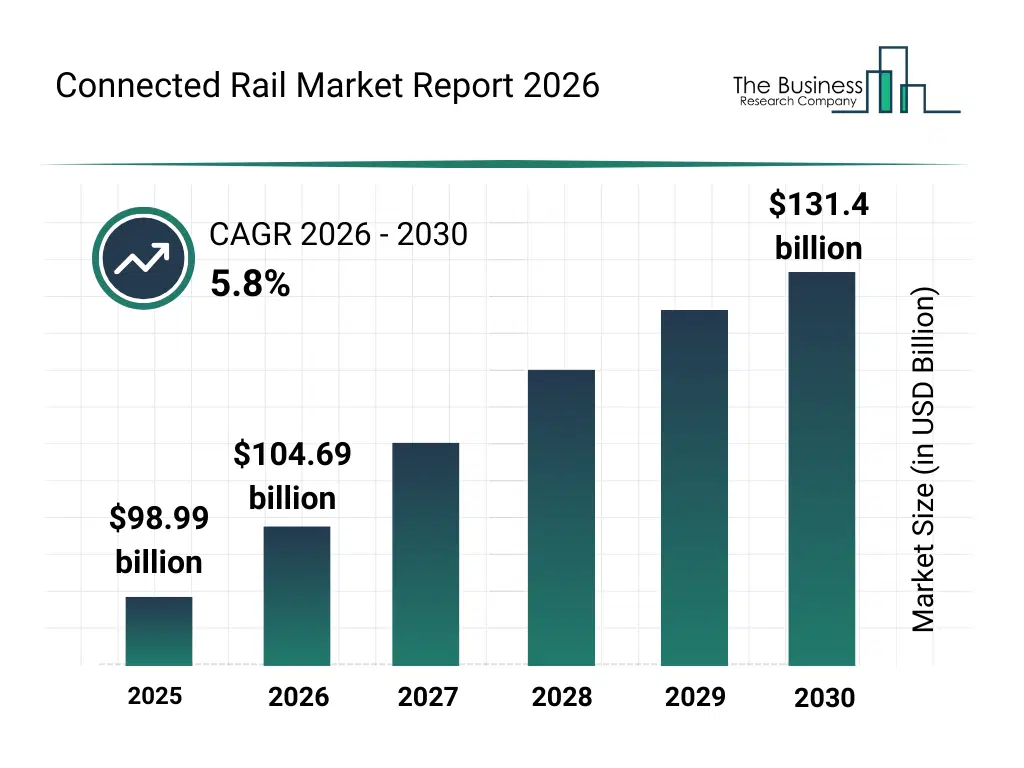
What Is The Connected Rail Market Size and Share 2026?
The connected rail market size has grown strongly in recent years. It will grow from $98.99 billion in 2025 to $104.69 billion in 2026 at a compound annual growth rate (CAGR) of 5.8%. The growth in the historic period can be attributed to urban rail electrification, government rail modernization programs, deployment of signaling systems, passenger traffic growth, infrastructure digitization.What Is The Connected Rail Market Growth Forecast?
The connected rail market size is expected to see strong growth in the next few years. It will grow to $131.4 billion in 2030 at a compound annual growth rate (CAGR) of 5.8%. The growth in the forecast period can be attributed to smart city investments, AI-driven rail analytics, demand for operational efficiency, connected mobility expansion, sustainability-driven public transport. Major trends in the forecast period include expansion of real-time rail monitoring, adoption of predictive maintenance platforms, growth of automated fare collection, integration of advanced rail signaling, focus on passenger experience enhancement.
Global Connected Rail Market Segmentation
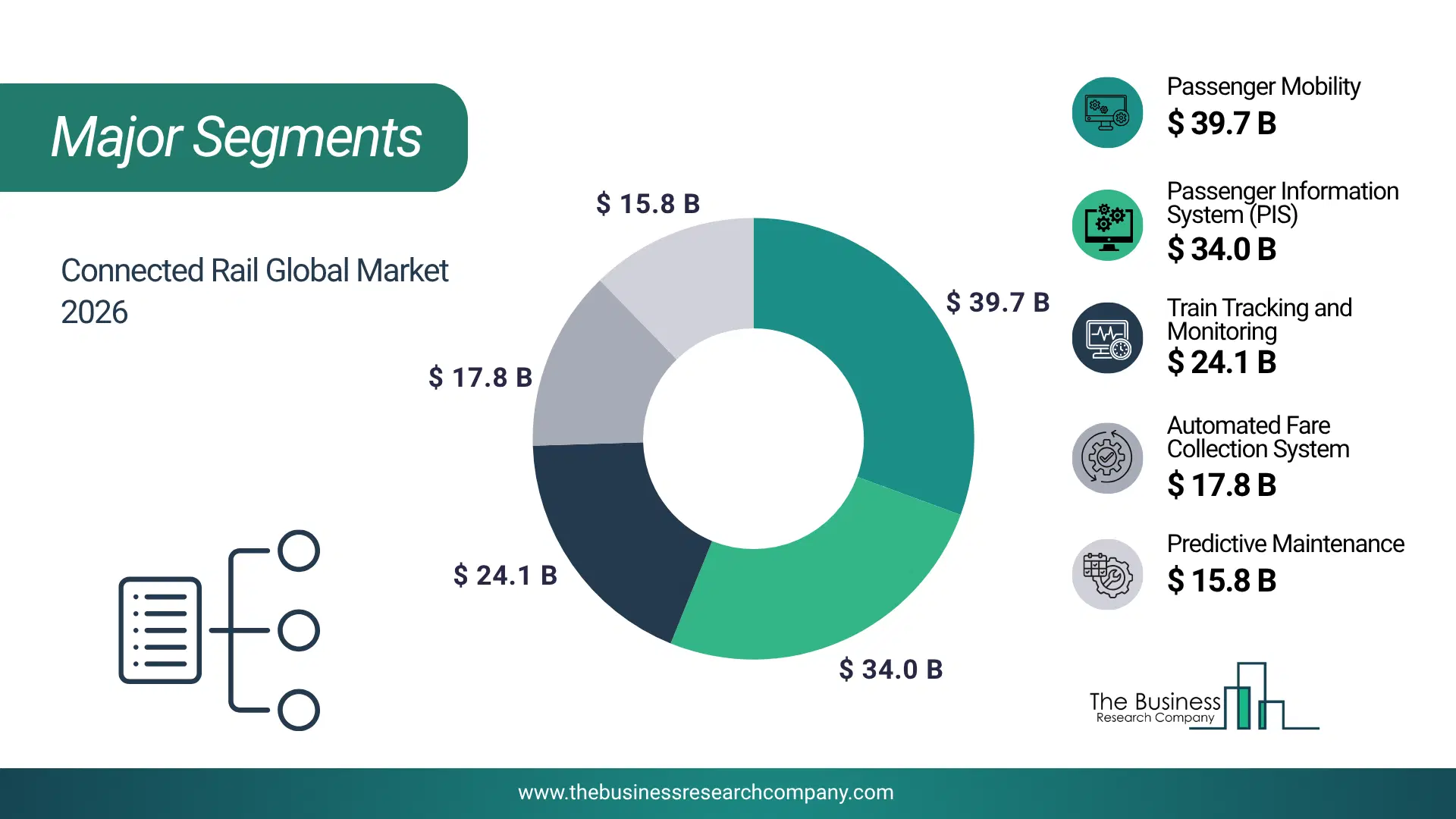
1) By Service: Passenger Mobility, Passenger Information System (PIS), Train Tracking And Monitoring, Automated Fare Collection System, Predictive Maintenance 2) By Rail Signaling System: Positive Train Control (PTC), Communication Based Train Control (CBTC), Automated Train Control (ATC) 3) By Rolling Stock Type: Electric Multiple Unit (EMU), Diesel Locomotive, Electric Locomotive, Passenger Wagons, Light Rail Or Tram Car, Other Rolling Stock Types Subsegments: 1) By Passenger Mobility: Real-Time Passenger Location Services, Mobile Ticketing Solutions, Seamless Intermodal Travel Integration 2) By Passenger Information System (Pis): Real-Time Train Schedules And Updates, Digital Display Boards And Announcements, Mobile Apps For Passenger Communication 3) By Train Tracking And Monitoring: Gps-Based Train Location Tracking, Onboard Sensors And Diagnostics, Remote Monitoring And Alerts For Train Status 4) By Automated Fare Collection System: Contactless Payment Solutions, Smart Cards And Mobile Wallet Integration, Ticket Vending Machines With Digital Payment Options 5) By Predictive Maintenance: Condition Monitoring Of Train Components, Predictive Analytics For Maintenance Scheduling, Remote Diagnostics And Fault Detection Systems The top segments in the connected rail market will be: • Passenger Mobility will reach $39.67 billion by 2030. • Passenger Information System (PIS) will reach $34.03 billion by 2030. • Train Tracking and Monitoring will reach $24.13 billion by 2030. • Automated Fare Collection System will reach $17.76 billion by 2030. • Predictive Maintenance will reach $15.81 billion by 2030.What Is The Driver Of The Connected Rail Market?
The governmental initiatives towards increasing rail connectivity are expected to propel the growth of the connected rail market going forward. Governmental initiatives towards rail connectivity are increasing due to the growing recognition of efficient and sustainable transportation systems' economic, environmental, and social benefits. Governmental initiatives play a crucial role in promoting and funding the adoption of connected rail technologies to enhance transportation efficiency, safety, and infrastructure modernization. For instance, in November 2023, according to the Office of Rail and Road, a UK-based government department, the UK government invested $10.42 billion (£9.7 billion) in rail infrastructure and rolling stock, with a significant portion dedicated to the High Speed 2 (HS2) project. Therefore, government initiatives aimed at increasing rail connectivity are driving the growth of the connected rail industry.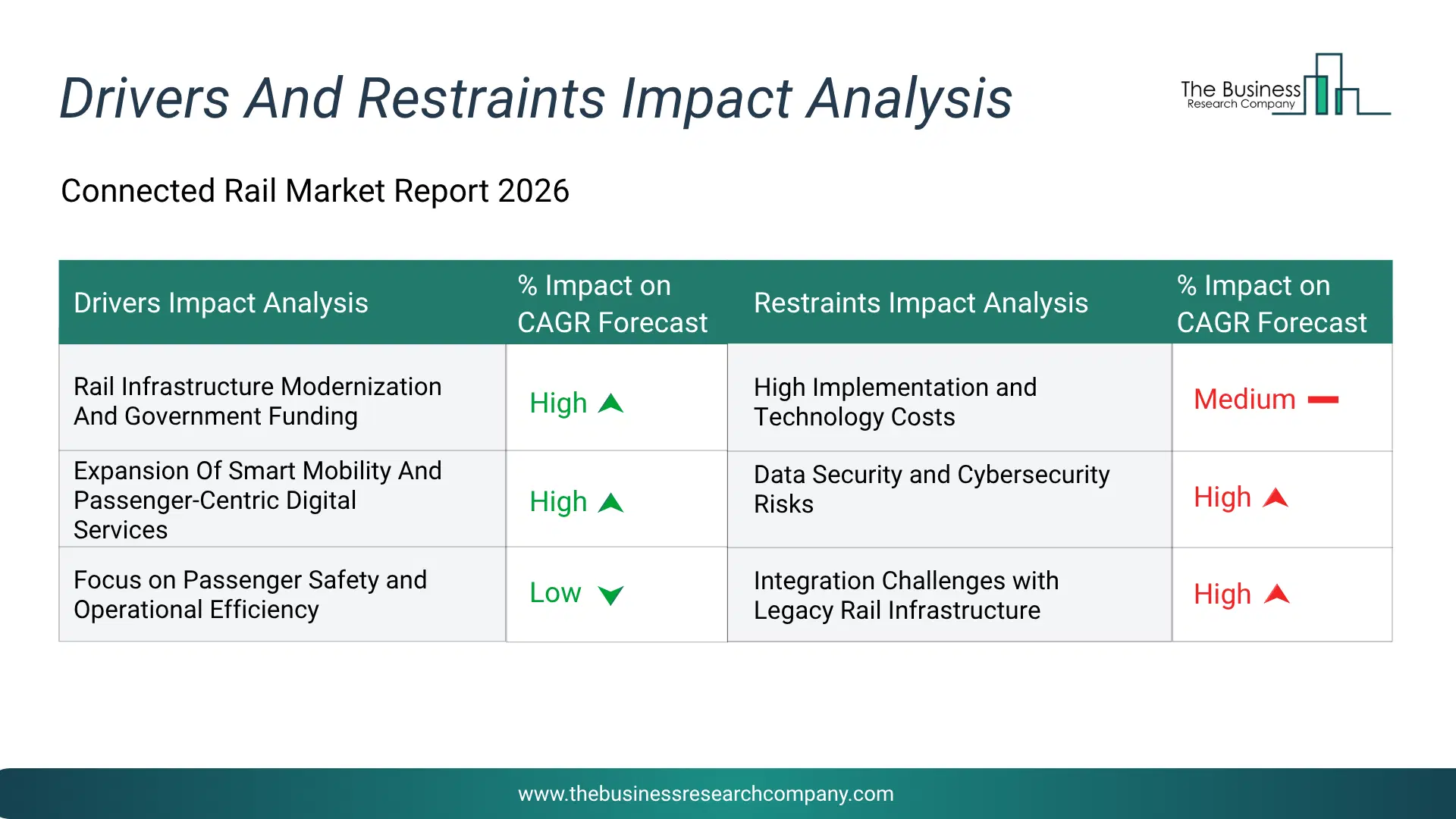
Infographic Chart Showing Key Market Drivers Analysis And Restraints For Connected Rail Market
The chart presents an impact analysis of key drivers and restraints, quantifying their relative influence on the market's growth rate and helping assess the balance between growth enablers and limiting factors. This chart offers a high-level perspective; the full report contains more detailed insights.
How Will The Drivers Impact Growth In The Global Connected Rail Market?
• Rail Infrastructure Modernization And Government Funding (High) – During the forecast period, the rail infrastructure modernization and government funding is expected to become a key growth driver for the connected rail market by 2030. Large -scale public investments in rail modernization programs are significantly accelerating adoption of connected rail technologies. Governments are prioritizing digital signaling systems, communications -based train control (cbtc), positive train control (ptc), and integrated traffic management platforms to enhance safety and operational efficiency. Funding allocated under national infrastructure and smart mobility initiatives is driving upgrades of legacy networks to interoperable, data -driven systems. This sustained capital inflow is expected to contribute the highest incremental growth impact during the forecast period. • Expansion Of Smart Mobility And Passenger-Centric Digital Services (High) – During the forecast period, the expansion of smart mobility and passenger-centric digital services is expected to emerge as a major factor driving the expansion of the connected rail market by 2030. Rail operators are increasingly deploying iot-enabled asset monitoring, ai-driven analytics, and cloud-based control platforms to reduce downtime and optimize lifecycle costs. Predictive maintenance solutions help minimize service disruptions, enhance asset reliability, and lower maintenance expenditure across rolling stock and track infrastructure. The growing pressure to improve punctuality, safety compliance, and network throughput is accelerating digital transformation across freight and passenger rail systems. This efficiency-driven adoption is projected to generate strong mid-range market impact. • Focus on Passenger Safety and Operational Efficiency (Low) – During the forecast period, the focus on passenger safety and operational efficiency is expected to act as a key growth catalyst for the connected rail market by 2030. Connected rail solutions enable real-time monitoring of track conditions, train performance, and passenger load, enhancing safety standards and operational reliability. Automated alerts, collision avoidance systems, and predictive analytics help prevent accidents and minimize delays. Rail operators are increasingly focusing on leveraging connected technologies to optimize train schedules, reduce energy consumption, and manage congestion effectively. The emphasis on improving passenger experience, safety, and operational efficiency acts as a strong catalyst for connected rail adoption.How Will The Restraints Impact Growth In The Global Connected Rail Market?
• High Implementation and Technology Costs (Medium) – During the forecast period, the deployment of connected rail solutions involves significant capital expenditure on sensors, communication networks, data analytics platforms, and cybersecurity systems. Smaller and regional rail operators may find these high upfront costs prohibitive, limiting adoption. Additionally, ongoing maintenance, software updates, and system integration expenses increase operational costs. These financial challenges act as a major restraint, particularly in emerging markets or less-developed rail networks. • Data Security and Cybersecurity Risks (High) – During the forecast period, the connected rail systems rely heavily on digital networks and cloud-based data platforms, making them vulnerable to cyberattacks, data breaches, and unauthorized access. Ensuring robust cybersecurity protocols, regulatory compliance, and real-time monitoring is critical but costly. Any breach can disrupt operations, compromise passenger safety, and lead to financial and reputational losses. These cybersecurity concerns act as a restraint on rapid adoption, particularly for rail operators lacking technical expertise or resources to maintain secure networks. • Integration Challenges with Legacy Rail Infrastructure (High) – During the forecast period, the integration challenges with legacy rail infrastructure act as a restraint for the connected rail market by making it difficult to deploy modern digital systems across existing railway networks. Many rail systems operate on outdated signaling, communication, and control technologies that are not compatible with advanced connected rail solutions. Upgrading or replacing these systems requires significant time, investment, and operational disruptions. Additionally, interoperability issues between old and new technologies can reduce system efficiency and reliability. These challenges slow down large-scale adoption and limit the pace of digital transformation in the rail sector.Key Players In The Global Connected Rail Market
Major companies operating in the connected rail market report include Russian Railways, Huawei Technologies Co. Ltd., Hitachi Ltd., General Electric Company, Siemens AG, International Business Machines Corporation, Cisco Systems Inc., Deutsche Bahn AG, ABB Ltd., Toshiba Corporation, Nokia Corporation, Union Pacific Railroad, BNSF Railway, Thales Group, CSX Corporation, Network Rail, Canadian National Railway Company, Norfolk Southern Corporation, Central Japan Railway Company, Alstom SA, Wabtec Corporation, Bombardier Inc., Trimble Inc., Ansaldo STS, Australian Rail Track Corporation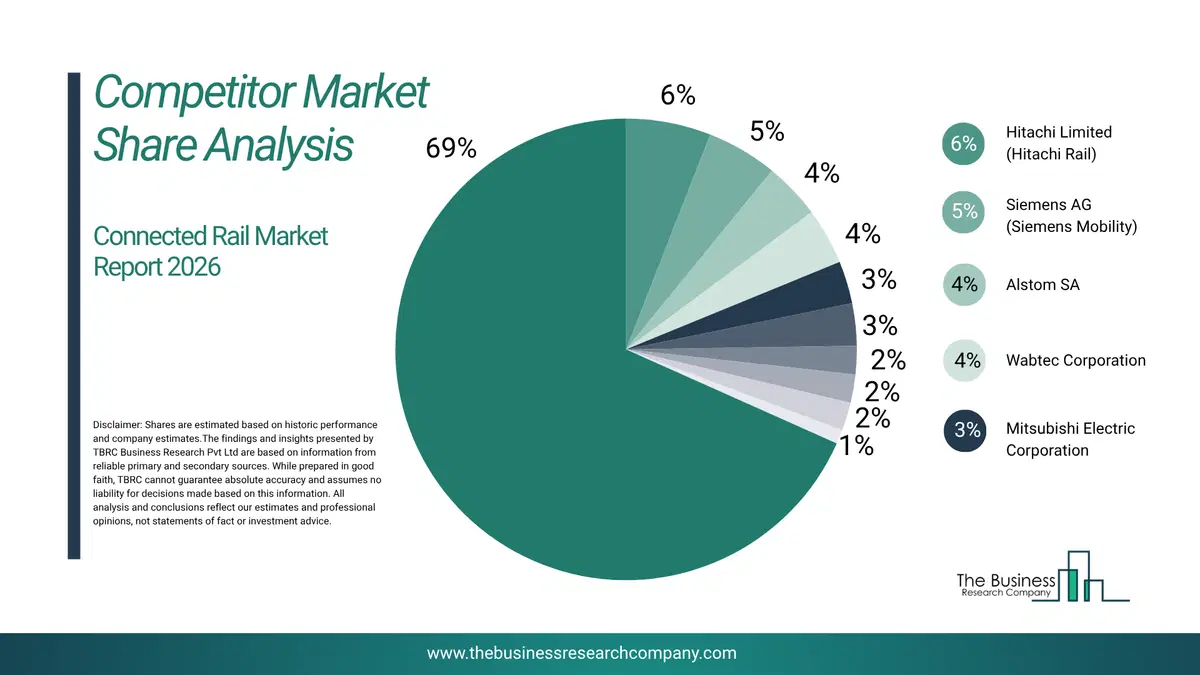
This chart is for illustrative purposes; the full report includes a detailed competitor analysis and comprehensive overview of the top 10 companies in the market.
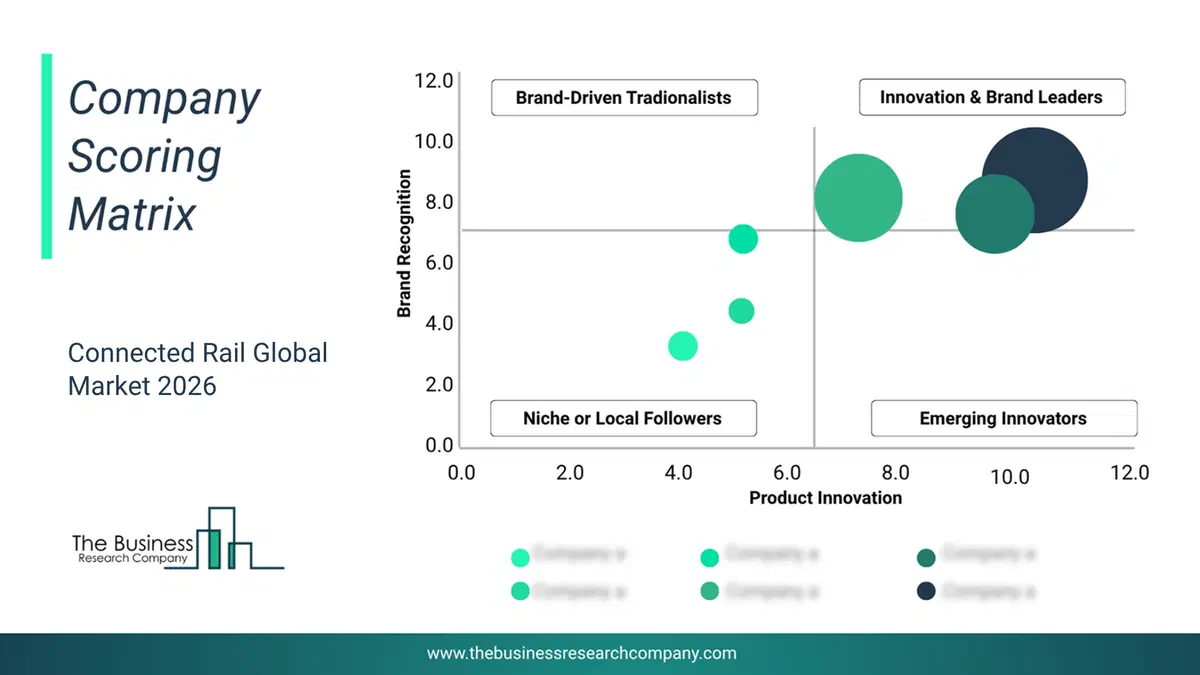
This chart maps companies by product innovation and brand strength, with bubble size indicating relative revenue, helping identify market leaders, challengers, and niche players. This is an illustrative chart; the full report provides a complete and accurate competitive analysis.
Global Connected Rail Market Trends and Insights
Major companies operating in the connected rail market are focusing on technological advancements, such as a fully autonomous railway system, to gain a competitive edge in the market. A fully autonomous railway system refers to trains that operate without human intervention, utilizing artificial intelligence, sensors, and communication networks for navigation and control. For instance, in June 2023, Hitachi Ltd., a Japan-based company, launched the first phase of the Honolulu Skyline, the first fully autonomous urban railway system in the United States. The initial phase of the system includes a 10.75-mile elevated rail line with nine stations, connecting East Kapolei to Aloha Stadium. The system is designed to reduce traffic congestion and pollution by providing a sustainable and efficient mode of transportation to the residents and tourists of Honolulu. The fully autonomous system is powered by electricity and features advanced safety features, including over 1,500 cameras connected to the control center for emergency response.What Are Latest Mergers And Acquisitions In The Connected Rail Market?
In June 2024, Hitachi Rail, a UK-based provider of rail solutions, acquired Thales’s Ground Transportation Systems (GTS) arm for a deal of $1.66 billion. The acquisition enables Hitachi to enhance its focus on sustainable mobility solutions and digital transformation. This strategic move positions the company as a leader in the evolving rail sector. Thales GTS is a France-based provider of connected rail solutions.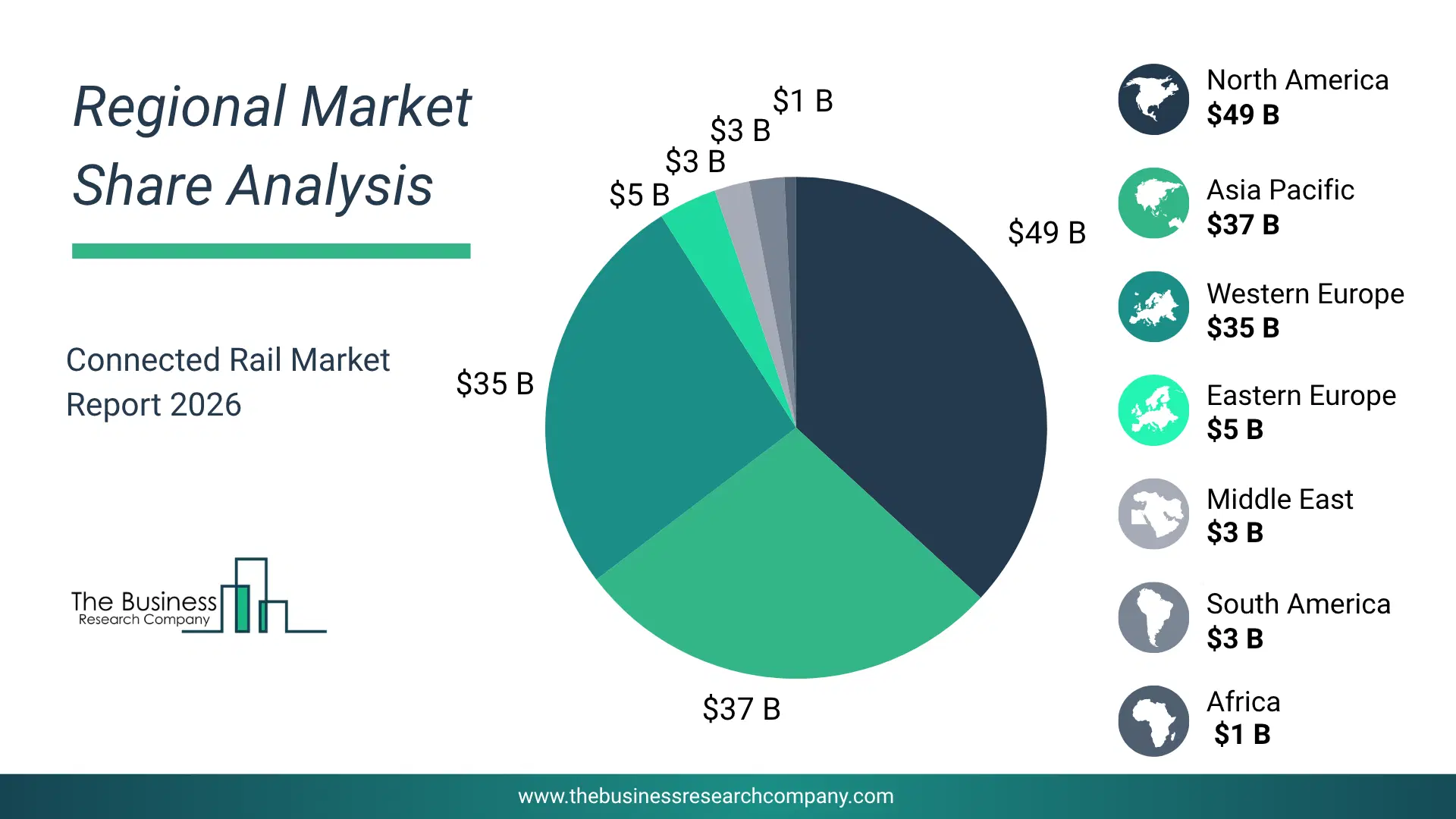
Regional Outlook
North America was the largest region in the connected rail market in 2025. Asia-Pacific is expected to be the fastest-growing region in the forecast period. The regions covered in this market report include Asia-Pacific, South East Asia, Western Europe, Eastern Europe, North America, South America, Middle East, Africa. The countries covered in this market report include Australia, Brazil, China, France, Germany, India, Indonesia, Japan, Taiwan, Russia, South Korea, UK, USA, Canada, Italy, SpainWhat Defines the Connected Rail Market?
The connected rail market consists of revenues earned by entities by providing services such as data analytics and management, consulting and system integration, and cybersecurity services. The market value includes the value of related goods sold by the service provider or included within the service offering. The connected rail market also includes sales of trackside sensors, onboard sensors, and digital signage. Values in this market are ‘factory gate’ values, that is the value of goods sold by the manufacturers or creators of the goods, whether to other entities (including downstream manufacturers, wholesalers, distributors and retailers) or directly to end customers. The value of goods in this market includes related services sold by the creators of the goods.How is Market Value Defined and Measured?
The market value is defined as the revenues that enterprises gain from the sale of goods and/or services within the specified market and geography through sales, grants, or donations in terms of the currency (in USD unless otherwise specified). The revenues for a specified geography are consumption values that are revenues generated by organizations in the specified geography within the market, irrespective of where they are produced. It does not include revenues from resales along the supply chain, either further along the supply chain or as part of other products.
This chart presents market attractiveness based on a quantitative evaluation of growth, competition, strategic alignment, and risk, offering a clear view of opportunity areas for decision-making. This chart is for illustrative purposes; the full report contains the complete analysis.

This chart highlights the Total Addressable Market (TAM) by estimating the maximum revenue opportunity using an assumption-driven approach, supporting strategic planning and opportunity sizing across markets. The chart is illustrative; the full report provides a more comprehensive analysis.
What Key Data and Analysis Are Included in the Connected Rail Market Report 2026?
The connected rail market research report is one of a series of new reports from The Business Research Company that provides market statistics, including industry global market size, regional shares, competitors with the market share, detailed market segments, market trends and opportunities, and any further data you may need to thrive in the connected rail industry. The market research report delivers a complete perspective of everything you need, with an in-depth analysis of the current and future state of the industry.Connected Rail Market Report Forecast Analysis
| Report Attribute | Details |
|---|---|
| Market Size Value In 2026 | $104.69 billion |
| Revenue Forecast In 2030 | $131.4 billion |
| Growth Rate | CAGR of 5.8% from 2026 to 2030 |
| Base Year For Estimation | 2025 |
| Actual Estimates/Historical Data | 2020-2025 |
| Forecast Period | 2026 - 2030 |
| Market Representation | Revenue in USD Billion and CAGR from 2026 to 2030 |
| Segments Covered | Service, Rail Signaling System, Rolling Stock Type |
| Regional Scope | Asia-Pacific, Western Europe, Eastern Europe, North America, South America, Middle East, Africa |
| Country Scope | The countries covered in the report are Australia, Brazil, China, France, Germany, India, Indonesia, Japan, Taiwan, Russia, South Korea, UK, USA, Canada, Italy, Spain. |
| Key Companies Profiled | Russian Railways, Huawei Technologies Co. Ltd., Hitachi Ltd., General Electric Company, Siemens AG, International Business Machines Corporation, Cisco Systems Inc., Deutsche Bahn AG, ABB Ltd., Toshiba Corporation, Nokia Corporation, Union Pacific Railroad, BNSF Railway, Thales Group, CSX Corporation, Network Rail, Canadian National Railway Company, Norfolk Southern Corporation, Central Japan Railway Company, Alstom SA, Wabtec Corporation, Bombardier Inc., Trimble Inc., Ansaldo STS, Australian Rail Track Corporation |
| Customization Scope | Request for Customization |
| Pricing And Purchase Options | Explore Purchase Options |