
Connected Wearable Patches Market Report 2026
Global Outlook – By Type (Glucose Monitoring Patches, Cardiac Monitoring Patches, Electromyography (EMG) Patches, Transdermal Drug Delivery Patches, Electroencephalography (EEG) Patches, Other Types), By Sensor Technology (Electrocardiography (ECG), Photoplethysmography (PPG), Accelerometry, Gyroscope, Temperature Sensing), By Distribution Channel (Online Stores, Pharmacies, Specialty Stores, Other Distribution Channels), By Application (Remote Patient Monitoring, Fitness And Wellness Monitoring, Drug Delivery, Sports And Performance Monitoring, Other Applications), By End User (Hospitals, Home Care, Fitness Centers, Research Institutions, Other End-Users) – Market Size, Trends, Strategies, and Forecast to 2030
Connected Wearable Patches Market Overview
• Connected Wearable Patches market size has reached to $6.42 billion in 2025 • Expected to grow to $12.26 billion in 2030 at a compound annual growth rate (CAGR) of 13.8% • Growth Driver: Surge In Fitness And Wellness Awareness Fueling The Growth Of The Market Due To Rising Health Concerns And Increasing Physical Activity Participation • Market Trend: Industrial Wearables Enhanced By Sweat-Sensing Biopatch Technology • North America was the largest region in 2025 and Asia-Pacific is the fastest growing region.What Is Covered Under Connected Wearable Patches Market?
Connected wearable patches refer to smart, adhesive, skin-worn devices embedded with sensors and wireless connectivity that continuously monitor physiological parameters such as heart rate, glucose levels, temperature, or hydration. These patches transmit real-time data to connected platforms such as smartphones or cloud systems, enabling remote health monitoring and timely medical interventions. They are increasingly used in chronic disease management, fitness tracking, and clinical trials. The main types of connected wearable patches include glucose monitoring patches, cardiac monitoring patches, electromyography (EMG) patches, transdermal drug delivery patches, electroencephalography (EEG) patches, and others. Glucose monitoring patches are wearable devices that continuously or intermittently measure blood glucose levels to help manage diabetes effectively. There are multiple sensor technologies, such as electrocardiography (ECG), photoplethysmography (PPG), accelerometers, gyroscopes, and temperature sensing. The various distribution channels are categorized as online stores, pharmacies, specialty stores, and others. The various applications are remote patient monitoring, fitness and wellness monitoring, drug delivery, sports and performance monitoring, and others, and by several end users such as hospitals, home care, fitness centers, research institutions, and others.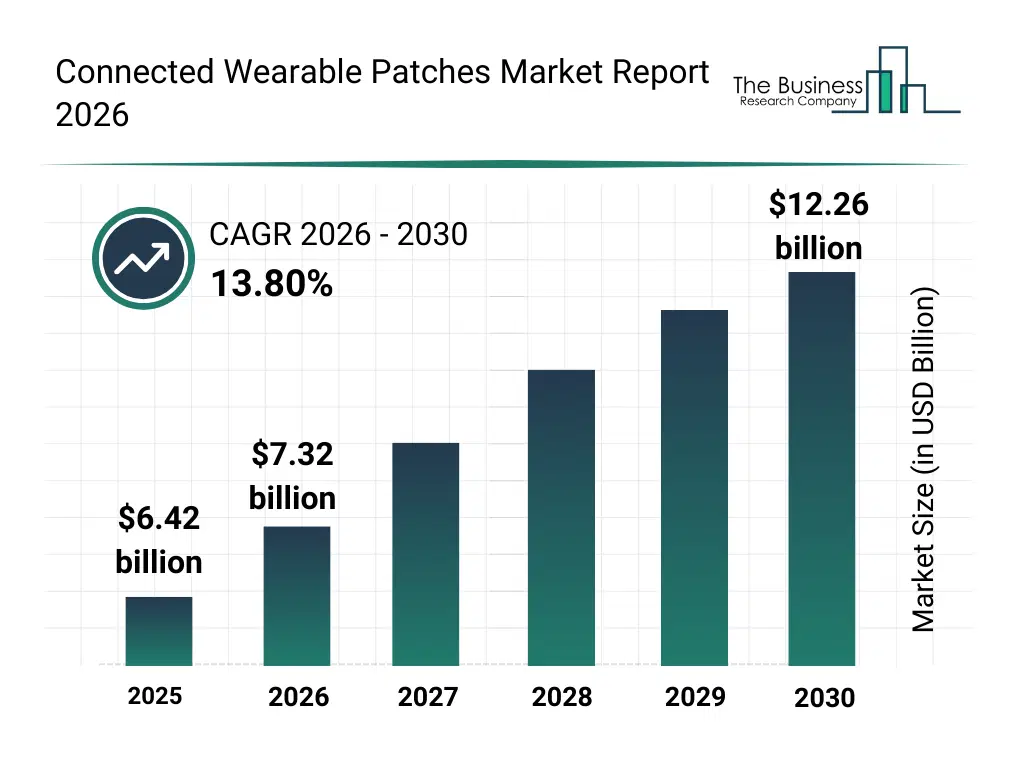
What Is The Connected Wearable Patches Market Size and Share 2026?
The connected wearable patches market size has grown rapidly in recent years. It will grow from $6.42 billion in 2025 to $7.32 billion in 2026 at a compound annual growth rate (CAGR) of 14.1%. The growth in the historic period can be attributed to limited adoption of connected wearable technologies, reliance on traditional monitoring devices, increasing prevalence of chronic diseases, early-stage clinical trials using wearable patches, growing awareness of patient-centric healthcare.What Is The Connected Wearable Patches Market Growth Forecast?
The connected wearable patches market size is expected to see rapid growth in the next few years. It will grow to $12.26 billion in 2030 at a compound annual growth rate (CAGR) of 13.8%. The growth in the forecast period can be attributed to advancements in sensor miniaturization and connectivity, integration with smartphones and cloud platforms, rising demand for continuous glucose and cardiac monitoring, expansion of sports and wellness tracking applications, increased regulatory approvals and healthcare reimbursement policies. Major trends in the forecast period include growth in remote patient monitoring and telehealth solutions, increasing adoption of non-invasive glucose monitoring technologies, rising use of wearable patches in fitness and sports performance, expansion of transdermal drug delivery applications, enhanced focus on data accuracy, sensor reliability, and patient safety.
Global Connected Wearable Patches Market Segmentation
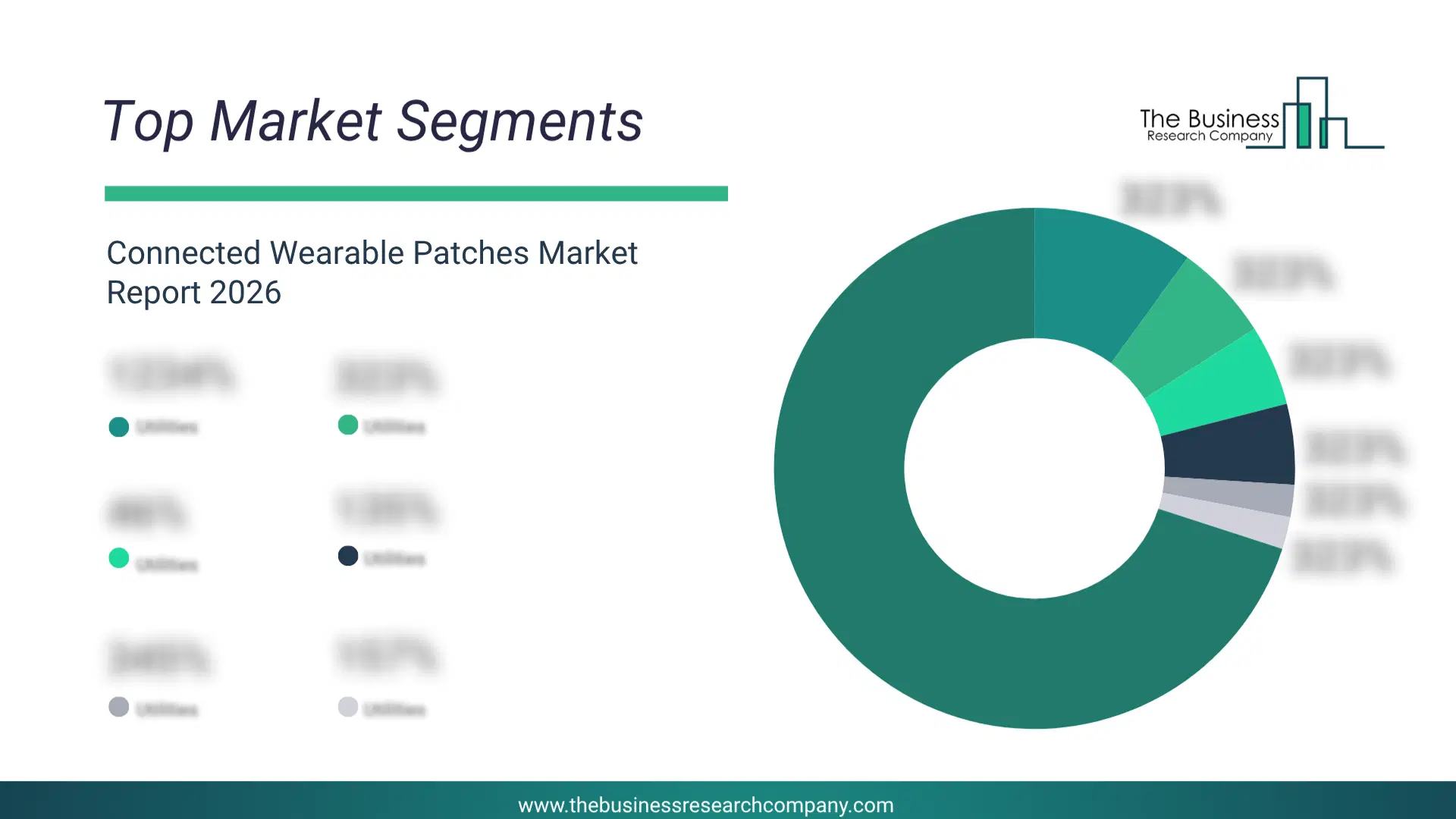
1) By Type: Glucose Monitoring Patches, Cardiac Monitoring Patches, Electromyography (EMG) Patches, Transdermal Drug Delivery Patches, Electroencephalography (EEG) Patches, Other Types 2) By Sensor Technology: Electrocardiography (ECG), Photoplethysmography (PPG), Accelerometry, Gyroscope, Temperature Sensing 3) By Distribution Channel: Online Stores, Pharmacies, Specialty Stores, Other Distribution Channels 4) By Application: Remote Patient Monitoring, Fitness And Wellness Monitoring, Drug Delivery, Sports And Performance Monitoring, Other Applications 5) By End User: Hospitals, Home Care, Fitness Centers, Research Institutions, Other End-Users Subsegments: 1) By Glucose Monitoring Patches: Continuous Glucose Monitoring (CGM) Patches, Flash Glucose Monitoring (FGM) Patches, Non-Invasive Glucose Monitoring Patches, Adhesive Enzyme-Based Glucose Patches 2) By Cardiac Monitoring Patches: Electrocardiography Monitoring Patches, Arrhythmia Detection Patches, Remote Cardiac Telemetry Patches, Holter Monitoring Patches 3) By Electromyography (EMG) Patches: Surface Electromyography Patches, Wireless Electromyography Sensor Patches, Multi-channel Electromyography Patches, Rehabilitation Monitoring Electromyography Patches 4) By Transdermal Drug Delivery Patches: Nicotine Delivery Patches, Hormone Replacement Therapy (HRT) Patches, Pain Management Patches (e.g., Fentanyl), Neurological Drug Delivery Patches, Anti-hypertensive Patches 5) By Electroencephalography (EEG) Patches: Sleep Monitoring Electroencephalography Patches, Seizure Detection Electroencephalography Patches, Brain-Computer Interface (BCI) Patches, Cognitive Performance Monitoring Patches 6) By Other Types: Hydration Monitoring Patches, Temperature Monitoring Patches, Sweat Analysis Patches, Oxygen Saturation (SpO₂) Monitoring Patches, Respiratory Rate Monitoring PatchesWhat Is The Driver Of The Connected Wearable Patches Market?
The increase in fitness and wellness awareness is expected to propel the growth of the connected wearable patches market going forward. Fitness and wellness awareness refers to the knowledge and understanding of the importance of regular physical activity and healthy lifestyle habits for overall well-being. The rise in fitness and wellness awareness is due to the growing concerns about chronic diseases, encouraging individuals to adopt healthier lifestyles for better long-term health. Connected wearable patches help boost fitness and wellness awareness by continuously monitoring vital health metrics, providing real-time feedback, and motivating users to stay active and maintain healthier habits. For instance, in June 2024, according to the International Food Information Council (IFIC), a US based non profit organization, the proportion of Americans who followed a specific diet or eating pattern over the past year remains high at 54%. Most individuals are aiming to increase their protein intake, with interest rising from 59% in 2022 to 67% in 2023, and reaching 71% in 2024. Additionally, about half of consumers are seeking to consume more fresh foods, which are widely regarded as the healthiest food options. Therefore, the increase in fitness and wellness awareness is driving the growth of the connected wearable patches industry.Key Players In The Global Connected Wearable Patches Market
Major companies operating in the connected wearable patches market are Abbott Laboratories, Medtronic plc, Koninklijke Philips NV, GE HealthCare Technologies Inc, ZOLL Medical Corporation, Dexcom Inc, Insulet Corporation, MicroPort Scientific Corporation, iRhythm Technologies Inc, Linxens Holding SAS, Biotricity Inc, Blue Spark Technologies Inc, Epicore Biosystems Inc, Cardiac Insight Inc, Delsys Incorporated, G Tech Medical Inc, Leaf Healthcare Inc, VivaLNK Inc, BioIntelliSense Inc, MC10 Inc, LifeSignals Group Inc, Preventice Solutions Inc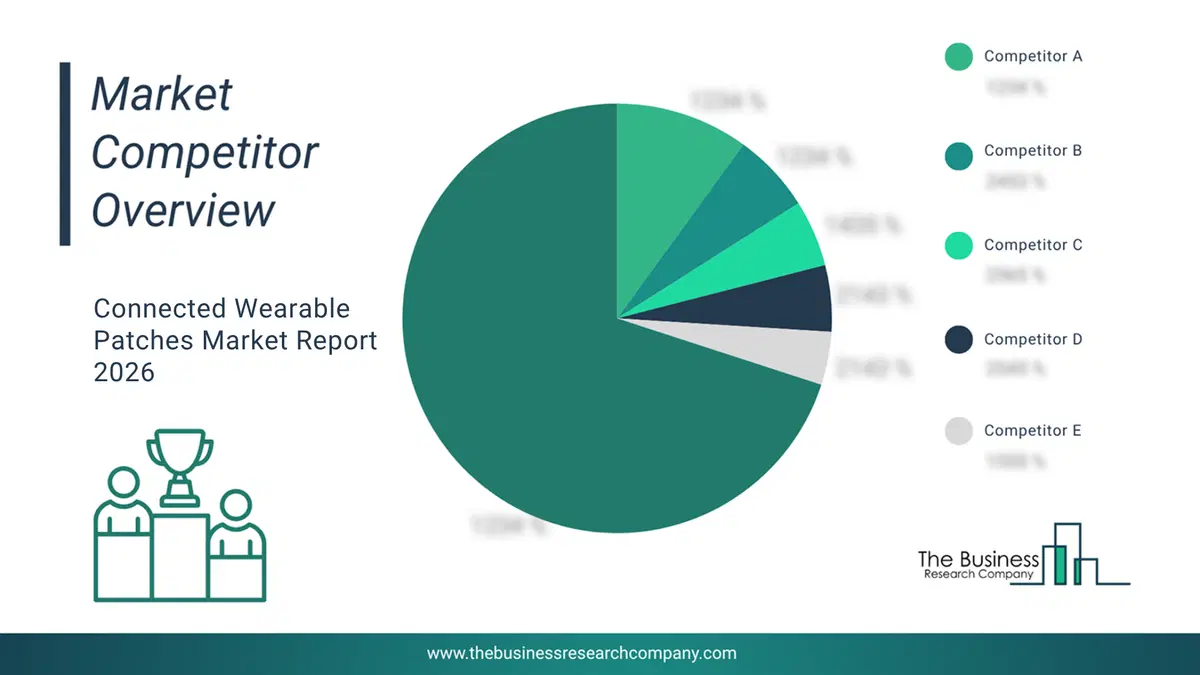
This chart is for illustrative purposes; the full report includes a detailed competitor analysis and comprehensive overview of the top 10 companies in the market.
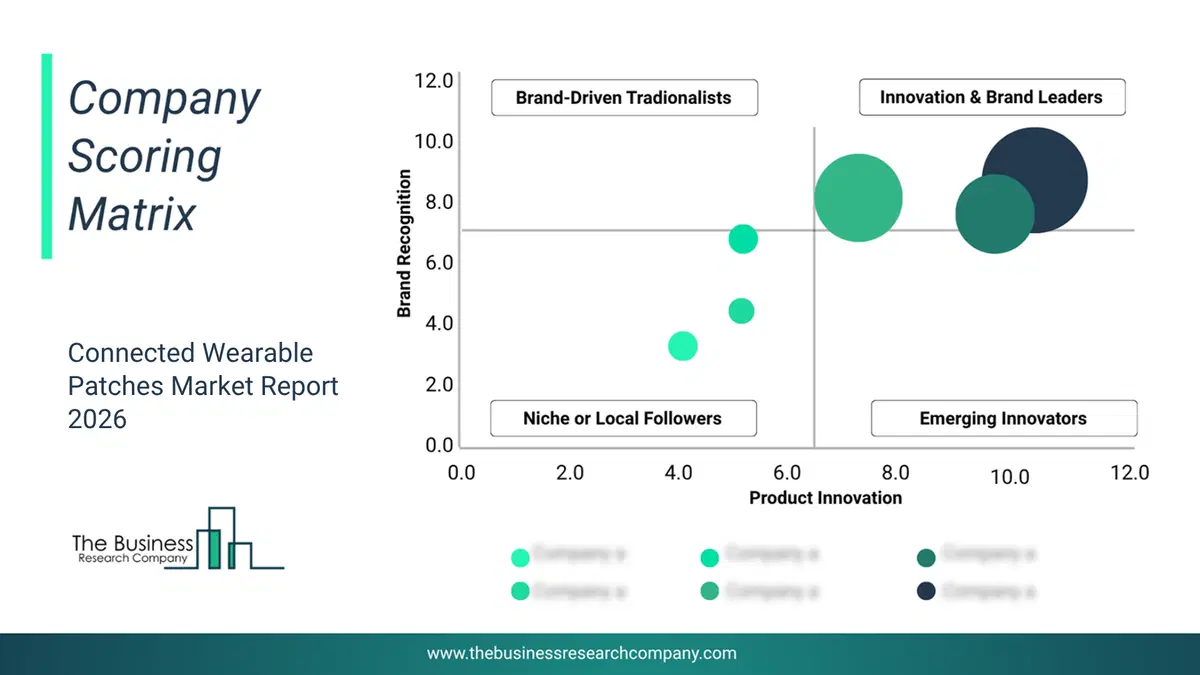
This chart maps companies by product innovation and brand strength, with bubble size indicating relative revenue, helping identify market leaders, challengers, and niche players. This is an illustrative chart; the full report provides a complete and accurate competitive analysis.
Global Connected Wearable Patches Market Trends and Insights
Major companies operating in the connected wearable patches market are focusing on advanced technologies such as sweat-sensing biopatch platforms to provide real-time, personalized hydration insights for industrial workers. A sweat-sensing biopatch integrates multiple biosensors to detect fluid and electrolyte loss, body temperature, and movement patterns in real-time, enabling proactive hydration and heat stress management. For instance, in April 2024, Epicore Biosystems, a US-based digital health company, launched Connected Hydration and a mobile application. It is a next-generation wearable patch system designed to help industrial workers prevent dehydration and heat-related injuries through real-time data feedback. This advanced solution includes a flexible, non-rechargeable biopatch with a 1,000-hour battery life, real-time dehydration alerts via haptic feedback, and a mobile application for tracking fluid intake and biometric trends. Its robust design is certified for hazardous environments and incorporates machine learning trained on over 420,000 field data points.What Are Latest Mergers And Acquisitions In The Connected Wearable Patches Market?
In November 2023, DuPont, a US-based chemicals company, partnered with STMicroelectronics to develop a smart wearable device for remote biosignal monitoring by combining DuPont’s expertise in flexible patch design, medical-grade silicone materials, and rapid prototyping with STMicroelectronics’ advanced sensors, microelectronics, and AI-enabled technology. STMicroelectronics is a Switzerland-based company specializing in advanced connected wearable technologies, such as sensors.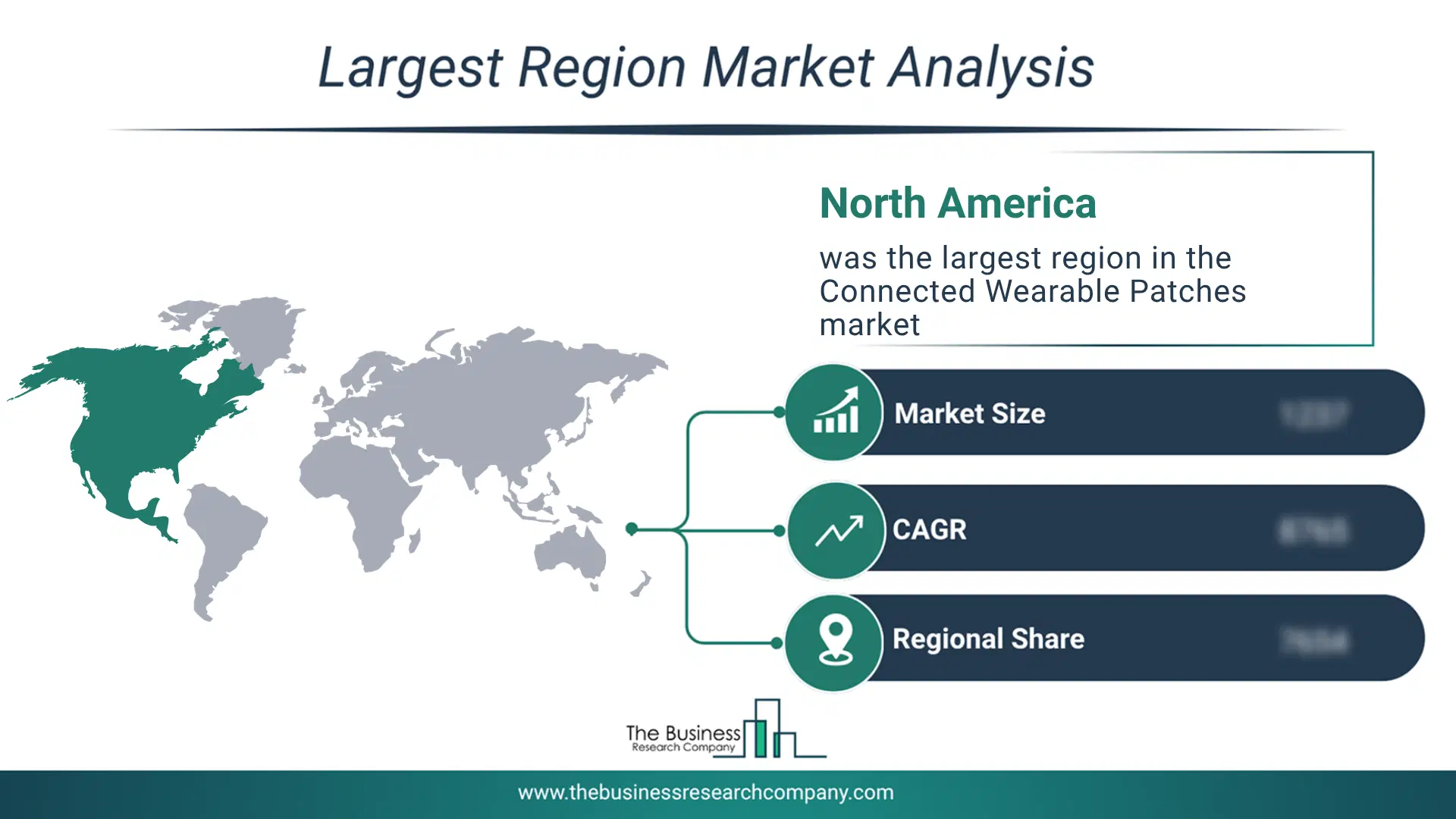
Regional Outlook
North America was the largest region in the connected wearable patches market in 2025. Asia-Pacific is expected to be the fastest-growing region in the forecast period. The regions covered in this market report are Asia-Pacific, South East Asia, Western Europe, Eastern Europe, North America, South America, Middle East, Africa. The countries covered in this market report are Australia, Brazil, China, France, Germany, India, Indonesia, Japan, Taiwan, Russia, South Korea, UK, USA, Canada, Italy, SpainWhat Defines the Connected Wearable Patches Market?
The connected wearable patches market consists of revenues earned by entities by providing services such as remote patient monitoring, glucose monitoring services, and cardiac monitoring services. The market value includes the value of related goods sold by the service provider or included within the service offering. The connected wearable patches market also includes sales of vital signs monitoring patches, continuous glucose monitoring (CGM) patches, and transdermal drug delivery patches. Values in this market are ‘factory gate’ values, that is, the value of goods sold by the manufacturers or creators of the goods, whether to other entities (including downstream manufacturers, wholesalers, distributors, and retailers) or directly to end customers. The value of goods in this market includes related services sold by the creators of the goods.How is Market Value Defined and Measured?
The market value is defined as the revenues that enterprises gain from the sale of goods and/or services within the specified market and geography through sales, grants, or donations in terms of the currency (in USD unless otherwise specified). The revenues for a specified geography are consumption values that are revenues generated by organizations in the specified geography within the market, irrespective of where they are produced. It does not include revenues from resales along the supply chain, either further along the supply chain or as part of other products.
This chart presents market attractiveness based on a quantitative evaluation of growth, competition, strategic alignment, and risk, offering a clear view of opportunity areas for decision-making. This chart is for illustrative purposes; the full report contains the complete analysis.

This chart highlights the Total Addressable Market (TAM) by estimating the maximum revenue opportunity using an assumption-driven approach, supporting strategic planning and opportunity sizing across markets. The chart is illustrative; the full report provides a more comprehensive analysis.
What Key Data and Analysis Are Included in the Connected Wearable Patches Market Report 2026?
The connected wearable patches market research report is one of a series of new reports from The Business Research Company that provides market statistics, including industry global market size, regional shares, competitors with the market share, detailed market segments, market trends and opportunities, and any further data you may need to thrive in the connected wearable patches industry. The market research report delivers a complete perspective of everything you need, with an in-depth analysis of the current and future state of the industry.Connected Wearable Patches Market Report Forecast Analysis
| Report Attribute | Details |
|---|---|
| Market Size Value In 2026 | $7.32 billion |
| Revenue Forecast In 2030 | $12.26 billion |
| Growth Rate | CAGR of 13.8% from 2026 to 2030 |
| Base Year For Estimation | 2025 |
| Actual Estimates/Historical Data | 2020-2025 |
| Forecast Period | 2026 - 2030 |
| Market Representation | Revenue in USD Billion and CAGR from 2026 to 2030 |
| Segments Covered | Type, Sensor Technology, Distribution Channel, Application, End User |
| Regional Scope | Asia-Pacific, Western Europe, Eastern Europe, North America, South America, Middle East, Africa |
| Country Scope | The countries covered in the report are Australia, Brazil, China, France, Germany, India, Indonesia, Japan, Taiwan, Russia, South Korea, UK, USA, Canada, Italy, Spain. |
| Key Companies Profiled | Abbott Laboratories, Medtronic plc, Koninklijke Philips NV, GE HealthCare Technologies Inc, ZOLL Medical Corporation, Dexcom Inc, Insulet Corporation, MicroPort Scientific Corporation, iRhythm Technologies Inc, Linxens Holding SAS, Biotricity Inc, Blue Spark Technologies Inc, Epicore Biosystems Inc, Cardiac Insight Inc, Delsys Incorporated, G Tech Medical Inc, Leaf Healthcare Inc, VivaLNK Inc, BioIntelliSense Inc, MC10 Inc, LifeSignals Group Inc, Preventice Solutions Inc |
| Customization Scope | Request for Customization |
| Pricing And Purchase Options | Explore Purchase Options |