
Connectivity Services Market Report 2026
Global Outlook – By Service Type (Internet Of Things (IoT) Network Provisioning And Access, Subscriber Identity Module (SIM) Or Embedded Subscriber Identity Module (eSIM) Internet Of Things (IoT) Connectivity Plans, Connectivity-As-A-Service (CaaS), Managed Connectivity Operations, Network Integration And Deployment Services, Remote Support And Optimization Services, Professional And Consulting Services), By Technology (5G Networks, Private Networks, Low Power Wide Area Network (LPWAN) Or Low-Power Networks, Edge Computing Integration, Cloud-Native Connectivity), By Organization Size (Small And Medium Enterprises (SMEs), Large Enterprises), By End-User Industry – Market Size, Trends, Strategies, and Forecast to 2030
Connectivity Services Market Overview
• Connectivity Services market size has reached to $3.88 billion in 2025 • Expected to grow to $4.61 billion in 2030 at a compound annual growth rate (CAGR) of 19.2% • Growth Driver: Expansion Of Fifth Generation (5G) Network Infrastructure Driving The Growth Of The Market Due To Enhanced Demand For High-Speed, Low-Latency Connectivity Enabling Real-Time Digital Applications • Market Trend: Launch Of AI-Native Network-As-A-Service (NaaS) Solutions Enhancing Automated And Intelligent Network Management Capabilities • North America was the largest region in 2025 and Asia-Pacific is the fastest growing region.What Is Covered Under Connectivity Services Market?
Connectivity services refer to the solutions and technologies that enable seamless data exchange and communication between devices, machines, and systems within enterprise and Internet of Things (IoT) environments. These services support reliable network connectivity, device management, data transmission, protocol interoperability, and secure integration across diverse IoT ecosystems, enhancing operational efficiency, real-time insights, and automated processes. The main service types of connectivity services are Internet of things (IoT) network provisioning and access, subscriber identity module (SIM) or embedded subscriber identity module (eSIM) IoT connectivity plans, connectivity-as-a-service (CaaS), managed connectivity operations, network integration and deployment services, remote support and optimization services, and professional and consulting services. Internet of things (IoT) network provisioning and access refers to services that enable the setup, configuration, and management of connectivity infrastructure that allows devices to communicate and exchange data over networks. These services are enabled through various technologies, including 5G networks, private networks, low power wide area network (LPWAN) or low-power networks, edge computing integration, and cloud-native connectivity. They are designed to support organizations of different sizes, including small and medium enterprises (SMEs) and large enterprises, and are widely adopted across multiple end-user industries, such as manufacturing and industrial, healthcare, transportation and logistics, energy and utilities, smart cities, retail and e-commerce, and information technology (IT) and telecom.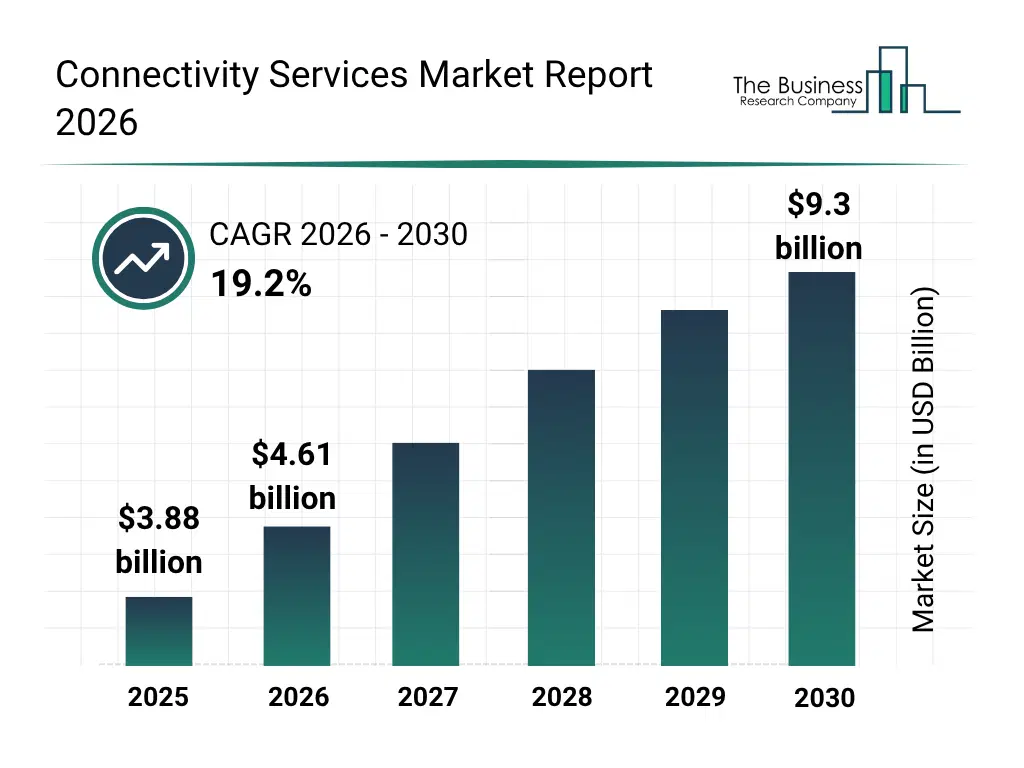
What Is The Connectivity Services Market Size and Share 2026?
The connectivity services market size has grown rapidly in recent years. It will grow from $3.88 billion in 2025 to $4.61 billion in 2026 at a compound annual growth rate (CAGR) of 18.9%. The growth in the historic period can be attributed to rapid iot device proliferation, expansion of mobile broadband networks, enterprise digital transformation initiatives, increasing cloud adoption in enterprises, growth in machine-to-machine communication.What Is The Connectivity Services Market Growth Forecast?
The connectivity services market size is expected to see rapid growth in the next few years. It will grow to $9.3 billion by 2030 at a compound annual growth rate (CAGR) of 19.2%. The growth in the forecast period can be attributed to rollout of 5g and private networks, rising demand for real-time data connectivity, expansion of industrial iot ecosystems, growth of edge computing integration, increasing adoption of managed connectivity services. Major trends in the forecast period include 5G and advanced network connectivity expansion, edge computing enabled iot connectivity orchestration, private network and industrial network deployment, connectivity-as-a-service adoption in enterprises, lpwan and low power iot network scaling.
Global Connectivity Services Market Segmentation
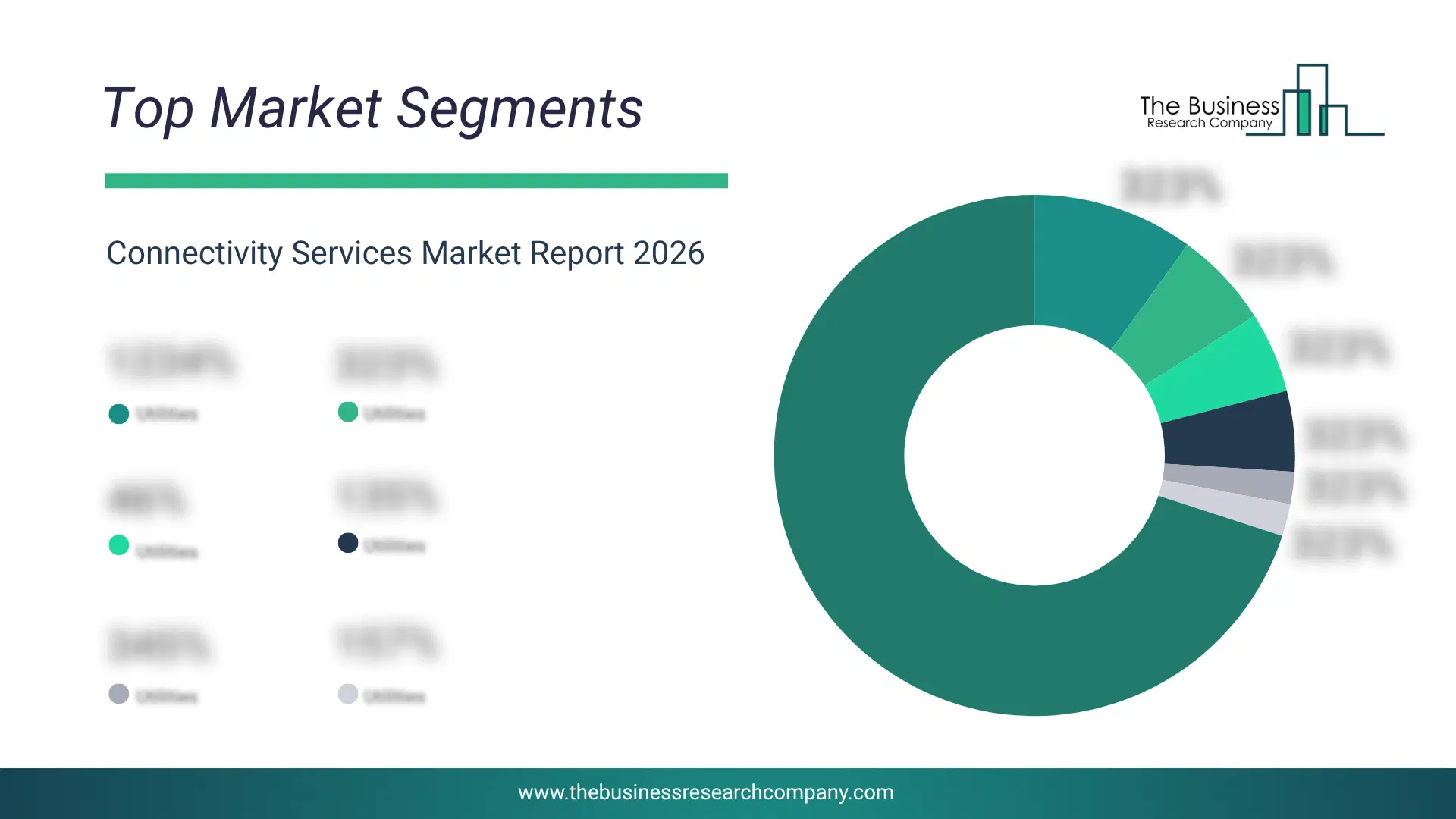
1) By Service Type: Internet Of Things (IoT) Network Provisioning And Access, Subscriber Identity Module (SIM) Or Embedded Subscriber Identity Module (eSIM) Internet Of Things (IoT) Connectivity Plans, Connectivity-As-A-Service (CaaS), Managed Connectivity Operations, Network Integration And Deployment Services, Remote Support And Optimization Services, Professional And Consulting Services 2) By Technology: 5G Networks, Private Networks, Low Power Wide Area Network (LPWAN) Or Low-Power Networks, Edge Computing Integration, Cloud-Native Connectivity 3) By Organization Size: Small And Medium Enterprises (SMEs), Large Enterprises 4) By End-User Industry: Manufacturing And Industrial, Healthcare, Transportation And Logistics, Energy And Utilities, Smart Cities, Retail And E-commerce, Information Technology (IT) And Telecom Subsegments: 1) By Internet Of Things Network Provisioning And Access: Device Onboarding, Device Management, Network Configuration, Data Security, Real Time Monitoring 2) By Subscriber Identity Module Or Embedded Subscriber Identity Module Internet Of Things Connectivity Plans: Global Connectivity Plans, Data Usage Management, Remote Provisioning, Device Authentication, Multi Operator Support 3) By Connectivity As A Service: Network As A Service, Infrastructure Management Services, Managed Connectivity Solutions, Cloud Based Connectivity Services, Scalable Subscription Models 4) By Managed Connectivity Operations: Network Monitoring, Performance Optimization, Security Management, Remote Diagnostics, Automated Maintenance 5) By Network Integration And Deployment Services: Network Design And Planning, System Integration, Deployment Management, Interoperability Solutions, Implementation Support 6) By Remote Support And Optimization Services: Troubleshooting Services, Remote Configuration, Performance Analytics, Continuous Monitoring, Issue Resolution 7) By Professional And Consulting Services: Advisory Services, Strategic Planning, Deployment Consulting, Technology Assessment, Optimization RecommendationsWhat Is The Driver Of The Connectivity Services Market?
The expansion of fifth generation (5G) network infrastructure is expected to propel the growth of the connectivity services market going forward. Fifth generation (5G) network infrastructure is an advanced telecommunications system that enables high-speed data transmission, low latency, and large-scale connectivity across devices and digital environments. The expansion of 5G infrastructure is rising due to the demand for high-speed connectivity driven by the rapid growth of connected devices and digital applications. The expansion of 5G network infrastructure benefits connectivity services by providing ultra-low latency and higher data speeds, which improves the speed, reliability, and responsiveness of real-time applications such as video calls, cloud computing, and connected devices. For instance, in November 2025, according to the International Telecommunication Union, a Switzerland-based United Nations agency, global 5G population coverage increased from 51% in 2024 to 55% in 2025, marking a clear year-on-year increase in network reach. Therefore, the expansion of fifth generation (5G) network infrastructure is driving the growth of the connectivity services industry.Key Players In The Global Connectivity Services Market
Major companies operating in the connectivity services market are Verizon Communications Inc., AT&T Inc., Comcast Corporation, Deutsche Telekom AG, Huawei Technologies Co. Ltd., Dell Technologies Inc., Orange S.A., Vodafone Group Plc, América Móvil S.A.B. de C.V., Hewlett Packard Enterprise Company, BT Group plc, Telefonaktiebolaget LM Ericsson, Nokia Corporation, KT Corporation, Bharti Airtel Limited, Telstra Corporation Limited, Reliance Jio Infocomm Limited, MTN Group Limited, GTT Communications Inc., 1NCE GmbH, Celona Inc., EMnify GmbH, floLIVE Ltd., Arelion AB, Druid Software Limited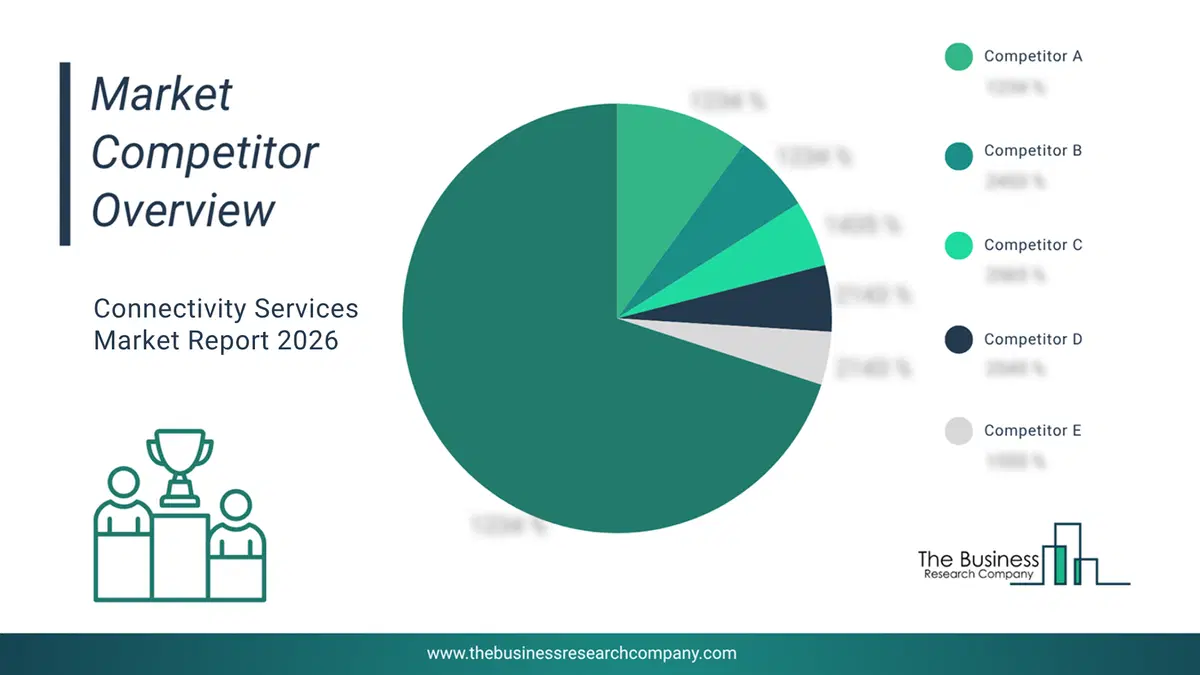
This chart is for illustrative purposes; the full report includes a detailed competitor analysis and comprehensive overview of the top 10 companies in the market.
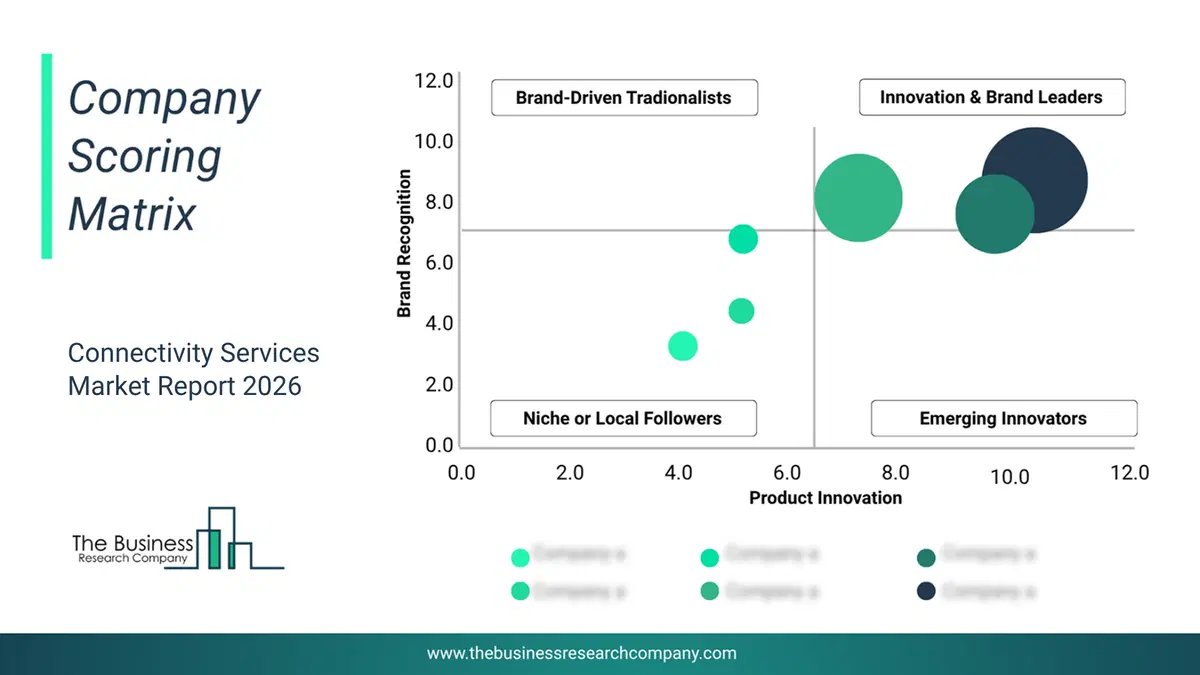
This chart maps companies by product innovation and brand strength, with bubble size indicating relative revenue, helping identify market leaders, challengers, and niche players. This is an illustrative chart; the full report provides a complete and accurate competitive analysis.
Global Connectivity Services Market Trends and Insights
Major companies operating in the connectivity services market are focusing on developing advanced solutions, such as AI‑native Network‑as‑a‑Service (NaaS) solution, to automate network management and optimization. An AI-native Network-as-a-Service (NaaS) solution is a cloud-delivered networking model that uses built-in artificial intelligence to automatically manage, optimize, and scale network resources based on real-time conditions and demand. For instance, in January 2025, NWN Corporation, a US-based managed services provider, launched Intelligent Connectivity, an advanced AI-native Network-as-a-Service (NaaS) solution that transforms how organizations design, manage, and scale modern network infrastructure. Built on HPE Mist technology and integrated with NWN’s patented Experience Management Platform (EMP), Intelligent Connectivity offers end-to-end visibility, predictive analytics, and automated network operations across the full networking stack. Introduced at the HPE Networking global sales leadership event, it helps organizations move away from reactive, hardware-dependent network management toward a more intelligent, service-based approach. Its key differentiator is an outcome-focused framework that continuously aligns network performance with changing business needs.What Are Latest Mergers And Acquisitions In The Connectivity Services Market?
In June 2025, NETGEAR Inc., a US-based provider of networking and connectivity solutions, acquired Exium for an undisclosed amount. As a result of the acquisition, Netgear plans to integrate Exium’s technology into its Insight cloud management platform. This combination will create an all-in-one solution that unifies wired and wireless networking, firewall capabilities, and integrated security to address evolving AI-driven security challenges. Exium is a US-based provider of connectivity services.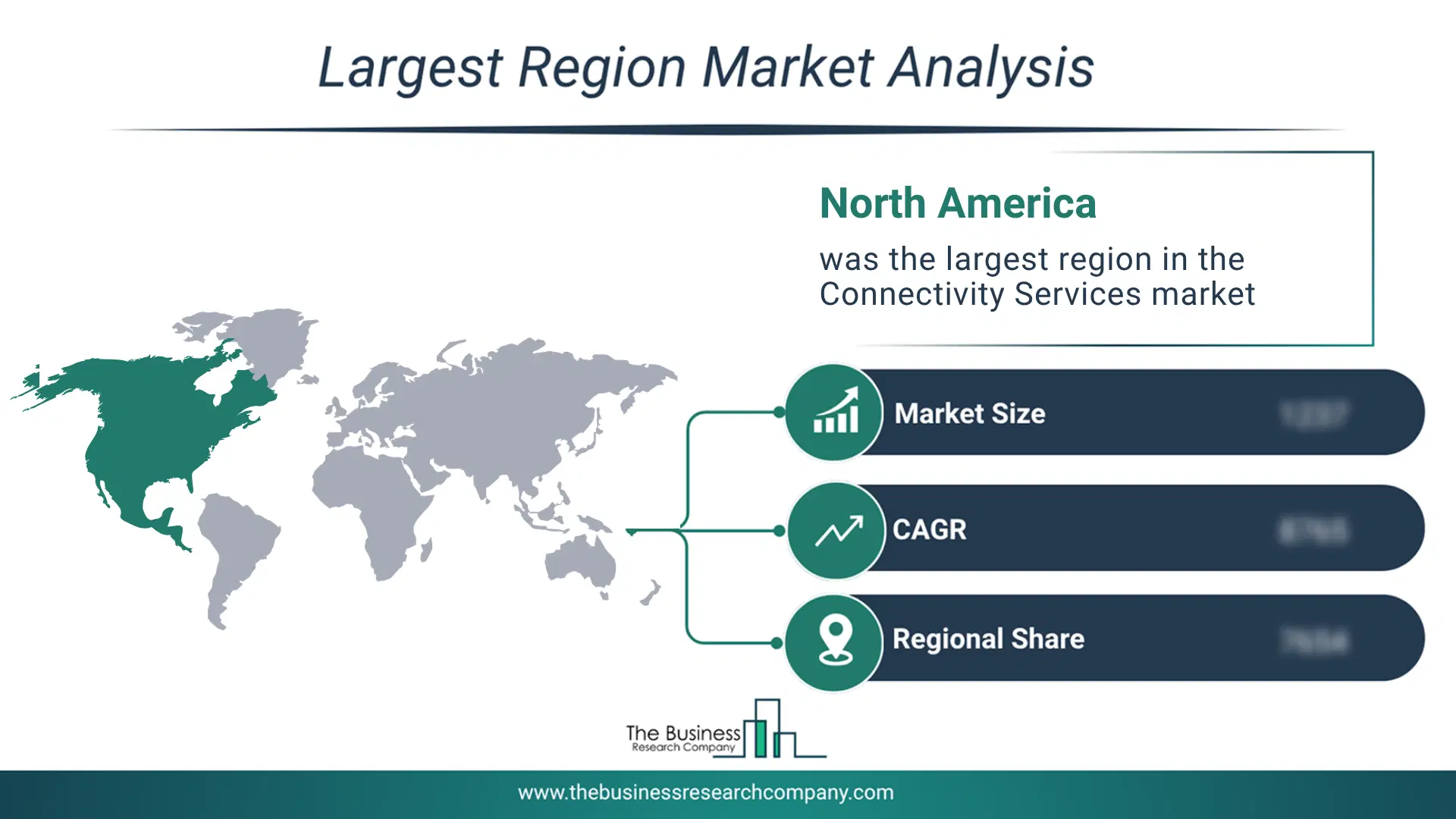
Regional Insights
North America was the largest region in the connectivity services market in 2025. Asia-Pacific is expected to be the fastest-growing region in the forecast period. The regions covered in this market report are Asia-Pacific, South East Asia, Western Europe, Eastern Europe, North America, South America, Middle East, Africa. The countries covered in this market report are Australia, Brazil, China, France, Germany, India, Indonesia, Japan, Taiwan, Russia, South Korea, UK, USA, Canada, Italy, Spain.What Defines the Connectivity Services Market?
The connectivity services market includes revenues earned by entities by providing services such as IoT network provisioning, connectivity‑as‑a‑service (CaaS), managed connectivity operations, data routing, network integration and deployment services. The market value includes the value of related goods sold by the service provider or included within the service offering. Only goods and services traded between entities or sold to end consumers are included.How is Market Value Defined and Measured?
The market value is defined as the revenues that enterprises gain from the sale of goods and/or services within the specified market and geography through sales, grants, or donations in terms of the currency (in USD unless otherwise specified). The revenues for a specified geography are consumption values that are revenues generated by organizations in the specified geography within the market, irrespective of where they are produced. It does not include revenues from resales along the supply chain, either further along the supply chain or as part of other products.
This chart presents market attractiveness based on a quantitative evaluation of growth, competition, strategic alignment, and risk, offering a clear view of opportunity areas for decision-making. This chart is for illustrative purposes; the full report contains the complete analysis.

This chart highlights the Total Addressable Market (TAM) by estimating the maximum revenue opportunity using an assumption-driven approach, supporting strategic planning and opportunity sizing across markets. The chart is illustrative; the full report provides a more comprehensive analysis.
What Key Data and Analysis Are Included in the Connectivity Services Market Report 2026?
The connectivity services market research report is one of a series of new reports from The Business Research Company that provides market statistics, including industry global market size, regional shares, competitors with the market share, detailed market segments, market trends and opportunities, and any further data you may need to thrive in the connectivity services industry. The market research report delivers a complete perspective of everything you need, with an in-depth analysis of the current and future state of the industry.Connectivity Services Market Report Forecast Analysis
| Report Attribute | Details |
|---|---|
| Market Size Value In 2026 | $4.61 billion |
| Revenue Forecast In 2030 | $9.3 billion |
| Growth Rate | CAGR of 19.2% from 2026 to 2030 |
| Base Year For Estimation | 2025 |
| Actual Estimates/Historical Data | 2020-2025 |
| Forecast Period | 2026 - 2030 |
| Market Representation | Revenue in USD Billion and CAGR from 2026 to 2030 |
| Segments Covered | Service Type, Technology, Organization Size, End-User Industry |
| Regional Scope | Asia-Pacific, Western Europe, Eastern Europe, North America, South America, Middle East, Africa |
| Country Scope | The Countries Covered In This Market Report Are Australia, Brazil, China, France, Germany, India, Indonesia, Japan, Taiwan, Russia, South Korea, Uk, Usa, Canada, Italy, Spain. |
| Key Companies Profiled | Verizon Communications Inc., AT&T Inc., Comcast Corporation, Deutsche Telekom AG, Huawei Technologies Co. Ltd., Dell Technologies Inc., Orange S.A., Vodafone Group Plc, América Móvil S.A.B. de C.V., Hewlett Packard Enterprise Company, BT Group plc, Telefonaktiebolaget LM Ericsson, Nokia Corporation, KT Corporation, Bharti Airtel Limited, Telstra Corporation Limited, Reliance Jio Infocomm Limited, MTN Group Limited, GTT Communications Inc., 1NCE GmbH, Celona Inc., EMnify GmbH, floLIVE Ltd., Arelion AB, Druid Software Limited |
| Customization Scope | Request for Customization |
| Pricing And Purchase Options | Explore Purchase Options |