

Constipation Treatment Market Report 2026
Global Outlook – By Therapeutic Types (Laxatives, Chloride Channel Activators, Peripherally Acting Mu-Opioid Receptor Antagonists, Guanylate Cyclase-C (GC-C) Agonists, Other Therapeutics), By Disease Type (Chronic Idiopathic Constipation (CIC), Irritable Bowel Syndrome With Constipation (IBS-C), Opioid-Induced Constipation (OIC)), By Distribution Channel (Hospital Pharmacies, Retail Pharmacies, Online Pharmacies) - Market Size, Trends, And Global Forecast 2026-2030
Constipation Treatment Market Overview
• Constipation Treatment market size has reached to $12.71 billion in 2025 • Expected to grow to $18.72 billion in 2030 at a compound annual growth rate (CAGR) of 8% • Growth Driver: Gastrointestinal Disorders Fueling The Constipation Treatment Market • Market Trend: Innovative Non-Pharmacologic Advancements Driving Next-Generation Therapies In Chronic Gastrointestinal Care • North America was the largest region and fastest growing region.Market Gains By 2030 – Top Opportunities By Segment
Market Gain identifies the most promising market opportunities by highlighting the segments or products expected to generate the highest incremental revenue growth over the next five years.
What Is Covered Under Constipation Treatment Market?
Constipation treatment refers to the numerous methods and measures taken to alleviate and manage the ailment, which is characterized by irregular or difficult bowel motions and frequently hard or dry stools. It is used to examine the rectum and lower, or sigmoid, colon and to treat constipation. The main types of therapeutics for constipation treatment are laxatives, chloride channel activators, peripherally acting mu-opioid receptor antagonists, GC-C (guanylate cyclase-c) agonists, and others. Laxatives refer to a material that facilitates the release of intestinal feces in humans that are used in constipation treatment to improve stool size, frequency, and motility. These are used for chronic idiopathic constipation (CIC), irritable bowel syndrome with constipation (IBS-C), and opioid-induced constipation (OIC) diseases and are distributed by various channels including hospital pharmacies, retail pharmacies, and online pharmacies.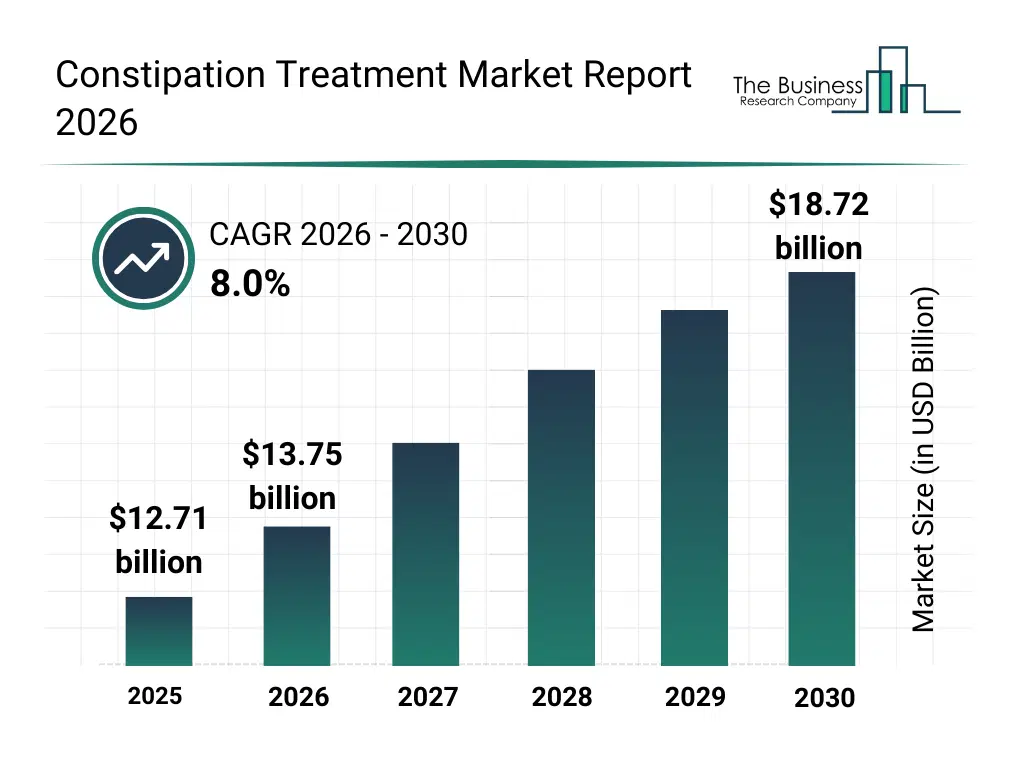
What Is The Constipation Treatment Market Size and Share 2026?
The constipation treatment market size has grown strongly in recent years. It will grow from $12.71 billion in 2025 to $13.75 billion in 2026 at a compound annual growth rate (CAGR) of 8.2%. The growth in the historic period can be attributed to high prevalence of gastrointestinal disorders, sedentary lifestyle patterns, dietary fiber deficiency, reliance on traditional laxatives, aging population growth.What Is The Constipation Treatment Market Growth Forecast?
The constipation treatment market size is expected to see strong growth in the next few years. It will grow to $18.72 billion in 2030 at a compound annual growth rate (CAGR) of 8.0%. The growth in the forecast period can be attributed to rising chronic constipation cases, increasing opioid usage, growing awareness of gut health, expansion of specialty gastroenterology care, improved access to novel therapeutics. Major trends in the forecast period include rising use of prescription therapies for chronic constipation, growing adoption of probiotics and gut health products, shift toward targeted mechanism-based drugs, increased focus on opioid-induced constipation management, expansion of online pharmacy distribution.
Global Constipation Treatment Market Segmentation
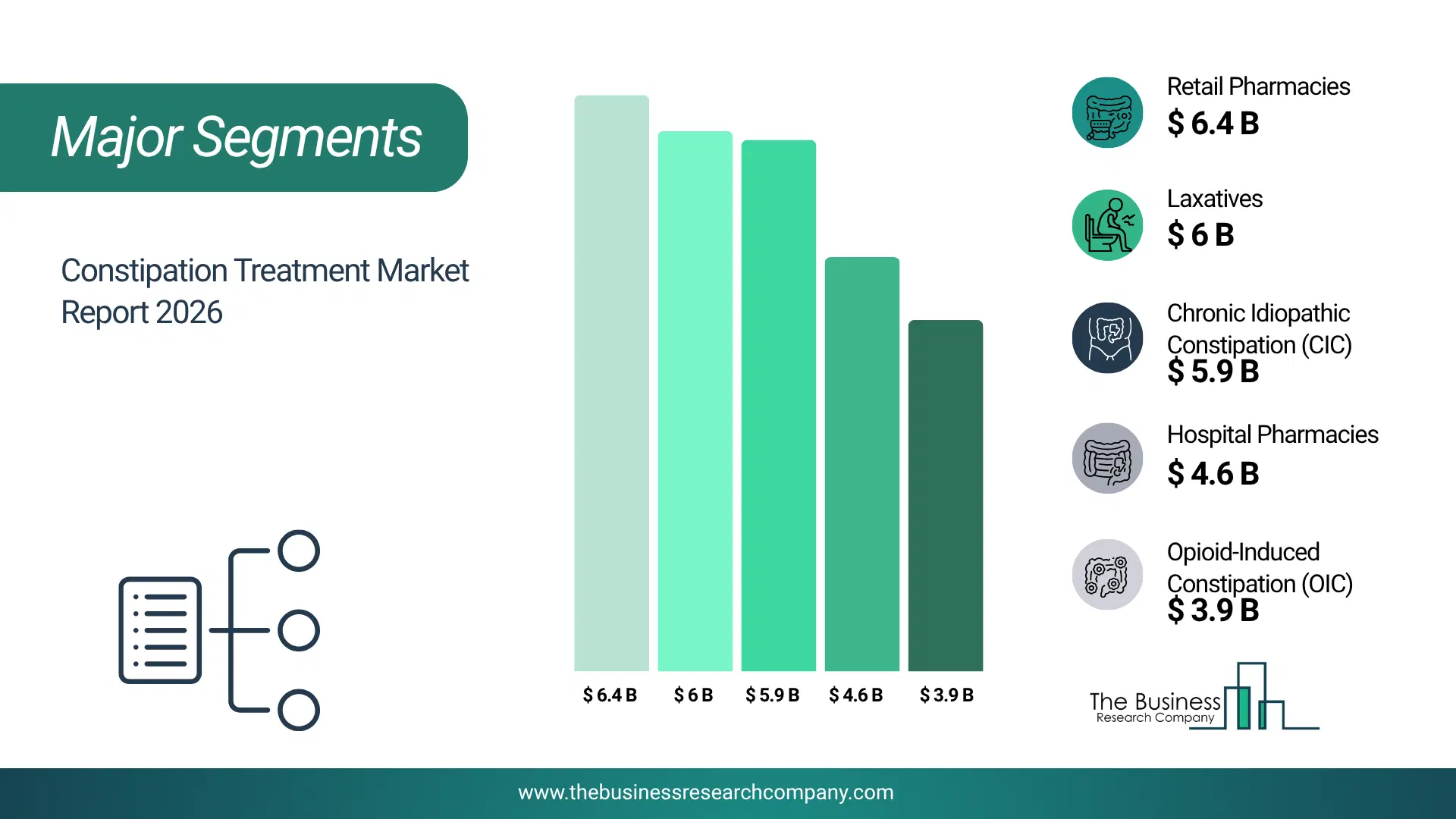
1) By Therapeutic Types: Laxatives, Chloride Channel Activators, Peripherally Acting Mu-Opioid Receptor Antagonists, Guanylate Cyclase-C (GC-C) Agonists, Other Therapeutics 2) By Disease Type: Chronic Idiopathic Constipation (CIC), Irritable Bowel Syndrome With Constipation (IBS-C), Opioid-Induced Constipation (OIC) 3) By Distribution Channel: Hospital Pharmacies, Retail Pharmacies, Online Pharmacies Subsegments: 1) By Laxatives: Bulk-Forming Laxatives, Osmotic Laxatives, Stimulant Laxatives, Stool Softeners 2) By Chloride Channel Activators: Lubiprostone-Based Formulations, Other Chloride Channel Activators 3) By Peripherally Acting Mu-Opioid Receptor Antagonists: Methylnaltrexone Formulations, Naloxegol Formulations, Other PAMORAs 4) By Guanylate Cyclase-C (GC-C) Agonists: Linaclotide Formulations, Plecanatide Formulations, Other GC-C Agonists 5) By Other Therapeutics: Prokinetic Agents, Serotonin 5-HT4 Receptor Agonists, Herbal and Alternative Formulations The top segments in the constipation treatment market will be: • Retail Pharmacies will reach $6490.26 Million by 2025. • Laxatives will reach $6085.28 Million by 2025. • Chronic Idiopathic Constipation (CIC) will reach $5920.44 Million by 2025. • Hospital Pharmacies will reach $4641.71 Million by 2025. • Opioid-Induced Constipation (OIC) will reach $3936.86 Million by 2025.What Is The Driver Of The Constipation Treatment Market?
The rising incidence of gastrointestinal disorders is expected to boost the growth of the constipation treatment market going forward. Gastrointestinal disorders, often referred to as digestive disorders, encompass a range of conditions that affect the digestive tract. Constipation is a common symptom of many gastrointestinal (GI) disorders. The increasing prevalence of gastrointestinal disorders, including irritable bowel syndrome (IBS) and inflammatory bowel disease (IBD), propels the constipation treatment market's growth as these conditions frequently coincide with constipation, fostering a heightened need for specific and effective treatments amid growing awareness. For instance, in January 2024, according to the American Cancer Society, a US-based non-profit organization, approximately 26,890 new cases of stomach cancer are anticipated in the U.S. in 2024, with 16,160 cases in men and 10,730 in women. It is also expected that this type of cancer will lead to about 10,880 deaths, comprising 6,490 men and 4,390 women. Therefore, the rising incidence of gastrointestinal disorders is driving the growth of the constipation treatment industry.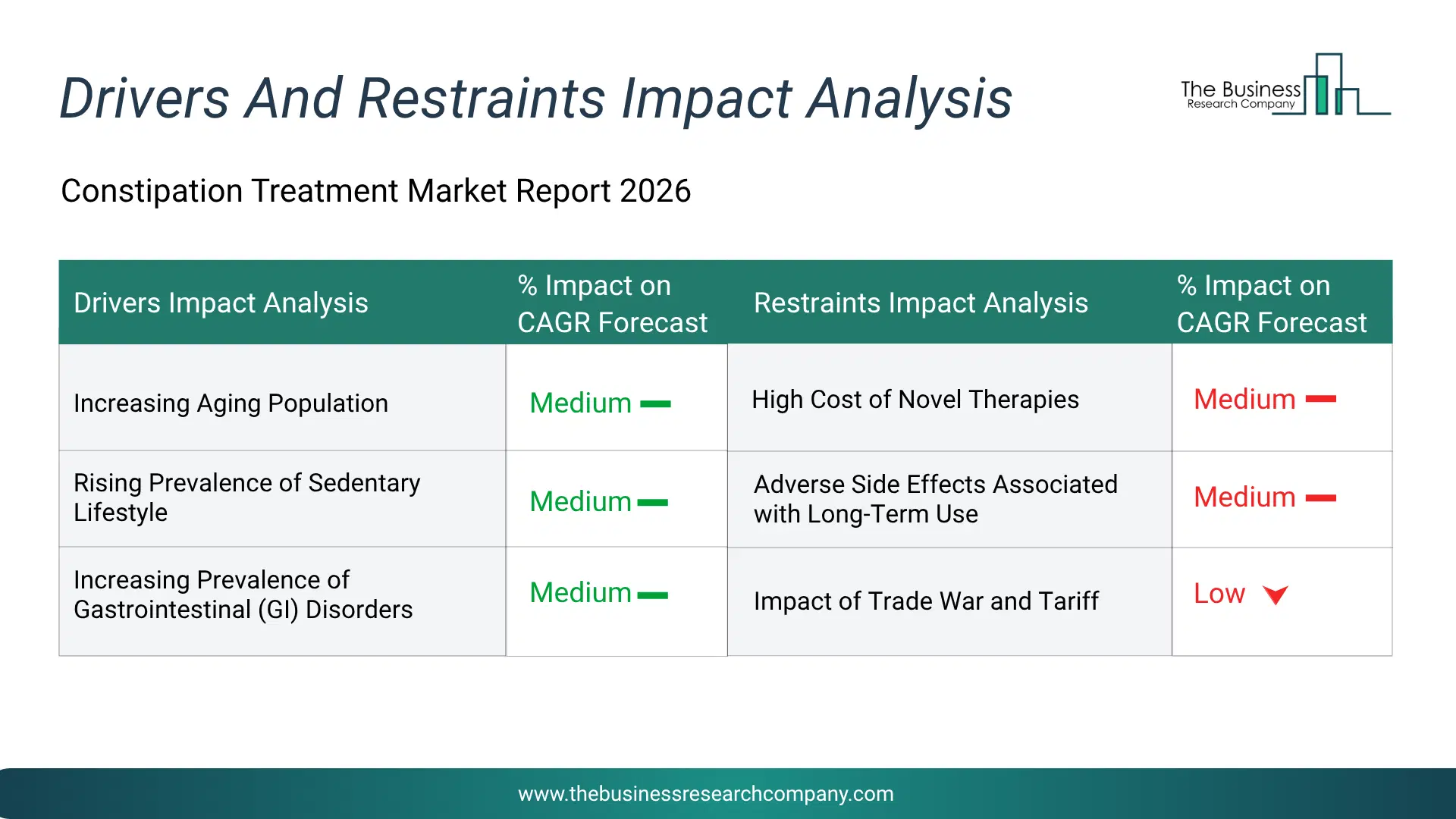
Infographic Chart Showing Key Market Drivers Analysis And Restraints For Constipation Treatment Market
The chart presents an impact analysis of key drivers and restraints, quantifying their relative influence on the market's growth rate and helping assess the balance between growth enablers and limiting factors. This chart offers a high-level perspective; the full report contains more detailed insights.
How Will The Drivers Impact Growth In The Global Constipation Treatment Market?
• Increasing Aging Population (Medium) – The increasing aging population will become a key driver of growth in the constipation treatment market by 2030. The elderly population is more susceptible to chronic constipation due to age-related physiological changes such as slower intestinal transit, decreased physical activity, polypharmacy and reduced dietary fiber intake, all of which increase the need for effective constipation management solutions. Constipation treatments, including laxatives, prokinetics and lifestyle management programs, cater significantly to geriatric health needs by improving bowel function and overall quality of life. Moreover, as healthcare systems and pharmaceutical industries increasingly focus on elderly care and preventive gastrointestinal health, the demand for specialized and safer treatment options continues to grow. As the global proportion of people aged 65 years or older continues to expand, particularly in regions with rapidly ageing demographics such as Europe and Asia, the requirement for reliable and patient-friendly constipation therapies will substantially increase, thereby driving the growth of the constipation treatment market. As a result, the increasing aging population is anticipated to contributing to a 1.5% annual growth in the market. • Rising Prevalence of Sedentary Lifestyle (Medium) – The rising prevalence of sedentary lifestyle will emerge as a major factor driving the expansion of the constipation treatment market by 2030. Low physical activity slows gastrointestinal motility and reduces bowel movement frequency, leading to a higher risk of constipation and related digestive issues. The growing use of digital technologies, urban commuting patterns and remote work setups have intensified sedentary behavior globally, resulting in a surge in digestive health problems. Moreover, changing work environments and declining engagement in physical exercise are contributing to lifestyle-related disorders such as chronic constipation. Therefore, as sedentary lifestyles become more widespread across both developed and developing nations, the demand for constipation treatment products and therapies is expected to rise substantially during the forecast period. Consequently, the accelerating rising prevalence of sedentary lifestyle capabilities is projected to contributing to a 1.3% annual growth in the market. • Increasing Prevalence of Gastrointestinal (GI) Disorders (Medium) – The increasing prevalence of gastrointestinal (GI) disorders processes will serve as a key growth catalyst for the constipation treatment market by 2030. Conditions such as irritable bowel syndrome (IBS), chronic constipation and inflammatory bowel diseases are becoming more common due to sedentary lifestyles, unhealthy diets and stress-related factors. These disorders not only impair quality of life but also increase healthcare costs and demand for effective pharmacological and non-pharmacological treatments. Furthermore, growing clinical awareness and improved diagnostic capabilities have led to a higher identification rate of GI disorders globally, expanding the patient pool requiring constipation management. Rising healthcare investments, along with the introduction of specialized therapies designed to enhance intestinal motility and balance the gut microbiome, are expected to further support market growth. Therefore, this increasing prevalence of gastrointestinal (GI) disorders processes operations is projected to supporting to a 1.0% annual growth in the market. • Rising Demand for Over-the-Counter (OTC) Laxatives (Low) – The rising demand for over-the-counter (OTC) laxatives will become a significant driver contributing to the growth of the constipation treatment market by 2030. The increasing consumer shift toward self-medication and non-prescription digestive health solutions is driving the widespread adoption of OTC laxatives. These products offer convenience, affordability and immediate relief, qualities that align with the modern preference for self-managed healthcare. Moreover, the growth of e-pharmacies and retail drug networks has made these treatments more accessible to consumers. As individuals increasingly prioritize preventive care and quick symptom management, the reliance on OTC laxatives as the first line of defence against constipation is expected to rise substantially, thereby accelerating the expansion of the constipation treatment market. Consequently, the rising demand for over-the-counter (OTC) laxatives strategies is projected to contributing to a 0.8% annual growth in the market.How Will The Restraints Impact Growth In The Global Constipation Treatment Market?
• High Cost of Novel Therapies (Medium) – High Cost of Novel Therapies will restrict the growth of the Constipation Treatment market during the forecast period. New constipation treatments including novel pharmacotherapies can be expensive, limiting patient access and healthcare affordability. High costs create barriers in regions with limited coverage or high out-of-pocket expenses. Cost constraints can affect the adoption of innovative treatments and limit market growth. • Adverse Side Effects Associated with Long-Term Use (Medium) – Adverse Side Effects Associated with Long-Term Use will restrict the growth of the Constipation Treatment market during the forecast period. Long-term use of constipation medications can cause adverse side effects including electrolyte imbalance and dependency. Side effect concerns can affect treatment compliance and patient willingness to continue therapy. Safety concerns can limit the market potential for chronic constipation treatments. • Impact of Trade War and Tariff (Low) – Impact of Trade War and Tariff will restrict the growth of the Constipation Treatment market during the forecast period. Constipation treatment production relies on imported active pharmaceutical ingredients subject to trade tariffs. Trade barriers can increase production costs and affect product availability. Trade tensions may also impact pharmaceutical supply chains and market growth.Key Players In The Global Constipation Treatment Market
Major companies operating in the constipation treatment market are Pfizer, Johnson & Johnson, AbbVie, Bayer, Sanofi, Fresenius Kabi, GlaxoSmithKline, Takeda Pharmaceutical Company Ltd, Bausch Health Companies Inc, Salix Pharmaceuticals Inc, Prestige Consumer Healthcare Inc, Ironwood Pharmaceuticals Inc, Cosmo Pharmaceuticals NV, Ferring Pharmaceuticals, Probi AB, 4D Pharma plc, Abbott Laboratories, Albireo Pharma Inc, Ardelyx Inc, Synergy Pharmaceuticals Inc, Astellas Pharma Inc, Allergan plc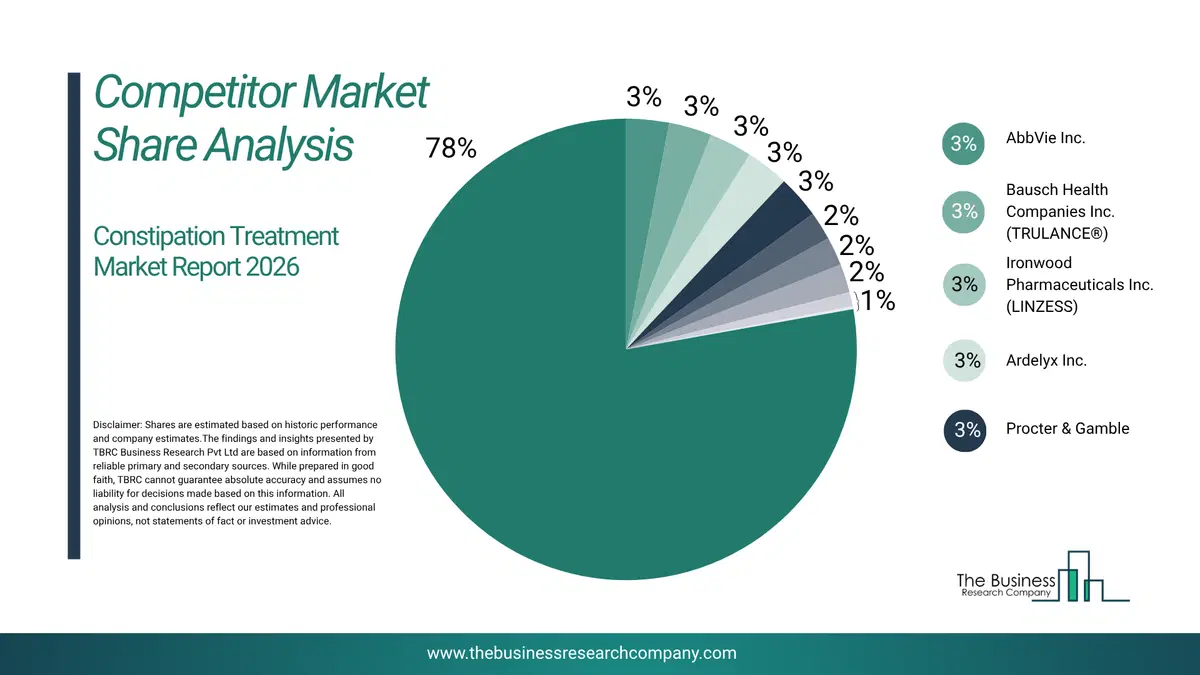
This chart is for illustrative purposes; the full report includes a detailed competitor analysis and comprehensive overview of the top 10 companies in the market.
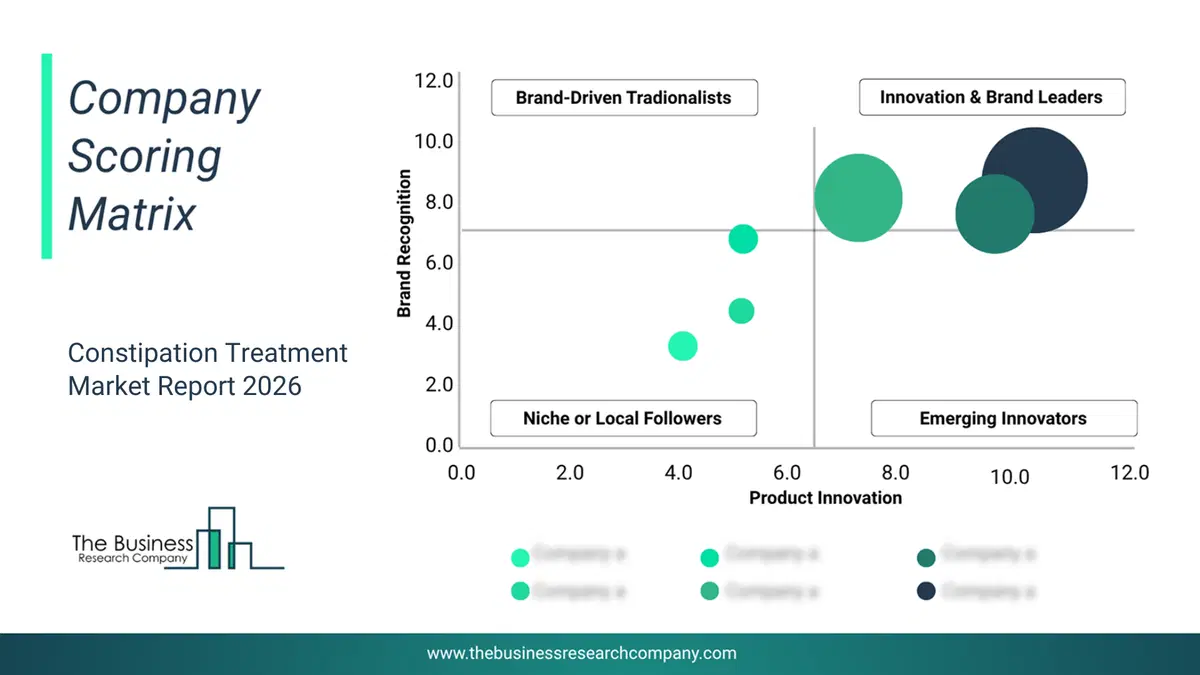
This chart maps companies by product innovation and brand strength, with bubble size indicating relative revenue, helping identify market leaders, challengers, and niche players. This is an illustrative chart; the full report provides a complete and accurate competitive analysis.
Global Constipation Treatment Market Trends and Insights
Major companies operating in the constipation treatment market are focusing on developing innovative solutions, such as drug-free mechanical stimulation capsules (vibrating capsules), to meet the rising demand for effective, side-effect-sparing therapies driven by an aging population, greater opioid use, and patient preference for non-pharmacologic options. A vibrating capsule is a swallowable, single-use oral device that contains a small vibration motor and battery encased in a medical-grade, excretable shell; it is designed to mechanically stimulate the colon at programmed times to induce peristalsis, offering predictable bowel movements without the systemic effects of laxatives or prescription prokinetics. For instance, in May 2023, Vibrant Ltd., a US-based medical technology company, launched Vibrant, a prescription-only vibrating capsule system cleared by the U.S. Food and Drug Administration (FDA) for adults with chronic idiopathic constipation who have not responded to laxatives. The system includes a reusable activation pod and a single-use capsule containing a coin-sized vibration motor, an electronic control card, and batteries, all enclosed in a two-piece shell. The pod programs the capsule, which then delivers a series of short vibration cycles, approximately 190 cycles per hour with timed bursts and rests, engineered to stimulate colonic contractions.What Are Latest Mergers And Acquisitions In The Constipation Treatment Market?
In March 2023, Ipsen, a France-based pharma company acquired Albireo Pharma Inc. for an undisclosed amount. Through the acquisition of Albireo, Ipsen strengthens its portfolio in rare diseases. Albireo Pharma Inc. is a US-based biotech company developing drugs for the treatment of chronic constipation.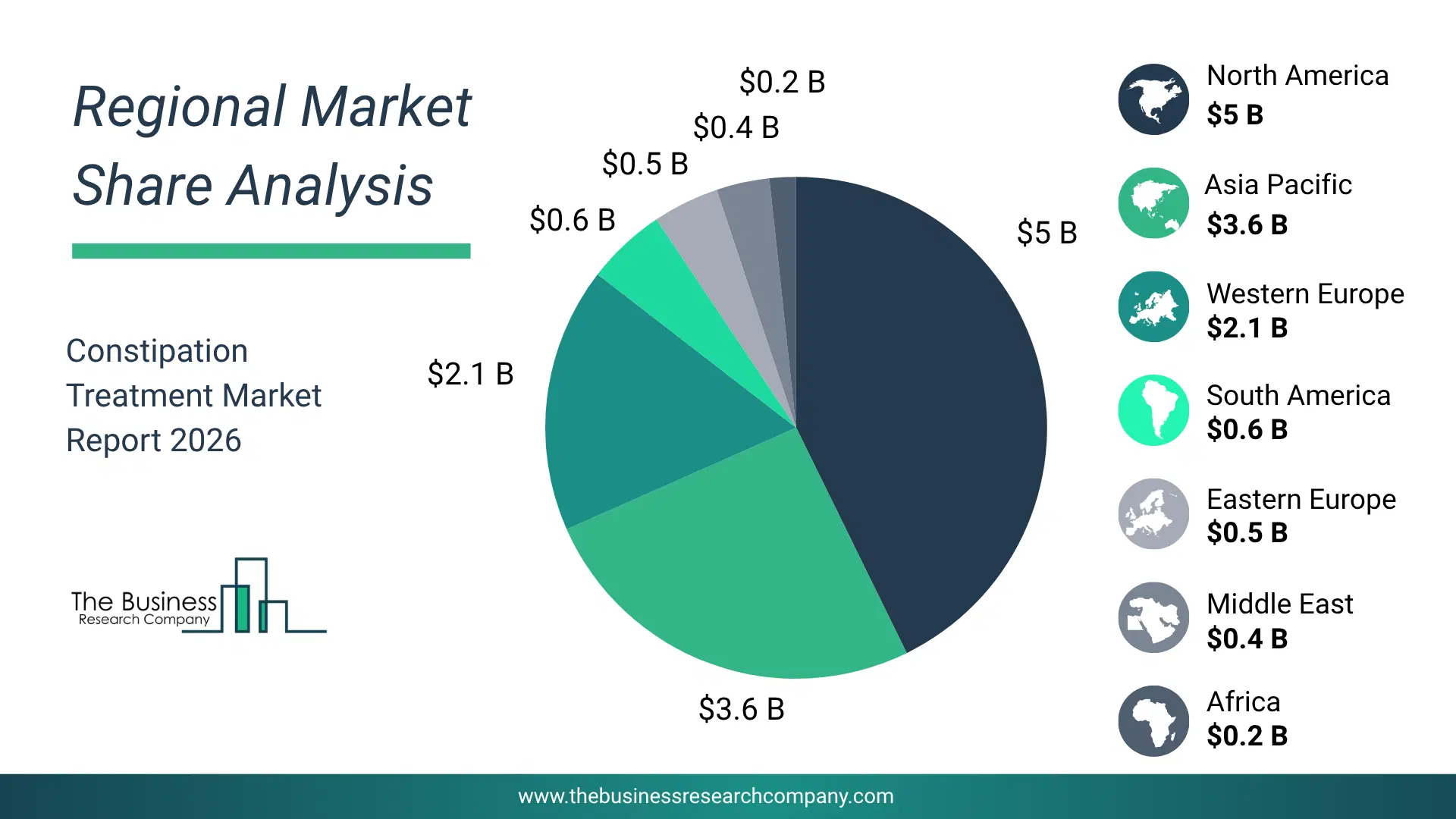
Regional Outlook
North America was the largest region in the constipation treatment market in 2025. North America is expected to be the fastest-growing region in the forecast period. The regions covered in this market report are Asia-Pacific, South East Asia, Western Europe, Eastern Europe, North America, South America, Middle East, Africa. The countries covered in this market report are Australia, Brazil, China, France, Germany, India, Indonesia, Japan, Taiwan, Russia, South Korea, UK, USA, Canada, Italy, Spain.What Defines the Constipation Treatment Market?
The constipation treatment market consists of sales of polyethylene glycol, bisacodyl, tegaserod, lubiprostone, and senna. Values in this market are ‘factory gate’ values, that is the value of goods sold by the manufacturers or creators of the goods, whether to other entities (including downstream manufacturers, wholesalers, distributors, and retailers) or directly to end customers. The value of goods in this market includes related services sold by the creators of the goods.How is Market Value Defined and Measured?
The market value is defined as the revenues that enterprises gain from the sale of goods and/or services within the specified market and geography through sales, grants, or donations in terms of the currency (in USD unless otherwise specified). The revenues for a specified geography are consumption values that are revenues generated by organizations in the specified geography within the market, irrespective of where they are produced. It does not include revenues from resales along the supply chain, either further along the supply chain or as part of other products.
This chart presents market attractiveness based on a quantitative evaluation of growth, competition, strategic alignment, and risk, offering a clear view of opportunity areas for decision-making. This chart is for illustrative purposes; the full report contains the complete analysis.

This chart highlights the Total Addressable Market (TAM) by estimating the maximum revenue opportunity using an assumption-driven approach, supporting strategic planning and opportunity sizing across markets. The chart is illustrative; the full report provides a more comprehensive analysis.
What Key Data and Analysis Are Included in the Constipation Treatment Market Report 2026?
The constipation treatment market research report is one of a series of new reports from The Business Research Company that provides market statistics, including industry global market size, regional shares, competitors with the market share, detailed market segments, market trends and opportunities, and any further data you may need to thrive in the constipation treatment industry. The market research report delivers a complete perspective of everything you need, with an in-depth analysis of the current and future state of the industry.Constipation Treatment Market Report Forecast Analysis
| Report Attribute | Details |
|---|---|
| Market Size Value In 2026 | $13.75 billion |
| Revenue Forecast In 2030 | $18.72 billion |
| Growth Rate | CAGR of 8.2% from 2026 to 2030 |
| Base Year For Estimation | 2025 |
| Actual Estimates/Historical Data | 2020-2025 |
| Forecast Period | 2026 - 2030 |
| Market Representation | Revenue in USD Billion and CAGR from 2026 to 2030 |
| Segments Covered | Therapeutic Types, Disease Type, Distribution Channel |
| Regional Scope | Asia-Pacific, Western Europe, Eastern Europe, North America, South America, Middle East, Africa |
| Country Scope | The countries covered in the report are Australia, Brazil, China, France, Germany, India, Indonesia, Japan, Taiwan, Russia, South Korea, UK, USA, Canada, Italy, Spain. |
| Key Companies Profiled | Pfizer, Johnson & Johnson, AbbVie, Bayer, Sanofi, Fresenius Kabi, GlaxoSmithKline, Takeda Pharmaceutical Company Ltd, Bausch Health Companies Inc, Salix Pharmaceuticals Inc, Prestige Consumer Healthcare Inc, Ironwood Pharmaceuticals Inc, Cosmo Pharmaceuticals NV, Ferring Pharmaceuticals, Probi AB, 4D Pharma plc, Abbott Laboratories, Albireo Pharma Inc, Ardelyx Inc, Synergy Pharmaceuticals Inc, Astellas Pharma Inc, Allergan plc |
| Customization Scope | Request for Customization |
| Pricing And Purchase Options | Explore Purchase Options |