
Convenience Store Retailing Market Report 2026
Global Outlook – By Store Type (Traditional Convenience Stores, Gas Station Convenience Stores, Hyper Convenience Stores), By Product Offering (Food And Beverages, Tobacco Products, Personal Care Products, Household Goods, Other Product Offerings), By Ownership (Franchise, Independent, Chain), By Application (Residential, Office Buildings, Schools, Transportation Hubs, Other Applications) – Market Size, Trends, Strategies, and Forecast to 2030
Convenience Store Retailing Market Overview
• Convenience Store Retailing market size has reached to $2862.83 billion in 2025 • Expected to grow to $4116.89 billion in 2030 at a compound annual growth rate (CAGR) of 7.5% • Growth Driver: Rising Purchases Of Ready-To-Eat Meals Driving The Market Growth Due To Busy Lifestyles And Increasing Demand For Convenience • Market Trend: Innovation In Transit-Oriented Convenience Store Concepts Enhancing Urban Commuter Retail Experiences • Asia-Pacific was the largest region and fastest growing region.What Is Covered Under Convenience Store Retailing Market?
Convenience store retailing refers to the operation of small-format retail outlets that offer a limited assortment of frequently purchased consumer goods and essential services in easily accessible locations. These stores are designed to provide quick and convenient shopping experiences, typically featuring extended operating hours and a streamlined product selection. They enable consumers to purchase everyday necessities efficiently while supporting immediate consumption and routine household needs. The main store types of convenience store retailing include traditional convenience stores, gas station convenience stores, and hyper convenience stores. Traditional convenience stores refer to small retail outlets that offer a limited assortment of everyday consumer goods, snacks, beverages, and essential household items with extended operating hours. These stores provide product offerings including food and beverages, tobacco products, personal care products, household goods, and other product offerings. They operate under franchise, independent, and chain ownership models and they find application in residential, office buildings, schools, transportation hubs, and others.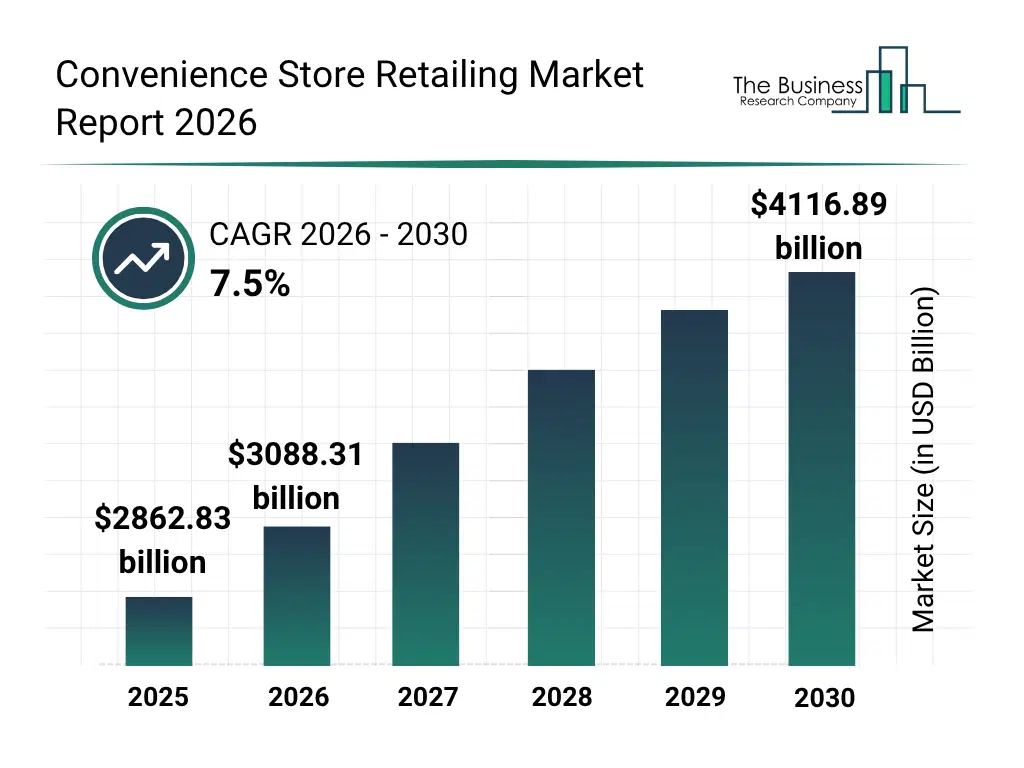
What Is The Convenience Store Retailing Market Size and Share 2026?
The convenience store retailing market size has grown strongly in recent years. It will grow from $2862.83 billion in 2025 to $3088.31 billion in 2026 at a compound annual growth rate (CAGR) of 7.9%. The growth in the historic period can be attributed to increasing urbanization and population growth, growing demand for quick and accessible shopping options, rising consumer preference for immediate purchase convenience, increasing expansion of retail outlet networks, growing adoption of convenience stores in transportation and high traffic locations.What Is The Convenience Store Retailing Market Growth Forecast?
The convenience store retailing market size is expected to see strong growth in the next few years. It will grow to $4116.89 billion in 2030 at a compound annual growth rate (CAGR) of 7.5%.The growth in the forecast period can be attributed to increasing demand for digital payment enabled retail experiences, growing expansion of convenience stores in emerging markets, rising preference for fresh food and ready to consume products, increasing investment in store format modernization, growing demand for efficient inventory management practices. Major trends in the forecast period include increasing adoption of self checkout and automated convenience store solutions, growing expansion of ready to eat food and beverage offerings, rising demand for extended hour and twenty four hour retail services, increasing focus on personalized customer shopping experiences, growing expansion of franchise based convenience store networks.
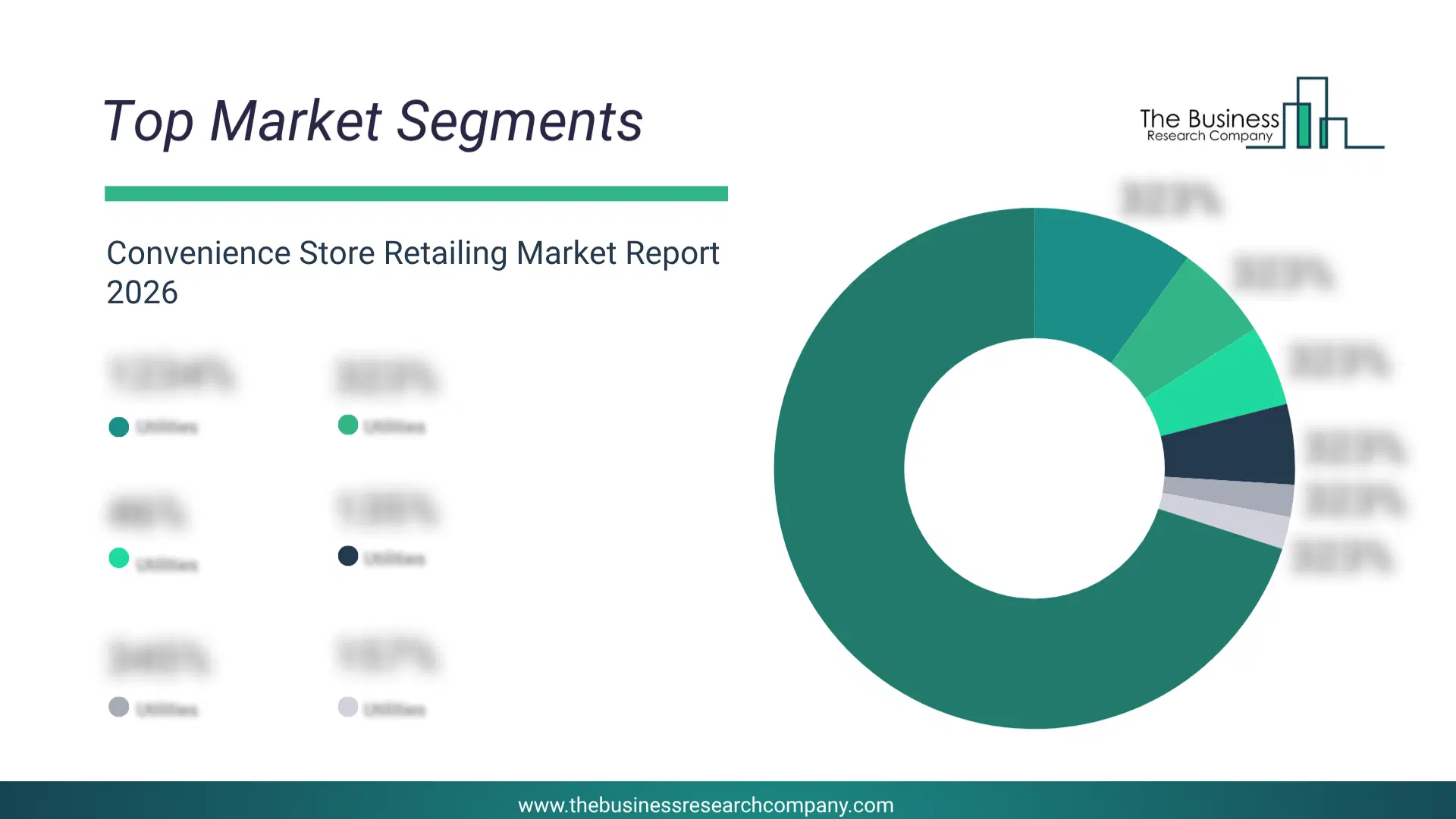
Global Convenience Store Retailing Market Segmentation
2) By Product Offering: Food And Beverages, Tobacco Products, Personal Care Products, Household Goods, Other Product Offerings 3) By Ownership: Franchise, Independent, Chain 4) By Application: Residential, Office Buildings, Schools, Transportation Hubs, Other Applications Subsegments: 1) By Traditional Convenience Stores: Neighborhood Convenience Stores, Independent Convenience Stores, Franchise Convenience Stores, Urban Convenience Stores, Rural Convenience Stores 2) By Gas Station Convenience Stores: Fuel Integrated Convenience Stores, Highway Convenience Stores, Truck Stop Convenience Stores, Branded Oil Company Stores, Express Fuel Mart Stores 3) By Hyper Convenience Stores: Large Format Convenience Stores, Foodservice Focused Convenience Stores, Twenty Four Hour Hyper Convenience Stores, Multi Service Convenience Stores, Premium Convenience StoresWhat Is The Driver Of The Convenience Store Retailing Market?
The rising purchases of ready-to-eat meals are expected to propel the growth of the convenience store retailing market going forward. Ready-to-eat meals are pre-cooked or prepared food products that require little to no additional preparation before consumption. The demand for ready-to-eat meals is increasing due to busy lifestyles, as consumers with hectic work schedules and limited time for meal preparation seek quick, convenient, and time-saving food options that can be consumed with minimal effort. Convenience store retailing caters to the growing demand for ready-to-eat meals by offering a wide range of freshly prepared, packaged, and grab-and-go food options through conveniently located stores with extended operating hours, enabling busy consumers to access quick and time-saving meal solutions while increasing store visits and sales. For instance, in March 2024, according to the report published by the Food Manufacturers, a UK-based online platform dedicated solely to readers working in the UK food and drink manufacturing industry, sales of on-the-go snacks reached 39% in 2023 compared to 2022. Current sales in 2024 showed a 4% increase over the previous year. Therefore, the rising purchases of ready-to-eat meals are driving the growth of the convenience store retailing industry.Key Players In The Global Convenience Store Retailing Market
Major companies operating in the convenience store retailing market are 7-Eleven Inc., Alimentation Couche-Tard Inc, ARKO Corp., Buc-ee's Ltd., Casey's General Stores, EG America LLC, FamilyMart Co. Ltd., Global Partners LP, GS25, Lawson Inc., Love's Travel Stops & Country Stores, Maverik, Ministop Co. Ltd., Murphy USA Inc., Nouria Energy Corporation, OXXO SA DE CV, QuikTrip Corporation, RaceTrac Inc., Reitan AS, Seicomart Co. Ltd., Sheetz Inc., Wawa Inc., Yesway Inc.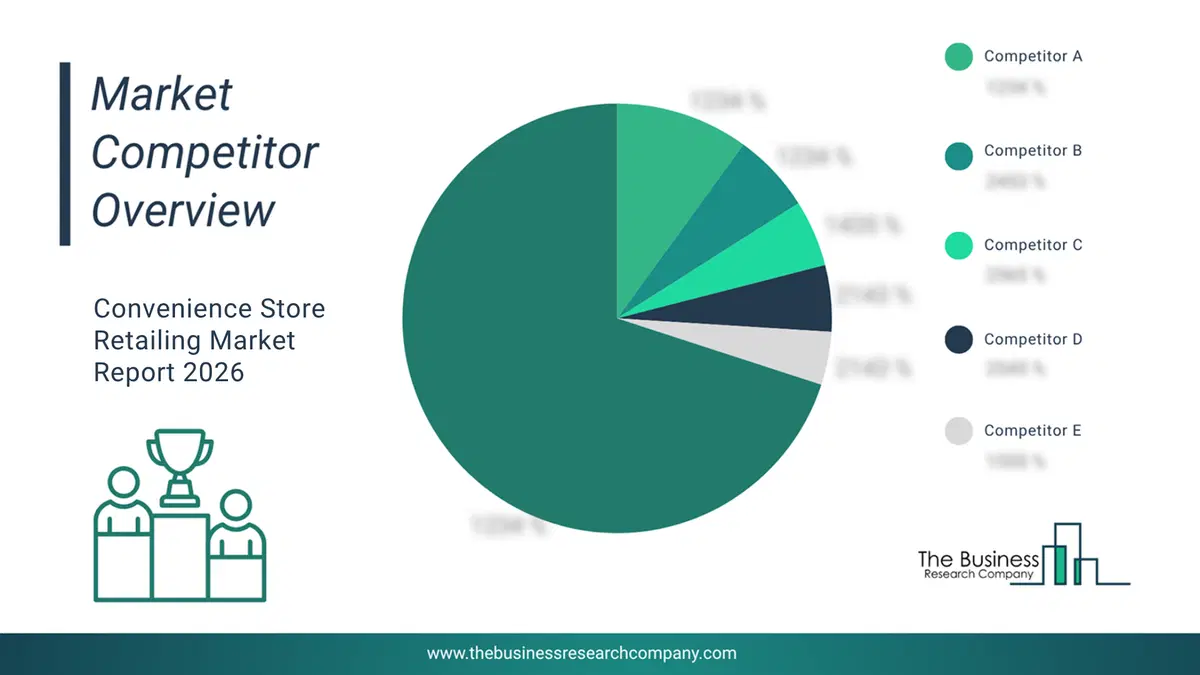
This chart is for illustrative purposes; the full report includes a detailed competitor analysis and comprehensive overview of the top 10 companies in the market.
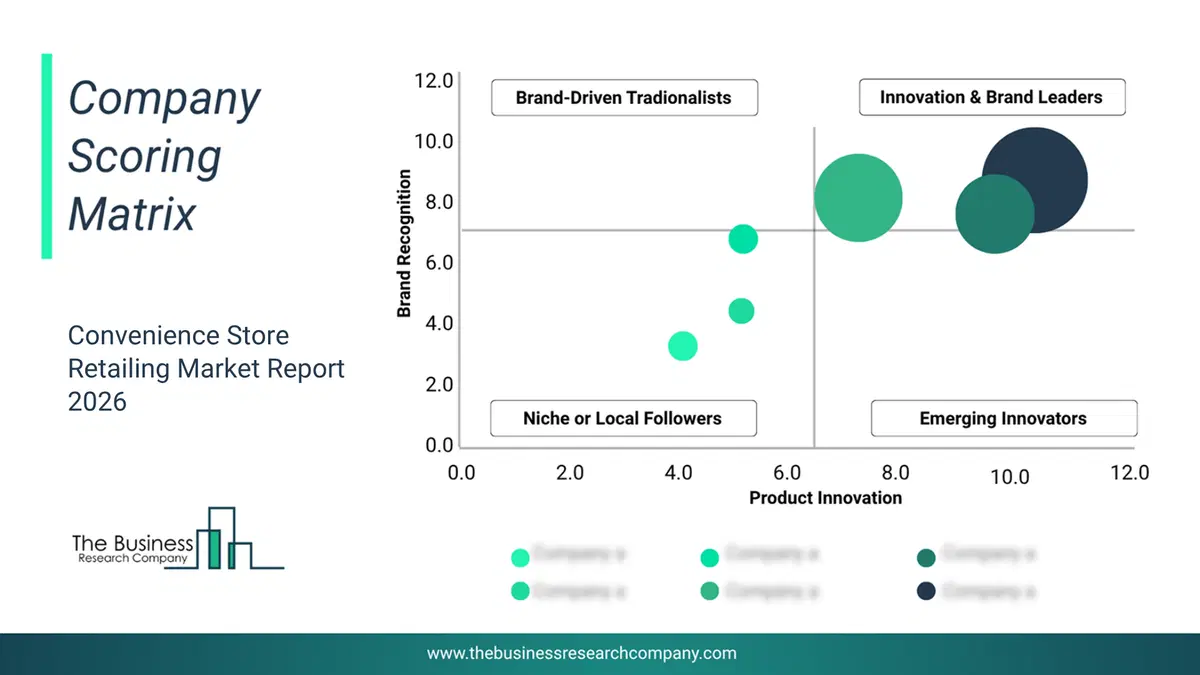
This chart maps companies by product innovation and brand strength, with bubble size indicating relative revenue, helping identify market leaders, challengers, and niche players. This is an illustrative chart; the full report provides a complete and accurate competitive analysis.
Global Convenience Store Retailing Market Trends and Insights
Major companies operating in the convenience store retailing market are focusing on developing advanced solutions, such as transit-oriented convenience store concepts to enhance commuter convenience, expand urban retail access, and drive customer engagement in high-traffic transportation hubs. Transit-oriented convenience store concepts are compact retail formats located within transportation hubs that provide commuters with quick access to essential products and services, helping enhance convenience, increase customer engagement, and drive retail sales in high-traffic transit locations. For instance, in March 2025, Carrefour, a France-based retail company, partnered with Altarea SCA, a France-based real estate development and investment company, and RATP Group, a France-based public transportation operator, to launch a new convenience store concept across 45 metro stations within the Grand Paris Express network. Designed to serve an anticipated 300 million annual passengers, the stores range from 50 to 250 square meters and feature multifunctional retail formats offering groceries, fresh produce, electronic accessories, chargers, earphones, parcel collection points, luggage lockers, and concierge services. The initiative forms part of a broader development plan that could expand to as many as 136 commercial spaces across the network, creating a comprehensive retail ecosystem within transit hubs. Additionally, Carrefour is testing complementary concepts such as fresh produce-focused stores and autonomous self-service formats to address evolving consumer preferences for speed, convenience, and seamless shopping experiences.What Are Latest Mergers And Acquisitions In The Convenience Store Retailing Market?
In August 2024, Fomento Económico Mexicano S.A.B. de C.V. (FEMSA), a Mexico-based multinational beverage and retail company, acquired the retail operations of Delek US Holdings Inc. for $385 million. With this acquisition, Fomento Económico Mexicano, S.A.B. de C.V. (FEMSA) aimed to establish and scale its presence in the U.S. convenience retail market by leveraging its OXXO operating model and expanding its North American retail footprint through the integration of acquired fuel and convenience store assets. Delek US Holdings Inc. is a US-based downstream energy company that specializes in petroleum refining and fuel marketing operations, including a portfolio of convenience stores and gas stations.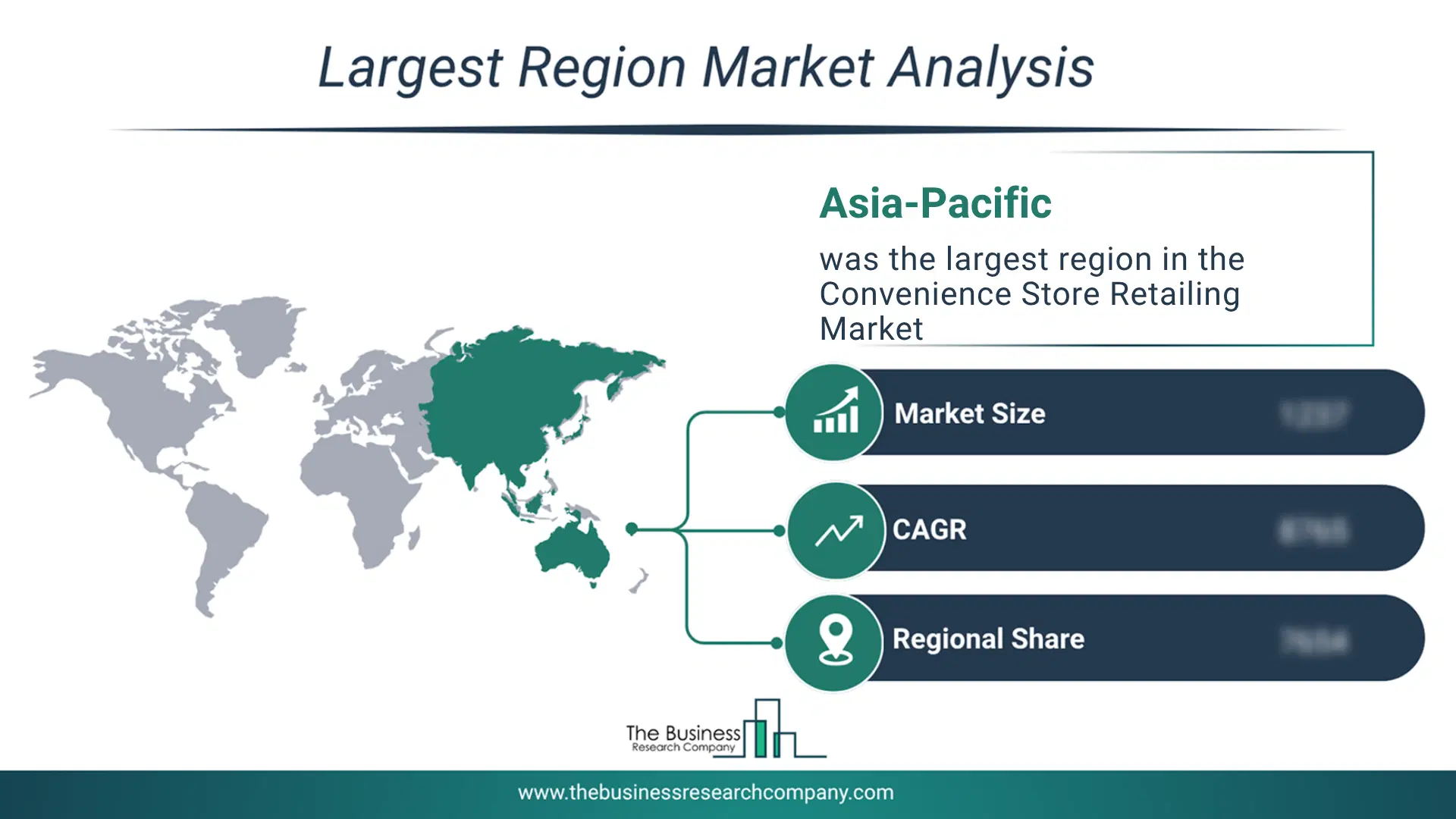
Regional Outlook/Insights
Asia-Pacific was the largest region in the convenience store retailing market in 2025. Asia-Pacific is expected to be the fastest-growing region in the forecast period. The regions covered in this market report are Asia-Pacific, South East Asia, Western Europe, Eastern Europe, North America, South America, Middle East, Africa. The countries covered in this market report are Australia, Brazil, China, France, Germany, India, Indonesia, Japan, Taiwan, Russia, South Korea, UK, USA, Canada, Italy, Spain.What Defines the Convenience Store Retailing Market?
The convenience store retailing market includes revenues earned by entities by providing services such as, bill payment services, mobile recharge services, ATM and money transfer services, parcel collection and delivery services, gift card and lottery ticket sales, ticketing services, fuel retailing, photocopying and printing services. The market value includes the value of related goods sold by the service provider or included within the service offering. Only goods and services traded between entities or sold to end consumers are included.How is Market Value Defined and Measured?
The market value is defined as the revenues that enterprises gain from the sale of goods and/or services within the specified market and geography through sales, grants, or donations in terms of the currency (in USD unless otherwise specified). The revenues for a specified geography are consumption values that are revenues generated by organizations in the specified geography within the market, irrespective of where they are produced. It does not include revenues from resales along the supply chain, either further along the supply chain or as part of other products.
This chart presents market attractiveness based on a quantitative evaluation of growth, competition, strategic alignment, and risk, offering a clear view of opportunity areas for decision-making. This chart is for illustrative purposes; the full report contains the complete analysis.

This chart highlights the Total Addressable Market (TAM) by estimating the maximum revenue opportunity using an assumption-driven approach, supporting strategic planning and opportunity sizing across markets. The chart is illustrative; the full report provides a more comprehensive analysis.
What Key Data and Analysis Are Included in the Convenience Store Retailing Market Report 2026?
The convenience store retailing market research report is one of a series of new reports from The Business Research Company that provides convenience store retailing market statistics, including convenience store retailing industry global market size, regional shares, competitors with a convenience store retailing market share, detailed convenience store retailing market segments, market trends and opportunities, and any further data you may need to thrive in the convenience store retailing industry. This convenience store retailing market research report delivers a complete perspective of everything you need, with an in-depth analysis of the current and future scenario of the industry.Convenience Store Retailing Market Report Forecast Analysis
| Report Attribute | Details |
|---|---|
| Market Size Value In 2026 | $3088.31 billion |
| Revenue Forecast In 2030 | $4116.89 billion |
| Growth Rate | CAGR of 7.5% from 2026 to 2030 |
| Base Year For Estimation | 2025 |
| Actual Estimates/Historical Data | 2020-2025 |
| Forecast Period | 2026 - 2030 |
| Market Representation | Revenue in USD Billion and CAGR from 2026 to 2030 |
| Segments Covered | Store Type, Product Offering, Ownership, Application |
| Regional Scope | Asia-Pacific, Western Europe, Eastern Europe, North America, South America, Middle East, Africa |
| Country Scope | The countries covered in the report are Australia, Brazil, China, France, Germany, India, Indonesia, Japan, Taiwan, Russia, South Korea, UK, USA, Canada, Italy, Spain. |
| Key Companies Profiled | 7-Eleven Inc., Alimentation Couche-Tard Inc, ARKO Corp., Buc-ee's Ltd., Casey's General Stores, EG America LLC, FamilyMart Co. Ltd., Global Partners LP, GS25, Lawson Inc., Love's Travel Stops & Country Stores, Maverik, Ministop Co. Ltd., Murphy USA Inc., Nouria Energy Corporation, OXXO SA DE CV, QuikTrip Corporation, RaceTrac Inc., Reitan AS, Seicomart Co. Ltd., Sheetz Inc., Wawa Inc., Yesway Inc. |
| Customization Scope | Request for Customization |
| Pricing And Purchase Options | Explore Purchase Options |