
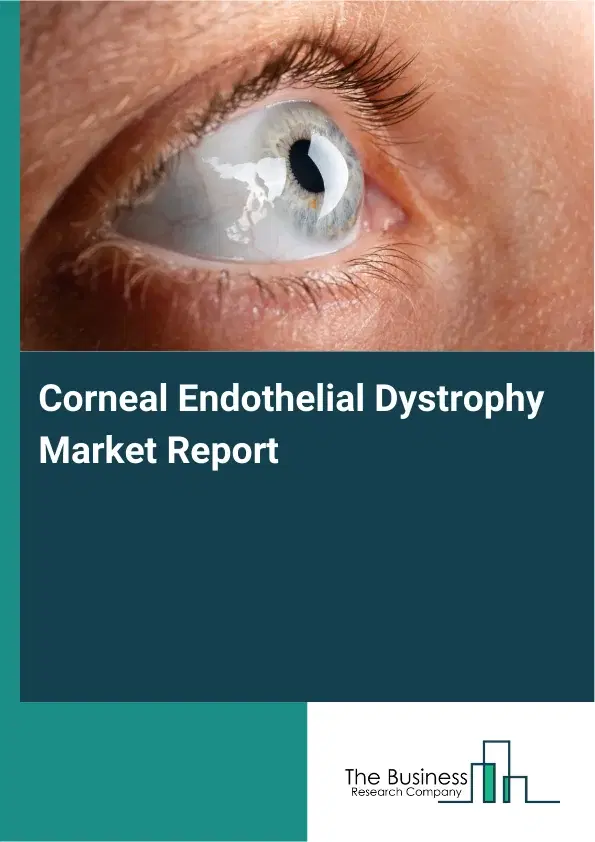
Corneal Endothelial Dystrophy Market Report 2026
Global Outlook – By Treatment (Phototherapeutic Keratectomy, Amniotic Membrane Transplants, Anterior Stromal Puncture, Conjunctival Flaps), By Disease Type (Congenital Hereditary Endothelial Dystrophy 1, Congenital Hereditary Endothelial Dystrophy 2, Posterior Polymorphous Corneal Dystrophy, Fuchs Endothelial Corneal Dystrophy), By Diagnosis (Cornea Examination And Grading, Corneal Tomography, Corneal Pachymetry, Corneal Cell Count), By End-User (Hospitals, Clinics, Other End Users) - Market Size, Trends, Strategies, and Forecast to 2030
Corneal Endothelial Dystrophy Market Overview
• Corneal Endothelial Dystrophy market size has reached to $184.84 billion in 2025 • Expected to grow to $269.98 billion in 2030 at a compound annual growth rate (CAGR) of 7.8% • Growth Driver: Growing Demand For Corneal Transplantation Driving The Market • Market Trend: Development Of Innovative Treatments In Market • North America was the largest region in 2025 and Asia-Pacific is the fastest growing region.What Is Covered Under Corneal Endothelial Dystrophy Market?
Corneal endothelial dystrophy is a genetic eye disorder that affects the cornea's endothelium (the inner layer of cells), leading to progressive loss of corneal clarity. The condition is characterized by the degeneration of the endothelial cells responsible for maintaining proper fluid balance within the cornea. The main types of treatments for the corneal endothelial dystrophy are phototherapeutic keratectomy (PTK), amniotic membrane transplants, anterior stromal puncture, and conjunctival flaps. PTK is a laser procedure that removes superficial corneal layers to treat surface irregularities or scarring. These treatments are used for various disease types, including congenital hereditary endothelial dystrophy 1, congenital hereditary endothelial dystrophy 2, posterior polymorphous corneal dystrophy, and Fuchs' endothelial corneal dystrophy. Diagnosis methods include corneal examination and grading, corneal tomography, corneal pachymetry, and corneal cell count. The treatments are utilized by various end-users, including hospitals, clinics, and other healthcare facilities.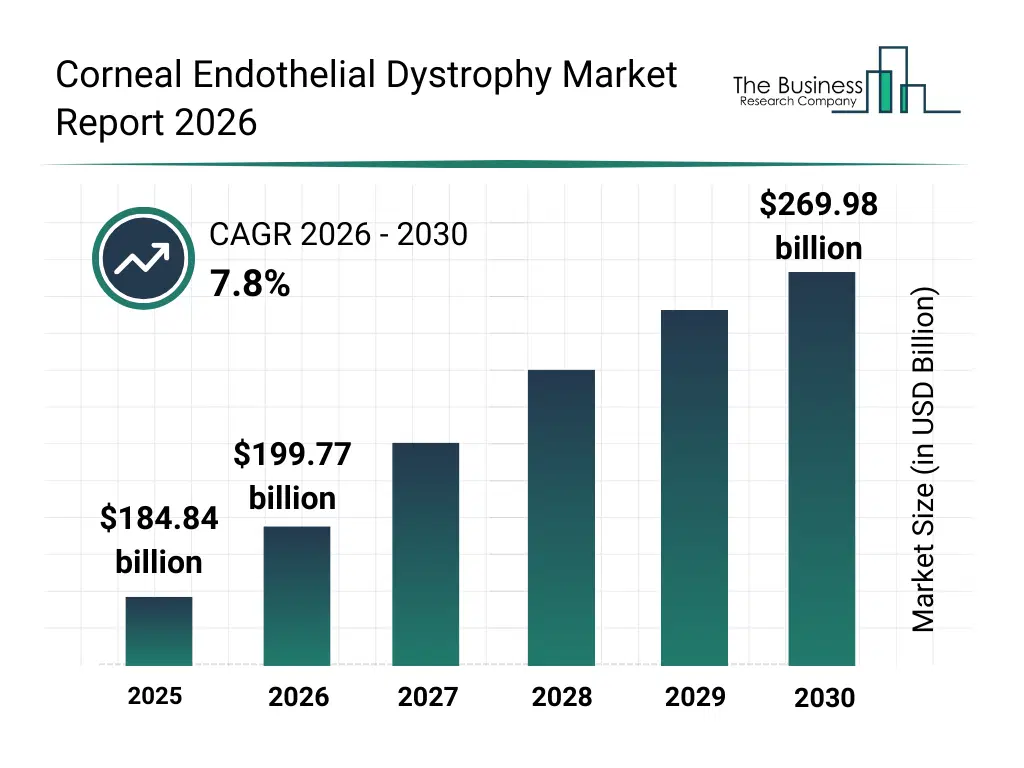
What Is The Corneal Endothelial Dystrophy Market Size and Share 2026?
The corneal endothelial dystrophy market size has grown strongly in recent years. It will grow from $184.84 billion in 2025 to $199.77 billion in 2026 at a compound annual growth rate (CAGR) of 8.1%. The growth in the historic period can be attributed to genetic prevalence of corneal disorders, limited early detection options, reliance on surgical intervention, aging population growth, specialized hospital-based treatment.What Is The Corneal Endothelial Dystrophy Market Growth Forecast?
The corneal endothelial dystrophy market size is expected to see strong growth in the next few years. It will grow to $269.98 billion in 2030 at a compound annual growth rate (CAGR) of 7.8%. The growth in the forecast period can be attributed to advancements in corneal imaging, increasing access to eye care, growth of specialty eye clinics, improved awareness of rare eye diseases, innovation in corneal therapies. Major trends in the forecast period include rising adoption of advanced corneal diagnostics, increased use of minimally invasive treatments, growing focus on early genetic diagnosis, expansion of specialized ophthalmic care, improved surgical outcome monitoring.
Global Corneal Endothelial Dystrophy Market Segmentation
1) By Treatment: Phototherapeutic Keratectomy, Amniotic Membrane Transplants, Anterior Stromal Puncture, Conjunctival Flaps 2) By Disease Type: Congenital Hereditary Endothelial Dystrophy 1, Congenital Hereditary Endothelial Dystrophy 2, Posterior Polymorphous Corneal Dystrophy, Fuchs Endothelial Corneal Dystrophy 3) By Diagnosis: Cornea Examination And Grading, Corneal Tomography, Corneal Pachymetry, Corneal Cell Count 4) By End-User: Hospitals, Clinics, Other End Users Subsegments: 1) By Phototherapeutic Keratectomy: Excimer Laser Therapy, Corneal Reshaping 2) By Amniotic Membrane Transplants: Fresh Amniotic Membrane Transplant, Cryopreserved Amniotic Membrane Transplant 3) By Anterior Stromal Puncture: Manual Technique, Laser-Assisted Technique 4) By Conjunctival Flaps: Partial Flap Technique, Full Flap TechniqueWhat Is The Driver Of The Corneal Endothelial Dystrophy Market?
The growing demand for corneal transplantation is expected to drive the growth of the corneal endothelial dystrophy market going forward. Corneal transplantation is a surgical procedure in which a damaged or diseased cornea is replaced with a healthy donor cornea to restore vision and improve eye health. The demand for corneal transplantations is due to the rising prevalence of corneal diseases, advancements in surgical techniques, and improved organ donation rates. Corneal endothelial dystrophy is treated with corneal transplantation, which replaces the damaged endothelium with healthy donor tissue to restore corneal clarity, reduce edema, and improve vision. For instance, in 2023, according to the Eye Bank Association of America, a US-based transplant association, domestic keratoplasty (a form of corneal transplantation) procedures increased by 2.7%, rising from 49,597 in 2022 to 50,925 in 2023. Therefore, the growing demand for corneal transplantation is driving the growth of the corneal endothelial dystrophy industry.Key Players In The Global Corneal Endothelial Dystrophy Market
Major companies operating in the corneal endothelial dystrophy market are Abbvie (Allergan plc), Alcon Inc., Bausch Health+Lomb, Santen Pharmaceutical Co Ltd, Lumenis Ltd, Carl Zeiss Meditec AG, Keeler Limited, ProQR Therapeutics NV, Rugby Laboratories, Blumont Healthcare Ltd, Grevis Pharmaceuticals Pvt Ltd, Rayner Group, Trefoil Therapeutics, Design Therapeutics, Horus Pharma, Stealth BioTherapeutics Corp, Surrozen Inc, Price Vision Group LLC, Invirsa Inc, KeraMed Inc, Massachusetts Eye and Ear, MediciBIO Co LTD, Prime Medicine Inc, AJL Ophthalmic SA
This chart is for illustrative purposes; the full report includes a detailed competitor analysis and comprehensive overview of the top 10 companies in the market.
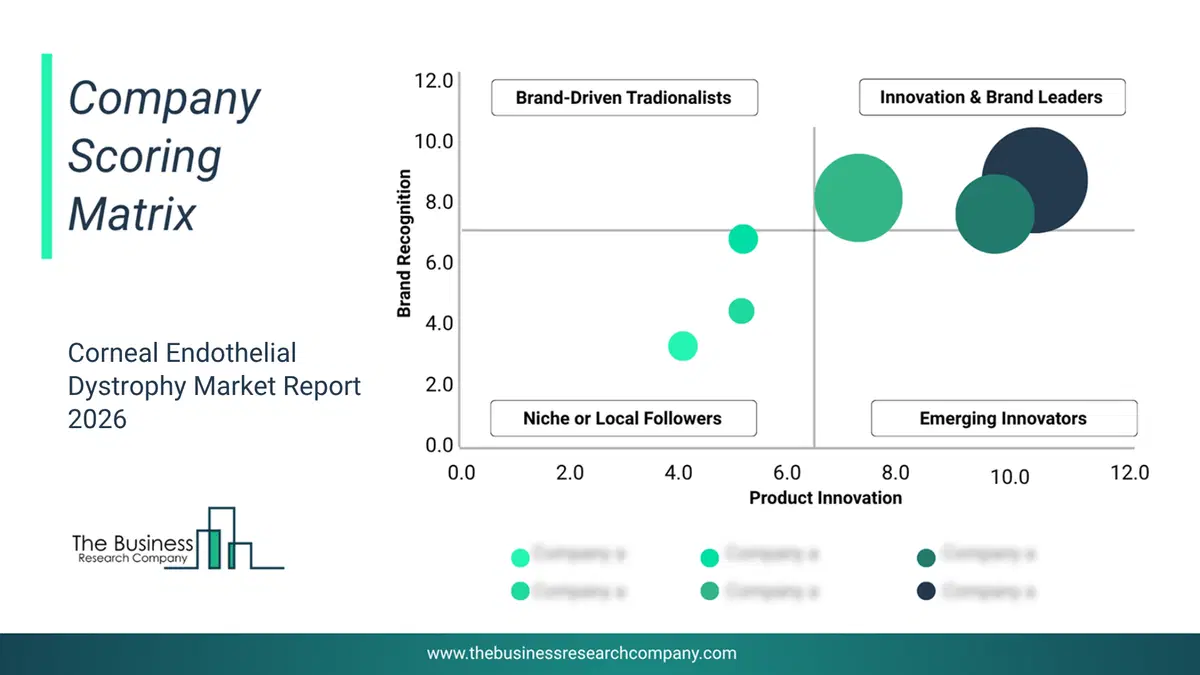
This chart maps companies by product innovation and brand strength, with bubble size indicating relative revenue, helping identify market leaders, challengers, and niche players. This is an illustrative chart; the full report provides a complete and accurate competitive analysis.
Global Corneal Endothelial Dystrophy Market Trends and Insights
Major companies operating in the corneal endothelial dystrophy market are focusing on developing innovative treatments, such as allogeneic cell therapy, to address unmet medical needs by offering innovative, minimally invasive treatment options that improve patient outcomes. Allogeneic cell therapy refers to using cells from a donor of the same species but genetically distinct to treat a recipient. For instance, in September 2024, Aurion Biotech Inc., a US-based clinical-stage biotech company, launched Vyznova (neltependocel) in Japan to treat bullous keratopathy, a corneal endothelial disease. Vyznova (neltependocel) is a cell therapy developed by Aurion Biotech to treat bullous keratopathy, which damages the corneal endothelial cells and causes vision problems. It is the first approved cell therapy for corneal endothelial disease and has been approved in Japan. Vyznova uses corneal endothelial cells grown in a lab, allowing up to 1,000 doses to be made from a single donor. This innovative treatment offers a less invasive alternative to corneal transplants, helping address the shortage of donor corneas and providing a new way to restore vision for patients with corneal diseases.What Are Latest Mergers And Acquisitions In The Corneal Endothelial Dystrophy Market?
In February 2024, Eversight, a US-based nonprofit eye bank, partnered with Emmecell. With this partnership, Eversight and Emmecell aim to advance minimally invasive cell therapies to treat corneal endothelial diseases, including corneal edema caused by endothelial cell dysfunction, and expand access to innovative treatments worldwide. Emmecell is a US-based biotechnology company developing a non-surgical cell therapy for corneal edema, often caused by corneal endothelial dysfunction.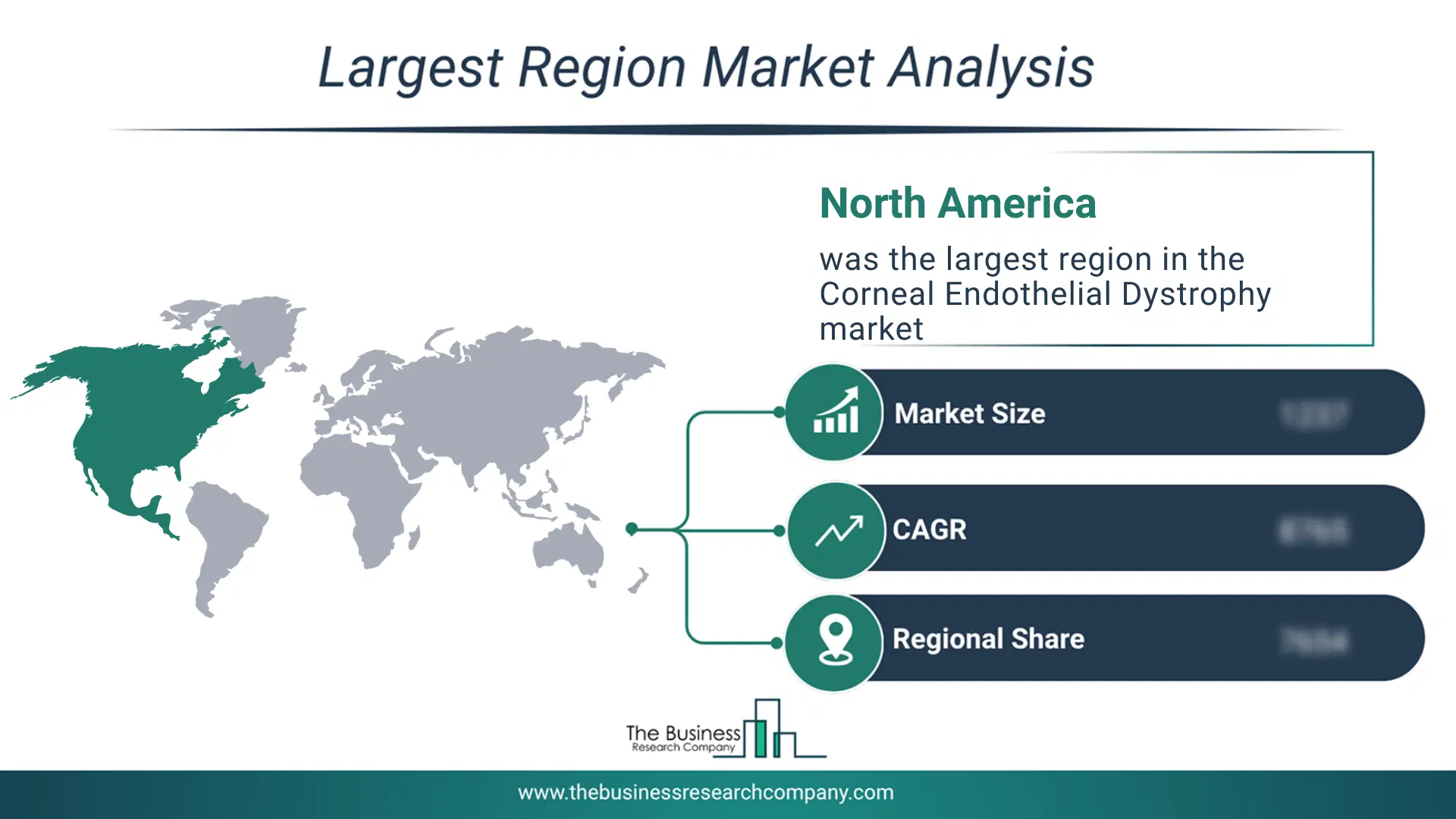
Regional Outlook
North America was the largest region in the corneal endothelial dystrophy market in 2025. Asia-Pacific is expected to be the fastest-growing region in the forecast period. The regions covered in this market report are Asia-Pacific, South East Asia, Western Europe, Eastern Europe, North America, South America, Middle East, Africa. The countries covered in this market report are Australia, Brazil, China, France, Germany, India, Indonesia, Japan, Taiwan, Russia, South Korea, UK, USA, Canada, Italy, Spain.What Defines the Corneal Endothelial Dystrophy Market?
The corneal endothelial dystrophy market consists of revenues earned by entities by providing services such as endothelial keratoplasty, specialized contact lenses, and penetrating keratoplasty. The market value includes the value of related goods sold by the service provider or included within the service offering. The corneal endothelial dystrophy market also includes sales of medications, corneal implants, surgical instruments, diagnostic devices, cell therapy products. Values in this market are ‘factory gate’ values, that is the value of goods sold by the manufacturers or creators of the goods, whether to other entities (including downstream manufacturers, wholesalers, distributors and retailers) or directly to end customers. The value of goods in this market includes related services sold by the creators of the goods.How is Market Value Defined and Measured?
The market value is defined as the revenues that enterprises gain from the sale of goods and/or services within the specified market and geography through sales, grants, or donations in terms of the currency (in USD unless otherwise specified). The revenues for a specified geography are consumption values that are revenues generated by organizations in the specified geography within the market, irrespective of where they are produced. It does not include revenues from resales along the supply chain, either further along the supply chain or as part of other products.
This chart presents market attractiveness based on a quantitative evaluation of growth, competition, strategic alignment, and risk, offering a clear view of opportunity areas for decision-making. This chart is for illustrative purposes; the full report contains the complete analysis.

This chart highlights the Total Addressable Market (TAM) by estimating the maximum revenue opportunity using an assumption-driven approach, supporting strategic planning and opportunity sizing across markets. The chart is illustrative; the full report provides a more comprehensive analysis.
What Key Data and Analysis Are Included in the Corneal Endothelial Dystrophy Market Report 2026?
The corneal endothelial dystrophy market research report is one of a series of new reports from The Business Research Company that provides market statistics, including industry global market size, regional shares, competitors with the market share, detailed market segments, market trends and opportunities, and any further data you may need to thrive in the corneal endothelial dystrophy industry. The market research report delivers a complete perspective of everything you need, with an in-depth analysis of the current and future state of the industry.Corneal Endothelial Dystrophy Market Report Forecast Analysis
| Report Attribute | Details |
|---|---|
| Market Size Value In 2026 | $199.77 billion |
| Revenue Forecast In 2030 | $269.98 billion |
| Growth Rate | CAGR of 7.8% from 2026 to 2030 |
| Base Year For Estimation | 2025 |
| Actual Estimates/Historical Data | 2020-2025 |
| Forecast Period | 2026 - 2030 |
| Market Representation | Revenue in USD Billion and CAGR from 2026 to 2030 |
| Segments Covered | Treatment, Disease Type, Diagnosis, End-User |
| Regional Scope | Asia-Pacific, Western Europe, Eastern Europe, North America, South America, Middle East, Africa |
| Country Scope | The countries covered in the report are Australia, Brazil, China, France, Germany, India, Indonesia, Japan, Taiwan, Russia, South Korea, UK, USA, Canada, Italy, Spain |
| Key Companies Profiled | Abbvie (Allergan plc), Alcon Inc., Bausch Health+Lomb, Santen Pharmaceutical Co Ltd, Lumenis Ltd, Carl Zeiss Meditec AG, Keeler Limited, ProQR Therapeutics NV, Rugby Laboratories, Blumont Healthcare Ltd, Grevis Pharmaceuticals Pvt Ltd, Rayner Group, Trefoil Therapeutics, Design Therapeutics, Horus Pharma, Stealth BioTherapeutics Corp, Surrozen Inc, Price Vision Group LLC, Invirsa Inc, KeraMed Inc, Massachusetts Eye and Ear, MediciBIO Co LTD, Prime Medicine Inc, AJL Ophthalmic SA |
| Customization Scope | Request for Customization |
| Pricing And Purchase Options | Explore Purchase Options |